1.8 C
New York
Home Blog Page 1184

Five-star Foresea launches final call

0

The EU-backed Foresea (Funding Ocean Energy through Strategic European Action) programme has opened its fifth and final call for funding of testing marine renewables at European test centres.

Foresea is an €11m project that offers free access to wave and tidal developers to test their devices at the European Marine Energy Centre in the UK , DMEC in the Netherlands, SEM REV in France and SmartBay in Ireland.

The 5th Foresea call for proposals is open until 25 January.

 “This final call will help bridge the gap between FORESEA and a potential follow-up project,” it said.

EMEC programme manager Nic Wallet added: “With less than a year left before the end of the project, we want to ensure that we wring as much value out of Foresea as we can for the benefit of this nascent sector."

“Delivering results through this final call will prove challenging due to time constraints but we are confident that many developers are ready to test innovative technologies.”

Source:renews

Watch: Celebrity Edge’s magic carpet

0

Celebrity Edge's Magic Carpet is the world's first cantilevered venue at sea to move 15 decks. It is designed to provide passengers with an immediate connection to the ocean with its outward-facing design.

The vessel was launched on December 2018 and is the Celebrity Cruises' first new ship in six years and first new ship series in more than a decade.


Cyber security challenges to look out

0

As 2019 begins, there are some important areas concerning cyber security that the ones interested should focus on, according to Silicon Republic's Ellen Tannam. Those in the industry may view it more as a future filled with potential threats and attack vectors to worry about.

  • IoT is to keep on being a problem to be solved

According to Guy Rosefelt, product management director for threat intelligence and web security at NSFocus, as quoted by Silicon Republic, Internet of Things may be efficient, yet it will continue being a source of vulnerability for enterprises and consumers, respectively.

Gary McGraw, vice-president of security technology at Synopsys, addressed that IoT still remains a 'security disaster waiting to happen'. Therefore, the IT systems in companies should be carefully examined.

  • Phishing gets personal

As stated by Asaf Cidon, vice-president of email security at Barracuda Networks, hacking and account take over is one of the most dangerous threats in the cyber security industry nowadays. He added that attackers will be tailoring email attacks to each individual target.

  • Multi-factor authentication will grow in popularity

Since many are those that have become aware of the value of their personal information, multi-factor authentication has become a challenge. Stacy Stubblefield, co-founder of secure communications platform TeleSign noted that increased collaboration between mobile network operators and online businesses will boost adoption. This data will be used to augment multi-factor authentication.

  • AI cyber attacks are a real possibility

AI is an everyday feature, thus it is convenient for cyber criminals to examine its vulnerability. Jason Hart, CTO of data protection at Gemalto, believes that an AI-augmented attack will be a real threat.

He quoted that by creating a new breed of AI-powered malware, hackers will infect an organisation’s system using the malware and sit undetected, gathering information about users’ behaviours and organisations’ systems.

  • Data regulation goes global

As the first anniversary of GDPR is getting closer, many are the countries preparing to examine their data privacy. Specifically, as published in Silicon Republic, the California Consumer Privacy Act 2018 will pave the way for similar legislation this year, while there are other changes afoot in Canadaand Brazil.

  • IIoT under threat

The threat is also focused on Industrial IoT. According to Forcepoint, in 2019, attackers will break into industrial IoT devices by attacking the underlying cloud infrastructure. This target is more desirable for an attacker – access to the underlying systems of these multi-tenanted, multi-customer environments represents a much bigger payday.

Targets include human-machine interfaces, industrial control systems and distributed control systems.

  • Cyber-criminals aim at the cloud

Jason Hart commented on this matter, stating that a new role of cloud migration security specialist will be a key part of large IT teams. Security-wise, continuous moderation with the help of automation can help teams.

Customer misconfiguration, mismanaged credentials or insider theft are the likely risks present – not so much provider vulnerabilities. Cloud hygiene will only grow in importance over the next 12 months, particularly in avoiding devastating data breaches.

  • C-levels wake up to cyber-risk

According to an IBM study, the average global cost of a data breach is close to $4m – and this is before you take reputational damage into account.

  • Software vulnerabilities set to be exploited

In an everyday enterprise, there is usually an array of software systems in use, from messaging to emails and productivity trackers. McGraw supports that this is where industries will face crucial challenges during 2019.

Source:safety4sea

MSC pledges to find all containers lost from MSC Zoe and cover costs

0

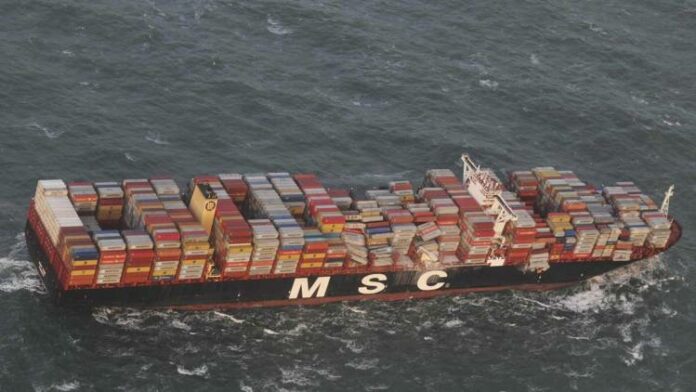
Container line Mediterranean Shipping Company (MSC) has pledged to find all the containers that fell from the MSC Zoe last week and cover full costs of the clean-up.

The vessel MSC Zoe lost 270 containers overboard on 2 January in bad weather off the coast of the Netherlands including some boxes that reportedly contained highly flammable, potentially dangerous organic peroxides. Some of the containers have washed up on both the shores of the Netherlands and Germany.

MSC said it wanted assure the authorities and public in the Netherlands and Germany it was committed to paying the full costs of the clean-up.

“MSC is committed to continue searching the sea for the containers which fell overboard, until the last one is found. MSC will also ensure that the beaches of the Dutch and German coastlines are surveyed until all debris related to this incident has been cleared,” MSC said in a statement.

The shipping line has appointed Ardent Global to coordinate the search at sea for missing containers lost from the vessel.

“Other specialist response companies already appointed by MSC continue to work with authorities and members of the public on beach cleaning, as previously communicated,” it said.

MSC would not comment on the cargo carried in the containers lost overboard and said it was not aware of any injury to the public from the cargo on board. However, it also said: “Members of the public are nonetheless advised to exercise caution when encountering containers or other materials on the beaches and to report any discoveries to local authorities, in order that they can relay the information to those in charge of the clean-up operation and avoid any unnecessary personal injury."

“Caution should be applied in particular for any containers or drums which are labelled as having hazardous content and these should only be touched under supervision of the authorities or clean-up experts.”

Source:seatrade-maritime

Block R Licence, Equatorial Guinea

0

Ophir announces that it has received notification from the Equatorial Guinea Ministry of Mines and Hydrocarbons that the Block R Licence, which contains the Fortuna gas discovery, will not be extended following expiry of the licence on 31 December 2018.

As a consequence, there will be an additional non-cash impairment of the asset, expected to be around $300 million, in Ophir’s full year financial results following the impairment taken in the half year results reported in September 2018.

The Board remains focused on implementing the strategy outlined in its announcement on 13 September 2018 and options available to maximise value for shareholders. In this regard, the Board would highlight the recent updates it has provided to the market in respect of its Southeast Asia assets, which it believes demonstrate the underlying quality of these assets including its recent acquisition of Santos.

As outlined in our announcement of 31 December 2018, Ophir and Medco have entered into discussions about a possible cash offer to be made by Medco for the entire issued and to be issued share capital of Ophir. Our discussions with Medco have taken place in the shared knowledge that there were a number of potential outcomes with respect to our Fortuna asset, and these discussions continue.

The next scheduled announcement by Ophir will be our pre-close trading statement on 15 January 2019 when we shall update investors on the progress made throughout our portfolio and the advances to our production and cashflow base in Southeast Asia.

Boskalis appointed prererred contractor for inch cape offshore wind farm project

0

Royal Boskalis Westminster N.V. (Boskalis) has signed an exclusive Pre-Construction Agreement (PCA) for the Inch Cape offshore wind farm project. The award was made by Inch Cape Offshore Limited (ICOL), a subsidiary of Red Rock Power Ltd. The project scope includes the transportation and installation of the wind turbine foundations, the offshore substation and cables.

The award of the contract is subject to a successful bid by ICOL in the next UK Contracts for Difference auction (mid 2019) and financial close (second half of 2020). The contract size, excluding procurement, is expected to exceed EUR 200 million. Boskalis will in the coming months assist with the further engineering and design of the project. The ultimate size of the contract including the cost associated with the supply of the wind turbine foundations and inter-array cables will be determined during this period.

The PCA includes the engineering, supply, transportation and installation of up to 72 pre-piled jacket foundations and up to 84 inter-array cables in addition to the transportation and installation of the offshore substation. The Bokalift 1 crane vessel will be deployed for the transportation and installation of the foundations as well as the offshore substation foundation, sub-structure and topside. Furthermore, Boskalis will in consortium with NKT supply and install two export cables of 85 kilometer each, connecting the offshore substation to the mainland. The Inch Cape offshore wind farm will be located in the North Sea, 15km off the Angus Coast in the East of Scotland. Boskalis aims to maximize UK local content for its scope of work. The project is scheduled to be executed in the period 2021-2022, in time to enable Inch Cape to meet the CfD 3 delivery windows between 2023 to 2025.

Boskalis' strategy is aimed at benefitting from key macro-economic factors which drive worldwide demand in our markets: expansion of the global economy, increase in energy consumption, global population growth and the challenges that go hand in hand with climate change. This project is related to the development of generating renewable energy due to climate change and increasing energy consumption.

ExxonMobil Begins Drilling Haimara-1 Exploration Well Offshore Guyana

0

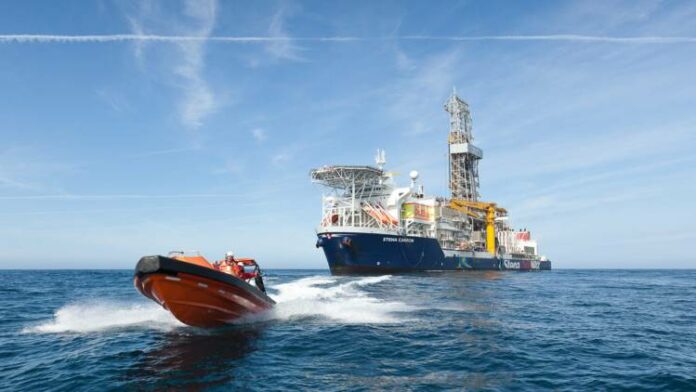
ExxonMobil said today that it has begun drilling the Haimara-1 exploration well offshore Guyana, the first of two planned wells in January. The Stena Carron drillship is drilling the well, which is located 19 miles (31 kilometers) east of the Pluma-1 discovery in the southeast Stabroek Block.

The Noble Tom Madden drillship is expected to drill the second well, Tilapia-1, about three miles (five kilometers) west of the Longtail-1 discovery. The Tilapia-1 well is located in the growing Turbot area.

“We continue to prioritize high-potential prospects in close proximity to previous discoveries in order to establish opportunities for material and efficient development,” said Steve Greenlee, president of ExxonMobil Exploration Company. “Like the Liza and Payara areas, the Turbot area is on its way to offering significant development options that will maximize value for Guyana and our partners.”

ExxonMobil is progressing the Liza Phase 1 development, which has moved into its peak execution phase ahead of expected startup in early 2020. Drilling of development wells in the Liza field is continuing using the Noble Bob Douglas drillship, subsea equipment is being prepared for installation, and the topside facilities modules are being installed on the Liza Destiny floating, production, storage and offloading (FPSO) vessel in Singapore.

Preparations are underway for the commencement of pipe-laying activities in the Liza field in the spring. The Liza Destiny FPSO is expected to sail from Singapore to arrive offshore Guyana in the third quarter of 2019.

The potential exists for at least five FPSOs on the Stabroek Block producing more than 750,000 barrels of oil per day by 2025. Liza Phase 2 is expected to start up by mid-2022. Pending government and regulatory approvals, project sanction is expected first quarter 2019 and will use a second FPSO designed to produce up to 220,000 barrels per day. Sanctioning of a third development, Payara, is also expected in 2019 with start up as early as 2023.

ExxonMobil also plans to deploy a seismic vessel operated by Petroleum Geo-Services (PGS) to the Turbot area to acquire 4-D seismic data similar to a 4-D campaign conducted in the Liza area in 2017. A second PGS vessel has been released after seismic acquisition activities were suspended on Dec. 22 when vessels were approached by the Venezuelan navy in the northwest portion of the Stabroek Block.

Drilling and development operations offshore Guyana are unaffected by the incident, which occurred more than 110 kilometers from the Ranger discovery, the closest of 10 discoveries made by ExxonMobil in the southeast section of the Stabroek Block.

ExxonMobil operates the Stabroek Block offshore Guyana under license from the government of Guyana. The acquisition of seismic data was being conducted under license from the government of Guyana in the country’s exclusive economic zone. ExxonMobil is evaluating next steps for the seismic program.

Throughout its activities, ExxonMobil continues to emphasize and promote direct benefit to local business. More than 50 percent of the Guyana affiliate’s employees, contractors and subcontractors are Guyanese, a number that will continue to grow as operations progress. ExxonMobil, its partners and its contractors spent about US$65 million with more than 300 local suppliers during the first three quarters of 2018. The Centre for Local Business Development, established by ExxonMobil in 2017 to promote the establishment and growth of small- and medium-sized local businesses, continues to enable access to training and capacity-building. More than 1300 local businesses have registered with the centre.

ExxonMobil affiliate Esso Exploration and Production Guyana Limited is operator and holds 45 percent interest in the Stabroek Block. Hess Guyana Exploration Ltd. holds 30 percent interest and CNOOC Nexen Petroleum Guyana Limited holds 25 percent interest.

IMCA to launch a web-based method to collect safety statistics

0

The International Marine Contractors Association, IMCA, launches a new web-based method for collecting safety statistics from its contractor members. This will result in simpler, more timely reporting, and the ability to easily benchmark performance.

Specifically, IMCA has been collecting safety data more than 20 years, up to now. The statistics collected highlight that the reported injury rates are just one tenth the level reported in 1997.

In addition, the traditional spreadsheet has been already replaced by a web-based, easy-to-use dashboard. This platform will make it easier for members to submit data and compare their performance with others of similar-sized companies, by keeping their anonymity.

According to IMCA's press release, it is of a big importance for companies to compare their performance when reporting to shareholders, and an important aspect of corporate social responsibility.

As quoted by Nick Hough, IMCA’s Technical Adviser, responsible for IMCA’s Health, Safety, Security & Environment Committee " The new reporting template will be simpler to complete. "

Moreover, the statistics will derive by a company's total hours and offshore hours worked, in comparison to onshore and offshore hours as in previous surveys.

Finally, IMCA supports that the easy completion and the ability to benchmark company performance will conclude in higher data submission rates than in the past.

Source:safety4sea

Blockchain in global energy market to reach USD 11,899m by 2024

0

Zion Market Research has published a new report according to which the global blockchain in energy market was valued at around USD 208 million in 2017 and is expected to reach about USD 11,899 million by 2024, increasing at a CAGR of above 78.2% between 2018 and 2024.

Specifically, Zion Market Research's report is entitled to "Blockchain in Energy Market by Type (Public and Private), by Component (Platform and Services), by End-User (Power Sector and Oil and Gas Sector), and by Application (Grid Management, Energy Trading, Government Risk and Compliance Management, Payment Schemes, Supply Chain Management, and Others): Global Industry Perspective, Comprehensive Analysis, and Forecast, 2017-2024".

As stated in the report, Blockchain can be also called "decentralized ledger technology" as it has no central server. On the contrary, the authentication of these servers is handled publicly. It enables people to trade energy by themselves.

The Blockchain project has plenty benefits since it offers fast and safe transaction at a low cost. Yet, because of the lack of regulations, advancements in the international trade and supply chain management are expected to provide many opportunities for the key players working in the global blockchain in energy market.

The application of global blockchain in energy market includes grid management, energy trading, government risk and compliance management, payment schemes, supply chain management, and others.

In 2017, the power sector dominated the market. This will play a crucial role to the rising demand for renewable energy around the globe.

The Blockchain project, globally, includes North America, Europe, Asia Pacific, Latin America, and the Middle East and Africa.

According to Zion Market Research, the European blockchain in energy market is expected to experience major growth in the years following. This is obvious by the numerous startups that are interested in blockchain.

In addition, UK and Germany held the largest market share in this regional market in 2017.

Also, important energy firms across Europe are to apply for blockchain processes in network management and billing, electric mobility, renewable power origin testimonials, decentralized power production, and retail sales.

North America is expected to experience important growth in the blockchain department, as stated by the Zion Market research because of government's support. Specifically, the government made an investment of approximately USD 22 million for various products and services in the field of emerging technologies.

Asia Pacific is allegedly expected to have a rapid rate of increase in the blockchain in energy market in the following years. The Asia Pacific's financial services are proceeding to important investments for the development in the market.

Additionally, the expansion of new and renewable energy supply in Asia Pacific countries are expected to boost the market in the future.

Concluding, the Latin American and the Middle Eastern and African regions are to witness mediocre increase in the blockchain in energy market over the forecast time period. This is a result of the increasing oil and gas sector in the Middle East region and rapid industrialization in the Latin American region.

Source:safety4sea

An Option for a Montreal – New York City River Cruise

0

It is presently possible for small private watercraft to sail between the shorter and more direct inland waterway route from New York City to the Lower Saint Lawrence River east of Montreal. However, a large commercial river cruise vessel carrying tourists could sail into the southern region of Canada’s Richelieu River and as far as the quaint Quebec town of Saint-Jean-sur-Richelieu, located some 25 miles (40 kilometers) from Montreal.

Introduction

Following the demise of trans-oceanic passenger ship services that lost market share to the airlines, a small number of maritime managers adapted the last commercial ocean-going passenger transportation ships to cruise and tour services. The service proved popular, and ocean tour and cruise operations have developed into a thriving and vibrant industry. Prior to the demise of ocean passenger ships, there was a time when river passenger vessels proved popular along major navigable inland waterways including into the era of the passenger trains. River vessels sailing overnight schedules offered more comfortable, cost competitive service on between several pairs of cities.

Competition from the combination of railway services, inter-city bus services and competitively priced airline service resulted in the closure of overnight river transportation services carrying passengers. Tour operators tested the market for multi-day cruises along inland waterways, with the result that such cruises are available along several inland waterways across Europe along the Danube River, Asia along the Yangtze River and even North America along the Mississippi, Ohio and Saint Lawrence Rivers. Small river cruise vessels carry 40 to 90 guests on multi-day tours along such waterways as the Erie Canal and Rideau Canal.  

New York City – Montreal Cruise

At present, Great Lakes Cruises operates 88 passenger vessels that sail north along the Hudson River from New York City to the Erie Canal and then to the Oswego Canal into Lake Ontario. The vessels than sail north along the windswept eastern region of Lake Ontario to the Saint Lawrence River, then eastbound to quayside at Montreal. An alternative route would sail from New York City north along the Hudson River and continue north to the Champlain Canal, where a series of locks connects to Lake Champlain that flows into the Richelieu River that flows to the Lower Saint Lawrence River.

The 88-passenger cruise vessel could sail along the Hudson River through to Lake Champlain and into the Richelieu River as far as the central area of the town of Saint-Jean-sur-Richelieu that is located some 25 miles southeast of Montreal. While the voyage would be extremely scenic between New York City and Saint-Jean-sur-Richelieu, a tour bus would be required to ferry passengers to and from Montreal. A 12-mile canal with nine navigation locks bypasses a non-navigable section of river and can transit vessels of up to 100 feet length by 21 feet width by six feet draft.

Mini-Cruise Vessel

A mini-cruise vessel built with a draft of six feet, beam of 21 feet and length of 112 feet with lift-up bow would be narrower than the mini-cruise vessel that carries tourists along the Rideau Canal. A multi-day cruise aboard a mini-cruise vessel would need to involve multiple stops to provide passengers with pre-prepared meals that would be delivered to the vessel, or passengers would disembark to take meals at nearby restaurants. Some stops could be overnight stops to allow for passenger accommodation at waterfront or nearby hotels. The cruise vessel would operate like a long-distance bus tour.

Borrowing from the precedent of the barge industry, there would be scope to develop an extended-length, coupled two-section version of the mini-cruise vessel that would sail between New York City and Saint-Jean-sur-Richelieu. It would be uncoupled and operate in two sections through the navigation locks along the Chambly Canal, to sail as a coupled assembly north of the canal to the Saint Lawrence River. The addition space aboard a two-section coupled vessel could enhance accommodations for a possible compliment of 50 passengers. Tour planners would need to evaluate market prospects for a mini-cruise vessel sailing between New York and Montreal.

Lengthening Navigation Locks

Extending the length of navigation locks may be a long-term possibility if sufficient commercial tourist traffic materializes on the New York City – Montreal river cruise via Lake Champlain. While the Lower Ottawa River only involves two navigation locks, there are nine navigation locks in the Saint-Jean-sur-Richelieu region and lengthening each of those locks will involve much greater expense.

River Port Development

The prospect of operating multi-day river cruises via Lake Champlain between New York and Saint-Jean-sur-Richelieu would require the development of a suitable dock area where a vessel of up to 300 feet in length by 43 feet width may be berthed. 

Change of Vessels

Coordination of schedules and maintenance involving two vessels would be required to offer river interlined cruise services between Montreal and New York City. Such a service would include extended sailing to Quebec City and Ottawa, especially if Canadian authorities were willing to lengthen navigation locks along the Lower Ottawa River between Montreal and Ottawa. An international vessel would sail between New York City and the southern entrance to the Chambly Canal at Saint-Jean-sur-Richelieu while a Canadian vessel would sail to/from Saint-Jean-sur-Richelieu connecting to Quebec City, Montreal and Ottawa. Cruises would include a one-night hotel accommodation at Saint-Jean.

During a scheduled overnight layover, accommodations aboard both vessels would be cleaned and prepared for new customers. One group of customers would be traveling to Canada while another group would be returning to New York. Alternatively, Canadian customers sailing south may board a prepared vessel at Saint-Jean-sur-Richelieu, for a multi-day return cruise to/from New York City while customers from New York City area sail on an eastern Canadian inland waterway cruise. Vessels 300 feet long and 43 feet wide could sail New York City – Saint Jean, with vessels 35 feet wide sailing north of Saint-Jean.

Tour Service Interlining

The close proximity between Montreal and Saint-Jean-sur-Richelieu allows for possible interlining between multi-day cruises based at Montreal, with multi-day cruises that sail via Lake Champlain between New York City and the Richelieu River. If Canadian authorities were willing to lengthen the pair of locks along the Ottawa River, multi-day river cruise excursions could sail the Ottawa – Montreal – Quebec City route. Some multi-day river cruises could originate at Saint-Jean-sur-Richelieu to carry tourists south to New York City and back, or south to Albany and west toward Niagara Falls.

A circular river cruise could involve two vessels sailing from New York City, departing several days apart. The first vessel would sail to the Erie Canal to Lake Ontario, then to the Saint Lawrence River and to Montreal and Quebec City. On its return voyage, it would sail to Saint-Jean-sur-Richelieu where a northbound vessel from New York City would arrive. The vessels would be serviced to switch passengers, with the passengers who arrived from New York City then sailing to Quebec City and the passengers who arrived from Quebec City, would sail south to New York City via Lake Champlain.

Conclusions

While a large passenger cruise vessel sailing via inland waterway from New York City north via Lake Champlain cannot sail into the Lower Saint Lawrence River, it can sail within 25 miles of Montreal, perhaps sufficiently close that tourists might find a 40-minute bus ride quite acceptable.

For tourists seeking to sail via inland waterway from Canada aboard a large river vessel, the close proximity between Montreal and Saint-Jean-sur-Richelieu could make that town an acceptable location from where tourists might begin and end their river cruises.

There may actually be a market for a multi-day river cruise between New York City and Montreal, involving a mini-cruise vessel or a two-section coupled version of such a vessel capable of fitting into the navigation locks on the north side of Saint-Jean-sur-Richelieu.

Source:maritime-executive