1.8 C
New York
Home Blog Page 1185

Topaz successfully contracts newbuild subsea vessel to work in renewables

0

Topaz Energy and Marine (“Topaz”), a leading offshore marine logistics company, has signed a substantial agreement with a large north European contractor. The contractor will charter Topaz’s newbuild subsea vessel, Topaz Tangaroa, for work on renewable energy projects, primarily in support of offshore wind farms in the southern North Sea. The contract underlines the growing significance of offshore wind projects to Topaz.

The charter contract will take effect from February 2019 for a firm duration of seven months, with options to extend to late 2020. The agreement reflects market terms.

The Topaz Tangaroa, which was ordered in 2015 as part of an ongoing fleet renewal and reinvestment strategy by Topaz, is a 1,000m², diesel-electric light subsea construction vessel with 82 pax accommodation in comfort class 3, equipped with an AHC 120-tonne subsea construction crane. The vessel is built to the highest North Sea standards, with world-class station keeping and fuel economics.The Topaz Tangaroa and its sister vessel, the Topaz Tiamat, were both designed with, and built by, VARD Norway.

The charter adds to Topaz’s industry-leading revenue backlog, which as of 30 September 2018 stood at US$1.4 billion.

Maersk Container Industry Exits Dry Container Business

0

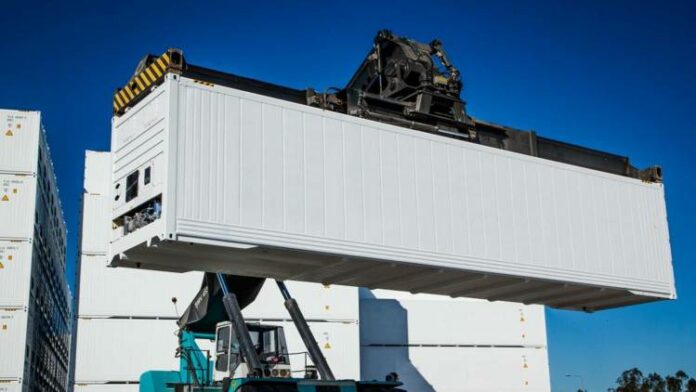
Maersk Container Industry (MCI) is exiting the dry container manufacturing business to focus on growing its cold chain business. 

Currently, one out of three refrigerated containers used in global perishable transportation uses Star Cool container technology manufactured by MCI. With the recent launch of Sekstant® Global Guidance solutions, the company is entering the IoT space, transforming reefer operations through the use of operational data.

The market for dry containers has been under enormous pressure for some time, says MCI, but reefer volumes continue to grow due to global demand for fresh produce and other commodities. The decision to exit the dry container business means that the company's production facility in Dongguan, China, will close. The factory has been idle since the beginning of December 2018.

“MCI’s strategy is to grow in cold chain where our Star Cool technology is a clear leader. This growth requires focused investment in the best products and services,” explains Sean Fitzgerald, CEO of Maersk Container Industry. “By putting all of MCI’s resources on the cold chain business will ensure sustainable growth and continued investment in the best products and services for our customers.”

 In June 2018, MCI closed its manufacturing facility in San Antonio, Chile, consolidating all its reefer manufacturing in the company’s original facility in Qingdao in China where production commenced in 1998. 

MCI received a record reefer order in October last year, with Hapag-Lloyd ordering 8,600 units, of which 2,000 will be controlled atmosphere reefers. The successful launch of Hapag-Lloyd’s ExtraFresh and ExtraFresh Plus services has driven the company's demand for more controlled atmosphere reefers. The order brings the number of Star Cool controlled atmosphere reefers in Hapag-Lloyd’s ExtraFresh fleet up to 5,000. MCI is producing the 8,600 Star Cool Integrated reefers at their Qingdao facility. 

Source:maritime-executive

Names of Two Future U.S. Destroyers Announced

0

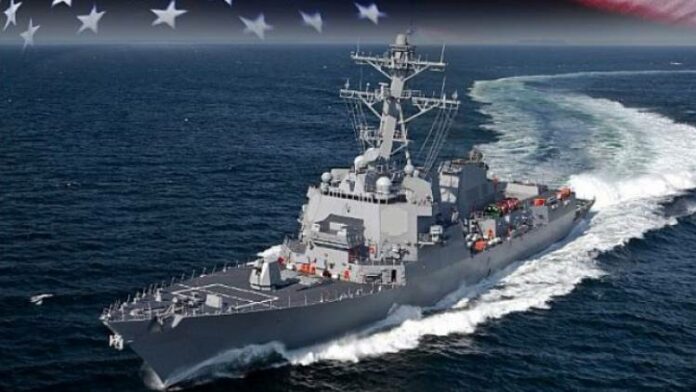
U.S. Secretary of the Navy Richard V. Spencer announced the names of two future Arleigh Burke-class guided-missile destroyers last week.

The first is named in honor of U.S. Navy Vietnam veteran, Navy Cross recipient and former U.S. Senator from Alabama, Admiral Jeremiah Denton.

In 1947, Denton graduated from the U.S. Naval Academy and served as a test pilot, flight instructor and squadron leader, and developed operational tactics still in use, such as the Haystack Concept, which calls for the dispersing of carrier fleets to make it more difficult for the enemy to find the fleets on radar. 

On July 18, 1965, Denton was shot down over North Vietnam and spent nearly eight years as a POW, almost half in isolation. During an interview with a Japanese media outlet, Denton used Morse code to blink “torture,” confirming that American POWs were being tortured. He suffered severe harassment, intimidation and ruthless treatment, yet he refused to provide military information or be used by the enemy for propaganda purposes.

In recognition of his extraordinary heroism while a prisoner-of-war, he was awarded the Navy Cross.  Denton was released from captivity in 1973, retired from the Navy in 1977 and in 1980 was elected to the U.S. Senate where he represented Alabama. 

Spencer also announced the name of a another Arleigh Burke-class guided-missile destroyer – this time honoring Senator Ted Stevens, who represented Alaska from 1968 to 2009.

Stevens served as a pilot in the Army Air Corps from 1943 to 1946 and was awarded the Distinguished Flying Cross before being discharged in 1946. Stevens was elected as a state representative in Alaska in 1964, re-elected in 1966, and in 1968 he was appointed to fill a vacancy in the U.S. Senate. In 1970, Stevens was elected to the seat in a special election and was subsequently re-elected five times. He left office in 2009 as the then-longest serving Republican U.S. Senator in history.

The Destroyers

Arleigh Burke-class destroyers conduct a variety of operations from peacetime presence and crisis response to sea control and power projection. The new vessels will be capable of fighting air, surface and subsurface battles simultaneously, and will contain a combination of offensive and defensive weapon systems designed to support maritime warfare, including integrated air and missile defense and vertical launch capabilities.

The ships, to be built at Huntington Ingalls Industries, will be 509 feet long, have a beam length of 59 feet and be capable of operating at speeds in excess of 30 knots.

Source:maritime-executive

Ensco ultra-deepwater drillship receives extension off Nigeria

0

Ensco plc has issued an update on its offshore drilling rig fleet.

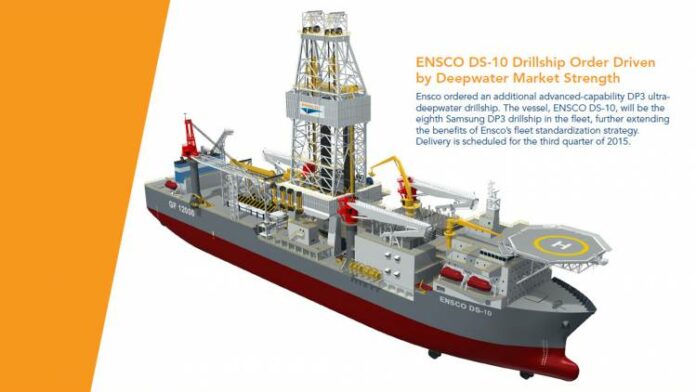
Offshore Nigeria, Shell has awarded a one-year contract extension to the high-spec ultra-deepwater drillship ENSCO DS-10.

In the Mediterranean Sea, Mellitah has extended the contract for the semisubmersible ENSCO 5004 by two wells. The estimated duration is six months.

In the North Sea, Premier has awarded the harsh-environment jackup ENSCO 123 two contracts. The first is a two-well contract that is expected to begin in July 2019. The second is a four-well contract that is expected to start in June 2020. Ensco said that it has the right to provide any ENSCO 120 Series rig to fulfill the second contract.

The ENSCO 123 is under construction in Singapore.

In the UK North Sea, Premier awarded the jackup ENSCO 100 a one-well contract that is expected to start in March 2020.

Offshore Saudi Arabia, Saudi Aramco has awarded the jackup ENSCO 76 a four-year contract extension to December 2022.

In addition, the jackup ENSCO 108 began a three-year contract with Saudi Aramco in November 2018.

Offshore Indonesia, Pertamina has awarded the jackup ENSCO 67 a 500-day extension to May 2020.

In the US Gulf of Mexico, Renaissance has awarded the jackup ENSCO 102 a one-well contract that is expected to begin in April 2019.

Offshore French Guiana, the drillship ENSCO DS-9 began a one-well contract for Total last month.

Source:offshore-mag

Aibel receives Sverdrup Phase 2 bridge option

0

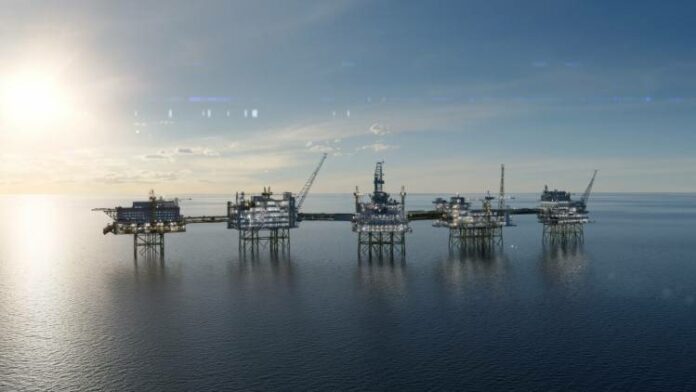
Equinor has awarded Aibel the engineering, procurement, and construction contract for the final bridge on the Johan Sverdrup field in the Norwegian North Sea.

The contract was included as an option in Aibel’s initial contract for the Johan Sverdrup Phase 2 (P2) topsides awarded by Equinor in April 2018 and has an estimated value of NOK200 million ($23 million).

The 100-m (328-ft), 1,350-metric ton bridge (YB005) will connect the P2 process platform with the riser platform.

Project director Stig Jessen said: “The design work in Asker is already well under way while the construction phase in Aibel’s yard in Thailand will start in the middle of 2020. The finished bridge is scheduled for delivery at our Haugesund yard in the end of 2021 together with the 23,000 tons P2 platform deck. The timing of the bridge construction is perfect as it comes on the tail end of the ongoing construction work in Thailand.”

Source:offshore-mag

Atkins designs on St Brieuc jackets

0

Atkins is to design 62 jacket foundations for Ailes Marines' 496MW St Brieuc offshore wind farm off the northern coast of France.

The engineering consultancy, which is part of the SNV-Lavalin Group, will deliver front end engineering design and detailed designs of the jackets.

Atkins director of offshore wind Andy Thompson said: “This adds to our growing portfolio of offshore wind projects that provide clean energy and play a crucial part in Europe’s energy mix."

It is important that as we work with an international supply chain, we advance the deployment of cost effective renewable energy technologies.

Ailes Marines is a consortium of Iberdrola, RES and Caisse des depots.

St Brieuc is scheduled to be operational in 2023 and will feature 8MW Siemens Gamesa turbines.

Source:renews

Daehan Shipbuilding Gets DNV GL Approval for LNG Tanker

0

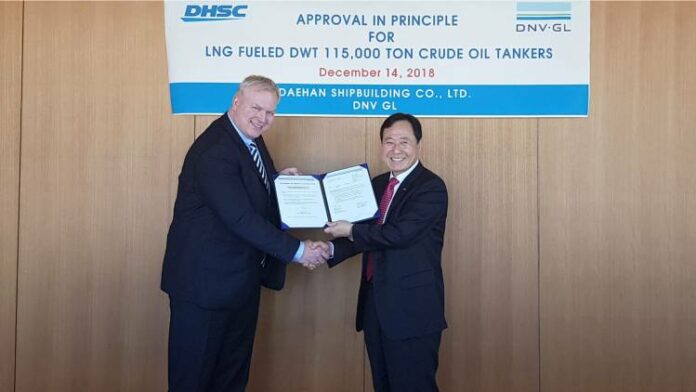
Korean shipbuilder, Daehan Shipbuilding (DHSC), has been given approval in principle (AiP)  from International accredited registrar DNV GL for a new liquefied natural gas(LNG)-fuelled 115,000 dwt Aframax tanker.

As the maritime industry continues to build on its efforts to reduce emissions to air, LNG as a ship fuel is attracting a great deal of attention across many ship sizes and types. The new joint development project (JDP) undertaken by DHSC and DNV GL focussed on producing a design that is tailored to these emerging regulatory and market trends.

We believe the completion of this joint development project will allow us to take a competitive position in a challenging market. Eco-friendly designs enabled DHCS to win newbuilding orders. The result of the JDP will be another enabler for us to strengthen our marketing strategy,” said Yong-Duk Park.

As a market leader in the global Aframax sector, Daehan now has an approved design and source technology that can satisfy the sulphur cap regulations which will take effect on 1 January 2020.

We appreciate DNV GL’s efforts to ensure a successful JDP. Widening and deepening the technical expertise is essential to achieve DHSC’s vision to be the best medium-sized shipyard in Korea. DNV GL is the right partner to accomplish this,” said Mr Park.

DNV GL reviewed and verified drawing packages related to gas-fuelled systems submitted by DHSC. “We are pleased to deliver this AiP to DHSC after an intensive six-month project and successful completion,” said Vidar Dolonen during the AiP presentation ceremony. “We appreciate that DHSC has chosen us as a partner in the project, trusting our expertise in gas-fuelled ships. This AiP is another concrete indication that the shipping industry is progressing in reducing its environmental impact.”

Source:marinelink

Carnival Corp to launch four new cruise ships

0

Carnival Corp will launch four cruise ships in 2019 across three of its brands – Carnival Cruise Line, Costa Cruises and Princess Cruises.  

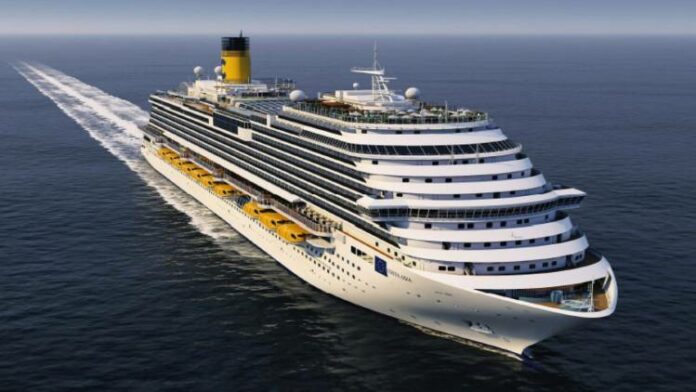
The new vessels include Carnival Cruise Line’s Carnival Panorama; Sky Princess, Princess Cruises’ fourth Royal-class ship; and Costa Smeralda, the second of Carnival Corporation’s 11 new ships joining the fleet between 2018 and 2025 that can be powered by LNG both in port and at sea; as well as Costa Venezia, Costa Cruises’ first ship designed and built specifically for the China market.

The four ships are part of Carnival Corporation's ongoing fleet enhancement strategy with 20 new ships scheduled for delivery between 2019 and 2025.

These new ships build on the success of Carnival Corporation’s four ships launched in 2018, Carnival Horizonfrom Carnival Cruise Line, Seabourn Ovation from Seabourn, Nieuw Statendam from Holland America Line and most recently, AIDAnova – the world’s first cruise ship that can be powered by LNG both in port and at sea – from AIDA Cruises.

“Each launch of a new ship generates lots of interest and excitement among consumers, whether they are among our many loyal guests or are new to cruising,” said Carnival Corp chief communications officer Roger Frizzell. “Our four new ships in 2019 will be no exception as our brands will introduce spectacular new vessels that have been designed with one purpose in mind: to dazzle our guests as they enjoy an extraordinary vacation experience.”

Carnival Panorama from Carnival Cruise Line is expected to launch in December 2019 and will become the brand’s first new ship to homeport in California in 20 years. It is third in the line’s highly successful Vista-class series, the largest ever constructed for Carnival Cruise Line, which includes Carnival Vista and Carnival Horizon.

Sky Princess from Princess Cruises is expected to launch in October 2019. New to Sky Princess are sky suites, centrally located on the top deck. Measuring 65 m2 and with a 270° panorama, the suites feature the largest private balconies at sea.

Costa Venezia from Costa Cruises – expected to launch March 2019 – is designed with Chinese consumers’ preference in mind. It is the brand’s first ship built specifically for the China market.

Costa Smeralda from Costa Cruises is expected to launch in October 2019 and will be Costa Cruises’ first vessel able to be powered in port and at sea by LNG.

Source:passengership

First power produced by Danish offshore windfarm

0

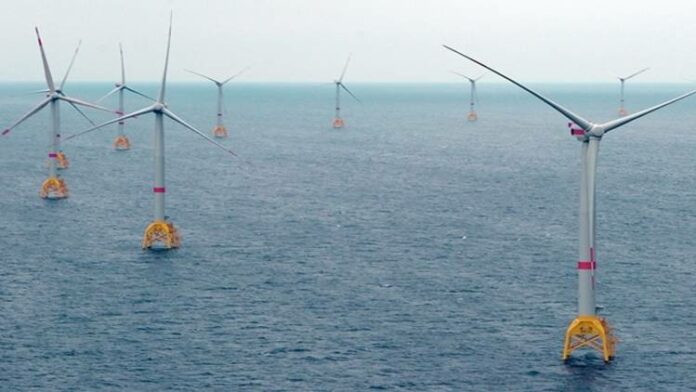
First power was produced by what will be Denmark’s largest offshore windfarm, Horns Rev 3 in late December.

When Horns Rev 3 is in full operation later in first half of 2019, its 49 turbines will increase annual Danish electricity generation from wind energy by about 12%. The 8.3-MW turbines are being supplied by MHI Vestas and shipped from Esbjerg.

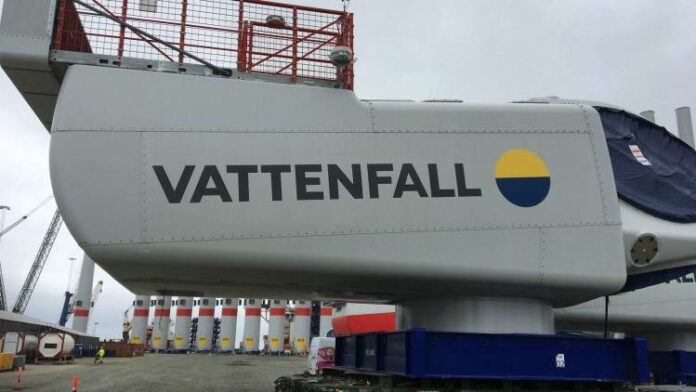
In addition to Horns Rev 3, developer Vattenfall is also constructing the Vesterhav Syd and Nord offshore windfarms in the North Sea and Kriegers Flak in the Baltic.

With a capacity of 406 MW and an expected annual output of 1,700 GWh, Horns Rev 3 is 25-40 km off the west coast of the country. With an area of 88 km2, it is being built west of Houstrup Strand on the west coast of Jutland.

The company placed an order for the turbines f or the offshore windfarm in 2016. The contract includes a five-year service contract to optimise power production. The V164-8.0 MW turbines are optimised for the Horns Rev 3 project, utilising a power mode to enable them to deliver a maximum output of 8.3 MW.

Source:owjonline

Crowley takes delivery of second LNG-powered conro ship

0

Crowley Maritime Corp has completed its US$550M investment in environmentally sustainable shipping and associated port upgrades by taking delivery in late 2018 of Taíno, the second of the world’s first two LNG-powered combination container/roro ships, from shipbuilder VT Halter Marine.

The Commitment-class vessel will make its maiden voyage on 8 January, joining sister ship El Coquí, delivered in July, in plying the trade between Jacksonville, Florida and San Juan, Puerto Rico. Crowley has served this route since 1954, longer than any other American shipping company. Like El CoquíTaino will be operated by Crowley’s global ship management group. Construction was managed in the shipyard by Crowley Solutions, including naval architects and engineers from company subsidiary Jensen Maritime.

The new Crowley ships, built specifically for the Puerto Rico trade, are 219.5 m long and 26,500 dwt. The LNG-powered engines can transport up to 2,400 TEU at a cruising speed of 22 knots. The vessels are built to accommodate a wide range of container sizes and types, including 53 foot by 102 inch wide, high-capacity containers, up to 300 refrigerated containers, and a mix of about 400 cars and larger vehicles in the enclosed and ventilated roro decks.

“From a business standpoint, Taíno and El Coquí are key components of our integrated logistics offerings that are bringing speed to market and creating a competitive advantage for our customers in Puerto Rico and the Caribbean,” said chairman and chief executive Tom Crowley. “With our own vessels and proprietary transportation and distribution network, we’re reducing friction and complexity while increasing the velocity of customers’ goods moving to market and reducing their landed costs.”

According to Crowley Maritime, LNG-fuelled propulsion cuts emissions significantly, including reducing CO2 by more than 35% per container compared with current fossil fuels. Working with Eagle LNG Partners, the ships are bunkered from a shoreside fuel depot at Jacksonville. The upgrades at the company’s Isla Grande terminal include a new 274 m long, 35 m wide concrete pier and associated dredging needed to accommodate the two new ships.

Source:containerst