1.8 C
New York
Home Blog Page 1183

US government shutdown hits Vineyard Wind

0

The Bureau of Ocean Energy Management is postponing two public meetings set for this week concerning the 800MW Vineyard Wind offshore project off the coast of Massachusetts because of the ongoing government shutdown in the US.

Meetings were scheduled for the 8 and 9 January to discuss the project's draft environmental impact statement, but will now be rescheduled on dates yet to be decided.

Further meetings regarding the wind farm set for 15-17 January could also be postponed if the shutdown still continues on 14 January, BOEM said.

BOEM said that during the shutdown the public can continue to comment online for the draft EIS and the Final Environmental Impact Report that has been submitted to the Massachusetts Environmental Policy Act Office.

Vineyard Wind is a 50:50 venture between Copenhagen Infrastructure Partners and Avangrid Renewables.

Source:renews

Esvagt hands out davit contracts

0

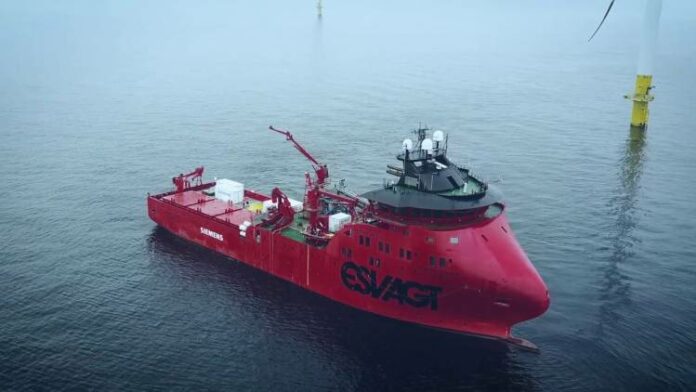
Denmark's Esvagt will install davits from Vestdavit on three service operations vessels (SOVs) for deployment at offshore wind farms in the North Sea.

Each of the SOVs will be equipped with one PAP-16000 Workboat davit with emergency launch capabilities, one PLRH-5000 International Convention for the Safety of Life at Sea davit, two L-3500 Life raft davits and one telescopic painter boom.

The equipment for the SOVs, which will be used to support maintenance activities, will be delivered by 2020.

Both the PAP-16000 and PLRH-5000 davits will be able to perform in sea states up to six.

Developed by Havyard Design & Solution and built by Havyard Ship Technology, the Esvagt trio will be delivered in 2020-2021.

Vestadavit managing director Rolf Andreas Wigand said: “These are repeat orders, demonstrating that Esvagt has been very happy with the quality and competitiveness of vessels delivered from the Leirvik yard.”

“We are therefore especially delighted that Hayvard has switched its boat launching and recovery system preference for these latest high performance SOVs.

The deal will also bring the number of Esvagt vessels equipped with davits from Vestdavit over a three-year period to six, according to Wigand.

Wigand said: “More and more, windfarm development is taking place further from shore, increasing the need for specialised vessels to transport personnel to the turbine in demanding conditions."

Boat launch and recovery requires special attention to match expectations for the SOV and ensure that crews are comfortable and safe when sea states are high.

The PAP-16000 is Vestdavit’s largest single point davit and uses a docking head to fix the boat into position during the lifting and lowering process.

The small crane is designed to handle Esvagt`s large STB12 workboat fully equipped.

To do this in challenging seas the davit will offer lifting speeds of 45 metres a minute and is equipped with shock absorbers and a constant tension system.

The system will also be supported by a long-outreach telescopic painter boom with winch to provide adjustable tension on the painter line.

The PLRH-5000 davit achieves lifting speeds as high as 60 metres a minute and is equipped with shock absorbers, a constant tension system and hydraulic guiding arms.

Source:renews

IMO: Which amendments entered into force from 1st January 2019

0

As of 1st January 2019, amendments to the bunker delivery note have entered into force, relating to the supply of marine fuel oil to ships, which have fitted alternative mechanisms to comply with the IMO's 2020 sulphur cap. Other amendments that entered into force this year include the IMSBC Code 2017 amendment and the amendments to designate North Sea and Baltic Sea as ECAs, while the data collection on fuel oil consumption also begins.

Bunker delivery note

Bunker delivery note amendments enter into force only a year before the limit for sulphur in fuel oil will be reduced to 0.50% m/m outside emission control areas (ECAs), from 3.5% currently. In ECAs, the limit will remain at 0.10% m/m.

The amendments to Appendix V of MARPOL Annex VI are intended to address situations where the fuel oil supplied does not meet low sulphur requirements, but has been supplied to a ship which is using an alternative compliance method permitted under regulation 4 of MARPOL Annex VI (“Equivalents”) to reduce the sulphur oxide emissions of the ship in order to comply with MARPOL requirements.

An equivalent means may be abatement technology such as a scrubber, if accepted by the flag State of a ship as an alternative means to meet the sulphur limit requirement.

The bunker delivery note shall include a declaration signed and certified by the fuel oil supplier's representative that the fuel oil supplied is in conformity with regulation 18.3 of MARPOL Annex VI and that the sulphur content of the fuel oil supplied does not exceed:

  • the limit outside ECAS (currently 3.50%, falling to 0.50% from 1 January 2020) under regulation 14.1;
  • the limit in emission control areas (0.10% m/m) under regulation 14.4;  or
  • the purchaser's specified limit value, on the basis of the purchaser's notification that the fuel oil is intended to be used:-in combination with an equivalent means of compliance; or
    -is subject to a relevant exemption for a ship to conduct trials for sulphur oxides emission reduction and control technology research.

The 0.10% m/m limit applies in the four established ECAS:

  • the Baltic Sea area;
  • the North Sea area;
  • the North American area (covering designated coastal areas off the United States and Canada); and
  • the US Caribbean Sea area (around Puerto Rico and the United States Virgin Islands).

Additionally, in October 2018, IMO’s MEPC adopted a further amendment to MARPOL Annex VI, which will prohibit the carriage of non-compliant fuel oil for combustion purposes for propulsion or operation onboard a ship – unless the ship has an equivalent compliance method. This amendment is expected to enter into force on 1 March 2020, and will (among other things) amend the form of the International Air Pollution Prevention Certificate (IAPP Certificate), so that it specifies that, for a ship without an approved equivalent arrangement, the sulphur content of fuel oil carried for use onboard the ship shall not exceed 0.50% m/m as documented by bunker delivery note.

North Sea and the Baltic Sea nitrogen oxides (NOx) ECAs

Also on 1 January 2019, amendments to MARPOL Annex VI to designate the North Sea and the Baltic Sea as emission control areas (ECAs) for nitrogen oxides (NOX) entered into force.

Both ECAs will take effect on 1 January 2021, and will result in considerably lower emissions of NOx from international shipping in those sea areas.

In NOx emission control areas, ships are subject to so-called “Tier III” controls to limit NOx emissions.

Solid bulk cargoes (IMSBC) code 2017 amendment

The 2017 set of amendments (04-17) to the International Maritime Solid Bulk Cargoes Code (IMSBC Code) cargoes entered into force on 1 January 2019. The amendments include requirements for the shipper to declare whether or not a solid bulk cargo, other than grain, is harmful to the marine environment.

Other amendments include updated carriage requirements for a number of specific cargoes and amendments to highlighting the responsibility of the shipper for ensuring that a test to determine the transportable moisture limit (TML) of a solid bulk cargo is conducted.

Data collection on fuel oil consumption begins 

From 1 January 2019, ships of 5,000 gross tonnage and above need to start collecting data on their fuel-oil consumption, under the mandatory data collection reporting requirements which entered into force in March 2018.

The MARPOL Annex VI regulation on Collection and reporting of ship fuel oil consumption data requires ships of 5,000 gross tonnage and above to collect consumption data for each type of fuel oil they use, as well as other, additional, specified data including proxies for transport work.

The aggregated data is reported to the flag State for each calendar year and the flag State, having determined that the data has been reported in accordance with the requirements, issues a Statement of Compliance to the ship. Flag States are required to subsequently transfer this data to an IMO Ship Fuel Oil Consumption Database. IMO is required to produce an annual report to the MEPC, summarizing the data collected.

The data collection system is one of the measures taken which will support the implementation of IMO’s Initial IMO Strategy on Reduction of GHG Emissions from Ships, adopted in 2018.

 

Oil tanker on fire in Hong Kong results to one dead, rescue continues

0

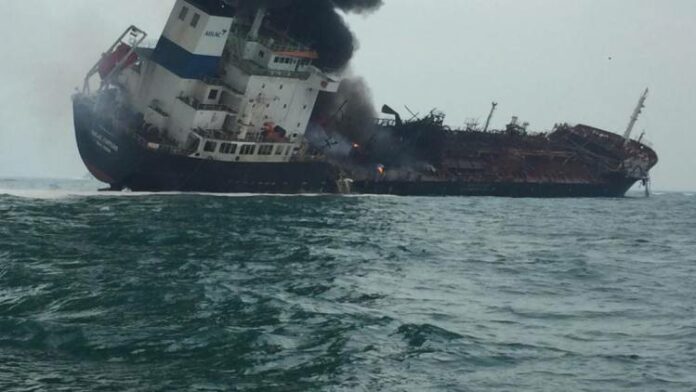
'Aulac Fortune', an oil tanker in Hong Kong’s southern waters caught fire on January 8, resulting to the killing of one crew member, whereas at least 21 people were rescued, according to Reuters' reporting.

Specifically, as stated by the Hong Kong Police Department, the vessel was found on fire outside Lamma Island. Police and Fire Services Department are conducting rescue operation.

Also, the blast was allegedly so loud that shook windows several kilometres away.

A police spokeswoman as quoted by Reuters addressed that there are still some crew members that haven't been saved.

Moreover, as stated by Reuters, the Aulac Fortune vessel is a small, Vietnamese-flagged,  17.500 deadweight tonne oil product tanker built in 2010. Last, it loaded 6.000 tonnes of gasoline, the majority of which was transferred to Guangzhou between Jan. 6 and 7.

According to residents of the island Lantau, the blast from the fire was so loud that rattled doors and windows.

Rhea Nee, resident in Lantau island, quoted in Reuters "It felt like when there is a strong typhoon, when the wind shakes your doors violently. It was really strong."

Crew Safely Evacuates Boxship as Cargo Fire Continues

0

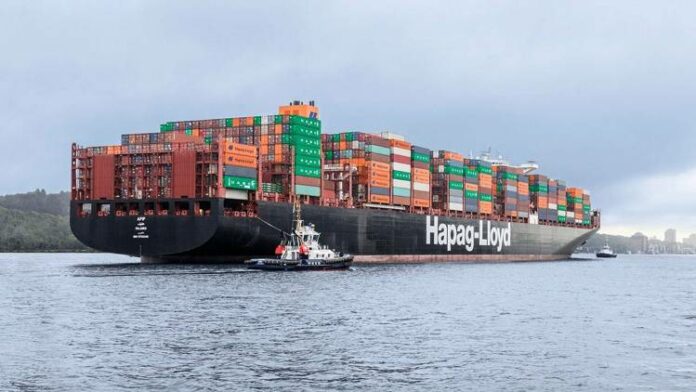
All crewmembers of the Hapag-Lloyd container vessel Yantian Express have abandoned ship safely, and efforts to fight the cargo fire on board continue. 

On Saturday evening, 11 non-essential crewmembers were evacuated from the Yantian Express to the AHTS Smit Nicobar, and on Sunday morning all remaining crewmembers followed suit. The Smit Nicobarremains on scene providing fire fighting assistance, and the good samaritan vessel that arrived to the Yantian's aid first – the Happy Ranger – has resumed her commercial voyage.

Ocean carrier Hapag-Lloyd reported Friday that a cargo fire had broken out on the deck of the Yantian Express as she transited about 650 nm off Canada's eastern seaboard. The blaze began in one container and spread to others, and the full extent of the damage is not yet known. 

Efforts to extinguish the fire in the containers were launched immediately, but these initial operations had to be suspended due to a deterioration of the weather conditions. A Hapag-Lloyd spokesman confirmed Monday that the fire continues to burn. 

The offshore tug Maersk Mobiliser is now en route to the scene. Upon arrival, the tug’s crew plans to take the Yantian Express in tow and bring her to Halifax, Nova Scotia.

Following the initial report of the fire, the U.S. Coast Guard secured the Happy Ranger's assistance using the AMVER system. The agency has also been providing continuing coordination for the response effort in the North Atlantic. “We’ve been monitoring the situation to provide as much assistance as possible and keeping in open communication,” said Chief Petty Officer Ryan Langley, watchstander at the Fifth District command center. 

Source:maritime-executive

Ponant moves forward with LNG cruise ship construction

0

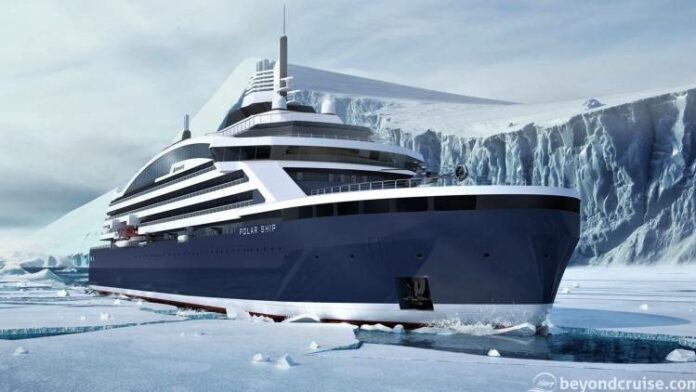
The keel of Ponant’s hybrid electric polar expedition vessel propelled by LNG, Le Commandant Charcot, has been laid at Vard shipyard in Tulcea, Romania.

Ponant ordered Le Commandant Charcot in December 2017, and the ship’s traditional steel cutting ceremony was held in November 2018. The keel laying took place in Tulcea, Romania, on 14 December 2018 at Vard shipyard, a subsidiary of Fincantieri.

“This second key stage in the construction of this exceptional vessel is perfectly on schedule,” Ponant said in a statement.

The launch is scheduled for 2020, with delivery in 2021.

Ponant added “Designed for a new type of cruise ship, the vessel will incorporate all the latest innovations in environmental protection, making Ponant a model of excellence in responsible tourism."

Indeed, Le Commandant Charcot will be the first exploration vessel to surpass the ecological standards set out in international regulations. Designed for intense polar explorations, and with PC2 Polar Class certification, Le Commandant Charcot will be able to reach exceptional destinations such as the geographic North Pole and remote sites of the Antarctic continent including the Ross Sea, Charcot Island and Peter I Island.

GTT is supplying LNG tanks to Ponant’s new vessel. Specially designed for use with LNG as fuel, these tanks will be equipped with GTT's Mark III membrane technology, already widely proven in the field of LNG transportation. The group will construct the tanks, select and co-ordinate its subcontractors, offering a turnkey solution to its partners Vard and Ponant.

The two tanks have a total capacity of 4,500 m3, allowing the ship to complete its entire route using LNG.

Source:lngworldshipping

Solar power on ship able to supply continuous power, report says

0

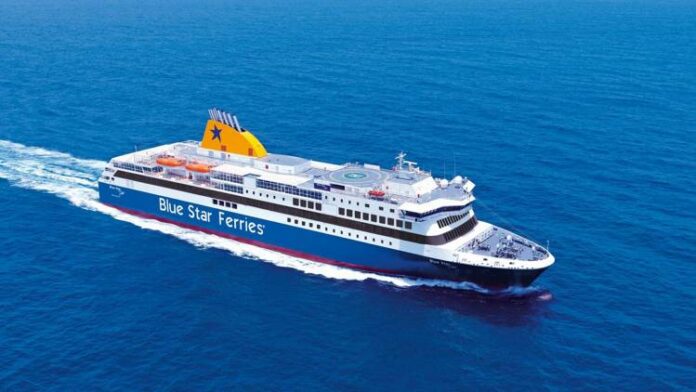
A research paper focused on the analysis of solar power trials on-board the high speed RoRo vessel Blue Star Delos. The paper, published in the Journal of Marine Engineering and Technology, notes that a low-voltage marine solar power system is able to ensure a continuous stable supply of power.

In 2014 the high speed car and passenger ferry, Blue Star Delos became the first ship of this type to be installed with a marine solar power system. This system was installed as a project to evaluate the use of renewable energy on merchant ships.

The photovoltaic power generating system (PV System) on Delos is designated as a marine solar power system. This designation is applied since the system elements were chosen due to their suitability for use on ships. The marine-grade PV panels are designed to withstand exposure to saltwater as is all external wiring. The marine solar power array or PV array consists of 16 thin PV panels (Table 3) made using polycrystalline cells.

The trials on Blue Star Delos demonstrated that under operational conditions at sea, a low-voltage marine solar power system using thin panel PV technology and energy storage can provide a continuous stable supply of power to a DC load.

Moreover, the power output of the system met or surpassed design expectations and the performance of the PV panels were not significantly impacted because of the build-up of dirt and salt. Nevertheless, analysis of data over a longer period needs to be carried out and the possibility to improve the power yield by adjusting system parameters requires investigation.

In addition, the impact of the marine environment on the solar panels and aluminium frames requires further study including determining how frequently the marine solar panel array should be washed and maintained.

Source:safety4sea

BAE Systems agreement to include Queen Elizabeth Class aircraft carriers

0

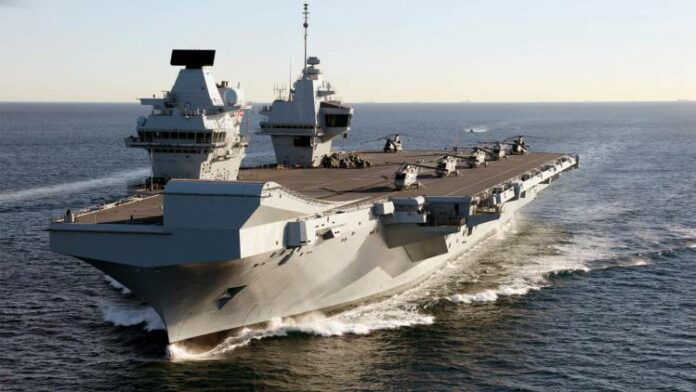
BAE Systems will provide essential mission system support to the UK Royal Navy’s largest ever warships, HMS QUEEN ELIZABETH and HMS PRINCE OF WALES, as part of an updated integration services agreement.

Through an addition to the Naval Combat Systems Integration Support Services (NCSISS) contract, BAE Systems will ensure both aircraft carriers are kept ready for operations by providing world class complex system engineering.

Richard Williams, BAE Systems Naval Ships Combat Systems Director, said: “NCSISS is a real success story for BAE Systems and provides essential support to the UK Royal Navy. Working in collaboration with QinetiQ and DE&S we have ensured the UK’s surface fleet is at peak operational performance and are pleased to extend that support to the nation’s flagship HMS QUEEN ELIZABETH and her sister ship HMS PRINCE OF WALES.”

Jo Osburn, DE&S Head of Maritime Combat Systems, said: “Extending the NCSISS arrangement to include the Queen Elizabeth Class aircraft carriers has provided a facility to test and assure new capabilities ahead of instillation into the platform. BAE Systems’ role in supporting the Combat System Enterprise through NCSISS will enable agile Operational Support to this new Class of Warship for her current equipment as well as de-risking the addition of the new systems and equipments planned in the near to medium term.”

The Queen Elizabeth Class (QEC) mission systems, comprising 62 individual sub-systems, are vital for the delivery of aircraft carrier operations and allow crews to assess and respond to threats, plan joint, air and maritime operations and manage aircraft movements.

Under the new agreement, known as NCSISS phase 2.2, both ships’ mission systems will be supported by engineers based at BAE Systems’ Maritime Integration Support Centre (MISC) in Portsmouth. From this dedicated support facility BAE Systems ensures the systems that enable both HMS QUEEN ELIZABETH and HMS PRINCE OF WALES to effectively carry out their operations fully optimised wherever they are in the world.

The MISC has supported the QEC aircraft carrier programme since 2009 and played a vital role in preparing HMS QUEEN ELIZABETH for her first of class flight trials. Opened in 2004 the MISC replicates key combat system equipment found on Royal Navy warships, providing them with shore integration services and support for their deployments across the globe.

Following a £10 million upgrade programme the MISC will be used to develop new technologies for BAE Systems’ INTeGEN combat system solutions.

As well as supporting in-service platforms NCSISS also includes support for future platforms such as the Type 26 Global Combat Ships being built by BAE Systems in Glasgow. Equipment testing for the first City class Type 26, GLASGOW, began at the MISC in July 2018.

Digital operations support centres help boost production

0

In just a few months the support centres established to help create higher value, improve safety and reduce emissions from Equinor’s installations on the Norwegian continental shelf (NCS) have led to good results from the first onshore-supported fields.

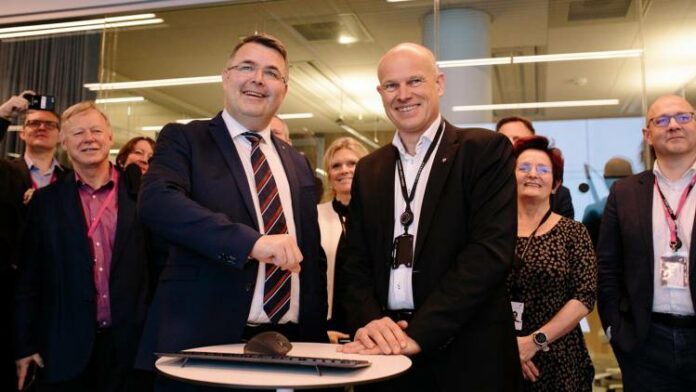
Today, 7 January 2019, two centres will be formally opened at Sandsli in Bergen by the petroleum and energy minister, Kjell-Børge Freiberg.

Equinor has set an ambition of increasing the value creation from NCS fields by more than USD 2 billion from 2020 to 2025 through measures such as onshore operations support (Equinor share before tax).

New this year is that monitoring of the energy consumption to reduce CO2 emissions from NCS operations will be improved by support of the digital centres.

By 2021, all Equinor fields on the NCS will be supported by manned onshore centres in Bergen, Stavanger and Stjørdal.

“So far, we see higher production and earnings from the Grane, Gina Krog and Åsgard fields, which have been supported by the integrated operations support centre (IOC) since September. After that the Aasta Hansteen and Norne fields have also been connected to the centre. This marks that we have just started phasing in our 40 installations to the IOC, revealing a great potential,” says Arne Sigve Nylund, executive vice president for Development and Production Norway.

“The good results are achieved by production optimisation, improved condition monitoring and operations support for safe offshore operation. IOC will also be relevant for our onshore installations and international activities,” says Nylund.

The IOC centre will be central in reducing CO2 emissions from the NCS. Equinor has implemented more than 300 energy efficiency measures on NCS installations from 2008 and up to the present, reducing annual CO2 emissions by almost 1.6 million tonnes so far. The company aims to reduce CO2 emissions by 3.2 million tonnes per year by 2030. Further energy efficiency measures and new energy solutions will help reach this goal.

“We have set ambitious goals for changing and transforming the NCS to maintain high value creation and low emissions for the next decades. We have improved our operating efficiency, increased production, reduced our CO2 emissions and developed a highly profitable project portfolio. Digitalisation, innovation and use of new technology will allow us to recover resources that are not profitable now,” says Nylund.

The IOC will also improve our collaboration with suppliers and partners and increase the transfer of knowledge across the organisation.

“The IOC gives us new digital tools ensuring faster and better decisions through close interaction between offshore operations and onshore support centre. Our main goal is to operate our installations safely and optimally every single day while identifying challenges and preventing shut-downs before they occur,” says Kjetil Hove, head of operations technology on the NCS.

The other centre to be formally opened today, the Geo Operations Centre (GOC), will ensure more efficient and better geoscience control of drilling operations as well as higher cost saving and personnel safety. Monitoring and control of offshore well path drilling will be moved from offshore installations and the various onshore units to a joint geoscience operations centre. The GOC is expected to save NOK 270 million per year.

“This is a completely new way of working and represents one of the biggest changes we have made in petroleum technology and geology during the last 20 years. The GOC will utilise new technology and help form a digital future, where tasks are carried out and experience gained and shared in smart ways,” says Hove.


Norwegian Maritime Authority Pushes for Stricter Environmental Regulations in Fjords

0

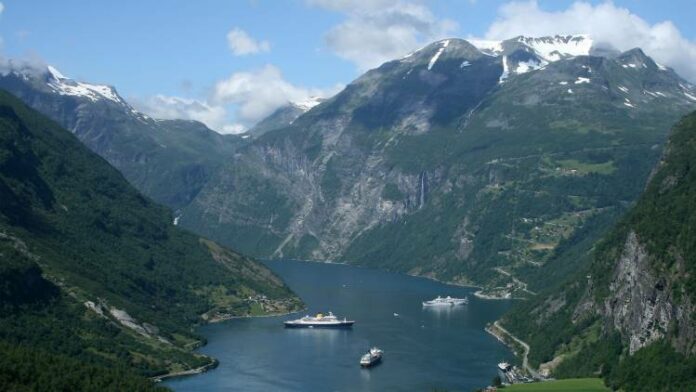
The Norwegian Maritime Authority (NMA) has proposed even stricter regulations to reduce the environmental strain in the world heritage fjords. 

As informed, the proposed amendments were circulated for review on October 31, with six-week deadline for comments.

In June this year, the NMA circulated for review new legislation for reduced emissions and discharges and a cleaner environment in the Nærøyfjord, Aurlandsfjord, Geirangerfjord, Sunnylvsfjord and Tafjord.

The proposal included, among other things, stricter sulphur requirements for the entire area, stricter requirements for NOx emissions, a prohibition against the discharge of sewage, regulations on the use of exhaust gas cleaning systems and a requirement for an environmental instruction.

Based on the comments received, the NMA is now proposing even stricter requirements in the new legislation.

“The Government wishes to reduce the emissions and discharges from cruise ships. Stricter requirements for ships in the world heritage fjords would be a step in the right direction,” Ola Elvestuen, Minister of Climate and Environment, commented.

Now, the NMA is proposing that fuel being used on ships in the world heritage fjords must have a sulphur content of maximum 0.1% by weight. Additionally, a prohibition against the use of exhaust gas cleaning systems in these areas is being proposed, including both open, closed and hybrid systems.

In practice, this means that the use of heavy fuel oil in the world heritage fjords will be banned, and that ships that currently use heavy fuel oil combined with an exhaust gas cleaning system will have to use marine diesel instead when sailing in the world heritage fjords, according to the maritime authority.

“Experience shows that today’s cleaning systems emit visible smoke emissions, and some systems also generate discharges to sea. Even if the visible smoke is partly water vapour, it has a negative impact on people’s experiences of our world heritage fjords,” Bjørn Pedersen, Head of Department of Legislation and International Relations in the NMA, explained.

The NMA is also proposing a prohibition against incineration of waste on board ships in the world heritage fjords, which will contribute to reducing the visible smoke emissions.

“We have a particular responsibility for taking care of the fjords inscribed on UNESCO’s World Heritage List,” says Pedersen.

The new proposal also lays down the possibility of exemption from the Tier I NOx requirements to be met by 2020 for ships that can document that they will satisfy the strictest NOx requirements (Tier III) by 2022, i.e. three years before the deadline.