1.8 C
New York
Home Blog Page 1182

Video: SpaceX Develops “Catcher” Boat for Rocket Fairings

0

Commercial rocket company SpaceX has built its business model around recovering as much of its equipment as possible after each launch. Reused rockets save SpaceX tens of millions of dollars for each flight, relative to single-use operations, and that savings can be passed on to its customers.  

To make recoveries possible, SpaceX has developed several novel methods for retrieving components at sea. It has two autonomous deck 1barges that serve as offshore landing pads for booster rockets, and it has recovered multiple boosters after launch from its Cape Canaveral site. One recent at-sea recovery made history: on December 3, a SpaceX orbital-class booster rocket became the first of its kind to make three full round trips, thanks to a successful deck barge landing.

SpaceX is also developing a specialized workboat to retrieve rocket nose cone fairings – the high tech aerodynamic shells that surround the payload during launch. This unusual boat, dubbed Mr. Stevens, is intended to work like a catcher's mitt. It is a fast crewboat retrofitted with a large net above its back deck, and its role is to maneuver underneath a fairing as it falls towards the sea. (The fairings are equipped with parachutes, slowing their descent.)

So far, the catching tests have not been successful, but the but the boat has still managed to recover the fairings from the water for later reuse. After the Mr. Stevens missed two fairings from a live launch last year, SpaceX CEO Elon Musk said that the "plan is to dry them out and launch again. Nothing wrong with a little swim."

In another recent test, a helicopter dropped a fairing from altitude so that the Mr. Stevens could make an attempt at a catch (top). The effort was not successful, but the boat came within feet of landing the fairing. Musk has previously said that each fairing is worth $6 million, raising the prospect of significant savings from recovery and reuse. 

Source:maritime-executive

Salvage Tug to Take Burned Car Carrier in Tow

0

A salvage tug is conducting a search and recovery mission for five missing crewmembers of the ro/ro Sincerity Ace, which caught fire and burned in the North Pacific on New Years' Eve.

Shortly after the fire broke out, 16 crewmembers were rescued from the Ace by good samaritan vessels. Four additional individuals were spotted in the water but were unresponsive and unable to aid in their own rescue. The fifth has not been found, and the U.S. Coast Guard has already called off its participation in the search. 

The tug will conduct its own search for the missing before taking the Sincerity Ace in tow and bringing her to a port of refuge. Merchant vessels transiting the area have been asked to look for bodies in the water. 

A spokesman for operator Shoei Kisen Kaisha told the AP that it is uncertain whether the Ace is still on fire. 

On New Year's Eve, the Ace was under way in the North Pacific, on her way to Hawaii. At 0100 hours, the U.S. Coast Guard JRCC in Honolulu received a notification from Japanese SAR authorities about an incident aboard the Ace. The vessel's master reported a significant vessel fire, ongoing firefighting efforts, and an intent to abandon ship. 

Watchstanders in Honolulu issued a SafetyNet broadcast requesting the assistance of vessels in the area, and they directed the launch of a Hercules aircraft from Coast Guard Air Station Barbers Point. The Green Lake, a 650-foot U.S.-flagged car carrier traveling from Japan to the U.S. mainland, was the first on scene to assist the Sincerity Ace. Three additional merchant vessels diverted to respond to the casualty. 

The cause of the fire remains under investigation. 

Challenging rescue operation

The American-crewed Green Lake rescued seven crewmembers from the Ace in a challenging 18-hour operation, which her master described in detail for the Masters, Mates & Pilots' weekly news outlet.

“The entire crew did a truly incredible job under extreme conditions,” said Green Lake's master, Captain William Boyce. “Winds were blowing a steady 25 knots, gusting to 30 knots, with a heavy 20-25 ft northwesterly swell. Due to the sea state and our high freeboard, it was very difficult to maneuver, bring the ship alongside each survivor, and get them on board with limited retrieval resources.”

The Green Lake's all-union crew – MM&P deck officers, MEBA engineers, SIU deck crew and two cadets – worked from 0200 hours to 2000 hours to bring seven survivors on board. In addition, the other merchant vessels on scene rescued another nine survivors. 

“The crew showed incredible perseverance, teamwork and determination, constantly improvising with each survivor’s recovery in very difficult and dangerous conditions," said Capt. Boyce. “I am proud of each and every one of this crew for saving seven souls that had experienced horrific conditions and were exhausted.”

Source:maritime-executive

Seismic Analysis Boosts BP’s Gulf of Mexico Confidence

0

BP has approved a major expansion at the Atlantis field in the U.S. Gulf of Mexico and has also identified significant additional oil resources that could create further development opportunities around the production hubs it operates in the region.

The $1.3 billion Atlantis Phase 3 development is the latest example of BP’s strategy of growing advantaged oil production through its existing production facilities in the Gulf. The approval for this latest development comes after recent BP breakthroughs in advanced seismic imaging and reservoir characterization revealed an additional 400 million barrels of oil in place at the Atlantis field. The proprietary algorithms developed by BP enhance a seismic imaging technique known as Full Waveform Inversion (FWI), allowing seismic data that would have previously taken a year to analyze to be processed in only a few weeks. 

Application of the technology has now identified an additional one billion barrels of oil in place at the Thunder Horse field. Elsewhere, two new discoveries near the Na Kika production facility could provide further tie-back development opportunities.

“BP’s Gulf of Mexico business is key to our strategy of growing production of advantaged high-margin oil,” said Bernard Looney, BP’s Upstream chief executive. “And these fields are still young – only 12 percent of the hydrocarbons in place across our Gulf portfolio have been produced so far. We can see many opportunities for further development, offering the potential to continue to create significant value through the middle of the next decade and beyond."

Atlantis Phase 3 will include the construction of a new subsea production system from eight new wells that will be tied into the current platform, 150 miles south of New Orleans. Scheduled to come onstream in 2020, the project is expected to boost production at the platform by an estimated 38,000 barrels of oil equivalent a day (boe/d) gross at its peak. It will also access the eastern area of the field where the advanced imaging and reservoir characterization identified additional oil in place.

Following a successful field trial at the Mad Dog field, further advanced seismic imaging with ocean bottom nodes and BP’s proprietary Wolfspar seismic acquisition source is being planned for Thunder Horse and Atlantis to better understand the reservoirs. Wolfspar uses ultra-low frequencies during seismic surveys, allowing geophysicists to see deeper below salt layers and enabling better planning of where to drill wells.

New Discoveries

BP has also announced two oil discoveries in the Gulf of Mexico, at the Manuel and Nearly Headless Nick prospects. The Manuel discovery is located on Mississippi Canyon block 520, east of the BP-operated Na Kika platform. The well encountered oil pay in high-quality Miocene sandstone reservoirs. BP is expecting to develop these reservoirs via subsea tieback to the Na Kika platform. BP’s partner in the Manuel discovery is Shell, which holds a 50 percent working interest.

BP also has a stake in the Nearly Headless Nick discovery located on Mississippi Canyon block 387, operated by LLOG. The well encountered oil pay in high-quality Miocene sandstone reservoirs and is expected to be tied back to the nearby LLOG-operated Delta House facility. BP’s partners in the Nearly Headless Nick discovery include LLOG, Kosmos Energy and Ridgewood Energy. BP holds a 20.25 percent working interest.

Over the last five years, BP’s net production in the Gulf of Mexico has increased by more than 60 percent, rising from less than 200,000 boe/d in 2013 to more than 300,000 boe/d today. BP is currently the top oil producer in the Gulf and anticipates its production growing to around 400,000 boe/d through the middle of the next decade. The growth will be supported by recent project startups, including Thunder Horse Northwest and Thunder Horse South expansions and the Thunder Horse Water Injection project, as well as the addition of a second platform (Argos) at the Mad Dog field scheduled to come online in late 2021.

Future potential developments at BP’s offshore fields in the Gulf include Atlantis Phase 4 and 5, further developments at Thunder Horse, Na Kika subsea tiebacks and Mad Dog field extensions.

Source:maritime-executive

Government Shutdown Hits Licensed Mariners

0

The U.S. Coast Guard's merchant mariner licensing offices are closed due to the ongoing government shutdown, with serious implications for some deck and engineering officers. 

To address the closure, the Coast Guard's National Maritime Center has granted an extension for Merchant Mariner Credentials (national endorsements only) and Medical Certificates expiring in December 2018 and January 2019. Mariners can sail using documents covered by the extension until March 31. 

However, the extension does not apply to STCW endorsements, which are required on STCW-certified ships. The Masters, Mates & Pilots (MMP), which represents a substantial portion of licensed American mariners, is concerned that some of its members may not be able to ship out if their STCW expires during the shutdown.

“The government shutdown, and therefore the closure of the USCG [Regional Exam Centers], is hampering our members’ ability to work,” said MM&P Coast Agent Jeremy Hope, who is based in Oakland. “[This is] another awful byproduct of the government shutdown.”

Coast Guard veterans may not receive retirement checks

Since December 22, hundreds of thousands of federal employees have been furloughed or have been compelled to continue working without pay. 42,000 U.S. Coast Guard servicemembers remain on duty, and thanks to a one-time workaround, they received all pay owed for the second half of December. However, their January 15 paycheck will not be paid unless funds are appropriated by Congress and approved by the president. 

The same is true for Coast Guard veterans, who will not receive their February retirement payment if the government shutdown continues past the end of this month. 

"The stress, worry, and utter nonsense of this shutdown is beginning to affect citizens of this country in many unseen ways," said Coast Guard retiree Anthony Sederstrom, speaking to WBUR. "I am a 26-year veteran of the Coast Guard and although I received my retirement pay on the first of the year, February's pay is in question."

Senator John Thune (R-SD) has introduced a special-purpose funding bill in the Senate, the "Pay Our Coast Guard Act," to provide for the service's salaries and operations until Congress passes a broader appropriations package. The stopgap bill has support from six other senators, three from each party, but it does not yet have a counterpart proposal in the House. 

Coast Guard families apply for charitable aid

In anticipation of work without pay beginning January 15, coastguardsmen and their families are looking for ways to weather the shutdown, taking out loans, seeking donated food and applying for discounts on their utilities. The service's military and civilian payroll is about $150 million every month, according to Coast Guard Mutual Assistance (CGMA), leaving a large gap to make up through charitable aid and lending. 

In an essay published in USNI Proceedings, former Commandant Adm. Thad Allen (USCG, ret'd) sharply criticized the nation's political leadership for failing to pay its servicemembers.

"I never believed it would be necessary to remind the leaders of all branches of government of their constitutional responsibilities," Adm. Allen wrote. "While this political theater ensues, there are junior Coast Guard petty officers, with families, who are already compensated at levels below the national poverty level, who will not be paid during this government shutdown . . . I’m glad my mother and father are not alive to see it."

Source:maritime-executive

Master of MOL Cruise Ship Suspended After Striking Fuel Pier

0

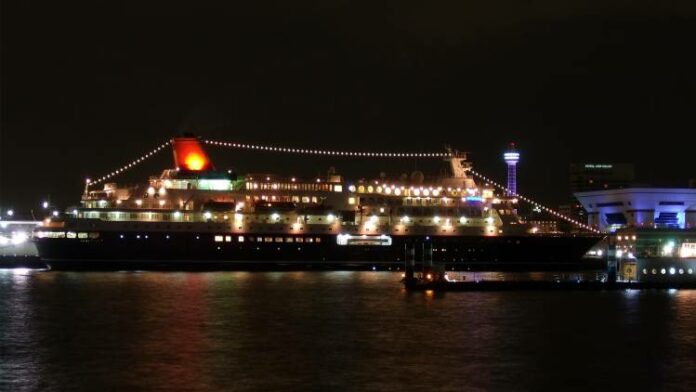
In a statement released Monday evening, Mitsui OSK Lines (MOL) said that the master of the cruise ship Nippon Maru has been suspended after the vessel's allision with a U.S. Navy fuel pier at Apra, Guam. 

As the Nippon Maru departed Apra on December 30, bound for Saipan with 372 passengers and 252 crewmembers, she struck the U.S. Navy's Delta Pier in Apra's harbor. No injuries or pollution were reported, but photos from the scene show that the Nippon Maru sustained a large hole near her stern, above the waterline. Initial reports indicated that the gash measures approximately five feet in height by seven feet long. According to the Navy, an initial assessment of the pier found an estimated $3 million in dock damage.

MOL's passenger division, Mitsui OSK Passenger Line, is looking into the cause of the accident. It has suspended the vessel's master until the inquiry is complete, citing the company drug and alcohol policy. 

"The company is aware of a report of alcohol use on the day of the accident," MOPAS wrote. "MOPAS has a stringent drug, alcohol policy that requires personnel to 'abstain from drinking alcohol four hours before performing scheduled duties on the day' and anyone in violation of the policy is subject to immediate removal. The master in charge of maneuvering has been suspended pending the results of the investigation."

The company says that it is cooperating fully with the U.S. Coast Guard and the U.S. Navy as they carry out full investigations into the accident. MOPAS is also conducting a thorough internal investigation to determine what may have contributed to the incident to ensure similar events do not occur in the future.

Source:maritime-executive

U.S. Funds New Ocean Power Research

0

The U.S. Department of Energy (DOE) has allocated $25 million to research projects for next-generation marine energy devices. 

Funded by DOE’s Office of Energy Efficiency and Renewable Energy Water Power Technologies Office, the 12 projects are expected to help the U.S. develop ocean power as a part of its all-of-the-above energy strategy. 

The projects are:

Early Stage Device Design Research                          

Oscilla Power from Seattle, Washington, will demonstrate the effectiveness its wave energy converter through open-ocean scaled testing in partnership with the University of Maine.

Atargis Energy Corporation from Colorado will advance its wave energy converter through numerical simulations at the model scale, as well as 1:20 scale wave tank tests.

Columbia Power Technologies from Virginia will design and test a prototype low-power wave energy converter that reduces costs and provides a quickly deployable mobile power system for maritime sensors, monitoring, and communications equipment.

Littoral Power Systems of Massachusetts will improve on its turbine design to increase power, reduce costs, and test a fully integrated sub-scale prototype that is ready for pilot site installation.

University of Hawaii will advance its wave energy converter concept and conduct testing in the open ocean. 

North Carolina State University will develop integrated numerical models and open water experimental prototypes for an energy-harvesting ocean kite system.

Texas A&M University will develop and test a scaled prototype of its surface-riding wave energy converter which will be ready for open-sea testing at the end of the project.

Florida Atlantic University will develop and prototype a low-flow marine current turbine to provide partial power to recharge battery banks onboard an unmanned mobile at-sea recharge station for aerial drones and potentially other unmanned marine vehicles.

Controls and Power Take Off Design Integration and Testing

Portland State University will demonstrate a newly-invented adjustable magnetic spring that allows for greater power adjustability and controllability.

CalWave Power Technologies from California will improve on its sub-scale prototype by integrating a new control architecture to improve costs and efficiency.

AWS Ocean Energy from Delaware will optimize a prototype hydraulic/electrical system and demonstrate performance in a laboratory environment.

Dissemination of Environmental Data 

Kearns and West from California will develop a marine and hydrokinetic energy environmental permitting toolkit that includes a spatial, regulatory, and document database of information. The project will address the complexities of permitting processes through a consolidation and dissemination of relevant and actionable information needed for efficient permitting.

Source:maritime-executive

Video: Product Tanker Explodes off Hong Kong

0

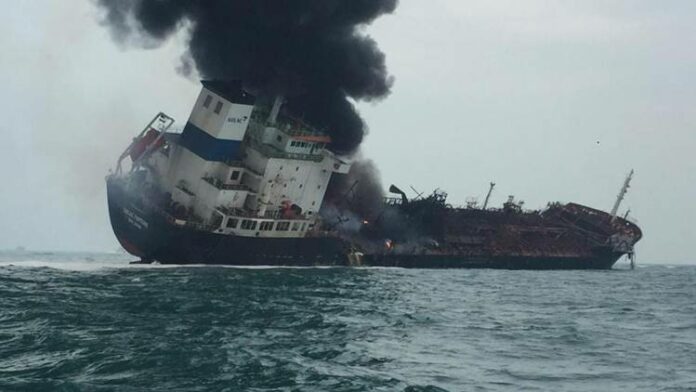
The Vietnamese product tanker Aulac Fortune exploded and caught fire off Lamma Island, Hong Kong on Tuesday morning, killing at least one crewmember and injuring four.

The Aulac Fortune arrived Tuesday morning in Hong Kong for a bunkering stop after delivering a cargo of gasoline in Dongguan. The explosion occurred at 1130 hours at a position about one nm to the south of Lemma Island, an outlying residential district of the city. Multiple cargo tanks were affected, including serious damage to a tank just forward of the house. Residents reported that the blast was forceful enough to rattle windows on several nearby islands. 

The crew abandoned ship into the water, and Hong Kong first responders rescued 23 survivors, including four injured crewmembers who have been hospitalized. One crewmember has been confirmed dead, and an additional two remain missing. Three fireboats, one dive boat, one helicopter, a police response vessel, 14 ambulances and about 140 fire and rescue personnel were involved in the casualty response. 

The Aulac Fortune took on a 30 degree list after the blast, but she is not believed to be in danger of capsizing. Salvors plan to tow her to another location for an assessment and repairs. However, Hong Kong authorities say that she will have to cool for several days before operations on deck can begin. 

“We will meet the Marine Department to discuss how to stabilize the vessel and allow investigators on board to find the cause of the fire,” said Fire Services division commander Yiu Men-yeung, speaking to SCMP. 

Source:maritime-executive


Six Killed as Cargo Ship Sinks Off Turkey’s Coast

0

A cargo ship sank in rough waters off Turkey's Black Sea coast on Monday, killing six crew members including its captain, officials and media reports said.

Seven other crew members were rescued  by Turkish Coast Guard teams after a Panama-flagged vessel sank in the Black Sea off Turkey's northern Samsun province.

According to a statement released by the Interior Ministry, coastguard teams were dispatched off 77 miles Samsun after receiving a distress call from the Volgo Balt 214.

Thirteen crew members, including eleven Ukrainians, two Azerbaijan nationals were on board the Volgo Balt 214 vessel, according to reports.

Ukraine's Ambassador to Turkey, Andreii Szbiha, wrote in a Tweet: "weather conditions drowned a commercial ship. Of 13 crew members, 11 were citizens of Ukraine. Appropriate measures were promptly taken by the security guard. Unfortunately, we failed to save 4 of our compatriots".

The vessel, which was carrying coal, was heading to Samsun from the Russian port of Azov, the coast guard said. It was located about 80 nautical miles (92 statute miles) from Samsun when it sent a distress signal at 8:10 a.m. (0510 GMT; 12:10 a.m. EST).

Two boats, three helicopters, and an aircraft were deployed for the search and rescue operation.

Source:marinelink

PGS Updates on Seismic Acquisition Contract in South America

0

Norwegian seismic player Petroleum Geo-Services ASA (PGS) updated on changes of the contract for the 3D survey in South America announced November 14, 2018.

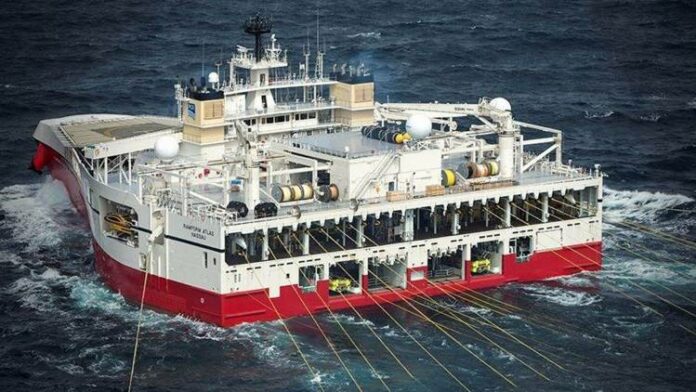
The vessels Ramform Atlas and Ramform Tethys mobilized early December 2018 for this survey.  The contract had an estimated total duration of approximately 13 vessel months and an estimated value in excess of $75 million, the marine geophysical company said.

Due to unresolved issues affecting the survey, both vessels have been on paid standby from December 23, 2018.

The client, ExxonMobil, has notified PGS that the Ramform Atlas is no longer required. PGS will receive payment for mobilization, work performed, standby and demobilization. PGS expects to deploy the vessel on a MultiClient program or contract survey shortly, but will incur idle time relating to steaming and possibly standby before commencing an alternative project.

ExxonMobil plans to deploy the Ramform Tethys to acquire a 4D survey offshore Guyana. The vessel will continue on paid standby until she commences the redefined program. PGS expects the vessel to be operating in the area for at least three months.

Source:marinelink

PSA approves North Sea Eldfisk wells

0

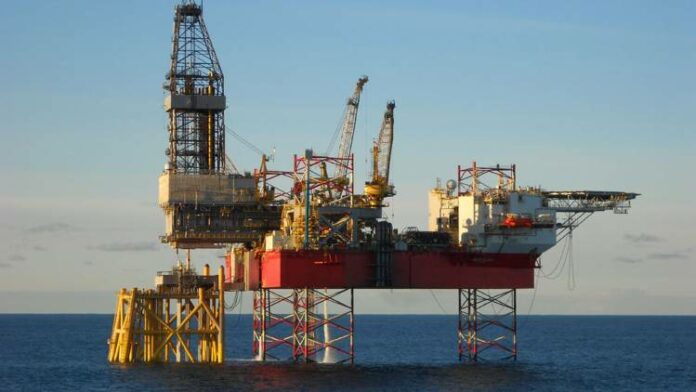
Seadrill’s jackup West Elara will start drilling production and injection wells in the current quarter on the Eldfisk field in the southern Norwegian North Sea.

This follows approval from Norway’s Petroleum Safety Authority (PSA) for ConocoPhillips Skandinavia’s program for the Eldfisk 2/7 S wellhead, production and quarters platform.

Eldfisk, in block 2/7, was discovered in 1970, and following sanction for the plan for development and operation (PDO) in 1975, production began in 1979.

The PDO for Eldfisk II, approved in 2011, included upgrades to existing infrastructure; the new 2/7S facility; and new production wells.

Wellesley Petroleum has the PSA’s permission to drill exploration well 25/1-13 in license 871 in the central Norwegian North Sea, using the semisubmersible Transocean Arctic.

The location is 42 km (26 mi) north of Jotun field complex and 153 km (96 mi) from shore. Water depth at the site is 109 m (357 ft).

Drilling is due to start on Jan. 22 and could last up to 52 days in the event of a discovery.

Source:offshore-mag