1.8 C
New York
Home Blog Page 1181

ABP, Thor Shipping Sign New Port of Hull Contract

0

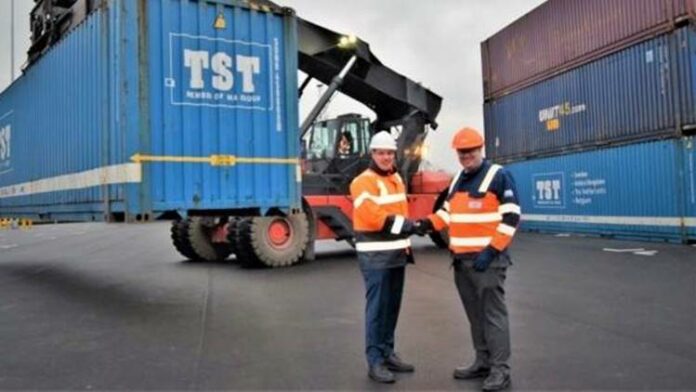
Associated British Ports (ABP) announced a major new agreement which sees Dutch shortsea specialist Thor Shipping & Transport commit 10 years to The Port of Hull.

In addition, ABP has invested GBP6 million into Thor’s 10-acre leased terminal, allowing substantial infrastructure improvement works and an additional 2.5 acres of container storage space. As part of this key investment, in March 2019, a hybrid £3.5 million Liebherr harbour crane will arrive, to bolster eco-friendly operations for many years to come.

Since July 2014 Thor has trebled its tonnage through the two-berth terminal on King George Dock. It has a regular container and breakbulk service from its own short sea operator – Sunline – connecting the UK with the East Coast of Sweden twice a week. It also facilitates vessels three times a week to Zeebrugge and a breakbulk liner service every fortnight from Finland and Iceland.

“The key to realising our potential and helping our valued customers to grow, is ensuring that we continually work closely with them and support their future aspirations,” said Chris Green, ABP Port Manager for Hull and Goole.

“This agreement shows that both ABP and Thor are confident in committing to support the Humber region for a substantial amount of time, so much so, it’s double the length of the previous contract agreed in 2014.”

ABP’s investment in the Port of Hull continues, recently including the installation of LED efficient mast lighting, the implementation of new heavy-duty paving and the demolition of a building to make way for new container storage.

This year Thor hopes to see its strongest performance yet, and expects to handle one million tonnes of cargo. In addition to containers, Thor’s other core business concerns steel and timber, both of which benefit from the rail links directly to the terminal at the port, which boost the efficiency of the operation and reduce carbon footprint.

Thomas Bryan, Thor Shipping and Transport Managing Director, added: “Throughout the years we have gone from strength-to-strength and it’s great to see that ABP recognises this by heavily investing into our terminal."

“Our future is bright and we look forward to continually building upon our international trade and transport links, helping to put the Humber on the map as a key gateway for trade. It will enable us to realise and sustain future growth opportunities.”

Source:marinelink
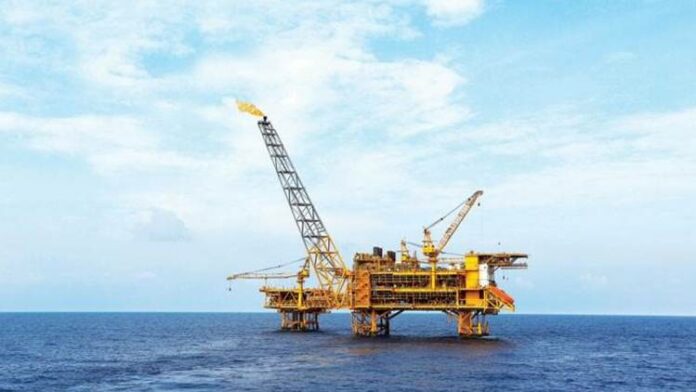
PetroVietnam: Maritime Tensions Weigh on Operations

0

Vietnam's state oil firm PetroVietnam said on Friday that tension in the South China Sea will continue to weigh on its offshore operations this year.

The company, formally known as Vietnam Oil and Gas Group targets to produce 12.37 million metric tonnes of crude oil this year, down 11.45 percent from last year's output, it said in a statement.

Vietnam and China have been embroiled in maritime disputes in parts of the busy waterway, where China claims 90 percent of the potentially energy-rich maritime territory, which Vietnam calls the East Sea.

"The complicated developments in the East Sea have heavily impacted the exploration and development activities of the company," PetroVietnam said.

Reserves at most of the company's operational fields are shrinking quickly, by 15-30 percent a year at many of the fields, the company said, adding that it failed last year to increase its recoverable reserves as targeted.

PetroVietnam said it aims to raise its recoverable reserves by 10-15 million tonnes this year, compared with 12 million tonnes last year.

The ongoing trade war and the strong fluctuations of the global oil prices will also have adverse impacts on its operations this year, the company added.

PetroVietnam said it will seek to invest in overseas oil and gas fields this year, while attracting large global oil companies to invest in its projects.

The company said it aims to start commercial production at two new offshore fields this year, including the Ca Tam field at Block 09-3/12 and the BK-20 field at Block 09-1.

PetroVietnam said in April last year that tensions in the South China Sea would hurt its operations in a rare comment made weeks after sources said it had ordered Spanish energy firm Repsol to suspend a project off Vietnam's southeastern coast following pressure from China.

Source:marinelink

ECSA, WSC support European Maritime Single Window

0

On January 10 the European Parliament Transport Committee will vote on Deirdre Clune’s report on the draft regulation for a European Maritime Single Window Environment. The World Shipping Council (WSC) and the European Community Shipowners Associations (ECSA) strongly supported the Commission proposal and the rapporteur’s recommendations.

The two organizations said that the shipping industry faces different information requirements and 'a costly array of differing local IT systems to connect to.'

These obstacles, which impede the greater use of maritime transport as a sustainable and green transport mode within the EU, would be reduced by the proposed simplifications and efficiencies.

The EU Social Partners have also welcomed the positive impact that limiting this administrative burden will have on the working conditions of ships’ crews.

For this reason, WSC and ECSA called MEPs to support amendments to ensure a fully Harmonised Maritime Single Window data set (EMSWe) and that new national data elements can only be requested if they are truly needed.

Secondly, WSC and ECSA urged MEPs to support maximum harmonisation of the reporting tools, whether the reporting is done through system-to-system connections or by manually submitting the information through a so-called Graphical User Interfaces.

They specifically noted that the best solution for system-to-system reporting would be to establish a voluntary system-to-system ‘Common Access Point Interface Module’ at EU level.

Martin Dorsman, ECSA’s Secretary–General, explained that the new regulations will not replace the national single windows, nor interfere with their decision making or the availability of data for individual ports. What is more, they will not risk the safety of the crew, the vessel and its cargo or the port.

It would simply route data directly from the maritime operator to the relevant national single window via one EU router and then relay back to the shipping company any responses from that national single window.

"For his side, John Butler, CEO and President of WSC, added that another key benefit will derive from a maritime carrier that is active in several Member States only having to establish one IT connection in order to lodge required information."

On the other hand, the ports are against this amendment. They believe that in the case where an additional EU level access point interface was to be introduced for ship reporting, that would result to delays and endangering safety and environmental protection in European seaports, since the already existent availability of reported data would be compromised.

Source:safety4sea


Real Time Ferries project unveiled to boost transport in Baltic

0

A new EU project seeking to improve ferries transport in Baltic Sea was presented in Sweden this week. The project "Real Time Ferries (RTF)", under the EU-funded Interreg Baltic Sea Region Programme 2014-2020, seeks to extend the use of real-time information to optimise intermodal transport chains for goods and people in the Baltic Sea Region.

The Baltic Sea region depends on well-functioning ferry links as significant parts of its international and domestic flows of goods and passengers include ferry trips and involve intermodal transport chains.

RTF sets up a collaborative BSR ferry real time data hub that provides a shares base infrastructure to collect, process and deploy real-time info along intermodal (ports and logistics, public transport, ship navigation) door-to-door transport chains across the region. It is intended to establish 5-10 pilot applications for different situations, such as redirecting goods and passengers in case the trip is cancelled."By the end of the project, it will be easier and cheaper for all relevant transport actors to generate and utilise the solution for optimising intermodal transport chains for both: goods and people, across the entire region."

The Interreg Baltic Sea Region Programme 2014-2020 supports integrated territorial development and cooperation for a more innovative, better accessible and sustainable Baltic Sea region. Partners from countries around the Baltic Sea work together in transnational projects on common key challenges and opportunities.

The Programme is an agreement between EU member states Denmark, Estonia, Finland, Latvia, Lithuania, Poland, Sweden and the northern parts of Germany as well as partner countries Norway, Belarus and the northwest regions of Russia. The Programme is funded by the EU and approved by the European Commission.

Projects have to involve at least three partners from three different countries from the Programme area. Total project budgets typically range between EUR 1.5 and 4.5 million for seven or more partners working together for two to three years.

Priorities

  • Priority 1 – Capacity for Innovation
  • Priority 2 – Management of natural resources
  • Priority 3 – Sustainable transport
  • Priority 4 – EU Strategy support

Source:safety4sea

Upgrading from automated to autonomous shipping

0

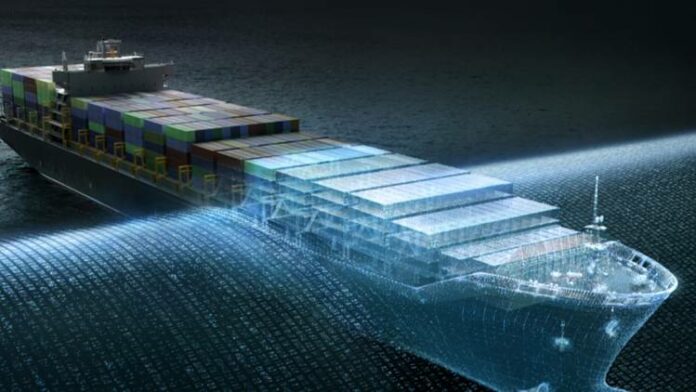
Autonomous ship is a marine vessel with sensors, automated navigation, propulsion and auxiliary systems, with the necessary decision logic to follow mission plans, sense the environment, adjust mission execution according to the environment, and potentially operate without human intervention. The maritime industry benefits by autonomous vessels since the latter includes operational efficiency, human error reduction, emission reduction, increased safety, and operational cost reduction.

The idea on the autonomous ship is accelerating through out the globe, being supported by governments. The alter from automated to autonomous shipping includes vessels that rely on quality,security and integrity of data, overall system cyber security and operational software.

Also, autonomous vessels are unmanned or can be remotely controlled from off-board centres.

In addition, supporting autonomous shipping, ABS is currently collaborating with members, industry and regulators on autonomous vessel design, risk management and implementation.

Furthermore, ABS has joined the Unmanned Cargo Ship Development Alliance aiming to a design that will integrate features of independent decision-making, autonomous navigation, environmental perception and remote control.

Moreover, IMO's Maritime Safety Committee on its 100th session on December 2018, approved the framework for regulatory scoping exercise on autonomous ships. The regulations were focused on the degrees of autonomy in maritime.

Yet, the MSC 100 pushed further regulatory work on shipping safety, with the adoption of amendments to the SPS Code and the STCW Code, as well as the approval of draft amendments and guidelines.

Finally, concerning the autonomous shipping, IMO's Committee also agreed on draft amendments to the 2011 ESP Code forwarded to MSC 101 and their approval.

Source:safety4sea

Watch: Cyber threat among the top risks for 2019

0

Eurasia Group issued its annual forecast of the top political risks that are most likely to arise this year, listing cyber threat at the third place. Cyber threat in business, including shipping, has gained increased attention as an issue in the past year. In the last decade, the report highlights, hackers have grown more sophisticated, societies have become heavily dependent on digital services, and efforts to agree on basic rules of the road for cyber conflict have gone nowhere.

"Cyber deterrence is hard. The source of an attack and lines between state and non-state actors are blurred in cyberspace. That makes it difficult to be sure whom to retaliate against, and attackers know that. Also, there is still a lack of clear red lines in many areas, meaning attackers can often get away with their misdeeds if they avoid clear no-gos (such as critical infrastructure). Finally, cyber weapons become obsolete fast, and access to targets comes and goes. It's tempting to use a capability when you can, making the idea of Cold War-style peaceful stockpiling of weaponry less likely. So, if cyber deterrence has never come close to actually working, what's new?"

According to Eurasia, ten years after the US and Israel destroyed portions of Iran's covert nuclear weapons program using a computer worm known as 'Stuxnet', ushering in the modern era of cyber conflict, the US will now for the first time attempt to establish deterrence 'by projecting its cyber power in much more assertive ways'.

However, the report underlines, this will not only fail to create an effective system of global deterrence, but 'it could backfire'."After taking a cautious approach while former president Barack Obama was in office, the US is now leaning heavily toward greater offensive action in cyberspace, including by freeing the Department of Defense's Cyber Command to unleash preemptive strikes. It's even considering giving private-sector actors leeway to “hack back” when attacked. In an ideal world, this show of teeth would lead foreign actors to keep their arsenals in check and create a new security equilibrium in which perceptions of US cyber dominance would discourage attacks."

However, Eurasia stresses that this is not going to work, for two reasons:

  • First, like traditional deterrence, cyber deterrence works best against states. But many of the world's most destructive cyber actors are non-state actors who have less to lose from taking their chances on offense.  "We're particularly worried that the stolen National Security Agency tools that powered the 2017 NotPetya attacks are being updated for current software systems and have been incorporated into sophisticated cyber operations. Non-state actors' temptation to use them against critical infrastructure or corporate networks before systems are upgraded will increase in 2019."
  • Second, even governments won't back down in reaction to Trump's assertive cyber policy. In the US-Russia rivalry, it's unclear which nation controls escalation dominance—the ability of one side to dominate a conflict as it grows more serious—and whether classic deterrence would work. For weaker states such as Iran or North Korea, there's also an asymmetry of power in the use of cyber weapons that makes them too tempting not to use.

Several of the world's most aggressive cyber powers have little to lose in the event of retaliation, given their low level of connectedness (think North Korea). And for China, the stakes are too high to allow the US sole use of a weapon that works. All of this leads to a scary prospect: The Trump administration thinks it's strengthening deterrence (and therefore peace) by deploying its arsenal, but the odds are greater that this show of force leads nations to “see and raise” the US's bet.

Source:safety4sea

Denmark launches strategy to improve cyber security in shipping

0

As part of Denmark's national strategy to improve cyber and information security, the Ministry of Business and Industry has launched a strategy for the shipping industry. The strategy contains initiatives to strengthen IT security and prevent cyber threats for the sector.

The objective of the strategy is to make sure that safety on board Danish ships and in Danish waters is not at risk as a result of cyber attacks.

The Danish Maritime Authority is responsible for the cyber and information security in the maritime sector, including ship systems and software for the ship's operation. It also includes services such as traffic monitoring, warnings and information for shipping, along with other systems regarding to the ship's safe navigation.

To implement the strategy, the Danish Maritime Authority has established the Maritime Cyber ​​and Information Security Unit. To ensure its proper implementation, the strategy's initiatives are:

  • Establishment of the Maritime Cyber ​​and Information Security Unit;
  • EU and International legislation;
  • Exchange point between maritime sector actors and Cyber ​​Security Center (CFCS);
  • Posting of seafarers at the Center from Cyber ​​Security (CFCS);
  • Increased awareness level through collaboration and knowledge sharing in the maritime sector;
  • Specific objectives and user-friendly recommendations for the maritime sector's players;
  • IT security culture and awareness;
  • Focus on standardized processes about cyber and information security management;
  • Ensure sustained and strong cyber and information security preparedness in the maritime sector;
  • Common emergency and alert plan for handling IT security incidents;
  • Planning and implementing common cyber and information security exercises.

Source:safety4sea

How cyber attacks affect small and medium businesses

0

Ponemon Institute presents the results of the second annual study on the 2017 State of Cybersecurity in Small and MediumSized Businesses sponsored by Keeper Security. The goal of the study is to reveal how smaller companies are addressing the same threats larger companies face. Approximately 600 individuals in companies with a headcount from less than 100 to 1,000 participated in this research.

Generally, cyber attacks, ransomware and disruptive technologies, such as the Internet of Things (IoT), challengethe ability of small businesses to safeguard their information assets. In fact, only 21 % of the companies represented in this study rate their ability to mitigate cyber risks, vulnerabilities and attacks as highly effective.

Ponemon Institute

According to the research, the top trends in the state of cybersecurity in SMBs are:

  1. Cyber attacks affected more SMBs in the past year, an increase from 55 % to 61 % of respondents. This year's research resulted to the fact that cyber attacks are better-targeted and more sophisticated.
  2. The rise of ransomware is affecting SMBs. Specifically, 52 % of respondents say their companies experienced a ransomware attack and 53 % of these respondents say they had more than two ransomware incidents in the past 12 months.
  3. SMBs are having slightly more data breaches involving personal information and the size of data breaches is larger. From the participants, 54% support that the root of the attack were negligent employees.
  4. Internet of Things (IoT), seems to be concerning the 67 % of respondents,  saying that their organizations are very concerned or concerned about the security of IoT devices in the
    workplace.
  5. Exploits and malware have evaded their intrusion detection system, and anti-virus solutions.
  6. Passwords are targeted and 59 % of respondents say they do not have visibility into employees’ password practices such as the use of unique or strong passwords and sharing passwords with others.
  7. Password policies are still not strictly enforced.
  8. Personnel, budget and technologies continue to be insufficient to have a strong security posture.
  9. Cyber attacks are more costly. The average cost due to damage or theft of IT assets and infrastructure increased from $879,582 to $1,027,053.

Moreover the types of cyber attacks, according to the research, are: 

  1. Phishing / social engineering;
  2. Cross-site scripting;
  3. Malicious insider;
  4. Advanced malware / zero day attacks;
  5. SQL injection;
  6. Denial of services;
  7. Compromised / stolen devices;
  8. General malware;
  9. Web-based attack;
  10. Other.

Concluding, the routes of cyber attacks, most commonly, are:

  1. Malicious insider; 
  2. External (hacker) attacks;
  3. Error in system or operating process;
  4. Third party mistakes;
  5. Negligent employee or contractor;
  6. Other.

Source:safety4sea

Ways to achieve personal cybersecurity

0

In its latest issue of Phish and Ships newsletter 2019, Be Cyber Aware at Sea campaign focuses on personal cyber crime and the victims of it. Since cyber attack poses major threats in the maritime industry, if one hasn't followed specific steps to build their cyber security at sea, they might be an easy target.

Mainly, at this point of cyber activity in the maritime industry, a big number has already been hit by cyber crimes. Everyone is a possible target of cyber attacks. Except owning an antivirus program and a host firewall, many are the steps to be taken to prevent any possible attacks.

  • WiFi

When not in need, turning your WiFi off will not only enhance your battery life but it will also prevent potentially dangerous information leaks. For instance, when travelling around with the WiFi turned on but disconnected from a network, it will broadcast a list of access points it has previously been connected to.

In the possibility of an attacker intercepting the broadcast, it will be easy for them to connect to the device, monitor traffic and collect data.

  • Bluetooth

Although Bluetooth attacks are a rare case, they can easily occur. The majority of Bluetooth attacks steal information from the device, such as files or contacts or monitoring your communications through a headset or microphone. Keep Bluetooth off when not used.

  • Cameras

It is easy to get hijacked via a camera. It is commonly used in penetration testings to demonstrate how invasive malware can be when itʼs being controlled by a human attacker. However, managing a camera hijack is kind of cheap and easy.

A quick solution is a small square piece of opaque sticky tape. itʼs also easy to remove if you want to have a video chat and replace when youʼre done.

  • Drive Encryption

Your whole drive should be encrypted and most popular operating systems now provide this feature. In the case where your computer physically fall into the wrong hands, information cannot simply be copied from the hard drive.

  • File Encryption

The files run in a computer could be stored locally on a drive, on a USB key, a mobile device or on a cloud drive. The solution is the same at the Drive Encryption. Meaning that one should better encrypt the files with something strong enough that, if they ever lose the key, the files are gone forever.

  • Email Encryption

Personal email encryption is generally beyond what the average user is willing to do.

Yet, the user benefits from having their email encrypted at rest. Therefore, even if the email server gets attacked, the email is unreadable to the attacker. However, in all cases, all parties should see eye to eye, prior to use encryption.

Source:safety4sea

7 steps to build cybersecurity awareness at sea

0

In the latest issue of its Phish and Ships newsletter, Be Cyber Aware at Sea campaign shares the 7 steps to build cybersecurity awareness at sea. The steps consist of a variety of training tools, continuous training, development through marketing, communication and support, security practises at home, gamifying and success.

Step#1: Use of a mixed bag and training tools and content that consists of a combination of various training techniques to help crew being engaged.

Step#2: Continuous training via the GCHQ and MCSA course in order to provide users to often revisit important cybersecurity topics to support knowledge retention.

Step#3: Culture development through marketing according to which the ones responsible for cyber security will design messaging campaigns aiming to keep the message front-of-mind through out the year.

Step#4: Early communication and support between ship masters, leadership teams and crew.

Step#5: Personal security practises meaning to keep your cyber environment at home secured, resulting to security onboard, as well.

Step#6: Gamifying the cybersecurity awareness programmes in order to attract all the seafarers and make them engage.

Step#7: Be prepared for success the minute the seafarers will be aware, educated and confident in identifying possible cyber risks.
Source:safety4sea