-2.2 C
New York
Home Blog Page 1060

Sabotage in UAE waters could lead to cyber attacks, former military officer says

0

Itai Sela, Naval Dome CEO, being a former senior officer in the military, commented on the attacks that took place in UAE's territorial waters, near the bunkering port of Fujairah. The attack concerns four vessels that were sabotaged in the Gulf of Oman, on May 12.

Specifically, Mr Sela commented.."While we hope these incidents will not escalate, shipowners with operations in the area must be vigilant and carry out inspections of all their PC-based navigation and machinery control systems. Ship operators should not allow crew members or technicians to plug-in USBs or external devices onboard or download maps and charts for specific areas, unless they absolutely need to do so."

He also advised that operators check their insurance policies to ensure that OT systems are covered in the event of any cyber damage.

Moreover, he noted that in Naval Dome they believe that these attacks could be developed to being cyber attacks on vessels operating in the region.

As he noted it is possible that vessels that operate in these water areas could be targeted, have their systems hacked and GPS spoofed in order to render vessels immobile or re-directed as part of wider actions.

There has been increased activity in the cyber domain over the last few months, which is very worrying, he added.

Source:safety4sea

Cyber security training organized for ASCO employees

0

A training on “Cyber ​​Security” was held for employees of the Azerbaijan Caspian Shipping Company (ASCO), ASCO says in a press release.

Tural Hajiyev, Aslan Ibrahimov and Melk Gasimova from Deloitte Azerbaijan highlighted the importance of cyber security in their trainings.

During the training, the participants were informed about the viruses inflived by the world’s shipping giants and the material damage they were caused by. Lessons learned from those incidents were in the center of focus of the training.

Speaking of social engineering, one of the most widespread attacking techniques in recent years, trainers have also talked about ways to fight such techniques. It was noted that social engineers seek to present themselves as trustworthy persons who are well aware of the internal processes.

The training also focused on the importance of cyber management and cyber strategy in order to ensure greater cyber security and awareness, and reach level of cyber preparedness to higher level.

The views of the participants were also listened and questions were answered during the training held interactively.

Huge explosion kills one, injures five at Bangladesh demo yard

0

A huge explosion killed one and injured five at the Mahinur Ship Recycling Yard in Chittagong today.

The fire broke out at the pump room of a ship being scrapped at the Bangladeshi demo yard in the morning. Local police say the accident happened when a gas cylinder exploded, sparking an intense fire that has yet to be put out.

Deaths at Bangladesh recycling yards continue to happen despite greater scrutiny. In February, a fire broke out in the engine room onboard a tanker, beached at a different Chittagong recycling facility, killing two workers.

Hurtigruten Builds All-Electric Excursion Vessels

0

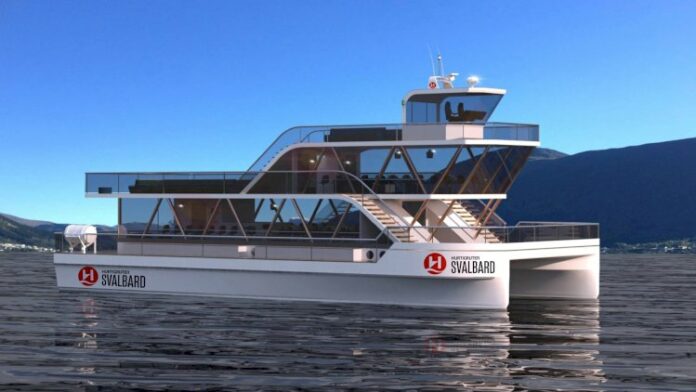
Norwegian expedition cruise operator Hurtigruten is building a battery-powered boat for shorter excursions on Svalbard, the Arctic archipelago east of Greenland.

Hurtigruten has partnered with the Norwegian startup Brim Explorer to design an electric passenger catamaran for polar operations. Beginning next spring, the 24-meter vessel will operate daily ocean excursions from Longyearbyen, Svalbard, operating under the Hurtigruten Svalbard brand.

With large battery packs, the new hybrid catamaran will be one of the world’s most flexible electric vessels, Hurtigruten says: It can carry up to 140 people and operate on batteries for 10 hours at a cruising speed of 10 knots. The designers claim that it can be recharged at virtually any port.

"Brim and Hurtigruten found each other through our common passion for the oceans. Their vision to change the way people experience the Arctic is a perfect match to our bold sustainability ambitions. We firmly believe the future of travel is emission-free," Hurtigruten CEO Daniel Skjeldam said.

Brim Explorer’s first vessel – similar to the excursion boat for Svalbard – is currently under construction in Norway. Beginning in August 2019, she will carry Hurtigruten guests around the Lofoten Islands in the summer and on Northern Lights outings based in the Arctic capital of Tromsø in the winter. 

"We have created the first sightseeing vessel in the world able to operate a full day on electric power, and we look forward to using our knowledge to move the travel industry in a greener direction together with Hurtigruten," said Brim Explorer co-founder and CEO Agnes Árnadóttir.

The explorer catamarans will also be fitted with hydrophones and underwater drones from another Norwegian startup already partnering with Hurtigruten – Blueye Robotics. Their drones will be introduced to several of Hurtigruten’s expedition cruise ships, as well as all Brim Explorer vessels. 

The partners will also work on integrating solar panels with the electric driveline to exploit the 24-hour Arctic sun to charge the batteries while sailing. They are also looking at developing renewable energy stations in smaller ports for recharging the vessels. 

Source:maritime-executive

North Club updates guidance on 2020 sulphur cap compliance

0

North P&I Club has updated its guidance on the 2020 Sulphur Cap for operators. This aims to help them prepare for the big switch to compliance on 1 January 2020. After a programme of events, training sessions and publications which have been taking place over the past 12 months, North published three new guides to ensure safe and compliant operations.

The three guides regard the three main methods of achieving compliance:

  • Using distillates (MGO/MDO);
  • Using blended very-low-sulphur fuel oils (VLSFO);
  • Installing exhaust gas cleaning systems (scrubbers).

"North has looked at the importance of good planning, the risks associated with each option and contingencies in the event of non-compliance. It isn’t just technical – enforcement and contractual risks are also considered'…The Club said.

Tiejha Smyth, Deputy Director (FD&D) at North, also commented on the importance of suitable transition clauses in the time charterparty to facilitate a smooth transition. She added that it is crucial to ensure that the technical objectives of the transition plan are reflected in the charterparty. What is more, for ships fitted with scrubbers, there will be additional considerations.

The guides also examine some of the challenges in preparing to receive compliant fuels. Speaking on this, Mark Smith, Loss Prevention Executive, believes that proper planning is key, but when it comes to the switchover, it is important to do it safe and do it right.

In addition, tank cleaning is possible to be needed and this might mean multiple tank entries. Mr. Smith continued:"Too many people die in enclosed or confined spaces. Tank cleaning operations must be subject to a risk assessment and a permit-to-work system"

Finally, if the tank and fuel system is not properly cleaned, it could contaminate several hundreds of tons of subsequently bunkered expensive fuel. It could also lead to enforcement action, delays and disputes.

Source;safety4sea

USCG issues rules on fire protection for recreational vessels

0

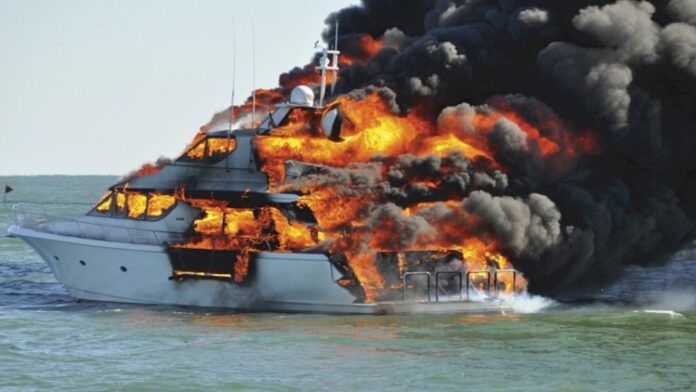
The USCG issued a notice of proposed rulemaking to amend the rules for recreational vessels by moving fire extinguishing equipment standards for recreational vessels from the uninspected vessel subchapter, which includes requirements for both recreational and commercial vessels, to the subchapter applicable only to recreational vessels.

This proposed move would relieve owners of recreational vessels from having to adhere to NFPA 10 fire extinguisher inspection, maintenance, and recordkeeping requirements intended to apply to commercial vessels only. This would not alter fire extinguishing equipment standards for commercial vessels, but would correct an incongruity in our regulations.

This proposed rule is discussed in the following three steps:

  • Remove recreational vessel fire extinguishing equipment regulations from 46 CFR subpart 25.30 (Fire Extinguishing Equipment).

(a) Fire extinguishing equipment regulations in 46 CFR subpart 25.30 (Fire Extinguishing Equipment) currently apply to all motorboats and motor vessels (as defined by 46 CFR 24.10-1), both recreational and commercial. In order to make subpart 25.30 regulations apply to commercial vessels only, the Coast Guard proposes to revise the applicability section in 46 CFR 25.30-1 so that the fire extinguishing equipment regulations in subpart 25.30 would explicitly not apply to recreational vessels.

(b) The other requirements in part 25 (life preservers, navigation lights, ventilation, etc.) will not be changed or moved to Title 33 of the CFR because they either expressly exclude recreational vessels or already exist in the Title 33 provisions for recreational vessels.

  • Move all of the fire extinguishing equipment regulations for recreational vessels from 46 CFR subpart 25.30 to 33 CFR part 175, subpart E, and revise the regulations to no longer require recreational vessel owners and operators to follow the monthly visual inspection, annual maintenance, and recordkeeping requirements of NFPA 10.

(a) The Coast Guard would create a new subpart E, Fire Protection Equipment, under part 175 (Equipment Requirements) in 33 CFR subchapter S (Boating Safety), and add the fire extinguishing equipment regulations from 46 CFR subpart 25.30 to that new subpart.

(b) The Coast Guard would limit the applicability of this new subpart to recreational vessels, as defined in 33 CFR 175.3, with propulsion machinery to clarify that the fire extinguishing equipment requirements would not apply to non-motorized sail boats, kayaks, canoes, and other human powered recreational vessels that do not require portable fire extinguishers. The fire extinguishing equipment requirements added to subpart E would be the same as in current 46 CFR subpart 25.30, but would be modified to clarify the regulatory language, update outdated information, and omit the requirement for recreational vessels to comply with NFPA 10.

  • Update text in 33 CFR part 175, new subpart E—Fire Protection Equipment.

(a) The Coast Guard would make several small administrative changes to the text being moved from 46 CFR subpart 25.30 to new 33 CFR part 175 subpart E, to clarify the regulatory language and update outdated information.

(b) The Coast Guard would change the terms “motorboats” and “motor vessels,” as currently used in subpart 25.30, to more clear terms of “Recreational vessels 65 feet and less in length” and “Recreational vessels more than 65 feet in length” respectively.

This change would align the language used in new subpart E with the terminology already used in 33 CFR part 175, and reinforce the subpart's intent to apply the requirements to recreational vessels, and not all motorboats and motor vessels. It would also make clearer the distinction between the two vessel size categories, allowing readers to easily find the fire extinguishing equipment requirements appropriate for a particular type of vessel.

(c) The Coast Guard would add new language to clarify acronyms, and update cross-references to 46 CFR subpart 25.30. For example, replacing the B.H.P. acronym with “brake horse power” and updating references to clearly point towards 46 CFR instead of chapter I.

(d) The Coast Guard would modify the language moved from 46 CFR subpart 25.30 to refer to recreational vessels by model years, as opposed to contracting or manufacturing dates. The latter are applicable to commercial vessels only. This change would allow the recreational boating community to more easily identify their vessel Start Printed Page 20830requirements, and it would align with industry and market naming practices.

(e) Because this rule is not intended to and would not change any exceptions that already apply to recreational vessels, the Coast Guard proposes to retain all the existing recreational fire extinguishing equipment exemptions, such as those for vessels manufactured before August 22, 2016, and the fire extinguishing equipment exemptions for vessels manufactured before November 19, 1952, as provided in 46 CFR 25.30-80 and 46 CFR 25.30-90.

In summary, the Coast Guard proposes separating recreational vessel fire extinguishing equipment rules from commercial vessel fire extinguishing equipment rules, and consolidating recreational vessel-specific requirements into one part, which would not contain NFPA 10 visual inspection, annual maintenance, and recordkeeping requirements for recreational vessels. This change would affect only recreational vessels with propulsion machinery, and would not affect commercial vessels.


Simec Atlantis and GE form marine ‘dream team’

0

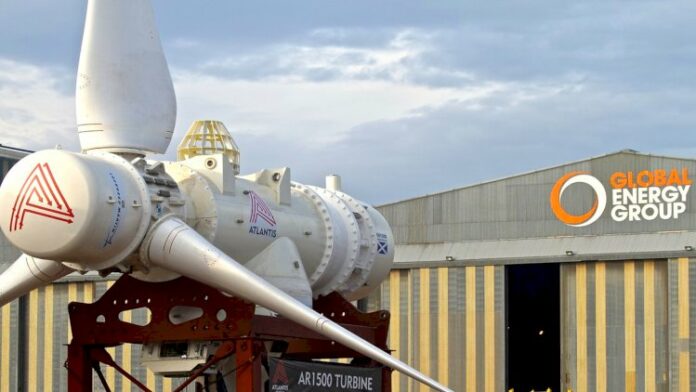
Simec Atlantis is partnering with GE to develop utility-scale tidal energy generation technology.

The partnership and preferred supplier agreement is between Simec Atlantis and GE’s power conversion business.

Under the terms of the agreement, both companies will work together and share resources for the ongoing development of utility scale tidal energy generation and associated energy storage.

They will also engage in joint marketing activities to promote new subsea connection technologies.

The companies had already been working together since September 2018 on the development and performance validation of Simec Atlantis’ 2MW AR2000 tidal generation system.

The AR2000 is expected to be deployed on future phases of Atlantis’ 6MW MeyGen project off the coast of Scotland and will also be available for sale to commercial developers.

The partnership will play a role in the delivery of equipment and services to the second phase of the MeyGen project, known as Project Stroma.

This will see two additional Atlantis AR2000 turbines connected via a new subsea hub to a single power export cable which will be linked via the MeyGen substation to the grid.

GE power conversion business’ commercial director Peter Oram said: “We are delighted to be working together towards cleaner energy solutions – harnessing natural resources, like tidal energy, and applying GE’s efficient medium voltage power conversion technologies allows us to turn this abundant source of energy into reliable, predictable power, for the UK and the world.”

Source:renews

Five lines to join the Digital Container Shipping Association

0

Five lines are joining the Digital Container Shipping Association giving the group that aims pave the way for digitalisation and standardisation of box shipping some 70% of the market as members.

CMA CGM, Evergreen, Hyundai Merchant Marine (HMM), Yang Ming and ZIM, are joining AP Moller-Maersk, Hapag-Lloyd, MSC, and Ocean Network Ocean (ONE) in the association.

CMA CGM is joining as what is described as a founding member of DCSA and will be a member of the supervisory board while the other four lines will join as members. The nine members will represent 70% of the container shipping market, pending regulatory approval.

“It is critical to our success that standards developed will be implemented, and the commitment and engagement of many container shipping lines is therefore crucial,” said Thomas Bagge, ceo of DCSA.

Meanwhle, Henning Schleyerbach, has been appointed as coo of the association from 1 July. Schleyerbach is currently senior director of customer relationship management with Hapag-Lloyd.

Source;seatrade-maritime

UAE says four cargo vessels ‘sabotaged’ off Fujairah coast

0

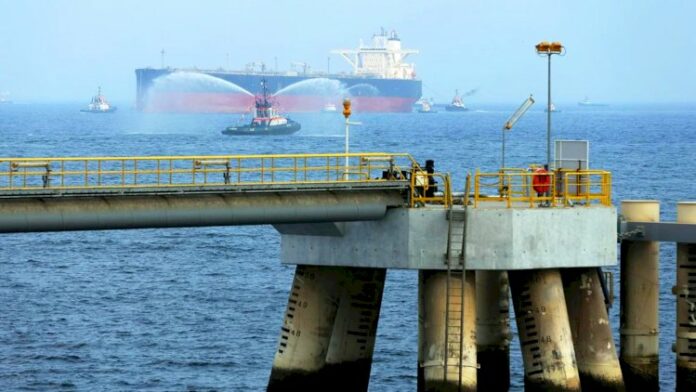
The United Arab Emirates said Sunday that four commercial ships off its eastern coast “were subjected to sabotage operations,” just hours after Iranian and Lebanese media outlets aired false reports of explosions at a nearby Emirati port.

Emirati officials declined to elaborate on the nature of the sabotage or say who might have been responsible. However, the reported incident comes as the U.S. has warned ships that “Iran or its proxies” could be targeting maritime traffic in the region, and as America is deploying an aircraft carrier and B-52 bombers to the Persian Gulf to counter alleged threats from Tehran.

Tensions have risen in the year since President Donald Trump withdrew the United States from the 2015 nuclear deal between Iran and world powers, restoring American sanctions that have pushed Iran’s economy into crisis. Last week, Iran warned it would begin enriching uranium at higher levels in 60 days if world powers failed to negotiate new terms for the deal.

The statement from the UAE’s Foreign Ministry put the ships near the country’s territorial waters in the Gulf of Oman, east of the port of Fujairah. It said it was investigating the incident “in cooperation with local and international bodies.” It said there were “no injuries or fatalities on board the vessels” and “no spillage of harmful chemicals or fuel.

The U.S. Navy’s 5th Fleet, which oversees the region, did not immediately offer comment on the incident. Emirati officials declined to elaborate while their investigation is ongoing.

Earlier Sunday, Lebanon’s pro-Iran satellite channel Al-Mayadeen, quoting “Gulf sources,” falsely reported that a series of explosions had struck Fujairah’s port. State and semi-official media in Iran picked up the report from Al-Mayadeen, which later published the names of vessels it claimed were involved in the incident.

The Associated Press, after speaking to Emirati officials and local witnesses, found the report about explosions at the port to be unsubstantiated.

Fujairah’s port is located about 140 kilometers (85 miles) from the Strait of Hormuz, through which a third of all oil at sea is traded. The facility handles oil for bunkering and shipping, as well as general and bulk cargo. It is seen as strategically located, serving shipping routes in the Persian Gulf, the Indian subcontinent and Africa.

The reported sabotage incident comes after the U.S. Maritime Administration warned Thursday that Iran could target commercial sea traffic.

“Since early May, there is an increased possibility that Iran and/or its regional proxies could take action against U.S. and partner interests, including oil production infrastructure, after recently threatening to close the Strait of Hormuz,” the warning read. “Iran or its proxies could respond by targeting commercial vessels, including oil tankers, or U.S. military vessels in the Red Sea, Bab-el-Mandeb Strait, or the Persian Gulf.”

It’s unclear if that is the same perceived threat that prompted the White House to order the USS Abraham Lincoln aircraft carrier strike group and B-52 bombers to the region on May 4.

Watch: First Q-Flex LNG Tanker to transit Panama Canal

0

The Panama Canal informed that on May 12 it welcomed Qatargas’ Al Safliya, the first Q-Flex and the largest liquefied natural gas (LNG) tanker to ever transit the waterway. The tanker features 315 meters in length and 50 meters in beam, having an overall cargo capacity of 210,000 meters3 of LNG.

The milestone transit also highlighted the Canal’s environmental benefits because of its ability to help vessels reduce the distance and duration of their trips, in comparison to alternate routes. Combined with Al Safliya’s Q-Flex class design, which allows for the 40% reduction of emissions in comparison to other gas carriers, the Panama Canal and Qatargas saved almost 10,000 tons of CO2 emissions compared to alternative routes.

This achievement follows the 6,000th Neopanamax vessel transit in the Panama Canal, a milestone marked by another LNG tanker, Energy Liberty, on April 23.

The transit opens the way for more Q-Flex LNG tankers to pass through the Panama Canal. This comes after an increase in the maximum allowable beam for vessels transiting the Neopanamax locks. The maximum beam allowed is now 51.25 meters, up from 49 meters.

Now the Canal is expecting to see increase in its LNG transits after the new beam increase. Specifically, during 2018, the Canal saw 340 LNG transits, up from 181 transits in 2017. So far in 2019, the Canal has experienced more than 100 LNG transits.

Source:safety4sea