-2.2 C
New York
Home Blog Page 1059

Inside threats that affect OT and IT ops of a vessel

0

The Korean Register of Shipping provides an insight into the inside threats the maritime IT/OT systems face. Due to the development of the maritime sector, digitalization and automation experience many challenges, as cyber threats seem to be increasing.

The maritime transport industry uses various operational technologies (OT) such as GPS, AIS, ECDIS and information technology (IT).

Damage to these systems can result in physical damage to the ship as well as data leakage, endangering all life on board. Insider threats, whether intentional or not, are considered one of the biggest cyber threats to business.

The inside threats are:

  1. Human Error – High click rates for phishing campaigns, negligence (leaving technology open and accessible), loss of technology, such as a laptop or a phone;
  2. Malicious Insider – Criminal insiders leaking sensitive data, infecting computer systems with malware, abuse of internal privileges and disgruntled employees;
  3. Social Engineering – The manipulation of seafarers to gain sensitive information. This can contribute to spear phishing, senior management spoofing, smishing and vishing

Therefore, the shipping industry should find additional ways to address the cyber attacks:

  • The educationtraining and exercising of the crew and shore based employees enhances their ability to competently react to attacks, find faults, understand the threat;
  • risk management strategy is vital in the assurance of IT/OT system assets. An effective risk management framework can create resilience in people, process and technology;
  • The development of an Incident Response Plan (IRP) should provide the vessel with the ability to respond quickly and effectively in a timely manner;
  • Information sharing with your community is vital. This will inevitably help in optimising the business recovery process, ensuring business continuity at the earliest opportunity;
  • Conduct testing and auditing. Penetration tests by ethical hackers attempt to breach an organisationʼs network to expose vulnerabilities.

Source;safety4sea

Three key cyber-security terms explained

0

Cyber security, and especially cyber threats, are becoming more and important for the shipping industry, which gets affected as well. In order to help understand some of the basic terminology of cyber-security, the Korean Register of Shipping presents three key cyber terms.

SSL (Secure Sockets Layer)

SSL is the standard security technology for creating an encrypted link between a web server and a browser. This link makes sure that all data passed between the web server and browsers are private and integral.

SSL is an industry standard and is used by millions of websites to protect their online transactions with their customers. In order to create an SSL connection a web server needs an SSL Certificate. While the SSL Certificate application process is taking place, the Certification Authority will validate the details and issue an SSL Certificate containing the operator's details, enabling him/her to use SSL. The web server will then match the issued SSL Certificate to the Private Key. The web server will also be able to establish an encrypted link between the website and the customer's web browser.

Man in the middle attack (MITM)

This is an attack where the attacker secretly relays and possibly changes the communication between two parties who believe they are directly communicating with each other. An example of a MITM attack is active eavesdropping, in which the attacker makes independent connections with the victims and relays messages between them to make them believe they are talking directly to each other over a private connection, when in reality the entire conversation is controlled by the attacker.

The attacker must be able to intercept all relevant messages passing between the two victims and inject new ones. This is direct in many circumstances; for example, an attacker within reception range of an unencrypted wireless access point (Wi-Fi) could insert themselves as a man-in-the-middle.

Sandbox

Sandbox is a security mechanism for separating running programs, usually in order to mitigate system failures or software vulnerabilities from spreading. It is often used to execute untested or untrusted programs or code, potentially from unverified or untrusted third parties, suppliers, users or websites, without risking harm to the host machine or operating system. A sandbox typically provides a tightly controlled set of resources for guest programs to run in, such as scratch space on disk and memory.

Source:safety4sea

How digitalization affects the energy sector

0

DNV GL published the 'Digitalization and the future of energy' report, focusing on what's the meaning of digitalization, how it affects the energy sector and where can it add most value for society and individual organisations.

This report explores the views and digital maturity of organizations across the energy value chain. It reveals which digital technologies organizations are investing in now and which they’ve earmarked for future investment; the goals and benefits being realized and how internal barriers are creating roadblocks to digitalization, which could see some organizations get left behind.

In order to get a full insight into what digitalization means for the energy sector, DNV GL surveyed nearly 2000 professionals from across the global energy value chain.

The results focus on three sectors that could help organisations:

  • Formulate the right questions to start a successful digital transformation;
  • Understand their digitalization options;
  • Benchmark their progress against other leaders in the industry.

The report notes that prior to starting their digital transformation, companies should be clear on why they are digitalizing and how it supports their long-term goals.

DNV GL focuses also on automation, virtual reality, blockchain. The research looks at what digital technologies are available, and which are already having the biggest impact across a range of segments. Data is, of course, king in the digital world.

Concluding, to ensure that digital transformation is successful, organizations need to ensure they’re involving employees, encouraging collaboration, and replacing hierarchy with cross-functional teams

For more information on the report, click here.

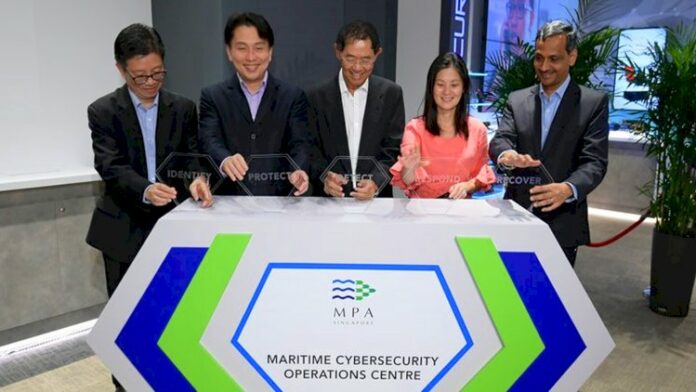
MPA Singapore opens maritime cyber security centre

0

MPA Singapore inaugurated a new 24/7 Maritime Cyber security Operations Centre (MSOC) Thursday, aiming to boost Singapore’s maritime cyber security posture through early detection and response to potential cyber-attacks on maritime Critical Information Infrastructure (CII). The MSOC will be operated by ST Engineering in its Hub.

Namely, MSOC will conduct 24/7 monitoring and correlate data activities across all maritime Critical Information Infrastructure (CII), with the aim to

  • detect and monitor cyber-attacks by analysing activities in the IT environment;
  • detect anomalies and threats; and
  • respond to the cybersecurity incidents using available technology solutions.

MPA will also build key data linkages between MSOC and Port Operations Control Centre in order to respond to cyber incidents in a more timely manner…"Cyber threats come in many forms and have been rising steadily across the globe. As the world’s busiest transhipment hub, it is important that we safeguard our maritime and port critical infrastructure to prevent a major disruption to port operations and delivery of services,"…stated Mr Niam Chiang Meng, Chairman of MPA Singapore, on the occasion of the Center opening.

MPA has also put in place other initiatives to strengthen the cyber security readiness of the maritime sector.

For example, it has has collaborated with Singapore Shipping Association and Singapore Polytechnic to develop a new “Maritime Cyber security (Intermediate) Training Course” for maritime personnel to enhance their knowledge in managing cyber threats. This new course will be rolled out in first half of next year.

MPA has also collaborated with the Singapore Maritime Institute and local institutes of higher learning to embark on a Maritime Cyber security Research programme.

This programme will focus on the protection of shipboard systems to mitigate cyber threats with the growing digitalisation onboard.

MPA will build on the existing Port Authorities Roundtable initiative, as well as with other partner networks, an information-sharing network with other port authorities.

The network seeks to foster efforts across port authorities to step up the sharing of intelligence relating to maritime cyber security.

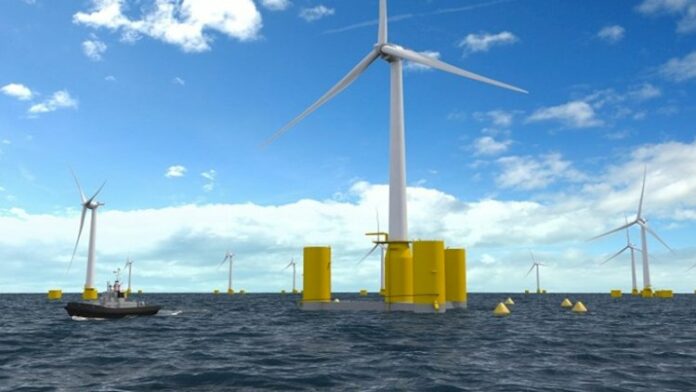
Floating wind ‘buoys’ RE investment in France

0

China and the US have maintained the top two places, respectively, in the EY Renewable Energy Country Attractiveness Index, with France moving up two places into third on the back of developments in floating offshore wind and bigger onshore targets.

The 53rd index sees India slip to fourth and Germany to sixth from fourth, with Australia moving up one place to fifth.

The UK remains in fifth place despite the recent offshore wind sector deal announcement.

The sector deal aims to deliver 30GW of offshore wind by 2030, compared with 8.2GW at the end of last year.

EY global power and utilities corporate finance leader and the index chief editor Ben Warren said: “While the offshore wind deal is extremely positive news for the UK renewables sector and will help to attract significant investment over the coming years, the announcement regrettably follows the withdrawal of support for onshore renewables in 2016 that has slowed UK sector growth.”

EY said that last year just 598MW of onshore wind was installed in the UK, down from 2.7GW in 2017, citing figures from trade body RenewableUK.

The lack of support for the Swansea tidal lagoon and changes to network charges – which have been favouring decentralised renewables, energy storage and demand-side response – will hamper investment in the sector in the UK going forward, EY added.

The company said that globally renewable energy is entering a new phase of subsidy free growth.

Warren said: “In this more complex subsidy-free environment, renewable developers must work harder and smarter to find the revenue certainty they need to finance or monetise their efforts."

Europe has led the way with unsubsidised projects in areas with good renewable resources, and multiple projects across the Nordics, UK, and Spain are being developed – backed by private investment and corporate power purchase agreements (PPAs) to provide the required stability.

For the renewable energy market overall, however, a future without government subsidy is one that will no longer be vulnerable to sudden shifts in policy, or to retroactive changes to promised tariffs.

It will be one where market forces impose discipline, drive efficiencies and accelerate the cost reductions that have allowed the sector to stand on its own two feet.

The index also highlighted growth in corporate PPAs, which it said was motivated by economic concerns – as a hedge against power prices – or for reputational reasons and to reduce carbon emissions.

Warren concluded: “The outlook for the global renewables sector remains extremely exciting."

As renewable generation continues to become more and more affordable; increased levels of penetration are beyond doubt.

It is perhaps the integration of renewables into the wider energy ecosystem, the sector’s contribution to the emerging low carbon e-mobility market and the integration with storage technology that will ultimately define the future for renewables.

Source:renews

Guanghui Energy to build an LNG receiving station at Xueyang port

0

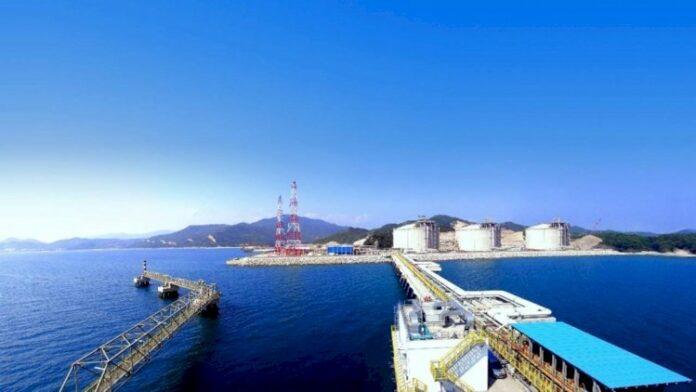
China’s Guanghui Energy is to construct the LNG receiving station at Xueyan port on the Yangtze river  following the project approval from Hunan Provincial Development and Reform Commission.

The project will be located at Junshan port area of Yueyang port, Hunan province, including two 8,000 c m LNG discharge berths, one berth for working ship, one 50,000 cu m LNG storage tank and related facilities. 

The first phase of the Yueyang LNG receiving station project will provide LNG refuel service and LNG resources to ships, and support the company’s LNG receiving station at Nantong, Jiangsu province. 

Guanghui Energy said that the new station would further promote the company’s strategy to develop LNG production and distribution as a core business, bringing positive influence to the company’s performance and social benefits. 

The project is expected to start construction within two years. 

Guanghui Energy, based in Xinjiang province, is a private energy company. It’s core businesses cover coal, oil and gas.

Damen Opens Helsinki Facility

0

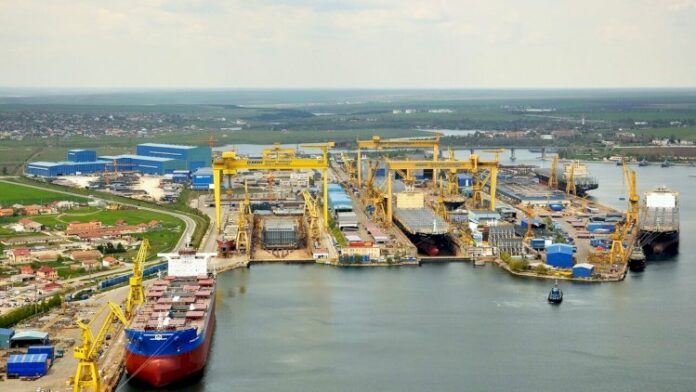
Damen Shipyard Group has opened its first-ever office in Helsinki, Finland as part of its new venture into building large vessels for the ro-pax, cruise and offshore markets.

This follows the group’s entry last year into building large vessels for the RoPax, Cruise and Offshore markets via its new Romanian yard, Damen Shipyards Mangalia.

Located in a recently renovated building in central Helsinki, the The office will augment and extend Damen’s engineering capability in this market segment.

Finland was selected as the location because, along with Italy, Germany and France, it is one of the leading countries in the world in the design and build of cruise and RoPax vessels; this in combination with particular expertise in ice-class vessels, a growing segment of the cruise market.

Helsinki also has excellent connections to Poland and The Netherlands, allowing for optimal collaboration between the Damen engineering entities situated in Gdansk and Rotterdam.

Damen Engineering Helsinki Oy will focus on concept and basic engineering with an initial target of around 30 people to be based there by the end of 2020 working in close cooperation with their colleagues within Damen.

The office is also intended as a showcase for Damen in Finland, welcoming both customers and suppliers, as well as seeking collaborating with local, specialized maritime engineering entities. With that in mind, a lot of effort went into finding the right premises.

A recently renovated building has been selected in a central location in Helsinki. The area is currently undergoing regeneration from being a former industrial harbour & fish market and offers excellent commuting connections and a pleasant work environment for Damen’s employees.

“We are now focused on building the team,” said Damen’s Frank Rebel, “and we already have two projects to start with: a cruise vessel and a RoRo vessel. Members of Damen’s Helsinki team will have the opportunity to add real value to these and other projects in the future. We look forward to welcoming them into the Damen family.”

Source:marinelink

Helsinki Shipyard Acquisition Wrapping Up

0

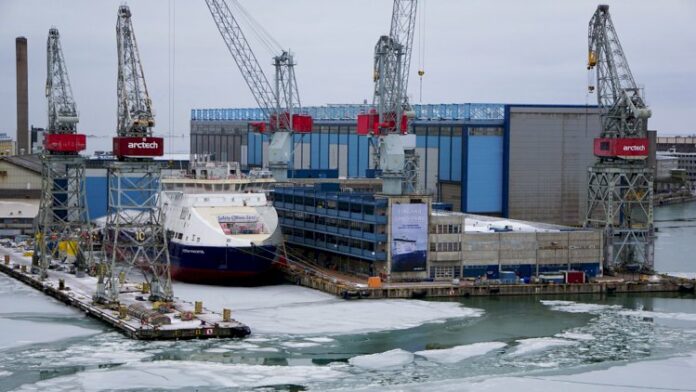
The acquisition of the current Arctech Helsinki Shipyard in Finland will be finalized in May, the involved parties say, having agreed to transaction terms on May 9.

In preparation for the closing, current owner Arctech Helsinki Shipyard Oy (AHS) said it has established a new company, Helsinki Shipyard Oy, which will receive the transferred assets and operations from AHS and continue shipbuilding at the shipyard. AHS will then sell 100% of Helsinki Shipyard Oy’s shares to Algador Holdings Ltd., owned by Rishat Bagautdinov and Vladimir Kasyanenko.

Bagautdinov's and Kasyanenko's companies operate international shipping and shipbuilding businesses including Russia’s largest river cruise ship operator Vodohod LLC.

Following the transaction, AHS will continue its shipbuilding operations as a shareholder of Nevsky Shipyard LLC.

The final vessel that will be delivered from the yard under AHS’s ownership is the icebreaking tanker NB515, which was floated out on April 29 and completed sea trials on May 12.

Victor Olerskiy, the incoming Chairman of the Board of the Helsinki Shipyard Oy, said, “The transaction will not have any effect on subcontracts. AHS’s personnel will be transferred to Helsinki Shipyard Oy without changes to their contracts. Under the new owners Helsinki shipyard can concentrate on its core expertise, which are strong iceclass vessels and cruise ships.”

The shipyard's tender backlog currently stands at €1.5 billion ($1.7 billion), including several cruise ships, icebreakers and liquefied natural gas (LNG) carriers. Letters of intent have already been signed for some of the tenders.

Source:marinelink

Watch: IMO Helps Cut Maritime Emissions in the Solomon Islands

0

A new IMO video puts the spotlight on how an IMO/EU initiative is helping cut maritime emissions in the Solomon Islands as part of a global project to help tackle climate change:

When the solar-powered LED lights go on at night in the port of Honiara, Solomon Islands, they are helping the port meet IMO maritime security requirements. But these lights are also an example of how a global project, through regional centers, can help individual countries' ports and shipping sectors improve energy efficiency, cut emissions and clean up local air quality.  

The Maritime Technology Cooperation Centre (MTCC) Pacific – one of five regional centers established under the IMO-led Global MTCC Network (GMN) project – helped the Solomon Islands port carry out a full energy efficiency and emissions audit. 

Eranda Kotelawala, Chief Executive Officer of the Solomon Islands Port Authority, showed an IMO team around the port, where a series of emission-cutting measures have been and are being implemented: from the solar-powered lights, to weighing in motion systems so that diesel-powered trucks do not have to stop and idle and repairing cracks in the road surface to help cut emissions and improve air quality. 

It has been estimated that savings of up to 75 percent can be made in the shipping and port industries just by using existing technology and doing things a little bit differently.

Simon Wame, a ship operator based in the Solomon Islands, said: "Fuel is very expensive. If I can save money it will be a great advantage for me. We are collecting fuel consumption data on board our vessels and then we supply this fuel consumption data to the MTCC team. And then the team analyse the data; and they provide us with the technical recommendations on efficiency and fuel consumption."

Joy Rurime, a shipowner/operator who heads a family business running one of the largest inter-island trading vessels in the Solomon Islands, has also benefited by improved operational efficiency.

The island of New Georgia's Port of Noro is an important tuna catching and tinning center. Glyn Joshua, Energy Efficiency Manager, Solomon Islands Port Authority, will be instaling a new solar farm to power refrigerated containers (reefers) – saving energy and cutting emissions. 

Source;maritime-executive

Norway and IMO Launch GHG Reductions Project

0

An international project has been launched to support the IMO's initial strategy for reducing greenhouse gas emissions from shipping.

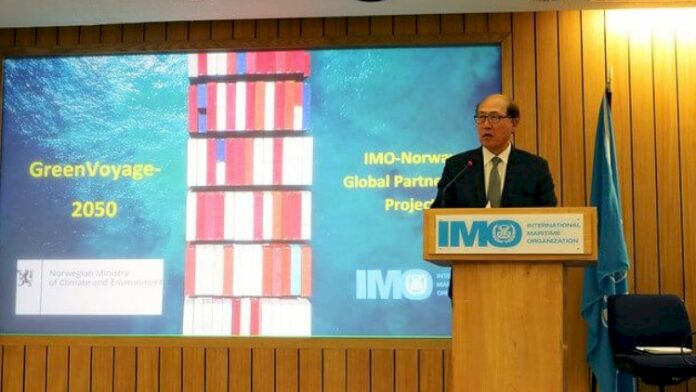
GreenVoyage-2050 is a collaboration between IMO and the Government of Norway to demonstrate and test technical solutions for reducing GHG emissions in shipping, and it will run for an initial two-year period. More than 50 countries in 14 sub-regions across the globe are expected to participate, including developed countries and the private sector.

The project will also build capacity in developing countries, including small island developing states and least developed countries, to fulfil their commitments to meet climate-change and energy-efficiency goals for international shipping.

Partnerships with existing programs (such as Norway's Green Shipping Program) will be explored, with a view to drawing on their results to encourage the phasing in of zero and low-emission solutions for shipping in developing countries.

Initially, eight countries, from five high-priority regions (Asia, Africa, Caribbean, Latin America and Pacific), are expected to take pilot roles at a national level. They will then support other countries in taking action.

The Government of Norway has provided NOK 10,000,000 ($1.1 million) for the initial two years of the project and intends to fund the project further into the future.

IMO Secretary-General Kitack Lim said the project was a direct response to the need to provide technical assistance to States and to support technology transfer and promote green technology uptake to improve energy efficiency and reduce GHG emissions throughout the maritime sector. 

Lim said, "Another of this project's most important aims is to spur global efforts to enhance global knowledge management and information sharing for climate action and sustainable oceans. In this time of greater connectivity and more rapid technological advances than ever before, I cannot stress enough how timely the launch of this project is".

The project will support delivery at least two of the United Nations Sustainable Development Goals (SDGs): SDG 13 on climate change and SDG 14 on sustainable use of the oceans. 

GreenVoyage-2050 will embrace experience from other successful environmental projects delivered by the IMO. In particular, GloMEEP, the GEF-UNDP-IMO Global Maritime Energy Efficiency Partnerships Project, which has itself established a successful public-private partnership, namely the Global Industry Alliance To Support Low Carbon Shipping, and the European Union-funded GMN project, which has established five Maritime Technology Cooperation Centres in Africa, Asia, the Caribbean, Latin America and the Pacific.

The new project was launched on the first day of the IMO's Marine Environment Protection Committee (MEPC), 74th session (May 13-17). Among other agenda items, MEPC 74 will continue its work on reducing GHG emissions from ships, in line with the initial GHG strategy.  

Source;maritime-executiv