-2.3 C
New York
Home Blog Page 1061

Tesla effect threatens the oil industry

0

According to CNN, the development of automation and Tesla are a great threat to the oil industry. The passenger vehicles are the number 1 source of demanding oil; the future transportation, though, might no longer need gas station.

Many question when this change is going to come. The timing depends on how many electric vehicles will be on the road, how seriously governments take global warming and a confluence of other factors. The lack of visibility in the oil industry's long-term future remains a big risk for investors.

JJ Kinahan, chief market strategist at TD Ameritrade, commented.."Look at what happened to the coal industry. You have to keep that in the back of your mind and be vigilant. It can turn very, very quickly."

A Barclay's report resulted to the fact that oil demand has a great gap, between 70 million to 130 million barrels per day; This could either mean the decline from today's daily demand of 100 million barrels, or a strong increase.

After oil prices bottomed in early 2016, energy stocks barely budged — up just 14%, as measured by the S&P SPDR Energy ETF (XLE) (over the same time, the S&P 500 has soared 55%). And yet oil prices have nearly tripled.

Adam White, an equity strategist at SunTrust Advisory Services, highlighted that…"A lot of damage has already been done. People are jaded towards the industry."

Barclays noted that oil reliance will probably peak between 2030 and 2035. Yet, the peak could come even earlier, as in 2025.

The International Energy Agency estimates that petrochemicals will account for the biggest source of demand growth through 2030.

In the meantime, the arrival of millions of people in fast-growing nations as China and India to the middle class could drive up energy demand more than enough to offset the rise of electric vehicles.

In light of the above assumptions, Jason Bordoff, a former energy adviser to President Barack Obama, said it's unlikely that oil demand will peak before 2025. Even if it did, it could plateau at a very high level.

Also, DNV GL estimates that the oil peak will become a reality in 2020s.

Concluding, as Sverre Alvik, lead author of the firm's energy transition outlook report noted.."By 2030, oil shareholders will feel the impact."

Source:safety4sea

DNV GL and NTU Singapore partner for 3D printing advances

0

DNV GL and Nanyang Technological University (NTU) Singapore, are supporting academic advances in additive manufacturing, the process of 3D printing – for the maritime, oil and gas and other industries, through a four-year research collaboration agreement. The research collaboration will focus on developing industry standards, quality assurance processes, certification and supply chain tracking for the additive manufacturing sector.

The research was designed by Dr. Pierre C Sames, Senior Vice President and Director of DNV GL Group Technology and Research, and Professor Tim White, Associate Vice President (Infrastructure & Programmes), NTU Singapore.

SnarTech Publishing, market researchers, expect that 3D printing will become a USD450 million market in the oil and gas industry by 2021, rising to USD1.4 billion by 2025.

Brice Le Gallo, Regional Manager South East Asia and Australia DNV GL – Oil & Gas and Director of the Global Additive Manufacturing Centre of Excellence in Singapore, commented that this cooperation reflects DNV GL's commitment to research and development (R&D) in 3D printing and securing the safe deployment of the technology in the maritime oil and gas, in times where technology is experiencing advances and changes.

Brice Le Gallo stated.."Our work with NTU, and with the support the new academic posts will receive from DNV GL’s Group Technology and Research, will help to strengthen our Global Additive Manufacturing Technology Centre of Excellence’s relations with academia. The collaboration agreement will also help us to further develop DNV GL’s approach to verification and certification of 3D printed parts as the technology develops."

The research idea follows DNV GL's decision on investing in 3D printing in the maritime industry one year ago, alongside 10-member companies from the Singapore Ship Association.

In addition, the participants will cooperate on the potential use of spare parts produced by 3D printers to help the capital-intensive maritime industry to cut costs and downtimes.

Initiated by the Maritime and Port Authority of Singapore, the JIP aims to establish what commonly ordered parts are highly feasible for 3D printing with or without certification respectively.

The signing ceremony at NTU was also witnessed by Brice Le Gallo, Regional Manager South East Asia and Australia DNV GL – Oil & Gas and Director of the Global Additive Manufacturing Centre of Excellence in Singapore, and Professor Chua Chee Kai, Executive Director of NTU’s Singapore Centre for 3D Printing.

Concluding, two new doctoral student (PhD) positions are being created through the Industrial Postgraduate Programme, supported by the Singapore Economic Development Board (EDB) and DNV GL. A further full time Research Fellow post is also being created at NTU’s Singapore Centre for 3D Printing.


Union of Greek Shipowners: All stakeholders to take on responsibility at MEPC 74

0

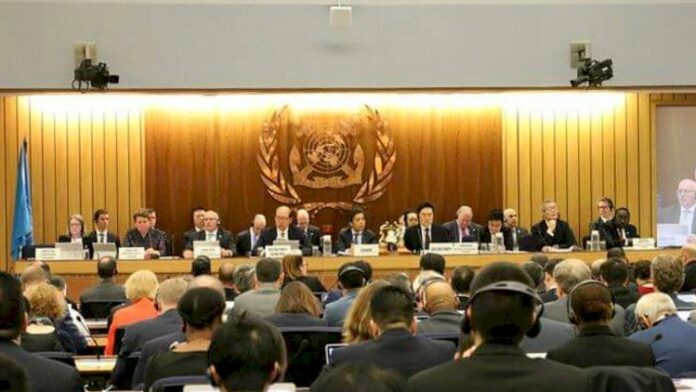
As UN IMO Marine Environment and protection Committee 74 (MEPC 74) meeting is taking place this week, the Union of Greek Shipowners (UGS) calls all stakeholders to take on responsibility and contribute to global policy making and commit to reaching attainable, workable and sustainable solutions to the problems related to the 2020 global sulphur cap in marine fuels and the issue of the GHG emissions reduction from ships.

As the President of the UGS, Mr. Theodore Veniamis stated…"MEPC 74 is the ultimate opportunity to ensure a safe, smooth and consistent implementation of the 2020 0.5% global sulphur regulation and to effectively address the many and severe challenges stemming from it. This last opportunity must not become a lost opportunity.:"

He continued focusing on the matter of GHG emissions reduction that it is of a great importance to ensure that IMO's new measures are easy-to-accomplish and suitable to the entire shipping industry.

In the meantime, he noted that each sector should be able to allowed to select the most ideal for its modus operandi and that should be respected by all. Specifically, because bulk shipping holds more than the 84%of the global trade, the new measures shouldn't jeopardise its sustainability.

Moreover, the Union highlighted the fact that there are many more identified gaps in shipping's regulation that result to practical problems. For instance, UGS referred to the issues of

  • Safe, complaint fuel worldwide;
  • The adoption of the Guidelines for consistent implementation with the inclusion of the ‘operational constraints’ clause;
  • The application of sound and practical measures to deal in a pragmatic way with cases of ship’s non-compliance due to reasons beyond its control;
  • The environmental, operational, legal, enforcement and other uncertainties related to the use of the Exhaust Gas Cleaning Systems.

Concluding, Mr Veniamis commented.."I am confident that the UN IMO will rise to the occasion and deliver on its unequivocal role as global regulator of the shipping industry. This global authority comes with great responsibility and this should be in the minds of all participating delegations to the imminent UN IMO MEPC proceedings."

Source:safety4sea

Wärtsilä to power first LNG-fuelled PSVs for COSL

0

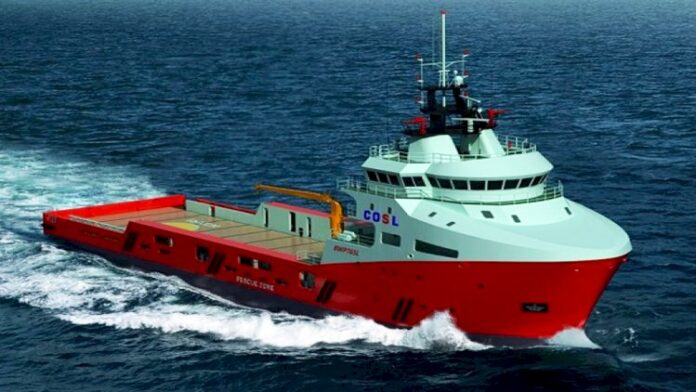
Wärtsilä announced the contract to supply 40 Wärtsilä 20DF dual-fuel engines for 12 new LNG-fuelled platform supply vessels (PSVs), which are the first such vessels to be built for China Oilfield Services Co Ltd (COSL).

Wärtsilä 20DF engine offers high fuel efficiency, low operating costs and good environmental performance, as well as its low-load operating ability and proven reliability and durability.

“Efficiency and environmental sustainability are key pillars of Wärtsilä’s approach to creating customer value. The choice of the Wärtsilä 20DF dual-fuelled engine for this major project reflects these values, and we are proud to maintain our leading position in this market by being selected for China’s first LNG fuelled PSVs,” said Henrik Wilhelms, segment sales director, Wärtsilä Marine.

Liu Hui, manager of COSL Shipping’s shipbuilding project management team said that more and more ships are being built for use with LNG fuel, and we see these 12 ships as part of a trend that will continue to grow, and that was why we the company chose Wärtsilä.

The vessels are being built at China’s Wuchang Shipbuilding Heavy Industry. The 40 sets of Wärtsilä engines are scheduled to be delivered to the shipyard at the end of 2019.


Shipping and environment in spotlight as IMO Committee meets

0

IMO says its key environment protection meeting has opened for its 74th session (13-17 May). The reduction of greenhouse gas emissions from ships is a key agenda item, following up on the initial IMO strategy on reduction of GHG emissions from ships.

A working group is expected to be established, continuing the work of an intersessional meeting which met last week (7-10) May. The fourth IMO GHG study is expected to be initiated, the procedure for assessing the impact on States of new measures will be considered and possible short-term measures will be discussed. 

A set of draft guidelines and guidance documents to support the implementation of the 0.50% sulphur limit from 1 January 2020 are set to be approved this week. The new limit will have major health and environmental benefits.  

Other important agenda items include: the  adoption of MARPOL amendments to strengthen requirements regarding discharge of high-viscosity substances, such as certain vegetable oils and paraffin-like cargoes; follow-up to the follow up on the IMO Action Plan to address marine plastic litter from ships; implementation of the Ballast Water Management Convention; and approval, for future adoption, of draft amendments to the International Convention for the Control of Harmful Anti-fouling Systems on Ships (AFS), to include controls on the biocide cybutryne.

The MEPC was opened by Secretary-General Kitack Lim and is being chaired by Mr. Hideaki Saito (Japan).

Source;portnews

Equinor set for Trestakk field start-up following nod from Norwegian authorities

0

Following Equinor’s submission in November 2016, the Norwegian authorities approved the Plan for Development and Operation (PDO) of the Trestakk discovery back in April 2017.

Equinor, as the operator, plans to start-up the Trestakk field during the month of May 2019, according to NPD’s statement on Monday, May 13.

Consent for start-up of Trestakk is granted to the licensees in production licence PL091 which, apart from Equinor, include ExxonMobil and Vår Energi.

It is also worth mentioning that Equinor was given consent by the Petroleum Safety Authority for the use of the pipeline and subsea production facilities at Trestakk field in March 2019.

Investments in the development of the field are expected to total approx. NOK 4.8 billion ($549.2M).

Equinor estimates the recoverable volume from Trestakk at 10.7 million standard cubic meters of oil (67 million bbls) and 1.4 billion cubic meters of gas.

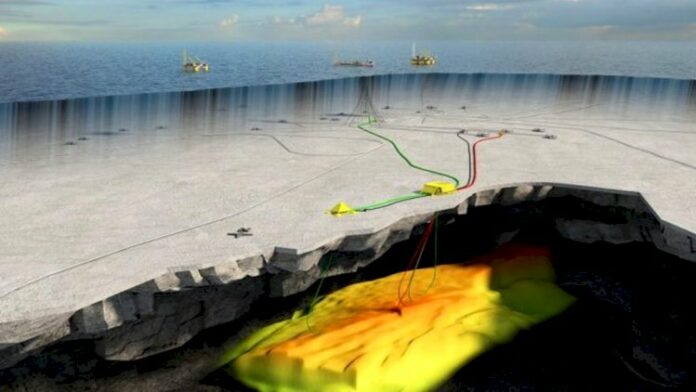
Trestakk is located about 25 kilometers southeast of the Åsgard field. The field will be developed with a subsea template with four well slots and one satellite well.

The well stream will be transported through a 12-inch production pipeline to the Åsgard A facility, where the well stream will be processed. The plan is to produce the Trestakk reserves with pressure support in the form of gas injection.

The addition of Trestakk will bring the total number of producing fields on the Norwegian shelf to 85.

U.S. Warns Merchant Ships of Iranian Threat

0

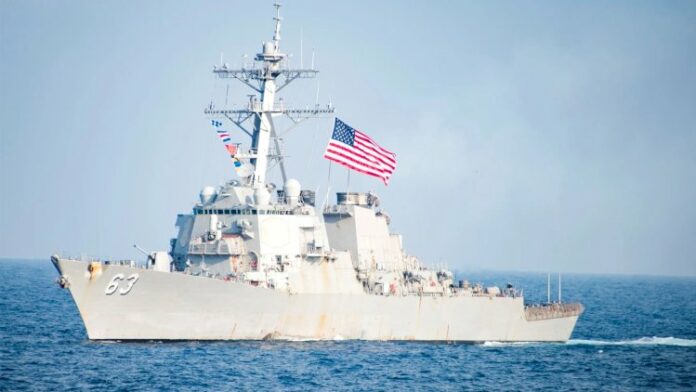
U.S. commercial ships including oil tankers sailing through key Middle East waterways could be targeted by Iran in one of the threats to U.S. interests posed by Tehran, the U.S. Maritime Administration said in an advisory.

The U.S. military said this week that a number of B-52 bombers would be part of additional forces being sent to the Middle East to counter what the Trump administration calls "clear indications" of threats from Iran to U.S. forces there. The Islamic Republic has dismissed the U.S. contention of a threat as "fake intelligence".

In the advisory posted on Thursday, the U.S. Maritime Administration (MARAD) said that since early May there had been an increased possibility of Iran or its regional proxies taking action against U.S. and partner interests.

These included, MARAD said, oil production infrastructure, after Tehran threatened to close the vital Strait of Hormuz chokepoint through which about one third of the world's seaborne crude exports flow.

"Iran or its proxies could respond by targeting commercial vessels, including oil tankers, or U.S. military vessels in the Red Sea, Bab-el-Mandeb Strait, or the Persian Gulf," MARAD said.

"Reporting indicates heightened Iranian readiness to conduct offensive operations against U.S. forces and interests."

Millions of barrels of oil pass daily through the various bottlenecks from Middle East oil producers to markets across the globe.

Tensions have risen between Tehran and Washington since the Trump administration withdrew a year ago from a 2015 international nuclear deal with Iran and began ratcheting up sanctions to throttle Tehran's economy.

Vice Admiral Jim Malloy, commander of the U.S. Navy's Bahrain-based Fifth Fleet, told Reuters on Thursday that its forces were on a heightened state of readiness, although the U.S. military was not seeking or preparing for war with Iran.

MARAD added that U.S.-flagged ships were encouraged to contact the Fifth Fleet – which is tasked with protecting commercial shipping in the area – at least two days before sailing through the Strait of Hormuz.

Washington further tightened sanctions on Iran this month – eliminating waivers that had allowed some countries to buy its oil – with a goal of reducing Tehran's crude exports to zero.

Iran has responded by scaling back some curbs on its nuclear programme concerning material stockpiles though it remains compliant with commitments to restrict its uranium enrichment activity.

Source:marinelink

Saudi Tankers Among Those Hit off UAE Coast

0

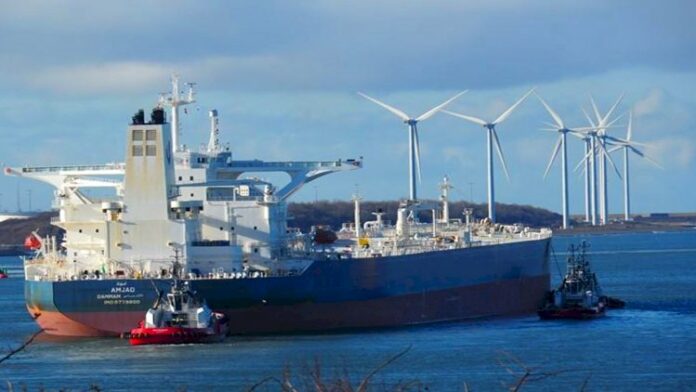
Saudi Arabia said on Monday that two of its oil tankers were among those attacked off the coast of the United Arab Emirates and said it was an attempt to undermine the security of crude supplies amid tensions between the United States and Iran.

The UAE said on Sunday that four commercial vessels were sabotaged near Fujairah emirate, one of the world's largest bunkering hubs lying just outside the Strait of Hormuz, but did not describe the nature of the attack or say who was behind it.

The UAE had not given the nationalities or other details about the ownership of the four vessels. Riyadh has identified two of them as Saudi and a Norwegian company has said it owned another. Details of the fourth ship were not immediately clear.

Iran, which is embroiled in an escalating war of words with the United States over sanctions and the U.S. military's presence in the region, moved to distance itself on Monday.

Iran's Foreign Ministry called the incidents "worrisome and dreadful" and asked for an investigation into the matter.

A senior Iranian lawmaker said "saboteurs from a third country" could be behind it, after saying on Sunday the incident showed the security of Gulf states was fragile.

Highlighting international concerns, Britain's Foreign Minister Jeremy Hunt warned of the risks of "a conflict happening by accident" with an unintended escalation between Washington and Tehran over an unravelling nuclear deal.

Washington withdrew last year from a 2015 pact between Iran and global powers aimed at reining in Tehran's nuclear plans. Since then, the United States has ratcheted up sanctions on Iran, saying it wanted to reduce its oil exports to zero.

A fifth of global oil consumption passes through the Strait of Hormuz from Middle East crude producers to major markets in Asia, Europe, North America and beyond. The narrow waterway separates Iran from the Arabian Peninsula.

Iran's Revolutionary Guards, designated a terrorist organisation by the United States, threatened last month to close the chokepoint if Tehran was barred from using it.

Oil prices rose on Monday, with Brent crude futures at $71.71 a barrel by 0912 GMT, up $1.09.

Saudi Energy Minister Khalid al-Falih said in a statement that one of the two Saudi vessels attacked was on its way to be loaded with Saudi crude from Ras Tanura port for delivery to state-owned Saudi Aramco's customers in the United States.

The attack did not cause any casualties or an oil spill but caused significant damage to the vessels' structures, he said.

Trading and shipping sources identified the Saudi vessels as very large crude carrier (VLCC) tanker Amjad and crude tanker Al Marzoqah, both owned by Saudi shipping firm Bahri, which did not respond to a Reuters request for comment.

Thome Ship Management also said that Norwegian-registered product tanker MT Andrea Victory was "struck by an unknown object on the waterline" that caused a hole in the hull.

The UAE Foreign Ministry had said there were no casualties and the Fujairah port operations were normal. An investigation was launched in coordination with international authorities, it said, calling on global powers to prevent any parties trying to harm maritime safety and security.

Gulf stock markets fell on Monday, with the index in Dubai, the region's trade and business hub, down 2.6% and the Saudi index down over 2%.

Sunni Muslim allies Saudi Arabia and the UAE have backed U.S. sanctions against Shi'ite Iran, a fellow OPEC producer but regional foe. After the United States ended all sanctions waivers that had allowed some nations to continue importing Iranian crude, Washington said Riyadh and Abu Dhabi would help compensate for any shortage in oil supply.

Falih said the attack aimed to undermine maritime freedom and the security of oil supplies to consumers worldwide.

"The international community has a joint responsibility to protect the safety of maritime navigation and the security of oil tankers, to mitigate against the adverse consequences of such incidents on energy markets and the danger they pose to the global economy," he said.

Iranian Foreign Ministry spokesman Abbas Mousavi said the incident "has a negative impact on maritime transportation security" and asked regional countries to be "vigilant against destabilising plots of foreign agents", the semi-official ISNA news agency reported.

The U.S. Maritime Administration said in an advisory on Sunday that incidents off Fujairah, one of the seven emirates that make up the UAE, had not been confirmed and urged caution.

The Maritime Administration had said earlier this month that U.S. commercial ships including oil tankers sailing through Middle East waterways could be targeted by Iran in one of the threats to U.S. interests posed by Tehran.

Washington said it was sending a U.S. aircraft carrier and other forces to the Middle East due to what it said were Iranian threats, while Tehran has called the U.S. military presence "a target" rather than a threat. Iran has said it would not allow its oil exports to be halted.

Source:marinelink

Shell conducts successful trials of 0.50% sulphur marine fuel

0

As the IMO 2020 implementation day is approaching quickly, Shell informed that, in order to help operators prepare, it is offering trials for its very low sulphur fuel oil (VLSFO) in key ports. Shell has also launched a new two-stroke engine cylinder oil specifically for use with engines running on VLSFO.

Specifically, Shell has already conducted 19 successful trials of the 0.5% sulphur fuel with shipowners at key ports globally and will be performing more trials in New Orleans, Rotterdam, and Singapore.

Until now the tests have shown that with the correct preparation, the fuels performed well in the engine, crews were comfortable using them and changeovers between grades did not lead to any extra workload for the engine crew.

In addition, during April Shell launched Shell Alexia 40. This is a new two-stroke engine cylinder oil specifically for use with engines running on VLSFO. It will be available in Singapore from 1 June 2019 and other main supply ports from 1 July 2019.

Speaking about the recent trials, Grahaeme Henderson, Head of Global Shipping & Maritime at Shell, stated:'Alongside our Marine Fuels business, Shell Shipping & Maritime has carried out a successful trial of the new fuel on one of our own vessels, the Silver Carolyn, in Singapore. The experience we gained from this trial and others, helps us be sure that the solutions Shell provides are what our customers and shipowners want"

BP has also informed that it is ready to sell a very low sulphur fuel oil (VLSFO) ahead of the 2020 sulphur cap which bans polluting fuels for the shipping industry. The company now aims to retail the new 0.5% sulphur VLSFO worldwide.

Van Oord’s Werkendam Begins First Job

0

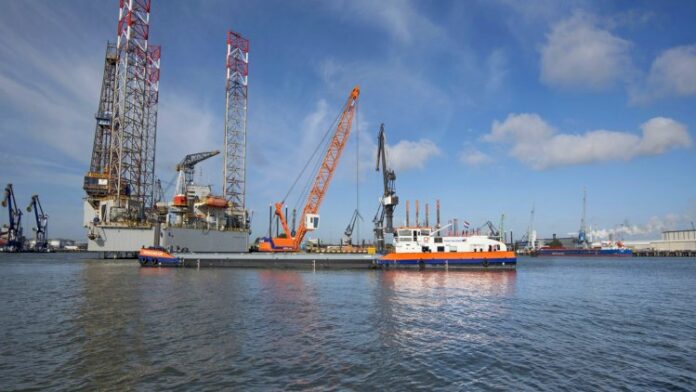
Dutch dredging specialist Van Oord said LNG-powered crane vessel, Werkendam started work on its first project this week.

The world’s first LNG-powered crane vessel is carrying out maintenance work in the port of Rotterdam, Van Oord said in a press release.

Port of Rotterdam Authority, is pleased with this initial deployment: "We are encouraging the transition from fuel oil to LNG as a fuel for shipping. It is good that operational ships are taking the lead," says Ronald Paul, COO of the Port of Rotterdam Authority.

The Werkendam is also the first Van Oord vessel to run entirely on LNG. With a storage tank on the aft deck, the Werkendam can store enough LNG to sail and operate for fourteen days without refuelling. Compared to a diesel-powered vessel, the Werkendam emits 80% less particulate matter and 70% less nitrogen. It also boasts a CO2 reduction of 25%.

"We are proud of this ingenious crane vessel. The vessel is a practical expression of our pioneering role in the field of sustainability," said Ronald Schinagl, Director Netherlands at Van Oord.

As well as running on LNG, the Werkendam has more sustainable innovations on board. For example, the electric crane is equipped with devices known as ultracaps, which recover energy when, for example, a load is released.

The Werkendam is co-financed by the European Union.