0.4 C
New York
Home Blog Page 1058

EU marine energy scheme opens first call

0

The first call for applications in the €13m Ocean DEMO initiative has opened and will run until 1 July 2019.

The initiative, which is funded by Interreg North-West Europe, aims to accelerate the transition in marine energy from single prototype to multi-device wave and tidal farms.

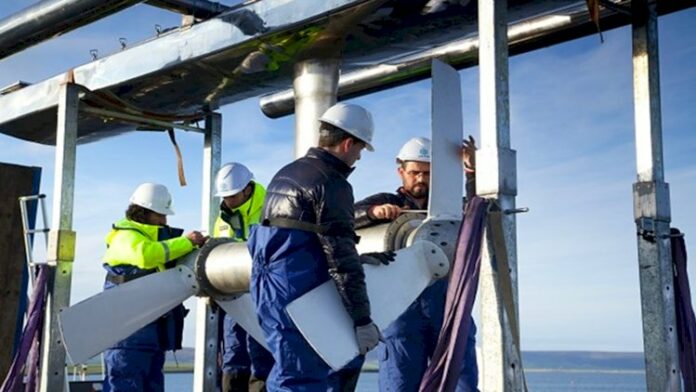
Successful applicants to Ocean DEMO will receive free access to test their ocean energy products and services in real sea environments at the project’s network of test centres, including the European Marine Energy Centre (EMEC) in the UK and SmartBay in Ireland.

Technology developers can apply for support packages to test multi-device farms or single devices able to scale up to multi-device in the future. Call documents are available on the Ocean DEMO website.

EMEC programme manager and Ocean DEMO project leader Nicolas Wallet said: “We’re looking forward to receiving the first applications for Ocean DEMO. This new project is a tremendous opportunity for growth in the ocean energy industry."

“Several past projects such as FORESEA have proven ocean energy technologies’ great potential, it is now time to scale up."

Wallet said reaching the multi-device farms stage will result in economies of scale, significantly improving ocean energy technologies’ competitiveness, and will drive innovation across the supply chain.

“The cost reduction will in turn attract new investors and promote further growth in the ocean energy sector,” he added.

SmartBay Ireland business development and projects coordinator Mairead Elliott said: “The test centres available through Ocean DEMO are amongst the best in the world."

“With its focus on multi-device farms, Ocean DEMO will help technology developers take an important step towards commercialisation. We’re looking forward to working with them, getting their technologies in the water and contributing to the growth of the ocean energy sector.”
Ensco Rowan wins arbitration case against Samsung Heavy MAY 17TH, 2019

0

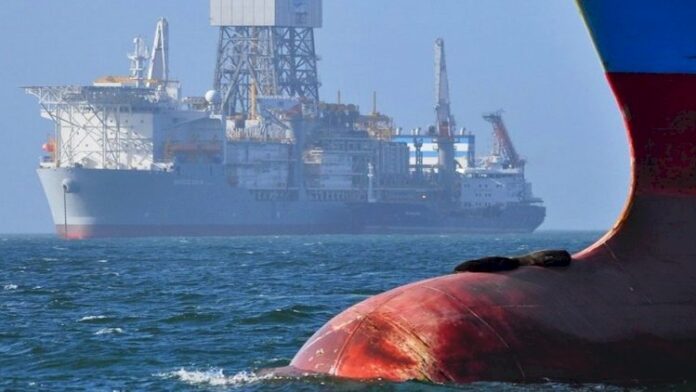
Offshore driller Ensco Rowan has announced that an arbitration tribunal has awarded the company $180m in damages as part of its proceedings against Samsung Heavy Industries (SHI) over a drillship charter contract.

The company initiated arbitration proceedings in London against SHI in 2016 for the losses incurred in connection with a drilling services agreement for Ensco DS-5 after the customer Petrobras cancelled the contract over corruption allegations.

In March, Petrobras also filed a lawsuit against SHI and demanded $249m for damages resulting from the contract. Petrobras claimed that it paid excessive charter fees under the contract.

According to the company, in January 2018, the arbitration tribunal issued an award on liability fully in Ensco Rowan’s favor, and the arbitral hearing on damages took place in the first quarter of 2019. SHI may apply to the English High Court for leave to appeal this award within 28 days from date of award.

Source:splash247

Production Starts at Cameron LNG

0

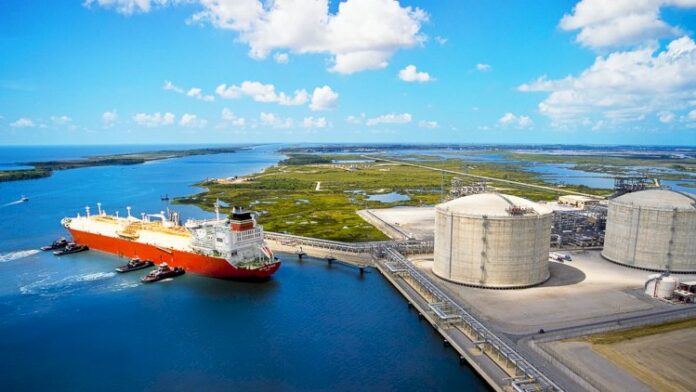
The Cameron LNG project in Louisiana has achieved first LNG production from train 1. 

Cameron LNG completed all major construction activities for Train 1 and began the commissioning and start-up process in November 2018. Phase 1 of the project of 13.5 million tons per annum (Mtpa) capacity includes three LNG trains of 4.5 Mtpa each. Construction is ongoing for trains 2 and 3 with first production expected by the turn of the year and mid-2020 respectively.

The project is operated by Cameron LNG LLC jointly owned by Sempra Energy (50.2 percent), Total (16.6 percent), Mitsui & Co. (16.6 percent) and Mitsubishi/NYK (16.6 percent).

Sempra Energy’s share of full run-rate earnings from the first three trains at Cameron LNG are projected to be between $400 million and $450 million annually. Cameron LNG Phase 1 is one of five LNG export projects Sempra Energy is developing in North America: Cameron LNG Phase 2, previously authorized by Federal Energy Regulatory Commission (FERC), encompasses up to two additional liquefaction trains and up to two additional LNG storage tanks; Port Arthur LNG in Texas and Energía Costa Azul (ECA) LNG Phase 1 and Phase 2 in Mexico.

Total entered the Cameron LNG project through the acquisition of Engie’s upstream LNG business in 2018. Total will have an overall LNG portfolio of around 40 Mtpa by 2020 and a worldwide market share of 10 percent. The group sold 21.8 million tons of LNG in 2018.  

Source:maritime-executive

Maersk secures work for three offshore rigs

0

 Maersk Drilling has signed two new contracts and one contract extension since the end of 1Q 2019.

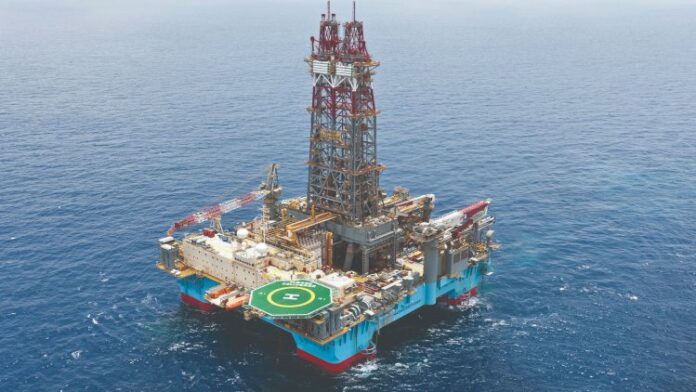
One firm three-year contract is with Inpex Australia for the ultra-deepwater semisubmersible Mærsk Deliverer, starting in 2Q 2020, with two one-year extension options. Value of the firm period is $300 million, equivalent to a day rate of $266,200.

The other firm contract is for one month, with three additional one-well options, with AGM Petroleum Ghana for the ultra-deepwater drillship Maersk Viking. One of the options has already been exercised.

In addition, Maersk secured a 100-day extension from BP for the semisub Maersk Discoverer which will now continue operating offshore Egypt until November.

Design Unveiled for Carnival Corp.’s First Cruise Terminal in Japan

0

Miami-based architecture firm Berenblum Busch Architects (BBA) has unveiled its design for Carnival Corporation’s first cruise terminal in Japan. Located in Japan’s port city of Sasebo, Uragashira Cruise Terminal will support the Japanese government’s plans to develop its ports and increase the number of cruise travelers in the region. The terminal will serve as a port-of-call for cruise ships primarily traveling from mainland China to Japan.

As the region is prone to typhoons and earthquakes, BBA’s design of the 50,000-square-foot terminal consists largely of concrete, as well as glass and steel, which will be locally sourced. The terminal’s interiors will be highlighted by wooden finishes. The program includes functions such as retail spaces, passenger waiting area, immigration, customs, offices, a second-floor terrace overlooking the sea, a public plaza, a designated car and bus drop-off area, and parking.

The terminal is expected to be operational by 2020, ahead of the Tokyo Olympic Games.

Carnival Corp. signed a long-term strategic partnership with the Japanese port city of Sasebo last year. The group anticipates entering more public/private partnership in Japan in the future to develop certain Japanese ports into turnaround ports to promote more fly-and-cruise packages out of Japan.

Carnival Corp. has a strong cruise presence in Japan, carrying an estimated 1.8 million passengers in the market.

Terminal Design

The new one-story terminal is located between Sasebo Bay and the mountains, and the design aims to make it part of the green landscape. BBA’s design is “Zen” and minimal, taking into account Sasebo’s culture, its building traditions, geography, and low-scale surrounding. 

The focal point of BBA’s design is the terminal’s curving roof. Extending past the building and out toward the lush hills that make the serene scenic environment, the roof welcomes the sea and the incoming ships it carries, while also blurring the lines between the inside and outside. Sawtooth skylights that face north were also incorporated into the roof to maximize the natural light resource without full sun exposure. The roof’s long overhead will serve as a cooling mechanism for the building, as well as a shield for the terminal’s glass walls and steel frame.

“The design concept for Uragashira was to create a ‘cruise terminal in a nature park.’ Sasebo is an area known for its 10,000 islands, and we want travelers to feel like they’re in a park and not a parking lot. We accomplished this by respecting and conforming with the surrounding nature and adding additional vegetation to the site,” said BBA Founding Principal, Gustavo Berenblum.

What changes made to SOLAS Chapter II-1 on damage stability

0

2019 is considered a busy year for the shipping industry and the IMO, especially with the upcoming SOLAS amendments. In fact, special consideration should be given to amendments to SOLAS Chapter II-1 on damage stability, which came into force in 2009.

Amendments to SOLAS Chapter II-1 aim to harmonise cargo ship and passenger ship damage stability, as they made probabilistic damage stability the main method for calculating damage stability for passenger ships and general cargo ships.

The philosophy behind the probabilistic concept is that two different ships with the same attained index are of equal safety and, therefore, there is no need for special treatment of specific parts of the ship, even if they are able to survive different damages. The only areas which are given special attention in the regulations are the forward and bottom regions, which are dealt with by special subdivision rules provided for cases of ramming and grounding.

What is more, It was necessary to include a deterministic 'minor damage' on top of the probabilistic regulations for passenger ships to avoid ships being designed with what might be perceived as unacceptably vulnerable spots in some part of their length.

"It is easily recognized that there are many factors that will affect the final consequences of hull damage to a ship. These factors are random and their influence is different for ships with different characteristics"…IMO said.

When these amendments applied, the need for several revisions was clear. For this reason, the IMO carried out a major review of the subdivision and damage stability requirements in Chapter II-1 of SOLAS.

Among others, key changes include:

  • The need of limiting stability information to contain trim;
  • Changing the required subdivision index, R, for passenger vessels;
  • Amending the calculation for S factor.
  • Limits regarding the distance between small wells and the keel line unless a damage stability check is made and the introduction of a minimum limit for the vertical damage extent. It also permitted a butterfly valve at the collision bulkhead on cargo ships;
  • Testing of watertight hatches;
  • Air pipes must terminate in a superstructure to be considered unprotected openings unless equipped with a watertight means of closure;
  • Removing the possibility of leaving watertight doors open.

These amendments need to be incorporated into the ships' design as from from 1 January 2020.

Bill introduced in the US to curb oil and gas methane emissions

0

US Rep. Diana DeGette introduced legislation to reduce the large amounts of methane pollution and waste that are being released into the atmosphere each year by oil and gas producers across the country. About one-third of all methane released in the US comes from oil and gas operations.

To protect this fuel and prevent it from being wasted or released into the atmosphere, Ms. DeGette’s legislation would require all oil and gas producers in the US to take measures to capture any methane gas that reaches the surface at their well sites, and not burn it off or let it leak into the atmosphere.

Commenting on the legislation, Diana DeGette stated: 'If we’re going to be serious about fixing the climate crisis, we have to be serious about curbing the release of methane into the atmosphere. We should be capturing and using this extremely valuable resource, not allowing the worst actors in the oil and gas industry to release it into the atmosphere where it’s going to harm future generations"

The bill – known as the Methane Waste Prevention Act – would mandate oil and gas producers to capture 85% of all gas produced on public lands within three years of enactment, and 99% of all gas produced on such lands within five years of enactment.

The legislation would also ban the venting of any natural gas on public lands, as well as methane flaring at any new wells created two years after the bill is passed.

Essentially, the legislation would reinstate, strengthen and protect two 2016 rules that the Obama administration had established. The first limited the amount of methane that oil and gas producers could release. The second sets similar limits that apply to any new or modified oil and wells in the US.

If approved, the legislation would prevent the EPA from rolling back its version.

Between 2009 and 2015, oil and gas producers released around 462 billion cubic feet of methane into the atmosphere. If captured, this amount would have been enough to supply about 6.2 million households for a year.

According to the EPA, when applied, the rule would would cut about 7.7 to 9 million metric tons of carbon dioxide emissions by 2025. In the same wavelength, the BLM estimated that its rule would keep the equivalent of 4.4 to 4.5 million metric tons of carbon dioxide out of the atmosphere.

A number of US states, including Colorado, North Dakota, Wyoming, Utah and Pennsylvania, have already taken measures to curb venting, flaring and leaks within their boundaries.

CNOOC to list energy logistics unit

0

Chinese state-run energy conglomerate China National Offshore Oil Corporation (CNOOC), has applied with China Securities Regulatory Commission (CSRC) to list its subsidiary CNOOC Energy Technology & Services.

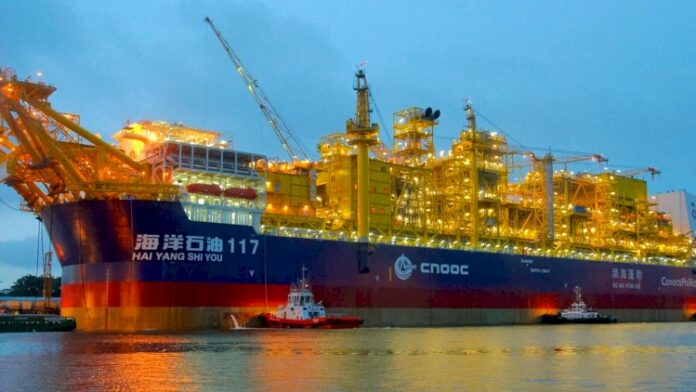
CNOOC Energy Technology & Services was established in 2008 and mainly offers energy logistics services and integrated FPSO services.

According to the company’s prospectus, it plans to raise RMB3.733bn ($543m) from the IPO. It has yet to reveal the location of the listing.

The company will use RMB1.5bn for debt repayment, RMB376m for a drilling platform construction project, RMB601m for the acquisition of LNG carrier to serve the Queensland Curtis LNG project in Australia, while another RMB629m will be used for the maintenance and repair for the 2004-built Hai Yang Shi You 111 FPSO.

CSRC will hold a meeting to review the IPO application on May 16.

CNOOC currently controls six listed units including two offshore service units COSL and COOEC.

Modular grid cables reach Zeebrugge beach

0

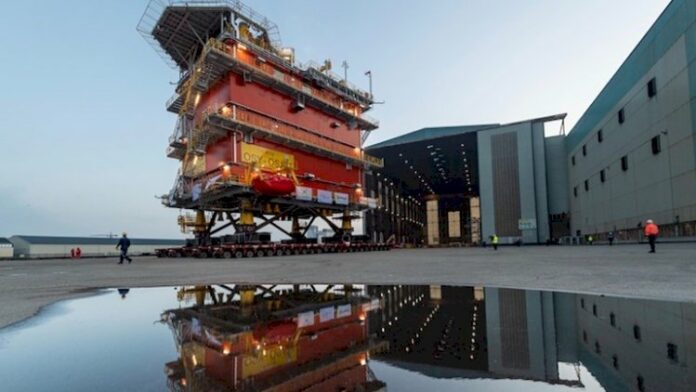
The second of two submarine cables from Elia’s modular offshore grid will arrive on the shore at Zeebrugge, Belgium, later this month, ensuring the switchyard platform can connect to offshore wind farms from September.

Earlier this month the first of the two cables was connected to the mainland’s existing onshore underground cables leading to the Stevin high voltage substation in Zeebrugge.

Work is also under way offshore to connect the cables to the platform.

The offshore ‘plug’ is located 40km off the Belgian coast and will connect to offshore wind farms to transmit maximum amounts of electricity to the mainland.

The project includes 130km of 220kV cables, which will be laid under the sea, leading from the offshore platform to Zeebrugge beach.

To mark progress the Belgium federal minister Philippe De Backer and minister Marie Christine Marghem visited the modular offshore grid along with executives from Belgian grid operator Elia, which has invested €400m in the project.

Bart Tommelein and Dirk De Fauw, Mayors of Ostend and Bruges respectively, were also present.

In April, the platform's topside was successfully fitted onto the jacket in the North Sea.

The plug will bundle the electricity generated by four wind farms, Rentel, Seastar, Mermaid and Northwester 2, and transmit it to the mainland via joint subsea cables.

The project enables savings of 40km-worth of cable and will also provide greater security of supply.

If one of the offshore cables fails or is faulty, the wind farms will still be able to inject their energy into Belgium's grid.

Elie chief executive Chris Peeters said: “The MOG plays an essential role in the transition towards more renewable energy."

“We are especially proud that Elia can act as a pioneer in this regard. The project has been completed in record time: the first agreements were made with the authorities in March 2016, and the MOG will be operational this September. That is unheard of.”

During the visit, Elia and the political stakeholders also looked ahead to the future.

In late April, the federal government approved Elia's 2020-2030 Federal Development Plan, in which Elia outlines its investment plans for the next decade.

Elia plans to expand the offshore network by building MOG 2, as part of a network of platforms in the North Sea that will connect the additional wind farms that Belgium’s offshore wind law provides for.

The MOG platform is unmanned and can be fully monitored and controlled remotely.

The topside rises 41 metres above the surface of the water and weighs 2000 tonnes.

The plug is anchored to the seabed with four posts at a depth of 60 metres.

ICS pushing MEPC meeting to adopt FONARs for 2020 sulphur cap

0

With the sulphur cap less than eight months away the International Chamber of Shipping (ICS) is pushing to get guidelines for non-availability of fuel adopted at the IMO MEPC meeting this week.

While much of the focus around the Marine Environment Protection Committee (MEPC) meeting this week has been on measures to cut greenhouse gas (GHG) emissions from shipping it is also the last opportunity ahead of the 2020 sulphur cap for the adoption of measures to smooth implementation.

“I think what will be important at MEPC this week we are pushing IMO to adopt these guidelines for fuel non-availability reports (FONARs),” Esben Poulsson, chairman of ICS told a Nautical Institute conference in Singapore on Wednesday.

Owners continue to have concerns over availability of low sulphur fuel come January next year, especially for tramp trading vessels calling smaller ports, and FONARs is designed to allow them to continue trading without penalty if they are only able to buy high sulphur fuel oil.

“And we as ICS do want to stress this is not a free pass, it just helps an owner who diligently and properly and documented tried to buy the proper fuel but has been able to.”

He added: “I personally look at this as a common sense exercise and I hope common sense will prevail.”