1.8 C
New York
Home Blog Page 1046

Crane collapses on bulker at Yangzijiang Shipbuilding, one dead

0

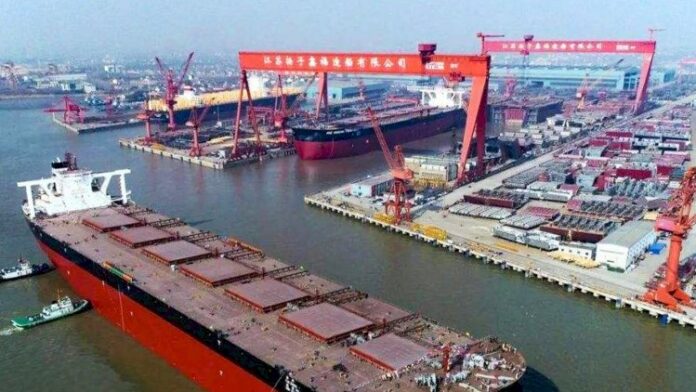
A crane collapse incident took place at Yangzijiang Shipbuilding’s Yangzi Xinfu yard this morning.

According to local reports, the crane fell onto a bulk carrier under construction at the yard and caused damages to the front starboard side of the vessel.

Yangzijiang Shipbuilding said in an announcement that the accident was caused by overweight lifting operations.

Two workers onboard the vessel were injured in the incident, one of them died after being sent to the hospital while the condition of the other worker has been stabilised.

Authorities have started investigations into the incident.

VesselsValue data shows there are only three 180,000 dwt capesize bulkers under construction at Yangzi Xinfu. All are being built for Japanese owner Orient Marine, a wholly-owned subsidiary of Mitsui & Co.

Source:splash247


Hamburg’s Oldest Wooden Ship Collides with Container Feeder

0

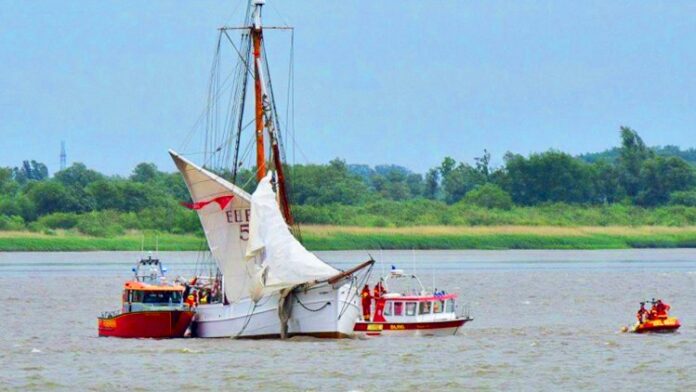
Seven people were injured on Saturday when Hamburg's oldest wooden ship collided with a container feeder ship on the Elbe River in Germany.

The 1883 built and recently restored pilot saver No.5 Elbe collided with a container feeder ship, the Cyprus-flagged Astrosprinter. All 43 passengers were rescued with the help of the German Life Saving Society (DLRG) and the fire brigade. 

DLRG said that it was lucky they were attending a minor incident nearby and could reach the vessel quickly. Pumps were bought on board to try and keep the vessel afloat, but they were not sufficient and the vessel sank.

It has been reported that the sailing ship steered directly into the container ship’s path after a failed tack. The Hamburg Water Protection Police are leading the investigation, and the Hamburg Waterways and Shipping Authority is coordinated the salvage work.

The 37-meter-long two-master is the oldest ship owned by the Hamburg Maritime Foundation which released a statement saying: “With great sadness we regret the collision and feel very much with the passengers and members of the ship's crew who have come to harm. We hope the injuries can be cured quickly.

“We sincerely thank the auxiliary crews of DLRG and the fire brigade for their courageous and skilled intervention in rescuing passengers and the ship's crew.”

Video source: Hamburg Maritime Foundation, published in May 2019.

In the 1920s the No. 5 Elbe was sold to an owner in the U.S. The Hamburg Maritime Foundation brought the ship back to Hamburg in 2002 and restored it. Over the winter of 2018/2019, the pilot's saver was again extensively restored. The ship has modern navigation and safety equipment.

Source:maritime-executive

Australian Authorities Make Largest Ever Onshore Ice Seizure

0

Australian authorities have seized the country’s largest ever onshore methylamphetamine (ice) consignment, after Australian Border Force (ABF) officers in Melbourne detected almost 1.6 tons of the illicit drugs – equal to almost 16 million drug deals – in stereo speakers originating from Bangkok, Thailand.

In a recent ABF targeting operation, officers selected a sea cargo consignment for further inspection at the Melbourne Container Examination Facility. An x-ray revealed anomalies within the speakers and when they were deconstructed, ABF officers found vacuum-sealed packages containing the drugs.

In total, 1.596 tons of methylamphetamine and 37kgs of heroin were detected with an estimated street value of A$1.197 billion ($838 million) and A$18.5 million ($13 million) respectively.

Last financial year the ABF made 43,000 detections of illicit drugs weighing more than 11.8 tons, so this seizure is equal to more than 13 percent of the total drugs we seized last financial year.

There have been no arrests and ABF and the Australian Federal Police (AFP) are continuing investigations.

Last month, the ABF intercepted MDMA and cocaine worth more than A$140 million ($97 million) which arrived in a shipping container from Spain.

Source:maritime-executive

Maersk Furthers Business in Russia

0

A.P. Moller – Maersk and Russian Ministry of Transport signed a Memorandum of Understanding on June 5, enabling the launch of TradeLens in Russia. The blockchain enabled platform, jointly developed by Maersk (through its subsidiary Maersk GTD Inc.) and IBM, is expected to significantly facilitate international trade, not least by the inclusion of the Port of St. Petersburg, Russia’s main container gateway, as part of the pilot launch.

The agreement, signed by Maersk CEO Søren Skou and Yuriy Tsvetkov, Deputy Transport Minister, enables the implementation of TradeLens on the Russian market with the aim of introducing digital documentation flow in what is currently mostly paper-based transportation processes. 

“The main result of the implementation of TradeLens, according to our expectations, should be an increase in the transparency of the contracting procedure by distributing information about supply and demand, conditions and operations between many participants of the transport and logistics processes” said Tsvetkov.

Last week it was announced that more carriers will be joining the blockchain-enabled digital shipping platform, which will result in data for nearly half of the world’s ocean container cargo shortly available on TradeLens.

TradeLens enables participants to connect, share information and collaborate across the container logistics supply chain ecosystem. Members gain a comprehensive view of their data and can digitally collaborate as cargo moves around the world, helping create a transparent, secured, immutable record of transactions.

With more than 100 participants on the platform today, TradeLens is already processing over 10 million discrete shipping events and thousands of documents each week, providing shippers, carriers, freight forwarders, customs officials, port authorities, inland transportation providers and others a common view of transactions, which can build trust. A commitment to data ownership rights and permissioned access to data helps ensure privacy and confidentiality, while enabling users to collaborate more efficiently with real-time access to shipping data.

Maersk to build its first cold store in St. Petersburg 

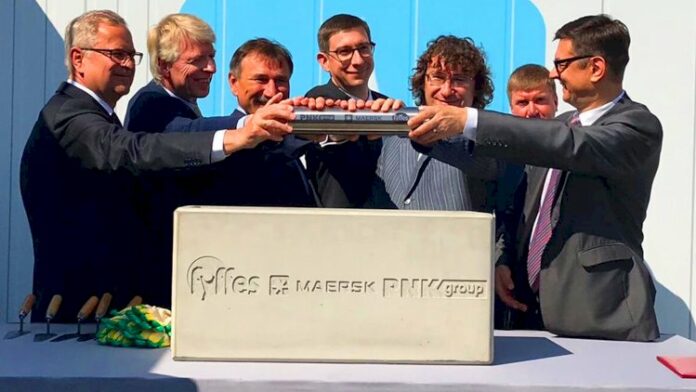
Also on June 5, Maersk participated in the ground-breaking ceremony for the new warehouse in St. Petersburg. Constructed by the Russian industrial developer PNK Group, the 23,700 square meter facility will be located within the PNK Park Sofiyskaya KAD in St. Petersburg. It will have 35 docks able to serve daily throughput of up to 200 trucks. The maximum storage capacity will be over 50,000 tons, and the fully Maersk-operated warehouse will employ over 200 employees.

Approximately 40 percent of the new warehouse will be occupied by European fruit company Fyffes, with the remaining capacity available for other customers from the fresh and frozen produce segment. The new cold store will enable Maersk to offer end-to-end solutions to Russian customers. 

The facility will offer separate storage chambers for frozen produce (-25°C), chilled (+2/+8°C), as well as for bananas, which require a specific temperature of +13°C.

Fyffes Chairman David McCann said: “Today’s ground-breaking is a very important milestone in Fyffes’ strategy to grow our business in Russia. As the largest importer of bananas in Europe, Fyffes is delighted to partner with Maersk in this new warehouse development, which will increase our ripening capacity in Russia to over 200 thousand boxes of bananas per week.”

In 2018, imports of fruit to Russia increased, with banana imports going up by one percent, citrus fruits by 7.4 percent and apples by nearly 13.5 percent compared to the year before. Experts expect fruit imports to continue to increase in the coming years. Since 2017, Russia has been the second largest importer of bananas in the world, after the U.S. and surpassing Germany.

French court clears way for 480MW Saint-Nazaire

0

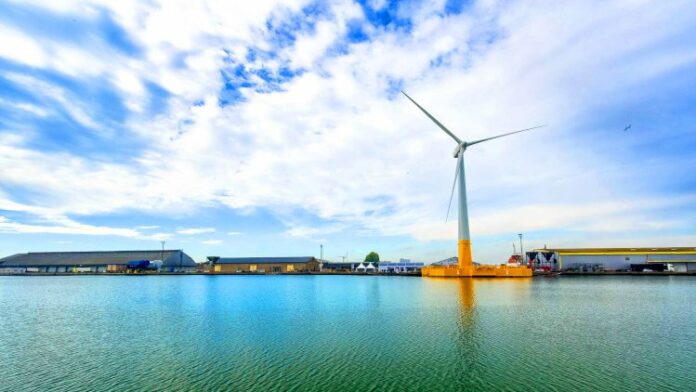
EDF Renewables’ 480MW Saint-Nazaire wind farm off France has cleared the final permitting hurdle after the country’s supreme administrative court Conseil d-Etat ruled against an appeal.

The ruling is an “endorsement of the robustness” of the project 12km off the west coast, according to EDF.

A concession for the project was first secured in 2012. The wind farm is due for commissioning in 2022.

EDF Renewables chairman Bruno Bensasson said: “The Conseil d’Etat’s decision is a ringing endorsement of the robust groundwork undertake by EDF Renewables’ and Enbridge’s teams which have been working for 10 years with professionalism, openness and dedication on bringing the Saint-Nazaire offshore wind project through to fruition.”

He added: “I also wish to salute the backing for the project we received from the local parties. It allowed us to be ready to open the way for marine renewable energies to take shape in France. It will deliver a boost to the local economy.”

The wind farm, which is being developed in the EMF consortium alongside US outfit Enbridge, is expected to feature GE Haliade 6MW turbines.

The US manufacturer welcomed the court ruling.

This is a significant step for offshore wind in France, and we are excited to be part of it. GE remains committed to execute one offshore wind project and our team in Saint-Nazaire will move forward with the assembly of the Haliade-150 6MW once EMF reaches financial close and issues the notice-to-proceed.

Hands-Free Mooring tech fully operational throughout St. Lawrence Seaway

0

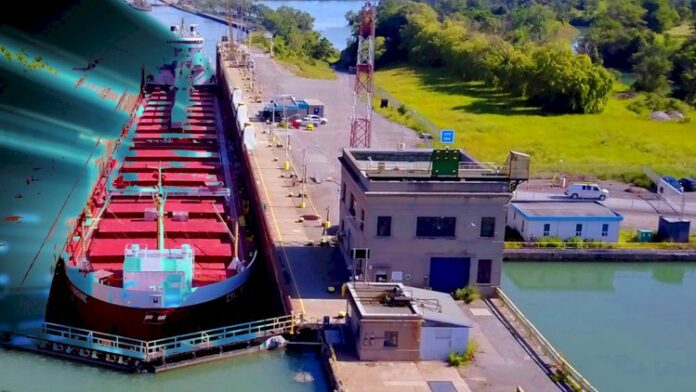
The US Department of Transportation’s Saint Lawrence Seaway Development Corporation (SLSDC) announced that Hands-Free Mooring (HFM) technology is fully used throughout the Saint Lawrence Seaway.

The new technology aspires to revolutionize the method for locking vessels through the Seaway and is considered the most important technological advance since the Seaway’s opening in 1959.

SLSDC has invested $23 million to install HFM technology in the US Snell Lock and the US Eisenhower Lock. The project is the first use of this technology for an inland waterway, and the SLSDC has trained its workforce with the skills needed to implement the new system.

The HFM system utilizes vacuum pads, each of which provides up to 20 tons of holding force. The vacuum pads are located on vertical rails inside the lock chamber wall to ensure the ship during the lockage process as it is raised or lowered while keeping it a fixed distance from the lock wall.

The final step in the lockage operation includes the releasing of the vacuum and retraction of the pads so that the ship can sail safely out of the lock.

The full implementation of this new technology is important to the Seaway, especially considering the fact that last year, there was a 7% increase in ships sailing through the St. Lawrence Seaway. These ships moved 41 million tons of cargo through the binational waterway, while the increase in shipping in the St. Lawrence Seaway is the highest cargo total since 2007.

Speaking about the new technology, SLSDC Deputy Administrator Craig H. Middlebrook, explained that Hands-Free Mooring will dramatically improve the vessel transit experience through the Seaway by improving safety and achieving greater efficiencies in freight movement.

"This new technology is a significant modernization of the St. Lawrence Seaway’s infrastructure, and will enhance workplace safety, lower operating costs for carriers, and decrease vessel transit times through the locks" stated US Transportation Secretary Elaine L. Chao.

Source:safety4sea

New cyber security campaign launched

0

The Port of Amsterdam acquires a cyber security program in order to keep companies and entrepreneurs in the North Sea Canal Area informed of possible cyber attacks. The Port updates its cyber security program, following the online publicity campaign being conducted by the Government of the Netherlands to call on people to better protect themselves against internet crime.

Specifically, the Government of the Netherlands (Rijksoverheid) launched the campaign 'First check, then click', aiming to alert people to be protected against phishing and other forms of internet attacks. The campaign focuses on raising awareness against phishing, while also provides information concerning safe use of the Internet.

The Government highlights:"If you end up on a phishing website, you can report the website via google safe browsing. In this way you help other internet users against internet crime and you contribute to cyber security."

In the meantime, Be Cyber Aware at Sea has already warned users on cyber attacks, as many are the incidents where cyber attackers aim to 'steal' private or sensitive information from the users. Pop-ups, emails and websites are commonly known for asking sensitive information.

Generally, when receiving an uncommon email, one should better check for the email address and track the user in order to understand whether its an official source or not.

Concluding, having an easy password is always a threat; Keeping in mind that surfing the Internet has many more threats than one thinks, simple passwords are vulnerable to cyber attacks, as they can be easily unlocked.

Source:safety4sea

NOVATEK, COSCO SHIPPING, Sovcomflot and Silk Road Fund sign an agreement in respect of Maritime Arctic Transport LLC

0

PAO NOVATEK (“NOVATEK”), China COSCO SHIPPING Corporation Limited, PAO Sovcomflot and Silk Road Fund (the “Parties”) signed an Agreement in respect of the Maritime Arctic Transport LLC (“MArT”), NOVATEK says in a press release.

According to the Agreement, the Parties intend to establish a long-term partnership providing for the joint development, financing and implementing year-round logistics arrangements for shipping hydrocarbons from the Arctic zone of the Russian Federation to the Asia-Pacific region, as well as organizing transit cargo traffic along the Northern Sea Route between Asia and Western Europe.

“The Agreement represents an important milestone in developing the transportation of LNG produced by our Arctic projects along the Northern Sea Route,” noted Leonid Mikhelson, NOVATEK’s Chairman of the Management Board. “The development of MArT will facilitate the rapid transformation of the Northern Sea Route into a global and commercially effective transportation corridor between the Pacific and Atlantic basins, as well as in the implementation of the decision made by the leadership of the Russian Federation to increase Northern Sea Route annual cargo traffic to 80 million tons in 2024”.

PAO NOVATEK is the largest independent natural gas producers in Russia, and in 2017, entered the global gas market by successfully launching the Yamal LNG project. Founded in 1994, the Company is engaged in the exploration, production, processing and marketing of natural gas and liquid hydrocarbons. The Company’s upstream activities are concentrated mainly in the prolific Yamal-Nenets Autonomous Region, which is the world’s largest natural gas producing area and accounts for approximately 80% of Russia’s natural gas production and approximately 15% of the world’s gas production. NOVATEK is a public joint stock company established under the laws of the Russian Federation. The Company’s shares are listed in Russia on Moscow Exchange (MOEX) and the London Stock Exchange (LSE) under the ticker symbol “NVTK”.

SHI receives AiP from LR for LNG-fuelled VLCC

0

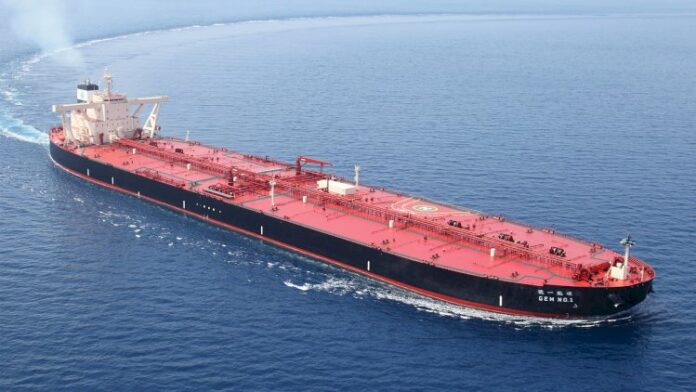
The maritime classification society Lloyd's Register (LR) has presented SHI with approval in principle (AiP) for an LNG-fuelled Very Large Crude Carrier (VLCC) equipped with a 6,000 cubic metre LNG fuel storage tank, a two-stroke dual-fuel diesel engine and an LNG fuel supply system.

This AiP was a result of joint development project with SHI named VLCC2020, said a press release from the technical and business services organisation, wholly owned by the Lloyd’s Register Foundation.

LR assessed the technical feasibility of the LNG fuel supply system and energy saving technologies, including SAVER Air, a SHI patented air lubrication system, and Norsepower’s rotor sail solution, a proven fuel-saving technology which offers potential fuel savings of 5-7%, depending on operating routes.

SHI’s LNG-fuelled VLCC design is estimated to reduce approximately 25% of CO2 emissions and 99% of sulphur oxides, compared to conventional VLCC design.

JT Jung, SHI CTO, said: “This is a significant milestone for SHI and demonstrates our commitment to taking a step forward to help meet the challenge of reducing greenhouse gas emissions through a technically and commercially viable design.”

Norsepower CSO, Jukka Kuuskoski, said: “We are excited to be collaborating with SHI and Lloyd’s Register on this project. We are optimistic that support from these industry leading organisations will open up the market for our rotor sail technology to a larger number of VLCCs and similar ships.”

Thomas Aschert, LR's North Europe Area Manager for Marine & Offshore, commented: “We are proud to work with SHI on a such a future-focused LNG-fuelled VLCC design and this AiP demonstrates SHI and Norsepower's commitment to supporting the shipping industry to reduce GHG emissions ahead of the IMO’s 2050 deadline.”

Source:marinelink

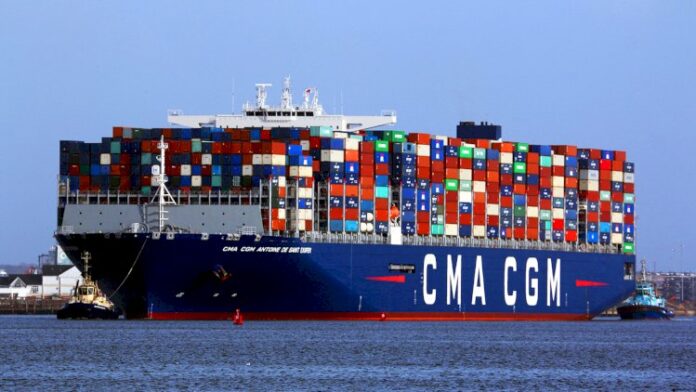
CMA CGM Group Cut Emission by 17%

0

Since 2015, CO2 emissions per container transported per kilometer have been reduced by 17%, said CMA CGM Group, the shipping and logistics giant.

"The Group has achieved a 50% reduction in CO2 emissions per container transported per kilometer between 2005 and 2015. It has achieved a further 17% reduction between 2015 and 2018, in line with its 2025 objective of -30%," said the French container transportation and shipping company in a press release.

Testimony to its ambition for the energy transition of the maritime industry, the Group has become a pioneer in the use of liquefied natural gas (LNG) as a marine fuel. This energy source reduces CO2 emissions by up to 25%, sulfur and fine particles emissions by 99% and nitrogen oxide emissions by 85%.

Since 2018, the Group has thus taken delivery of its first two LNG-powered vessels and it will receive a total of 20 LNG-powered container ships by 2022, including nine 22,000-TEU (Twenty-foot Equivalent Units) vessels to be delivered from next year.

In 2019, CMA CGM also became the first shipping company in the world to successfully test a biofuel oil on board one of its container ships. This major step in the decarbonization of ocean freight will highlights the prospects for the development of marine biofuel oil.

This commitment is driven by the strong human and family values shared by the Group’s 110,000 employees, who act on a daily basis to build a sustainable future. Their work is regularly acknowledged; in 2018, CMA CGM received a total of 40 distinctions and awards and was ranked among the 1% most responsible companies in the field of transport by specialized agency EcoVadis.  

Source;marinelink