2.7 C
New York
Home Blog Page 1047

Nigg to host Moray East jackets

0

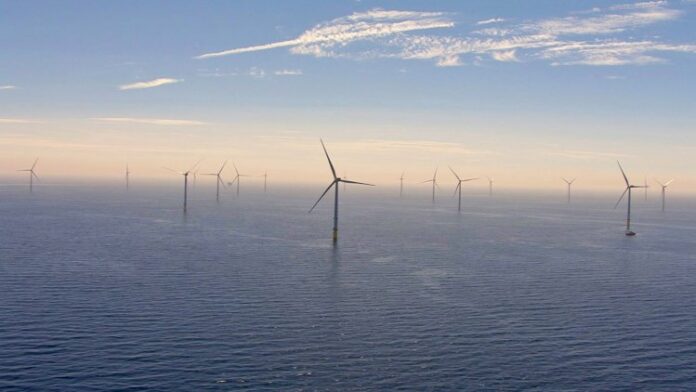
Global Energy Group's Port of Nigg has been chosen by DEME Offshore as the staging port for jacket foundations for the 950MW Moray East offshore wind farm off the coast of Scotland.

The up to £12m contract, details of which were first reported in the 23 May edition of the subscriber-, will see the port provide services for the receipt of completed jacket structures, ahead of installation at the project site in the Moray Firth.

DEME Group is the EPCI contractor for the project's 100 turbine foundations, as well as three substation platforms.

Global Energy said it has invested £90m at the port since taking it over in October 2011.

It said £50m has been spent on port infrastructure, including the new south quay, and £40m on heavy plant and equipment, such as cranes and low loaders, to handle the large offshore wind structures.

A further £10-£15m is to be spent to expand quayside availability and adjacent yard space.

Global Energy Group chairman Roy MacGregor said: “This award is a culmination of a lot of hard work from our people and I would like to thank them and DEME Offshore for their confidence and support in awarding us this contract."

Global now have great experience in this work and this will further establish the Port of Nigg’s position as an important staging port supporting the offshore wind industry.

We look forward to working with DEME Offshore in the delivery of this important work.

Moray East is being developed by EDPR, Engie and Diamond Green and will feature 100 MHI Vestas 9.5MW turbines.

Moray East project director Marcel Sunier said: “The selection of Nigg as the staging port for the massive ‘jackets’ – the oil-rig-like foundations on which the turbines and offshore substations will be installed comes after extensive engagement with the local supply chain and capitalises on the strengths of a history of offshore engineering."

Using Nigg for jackets complements our previous announcement of the Port of Cromarty Firth as an intermediate port for turbines.

“The installation of subsea substructures from Nigg combined with the installation of turbines from Invergordon shows how a complete onshore cluster to deliver the offshore works has been established in Easter Ross.”

SPR given all clear for 1.4GW EA3

0

ScottishPower Renewables has secured the green light to boost maximum power at its East Anglia 3 offshore wind farm of Suffolk to 1400MW from 1200MW.

The developer said the change will allow it to “better position itself for future auctions, allowing for advances in technology to be taken into consideration”.

The UK Secretary of State for Business, Energy and Industrial Strategy (BEIS)granted permission for the change, which is subject to further approval from UK marine authorities.

In addition to the power hike, SPR will reduce the maximum number of gravity base foundations that can be deployed at the project to 100. SPR may still use up to 172 fixed-bottom foundations at the project.

No changes to the size of turbines that may be used were made – maximum rotor diameters remain 220 metres and tip heights 247 metres.

Original consents granted in 2017 limited the upper rating of each turbine at 12MW, but this cap has now been removed.

The 2017 consent allowed SPR to build out the project as either a single 1.2GW development or two 600MW phases.

These figures will be revised to allow the developer more flexibility in the delivery of the two offshore segments, planning documents show.

Source:renews

Automation will be key for the future of shipping

0

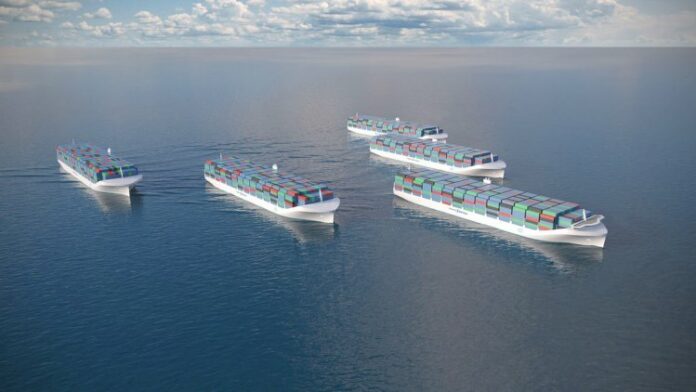
Massterly, a ship manager who will operate unmanned vessels via a manned Shore Control Center, aspires to see a more sustainable maritime transportation. The unmanned ships will be 100% electrically powered and the battery will be charged when the ship is at shore.

Speaking about autonomous ships, Pia Meling, sales and marketing manager in Massterly, noted that they will have various degrees of operate without human interaction. From only decision support with full crew on board, to completely unmanned ships.

She explained that fully autonomous ships should not have any people on board. But, there should be someone on land and could intervene. However, the ship is designed to make its own decisions.

Autonomous vessels will also save on operating expenses, as currently crew costs are large, especially for ships that travel short distances. Moreover, the environment will also be benefited by the use of electric power.

In addition, Ms. Meling said that automation in shipping will provide more flexibility, with those working from land having a better working day. For example, a captain can work on land, work shifts and go home after the end of the working day.

Another important factor is that human errors will be reduced, as Massterly calculates that about 75-80% of the accidents at sea are because of human failure.

What is more, Ms. Meling believes that in 10 years, vessels will be running on hydrogen. The boats will be sailing on short distances with battery operation. But she added that in 10 years, boats that operate on longer distances will use hydrogen instead of electricity.

Moreover, Kristin H. Holth, who heads DNB's Ocean Industries, stated that digitization, automation and new technology will benefit the ocean industries greatly. Furthermore, more actors in the industry are expected to focus more on finding sustainable solutions.

The fact is that more companies in maritime have the environment as a priority nowadays. This can be profitable both for the operation of the companies, but also for the environment.

Source:safety4sea

Digitalization to pave new ways for ship routing

0

As emerging technologies are enhancing ship routing, navigation is getting faster and safer, while there are new possibilities for mega-container ships and fully autonomous ships to sail the high seas in the coming future.

Ship routing has been steadily improving, as the shipping industry successfully mitigates several issues, thus providing viable solutions for real-world applications. Some of these issues regard weather routing, offshore logistics, speed optimization, fleet deployment and maritime inventory routing.

Ship routing uses weather forecast data to digitally present information like shore and fishing ground information, traffic information, and weather-related navigation forecasts and warnings.

Currently, as new technologies emerge, so does the digitalization on board ships. This allows for immediate action based on real-time data provided by ECDIS. As a result, the use of this new technology can lead to more and reliable voyage planning, as well as better monitoring of vessel movements, fuel consumption and efficiency.

By fully digitizing ship routing, vessel motions can improve by considering various navigation factors, especially during low visibility conditions. This type of condition increase the potential of unwanted ship motions that may put the safety of ship at risk.

What is more, the complete digitization of ship routing would enable an even more centralized voyage planning process and open new ways for predictive shipping.

The final result ships' digitization would be the successful development of semi- and fully-autonomous ships. The industry would have to initially improve ship routing systems in such a way that more complicated route plans can be passed back and forth, depending on environmental data like weather forecasts, wind, tide, wave and current conditions.

Source:safety4sea

Good cyber hygiene organisations are the most protected ones

0

In June's edition of Phish and Ships, John Donald, Cyber Adviser at AXIS Capital, compares two different forms of attack; The 'physical' one, coming from a military point of view; The 'digital' one, meaning cyber attack. He highlights why the cyber attacker has an advantage when attacking and the industry's vulnerabilities to attacks.

Specifically, Mr Donald notes that a rough rule of thumb in military circles is that an attacker needs a 3 to 1 advantage in manpower and firepower in order to successfully defeat a defender. Defenders, not attackers, typically have an advantage because it is normally easier to protect and hold than it is to move forward, to destroy and to take.

On the contrary, in the cyber worlds, it is common that the attacker has the advantage; Today's vulnerabilities when it comes to cyber attacks is mostly because the Internet's goal was primarily to share information, and not prevent its flow. 

Cyber attack is a common phenomenon due to the fact that it's low-cost and high payoff.

Moreover, the attacker has an advantage as the Internet and IT systems have a complex software, enabling the attacker move inside the cyber world and the user facing difficulties. 

The attacker and the defender are looking for open windows to find vulnerabilities, either to attack, or to be protected from. Yet, the number of vulnerabilities grows exponentially with the size and complexity of the system. The defender has little chance of finding every single vulnerability and patching it before the attacker finds one to exploit

Mr Donald, on the contrary highlights that "Offensive techniques can be used for defensive purposes since the skill sets required are the same. Malware becomes obsolete quickly (hence the value of zero day exploits) and once it has been identified it can be rapidly defeated."

In light of Internet development in a fast pace the defender is now able to succeed, being protected from factors such as authentication, password managers and keychains, disposable ʻone-offʼ credit cards, cloud computing and faster patching cadences.

Although no organisation is fully-protected from attacks, those with a good cyber hygiene, educated users and well-configured systems can increase an attackerʼs costs significantly.

In cyberspace, defence is more about best practice than best products.

Source:safety4sea

Canada’s first LPG marine export facility opened

0

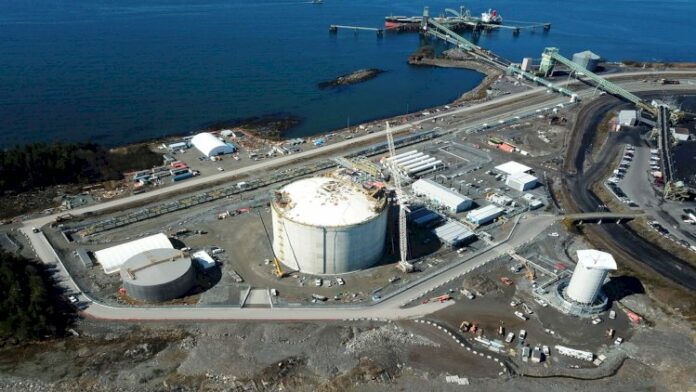
Canadian energy infrastructure company AltaGas announced the opening of its Ridley Island Propane Export Terminal (RIPET), located in Prince Rupert, British Columbia, the first marine export facility for propane in Canada.

The facility began introducing propane feedstock in mid-April, and the first shipment departed the terminal on 23 May bound for Asia.

"RIPET signals to our customers overseas that Canada can deliver on energy exports, and the facility will make significant long-term contributions to international trade, support economic growth in northern B.C., and provide immediate access to clean-burning fuel in Asian markets, where demand is particularly strong,"…said Randy Crawford, AltaGas' President and CEO.

In 2017, AltaGas entered a multi-year agreement with Astomos Energy Corporation, a Japanese propane importer and distributor, to purchase at least 50 % of the propane shipped from RIPET annually.

"The ability to import Canadian propane is a significant advantage for Japan, as it provides greater energy security and supply diversification, while also enabling Canada to maximize the value of its natural resources. This first-of-its-kind project demonstrates to the world what can be achieved through effective partnerships between Canadian and Japanese companies, and will ultimately benefit both countries for decades to come,"...said Seiya Araki, President of Astomos Energy Corporation.

In total, RIPET is expected to ship approximately 1.2 million tonnes of propane annually to customers in Asia.

Asia is the world's largest importer of LPG, with as many as 24 million households using propane for heating and cooking in Japan alone.

Propane is also an important feedstock for the petrochemical industry, and fuels nearly 25 million vehicles worldwide.

The project provided more than 200 jobs during the construction phase, and will provide up to 40 additional permanent jobs for the local economy now that the facility is operational.

AltaGas also worked closely with emergency responders in Port Edward and Prince Rupert, providing training and financial support to ensure the safety of nearby communities.

RIPET is owned by a joint venture between AltaGas (70% interest) and a Canadian subsidiary of Royal Vopak (30% interest).

Spot LNG Freight Rates Plummets in Q1: Flex LNG

0

During the first quarter 2019, spot LNG freight rates plummeted from the record levels seen in the previous quarter, said Flex LNG, the company controlled by billionaire John Fredriksen.

Asia winter demand came in lower than expected due to an unseasonably mild weather in northern Asia, coupled with Japanese nuclear power plants restarting as well as an oversupplied LNG market due to start-up of new LNG production, said the emerging player in the LNG shipping.

Asian LNG prices moved lower, trading closer to or at par with key US and European LNG markers, preventing arbitrage opportunities between the markets. Despite significant growth in liquefaction and exported volumes, sailing distances and utilization where challenged by muted trade in the quarter.

Øystein M Kalleklev, CEO said: “First half of 2019 has been challenging due to the disruption in the LNG trade caused by a unseasonably mild winter, a glut of LNG hitting the market as well as shift in trading patterns favouring shorter hauls to Europe."

Global nominal liquefaction capacity reached 393 million tonnes per annum (Mtpa) in the first quarter 2019 according to IGU.

Total trade reached a historic high of 316.5 million tonnes in 2018, of which 31% or 99 million tonnes was classified as Non-long-term trade, illustrating the LNG markets gradual move towards shorter term structures and arbitrage driven moves. Total LNG trade rose by 28.2 million tonnes in 2018, the third largest increase ever.

Preliminary tracking data from KPLER point towards a 15% increase year-on-year for global LNG exports in the first quarter 2019. The combined exports from Australia, Russia and USA reached 32.6 million tonnes, representing a year-on-year growth of close to 30%.

In the same period, the three largest importers Japan, China and South Korea imported 47.25 million tonnes of LNG, representing a slight decline of ~3% compared to first quarter 2018 primarily due to lower heating demand.

According to industry sources, 12 LNG carriers and one FSRU were delivered in the first quarter of 2019. 13 new LNG orders were reported in the same period. By the end of the quarter, there were 471 vessels above 125,000 cbm in the global LNG fleet, excluding FSRU’s.

The order book at the end of the quarter amounted to 107 conventional vessels, of which 44 were reported as ‘uncommitted’. 23 conventional LNG carriers are scheduled for delivery in 2019, 37 in 2020, 39 in 2021 and 8 in 2022.

The global liquefied natural gas market is expected to grow substantially in the coming years. Total proposed liquefaction capacity is at 843 Mtpa, more than double existing facilities. Over the next two years about 60 Mtpa of liquefaction is expected to come on-line. In the same period, 2019/20, about 120 Mtpa of additional liquefaction capacity is expected to reach final investment decision with the majority in Canada and USA.

Demand is expected to grow firmly as China in particular continues to focus on energy efficiency and improvements in air quality in key metropolitan areas. Economic policies in the country are to an increasing degree focused on environmental advances rather than pure economical growth.

Chinese LNG imports grew 41% in 2018 to ~53 Mtpa. US LNG tariffs have so far primarily affected the Chinese sourcing of LNG, not the country’s growing import volumes, up 28% compared to the first quarter 2018.

Outlook for LNG shipping demand, albeit showing slow growth in the first quarter 2019, remains sound due to new liquefaction capacity coming on-line in the western hemisphere, coupled with robust demand growth in the eastern parts of the world.

Traditionally market analysts have estimated shipping demand to increase by 1.3 LNG carriers per new million ton of liquefaction capacity per annum. Recent liquefaction growth in USA and Russia yield a higher multiple as the distance from supply to key markets are considerable longer implying tonne miles growth.

Source:marinelink

Shell Ocean Discovery XPRIZE Winner Annouced

0

The GEBCO NF- Alumni Team was announced as the $4 million grand prize winner of the Shell Ocean Discovery XPRIZE, a three-year global competition that challenged teams to advance deep sea technologies for autonomous and unmanned, fast and high-resolution ocean exploration. 

The team's winning concept includes the use of a unique unmanned surface vessel (USV) / autonomous underwater vessel (AUV) and associated combination of communications hardware and software to process and transmit data remotely. 

The SEA-KIT USV, Maxlimer, built by Hushcraft in the UK, has a unique ability to launch and recover a KONGSBERG HUGIN AUV, and track it accurately on the surface during subsea survey operations. The autonomous navigation and AUV tracking capabilities of the USV are possible through the integration of the KONGSBERG & Hushcraft custom developed automation and software configuration in conjunction with KONGSBERG’s K-MATE common autonomous control engine.

The HUGIN AUV, Chercheur, deployed by the SEA-KIT USV is owned and operated by Ocean Floor Geophysics (OFG). It is one of the best equipped survey and pipeline inspection AUVs in the world, with HISAS interferometric synthetic aperture sonar, multibeam, sub-bottom profiler, OFG Self-Compensating Magnetometer, water chemistry sensors, acoustic modem, and a state-of-the-art positioning system. 

The GEBCO-NF Alumni Team’s data processing solution utilizes Teledyne Caris components and the development work to meet the requirements of the Shell Ocean Discovery XPRIZE has been undertaken with assistance from Teledyne CARIS. 

A truly international group, the GEBCO-NF Alumni Team includes 16 alumni of The Nippon Foundation-GEBCO Postgraduate Training Program at the University of New Hampshire (UNH), US. They are Dr Evgenia Bazhenova (Russia), Aileen Bohan (Ireland), Dr Mohamed Elsaied (Egypt), Andres Fitzcarrald (Peru), Tomer Ketter (Israel), Christina Lacerda (Brazil), Jaya Roperez (Philippines), Azmi Rosedee (Malaysia), Ivan Ryzhov (Russia), Hadar Sade (Israel), Sattiabaruth Seeboruth (Mauritius), Masano Sumiyoshi (Japan), Neil Tinmouth (South Africa), Dr Rochelle Anne Wigley (US), Dr Yulia Zarayskaya (Russia), and Dr Karolina Zwolak (Poland).

The team’s entry into the competition was funded by The Nippon Foundation, a Japanese private non-profit organisation, and the prize money will be reinvested by foundation into the development of future ocean mapping initiatives.

The team venture was based at the Center for Coastal and Ocean Mapping / Joint Hydrographic Center (CCOM/JHC) at UNH. The Alumni worked closely with partners including the Sasakawa Peace Foundation, Hushcraft Ltd., Ocean Floor Geophysics Inc., Earth Analytic, Teledyne CARIS, Raitt Orr and Associates, ShipOwners, and OmniAccess, as well as equipment supplier Kongsberg Maritime AS, to develop and advance the team concept created especially for the Shell Ocean Discovery XPRIZE.

Dr Rochelle Wigley, Project Coordinator for the team, thanked the XPRIZE judges for recognizing the tireless work and ingenuity of the team members and all others who had contributed to the entry.

“We’re all absolutely overjoyed”, said Dr Wigley, speaking after the announcement was made. “Getting to this point has been a truly international effort. Our diverse nationalities, backgrounds, and specialities have been our greatest asset, and are the reason we made it this far."

Our team’s success could not have been achieved without the partnership and support of The Nippon Foundation. We are the result of their investment in training a new generation of ocean mappers at the University of New Hampshire for the last fifteen years.

The Shell Ocean Discovery XPRIZE challenged us to develop effective, efficient, and better ways of mapping the seafloor. We chose to meet the challenge of XPRIZE by forming a team that transcended borders, on land and at sea. We are privileged to have competed against so many excellent teams, and we have all succeeded in the challenge. We can’t wait to see what the future holds for us and for our technology, all of which can only further the ambition of The Nippon Foundation-GEBCO Seabed 2030 Project to map the entirety of the world’s oceans.

Dr Yulia Zarayskaya said she believed that “the most important and unique aspect of our solution is the approach that we took. It brought together engineers, scientists, developers, business, authorities and many others. Although sometimes it was a challenge to find a common language, I think our achievements show how effective this approach can be."

The GEBCO-NF Alumni Team entered the competition in July 2016, successfully making it through to the semi-final stage and qualifying for the final round, which saw them travel to Kalamata, Greece, to compete against the other finalists in a 24-hour ocean mapping challenge. This involved producing a 5m horizontal resolution bathymetric map, as well as high-definition images of biological, archaeological, or geological features of the ocean environment, which are critical to understanding the oceans and will help inspire the next generation of educators, students, policymakers, and investors to care about ocean discovery, resource development, and protection.

The team mapped 278 km2 and produced ten high-resolution images which were selected using the Kongsberg REFLECTION software package from standard HISAS imagery. Additionally, eight 3D surfaces of the seafloor were produced using Fledermaus software. Kongsberg EM304 multibeam data was uploaded online and team members at UNH cleaned and produced nine point cloud images using Qimera.

The team’s SEA-KIT vessel USV Maxlimer was named after UNH Nippon Foundation-GEBCO Postgraduate Training Program alumna Maxlimer Anziani Vallee, who passed away following a car accident in January 2017. Since being used in the team’s XPRIZE entry, the vessel has completed the world’s first international commercial uncrewed transit, successfully traversing the world’s busiest shipping lane to deliver a box of oysters from the UK to Belgium on May 7, 2019.

Sempra’s Cameron LNG Terminal Ships First Cargo

0

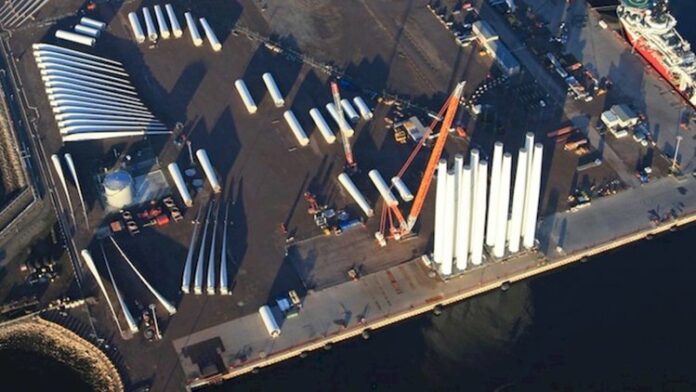
Sempra Energy said on Friday the $10 billion Cameron liquefied natural gas export terminal in Louisiana had shipped its first cargo, making the plant the fourth big LNG export terminal to enter service in the United States.

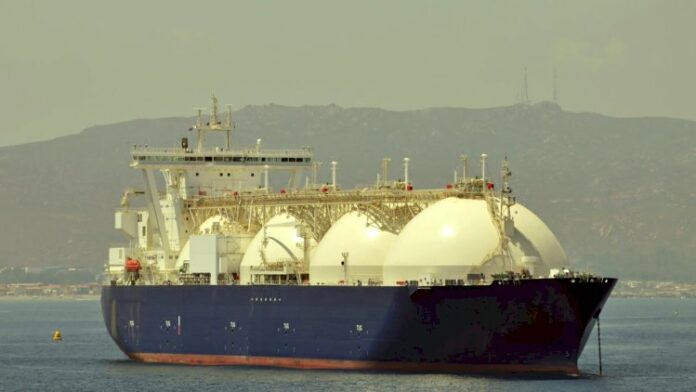
Mitsui & Co Ltd, one of the partners in the Cameron project, chartered the tanker, Marvel Crane, to pick up the commissioning cargo.

It was not immediately clear where the vessel was headed.

Sempra said commissioning cargos were a critical step in the start-up process. The plant is expected to get federal authorization to enter commercial operations in mid-2019.

Natural gas use is growing fast around the world as countries seek to wean their industrial and power sectors off dirtier coal.

There are three liquefaction trains at Cameron. The first started producing LNG in mid May. Sempra has said it expects Cameron 2 and 3 will enter service in the first and second quarters of 2020.

Cameron will produce about 12 million tonnes per annum (MTPA) of LNG, or roughly 1.7 billion cubic feet per day (bcfd) of natural gas. One billion cubic feet of gas is enough to fuel about 5 million U.S. homes for a day.

When the United States sent out its first LNG cargo in February 2016, the country was not exporting any of the fuel.

Since then, the United States has become the world's fourth biggest LNG exporter in 2018, behind Qatar, Australia and Malaysia, and is on track to overtake Malaysia and become the third biggest in 2019.

Just looking at terminals under construction, U.S. LNG export capacity is expected to jump to 7.4 bcfd by the end of 2019 and 10.0 bcfd in 2020 from 5.2 bcfd now.

Cameron is jointly owned by affiliates of Sempra, Total SA , Mitsui, and Japan LNG Investment LLC, a company jointly owned by Mitsubishi Corp and Nippon Yusen Kabushiki Kaisha (NYK). Sempra indirectly owns 50.2% of Cameron.

McDermott International Inc and Chiyoda Corp are the lead contractors at Cameron.

Sempra has a long-term goal of exporting 45 MTPA of North American LNG and is developing a second two-train phase at Cameron, the Port Arthur LNG export terminal in Texas and plans to add export facilities in two phases at its existing Costa Azul LNG import terminal in Baja California in Mexico.

Saudi Aramco signed a 20-year agreement on May 22 to buy LNG from Sempra's proposed Port Arthur.

Source:marinelink

HHI votes in favour of merger with DSME

0

Hyundai Heavy Industries (HHI) shareholders decided to vote in favour of the merger with Daewoo Shipbuilding & Marine Engineering (DSME), despite strong workforce opposition this week. The merger will create a Korean megayard, which will be responsible for 21.2% of the global orderbook.

Workers at both companies strongly oppose to the merger, as they worry about wide job losses. Namely, about 30,000 workers have been laid off from both yards over the last four years.

In fact, the shareholder vote took place under heavy police protection, as violent scenes were occurring all week between workers and top management at HHI’s headquarters in Ulsan.

In order for the merger to be completed it must pass anti-monopoly reviews at Korea and worldwide, with China and the EU raising concerns.

In January 2019, Hyundai Heavy Industries, the biggest shipbuilding group globally, signed a conditional deal with Korea Development Bank (KDB), the biggest shareholder of DSME, on buying the company. Yet, from the beginning, the plans rose a wave of protests from the workers of both companies, who demanded job guarantees in light of potential layoffs.

HHI's split up is the first step to be taken, placing it closer to the merger with DSME. In addition, in March the two shipbuilders signed the deal of about US$1.6 billion with KDB, as the Korea Development Bank is the largest stakeholder of Daewoo Shipbuilding, as it holds a 55.7% stake of the company.

The deal states that the shipbuilder is to be divided into a subholding company and a reorganized Hyundai Heavy Industries, which will carry out its shipbuilding and offshore businesses.

This merger has faced many strikes, as the union in opposed to this proposal, supporting that the split forces the newly born Hyundai Heavy to inherit massive debts, which will lead to job cuts.

Since May 16, the shipyard’s unionized workers have been launching partial and full-scale strikes.

Source;safety4sea