2.3 C
New York
Home Blog Page 1032

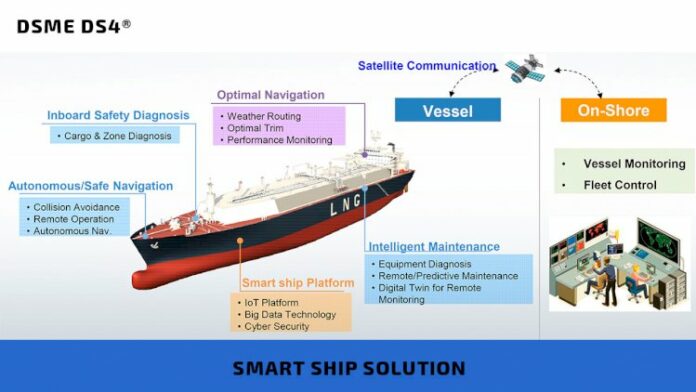
DS4® approved by LR

0

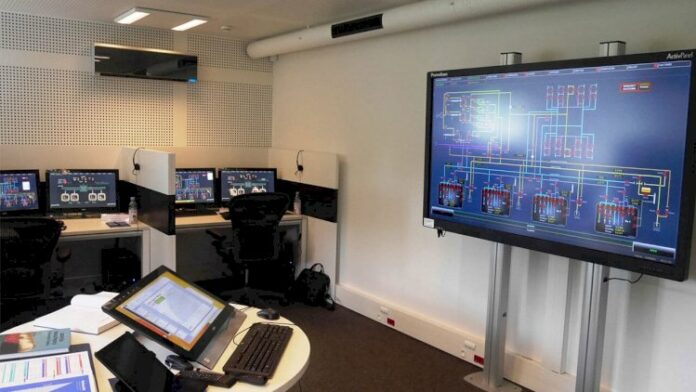
The fleet monitoring ECDIS and surveillance system has been granted the descriptive note' Digital AL3 SAFE SECURITY', confirming compliance with LR's digital ships requirements.

The descriptive note confirms that systems which are essential for ship operation, and that have remote access to onboard operational data for analysis, decision-making and control, have been assessed following LR's Digital Ships ShipRight Procedure.

The descriptive security note means that systems with digitally-enabled functions have adequate resilience measures in place to protect against cyber-attacks or other unauthorised access. LR has defined five accessibility levels for digitally-enabled technology onboard ships. AL3 means the systems have digital access for autonomous/remote monitoring and control, but onboard permission is required and onboard override is possible.

To enhance ship safety and mitigate the risk of introducing vulnerabilities to cyber-attacks, DSME and MARINEWORKS focussed its efforts on developing smart ECDIS and surveillance system.

DSME Senior Executive Vice President, Mr Odin Kwon, commented:

"We are pleased to receive AiP from LR for our fleet monitoring smart ECDIS and surveillance system. We look forward to installing the system onboard several ultra-large container ships that are currently under construction. We keep enhancing our Smart Ship Solution to reflect market demands."

MARINEWORKS President, Mr Yong-Dae Kim said:

"MARINEWORKS is Korea's leading company for the digitisation of the ship's navigational systems. We have supplied over 400 Electronic Chart Display and Information Systems (ECDIS) in the last five years. We are very pleased to be working with DSME and Lloyd's Register to receive AiP before installing this system on ships in the future."

Jin-Tae Lee, Ph.D., Korea Chief Representative and Marine Manager for LR said:

"We have been working closely with DSME to ensure that Smart Ship Solution meets our digital ships requirements. This pre-emptive solution will help shipowners and operators meet the digitalisation challenges that the industry is currently facing. We are very proud to present  AiP to DSME, confirming that the system has adequate cyber resilience measures in place to protect against cyber incidents."
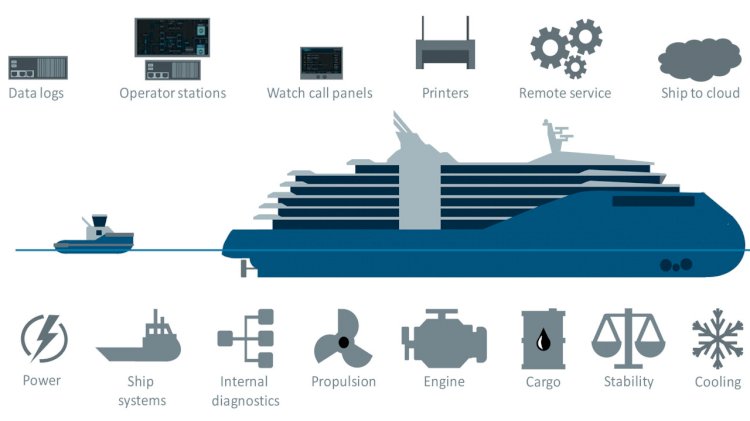
Next Step in Automation and Digitalisation within Marine Operations

0

The former ULSTEIN subsidiary, Ulstein Blue CTRL, will continue as an independent company under the name Blue CTRL. Both Ulstein and SCHOTTEL will own 50 per cent of the shares in the company. Deliveries from the company will be based on the unique X-CONNECT ®platform.

ULSTEIN has been developing the X-CONNECT® platform for future marine automation since 2011. SCHOTTEL has long traditions for developing control and automation systems with regards to a wide range of ship propulsion asystems.

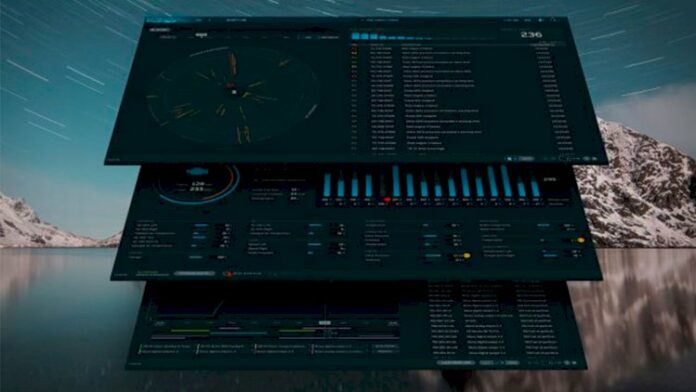
X-CONNECT® is a universal digital platform for marine automation, control and monitoring. All functionality in the system is predefined and configurable supporting the work philosophy; configure, plug and play. Besides systems for new building projects, the new cooperation will also offer systems suitable for vessel upgrades.

“There are many similarities between our companies. We are both privately owned. This implies the possibility of long-term strategic business concepts. We believe that we have highly complementary products”,

says Tore Ulstein, deputy CEO in Ulstein Group and continues:

“Seen from the designer’s perspective, we believe that closer integration between the development of the marine platform and the propulsion system will give far better operations of the vessel. If we manage to streamline more data between the different systems on board, we can optimise dynamic positioning and operations. This again will lead to reduced fuel consumption, reduced emission hence greener operations.”

Traditionally SCHOTTEL is already present on the vessel’s bridge with propulsion control systems. Propulsion controls, together with the recent development of further assistance and positioning systems, have always been a strategic focus for SCHOTTEL.

“We very much look forward to this cooperation in Blue CTRL and to start the common development of intelligent systems for marine automation and digitalisation. The Blue CTRL systems will not only enable us to offer our customers smarter and integrated controls for both newbuilding and existing vessels but also provide a solid system for the offering of hybrid and electric solutions. Partnerships are essential in the current market. With the independent set up of Blue CTRL, with a clear focus on the development of automation and digital services, we ensure that we continually serve our customers as the innovative and global propulsion experts,”

says Stefan Kaul, President Industrial Operations & CEO in SCHOTTEL.

The X-CONNECT® platform is the backbone for a range of products; Alarm and Monitoring System, Integrated Automation System (IAS), Energy Management, Power Management System and the BLUE BOX™.

GTT Training obtains DNV GL approval for G-Sim

0

GTT Training has obtained approval from DNV-GL for its new LNG Bunkering & Fuel Gas Handling System simulation model G-Sim from DNV-GL following their standard for Maritime Simulator Systems.

DNV-GL’s standard specifies the requirements of simulators to deliver training to the shipping industry following the STCW convention requirements, and in this case specifically for those vessels built to the IGF Code.

The new simulator includes the vessel’s LNG fuel tanks and the complete fuel gas handling management system along with all the associated support systems as fitted on the latest LNG fuelled vessels. It also allows a user to undertake any operation with such a system as onboard a real vessel. These operations include preparation and management of the LNG fuel tanks, bunkering from different types of suppliers and the supply of gas fuel to the equipments onboard using both compressors and fuel pumps.

The simulator functionality also includes the capability to change the type of LNG fuel tank and the composition of the LNG to be bunkered. A CCTV view of the bunker stations included.

“Our new simulator is the first of its kinds for LNG as fuel applications. It answers the expectations of training providers and ship-owners desiring to train their teams to the use of LNG as a marine fuel. The approval issued by DNV-GL confirms our belief that the new simulator provides a cost-effective solution to the industry for meeting the requirements of the STCW convention,”

said Ray Gillett, General Manager of GTT Training Ltd.

The G-Sim software can be used to provide practical training in real time on the methods and procedures to successfully perform any of the operations that may be conducted on multiple types of LNG cargo ships and LNG-fuelled vessels.

Fugro Performs First North Sea Remote Heading Control Operation

0

Fugro has successfully provided remote positioning services onboard floating production storage and offloading (FPSO) vessel for Bluewater during a scheduled subsea inspection, repair and maintenance campaign in the North Sea.

A recent week-long operation included proper remote configuration of the positioning systems onboard the FPSO, the assisting anchor handling the vessel and the dive support vessel, with no Fugro survey crew offshore. This is the first fully remote FPSO heading control operation in the North Sea, enabling significant operational cost savings and de-risking through a reduction of offshore personnel.

Fugro managed the remote operation from its centre in Aberdeen via a robust low bandwidth connection, enabling command and control of the integrated survey system onboard the vessel and communication with the FPSO marine crew. Bluewater was also able to monitor operations in real-time from shore via a web browser link.

Fugro has now provided over 100,000 remote service project hours for the rig and FPSO positioning around the globe from its 7 key remote service centres, with 24/7 onshore supervision in Aberdeen, Bergen, Houston, Macaé, Perth and Singapore. Clients benefit from easy-to-install survey equipment and the flexibility of a scalable tiered service ranging from excursion monitoring to remote rig and FPSO positioning solutions.

Alastair McKie, Fugro’s Director for Positioning and Construction Support Europe, commented,

“Fugro is pleased to have assisted Bluewater and the end operator with this key FPSO project and offer increased efficiencies via our remote service solutions. This critical positioning operation demonstrates the reliability and trusted performance of Fugro’s remote services and builds on the increasing demand we are seeing from energy operators and vessel owners to embrace remote operations and digital technology. The goal is not only to reduce total spend but also to optimise the number of personnel working offshore, simplify mobilisations and reduce health, safety and environmental exposure.”

Murray Burnett, Bluewater’s Subsea and Pipeline Superintendent commented,

“Fugro is offering a highly accurate positioning system that does not require someone in the field and is remotely accessed from onshore via a virtual private network (VPN). This offers considerable financial savings, and we were impressed with how smoothly the operation ran.”

DNV GL launches ‘Face the Facts’

0

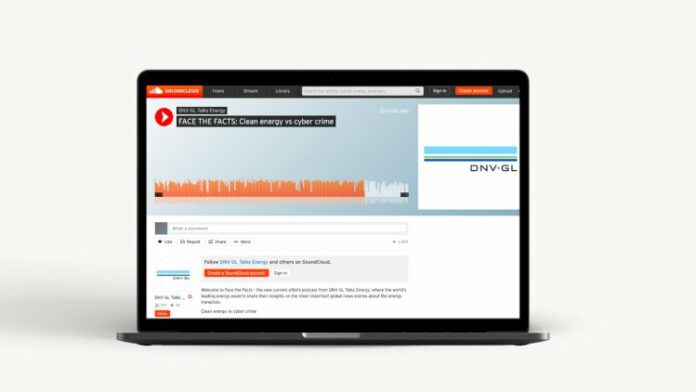
Today DNV GL, the world’s largest resource of independent energy experts, launching a new news and current affairs podcast, analysing the most significant global stories about the energy transition.

Face the Facts will give energy professionals, sustainability experts and journalists access to opinions and insights on the latest global news stories from the world’s leading energy experts within DNV GL and its global network.

“Energy companies around the world are living through a period of great change. The rise of renewables, the impact of new technologies and increased electrification is transforming the energy sector. At the same time, the climate emergency requires an acceleration in decarbonisation measures. These major challenges now facing the energy sector, societies and governments all over the world call for significant debate, so people everywhere are aware of the issues and informed on the facts. This is why we are launching our new podcast, Face the Facts, so people can tune in and listen to what DNV GL’s energy experts think about the news stories that surround us each week. We believe our insight and opinion will help audiences know and understand the real facts” .

said Lucy Craig, Vice President of Technology and Innovation at DNV GL – Energy.

Published weekly, in a short format designed to inform and inspire, each episode will bring the latest information on renewable energy technologies to a senior global audience – including content on the climate emergency, wind and solar, electric grids, electric vehicles, the power system, energy storage, management, financing, innovation and digitalization.

A team of senior speakers from across DNV GL’s global business will respond to live news stories and events each week, sharing their insights and opinions on the facts at the heart of the issue. In addition to this in-house team, the podcast will feature external speakers from business, academia and the media.

The First-Class Swedish Ferry Interrupted Voyage after ER Fire

0

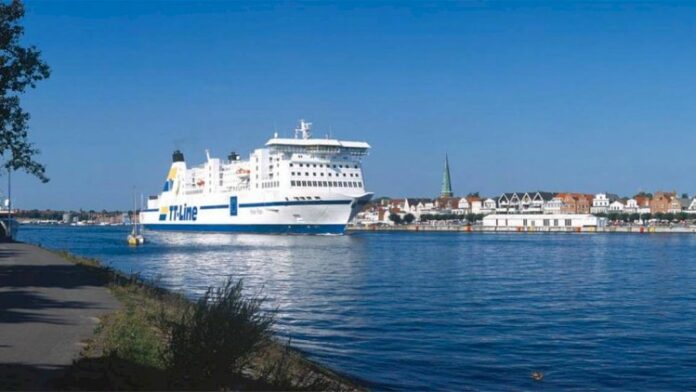
Passenger/Ro-Ro Cargo Ship built in 2001 and currently sailing under the flag of Sweden, PETER PAN (IMO: 9217242), interrupted voyage after engine room fire.

The fire erupted in the engine room of ferry Peter Pan (IMO: 9217242) at around 1800 UTC Jul 9 in the Baltic sea, shortly after the ferry left Travemunde, Lubeck, Germany, bound for Trelleborg, Sweden.

The fire extinguished by crew, but the ship had to return to Travemunde, at a reduced speed.

As of morning Jul 11, the ship still berthed at Travemunde.

Subsea 7 awarded contract offshore Norway

0

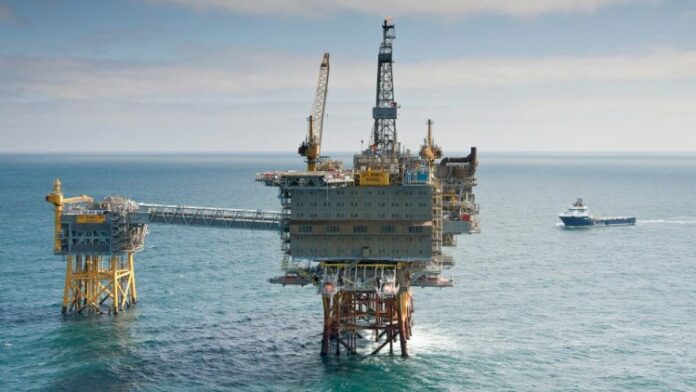
Subsea 7 announced the award of a sizeable contract by Equinor for installation and diving operations on the Europipe II, Heimdal and Statfjord (EHS) fields, located in the Danish and Norwegian sectors of the North Sea.

The contract comprises engineering, procurement, construction and installation (EPCI) of pipeline end manifolds (PLEM), bypass and tie-in spools for the Europipe II gas pipeline, Oseberg Gas Transport and Statpipe pipelines, operated by Gassco AS.

Project management and engineering, including front end engineering (FEED), expected to commence immediately at Subsea 7’s office in Stavanger, Norway. Offshore installation campaigns are scheduled for 2020, 2021 and 2022 using one of Subsea 7’s state-of-the-art diving vessels as well as substantial construction and light construction vessels.

Monica Th. Bjørkmann, Subsea 7’s Vice President Norway, said,

“This award builds on our established and strong relationship with Equinor, and recognises our substantial experience of delivering our installation and diving capabilities safely, efficiently and reliably.”

This is the second subsea contract from Equinor in this month. Last week, DeepOcean awarded a contract by Equinor for marine operations for installation of the Vigdis Boostin Station.

Fugro Succeeds with New Seep Survey License Sales Offshore Newfoundland

0

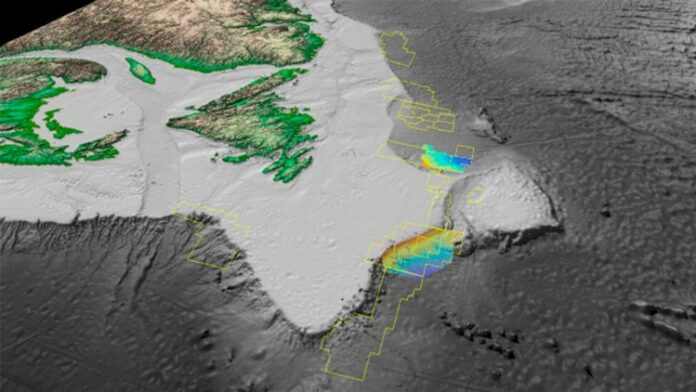
Fugro and partner Amplified Geochemical Imaging (AGI), are reporting recent success selling multiple licences for data from frontier regions offshore east coast Canada. The data were acquired during two separate hydrocarbons seep surveys in the Orphan Basin (2017) and Carson Basin (2018), both situated on the continental margin of Newfoundland.

The comprehensive data packages are licensed by Fugro and include multi-beam echo sounder data (bathymetry, backscatter intensity, and water column), sub-bottom profiler data, heat flow measurements, and shipboard geochemical screening analyses; advanced geochemical analyses, including biomarkers on select samples, are also included.

The Orphan Basin package covers an area of 11,070 square kilometres and the Carson Basin package covers an area of 18,880 square kilometres; each survey was followed by heat flow and geochemical sampling and analysis. Both programmes were planned so that purchasing clients would have the data in advance of the upcoming lease rounds, so data could be used in derisking their potential investment. Purchase post lease round is also advantageous from numerous perspectives, including guiding – and potentially reducing the scope of – expensive 3D seismic surveys.

Geochemical datasets (shipboard, conventional shore-based and AGI adsorbent-based analyses) all suggest the presence of thermogenic hydrocarbons.

“With the keen interest in these licences to international E&P companies, and recent record-breaking bids in the Orphan Basin, it is clear to us there is much excitement surrounding Canada’s growing offshore industry and Newfoundland and Labrador’s licensing rounds,”

said Keith Kneale, Fugro’s Business Development Director for the Americas.

These data will continue to be useful throughout the life of the field. A variety of further investigations – such as establishing environmental baselines, evaluating seafloor geohazards and preliminary planning for field development – ensures the data will deliver long-term value to any client purchasing a licence. Nalcor Energy-Oil and Gas was a partner in these work programmes.

IMCA and ADCI Signed MoU to Benefit Commercial Diving

0

The International Marine Contractors Association (IMCA) and the Association of Diving Contractors International (ADCI), the two major trade associations in the commercial diving industry, have signed a Memorandum of Understanding to collaborate on matters of operational safety, training standards, and the mutual recognition of diver qualifications.

The two organisations have had a close relationship for a number of years and earlier this year established the International Diving Industry Forum (IDIF) together with the International Association of Oil & Gas Producers (IOGP), to reduce and control the risks associated with diving in the oil and gas industry globally.

Under this Memorandum of Understanding IMCA and ADCI will recognise each other’s international offshore diving qualifications, monitor each other’s diver certification schemes, share views and opinions relating to safety and collaborate to ensure that commercial diver training for offshore operations is conducted to the highest industry standards.


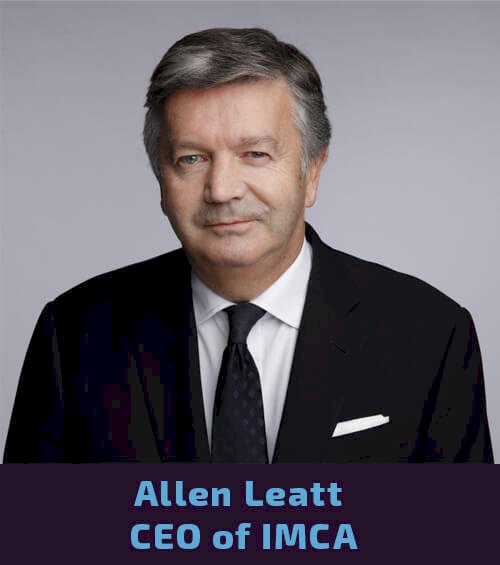
Allen Leatt, CEO of IMCA, stated that

“This collaboration is an extension of our work together at IDIF and formalises ad hoc arrangements of the past. We recognise that there is a cross-over in our membership and working closer together will certainly be beneficial to our shared membership. We look forward to working with ADCI for the benefit and safety of offshore commercial diving globally.”

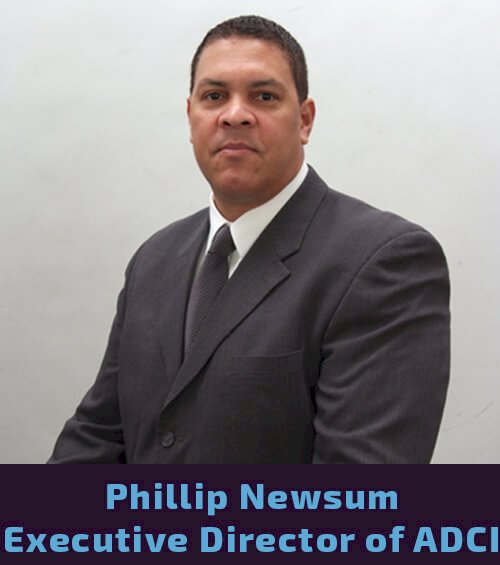
Phillip Newsum, Executive Director of ADCI, said:

“The formal collaborative efforts of both associations will allow us to better address industry challenges, as well as standardize and promote best safe practices."

NYK to Build New Energy-saving Bulk Carrier

0

The new energy-efficient vessel not only will be compliant with NOx (nitrogen oxide) emission regulations (Tier III) and the IMO SOx emission cap. She will also have a larger cargo space than a conventional ship, leading to improved fuel economy. The ship’s carbon dioxide emissions also meet the stricter Phase 2 Energy Efficiency Design Index (EEDI) requirements entering into force in 2020.

Also, cargo hold corrosion-resistant steel (JFE-SIP®-CC) developed by JFE Steel will be used for the parts of the ship to improve corrosion resistance. In accordance with “Staying Ahead 2022 with Digitalization and Green” plan, the NYK Group continues to secure stable freight rates through long-term contracts and is making efforts to contribute to realizing a sustainable society through the operation of an environment-friendly ship.

The ship will be installed with a SOx scrubber (system for desulphurizing exhaust gas) to meet the IMO regulations (0.5 percent cap on sulfur content in marine fuels starting in 2020).

Vessel Particulars

Length overall: about 299.9 meters

Breadth: about 50.00 meters

Designed draft: about 25.00 meters

Gross tonnage: about 108,900 tons

Deadweight tonnage: about 211,000 tons

Flag: Panama