2.1 C
New York
Home Blog Page 1029

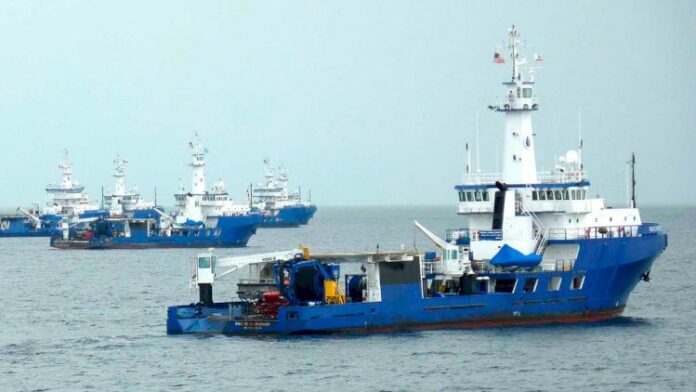
Sea Machines has entered into a cooperative agreement with MARAD

0

Boston-based Sea Machines Robotics and MARAD enter into agreement to demonstratecapabilities of autonomous tech iInstalled aboard an MSRC spill-response vessel.

To make the on-water exercises possible, Sea Machines will install its SM300 autonomous-command system aboard a Marine Spill Response Corp. (MSRC)-owned MARCO skimming vessel and will train MSRC personnel to operate the system. Then, on August 21, Sea Machines and MSRC will execute simulated oil-spill recovery exercises in the harbor of Portland, Maine, before an audience of government, naval, international, environmental and industry partners.

The response skimming vessel is manufactured by Kvichak Marine Industries, of Seattle, and is equipped with a MARCO filter belt skimmer to recover oil from the surface of the water. This vessel typically operates in coastal or near-shore areas. Once installed, the SM300 will give the MSRC vessel the following new capabilities:

  • Remote autonomous control from an onshore location or secondary vessel,
  • ENC-based mission planning,
  • Autonomous waypoint tracking,
  • Autonomous grid line tracking,
  • Collaborative autonomy for multi-vessel operations,
  • Wireless remote payload control to deploy onboard boom and other response equipment,
  • Obstacle detection and collision avoidance.

Additionally, Sea Machines enables minimally manned and unmanned autonomous operations. Such configurations allow operators to respond to spill events 24/7 depending on recovery conditions, even when crews are unavailable or restricted. These configurations also reduce or eliminate exposure of crewmembers to toxic fumes and other safety hazards.

“Autonomous technology has the power to not only help prevent vessel accidents that can lead to spills, but can also facilitate better preparedness; aid in safer, efficient, and effective clean-up,” said CEO Michael G. Johnson, Sea Machines. “We look forward to working closely with MARAD and MSRC in these industry-modernizing exercises.”

“Our number one priority is the safety of our personnel at MSRC,” said John Swift, vice president, MSRC. “The ability to use autonomous technology – allowing response operations to continue in an environment where their safety may be at risk – furthers our mission of response preparedness.”  

Sea Machines’ SM Series of products, which includes the SM300 and SM200, provides marine operators a new era of task-driven, computer-guided vessel control, bringing advanced autonomy within reach for small- and large-scale operations. SM products can be installed aboard existing or new-build commercial vessels with return on investment typically seen within a year. Sea Machines is also a leading developer of advanced perception and navigation assistance technology for a range of vessel types, including container ships. The company is currently testing its perception and situational awareness technology aboard one of A.P. Moller-Maersk’s new-build ice-class container ships.

About Sea Machines
Headquartered in the global tech hub of Boston and operating globally, Sea Machines is the leader in pioneering autonomous control and advanced perception systems for the marine industries. Founded in 2015, the company builds autonomous vessel software and systems, which increases the safety, efficiency and performance of ships, workboats and commercial vessels.

About the DOT’s Maritime Administration
The United States Maritime Administration is an agency of the United States Department of Transportation. Its programs promote the use of waterborne transportation and its seamless integration with other segments of the transportation system, and the viability of the U.S. merchant marine. The Maritime Administration works in many areas involving ships and shipping, shipbuilding, port operations, vessel operations, national security, environment, and safety.

About the Marine Spill Response Corporation
The Marine Spill Response Corporation is a not-for-profit, U.S. Coast Guard-classified Oil Spill Removal Organization (OSRO). MSRC was formed in conjunction with the Marine Preservation Association (MPA) in 1990 to offer oil spill response services and mitigate damage to the environment. With over 25 years of experience, MSRC offers a full range of oil spill response capabilities intended to help meet the planning criteria of the Oil Pollution Act of 1990 (OPA 90).

SGRE will supply the SG 4.5-145 for its first nearshore project in Vietnam

0

Siemens Gamesa Renewable Energy (SGRE) has secured an order to supply seven SG 4.5-145 for No. 5 Thanh Hai 1 wind farm, its first nearshore project in Vietnam located between 2 km and 5 km off the coast. Additionally, it will provide O&M services for the project for 10 years.*

The company has leveraged its offshore wind power leadership to re-engineer onshore wind turbines, adapting them to the marine environment and ensuring best-in-class reliability and cost of energy.

The order marks the debut of this turbine model in the country and is the first agreement with Tan Hoan Cau JSC, a leading independent power provider in Vietnam specializing in hydro and wind power.

Conditionally, Siemens Gamesa will supply seven more SG 4.5-145 for the second phase of the project.The 60MW No. 5 Thanh Hai1&2 wind farms will be located in Thanh Hai commune, Ben Tre province.

Commissioning of the No. 5 Thanh Hai 1 wind farm, with an installed capacity of 32 MW, is expected for mid-2020 and the project will help to meet the country’s fast-growing energy demand. The Vietnamese government has established a target of 800 MW of wind power installations by 2020, a large part of which will be in nearshore projects.

“As the industry leader in offshore wind, Siemens Gamesa can leverage our unmatched experience and know-how in the industry to adapt our onshore turbines to meet this project’s requirements and optimize project economics for the customer,” stated Richard Paul Luijendijk, Siemens Gamesa Onshore CEO in APAC. “We are coordinating the discussions with the financing parties, which includes at this stage the Danish Export Credit Agency, an international bank and one of Vietnam’s largest banks. For two years we have been working on a tailored financing solution to address Tan Hoan Cau JSC’s requirements and the challenges of the Vietnamese market and offer our customer the most bankable and competitive debt package available in the market”, added Richard.

“As a reputable employer in Vietnam, Tan Hoan Cau is experienced in wind power investment. This first ever cooperation with Siemens Gamesa across the value chain from turbine supply to operation and maintenance over 10 years will help optimize project economics and lay a good foundation for both companies to further explore the nearshore market in Vietnam and other markets, based on competitive wind equipment and efficient operations,” stated Nguyen Trung Thanh, Tan Hoan Cau JSC’s Deputy CEO. “We highly appreciate the reputation and experience of Siemens Gamesa in the wind market globally and Vietnam particularly. Thanh Hai 1&2 are just the first step of our cooperation towards the sustainable renewable energy target for Vietnam”, added Thanh.

In addition to Vietnam, Siemens Gamesa's footprint in Asia Pacific extends to China, Japan, South Korea, Indonesia, the Philippines, Thailand, Australia and New Zealand, where it has already installed more than 7.6 GW of onshore turbines. In the offshore segment, the company has developed strongly in this region following the signing of orders to supply 1.5 GW in Taiwan and preferred supplier agreements for an additional 831 MW in Japan and Taiwan.

*The order was signed in Q3 of fiscal year 2019.

Heerema signs first wind project in Taiwan

0

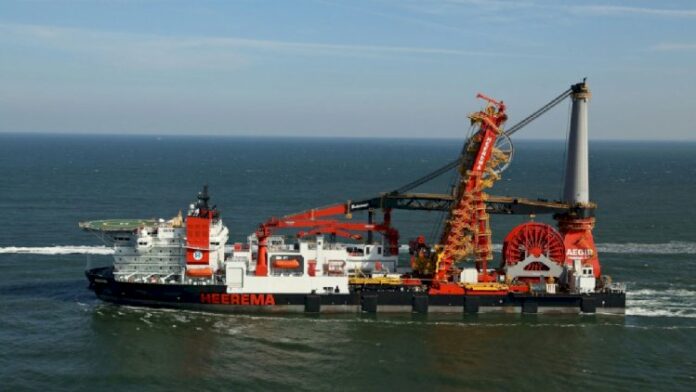
Heerema Marine Contractors has signed a new contract to support the construction of a wind farm project, this time in Taiwan. Assigned by the Taiwan branch of Jan de Nul, Heerema will take on the installation of 21 jacket foundations (4 legged) for the Changhua project.

The Changhua Windfarm Phase 1 project is situated in Taiwanese waters and is a project of the Taiwan Power Company (TPC) and executed by a consortium of Jan de Nul and Hitachi. The installation will take place 8 km off the coast of Changhua county, at a water depth of 18 to 28 meters.

The installation will be done by Heerema’s fast sailing heavy lift vessel “Aegir”. Aegir is capable of executing challenging projects such as these and is perfectly suited to install the 21 foundations in the harsh conditions in which this project takes place. The foundations must be able to withstand extreme Taiwanese circumstances such as earthquakes, typhoons and high waves.

Koos-Jan van Brouwershaven, CEO of Heerema Marine Contractors is excited:

‘This is our first contract in Taiwan, thus another major milestone. This Changhua project re-emphasizes Heerema’s commitment to operate in wind projects all over the world and strengthen our position in the Asian offshore wind market.’

Van Brouwershaven praises the hands-on mentality of both Jan de Nul and Heerema contract teams.

‘The willingness to constantly seek cooperation between partners is what drives this team and Heerema as a company. With such a mindset we can jointly achieve anything.’

For Heerema, the offshore phase of this project will start in March 2020 with planned completion in early June 2020. 

Eni and QP signed an agreement to enter 3 exploration blocks in Kenya

0

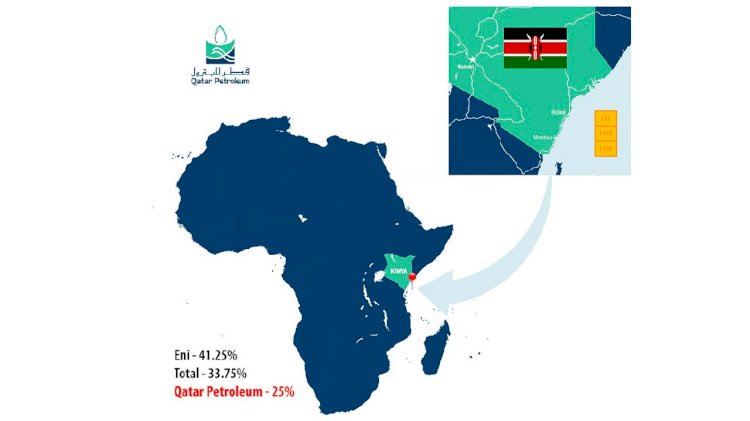
Eni and Qatar Petroleum (QP) signed an agreement that will see the Qatari national oil company acquire a 13.75% share in the exploration blocks L11A, L11B and L12, in deep offshore Kenya. The proposed deal is pending subject to the approval of the Kenyan authorities.

Blocks L11A, L11B and L12 are located in water depths ranging between 1,000 and 2,700 metres, cover a total surface of about 15,000 square kilometres and hold high exploration potential. Eni and Total currently hold 55% and 45% interest share in the blocks respectively, with Eni acting as the operator. QP would acquire 25% interest share in each of the blocks, of which 13.75% from Eni and the remaining from Total. Accordingly, the composition of the joint venture should become Eni 41.25%, Total 33.75% and QP 25%.

This is the last of a series of agreements recently inked with Qatar Petroleum, which further reinforces the continuously evolving strategic cooperation between the two companies. Eni and Qatar Petroleum are already partners in Oman, Mexico, Morocco and Mozambique. Eni has been present in Kenya since 2014, through its subsidiary Eni Kenya.

Commenting on this occasion, H.E. Mr. Saad Sherida Al-Kaabi, the Minister of State for Energy Affairs, and President & CEO of Qatar Petroleum, said: “We are pleased to sign this agreement to participate in exploring these frontier offshore areas in Kenya and to further strengthen our presence in Africa.” H.E. Al-Kaabi also added: “We hope that the exploration efforts are successful, and we look forward to collaborating with our valuable partners Eni and Total, and the government of Kenya in these blocks. I would like to take this opportunity to thank the Kenyan authorities and our partners for their ongoing and continued support.”


Aibel delivers second module for Dvalin project

0

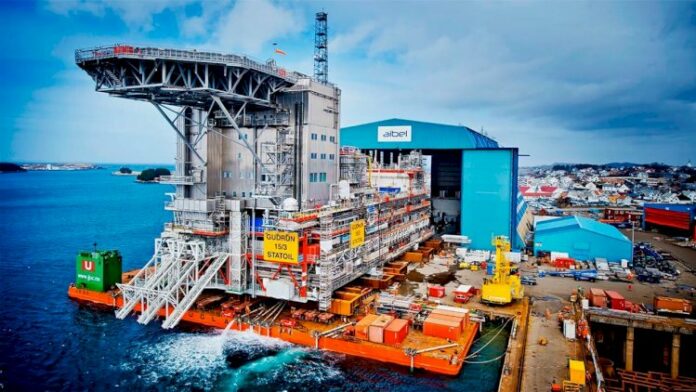
After two and a half years of work, Norwegian oilfield services company Aibel has delivered the M40 module for the Wintershall Dea-operated Dvalin project located in the Norwegian Sea.

Aibel has been responsible for the engineering, procurement, construction and installation of two new modules and major modifications offshore. H25 – the first module for the Heidrun platform was delivered in the spring of 2018, and handover of the 3,500 tonne M40 module, marks the end of the project’s construction phase. This leaves only the installation phase, which is expected to be completed during September 2020.

“The M40 module is a significant investment for DEA, but the project could not have been in better hands. Aibel's team in Haugesund has delivered a high quality complex module, on schedule and with an outstanding safety record and safety culture. DEA would like to congratulate and thank Aibel on this fantastic achievement,” says Roy Padgett, Wintershall DEA’s Facilities Project Manager for the Dvalin development.

“I hope the collaboration in this project can become an example of how the supplier and customer can work together to ensure that the industry remains competitive and well equipped for the future,” President and CEO of Aibel, Mads Andersen, states.
 

Drewry: Smart devices to transform the utility and value of shipping container assets

0

Smart devices have the potential to radically transform the utility and value of shipping container equipment assets, according to Drewry’s latest Container Census & Leasing Annual Review & Forecast 2019/20 report.

Smart containers have increased in prominence in a very short space of time and the pace of adoption is expected to accelerate over the next five years. A container becomes “smart” when fitted with a telematics device that provides real-time tracking and monitoring, enabling operators to increase turn time of their container equipment and so utilisation. It also allows beneficial cargo owners (BCOs) to understand the location and status of their cargo so that they can better control their supply chains.

“There are a number of factors driving this market growth, including growing calls for greater transparency and security across transport value chains,” said Drewry’s director of research products Martin Dixon. “Meanwhile, in shipping there is a demand to know the location of the container and above all the status of that container and the condition of the cargo inside it.”

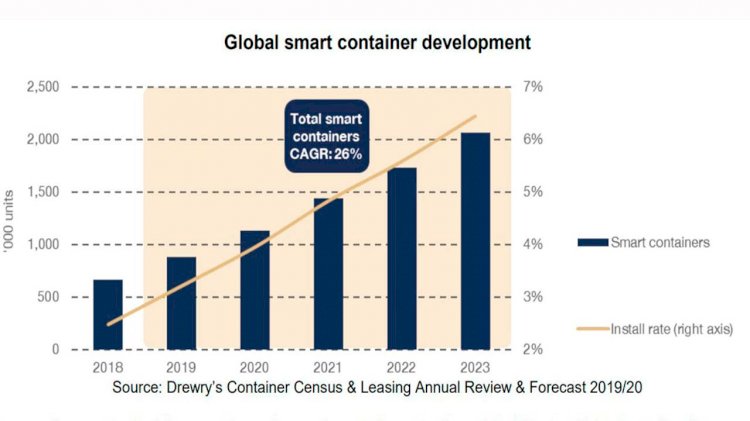
Drewry estimates that by the end of 2018, around 2.5% of the global container equipment fleet was fitted with smart technology devices. However, take-up varies considerably by equipment type, with penetration already strong in intermodal and reefer containers but much lower in the dry box sector.

Drewry forecasts that the number of smart containers in the global fleet will triple in the five years to 2023 to reach over 2 million units, representing around 6.5% of worldwide box inventories. As technological innovation lowers the cost of devices and enhances their value to BCOs, uptake is expected to accelerate.

Some equipment manufacturers and leasing companies already have plans to supply equipment ready-fitted with devices, and such practices are expected to become widespread among other industry players. Uptake amongst the latter is significant as the rental sector continues to take a lead in container equipment investment and ownership, now controlling comfortably more than half the fleet and expected to extend their share to over 55% by 2023.

Meanwhile, container equipment rental rates have weakened through the first six months of the year following two years of recovery from the depths of the market in 2016. But they still have a long way to go if they are to get back to the returns seen in the earlier part of the decade, when per diems for 40ft high-cubes on long-term lease were above $1.50, compared with around $1.00 now.

“We expect lease rates to ease back over the near term on slowing growth in global trade and so demand for containing equipment. However, with newbuild prices also falling cash investment returns are expected to remain stable,” added Dixon.

McDermott, Chiyoda and Zachry Group introduce feed gas to train 1 at Freeport LNG

0

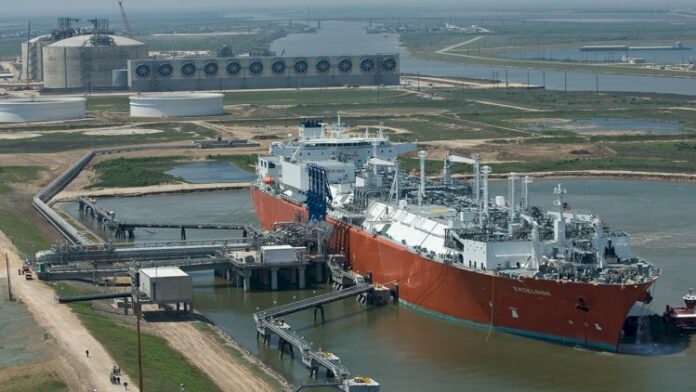
McDermott International, Inc. along with its partners, Chiyoda International Corporation and Zachry Group, announced that train 1 of the Freeport LNG Liquefaction project on Quintana Island in Freeport, Texas, has reached the final commissioning stage.

This includes the introduction of feed gas into Train 1 of the natural gas liquefaction and LNG export facility.

"We are extremely proud of the Freeport LNG project team for reaching this major milestone at this unique LNG production facility," said Mark Coscio, McDermott's Senior Vice President for North, Central and South America. "First of its kind in the US, with the largest electric motor driven refrigeration compressors, the Freeport LNG facility will significantly improve the energy export capabilities we have in the U.S., and McDermott is pleased to be part of its development from the ground up. Once Train 1 is fully operational, it will have the capacity to produce more than 5 million tonnes of LNG per year." 

Zachry Group, as the joint venture lead, engaged McDermott for the Pre-FEED in 2011, followed by FEED works to support the early development stage of the project as a one-stop shop solution provider. Later Chiyoda joined the partnership and the joint team provided engineering, procurement and facility construction as well as commissioning and initial operations for the project. The project includes three pre-treatment trains, a liquefaction facility with three trains, a second loading berth and a 165,000 m3 full containment LNG storage tank.

About McDermott

McDermott is a premier, fully integrated provider of technology, engineering and construction solutions to the energy industry. 

About Zachry Group

Zachry Group is North America's pacesetter in turnkey construction, engineering, maintenance, turnaround and fabrication services to the power, energy, chemicals, manufacturing and industrial sectors.

About Chiyoda

Chiyoda Corporation, headquartered in Yokohama, Japan provides services in the fields of engineering, procurement and construction on a global basis for petroleum refineries, petrochemical complexes, other hydrocarbon or industrial plants, particularly LNG plants in the USA, South East Asia, the Oceania regions, the Middle East and Russia.

Saipem: new contracts in offshore drilling in Romania and Abu Dhabi

0

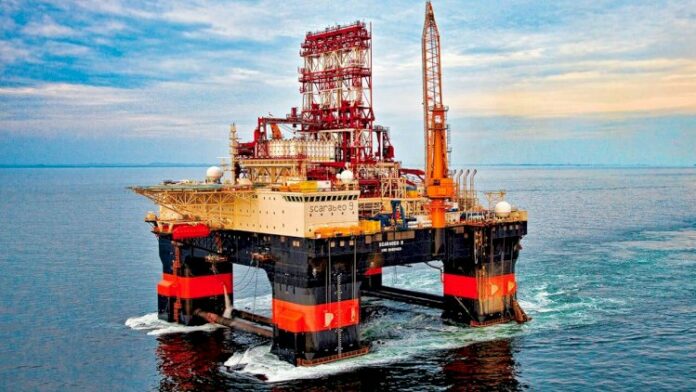
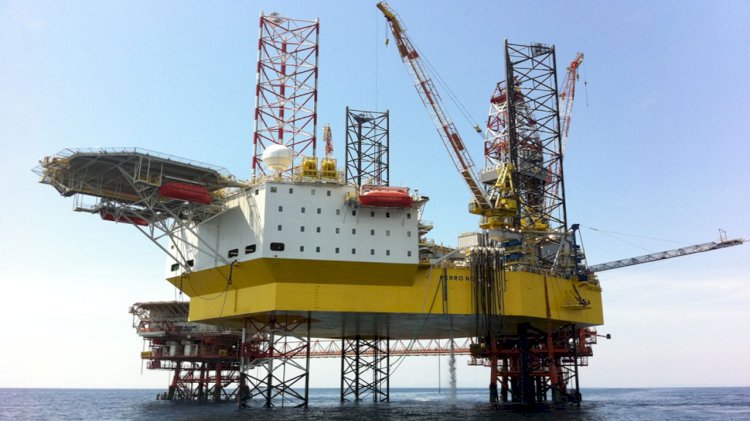
Scarabeo 9 and the Perro Negro 8 respectively will be the vessels involved

Saipem has been awarded new contracts in offshore drilling in Romania and Abu Dhabi worth over 160 million USD. According to one contract, the company will drill a well in Romania’s Black Sea waters, expectedly in the fourth quarter of 2019. Works will be executed by the semi-submersible rig Scarabeo 9, a drilling unit suitable for operations in the area, thanks to its ability to lower its tower which enables crossing of the Bosphorus Strait.

In addition, a contract has been awarded for drilling works offshore Abu Dhabi in the United Arab Emirates. The drilling activities will be carried out by the high spec jack u­­­p Perro Negro 8, in continuity with current operations. The contract will have a duration of 4 years.

Saipem


TechnipFMC awarded a contract for Neptune Energy in the North Sea

0

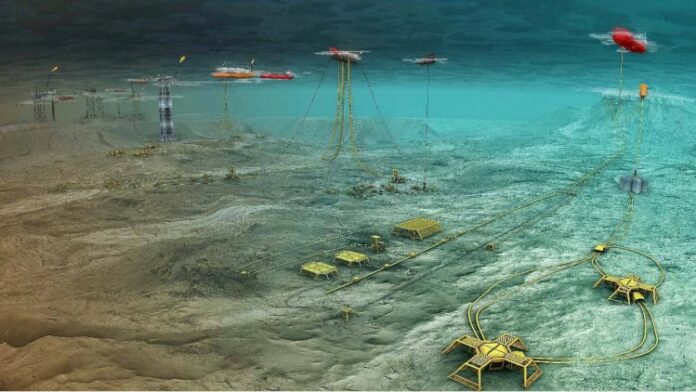
TechnipFMC has been awarded a significant integrated Engineering, Procurement, Construction and Installation (iEPCI™) contract from Neptune Energy for the Seagull project, located in the Central North Sea. 

This contract is the second call-off under the recently announced five-year strategic global alliance agreement between TechnipFMC and Neptune Energy. TechnipFMC will manufacture, deliver and install subsea equipment including production and water wash pipelines, umbilicals, subsea structures and control systems.

Arnaud Pieton, President Subsea at TechnipFMC, commented:

“We are delighted to partner again with Neptune Energy. Our alliance clearly demonstrates the importance and value of early engagement and collaboration as well as our ability to offer clients a full suite of services and global experience. We look forward to expanding our working relationship through the development of fields such as Seagull. As architects of our clients’ projects and through the adoption of collaborative working methods, we can bring more efficient, repeatable solutions to our clients that increase value, reduce engineering interfaces and time to market.”

Neptune Energy is the operator of the Seagull discovery, together with joint venture partners BP and Japex. Seagull is a high-pressure, high-temperature oil field located in the Central North Sea in a water depth of approximately 90 meters. Comprising four subsea production wells, a new 5 kilometer pipe-in-pipe production line and a 17 kilometer control umbilical, Seagull outputs will travel via the Heron pipeline system to the BP-operated ETAP (Eastern Trough Area Project) development and on through the Forties pipeline system to Grangemouth, UK.

Eni starts the installation of the hull of Coral Sul FLNG

0

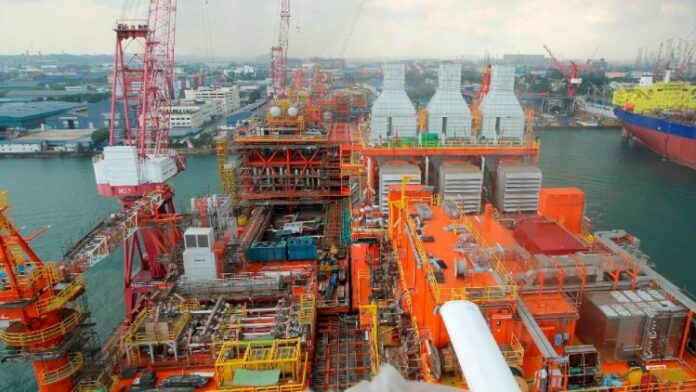
Eni has started installation works on the hull of the Coral Sul floating liquefied natural gas (FLNG) treatment and liquefaction unit that will be moored offshore in Mozambique.

The unit is part of the Coral South project, which will put in production 450 billion cubic meters of gas from the giant Coral reservoir. The hull is expected to be launched in 2020, in line with the planned production startup of the Coral South Project in 2022.

The Coral Sul FLNG facility will have a gas liquefaction capacity of 3.4 million tons per year when completed and will be the first FLNG vessel ever to be deployed in the deep waters of the African continent. The vessel, which will be 432 metres long and 66 metres wide and weigh about 220,000 tons, will be able to house up to 350 people in its eight-storey accommodation module. The facility will be anchored at a water-depth of around 2,000 metres by means of 20 mooring lines that weigh a combined 9,000 tons.

Construction works on the Coral Sul FLNG started in 2018 and are ongoing in seven operational centres across the world. Construction of the mooring turret began in March; construction of the hull’s 24 modules that contain the LNG storage tanks and sections of the treatment facilities began in September. Construction of the topside, consisting of 12 gas treatment and LNG modules, started last November, along with the living-quarters. By the end of 2019 the overall progress of the project is expected to exceed 60% completion with the total man-hours worked shortly expected to reach 10 million.

Drilling and completion activities for the six subsea wells that will feed the liquefaction unit will begin in September 2019. The wells will have an average depth of approximately 3000 metres and will be drilled in about 2000 metres of water depth. The activities, carried out by the SAIPEM 12000 drilling rig, will be completed by the end of 2020.

Alongside the LNG infrastructure under construction, the Coral South project also includes a number of initiatives aimed at enhancing the overall capabilities of the local workforce. These include specialized training activities for over 800 Mozambicans, who will eventually be employed during the operational phase of the project. Eni is also engaged in a broad programme of social, economic and health care initiatives, to support a long-term, diversified and sustainable development of the local communities.

Eni has been present in Mozambique since 2006, with the acquisition of a participation interest in the exploration concession of Area 4, located in the deep offshore in the Rovuma basin, in the north of the country. Between 2011 and 2014, Eni discovered supergiant natural gas resources in the Coral, Mamba Complex and Agulha reservoirs, holding estimated 2,400 billion cubic metres of gas in place.