-4.2 C
New York
Home Blog Page 1020

Damen signs milestone pontoon order

0

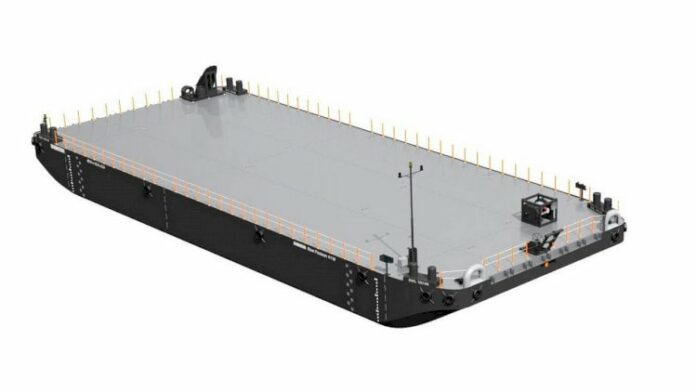
Damen Shipyards Group has signed a contract for the delivery of a pontoon to France-based company, Marc SA. The contract is a significant one for Damen, being the 100th order for a pontoon since the company opened its dedicated Pontoons & Barges product department in 2010.

The client, is a leading civil works company in Brittany, located in Brest, Roscoff, Cherbourg and Lorient and serves the urban, rural, road, rail, maritime, industrial and environmental sectors. Marc SA uses pontoons to carry out its scope of work in the maritime arena, which includes harbour and quayside projects.

When Marc was looking to upgrade its pontoon fleet, it approached Damen, as Damen sales manager Alexandre Richerd explains:

“We already had an existing relationship with Marc; the company is very active in Brest and their pontoons sometimes visit Damen Shiprepair Brest for works and we have hired their pontoons to assist on projects on occasion. We are very much looking forward to continuing to develop this relationship.”

The pontoon will also be used by the Société Cooperatives des Lamaneurs des Ports de BREST et de ROSCOFF, a cooperative society responsible for the berthing, docking and undocking of commercial vessels in the ports of Brest. The region is generally experiencing an increase in civil works projects, combined with the navy and marine renewables activity in the Port of Brest, that has signaled an increase in use of pontoons.

Alexandre:

“We see relatively high demand for pontoons in France generally at the moment; this is the second order in a very short space of time. We look forward to delivering more in the future. Damen will deliver the 100th pontoon to Marc in spring 2020. This is a purpose-built pontoon, which we will deliver to Marc’s requirements. We also build standard Damen pontoons in series for stock, which we are able to deliver in record times.”

Damen builds pontoons for stock from 12 – 145 metres. The stock pontoons are built to proven designs and kept at strategic locations to ensure fast delivery.
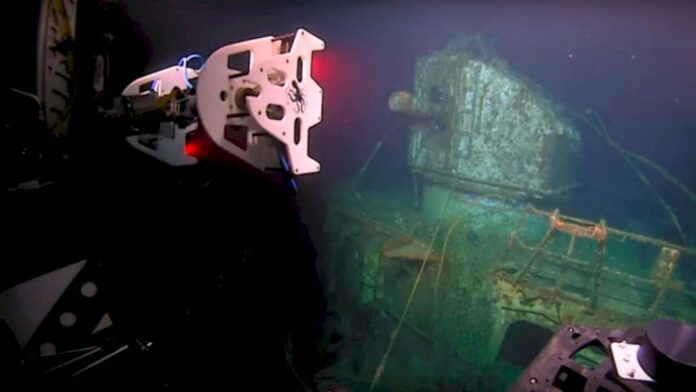
 

VIDEO: NOAA 2019 technology demonstration with Kraken SeaVision

0

The outstanding data shown is the raw data processed in real time on the unit. 

Kraken Robotic’s SeaVision® is a compact underwater laser imaging system that offers the resolution, range, and scan rate to deliver dense 3D point cloud images of subsea infrastructure with millimeter resolution in real time. The system is designed for deployment on underwater robotic platforms such as remotelyo perated vehicles (ROVs) and autonomous underwater vehicles. A SeaVision® system consists of two units. Each unit has a low-light underwater camera, a high-power LED light, and steerable RGB-line lasers.

SeaVision® uses the camera and the steerable laser line projector to sweep a laser line over a scene while recording all images. During recording, the SeaVision® software running on the laser scanner itself analyses each frame online, detects the laser-line in each frame, and uses a special method of triangulation to determine the 3D position of each pixel in the laser-line with sub-millimeter precision. At the end of the laser line sweep, commonly referred to as the "scan,"" all the points are combined into one big file called a point cloud. This point cloud is a metric-correct image of the scene SeaVision® scanned. That means it is possible to measure distances between objects in the scene, for example the thickness of coral stem, or to estimate volumes.

The combination of the full functional camera with the RGB laser line projector and the internal LEDs allows SeaVision® to gather a lot of additional information: The strength of the laser line reflection on the target can be recorded and displayed as color information; a color image taken before or after the scan can be projected on the image to give the points real-life color values; and using a complementary color to the laser while scanning (e.g., green laser and red light) enables tracking and correcting for motion in the scene.

Hydro Group technology enables successful floating wind turbine test

0

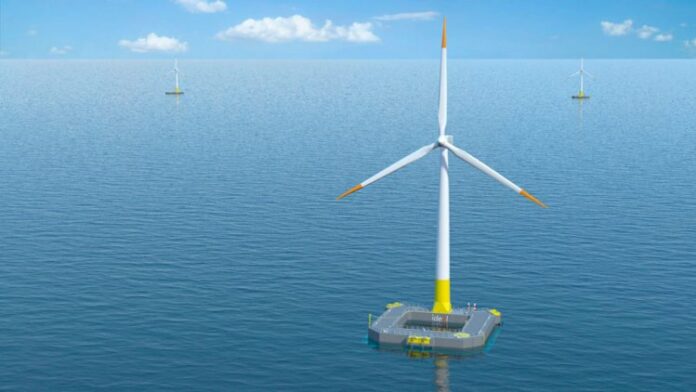
An innovative floating wind turbine utilising Hydro Group connectivity is ready for commercial applications, following site tests which saw it generate 2.2GWh of electricity and face wave heights of up to 6.2m during the first half of 2019.

The Floatgen Vestas V80 turbine, located in the SEM-REV marine renewable energy site off the coast of Le Croisic, France, uses subsea cable and connector specialist Hydro Group’s Hydro Renewable Connector (HRC) and Power Distribution Hub (PDH).

Hydro Group and regional partner Wenex Equipements developed and provided other equipment for the installation, including connectors, hub, dynamic cable and cable hang-off.

The SEM-REV installation is capable of connecting any device cable to the export cable with a 24kV variant of the Scottish firm’s HRC. In addition, a custom-designed PDH enables reliable in-line connectivity for multiple devices in harsh Atlantic seawater conditions.

Ian Walters, Head of Engineering at Hydro Group plc, said:

“All of us at Hydro Group are proud to see that our equipment has enabled the turbine to export reliable electricity. According to turbine operator Ideol, average availability in the second quarter of 2019 alone has been above 90%. The SEM-REV project has been a great opportunity for us to demonstrate the performance and reliability benefits of our subsea connectivity products in a top-tier marine renewable energy project. These tests have shown that our HRC and PDH technologies can play their part in the success of floating offshore wind thanks to their long design life of 20 years, anti-corrosion capabilities and sturdy construction.”

Hydro Group successfully completed their scope of work on their £2.5m contract in only seven months, with the help of their French market business partner.

Benoit d’Alançon, Director General of Wenex Equipements SA, added:

“The performance of the Floatgen turbine during its recent tests is good news for the partnership between Hydro Group and Wenex Equipements. Once our tender was accepted, we were rapidly able to design, manufacture and test a custom solution to ensure our technologies would feature in connecting France’s first offshore wind turbine to the national grid.”

Floatgen is developed by floating wind organisation Ideol and constructed by an international consortium.

The SEM-REV site, in which Ideol’s Floatgen floating wind turbine has been installed, is operated by École Centrale de Nantes.

Hydro Group’s connectivity solutions were deployed on site under the guidance of Entreprise Travaux Publics de l’Ouest (ETPO).

MARSS awarded NiDAR drone detection system contract for 90m+ superyacht

0

MARSS have secured a contract for the installation of their NiDAR perimeter security and drone detection system onboard a 90m+ superyacht.

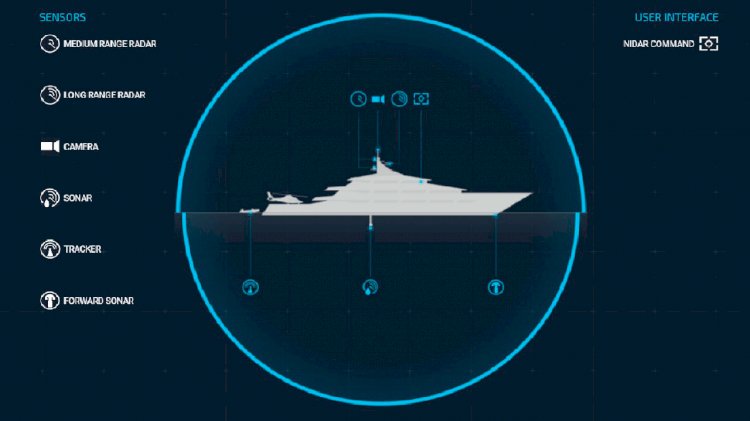
NiDAR provides long range 360 degree perimeter surveillance detecting surface and air approaches in the vicinity of the vessel while underway, at anchor and in port. The system operates autonomously and discreetly 24/7 while smart software algorithms automatically analyse and rank threats, triggering alerts to notify crew and security personnel.

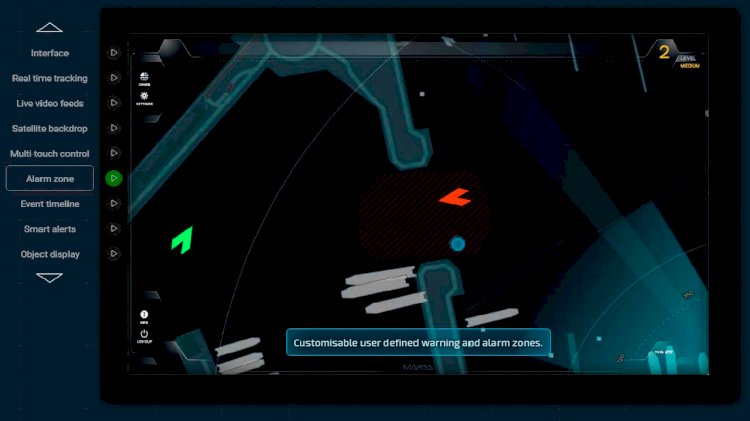
By integrating security radars, advanced thermal cameras and searchlights, NiDAR presents a real time awareness picture to operators via an intuitive touch screen interface. An integrated tracking system also enables the crew and security teams to track the live location of tenders and toys via the NiDAR interface. 

The vessel is under construction and due for delivery in 2021.

About NiDAR
Operating autonomously and discreetly 24/7, smart software algorithms developed by MARSS analyse and rank unknown objects to determine potential threat levels and trigger alerts.

A yacht’s own assets such as tenders, surface and underwater toys and helicopters, plus guests and crew, can be tracked and monitored within NiDAR for added safety and security.

IMarEST’s MLA College partners with BAU Global to extend reach of marine education

0

The Institute of Marine Engineering, Science & Technology (IMarEST)’s education arm – MLA College – is partnering with BAU Global Education Network to deliver more marine distance learning to a wider audience around the world.

BAU Global subscribes to an ethos of education without borders and comprises universities, schools and liaison offices across 4 continents. The organisation offers nearly two hundred school and higher education programmes in a variety of disciplines, which are not only accredited by a professional organisation, but highly ranked within their respective countries.

Professor John Chudley, Rector, MLA College, said:

“We are delighted to be partnering with BAU Global. Their extensive reach across the globe will be tremendously valuable to our students, and will no doubt strengthen the international and intercultural perspective they gain through their studies. This is hugely important when working within the marine industry which, by its very nature, is transnational.”

MLA College’s courses in marine engineering, hydrography, oceanography, meteorology, navigation and sustainable maritime operations will go a long way to enrich the marine syllabus being offered on what is a truly global curriculum.

Enver Yücel, President, BAU Global, said:

“Partnering with MLA College is a superb opportunity for us to increase the number of courses we offer within the marine sphere. With their headquarters in the UK, we are thrilled to form strong links within a country that has a longstanding tradition of academic excellence, ensuring our students have access to the best possible resources and tuition. As part of a prestigious Institute that upholds professional standards across the world, we are confident that this partnership will benefit not only our students but also the global marine workforce.”

The two organisations are well matched in their principles, holding educational excellence, ethical professionalism and sustainability as their chief aims when it comes to providing learning and development.

David Loosley, Chief Executive, Institute of Marine Engineering, Science & Technology, said:

“BAU Global is an organisation that truly aligns with the IMarEST’s vision and our charitable purposes. Collaborating with the UN, they have set up a CIFAL Centre in Istanbul to work towards the United Nation’s Sustainable Development Goals. Attaining these goals are a key part of the IMarEST’s strategic plan and of paramount importance to the Institute. Moreover, their aim of developing global citizens who are committed to values that benefit the entire world could not be closer to the philosophy of our organisation and its members.” 

Students on any MLA College course benefit from complimentary IMarEST membership for the duration of their studies, to support them in their professional development and ensure they have the skills they need to embark on the next step in their 

CMB Technologies and Windcat develop hydrogen CTV project

0

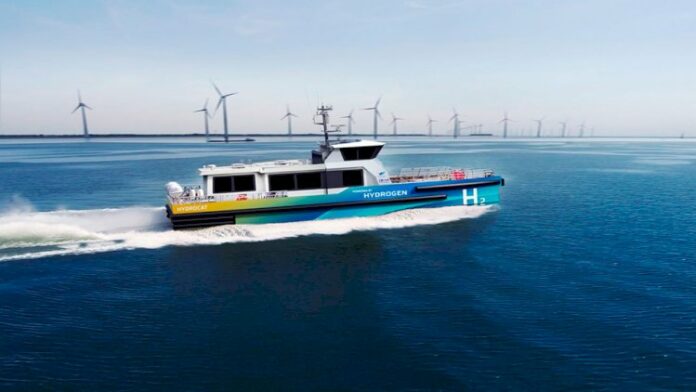
Vattenfall has signed a contract with Windcat Workboats for the provision of crew transfer vessels (CTVs) for the Hollandse Kust Zuid 1 & 2 offshore wind farm in the Dutch North Sea.

Under the agreement, Vattenfall will be one of the first users of Windcat's hydrogen-powered vessels, currently being developed.
The IJmuiden-headquartered vessel operator is working with CMB Technologies on the vessel development, which is expected to be completed by the third quarter of 2020.

The contract comes as Vattenfall has selected the Port of IJmuiden as the home base for O&M activities for the 700MW project.
Hollandse Kust Zuid 1&2 will be the world's first offshore wind project built without public subsidies.

The project, located 22km off the coast, is expected to be commissioned in 2022.

The hydrogen CTV – named HydroCat – will be able to transport 24 service engineers from the coast to the offshore windmill farms at a cruise speed of 25kn, propelled by 2 x 1000 horsepower and will consume 170 kg of hydrogen per day.

Omantel supports Subsea optical fiber communications school

0

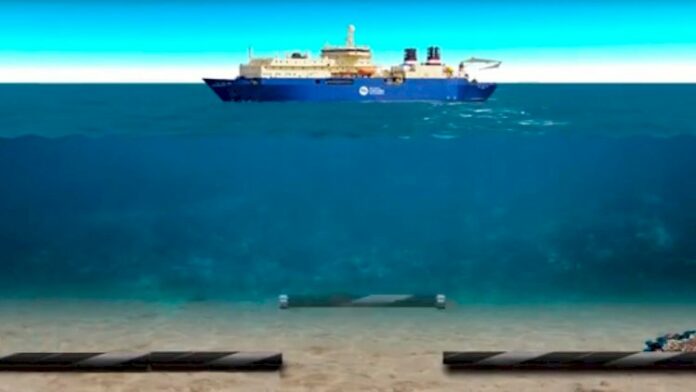
Omantel, a global player in the integrated telecommunications market, is a key supporter of the Subsea Optical Fiber Communications 2019 International Summer School, presented by Google and the OSA Foundation.

Intended for early stage researchers, engineers and Ph.D. or master's degree students looking for a new field of opportunity in technology, the event involves multi-disciplinary courses covering subsea optical fibre communication. Candidates has gone through an in-depth process of building a modern global communication network, with a focus on submarine system design, submarine powering, cable technology, planning, marine operations and maintenance. Speakers from Google, Facebook, Subcom, Alcatel Submarine Networks, NEC and more helped attendees to understand, innovate and prepare to solve challenges in the subsea cable industry.

Johannes Boersma, General Manager Capacity & National Accounts at Omantel, said:

“We are proud to be supporting innovation in the subsea cable market and enabling the future of our industry to meet, collaborate and solve challenges. The ideas developed at Subsea Optical Fiber Communications School are crucial to the growth and development of our industry. We truly believe in the value of continued learning and are committed to the long-term transformation of the subsea cable market. The technological advancements, design concepts and innovations shared at the event will unlock new potential across the entire ecosystem.” 

Ninety-nine percent of international data traffic travels through the 1.2 million kilometres of subsea optical fiber used in subsea cables today. This data traffic is set to double in the next three years. Omantel plays a vital role in the subsea cable market with its growing investments in more than 20 international subsea cables that serve areas covering more than 5 billion people. It supports global transformation with a unique global subsea cable footprint that delivers ultra-low latency connectivity to help its partners and customers to reach further.


Heerema lands second large wind contract in Taiwan

0

Another prestigious contract is awarded to Heerema Marine Contractors for an offshore wind project in Taiwan, this time in the middle of Taiwan.

The Greater Changhua offshore wind projects consist of four sites in the Taiwan Strait, from 35 km to 60 km off the coast of Changhua County. Danish offshore wind developer Ørsted has obtained site exclusivity on four offshore wind sites with a planned total generation capacity of 2.4 GW, and was in 2018 awarded capacity for two projects of 900MW and 920MW.

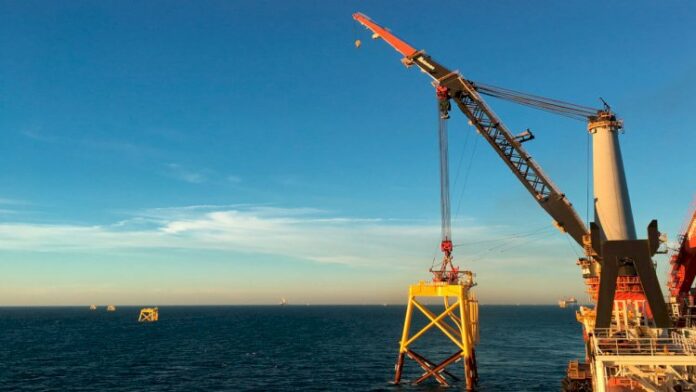
The contract for Heerema is for the 900 MW Greater Changhua 1 and 2a offshore wind farms. The contract scope entails the transport and installation of one hundred eleven (111) turbine foundations as well as the installation of two large offshore substations, essential components of offshore wind farms that run electricity to the mainland. Furthermore, Heerema will also be responsible for onshore marshalling services as well as the seabed preparations and scour protection.

The installation will be executed by Heerema's fast sailing heavy lift vessel "Aegir", that is already in the area for another project. Due to Aegir’s strength and agility, the vessel is very suitable for operating on challenging wind projects such as these. The installation will take place in waters of 30-35 meters deep.

CEO Koos-Jan van Brouwershaven, on the new contract:

'Heerema is very excited to participate in this large and unique project. Heerema has got what it takes to be a leader in the renewables market: great vessels and highly skilled and experienced people that are always eager to co-operate. The collaboration between Ørsted and Heerema is characterized by a mutually outstanding attitude towards this enormous project. We share the same mentality: it's this engagement and mindset of people that enables us to plan and execute these complex operations. We will continue to participate in ambitious and sustainable projects like Greater Changhua.’

Heerema will execute the offshore work on Greater Changhua 1 and 2a during 2021 and 2022, while complying with relevant local regulations in relation to supporting vessels and crews.

VIDEO: World’s first electric hydrofoil jet-ski

0

The University of Western Australia’s renewable energy vehicle project (REV) has teamed up with technology partner Electro.Aero, a Perth-based start-up company, and funding sponsor Galaxy Resources, an ASX-listed lithium producer, to develop the world’s first electric hydrofoil personal watercraft, named WaveFlyer.

The University of Western Australia (UWA) is recognised internationally as a top 100 university. Browse our channel to learn about our ground-breaking research, state-of-the-art facilities and vibrant student experience.

Meyer Werft’s new ship for Norwegian Cruise Line leaves the dock

0

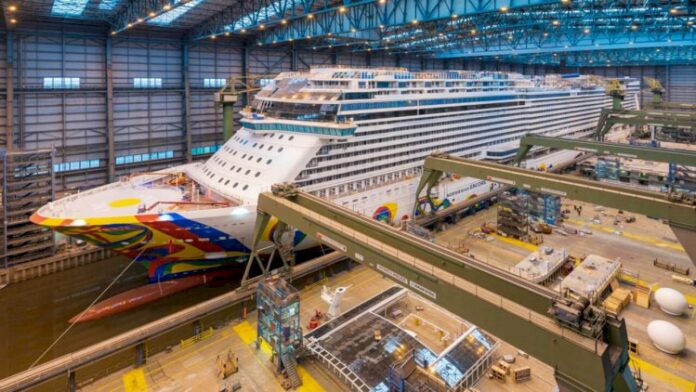
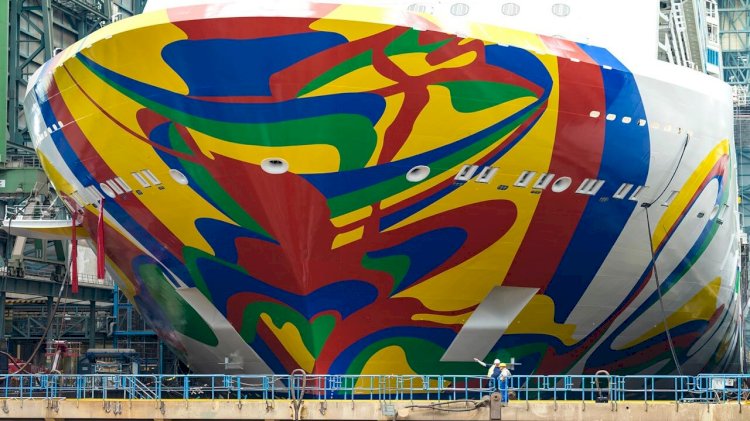
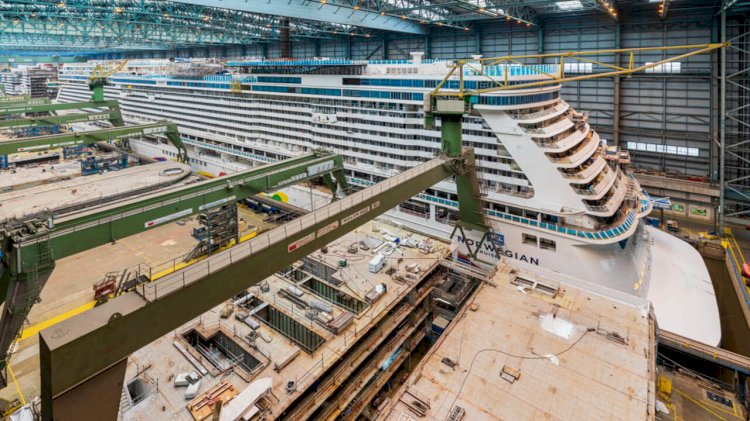
Norwegian Encore will most likely be leaving the cov-ered building dock II at the MEYER WERFT shipyard on 17 August 2019. The ship has a rating of 169,145 GRT and measures 333.46 m in length and 41.4 m in width, with capacity for 4,004 passengers.

The ship built for the American cruise shipping company Norwegian Cruise Line will start to leave the dock at around 8 a.m. Once Norwegian Encore has left the dock, it will berth at the shipyard's out-fitting pier to be fitted with its funnel cladding. The ship will then remain in the shipyard port for further out-fitting work and on-board trials until its passage through the river Ems up to the North Sea, which is expected to take place end of September.

For Norwegian Encore to be able to berth at the out-fitting pier, the floating section (en-gine room unit) of P&O’s Iona that is currently moored here will have to be moved to another berth in the shipyard port. Once Norwegian Encore has left the dock, the float-ing part for Iona, which is due for completion in spring 2020, will be manoeuvred back into the free covered building dock II for further construction work.

All times are subject to the weather