-2.6 C
New York
Home Blog Page 1019

Crown Prince of Denmark inaugurates Horns Rev 3 offshore wind farm

0

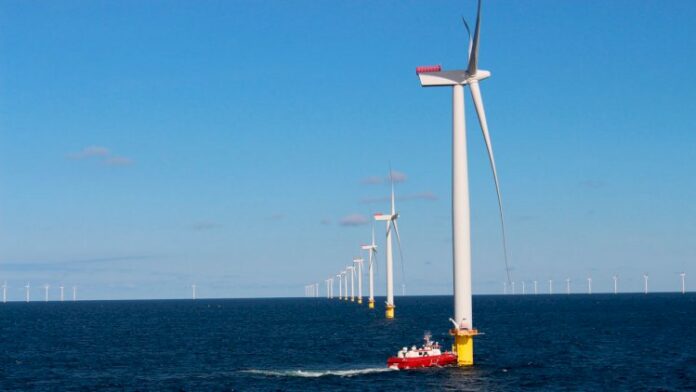
On 22 August, HRH the Crown Prince of Denmark will inaugurate Vattenfall’s next and largest offshore wind farm, Horns Rev 3, in the North Sea.

Horns Rev 3 offshore wind farm is ready to supply fossil-free electricity corresponding to an annual electricity consumption of approx. 425,000 Danish households. 

The wind farm will be officially inaugurated with a reception on 22 August at the port of Hvide Sande, which, from 2024, will constitute the base for maintenance and operation of the 49 wind turbines.

Magnus Hall, CEO of Vattenfall, says:

"The opening of Horns Rev 3 is proof of our commitment to enabling a fossil-free living within one generation. We look forward to and are proud that His Royal Highness the Crown Prince will attend and start up the wind farm."

The Crown Prince, who will start up the farm together with pupils from a local school, will, after the official event, look at a service vessel in the port and visit Horns Rev 3 offshore wind farm by helicopter.

About the Horns Rev 3 offshore wind farm

Horns Rev 3 will be Denmark’s largest offshore wind farm and increase Danish electricity generation from wind by around 12 per cent. With a capacity of 407 MW, Horns Rev 3 will cover the annual electricity consumption of approx. 425,000 Danish households. The total height of the 49 8.3 MW wind turbines is 187 metres, and each turbine weighs close to 1,500 tonnes, including the foundation. The Horns Rev 3 wind farm is located in the North Sea 25-40 kilometres off the Danish West Coast.
Shell supports the development of maritime energy storage solutions

0

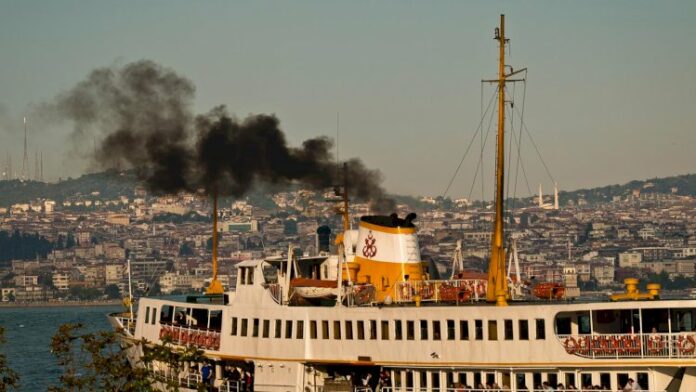
Corvus Energy announces major investment from Shell Ventures to support the global development of its maritime energy storage solutions.

Corvus Energy has announced that it has finalized an investment deal with Shell Ventures. The investment is a step towards Shell’s ambition to decrease the carbon footprint of the energy products they sell by around 20% by 2035 and by around 50% by 2050, in step with society.

Corvus Energy is a leading developer and supplier of advanced energy storage systems (ESS) for maritime, offshore, subsea and port applications. Their range of lithium-ion battery ESSs are integral to the propulsion and power management systems of more than half of the battery-hybrid and zero-emission vessels worldwide. The investment will help Corvus Energy expand internationally and further enhance its technological leadership within maritime energy storage.

As a pioneer in maritime energy storage, Corvus Energy has delivered ESSs for more than 30 offshore support vessels, in addition to various subsea applications and solutions for regenerative energy solutions from mechanical equipment. Corvus has successfully demonstrated its innovative and patented technology effectively helps reduce fuel consumption and emissions, while exceeding the offshore sector’s stringent performance, safety and operational requirements. 

Geir Bjørkeli, CEO of Corvus Energy is enthusiastic about having Shell Ventures as one of the strategic investors:

“To have strong and active owners has been crucial to our success and has taught us that by working closely with strategic investors we can achieve great results. A good example is what we achieved with Equinor, which has now become the model and inspiration for the rest of the world. To have Shell onboard as an investor means that we can reach out to a much larger market and apply our technology to more rigs and platforms as well as continue the hybridization of offshore vessels. We look forward to working with Shell to power a clean future and support Shell’s determination to make their operations more sustainable.”

Kirk Coburn, Investment Director in Shell Ventures, said:

“Corvus Energy is strong partner for Shell. The energy sector is going through a major transition as the trend towards renewable generation and electrification of many sectors accelerates. Current hybrid and zero-emission projects have proven that the potential for reducing costs and cutting emissions are substantial, which Shell will take advantage of in its offshore operations,” Coburn continues. “We look forward to working together with Corvus Energy’s renowned technological know-how and unique expertise in maritime energy storage to develop innovative and competitive solutions also in fields where it has not been used before.”


COOEC and Expro form subsea well intervention alliance

0

China based offshore and subsea solutions company, COOEC Offshore, has formed an alliance with international oilfield services company, Expro.

The formal exclusive agreement allows both companies, which are already globally recognised as safe providers of high-quality subsea and well intervention solutions, to expand its capabilities and resources.

COOEC Offshore, as a division of COOEC, is a large offshore engineering contractor servicing the full lifecycle of offshore from field development through field decommissioning. With over 22 specialised marine assets, subsea intervention equipment and in house engineering, the venture into deepwater Riserless Well Intervention (RWI) will further strengthen the depth of service offering to industry.

Expro, as a premier well flow management group, already maintain a leading position in subsea landing string and well intervention markets and has recently entered the riser-based intervention market with the Intervention Riser System (IRS). As part of this alliance, RWI system provides a field proven, established and reliable wire through-water integrated solution for carrying out cost effective intervention and/or abandonment operations on all types of subsea well.

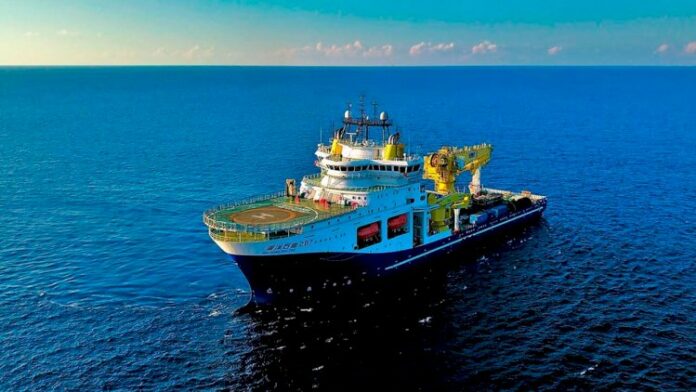
Under the alliance, COOEC Offshore and Expro will deliver this new system to market in 2020, tested and ready for service. The system will be deployed off the new state of the art HYSY287 DP3 construction vessel with a dedicated handling and deployment system to facilitate slick and efficient well construction, well intervention and well plug and abandonment (P&A) activities. Furthermore, with Expro’s recent acquisition of Quality Intervention (specialising in coiled tubing and annular integrity technologies), the propriety coil hose technology for open water will be a key exclusive capability onboard the vessel.

The alliance ensures minimal interfaces, integrated management teams and the majority of the services being delivered in-house.

COOEC Offshore commercial director, Brett Silich, said the agreement was an exciting development for both companies, which already enjoyed formidable reputations as providers of high-quality offshore solutions.

Mr Silich said: 

"This is an extremely significant alliance for both companies that wish to cement their position in the subsea well intervention market long into the future. Allowing us to use our respective key strengths, developed through solid offshore experience across the globe, to further enhance the highly specialised services we provide to our valued global customers".

Expro Light Well Intervention Services (LWIS) Global Sales Manager, Kevin Illingworth, said the strategic alliance would benefit customers around the world: 

“The agreement is an opportunity for both companies to combine our efforts and provide a very attractive commercial alternative to rig-based intervention. It complements our range of services and ultimately the quality of well access and well intervention services available to our clients. Both parent groups have a long standing and close working relationship that ensures deep collaboration”.

COOEC Offshore will continue to focus on its international expansion while growing its network of international alliance partners.

The latest version of Impact Subsea seaView software has been released

0

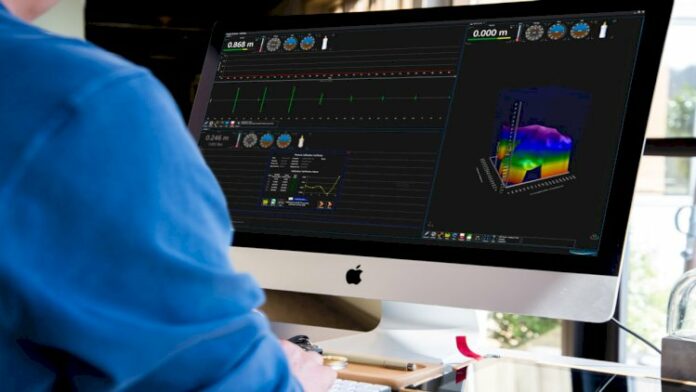
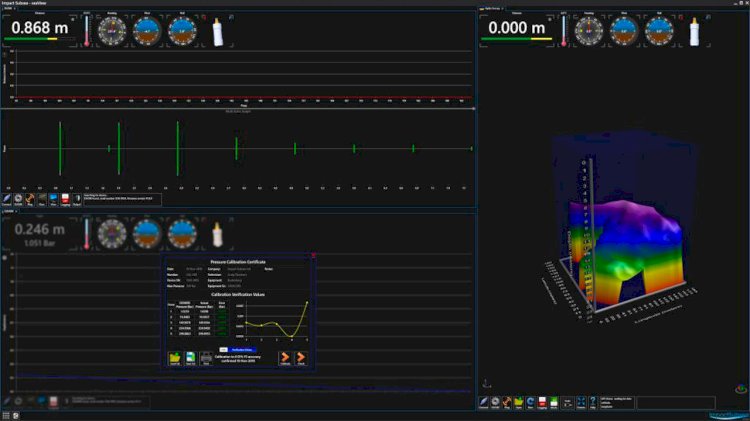
seaView is an easy to use software package comprised of multiple applications (Apps) for viewing, logging, calibrating and configuring all Impact Subsea sensors.

seaView allows the viewing and logging of data together with configuration and calibration of Impact Subsea sensors. Hydrographic surveys and Flooded Member Detection can also be performed using the seaView software.

The latest iteration of the seaView software enables new features and improvements to Impact Subea’s core sensor family. The software also contains updated details of the available output strings from each sensor.

Commenting on the latest release, Alastair Mclennan-Murray, Technical Director said:

"SeaView is a core part of the Impact Subsea ROV & AUV sensor solution offering. We continue to invest in the development of the platform and have several new exciting features in development for future release".


Production drilling starts on the Dvalin Field in Norway

0

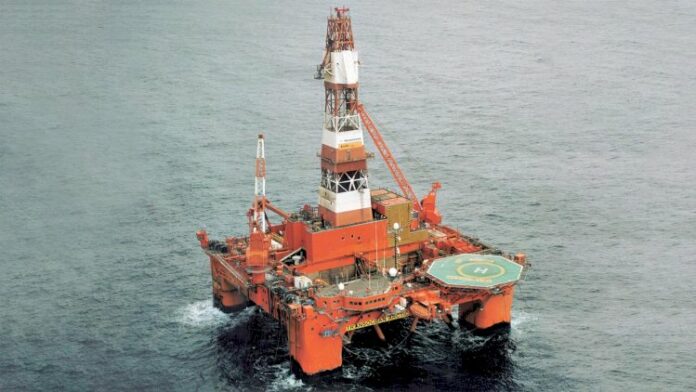
Drilling of the production wells from the Transocean Arctic rig is expected to last approximately one year and follows an intense summer of activity around the Wintershall Dea operated Dvalin development.

Since April there has been high activity at the Dvalin field with installation of pipe-lines and the manifold at 400 meters water depth. In August, a 3,500 tonne processing module was completed and lifted on to the nearby Heidrun platform in preparation for receiving gas from the Dvalin field. The field is located 259 kilometers north of Kristiansund in mid Norway.

Dvalin is being developed as a subsea field tied back to Heidrun, which lies some 15 kilometers to the northwest. The four wells will be drilled to a depth of around 4,500 meters.

The design philosophy for the wells has focused strongly on HSEQ, in line with the whole Dvalin project to date. The drilling team aims to maintain the project record of having no serious incidents.

Alv Solheim, Managing Director of Wintershall Dea in Norway, said:

“Dvalin fits neatly into our strategy of supplying gas to the European market through fields and pipelines while ensuring we remain one of the most important gas producers on the Norwegian Continental Shelf. It further demonstrates our capabilities as an efficient and capable operator.”

About Dvalin

The Dvalin gas field in the Norwegian Sea is being developed with four subsea wells, tied back to the Equinor operated Heidrun host platform. The gas from Dvalin will be transported to the Heidrun platform via a 15-kilometre pipeline. From there, it will be sent to the Polarled gas transportation system via a 7.5-kilometre pipeline, before it will be further processed to dry gas at the Nyhamna onshore gas terminal. Finally, the gas will be transported via Gassled to the market.

Telephonics awarded contract to support Korean naval programs

0

Telephonics Corporation, a wholly owned subsidiary of Griffon Corporation, has announced that it has been awarded a $22.8M contract from Huneed Technologies for its AN/UPX-44 Identification Friend or Foe (IFF) system.

Through a Direct Commercial Sales (DCS) contract, Telephonics will supply its AN/UPX-44 to Huneed Technologies to support Republic of Korea naval modernization programs.

Recognized as an industry leader in the development of IFF technologies, Telephonics’ next generation AN/UPX-44 will include Mode 5 capabilities allowing for expanded data handling transmissions without increasing interference. This marks the second significant IFF contract awarded to Telephonics this year for its AN/UPX-44 system.

Kevin McSweeney, Telephonics President, said:

“The AN/UPX-44 is part of a family of IFF systems that is ready to meet the demands of the Republic of Korea Mode 5 naval modernization program. As we continue to grow our global presence, we are proud to be partnered with Huneed Technologies and look forward to supporting future pursuits together.”

Eugene Kim, Chairman of Huneed Technologies, said:

“Partnering with Telephonics was a natural choice for Huneed as our companies share a common culture that puts focus on our customers, and continuous improvement of on-quality, on-time, and best value metrics. Synergies between world-class Telephonics products with Huneed’s production and integration capabilities will open new business opportunities not just in Korea, but globally.”

About Telephonics

Telephonics, founded in 1933, is recognized globally as a leading provider of highly sophisticated intelligence, surveillance and communications solutions that are deployed across a wide range of land, sea and air applications. Telephonics designs, develops, manufactures and provides logistical support and lifecycle sustainment services to defense, aerospace and commercial customers worldwide. 

Tullow makes first oil discovery on Orinduik license

0

The Jethro-1 was drilled by the Stena Forth drillship to a Total Depth of 4,400m metres in approximately 1,350 metres of water.

Evaluation of logging data confirms that Jethro-1 is the first discovery on the Orinduik licence and comprises high quality oil bearing sandstone reservoirs of Lower Tertiary age. The well encountered 55m of net oil pay which supports a recoverable oil resource estimate which exceeds Tullow’s pre-drill forecast. Tullow will now evaluate the data from the Jethro discovery and determine appropriate appraisal activity.

This discovery significantly de-risks other Tertiary age prospects on the Orinduik licence, including the shallower Upper Tertiary Joe prospect which will commence drilling later this month following the conclusion of operations at the Jethro-1 well. The non-operated Carapa 1 well will be drilled, later this year, on the adjacent Kanuku licence to test the Cretaceous oil play.

Tullow Guyana B.V. is the operator of the Orinduik block with a 60% stake. Total E&P Guyana B.V.  holds 25% with the remaining 15% being held by Eco(Atlantic) Guyana Inc.

Paul McDade, cheif executive officer, commented:

“This substantial and high value oil discovery in Guyana is an outcome of the significant technical and commercial focus which has underpinned the reset of our exploration portfolio. It is an excellent start to our drilling campaign in the highly prolific Guyana oil province. We look forward to drilling both the Joe and Carapa prospects in our 2019 drilling campaign and the material follow-up exploration potential in both the Orinduik and Kanuku licences.”

VIDEO: Equinor installed 14 templates in one month

0

In one month the two vessels Edda Freya and Normand Vision installed 14 templates, delivered by Aker Solutions and TechnipFMC, at four fields on the Norwegian Continental Shelf.

They are all built according to the same, new standard. After a significant increase in the price level for subsea equipment over several years, we now see that standardization and simplification strengthens the competitiveness of the subsea industry, providing jobs both onshore and offshore. Askeladd, Johan Castberg, Troll Phase 3 and Snorre Expansion Project still creates a high activity level in yards along the Norwegian coast. Now they are building the manifolds for the templates – and even more templates.

Port Manatee awarded more than $1.4 million to bolster security

0

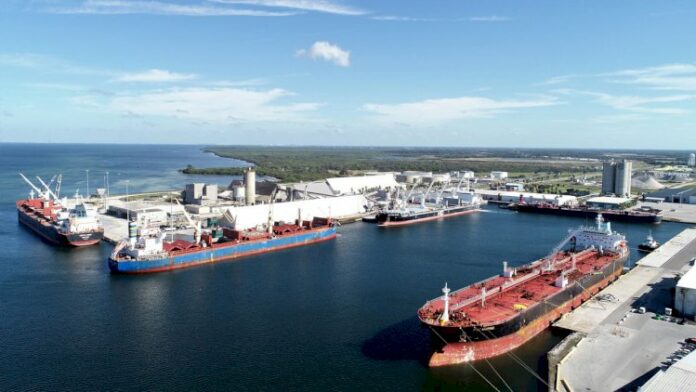
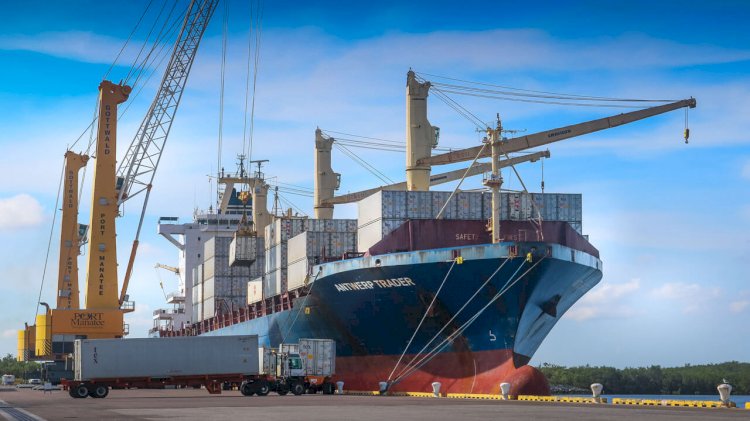
Port Manatee has been awarded $1,425,000 in federal funding to advance three projects to bolster security at the fast-growing Central-Southwest Florida Gulf Coast port.

Vanessa Baugh, chairwoman of the Manatee County Port Authority, said:

“Port Manatee greatly appreciates federal support of our efforts to ensure safe, secure and efficient flows of dynamically increasing cargo volumes.”

David St. Pierre, Port Manatee’s director of public safety and security, commented:

“Since initial installation of the present port security system in 2010, Port Manatee’s gate activity has tripled, to the current annual pace of 750,000 transactions. These grant monies, along with federal awards in preceding years, allow Port Manatee to stay at the leading edge of port security while accommodating escalating amounts of cargo.”

The latest award of $1,425,000 is to be joined by a 25 percent port match of $475,000 in moving forward three projects totaling $1.9 million in investments.

The largest endeavor is the $1 million expansion of Port Manatee’s south security gate facility into a full-service complex with four configurable lanes and capabilities for handling the full spectrum of registered, temporary and visitor transactions.

Meanwhile, a $750,000 undertaking bodes to complete a comprehensive update of portwide security systems, including modernizing computer software and integrating video and access control technologies into a common operating platform.

In addition, a $150,000 project aims to upgrade Port Manatee’s emergency alarm system.

All projects backed by fiscal 2019 port grants must be completed within three years.

Port Manatee is currently finishing projects supported by prior federal grants totaling nearly $1.7 million. Those efforts include expansion of the port’s north security gate complex.

Located “Where Tampa Bay Meets the Gulf of Mexico,” Port Manatee is the closest U.S. deepwater seaport to the expanded Panama Canal, with 10 40-foot-draft berths serving container, bulk, breakbulk, heavylift, project and general cargo customers. The port generates more than $2.3 billion in annual economic impact for the local community, while supporting more than 24,000 jobs, without levying ad-valorem taxes.

VIDEO: NOV’s technology preserves lost energy to cut fuel

0

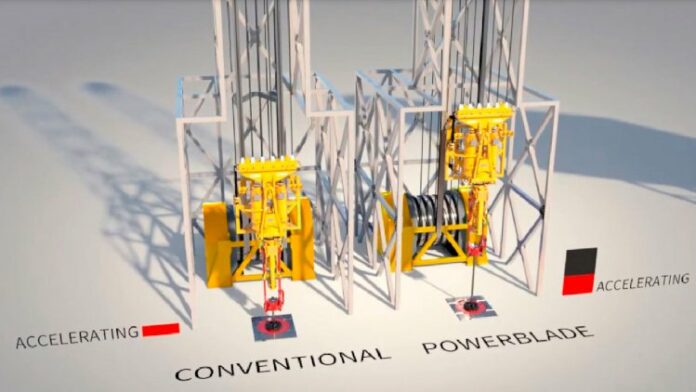
Kinetic Energy Recovery Systems (KERS) are a proven technology widely used in Formula One racing vehicles and NASA exploration spacecraft, recovering a moving vehicle’s kinetic energy while braking, storing it in a reservoir (flywheel) for later use under acceleration.

On most drilling rigs, the load on the hook is raised and lowered by the drawworks. During active heave compensation, tripping, and all block movement, the AC drawworks motors generate electricity when slowing and stopping the load. The “excess” energy is dissipated in braking resistors as heat.

The NOV PowerBlade is a KERS system that preserves that lost energy to cut fuel costs and cut emissions while increasing operational safety and reliability.

During operation, the PowerBlade system captures regenerated electrical energy when the drawworks, crane or winch slows and stops the load on the hook. The PowerBlade stores this as kinetic energy using a flywheel that accelerates and gathers speed, capturing energy from vessel rising and block lowering during active heave compensation. This energy is then recycled and utilized to put power back onto the power grid when needed. The spinning flywheel is housed inside a PowerBlade unit and rotates between 1,000 and 2,000 RPMs, charging and discharging energy in a safe fashion.