-6.2 C
New York
Home Blog Page 1021

BAE Systems awarded US Navy vessel work

0

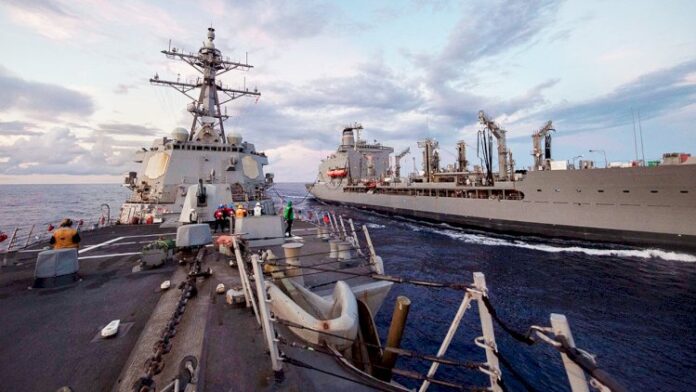
The U.S. Navy has awarded BAE Systems a prime contractor position on a new indefinite-delivery/indefinite-quantity contract to enhance maritime operations and flight safety systems aboard new construction aircraft carriers and large deck amphibious ships, to include refueling and complex overhaul ships.
 
BAE Systems was one of three contractors awarded the opportunity to bid on future integration, engineering, assembly, testing, and installation focused task orders awarded throughout an eight-year ordering period. The work will be performed to enhance a variety of distributed systems that provide network capabilities, communications, command and control, intelligence, and non-tactical data management.

Mark Keeler, vice president and general manager of BAE Systems’ Integrated Defense Solutions business, said:

“As a leading systems integrator, we continuously seek to broaden our support to the U.S. Navy to advance its C5ISR capabilities. We are working with our defense customers to innovate our approach to systems development to better meet their ever evolving mission requirements in alignment with construction and modernization priorities.”

A majority of the work awarded will take place near the U.S. Navy’s Test and Integration Facility Complex, alternatively known as the C4I-System Innovation Facility, located at Naval Information Warfare Center Atlantic in Charleston, SC. Additional work is slated for shipyards in Pascagoula, MS; Newport News, VA; and Norfolk, VA.

BAE Systems delivers a broad range of solutions and services enabling militaries and governments to successfully carry out their respective missions. The company provides large-scale systems engineering, integration, and sustainment services across air, land, sea, space, and cyber domains. BAE Systems takes pride in its support of national security and those who serve.
Fernandina Terminal to use Octopi TOS

0

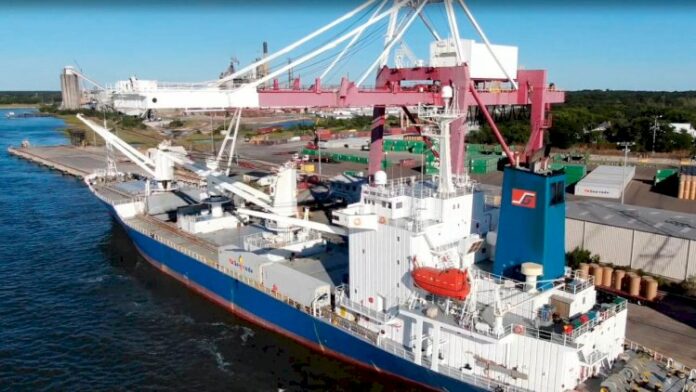
Octopi, part of  Navis, and Cargotec Corporation, provider of operational technologies and services that unlock greater performance and efficiency for the world’s leading organizations across the shipping supply chain, is announcing that Worldwide Terminals Fernandina, which operates the Port of Fernandina in Northeastern Florida, has agreed to implement Octopi’s software-as-a-service TOS.

Worldwide will run Octopi TOS to help the terminal effectively monitor, manage and improve operations at the site in real-time.

Octopi TOS is lightweight and designed to improve vessel planning and gate operations at small-to-medium terminals. Currently handling two mid-size container lines and 300,000 tons of breakbulk cargo annually, Worldwide is located 2 miles from the open ocean in Fernandina Beach, FL and is focused on containers, breakbulk and project cargo.

Worldwide recently refinanced the Port’s debt with a $27.6 million public bond financing, which includes approximately $10 million for capital investment to modernize and expand automation and the infrastructure at the terminal, including dredging to 40 feet MLW. It selected Octopi’s robust platform as part of its modernization plan to attract new container lines to their facility. Additionally, Worldwide wanted a system that could track cargoes moving between truck, vessel and rail, share real-time data through EDI with its customers and could automate processes such as customer billing and inventories.

Christopher T. Ragucci, CEO at Worldwide Terminals Fernandina, said:

“The Octopi team, the SaaS model, the scaling abilities, and the software’s ease of functionality and intuitive nature all factored into our decision to choose Octopi. Implementing Octopi’s state-of-the-art TOS is consistent with our commitment to offering the highest level of comprehensive services available in the South Atlantic, at extremely competitive rates.”

With this investment in Octopi, Worldwide will train its staff and provide them with technology that will upgrade their service to new and existing customers, many of which have been using the terminal for over thirty years.Once the implementation is complete, Octopi will aid in improving vessel operations, unloading and loading operations, yard and gate operations, administrative tasks and planning at the terminal.

Martin Bardi, VP of Global Sales, Octopi, said:

“We are excited to continue our foray into the smaller terminal and mixed cargo market through this partnership with Fernandina. We look forward to being an asset to Worldwide in managing its operations more efficiently and are eager to aid in their continued success at the terminal.”

About Octopi by Navis

Octopi by Navis is the leading developer of cloud-based software solutions for small-to-medium terminal operators. Octopi by Navis helps a wide variety of terminals manage their operations, track their cargo, and communicate electronically and in real-time with their commercial partners. Octopi by Navis provides small terminal operators the agility and adaptability required to modernize and efficiently run their operational ecosystem. 

Subsea Innovation ready for five LARS deliveries

0

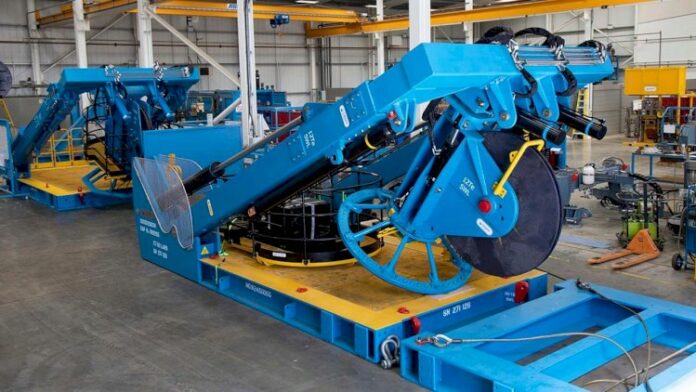
Subsea Innovation Ltd, part of Tekmar Group plc, are a market leader in the supply and refurbishment of launch and recovery systems (LARS). The workshop is currently busy with 5 systems in progress and will soon be dispatched to clients who have projects in progress requiring these systems.

In the previous 12 months the company has delivered a range of new and refurbished systems.

Within Subsea Innovation’s offer to provide both new and refurbished systems, the ability to prolong the life of assets through refurbishment and maintenance services is important in the industry to help client’s equipment operate for longer before being replaced. 

Dave Thompson, Managing Director of Subsea Innovation, said:

“In a climate which has seen many smaller companies going out of business our services can be an absolute life saver for contractors using aging and/or unsupported kit.”

Dave Thompson continued:

“Through being primarily an engineering design company, the company can re-engineer components enabling to re-purpose or add functionality, often cheaper than OEM’s. We are also often engaged in modifying customers equipment. Subsea Innovation are a world leader in the supply of Launch & Recovery Systems, with all systems designed, constructed and tested according to DNV standards for a range of environments including deepwater and heavy weather”.

The projects were carried out by Subsea Innovation’s teams of engineers and technicians in their state-of-the-art workshop in Darlington, UK. The 40,000 sq ft facility offers three work bays, each 42m in length and up to 24m in width, sized for larger equipment and overhead craneage up to 50Te.

Subsea Innovation have delivered over 120 LARS since the company was founded, including refurbishment and upgrade work on a wide variety of onshore and offshore equipment from a range of manufacturers including LARS systems, Winches, Mass Flow Excavators, Cable Engines, Tensioners, HPU’s and Pipeline Repair Systems. 

Subsea Innovation Limited are one of Tekmar Group plc’s four primary operating companies; in addition to Tekmar Energy Limited, AgileTek Engineering Limited and Ryder Geotechnical Ltd. 

VIDEO: Videotel’s new virtual reality Wall Wash Test

0

Videotel's new virtual reality Wall Wash Test provides necessary theoretical and practical knowledge to crew for successful demonstration and competency of wall wash test requirements and procedures onboard a chemical tanker.

Jan De Nul wraps up Formosa 1 P2 export cables installation

0

Jan De Nul Group’s Cable Laying Vessel Willem de Vlamingh has successfully installed the three export cables on the 120MW Formosa 1 Phase 2 wind farm in Taiwan.

As part of Jan De Nul Group’s EPCI contract for building of the overall Balance of Plant, Jan De Nul Group mobilised its Cable Laying Vessel Willem de Vlamingh to install the 17 inter array and 3 export cables.

These three export cables have been successfully installed within one week. Thanks to its shallow draft design, the Willem de Vlamingh was able to position in water depths of not more than 7 metres, thus limiting the shore pull distance to around 1,750 metres. At the beach landing, the cables have been pulled through three HDD ducts into the transition joint bays. The Willem de Vlamingh is also acting as Trenching Support Vessel for the jet-trenching of both the export as well as the inter array cables.

For the installation of the export cables, Jan De Nul Group relied on its local supply chain network for the performance of the beach pull assistance works including installation of the HDD ducts, dive support and supply and operation of the support vessels.

About the Formosa 1 Phase 2 OWF

The wind farm is owned by Formosa I Wind Power Co. Ltd., a partnership of Orsted (35%), JERA (32.5%), Macquarie Capital (25%) and Swancor Holding (7.5%).

The offshore wind farm is located around six kilometres off the west coast of the Miaoli district in the Taiwan Strait, with water depths ranging between 15 and 30 metres. The original demonstrator project, comprising two wind turbines with a total capacity of 8MW, is currently being extended. This second phase will add 20 offshore wind turbines with a total capacity of 120MW to Formosa 1's current 8MW capacity. Formosa 1 will be the first commercial-scale offshore wind farm in Taiwan before 2020.

RENK wins order for maritime hybrid drive MARHY

0

The maritime sales team of RENK’s Rheine plant managed to win its first new construction project for the maritime hybrid system called MARHY.

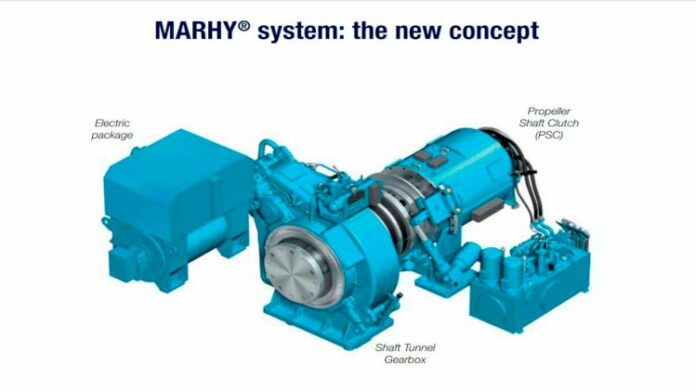
This system enables ships with 2-stroke engines to efficiently generate on-board power supply by using the main engine (PTO-operation). In addition, a fully electric drive (PTH-operation) is available for zones with low emissions zones (port areas) and for emergencies.

The newbuild is a 30,000 cbm LNG carrier owned by Knutsen OAS. It is equipped with a 6,00 kW strong 2-stroke main engine and is the first of this size. RENK's scope of delivery includes a tunnel gearbox (type SHHII1600), a fully-automatic PSC-85 (Propeller shaft clutch), elastic couplings, and, for the first time, key electric components. These include a 1 MW generator/e-motor as well as the corresponding frequency converter.

In addition, RENK is responsible for the system integration. After completion of the ship at the Hyundai Mipo shipyard in South Korea, it will be stationed in the Italian Mediterranean Sea and operated by Milan-based Edison Energy SpA. The LNG carrier is part of an infrastructure strategy, which provides for the construction of several LNG depots along the Italian coast to provide a reliable energy supply.

MARHY® can be used on any type of vessel with Fixed Pitch or Controllable Pitch Propeller (FPP or CPP), with a propulsion power of up to 60 MW. PTO/PTH/PTI power will be adapted in accordance to each specific project requirement.

Intelsat 39 successfully launched for better maritime connection

0

Intelsat S.A. has announced the successful launch of Intelsat 39, which will provide video distribution and connectivity services for mobile network operators, enterprises, governmental entities, as well as aeronautical and maritime service providers operating in Africa, Asia, Europe and the Middle East.

Manufactured by Maxar Technologies and launched aboard an Arianespace Ariane 5 launch vehicle from the Guiana Space Center in Kourou, French Guiana, Intelsat 39 lifted off at 3:30 pm EDT. The satellite separated from the rocket’s upper stage on August 6 at 3:59 pm EDT. Signal acquisition has been confirmed.

Designed with wide-beams and high-powered steerable spot beams, Intelsat 39 will deliver high-speed agile connectivity services. The steerable beams will provide additional flexibility, enabling customers to rapidly reposition their service to respond to changing application or geographic requirements. The satellite’s C-and Ku-band capabilities will add scale to the Intelsat Flex managed services, enhancing mobile connectivity for aeronautical, maritime, enterprise, and government customers operating across these geographies. Intelsat 39 will replace Intelsat 902 at the 62ºE orbital location.

Stephen Spengler, Intelsat’s Chief Executive Officer, said:

“Intelsat 39 adds to the breadth of services and vast geographic reach that our global network provides. Businesses and communities across three continents will have greater access to robust, reliable and resilient connectivity services whenever and wherever they need it.”

Intelsat 39 will host both C- and Ku-band satellite services for Myanmarsat-2 which will enable the Ministry of Transport and Communications (MOTC) of Myanmar to significantly enhance its existing network. By integrating satellite solutions into its own network, the MOTC will be able to dramatically increase its overall network bandwidth, speed and reliability as it expands 3G and 4G services into the more remote areas of Myanmar. It will also ensure that communities have access to a broad range of government services, including healthcare and education. The satellite will provide critical e-banking services as well as distribute informative and entertaining content to viewers throughout Myanmar.

Intelsat 39 is expected to enter service in the fourth quarter of 2019.

About Intelsat
Intelsat S.A. operates the world’s first Globalized Network, delivering high-quality, cost-effective video and broadband services anywhere in the world. Intelsat’s Globalized Network combines the world’s largest satellite backbone with terrestrial infrastructure, managed services and an open, interoperable architecture to enable customers to drive revenue and reach through a new generation of network services. 
 

Manchester Uni studies floating wind stabilization options

0

Wave simulation specialists hope to make offshore wind turbines in deep water more financially feasible by researching the best way to stabilise the floating pontoons they would have to sit on.

Static turbines can be fixed to the ocean floor near the coast but the cost and infrastructure complexities of doing so further out to sea mean they would have to be instead mounted on tethered buoyant platforms – exposing them to high winds and large waves.

Academics from Manchester Metropolitan University have won a £124,000 grant to develop computer models to test the best methods to stabilise and control the motions of the turbine and its semi-submerged support structure.

Dr Ling Qian, Reader in Computational Fluid Dynamics at the Centre for Mathematical Modelling and Flow Analysis at Manchester Metropolitan University, and the lead academic of the project, said:

“At the moment most offshore wind turbines are fixed-bottom devices that are secured directly to the seabed and normally it is located not very far from the coastline. But if you’re close to the shoreline you get lots of people objecting to the construction of a wind farm. If you want to locate wind turbines far away from the shore at a water depth of more than 50m, a fixed-bottom turbine becomes a very expensive and challenging engineering project.

So we need to develop a floating offshore wind turbine that works in water deeper than 50m, but that leaves the top-heavy turbines exposed to being buffeted by high winds and rough seas even if the buoyant support system is attached to mooring lines anchored to the sea floor.”

Based on a code they have developed themselves, Dr Qian and colleagues will use the University’s high performance computer cluster to run a computer simulation of waves interacting with a platform based an existing design for floating support structures.

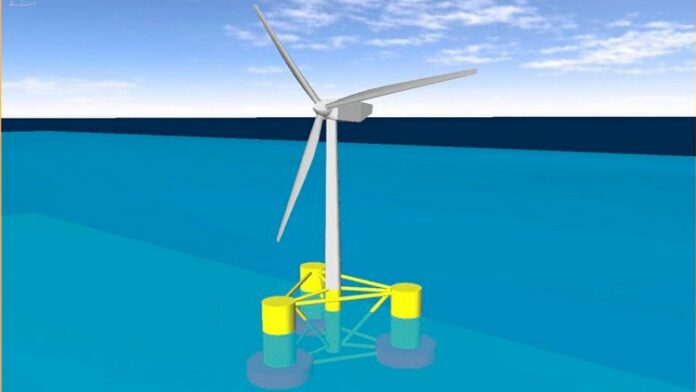
The design comprises three connected columns 50m apart, creating a triangle frame in which the turbine sits, keeping the majority of the mast above the surface of the water.

It is manufactured separately from the turbines – which are typically 130m high with a blade length of between 60m and 90m – and the two are bolted together on location.

Even if it was possible to fabricate an all-in-one system it would just be too large to transport anywhere.

Dr Qian said representative waves from the North Sea will be used in the computer simulation.

The Manchester Metropolitan University team’s model will uniquely incorporate two proposed stabilisation measures, first testing with one and then adding the second:

  • Tuned liquid damper is a U-shaped tube filled with water, which sloshes as the platform moves and acts as a counterbalance and helps absorb the rotational movements.
  • Heave plates are placed under the three columns like the suspension in a car to suppress the up and down motion.

Dr Qian said:

“Under extreme wave conditions such as during storms, floating platforms will undergo large movements and sometimes this movement is dangerous and leads to system damages. Therefore, we need to make sure the device can survive such storms with large waves. On the other hand, in order for the wind turbine to operate optimally we also need to control its motion. There is already one commercial floating offshore wind demonstration project in the UK, a test farm off the coast of Scotland near Peterhead, but to enhance the technical viability and to drive the cost down, further fundamental research is still needed.
In this project, we will look at some novel and cost effective techniques to stabilise a floating system so it can operate under high sea states and survive the worst impact.”

VIDEO: New hydrographic survey CEE-USV launched

0

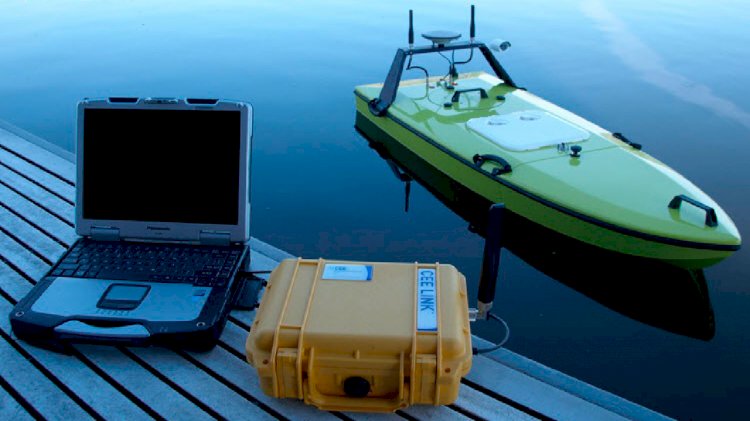
Dynautics Ltd, the leader in intelligent marine electronics for unmanned boats and CEE HydroSystems, manufacturer of shallow water hydrographic survey echo sounders announced a technical collaboration which brings a uniquely integrated unmanned survey solution to the market, the CEE-USV™.

The CEE-USV™ hydrographic survey vessel received its specialized CEE-PILOT™ control system, developed in partnership with Dynautics Ltd., utilising a custom version of the Spectre E-boat module integrated with Eye4Software’s Hydromagic survey software.

Adrian McDonald of CEE HydroSystems, commented:

‘We declined to patch together a system based on freeware, or community-based programming, but instead set the bar high for a fully integrated hardware and software solution. This approach was the only way to maintain CEE’s unique usability and simplicity, even on a robotic USV.’

The collaboration’s focus on simplicity led to the removal of all extraneous connections with no on-board PC needed. Simpler operations are provided through the pre-defined survey grid patterns set up in Hydromagic being integrated with route planning in the modified E-Boat module.

Dr Henry Robinson, Dynautics CEO, commented:

‘Working with CEE HydroSystems is a great example of how collaborations, which are focused on the ease of the use for the customer, provide excellent solutions. Combining and integrating complementary technologies provides a powerful solution’.

Helix announces contract for new Q7000 vessel

0

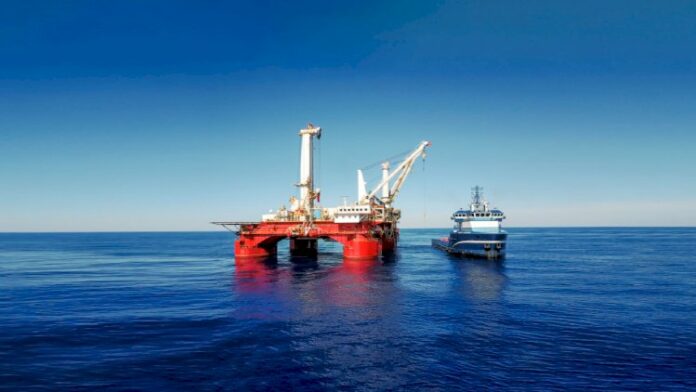
Helix Energy Solutions Group, Inc. has announced that it has entered into a contract for its new-build semi-submersible well intervention vessel, the Q7000.

The vessel will be performing subsea workover and integrated well intervention services with a major client offshore Nigeria, an estimated minimum 80-day campaign. Helix continues to mobilize the vessel from the shipyard in Singapore, and the project is scheduled to begin in early January 2020.

Owen Kratz, President and Chief Executive Officer of Helix, stated:

“We are very pleased to announce our first contract for the Q7000. The contract represents the result of years of work to bring our new vessel to market, and we look forward to the opportunities that our expansion into the riser-based well intervention market in West Africa will provide, as we continue to strengthen our presence globally.”