-2.4 C
New York
Home Blog Page 1016

ERAPSCO awarded USN sonobuoy contract

0

Ultra Electronics Holdings plc (ULE) and Sparton DeLeon Springs, LLC announce the award of an IDIQ contract valued at Not-to-Exceed amount of $1.04B to their ERAPSCO joint venture, for the manufacture of sonobuoys for the United States Navy. The contract provides the base year award of a five year Indefinite Delivery Indefinite Quantity (IDIQ) contract.

ERAPSCO will provide production subcontracts in support of the USN FY19 base year delivery order in the amount of $75.75M and $75.26M to Ultra Electronics USSI and Sparton. Production will take place at Sparton’s DeLeon Springs, FL facility as well as Ultra’s Columbia City, IN facility.

Simon Pryce, Chief Executive Officer of Ultra Electronics, commented:

“I am very pleased that we have secured this important contract for Ultra and that we will continue to provide critical sensor capabilities to the US Navy for many years ahead. This contract is a reflection of the increased focus on anti-submarine warfare by the US Navy and ERAPSCO’s strength and expertise in this area.”

William Toti, CEO of Sparton ECP, commented:

“Hundreds of Sparton employees work tirelessly, day and night, with our Fleet Sailors always in mind. It’s Sparton’s great honor to provide both innovative technology and a stable industrial base for our undersea forces.”

About Ultra

Ultra is a specialist international electrical and electronics engineering company. The Group operates predominantly in defence and other highly regulated markets with particular expertise in the maritime, and C3 (command, communication, and control including cyber) domains. Ultra is a sub-system and systems provider, focused on providing mission specific, bespoke solutions for its customers.

About Sparton DeLeon Springs, LLC

Sparton DeLeon Springs, LLC, as a leader in the design, development, and manufacture of sonobuoy systems for the U.S. Navy, is a leader in technologies that align with the Defense Department’s Undersea and Ground Warfare Technology roadmaps. Sparton’s DeLeon Springs facility is uniquely qualified to handle projects for the Defense Department and Prime contractors in the design and manufacturing of engineered products.
Bangor University to gather data from the seas around Wales

0

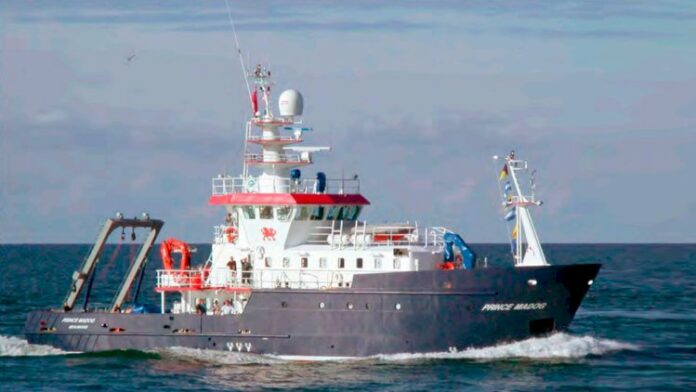
The Welsh Government and Bangor University are joining forces to help ensure that the seas around Wales are clean, healthy, safe, productive and biologically diverse.

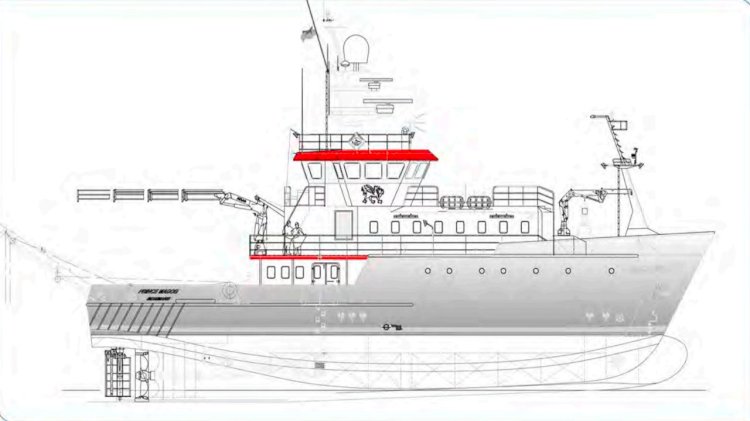
Bangor University’s research vessel, the Prince Madog will be used to gather data from the seas around Wales which will assist the Welsh Government to fulfil its marine and fisheries evidence requirements.

After Brexit, it is clear that Wales needs to enhance its marine science and data collection capability, and doing this now has become a matter of urgency as the UK prepares to leave the EU.

The new collaboration will help secure the future of the Prince Madog research vessel.

Lesley Griffiths, Minister for Environment, Energy and Rural Affairs said:

“We want our Welsh seas to be clean, healthy, safe, productive and biologically diverse.  I am pleased we have been able to collaborate with Bangor University as this will help us meet our marine evidence and data gathering requirements.”

Professor David Thomas, Head of Bangor University’s School of Ocean Sciences said:

“There can be no doubt that understanding our marine resources, and their sustainable management, is a massive challenge facing scientists and governments alike. The Prince Madog is a wonderful platform to deliver the type of innovative survey work the Welsh Government fisheries team need and we are proud to be working together with them over the next 2 years. Bangor University will provide the equipment a technical expertise, and together with P&O Maritime who operate the vessel with us, we are confident that this will be the start of a much longer term collaboration. The research vessel is a valuable resource for Wales, and I very much hope that this is the beginning of a long term partnership to safeguard our seas for generations to come, and that the Prince Madog will be central to this.”

This collaboration builds on decades of expertise developed in the School of Ocean Sciences at Bangor University, where research into fish and shellfish management in the Irish Sea, and further afield, has been at the core of much of the work being carried out.

Equinor completes acquisition with Shell in the US Gulf of Mexico

0

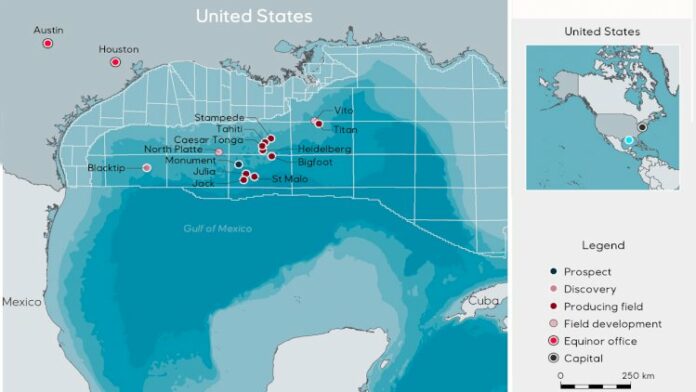
The Bureau of Ocean Energy Management has approved Equinor and Shell’s transaction announced in May 2019, whereby Equinor exercised its preferential right to acquire 22.45% interest in the Caesar Tonga oil field from Shell Offshore Inc for a total consideration of USD 965 million in cash. 

Equinor’s interest in the field is now 46%. Anadarko Petroleum Corporation is the operator with a 33.75% interest, and Chevron holds 20.25% interest. This transaction demonstrates Equinor’s ambition to grow and strengthens the portfolio in the US Gulf of Mexico, now producing a total of more than 130,000 boe/day.  

Equinor has a broad portfolio in the Gulf of Mexico, with active exploration activity, equity- and operated production. In addition, Equinor has extensive US onshore operations with a total equity production of nearly 300,000 boe/d, and recently won a bid to deliver offshore wind energy to New York.  

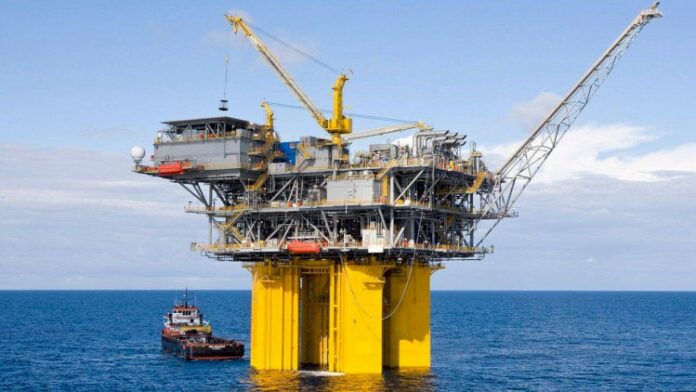
The Caesar Tonga field is located 180 miles (290 kilometres) south-southwest of New Orleans in the Green Canyon area and is one of the largest deepwater resources in the US Gulf of Mexico. Equinor’s current share of production from Caesar Tonga is 18,600 boepd (net to Equinor). 
 

Reliance awards Worley a PMC services contract

0

INTECSEA Inc, a wholly owned subsidiary of Worley, has been awarded a project management consultancy (“PMC”) contract by Reliance Industries Limited (“Reliance”) for the MJ Field deep-water gas and condensate project.

Under the contract, INTECSEA Inc will provide PMC services for the development of Reliance’s subsea gas and condensate resource located in deep water of approximately 1,000 meters in the MJ Field offshore of India. The contract covers the engineering, procurement and construction phases and involves subsea facilities and offshore processing using a floating production storage and offloading facility and existing gas trunk line.

Andrew Wood, Chief Executive Officer of Worley, said:

“We are pleased to continue our relationship with Reliance and support them in their deep-water development.”

About Worley

Worley delivers projects, provides expertise in engineering, procurement and construction and offers a wide range of consulting and advisory services. 

UNH technology helps to solve a historical mystery in the ocean

0

Researchers from the University of New Hampshire’s Marine School are part of the crew, led by National Geographic Explorer-at-Large Robert Ballard, that is setting out to hopefully find answers to questions around the disappearance of famed pilot Amelia Earhart.

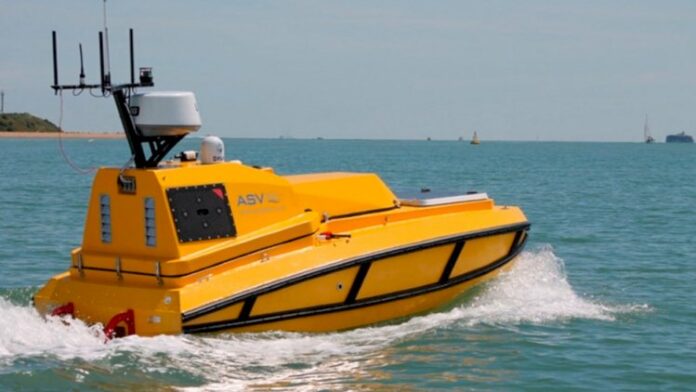
UNH’s Center for Coastal and Ocean Mapping has developed an autonomous surface vehicle (ASV), or robot, that can explore the seafloor in waters that may be too deep for divers.

The UNH robot known as BEN, the Bathymetric Explorer and Navigator, provides Ballard and the crew aboard the EV Nautilus with a unique capability to map the seafloor in the shallow areas adjacent to the island where Earhart sent her last radio transmission. This area is too deep for divers and too shallow for safe navigation of the Nautilus to use its deep-water sonar systems. Maps of the ocean floor produced by BEN will be used by the Nautilus crew to target dives with remotely operated vehicles (ROV) in the search for remnants of the plane.

Evidence suggests Amelia Earhart made a successful landing, likely near the coral reef around the island of Nikumaroro, in the western Pacific Ocean, and was able to transmit radio signals afterward. However, no plane was seen by Navy pilots surveying the islands several days after her disappearance suggesting that the plane may have been pushed off the reef into deeper water.

BEN is equipped with state-of-the-art seafloor mapping systems including a Kongsberg EM2040P multibeam echo-sounder and Applanix POS/MV navigation system, which allow it to make 3D topographic and acoustic backscatter maps of the seafloor. The Center has developed mission planning and “back-seat-driver" control software designed specifically for piloting BEN for the seafloor mapping mission. BEN was manufactured by ASV Global, in a design collaboration with the Center.

The UNH crew consists of research engineers Val Schmidt, lead of this operation, KG Fairbarn, and Andy McLeod, who are all aboard the EV Nautilus as well as Roland Arsenault, who is supporting the crew from shore. All are a part of the UNH Marine School’s Center for Coastal and Ocean Mapping development and use of robotics for marine science and seafloor mapping.

The expedition, which is being covered on nationalgeographic.com, will be featured in a two-hour special titled EXPEDITION AMELIA that will premiere October 20, on National Geographic.
 

GeoSpock and Baltic Exchange build the global maritime database

0

GeoSpock, the Spatial Big Data company, has announced it will partner with the Baltic Exchange to build the world’s most advanced global maritime spatial database. The data repository will act as a critical resource for the array of new datasets emerging from the industry.

The digital programme will commence with a specific focus on maritime air emissions enabling collaborators to have unparalleled access to visualisations and data insights. It will allow for informed decisions to be made on clean air initiatives, effectively demonstrating how the industry is tackling regional and global emissions. 

Shipping is central to the global economy, underpinning 90% of the world’s trade. This vast industry is undergoing an intense period of digitalisation, with data analysis becoming fundamental to business success. Currently, the industry generates huge quantities of data; from every aspect of the supply chain from sensors in dispatch warehouses, onboard ships, in ports and on trucks. This data remains siloed and there is no central pool of data that companies, and the industry as a whole, can utilise. 

The Baltic Exchange is developing the intelligent database to capture data on measurable aspects of the shipping industry. This includes metadata onlocation, weather, emissions, fuel usage and journey route and times. Through the collection of this data, the maritime market will have complete and instant visibility into the shipping landscape. Companies will be able to analyse and optimise shipping on a global scale, while providing regulators and governments with a new level of transparency. 

The dataset and data science tools will be designed and built by GeoSpock. The GeoSpock Spatial Big Data platform, built on AWS Cloud, will be able to ingest and provide context to huge quantities of global maritime data from Baltic members and industry participants. While the project will initially focus on regional emissions, the initiative will have global capabilities and reach, it will embrace data science as a fundamental technology and how it will impact future skills and talent in the maritime industry. 

Mark Jackson, CEO, Baltic Exchange, commented:

"We are driven by supporting the needs of our members and a desire to change the maritime industry. As our market embraces digital technologies, the Baltic is in a unique position to facilitate the industry’s digital growth. To achieve this vision we must adopt and utilise the most advanced technology and develop the most holistic database available. Our priority is to inform our membership and the wider shipping community, providing them with the means to see, prove and act on any developments in the industry.

The GeoSpock database will act as a self-improving and scalable global information hub that can be interrogated in real-time It's an opportunity for our community to innovate and collaborate for the benefit of the industry as a whole. We believe it will set a global standard for a data-first strategy in the shipping industry."

Richard Baker, CEO at GeoSpock, said:

"The maritime industry is currently trapped within many siloes, with operators hungry for insight and visibility. The goal of our combined database is to disentangle the sector, achieving data interoperability throughout whilst ultimately creating an innovation hub. Only by having ubiquitous access to trusted data and removing friction to data silos can the industry move to measuring and managing what matters. I am delighted to be working with Mark and his team at the Baltic Exchange on this project, this is something we are uniquely built for and incredibly excited to be involved in.

Technology will revolutionise the maritime industry and provide it with the insight it so desperately wants. Today’s announcement is the first step in that digital journey. We believe it will set a gold standard for the industry to follow and completely change the way it is viewed. Analytics at this scale has the capability to improve not just the industry, but to make the world less polluted and more prosperous."

Samsung Heavy Industries to advance smart ship technology

0

Samsung Heavy Industries has pushed ahead with advancing smart ship technology thanks to joint work with global equipment producers on SVESSEL, a smart ship system independently developed by Samsung.

SHI has announced that it signed an MoU with MAN Energy Solutions, a German-based global company specializing in engine technology, to facilitate cooperation on technology development of marine engines.

The MOU mainly aims at enhancing operating services of main marine engines by applying the engine diagnosis and high-tech control technology of MAN-ES to SVESSEL, an SHI's cloud-based smart ship system.

Shipbuilding companies will be able to reduce operating cost with accurate data provided in real time via the upgraded SVESSEL to onshore control centers and vessels on the water as this will facilitate effective navigation and maintenance.

Meanwhile, SHI has cooperated with WinGD of Switzerland from January, one of the top two giants in the global marine gas and diesel market along with MAN-ES, in order to develop a remote engine diagnosis technology applicable to LNG-fueled vessels.

Samsung also has continued to expand collaboration with major equipment companies on technology development for smart ship solutions; earlier this month it comlpleted technology development with Hi Air Korea, a Korean company, which enables remote control of cooling and heating, humidity and fan system inside vessels from onshore control centers.

The way how equipment producers use SVESSEL, a smart ship system developed by SHI, as a platform to develop optimized solutions on their own has received attention from the industry as a win-win model between shipbuiders and equipment companies.

Shim, Yong-Lae, Vice President of SHI Ship & Offshore Research Institute, said:

"Equipment manufacturers have actively participated in technology development of our cloud-based smart ship system and this will provide more useful and diverse services to shipowners. By solidifying the ecosystem where both shipbuilders and equipment producers coexist, we will take the lead in developing innovative smart ship system." 

NOAA awards $2.7 million in grants for marine debris removal

0

NOAA has announced a total of $2.7 million in grants supporting 14 projects to address the harmful effects of marine debris on wildlife, navigation safety, economic activity, and ecosystem health. With the addition of non-federal matching contributions, the total investment in these marine debris projects is more than $5.2 million.

The grants, selected competitively from 82 community-based marine debris removal and research proposals received this year, are spread across 10 U.S. states and territories and 2 federally recognized tribes. Ten marine debris removal projects will receive a total of $1.5 million, while four research programs will receive a total of $1.2 million. 

Retired Navy Rear Adm. Tim Gallaudet, Ph.D., assistant secretary of commerce for oceans and atmosphere and deputy NOAA administrator, said:

“Marine debris removal and research efforts have both immediate and long-term benefits for local communities, regional interests, and the American Blue Economy. Marine debris is a pervasive national and global challenge, and NOAA is proud to support these projects to protect and better understand the impact of marine debris on our coastal habitats, waterways and wildlife.”

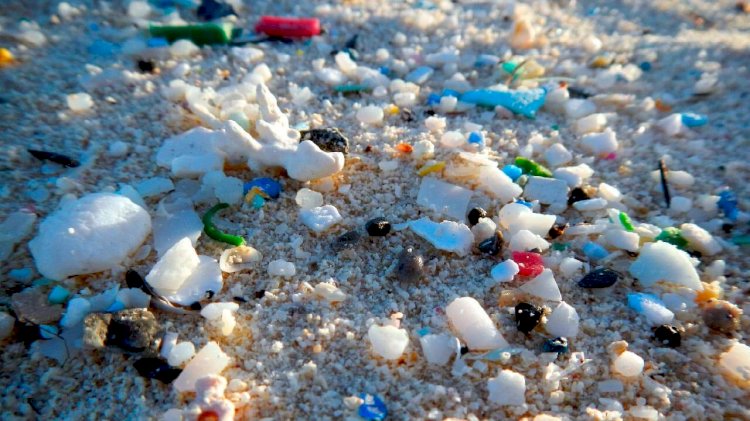
Among the projects selected are the removal of 30,000 pounds of marine debris from shoreline and beach habitat in St. Paul Island, Alaska; the removal of 441,000 pounds of medium-to-large debris at two critical salt marsh sites in the New York City borough of Queens; and research by Rutgers University in New Jersey to study how microplastics move from rivers to the ocean, and how they may enter the food chain.

Approximately $1.5 million in grants will support 10 community-driven removal projects in Alaska, the Aleut Community of St. Paul Island (Alaska), California, Guam, Louisiana, New York, North Carolina, the Swinomish Indian Tribal Community (Washington) and the U.S. Virgin Islands.

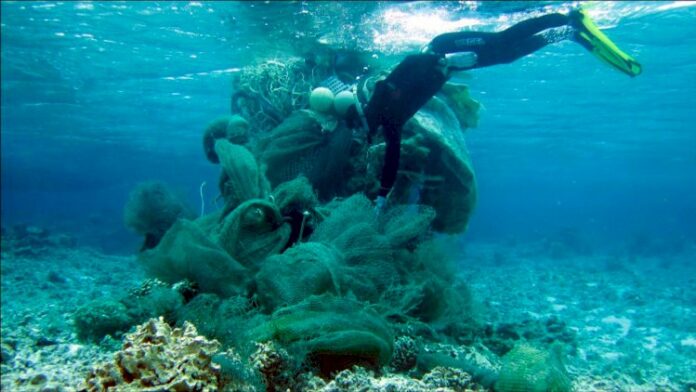
The grantees will implement locally based, cost-effective activities to remove marine debris, including derelict fishing gear and abandoned and derelict vessels. Approximately $1.2 million will support four marine debris research projects in California, Delaware, New Jersey and Virginia. These projects address ecological risk assessment and the fate and transport of marine debris.

Marine debris is not only a threat to our ocean, Great Lakes and waterways, but can affect navigation safety, the economy and, potentially, human health. To address this growing challenge, the NOAA Marine Debris Program is dedicated to investigating and preventing the adverse impacts of marine debris in our nation’s marine environment and Great Lakes.

Congress authorized the NOAA Marine Debris Program in 2006 as the lead federal program for addressing marine debris. This program was reauthorized in 2018 through the Save Our Seas Act.

USTPO approves patent for WaveRoller®

0

AW-Energy Oy, the world-leading Finnish wave energy technology developer, has taken another major step towards commercialising its WaveRoller® device.

Company has announced the United States Patent and Trademark Office (USPTO) has issued an “approval” for AW-Energy’s patent application covering its WaveRoller® technology.

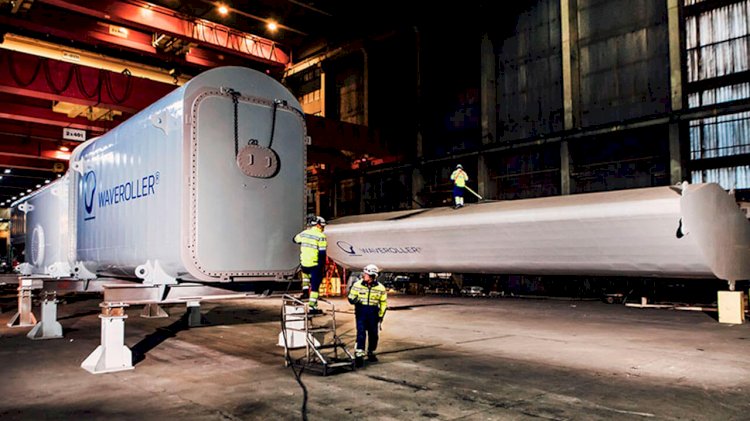
The patent [PCT/050485] provides AW-Energy with broad IP protection of its latest generation WaveRoller® device including a range of operating improvements made to the device’s system and infrastructure, particularly on failsafe operating improvements to protect against extreme weather conditions.

Jussi Åkerberg, CTO of AW-Energy Oy, said:

“This is a significant and exciting decision by the USPTO, and we view this announcement as recognition of AW-Energy’s important contribution to the growing number of renewable energy and sustainable power generation devices that are needed globally to reduce the climate change challenges we face. We are committed to leading the way on wave energy technologies that change the way utilities and power generation companies can supply tomorrow’s sustainable power solutions for our homes and our businesses.  Industry and its customers are the beneficiaries of these innovations, particularly our leadership in wave energy supply solutions.”

Today AW-Energy is among the top few technology providers whose level of development meets the requirements of commercial energy projects such as ongoing developments in Portugal, Ireland, France, UK, Chile, in South East Asia and the US.  Its WaveRoller® device is increasingly being favoured as a ‘plug-in’ solution to harness the energy which can be extracted from wave power. Certification by DNVGL and Lloyd’s Register, has qualified the technology to mitigate risks and is making the technology bankable for large utility customers in US as well as across Europe and Asia. Its power unit can easily be adapted to meet customer requirements for different types of grids.

WaveRoller® technology also makes it possible to capture energy independently from feeding power to the grid, which then enables customers to tailor the grid support function such as frequency regulation.

The USTPO Patent Approval for WaveRoller® provides further reassurance of AW-Energy’s approach on protecting the commercial opportunities for its technology and offshore energy expertise.

About WaveRoller

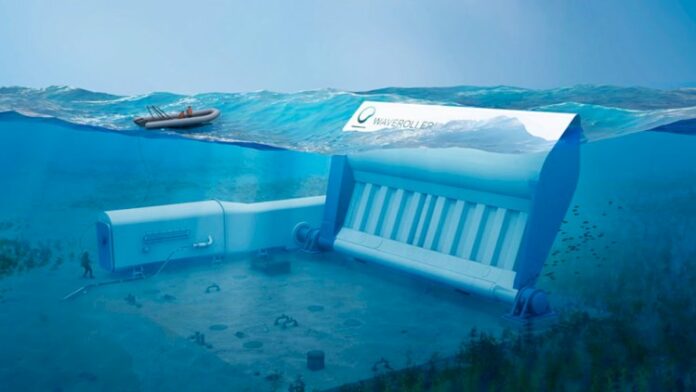
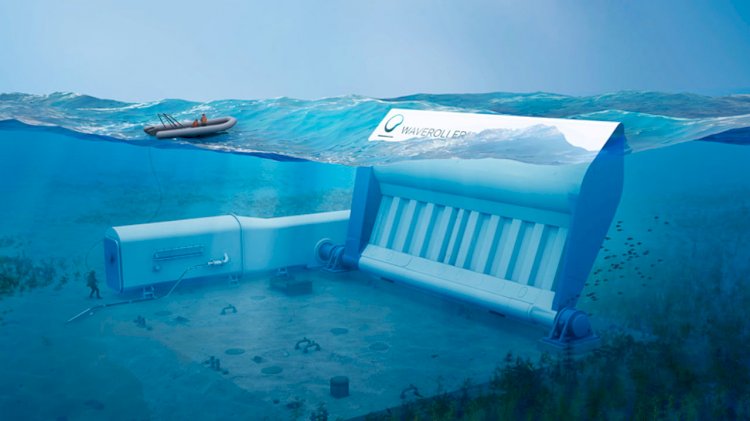
The WaveRoller is a device that converts ocean wave energy to electricity. The machine operates in near-shore areas (approximately 0.3-2 km from the shore) at depths of between 8 and 20 meters. Depending on tidal conditions it is mostly or fully submerged and anchored to the seabed. A single WaveRoller unit (one panel and PTO combination) is rated at between 350kW and 1000kW, with a capacity factor of 25-50% depending on wave conditions at the project site. The technology can be deployed as single units or in farms.

VIDEO: Capital improvements 2019-2020 in Port Manatee

0

The Port's capital improvements include road and railroad improvements, security upgrades, berth rehabilitation and more.

Located “Where Tampa Bay Meets the Gulf of Mexico,” Port Manatee is the closest U.S. deepwater seaport to the expanded Panama Canal, with 10 40-foot-draft berths serving container, bulk, breakbulk, heavylift, project and general cargo customers.

The port generates more than $2.3 billion in annual economic impact for the local community, while supporting more than 24,000 jobs, without levying ad-valorem taxes.