-2.4 C
New York
Home Blog Page 1017

Oceaneering wins subsea wellhead removal from Lundin

0

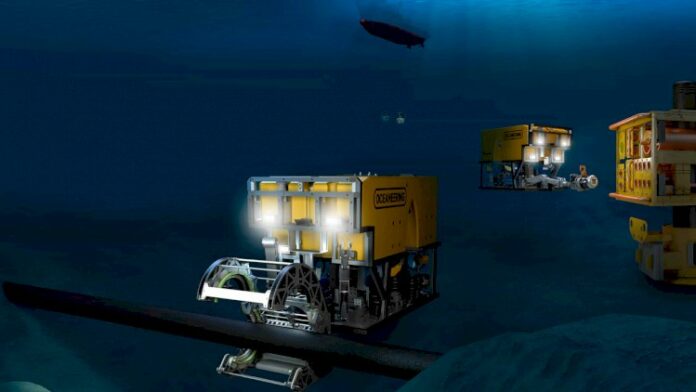
Oceaneering International, Inc. (“Oceaneering”) has announced that its wholly owned subsidiary Oceaneering AS has secured a contract from Lundin Norway AS covering the removal of the Jorvik subsea well in Norway, with options for additional wells.

The removal project, which is part of an ongoing rig chase multi-client campaign, is expected to begin this fall and take 3-4 weeks to complete. Contract management is a cross border operation between Oceaneering’s Norway and U.K. teams.

Rune H. Rosnes, Business Development Manager, Oceaneering, said:

“We are excited to work with Lundin Norway on this campaign featuring our vessel-based wellhead removal solution. Our multi-client campaigns allow all operators to benefit from economies of scale, thus reducing subsea plug and abandonment costs to a minimum.”

Geir Smaaskjær, Lundin Operations Manager Norway, said:

“We have considered cost/benefit and risk of moving this activity from rig to vessel and found it attractive to award this contract to Oceaneering."

To date Oceaneering has more than 10 wells in U.K. and Norway awarded to its 2019 Rig Chase multi-client campaign.

VIDEO: Atlantis decommissioned tidal SeaGen system

0

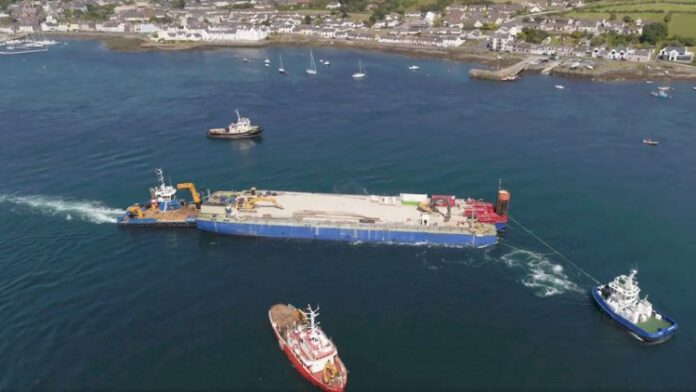
SIMEC Atlantis Energy Limited, the global developer, owner and operator of sustainable energy projects, is pleased to announce that it has successfully decommissioned the SeaGen tidal turbine support structure in Strangford Narrows, Northern Ireland.

This marks the completion of the 1.2MW SeaGen tidal stream energy project lifecycle and is the first commercial scale tidal turbine development to be fully decommissioned.

Specialist UK-based marine business Keynvor MorLift ltd. (KML) was appointed as the Principal Contractor to carry out the decommissioning engineering, planning and offshore works. The final major lift operations included the rigging, cutting and lifting of the over 500 tonne structure by KML which was safely and expertly executed at Strangford Lough.

The surface piercing tidal SeaGen system was installed in 2008 and became the world’s first commercial scale, electricity generating, grid connected tidal stream project. It exported over 11.6GWh of power during its useful life and the lessons learned from the project have underpinned both present and future global tidal turbine development whilst helping to shape the success of MeyGen, the world’s largest multi-megawatt tidal stream array. MeyGen has now exported circa 19GWh of electricity to the national grid and its total system availability, a key performance metric, is approaching 90% for 2019 to date.

The first phase of decommissioning SeaGen started in May 2016 with the removal of the system’s two 600kW Powertrains. In August 2018 the topsides and crossbeam were removed, and final works were completed with the successful removal of the remaining tower and subsea structure.

OPEX secures multi-million contract for digital services

0

OPEX has secured a new multi-million-pound contract with CNOOC Petroleum Europe Limited, a wholly-owned subsidiary of CNOOC Limited, for digital services across the company’s UKCS assets.

The three-year contract, with extension options, will see our X-PAS™ predictive analysis service rolled out on the Buzzard, Golden Eagle and Scott platforms, supporting operations across all topside oil, gas, water and power systems. OPEX has delivered digital services for CNOOC Petroleum Europe Limited for the past seven years through a previous contract with the company.

The X-PAS™ service has been developed to support oil and gas operators improve the predictability of offshore operations. Combining oil and gas and data science expertise with a range of predictive technologies, the service helps operators to maximise the value of operational data.

OPEX Chairman and CEO, Jamie Bennett, said:

“This new contract with CNOOC Petroleum Europe Limited is the culmination of several years of close collaboration between our organisations. We are pleased to have extended our scope across the company’s UKCS assets.  We have seen a notable shift as the industry is starting to show real commitment to digitalisation, which will undoubtedly bring breakthroughs in productivity and safety by using data to create meaningful insights.”

VIDEO: OPUS Logistics SaaS tutorial by CyberLogitec

0

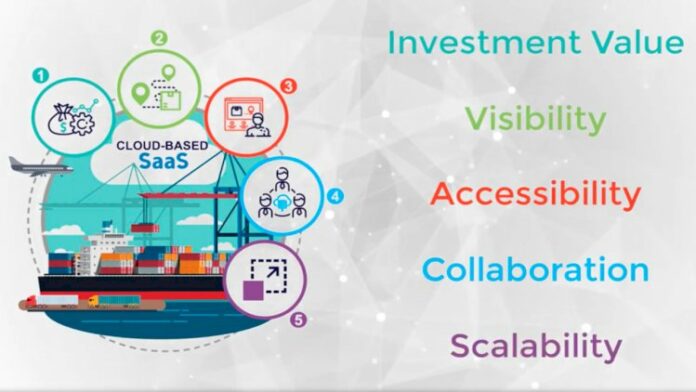
CyberLogitec has published tutorial illustrating its OPUS Logistics SaaS.

OPUS Logistics SaaS is designed to meet the needs of logistics service providers no matter their size. With a simplified, subscription-based, integrated approach, OPUS Logistics SaaS enables freight forwarders, third-party logistics (3PL), and other logistics service providers to efficiently manage costs and improve their services.

APM Terminals Poti to implement uninterrupted 24/7 operations

0

APM Terminals Poti has commenced the implementation of uninterrupted 24/7 operations to maximise berth utilisation, increase efficiency and speed up vessel handling.

The implementation of a flexible workforce management solution will take place in two phases. Phase one will apply to single berth occupancy. The workforce currently allocated to the free berth will be assigned to the operational berth to cover break times and support a smooth and uninterrupted workflow.

The second phase, which will apply when both berths are occupied, is expected to be fully implemented in Q4 2019. In this case, an external, flexible workforce will be applied to speed up the vessel handling process. 

This flexible concept also means that, in alignment with the best international labour practices, equipment operators will receive two breaks. This proactively addresses potential fatigue issues, improves safety and work-life balance, and has a positive impact on productivity and customer satisfaction. 

The positive impact on productivity was confirmed during trials involving a number of shifts on a variety of different vessels. The implementation of continuous operations during single berthing alone, is forecast to increase capacity at the terminal with an additional 8,677 moves for the remainder of 2019. Single berth occupancy accounts for around 55% of total operational time. These improvements will contribute to faster vessel turnaround times and once phase two is fully implemented, it will equate to an additional 56 crane hours per week. 

The APM Terminals Poti team will continues to engage different stakeholders that directly influence the logistics chain in the port, to promote this new way of working and ensure its long-term success.

Klaus Laursen, Managing Director of APM Terminals Poti, congratulated his employees for, “This utterly smart and mutually beneficial remodelling,” and wished them every success in future endeavours to take customer experience to the next level in Poti Sea Port.

Neste introduces IMO-compliant low-sulphur marine fuel

0

From January 1, 2020, the International Maritime Organization (IMO) will enforce a 0.5% global sulphur cap on fuel content for areas currently with 3.5% limit. In these areas, all vessels will be required to use fuel with a maximum sulphur content of 0.5%, unless they use exhaust gas cleaning systems.

Neste helps shipping companies to respond to the tightening regulation on sulphur dioxide emissions by offering them a new IMO2020-compliant marine fuel. The Neste Marine™ 0.5, containing maximum 0.5% sulphur, will be introduced to the market during Q4/2019. By choosing Neste’s low-sulphur fuel, shipping companies will have a solution, which is easy to switch to, and guarantees immediate compliance with the global sulphur cap. 

Marko Pekkola, Executive Vice President of Oil Products at Neste, says: 

“Neste’s has always been in the forefront of developing cleaner and more sustainable solutions. This is also the key driver within our marine fuels business. Neste Marine 0.5 meets the stricter legislative requirements for maritime sulphur emissions, enabling smooth operations.”

Neste Marine 0.5 is manufactured in Neste’s refinery in Porvoo, Finland. Leveraging on its long-term refining expertise, Neste is able to ensure stable product quality and technical feasibility. These are verified by full scale fuel equipment system and engine tests in laboratory and onboard. The product meets the RMG 0.5 specification and ISO 8217:2017 standard requirements.

The product will be available in Northwest Europe. The exact locations and product’s technical specification will be released in the fall of 2019.

Vår Energi awards major contract to Rosenberg Worley AS

0

Vår Energi AS has awarded an EPCI (Engineering, Procurement, Construction and Installation) contract to Rosenberg Worley AS in Stavanger, Norway.

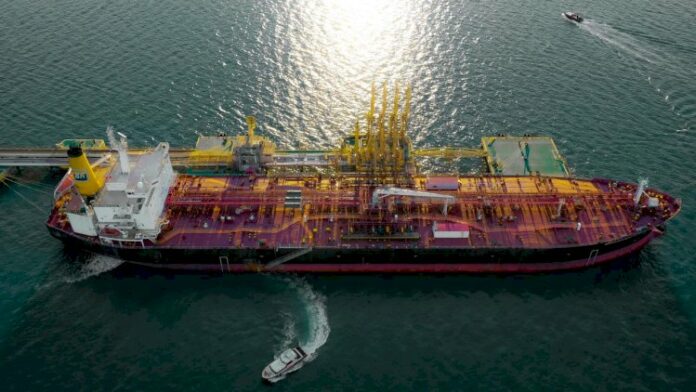
The contract encompasses the lifetime extension of the Jotun floating production storage and offloading vessel (FPSO), enabling oil and gas production from the Balder field until 2045. A large proportion of the contract value is expected to be provided by local providers and will benefit the supplier industry in the region.

Kristin Kragseth, CEO in Vår Energi, says:

“We are very happy to award this important contract to Rosenberg Worley AS, providing local job opportunities in a highly competitive and competent oil and gas service environment. Extending the life of the Jotun FPSO towards 2045 in the Balder Future Project is key in enabling Vår Energi’s future growth plan, ensuring Norway’s first offshore license, PL 001, a life span of 80 years.’

Rosenberg Worley will perform engineering, procurement, construction, installation and commissioning as part of the FPSO life extension program and started planning activities in May this year. The planning phase is in coordination with the ongoing FEED work being performed by Aker Solutions which started in December 2018. Aker Solutions will continue to provide engineering services during the execution phase.

The plan is to transport the Jotun FPSO to the Rosenberg Worley yard in Stavanger in spring 2020 for an estimated 15 month long yard-stay. When the life time extension scope of work is completed, the FPSO will be moved offshore for installation at the Balder Field.

Jan Narvestad, Managing Director at Rosenberg, is very pleased with the Jotun A project award and the trust that Vår Energi is showing Rosenberg:

“We take this as recognition of our capability to execute major projects, which is a result of our systematic efforts during recent years to build competence and capacity. This contract is very important and will secure high activity at Rosenberg the next few years. The project will require a workforce of more than 1500 at peak, involving both engineering and construction resources.”

The redevelopment of the Vår Energi-operated North Sea fields Balder and Ringhorne entails other major project activities such as extending the life of the Balder FPSO to 2030; drilling of 15 new production wells in the Balder field area and 11 new production wells in the Ringhorne field area. These activities will take place while ordinary production continues at the Balder and Ringhorne fields.

Vår Energi AS has reserves and resources of more than 1 250 million barrels of oil equivalent (Mboe), targeting development of about 500 Mboe during the next five year period. Continued development of proven and additional mapped resources in the Balder and Ringhorne fields are key components of this growth plan. In addition, there is potential to further increase the reserves in the area through an exploration program that is planned to start in 2020.

Inmarsat to work with more maritime logistics start-ups

0

Inmarsat is supporting the second cycle of Rainmaking Trade & Transport Impact, a start-up programme focused on addressing some of the biggest challenges in the maritime logistics industry.

The search is on for 10 mature tech start-ups and scale-ups to work together with Inmarsat, Cargotec, Shell, HHLA and Wärtsilä. The first cycle of the industry-disrupting programme last year resulted in 11 pilot projects between eight selected start-ups and partner corporations.

In this second cycle, Rainmaking expects more than 500 start-ups with relevant technology and business models to be identified during the application process, which has a deadline of 8 September 2019. Ten teams will go forward to selection days, held in Hamburg, Germany, and matched with the appropriate partner. The six-week semi-remote programme, throughout which Rainmaking will support start-up/corporate collaboration on the pilot projects, will kick off in late October.

The shipping and supply chain industry has a need to digitalise, however manual processes can be difficult to change on a large scale. Lack of automation, inefficiencies in operations and security, and insufficient data leveraging are some of the issues that are being faced.

By working together, start-ups with disruptive solutions and global leaders in maritime and logistics can address these problems – saving the industry heavy costs and protecting the environment.

Alison Grey, Senior Director of Digital Incubation at Inmarsat, said:

“We know that Inmarsat can’t do this alone and we also know that the maritime industry is in the initial stages of digitalisation with a huge opportunity for collaboration in front of us. That transformation will not be achieved by any one player in the industry. It’s going to take large corporates, who own a significant part of the value chain, to get together with other corporates and work with smaller businesses as catalysts to making this happen.”

NORDEN signs multiple long-term contracts with energy companies

0

NORDEN has contracted with Enviva to transport 1.3-1.5 million metric tons of wood pellets from the United States to Europe over a 6-year period.

The Contract of Affreightment (CoA), which runs from 2021 to 2026, builds on NORDEN’s long-term collaboration with Enviva, which began in 2012 and expands the co-operation between the 2 companies.

NORDEN CEO Jan Rindbo says:

“With Enviva being the world’s largest producer of wood pellets, we are delighted to further cement our good relationship and proud to be entrusted to once again deliver even more Enviva products to their customers across the Atlantic."

With the new contract, NORDEN now holds a number of long-running contracts with Enviva for the transportation of wood pellets across the Atlantic, all of which are carried out on Supramax vessels.

Jan Rindbo adds:

“Our collaboration with Enviva has enabled us to play a leading role in the fast-growing market for sustainable wood bioenergy, as an increasing number of electric power generating plants convert from coal to wood pellets in order to reduce their lifetime carbon emissions.”

Hong Kong power firm contract

NORDEN has also been awarded a 3-year contract with a power company in Hong Kong for the transportation of coal from Indonesia to Hong Kong.

The CoA, which runs from 1 January 2020 to 31 December 2022, will see NORDEN ship around 1.3 million tonnes of coal per year on Panamax vessels, an estimated 17-20 cargoes annually. Most of the volume loading will take place in Indonesia and the vessels will discharge into the Hong Kong power company’s coal terminal.

The power firm has been a good supporter to NORDEN over the years on both shorter running contracts (spot) and long-running CoAs.

Jan Rindbo in comment to the newly signed contract says:

“This is an attractive CoA for us as it increases our existing Panamax South East Asia presence and I would like to thank the company for their continued trust in NORDEN, allowing us to further build on our good business relationship.”
 

VIDEO: Equinor announces first oil from the Mariner field

0

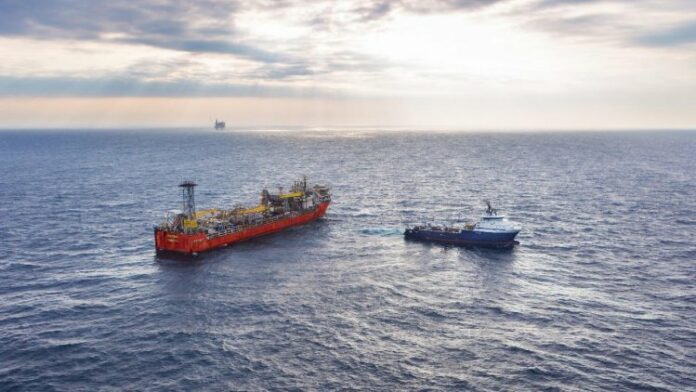
Equinor and partners have announced first oil from the Mariner field in the UK North Sea. The field is expected to produce more than 300 million barrels of oil over the next 30 years.

Hedda Felin, senior vice president for UK and Ireland Offshore in Equinor says:

“The start-up of Mariner, the first Equinor-operated oil field on the UKCS, establishes our foothold in the UK and reinforces our commitment to be a long-term energy partner.”

The Mariner reservoirs have up to 3 billion barrels of oil in place, a 50% increase on what was originally assumed, and the estimated recovery rate has already been increased by 20 percent. Mariner is expected to produce annual average plateau rates of around 55,000 barrels of oil per day and up to 70,000 barrels of oil per day at peak production.

Anders Opedal, executive vice president for Technology, Projects and Drilling in Equinor, says:

“By gathering and interpreting new seismic data we have improved our understanding of the reservoirs. This has resulted in fewer and better placed wells and increased resources since the project was sanctioned in 2012. With the significant volumes in place, we see clear potential to further increase the oil recovery from the Mariner field and will proactively seek opportunities to do so through the application of new technology, additional drilling and future tie back opportunities."

Mariner is one of the largest industrial projects in the UK in recent years. A gross investment of more than $7.7 billion, the development will support more than 700 long term jobs and generate significant revenue in the supply chain for decades to come. Contracts worth more than $1.3 billion have been awarded to UK suppliers since the project started.

Opedal adds:

“With the start-up of Mariner, we have delivered one of the most complex developments in the North Sea and Equinor’s portfolio. We will continue to apply digital solutions and new technology to deliver safe and efficient operations and optimize production.”

Digital solutions include automated drilling, digital twin, field worker tools, and digitized logistics to support operational and field maintenance planning. In the UK, Equinor has established a broad energy portfolio including oil, gas and offshore wind, with Mariner as the foundation of its upstream operations.

Felin says:

“Many have played a part in bringing Mariner onstream safely including our partners, contractors and suppliers, and we are grateful for their important contributions."