-2.2 C
New York
Home Blog Page 1009

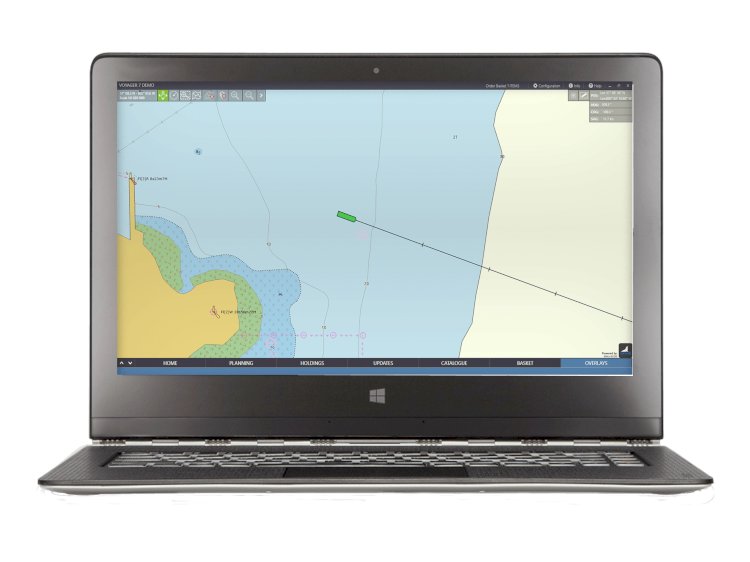
GPS OVERLAY application works with wireless GPS for emergency navigation

0

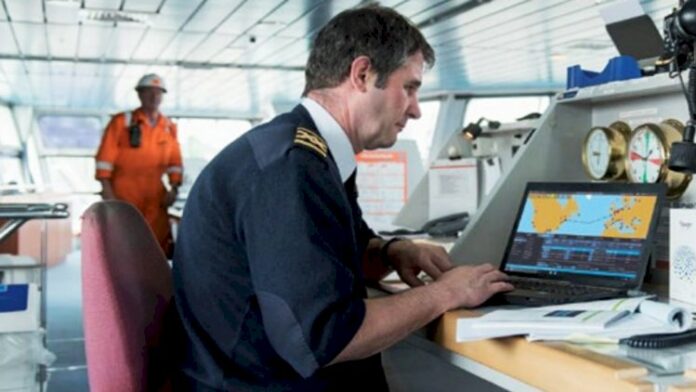
GNS has released a new version of its Voyager HUB GPS OVERLAY application to enable users to display vessel position using Pilot Plug and Bluetooth GPS connections as well as a wired connection.

Voyager GPS OVERLAY enables Voyager PLANNING STATION to be used as an emergency navigation system in the event of multiple ECDIS failures. The GPS OVERLAY app also supports enhanced situational awareness in the back of bridge environment.

Using the GPS OVERLAY, the vessel’s live GPS position is displayed in real time either on the Voyager map or on official AVCS ENCs to enable the bridge team to monitor vessel position and, if required, to navigate.

Wired and wireless GPS USBs and pilot plugs can be purchased from GNS or users can use their own devices.

Fugro has completed the second Malaysian geochemical campaign for PETRONAS

0

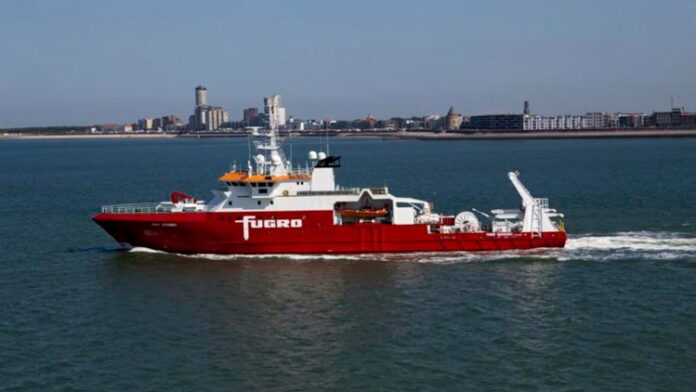
Fugro has successfully completed the second of three Malaysian seep hunting and geochemical campaigns for the Petroliam Nasional Berhad (PETRONAS), Malaysia’s fully integrated oil and gas company.

The second campaign was located offshore Sarawak, Malaysia and began 8 May 2019 onboard the Fugro Equator. Acquired geophysical data included over 15 000 km2 of multibeam echosounder (MBES) data providing bathymetry, backscatter intensity, and water column information. More than 40 discreet water column anomalies, potential locations of active hydrocarbon seepage, were identified. Using the MBES data in combination with over 3600 line-km of sub-bottom profiler data, Fugro and PETRONAS’ geoscientists identified 350 locations for coring and geochemical analysis.

The Fugro Equinox mobilised on 29 May 2019 to target these locations: over the course of two months, 275 piston cores were acquired and more than 1600 near-real-time geochemical analyses – including headspace gas, total scanning fluorescence and extracted hydrocarbon gas chromatography (C15+) – were conducted. This targeted approach identifies precise seep locations quickly and accurately, which avoids unnecessary sampling locations and streamlines acquisition for clients such as PETRONAS.

Following the Sarawak campaign, En Amiruddin Mansor, Head, Basin Strategy and Management, Resource Exploration, Malaysia Petroleum Management PETRONAS, stated:

“The results from deepwater Sarawak campaign have been exciting to receive in near-real time, and it was executed successfully, within the set timeline, with excellent health, safety and environment (HSE) compliance. The onboard geochemical analyses were very helpful in providing early results to accelerate our project timeline. The results from these campaigns have all been positive and will enhance our open block’s attractiveness for future block promotion and exploration activities.”  

The third seep hunting and geochemical campaign for PETRONAS will begin in Q3 2019 and will take place offshore Peninsular Malaysia in the Straits of Malacca. The first campaign was conducted offshore Sabah, Malaysia, and took place between December 2018 and March 2019.

Pondera and Hanmi Global enter Korean Offshore Wind project

0

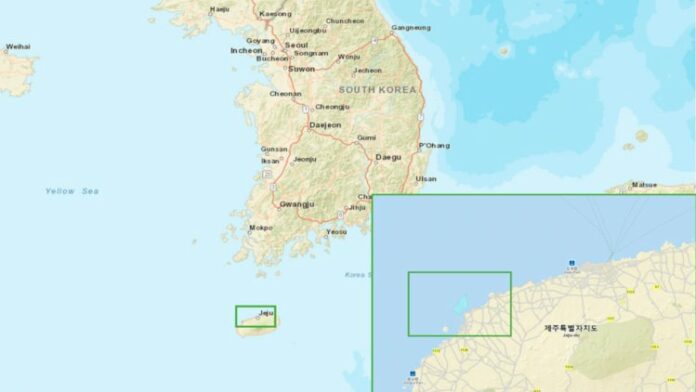
Dutch based engineering consultancy Pondera and Korean engineering company Hanmi Global announced that they were awarded a contract from Jeju Hanlim Offshore Wind Co. to perform the role as an owner’s engineer.

The Jeju Hanlim Offshore project is the third offshore wind project in the Korean waters and the second one on a commercial scale. It is located near the Tamra Offshore project just of the coast of Jeju Island. The project size is approximately 100 MW. A consortium that consists of Korean KEPCO E&C in the lead combined with KOMIPO, DAELIM and BARAM is developing the project since 2011. The realisation of the project is an important step to speed up the utilisation of the offshore wind potential in Korea. It is expected that many other projects will follow as the Korean Governmental target to reach 20% renewables in 2030 is still far away. The idea is to develop 13 GW of offshore wind by that time.

Pondera and Hanmi are pleased with this contract. Pondera’s CEO Hans Rijntalder explains:

“It is a major breakthrough for us after being present in Korea for some years now and we hope to be able to assist our Korean colleagues with our Western owners engineering experience.” 

Hanmi Global’s CEO Jong Hoon Kim adds:

“Also for us this is an important step. We have a lot of experience with project realisation and construction management, but our knowledge of offshore wind projects is still limited. Therefore, we are happy to join forces with Pondera.”

VIDEO: McDermott assembled Freeport LNG liquefaction module transport

0

McDermott has procured, fabricated and assembled this Freeport LNG liquefaction module at Lake Charles, Louisiana fabrication facility. Then module was transported to Freeport, Texas.

Modular construction offers a number of advantages over conventional "stick-built" construction. The bulk of the fabrication and assembly are performed at McDermott's facilities. Modular construction also minimizes lay-down space, an important benefit when the field site is small or congested, and reduces delays due to adverse weather. In-air work is minimized and foundation requirements are often simplified. 

Port of Vancouver carries out work on expansion the Centerm terminal

0

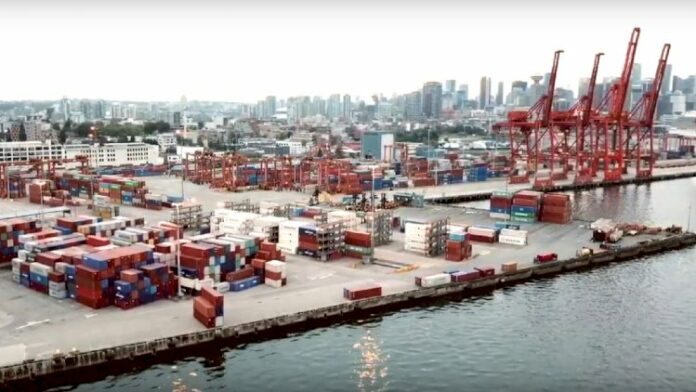
The Vancouver Fraser Port Authority carries out work to expand the Centerm terminal and upgrade roadways along the south shore of the Burrard Inlet.

Pictured here, you see the Burrard Dock after old rail ties have been removed. During construction, the Burrard Dock will become a temporary parking lot for use by terminal staff. 

Prior to starting marine construction the port will survey the area for crabs and sea cucumbers, then trap or catch them to move them to other areas of Burrard Inlet. It will do this throughout the marine work period.

Dredging and infilling can cause turbidity, which happens when sediment from clay or soil is stirred up in the water. The port will use construction methods that minimize turbidity, such as doing infilling slowly so as not to stir up more particles. Additionally, it will use curtains to control the spread of turbid water, and use sampling buoys at locations away from the area to ensure it is successfully containing the particles until they settle.

The Centerm Expansion Project will allow for a 60 per cent increase in container throughput at the terminal. By carefully reorganizing existing operations, it will be able to achieve this increase while only adding 15 per cent additional land.

NYK concludes charter agreement with Total for LNG carriers

0

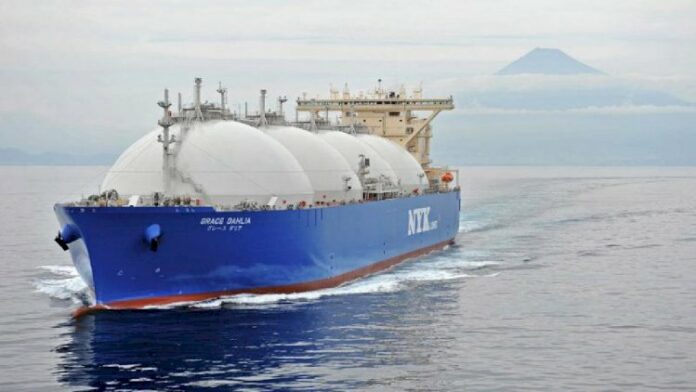
NYK has signed a new long-term contract with Total Gas & Power Chartering Limited (TGPCL),* a subsidiary of Total, a leading oil and energy company headquartered in France. The contract calls for TGPCL to charter from NYK a newly built liquefied natural gas (LNG) carrier that will be built by Samsung Heavy Industries Co. Ltd. in Korea and scheduled for delivery in 2021.

The LNG carrier will be equipped with a WinGD-made dual-fuel slow-speed diesel engine (i.e., X-DF diesel engine) that has superior fuel-consumption efficiency and can operate on marine gas oil or boil-off gas stored in the cargo tank. The carrier will also feature a re-liquefaction system that can use surplus boil-off gas effectively. The cargo tank will be a 174,000 cubic meter capacity membrane-type tank that will make use of advanced insulating materials** to suppress the boil-off rate (percentage of gas volume that vaporizes during navigation) in the cargo tank and realize superior efficiency and economical LNG transportation.

NYK concluded time-charter contracts with Total last year for three LNG vessels, so this most recent contract brings the total to four LNG carriers and reinforces the close relationship between the two companies.

In accordance with its medium-term management plan “Staying Ahead 2022 with Digitalization and Green,” the NYK Group seeks to secure stable freight rates through long-term contracts, provide flexible and optimal LNG transport options that meet customers’ diversifying needs, and continue its efforts to contribute to a stable supply of LNG.

New technology: tackling one of the biggest risks facing oil and gas

0

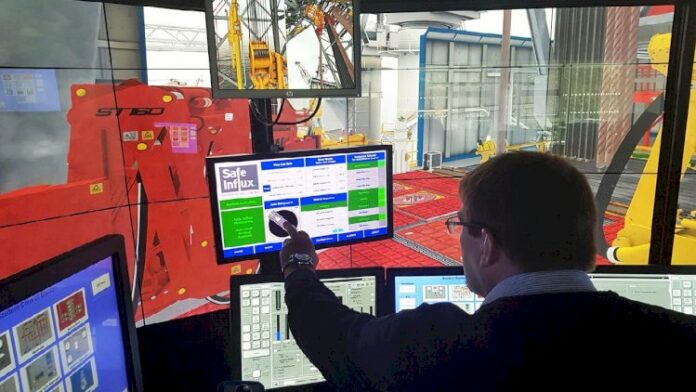
Technology to automate well control, one of the biggest risks facing the oil and gas industry, has been developed by Safe Influx, a spinout company from RGU.

The system is designed to detect well influxes, kicks of gas or fluid from a formation into a wellbore, and take immediate corrective action to minimise the influx and prevent a well blowout. This will support the industry to improve safety, reduce cost and minimise any environmental impact. 

Phil Hassard, Co-founder of Safe Influx and Drilling Simulation Manager at RGU’s Energy Transition Institute, said:

“We have designed this product to save lives. During development, we found that the industry has six blowouts for every 1,000 wells drilled. With over one million wells still to be drilled in basins across the globe this is potentially 6,000 well blowouts, leading to 120 major oil spills and loss of life, so the potential impact of Safe Influx is significant.

Further research showed that up to 70% of well blowouts are down to human factors. Drillers have an ever-increasing workload and naturally this means concentration can lapse. To support drillers, our system acts as an automatic preventative safety tool they can use to make the well safe as quickly as possible when the situation arises.”

RGU’s Startup Accelerator, the only funded programme of its kind in the northeast of Scotland, has supported the company, providing the team with essential funding, expertise and mentorship to shape the commercial side of the business. The team has also recently received significant funding from the Oil and Gas Technology Centre (OGTC), which will support the completion of a field test.

Bryan Atchison, Co-founder of Safe Influx and Well Engineering Manager at RGU’s Energy Transition Institute, said:

“We want to make sure that the industry knows our product is robust, so it has been validated by an Independent Verification Body. We have also tested it extensively on cyber rigs with real drillers and in simulations, and have consistently seen excellent results. To prove the effectiveness of our technology even further, we are conducting a field test in October on an older drilling rig. This will show that the system works in a realistic environment and can easily fit within a drilling rigs’ existing infrastructure without the need for significant modification, which will reduce installation costs. This field test has been enabled through funding by the OGTC and is supported by a major drilling contractor.”

Malcolm Banks, Wells Solution Centre Manager at the OGTC commented:

“The OGTC is pleased to support Safe Influx in the development and testing of their automated well control technology. This project is supported by industry partners and aligned with the Wells Solution Centre Roadmap focus area of ‘flawless delivery’, specifically the theme of decision-making. This technology could represent a further step towards automation of well operations and has the potential to enhance real time decision-making in critical well control situations.”

Together, Bryan and Phil have over 60 years of experience working in the oil and gas industry, 20 years of this has seen them focus on well control instruction. Phil said:

“We have designed our system with the end-user, the driller, in mind throughout. We have both worked on drilling rigs during our career so we know that when things go wrong offshore, they can really go wrong. We believe Safe Influx is the answer to the well control challenges we have seen first-hand, essentially automating a 100-year-old procedure. The Safe Influx system and team will be on hand throughout Offshore Europe at stand 1AA54. We encourage anyone who is interested in learning more about automated well control to come down and try out our product.”

Deutsche Bucht offshore wind farm supplies first power to the grid

0

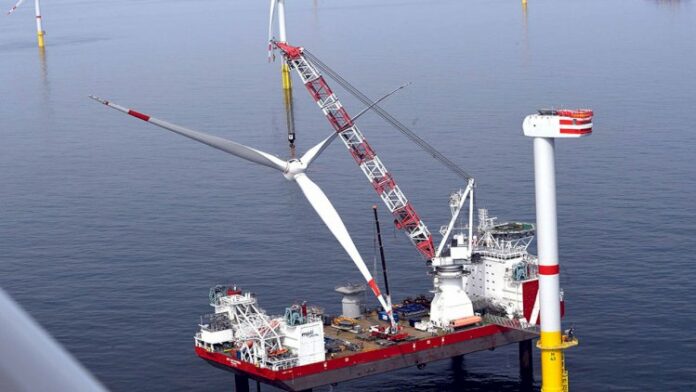
Northland Deutsche Bucht GmbH has confirmed that the first turbineat its 269 MW Deutsche Bucht offshore wind farm, has been successfully commissioned and is delivering power to the German grid.

Jens Poulsen, Project Director of Northland Deutsche Bucht GmbH, said:

“This is a great achievement for our Deutsche Bucht project. The rapid progress on installation and commissioning was made
possible by the dedication of our team, combined with excellent cooperation by all partners, especially the grid operator and the BSH licensing authority."

Installation of the 33 turbines began earlier this year and all turbines are expected to be delivering energy to the grid by the end of 2019, as per schedule. Once operational, Deutsche Bucht will produce 1.1 billion kilowatt hours of eco-friendly energy each year, meeting the demand of approximately 328,000 households. The renewable energy produced by Deutsche Bucht will save 740,0001 tonnes of reenhouse gas emissions.

Mike Crawley, President and CEO of Northland, noted:

“Northland prides itself on delivering projects on time and on budget. Achieving these goals is a significant accomplishment and a testament to our Deutsche Bucht project team and its partners. We look forward to adding 269 MW to our existing portfolio of offshore wind capacity in Germany and are proud to support the German government in their efforts to create a more sustainable future through the continued transition to cleaner and greener energy.”

Installation of the turbines began in early June; as of today, 21 of the turbines have been installed by the turbine manufacturer, MHI Vestas Offshore Wind. The final fabrication on the two innovative Mono Bucket foundations is currently ongoing at Bladt Industries facilities at Lindoe, Denmark.

Installation and cabling for the two Mono Bucket foundations and their turbines is planned for the fourth quarter. All 33 turbines are expected to be operational by the end of 2019.

Over the past few weeks, the installation and testing campaign for over 40 kilometres of internal cable was completed. The offshore substation of the wind farm was also successfully handed over to Northland by the Balance of Plant contractor Van Oord. The offshore substation had already been connected to the offshore converter station BorWin beta of grid operator TenneT, enabling the turbines to produce power. TenneT made a partial grid supply possible by connecting the first of the two 155-kilovolt export cables; a complete connection to the German high-voltage grid will occur later this year. Once all turbines are successfully installed, Deutsche Bucht will have an array of 33 turbines, each outputting 8.4 MW (megawatts) of power.
 

Port of Long Beach awarded grant to upgrade cybersecurity

0

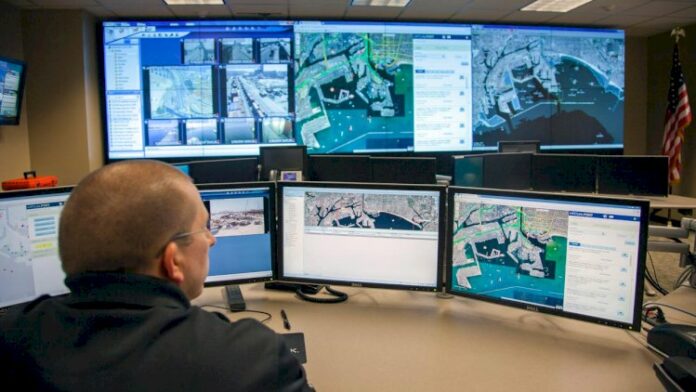
The Port of Long Beach has been awarded $4,777,500 by the U.S. Department of Homeland Security’s Federal Emergency Management Agency to enhance safeguards at the nation’s second-busiest seaport.

The funding from the FEMA Port Security Grant Program was announced and will pay to upgrade cybersecurity, increase the number of cameras and sensors around the harbor, and continue the Port’s investment in its fiber and wireless network infrastructure.

Port of Long Beach Executive Director Mario Cordero said:

“Securing the Port requires state-of-the-art technology to monitor activities on land, on the water and below the water. This grant will help us enhance our domain awareness and maintain our readiness to protect the harbor.”

Long Beach Harbor Commission President Bonnie Lowenthal said:

“Trade at the Port of Long Beach supports 2.6 million jobs around the nation, and the Harbor Commission is thankful for this federal funding that helps us ensure the smooth flow of commerce.”

Kalmar’s technology selected by DP World for NSICT in Mumbai

0

Kalmar, part of Cargotec, is to supply DP World with a total of 15 Kalmar rubber-tyred gantry cranes (RTGs) for the Nhava Sheva International Container Terminal (NSICT) in Mumbai, India. The order, which also includes 24 months of on-site maintenance support, was booked in Cargotec's 2019 Q2 order intake with delivery scheduled to be completed during Q4 2020.

Kalmar and DP World, one of the world's leading operators of marine and inland terminals, have developed a highly successful partnership over many years of working together. The two companies share a vision of a more eco-efficient and sustainable future for the cargo-handling industry, and Kalmar's equipment enables successful daily operations at several DP World terminals around the world.

NSICT was India’s first public-private partnership project and is part of the country’s largest port, Jawaharlal Nehru Port Trust (JNPT), which handles 40% of India’s total maritime trade.

The Kalmar Classic RTG combines the best of diesel and electric technology for fuel savings, low emissions and easy maintenance. At 1,000 hours, it has one of the longest maintenance intervals in the industry, while its modular design makes it easy to tailor to customer requirements. The units delivered to Nhava Sheva will be equipped with a Variable Speed Generator (VSG) which enables even greater fuel economy and lower emissions by automatically optimising RPM according to the required power.

Eduardo Prat, Vice President, Sales, Kalmar Automation Solutions:

“We are delighted to announce this order from DP World, a partner with whom we have a long-standing and highly successful relationship. Furthermore, this order is a reflection of the skill and dedication of our local service team in India, whose unparalleled knowledge of RTG technology will ensure that we can continue to provide NSICT with world-class service and support.”