-2.2 C
New York
Home Blog Page 1010

Hydrogen project: Ørsted, ITM Power and Element Energy won funding from the UK Government

0

Project to demonstrate delivery of bulk, low-cost and zero-carbon hydrogen through gigawatt scale PEM electrolysis, manufactured in the UK.

ITM Power, the energy storage and clean fuel company, is pleased to announce funding from the UK Government for the Gigastack feasibility study with Ørsted and Element Energy.  The project funding is for the feasibility phase leading, if successful, to the opportunity to bid for further funding for the implementation.

Gigastack funded by the BEIS Hydrogen Supply Competition, will demonstrate the delivery of bulk, lowcost and zero-carbon hydrogen through gigawatt scale polymer electrolyte membrane (PEM) electrolysis, manufactured in the UK. The project aims to dramatically reduce the cost of electrolytic hydrogen through:

• Development of a new 5MW stack module design to reduce material costs.

• A new semi-automated manufacturing facility with an electrolyser capacity of up to c. 1GW/year to increase throughput and decrease labour costs.

• Deployment of very large scale and hence low cost 100MW+ electrolyser systems using multiple 5MW units.

• Innovations in the siting and operation of these large electrolysers to exploit synergies with large GW scale renewable energy deployments.

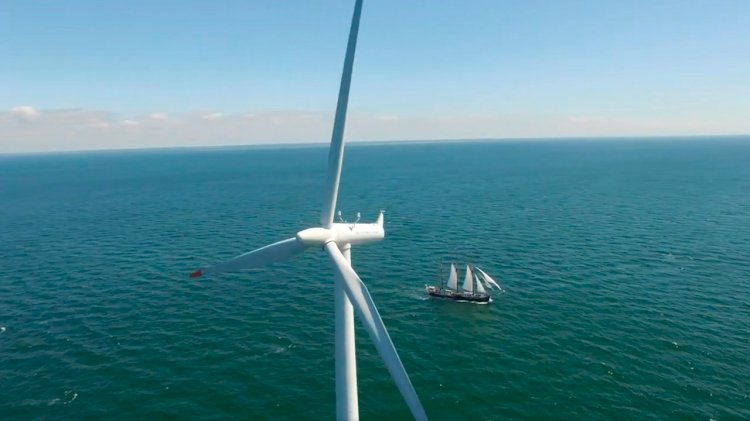
The deployment of PEM electrolysers on such a large scale has not been possible to date, as it requires low-cost stack modules which are easily integrated into larger electrolyser systems, and much larger automated manufacturing facilities (the largest electrolyser factories globally are capable of less than 30MW of capacity output per annum). ITM Power’s proposed innovations in stack design and manufacturing techniques will address these issues and reduce the cost of installing an electrolyser such that the capital cost contribution to the eventual cost of hydrogen becomes less significant, being dominated by the cost of electricity. Ørsted will demonstrate the synergy between GW scale offshore wind energy deployments and hydrogen that will enable the continued decarbonisation through renewables and a continued cost out of offshore wind power projects.

This project brings together; ITM Power a developer and provider of world-class hydrogen systems with 16 years of experience; Ørsted, the global leader in offshore wind; and Element Energy, a low carbon, sustainability and consumer behaviour consultancy and engineering practice with 15 years of experience in initiating and analysing hydrogen technology projects.
In Phase One (feasibility), ITM Power will develop the designs and finalise the material requirements to deliver a low-cost 5MW stack.  ITM Power will also refine concepts to maximise the throughput of the proposed semi-automated manufacturing facility to meet the demands of bulk hydrogen supply. Ørsted will investigate potential synergies between offshore wind farms and electrolysers to identify scenarios that can provide affordable electricity and a sufficient load factor to allow economic operation of the electrolysers. Finally, Element Energy will conduct market analysis of potential end users, explore business models for the operation of large electrolysers in the energy system and define a roll-out strategy for the first 100MW electrolysers.

In Phase Two, the 5MW stack would be built and tested both in-house and in a representative windhydrogen scenario. Construction of the semi-automated manufacturing facility would also begin. Finally, the business case for large electrolysers would be refined, enabling commercialisation. This project is a unique opportunity to develop green hydrogen production for the UK and establish the country as a centre of excellence in electrolytic technology. A portfolio of solutions are required to ensure reliable volumes of hydrogen and security of supply and this study will advance the development of green electrolytic hydrogen.

Climate Change Minister Lord Duncan said:

“Using the power of hydrogen could help cut emissions, create jobs and make industrial processes cleaner and greener, benefitting the whole economy as we work towards net zero by 2050.      “This innovative project from Ørsted and ITM Power will help our efforts to roll out hydrogen at scale by the 2030s – a crucial step towards the end of the UK’s contribution to global warming.”

Wärtsilä’s auto gasification solution to provide waste disposal for the Regal Princess

0

The technology group Wärtsilä will supply and install an Auto Gasification solution for the ‘Regal Princess’, a Princess Cruises vessel.

This innovative technology will enable the safe disposal of waste from the ship through a self-fuelling thermal decomposition unit, thereby significantly reducing greenhouse gas emissions. It will also lessen the requirement to offload waste at shore facilities. Princess Cruises is a Carnival Corporation & plc brand operating as part of the Holland America Group. The order with Wärtsilä was placed in July 2019.

The Wärtsilä supplied gasification unit will replace one of the vessel’s onboard incinerators, and will safely dispose of hazardous, contaminated, and dry burnable waste in an environmentally sustainable way. The emissions quality from this system exceed the standards of land based thermal destruction, and treating waste onboard the vessel rather than offloading in port therefore significantly reduces the environmental impact. Furthermore, since the system recovers energy from the waste heat being produced by the thermal destruction process, additional energy and emission savings will be gained. The auto gasification process will reduce the ship’s waste to less than 5 percent of the original volume, and will produce Bio Char, a sterilised inert material, and syngas (synthesis gas), which is recycled within the unit as fuel.

Jason Hardy, Head of Sales, Advanced Waste Management (Retrofit), Wärtsilä Marine, says:

“Wärtsilä and Carnival have cooperated closely on numerous projects over the years, and we have delivered a number of advanced waste treatment systems for their vessels. Our experience with the Auto Gasification technology will help support them in their focus on efficiency and environmental sustainability.”

Princess Cruises has made it clear that efficient waste management and reducing emissions are extremely important for the company, and for all Carnival Corporation brands. Wärtsilä’s innovative and advanced technologies continue to support this commitment.

Wärtsilä is scheduled to deliver the equipment in January 2020.
 

Oil company Saudi Aramco protects and enhances coral reefs

0

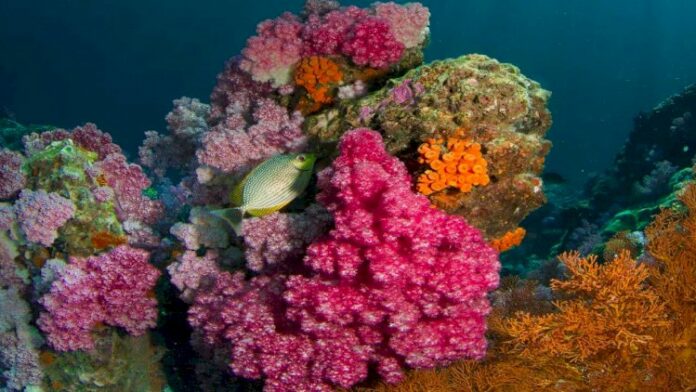
Saudi Aramco has deployed roughly 1,000 tons of artificial reefs throughout the Arabian Gulf to help rebuild marine ecosystems as well as support the local fisheries industry. Last year, artificial reefs were deployed at both Safaniyah and Al Khafji — 1,220 artificial reef units at Safaniyah and 459 units at Al Khafji.

This effort contributes to the company’s total deployment of over 2,728 artificial reefs — a number that will continue to rise — as more deployments are planned for the southern Red Sea.

At a higher level, partnerships with organizations such as the Smithsonian Institution have helped the company develop a deeper understanding of critical factors needed to ensure and promote conservation of biodiversity in Saudi Arabia, including artificial reefs.

Additionally, the Environmental Protection Department, in collaboration with the Saudi Aramco-KAUST Center for Marine Environmental Observations, presented a research paper on coral reef monitoring in the Red Sea during the 4th Asia-Pacific Coral Reef Symposium last year.

The symposium grouped participants from more than 30 countries to develop solutions to better manage coral reefs. Topics such as management of marine protected areas, sustainable fisheries, coral transplantation, and nurseries are highly relevant to Saudi Aramco due to the amount of company activities near coral reefs and other valuable habitats.

Ecochlor and NanoVapor to introduce a new gas-freeing tank technology

0

Soon to market, the NanoVapor technology dramatically improves workplace health and safety while significantly reducing time and any environmental pollution related to “degassing” bunker tanks and cargo tanks on barges.

Maritime news coverage has been inundated with the latest tragedies surrounding the cleaning of confined-spaces on board ships. Despite very strict procedures, regulatory guidelines and instruction manuals highlighting the risks associated with working in enclosed spaces, seafarers are still at risk of dying.

During a recent webinar hosted by InterManager, seafarers reported “enclosed spaces are frequently impossible to properly ventilate or to measure the atmosphere in, as well as being difficult to reach.”

Using break-through technology, the NanoVapor process reduces the time needed to achieve a gas-free condition in confined spaces by up to 90%, making tank cleaning, maintenance, and inspections much safer and faster at the same time. NanoVapor’s system consists of a liquid nano-suppressant and a hardware delivery unit: These components work together to produce and then insert tiny nano-droplets of suppressant molecules into the fuel tank using a high-flow air stream. The molecules work microscopically to quickly stop the evaporation of Volatile Organic Compounds (VOCs) throughout the entire tank. It is even effective with residual fuel or sludge remaining in the tank, all the while fully preserving ambient oxygen for a seaman’s safe entry. The nanotechnology is completely non-toxic, non-corrosive, non-reactive, and biodegradable; it is completely safe for human contact.

At the International Shipowning and Shipmanaging Summit, during the London International Shipping Week (LISW 2019), Ecochlor’s Andrew Marshall will be introducing this patented Vapor Suppression System (VSS) to ship owners and managers. Mr. Marshall believes that this nanotechnology will, “revolutionize tank cleaning and gas freeing of cargo and bunker tanks in preparation for dry dock or tank inspections for emergencies or maintenance. Additionally, it can be used to facilitate faster tank cleaning procedures in due to fuel switching for the new global sulfur cap regulations allowing vessels to get back to normal operation as quickly as possible.”

NanoVapor’s CEO, Russ Chew is very excited about bringing this technology to marine transportation industry:

“Our VSS’s have been successfully applied across the transportation industry for many years, including commercial aviation, retail underground tanks and inland marine. We have been designated a global ‘Best Practice’ standard by Shell Oil for the degassing of underground petrol tanks for maintenance and inspections.”

About NanoVapor

NanoVapor’s breakthrough nanotechnology dramatically reduces the time needed to purge and gas-free a tank by up to 90% even with residual sludge remaining. It protects all health and safety requirements for tank entry, and can facilitate faster bunker tank cleaning procedures to satisfy the IMO global sulfur cap 2020. 

IDENTEC SOLUTIONS enhanced the personnel safety solution Crew Companion

0

With the Oil and Gas industry putting more focus on QHSE and encouraging companies to move from manual to digital solutions, the demand has increased for alternatives to traditional paper-based safety regimes.

The combination of remote locations, the exploitation of highly explosive materials, and the harsh environment has given the industry constant and pressing concerns about the safety of their personnel. Knowing the location of personnel on-site at any time and improving muster times at their dedicated locations during emergencies can add an extra layer of security. This makes the complex process more visible, efficient, and ultimately more profitable.

Despite efforts to increase the safety of working at an offshore location, accidents can occur at any given time, turning a work place into a danger zone. People attempting to escape emergency situations are trying to get out as fast as possible, only thinking about how to get away without following the companies evacuation policy. The classical approach in such situations has been to bring personnel to a muster area to manually count who has arrived utilising a “T-card” system and manifest. A challenging task, even in ideal conditions.

In an emergency, things do not always go to plan in an orderly safely manner as it would in a controlled exercise drill. People’s behaviors inevitably change under stress due to the nature of the incident. This challenge is amplified by the widespread and geographically dispersed area the industry has to deal with. Finding all the personnel is a crucial task.

A key role in overcoming safety challenges is the emergence of automated locating and a mustering system to receive accurate real-time visibility of all personnel. Such a system can make a truly life-saving impact on emergency situations and offers many benefits to personnel and their respective company.

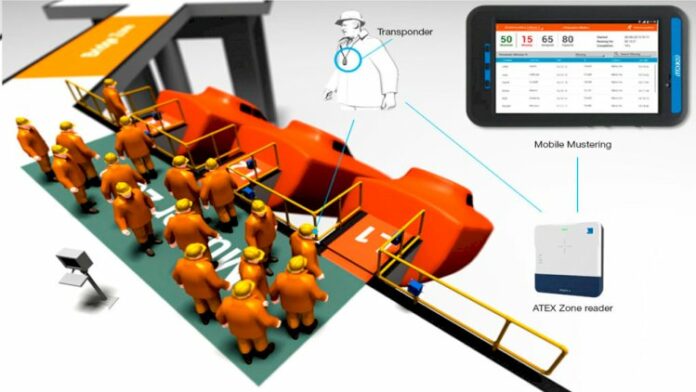
IDENTEC SOLUTIONS Crew Companion delivers the required real-time visibility by equipping each worker with a transponder. The devices are located via an infrastructure, covering defined areas, such as life boats, mustering areas and red zones, with a modular location coverage. The location of personnel in these areas is constantly reported to the control center (onshore and offshore), providing full visibility for safety of all personnel at any time.

Crew Companion also provides access to automated headcount at various locations throughout the site; ensuring no missing personnel is in the defined areas during emergencies. Emergency operations and mustering drills can now be completed 60 % faster than any manual method. Faster drills can save lives in a severe emergency by knowing exactly where to direct rescue teams. A digitalized process also reduces the risk of human error.

After winning several major projects in the North Sea, IDENTEC SOLUTIONS makes a strategic move towards a new location. This year a new district office in Aberdeen has been opened to better service the UK market and respond effectively to the needs of local customers.

IDENTEC SOLUTIONS are delighted to announce that Stena Drilling, Aberdeen based Drilling Contractor, has decided to partner up with them to move from their manual mustering & evacuation method to the fully digitalised automated Crew Companion solution. The safety of everyone on-board a Stena Drilling vessel is the company’s highest priority – mustering and evacuation of personnel should be done in the safest, most effective way – Crew Companion can help achieve this.

Online service requests introduced by APM Terminals Mumbai

0

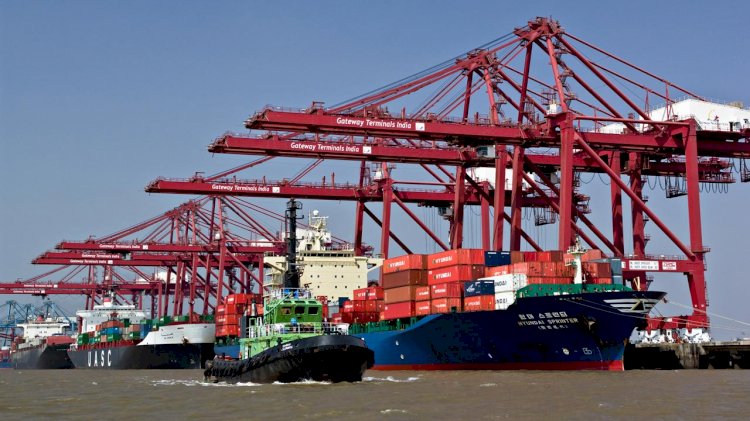
At APM Terminals Mumbai it is now possible to submit Additional Service Requests (ASR) via its online Customer Service Portal. Replacing a manual process, this new automated process is quicker, simpler and more transparent for customers.

Around 20 import and 20 export services can now be requested online, ranging from priority delivery, seal fixing, and inter-terminals transfers to early or late gate-ins, empty container storage and break-bulk handling.

Requests for additional services are activated immediately, removing the need to allow for 24 hours processing. Payments for services are automatically added to the customer’s account.

Reaching out to the broader local shipping community last week, APM Terminals Mumbai’s Commercial, Finance, IT and Operations Team held a two-day workshop with customers to highlight the various features of its Customer Service Portal including the new ASR feature.

The workshop enabled the company to address customers’ concerns on the spot and get direct customer feedback about additional online services they would find useful.

Qatargas delivers first Q-Max LNG cargo to Belgium

0

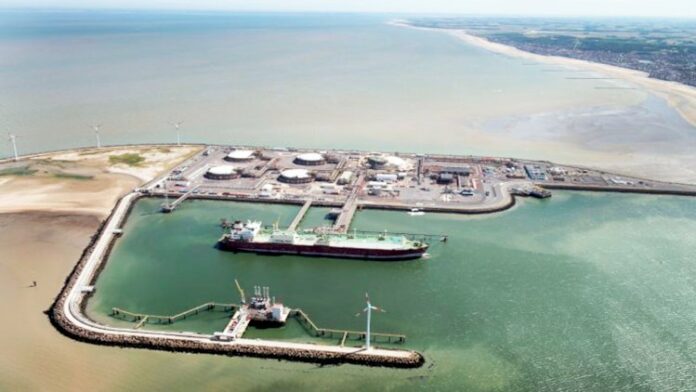
Qatargas Operating Company Limited (Qatargas) delivered the first cargo of Liquefied Natural Gas (LNG) on a Q-Max vessel to Zeebrugge LNG Terminal in Belgium, marking the first discharge of a Q-Max LNG vessel at this terminal. The cargo, which was loaded at the Ras Laffan terminal in Qatar on 22nd June 2019, arrived on board the Q-Max vessel, 'Al Dafna' on 22nd July 2019.

The delivery also celebrates yet another multi-terminal delivery for Qatargas bringing the total number of multi-port deliveries undertaken by the Company in 2019 to eight deliveries. This operation saw the first LNG parcel discharged in Zeebrugge and a second parcel at the South Hook LNG terminal in the United Kingdom.

Commenting on this, Khalid bin Khalifa Al Thani, Qatargas Chief Executive Officer, said:

“At Qatargas, we are very much focused on further developing the concept of multi-port deliveries of our LNG cargoes and offer it to our global portfolio of customers. This will provide our customers with flexibility and reliability to help them meet their demand for clean burning natural gas while enhancing flexibility of supply. As the World's Premier LNG Company, we are committed to meet and exceed the expectations of our customers."

Pascal De Buck, Chief Executive Officer and Managing Director of gas infrastructure group Fluxys, owner and operator of the Zeebrugge LNG terminal, said:

“We are particularly pleased at Fluxys with this new milestone in our long-standing cooperation with Qatargas at the Zeebrugge LNG terminal. The Q-Max delivery demonstrates the versatility we offer our customers, with LNG carriers of all types and sizes able to dock at the facility, ample pipe gas take away capacity for delivery throughout Northwestern Europe and a range of options for downstream small-scale LNG distribution."

The established practice in the LNG industry is to deliver a single cargo of LNG to a single location. Qatargas' pioneering achievement was made possible by using the largest class o​f LNG vessel in the world, a Q-Max vessel, which has a cargo carrying capacity of 266,000 cubic metres. Its large capacity allows Q-Max to deliver two full conventional size cargoes to multiple destinations and customers in one voyage.

VIDEO: The KONGSBERG Sounder USV system with a unique hull design

0

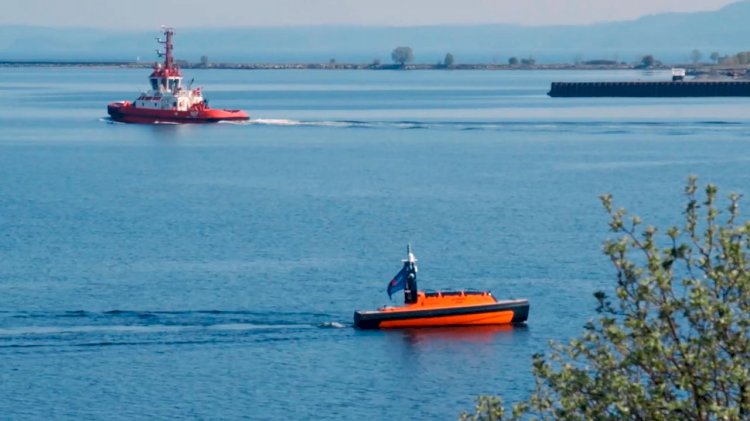
The KONGSBERG Sounder USV system is a multi-purpose unmanned surface vehicle system with a unique hull design to ensure high performance for hydroacoustic applications.

The Sounder Unmanned Surface Vehicle – USV supports quick and easy change of payload and is adaptable for both hull and bow mounted systems. KONGSBERG’s K-MATE autonomy system provides safe navigation and control of the system, capable of direct remote control, supervised or autonomous operation. A robust and reliable propulsion system and hull design ensures safe sailing for up to 20 days.

With a spacious moonpool and rack mount, the Sounder USV System is a flexible and adaptive platform for different applications. The onboard power generation provides enough power to operate several payloads at once. The payload is installed in the moonpool, though customisation allows installation in the keel or even bow mounted equipment.

Throughout the entire design process, focus has been on creating an optimal platform for hydroacoustic payload sensors, and maximum endurance while retaining the ability to transport the vessel in standard shipping containers, allowing for efficient deployment anywhere in the world. The hull shape ensures smooth sailing through the water, eliminating aeration and minimizing drag. A slim bow and the stabilizing fins dampen roll and pitch movement while the three rudders provide exceptional manoeuvrability.

The Sounder USV System is designed to perform for hydro-acoustic applications, from fish finding and fishery research to seabed mapping. With KONGSBERG’s range of sonars and echosounders, the Sounder is a versatile platform for many applications; a holistic solution from the world leading manufacturer of professional sonars and autonomous vehicles.
KONGSBERG works in collaboration with Norsafe AS as our hull partner. With Norsafe’s 100+ years of experience as a boat builder and KONGSBERG’s 30+ years of experience with autonomous underwater vehicles for demanding applications, the Sounder USV System is a reliable platform with innovative solutions designed to do the work, every time.Fitted with the world leading fishery sonar, the Simrad SX90, along with the ES80, the Sounder USV System provides detection and classification of fish schools from a remote location at a fraction of the current cost.

VIDEO: Nova subsea pipelines installed in Norway

0

Wintershall Dea has completed the installation of the subsea pipelines and umbilicals for the operated Nova project in the Norwegian North Sea. The successful installation of the flowlines completes a summer of significant subsea activity for Nova which began in May with two templates being installed on the seabed at 370 metres water depth.

The subsea installation consists of several work stages. Subsea 7 spearheaded the subsea work and installed the templates on the Nova field before laying 65 kilometres of pipelines using the Seven Oceans vessel, and 20 kilometres of control umbilicals using the Skandi Acergy vessel.

Hugo Dijkgraaf, Chief Technology Officer (CTO) and Member of the Executive Board of Wintershall Dea, explained:

“The safe installation of the pipelines and umbilicals in the field marks another major step towards the completion of the Nova project. Together with the recent accomplishments on the Dvalin project, Wintershall Dea had very successful installation activities over the last summer.”

The pipelines, fabricated by Subsea 7, and umbilicals and tie-in systems, fabricated by Aker Solutions, will tie the Nova field back to the nearby Gjøa platform, which will process and export the hydrocarbons, and provide injection water and lift gas for pressure support.

André Hesse, Senior Vice President, Major Project Nova, said:

“In close co-operation with our suppliers, we are delivering as ‘One Team’. With the installation of a dedicated Nova module on the Gjøa platform and the drilling of the wells to start next year, we are delivering according to our plans and on highest safety standards. We look forward to seeing the field in production in 2021”.

When it comes on stream, Nova will be Wintershall Dea’s fourth operated subsea field in production, underpinning the company’s position as an experienced underwater field developer in Norway.

Alv Bjørn Solheim, Managing Director of the Business Unit Norway, said:

“We continue to use our expertise in subsea field construction and operation in Norway to make the best use of existing infrastructure on the shelf. By delivering hydrocarbons through subsea technology, we are meeting the energy needs of business and consumers in the most sustainable way”.

About Nova

Nova is located in the Norwegian North Sea, 120 kilometres northwest of Bergen. The expected recoverable reserves from the field are around 80 million barrels of oil equivalent (boe), of which the majority will be oil. The partnership is investing almost 1.1 billion euros (NOK 9.9 billion Norwegian kroner) in the development of the Nova field, which is expected to come on stream in 2021.