-1.9 C
New York
Home Blog Page 1005

Rolls-Royce offers new MTU propulsion and bridge solutions for yachts

0

Rolls-Royce is launching new MTU propulsion systems and bridge solutions for yachts onto the market and enhancing its portfolio of technical services with the addition of a new Yacht Competence Centre.

IMO III propulsion systems covering MTU series 4000 engines in a power range between 2,830 and 3,900 kW are already available for delivery and as of 2021 for series 2000 engines with outputs from 1,270 to 1,940 kW. A large yacht built by the Bilgin Yachts shipyard in Turkey as other yachts have been fitted with the new propulsion system. As of 2020, Rolls-Royce will gradually introduce a range of completely integrated and modular MTU hybrid marine propulsion systems for production yachts with a power range extending from approximately 1,000 kW to 4,000 kW per powertrain. Rolls-Royce is now also offering integrated bridge solutions – MTU SmartBridge – for both series production yachts and mega yachts.

Rolls-Royce will be showcasing the new propulsion systems, in addition to MTU service and bridge solutions for motor yachts, at the Yachting Festival in Cannes from 10 to 15 September on Stand Jetée 179 and at the Monaco Yacht Show from 25 to 28 September at Quai Chitane-on Stand QC9.

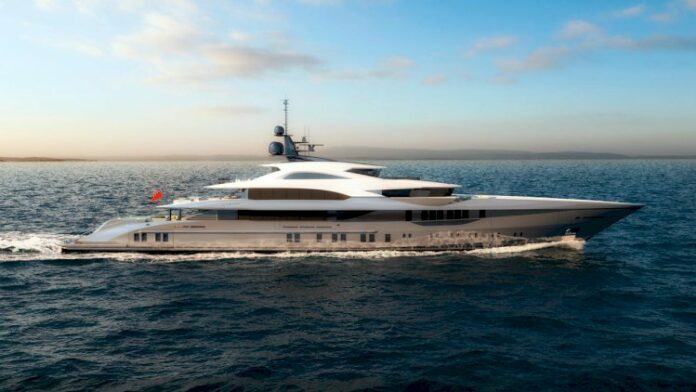
The new 80-metre Bilgin 263 as other yachts are fitted with IMO III propulsion systems from MTU. The integrated solution for the yacht of the Turkish yard consists of two 16-cylinder Series 4000 engines and two SCR systems. The vessel thus meets the emission requirements of IMO Tier III, which to date have been in force in individual Emission Control Areas (ECAs) and will be introduced in further regions. With a total power output of around 5,100 kW, the yacht has a top speed of 20 knots. Bilgin has commissioned Rolls-Royce to deliver IMO III compliant MTU propulsion systems for a total of three yachts of this kind.

The integrated solution for IMO III consists of a propulsion system and SCR exhaust gas aftertreatment system that are optimally matched, designed for flexible installation and are maintenance friendly. MTU’s SCR system is fully controlled with real-time NOx measurement both upstream and downstream of the SCR system. This ensures that the precise amount of reactant is introduced at all times, regardless of the conditions. IMO III solutions for yachts based on MTU 16 and 20-cylinder Series 4000 engines (2,830 to 3,900 kW) are already available. Beginning in 2021, Rolls-Royce will also be putting integrated IMO III solutions on the market for 12 and 16-cylinder Series 2000 engines (1,270 to 1,940 kW).

Beginning in 2020, Rolls-Royce will launch completely integrated and modular MTU hybrid marine propulsion systems for production yachts onto the market covering a power range of between 1,000 kW and 4,000 kW per powertrain. What is of interest to yacht owners is especially the significant increase in comfort levels resulting from silent, vibration-free and low-emission cruising.

“With the aid of a modular system, we will make integrated hybrid propulsion systems available that are tailored to the customer’s specific requirements,”

says Denise Kurtulus, Director Global Sales Marine at the Rolls-Royce Power Systems business unit. The introduction of the first yacht built by British luxury yacht manufacturer Sunseeker International fitted with an MTU series production hybrid system is already scheduled in the near future.

The hybrid propulsion systems encompass MTU’s Series 2000 and 4000 internal combustion engines, electric propulsion models, transmission systems, batteries, monitoring and control systems and other electronic components.

Denise Kurtulus says: 

“Our customers receive integrated systems with an appropriate choice of propulsion involves the easy to operate. This is something we are quite capable of doing as a result of decades of experience in system integration and with the aid of our Blue Vision New Generation Hybrid automation system.”

Rolls-Royce is now offering integrated bridge systems – MTU SmartBridge – for both series production yachts and mega yachts. All essential subsystems on the vessel for monitoring, control and navigation are integrated into a platform that provides a single point of access to all information that is crucial to the safe and efficient operation of the vessel. This relates primarily to the propulsion system, the ship automation and control system, the power management system, in addition to navigation and communication systems. Additional digital features, such as one-touch documentation, the integration into the MTU Go! platform and the access to MTU’s global service network improve the performance of the vessel as a whole and enhance the cruising experience.

In October of this year, Rolls-Royce will be opening a new Yacht Competence Centre in La Spezia (Italy), with experts on MTU propulsion systems available to provide highly professional and detailed advice to shipyards and the project teams of yacht owners when fitting out.


Speedcast enhances Stena Drilling communications solution with addition of Crew Wi-Fi

0

Speedcast International Limited, the world’s most trusted provider of remote communication and IT solutions, announced today that the company has been awarded a contract to add Crew Wi-Fi to their fully-managed communications services onboard Stena Drilling’s global fleet.

Stena Drilling is one of the world’s leading drilling contractors and has been a valued customer of Speedcast for years. Speedcast manages Stena’s global remote communications across their fleet of four drill ships and two semi-submersible rigs, and will now be adding Crew Wi-Fi to all assets following a successful pilot on a drillship currently operating in Guyana.

Speedcast Crew Wi-Fi provides Stena’s onboard personnel with fast and reliable internet access to communicate with family and friends, browse the web, engage on social media platforms and stream content, with personnel paying with credit card or PayPal through a self-service portal. Crew members can purchase vouchers, add credits or change plans as they wish by accessing the self-service portal and a direct billing gateway from their personal devices. Speedcast Crew Wi-Fi provides customers with a simple internet option for crew without the burden of administrating or managing the service, letting customers' networking and IT teams focus on their business.

Keith Johnson, Speedcast’s EVP of Energy, says:

“Speedcast strives to provide our customers with complete communications and IT solutions that go beyond just standard VSAT connectivity, and we are proud to add reliable Crew Wi-Fi to the services we provide to Stena. This is a convenient and cost-effective solution which removes the need for Stena personnel to manage administration and payment plans, and allows them to focus on critical business operations. We are seeing this type of out-sourced solution gaining momentum in the market.”

Drewry: Reefer container equipment availability to remain tight

0

Reefer container equipment availability will remain tight over the next few years which will impact shipping capacity supply and freight rates at seasonal peaks, according to Drewry’s latest Reefer Shipping Annual Review and Forecast 2019/20 report, published this month.

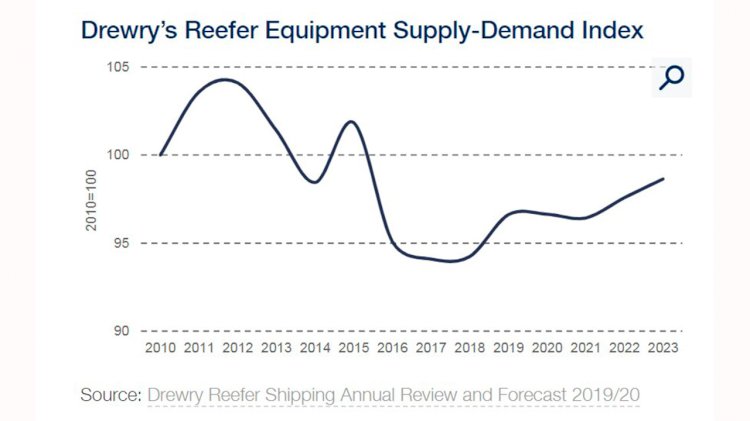
After the dramatic halt in reefer equipment expenditure by cash-strapped shipping lines in 2016 which led to acute shortages in several regions, production of new refrigerated container equipment recovered during 2017 and continued to gather pace in 2018. Drewry expects the reefer container equipment fleet to maintain a CAGR of 4.5% over the next five years which is slightly ahead of anticipated growth in containerised cargo traffic but will not be sufficient to bring supply back into equilibrium – see chart below where 100 equates to equilibrium.

By contrast, there remains ample supply of containership reefer slot capacity on most trades, though certain routes with a high proportion of reefer cargo can experience tight space during seasonal peaks.

Drewry’s director of research products Martin Dixon said:

“While we expect container carriers to continue to improve the effective availability of reefer containers through more centralised inventory and imbalance management, Drewry’s data indicates that equipment supply conditions will remain tight. With cargo owners increasingly reliant on container carriers to move perishable products, given the ongoing decline in the specialised breakbulk reefer shipping fleet, refrigerated shipping capacity could be constrained during seasonal peaks.”

Global seaborne reefer trade continued to grow in 2018 but the pace of expansion was slower than trend and is projected to be more muted over the coming years. Drewry estimates that the volume of seaborne reefer cargo grew 3% in 2018 to 129 million tonnes which was weaker than the 4.4% gain achieved in 2017 and the 3.5% average annual rate recorded over the prior 10-year period. The weaker trade development was driven by a slowdown in shipments of meat and poultry, fish and seafood, and banana shipments, as well as a contraction in deciduous trade.

Looking ahead, Drewry forecasts that worldwide seaborne perishable reefer trade will continue to expand but at a below trend rate of 2.7% a year in the period to 2023 as certain seasonal climate related factors such as El Nino slow production output in the short term and rising geopolitical risk impacts wider trade growth prospects. But containerised reefer traffic will expand at a faster pace as its share of the trade is forecast to rise from 81% in 2018 to 85% by 2023 as the specialised breakbulk reefer shipping fleet continues its contraction.
 
Martin Dixon said:

“Hence, despite a slowdown in the pace of growth in global seaborne perishable cargo trade, the additional boost of modal shift is providing container carriers with an attractively expanding market in reefer cargo. Excluding a particularly weak 2019 caused by certain one-off weather related factors, forecast growth thereafter is expected to match that of the wider container shipping market with annual growth of around 4%. And together with tight container equipment availability we expect reefer container freight rates to continue to outperform dry box rates.”

MacGregor designs innocative cargo system for MSC GÜLSÜN

0

MacGregor, part of Cargotec, has designed the cargo system for the world’s largest containership, MSC Gülsün, which was delivered in July 2019 by South Korea’s Samsung Heavy Industries.

he is 400 m long, 61.5 m wide and is the first in a series of 11 ultra-large containerships with a capacity of more than 23,000 TEU. Six of the vessels are being built by Samsung Heavy Industries, and the other five by Daewoo Shipbuilding & Marine Engineering.

The system was developed in close collaboration with MSC from an early stage of the project. It fully meets MSC`s operational requirements while maximising the actual cargo intake. At the same time, it provides a great degree of flexibility for the cargo operations and planning process.

"This is an industry-leading cargo system, and the design of the system is very innovative,”

says Atte Virta, Senior Naval Architect, MacGregor Cargo Handling. The cargo system design, combined with a 24 container wide ship design, takes MSC Gülsün's total container capacity to 23,756 TEU, which is 1,500 TEUs more than the largest containerships have previously carried.

Magnus Sjöberg, Senior Vice President, MacGregor Cargo Handling, says:

"By designing an entire cargo system in close collaboration with our customers, we can respond to the market and specific requirements in the best possible way.”

Giuseppe Gargiulo Head of Newbuildings, MSC Mediterranean Shipping Company, says:

"As our fleet grows and technology develops, we want to make sure that our strategic investments are focused on maximising the ship´s performance. Through our close cooperation with MacGregor we are able to develop new solutions that are of mutual benefit and help us to grow together.”

MacGregor booked the orders for these vessels during 2018 and the first quarter of 2019. The parties have agreed not to disclose any further contractual details.

MACS3: Navis carrier and vessel solution

0

Navis, a part of Cargotec Corporation, and the provider of maritime software solutions for cargo and vessel performance and compliance, announced the launch of the MACS3 API Services at its Carrier and Vessel Solutions' APAC Customer Conference in Singapore.

MACS3 API Services unlock loading computer calculation results to manage safe cargo handling across the supply chain. “For the first time, ports, terminal operators, carriers and other key entities in the shipping industry can directly access and explore ship-specific loading calculation results for stability, strength, dangerous goods (DG), lashing and condition checks. All of these significantly improve safety, collaboration and efficiency of cargo transportation by sea,” said Ajay Bharadwaj, Head of Product Management for Navis Carrier and Vessel Solutions.

Stability & strength calculations are part of the API services offered, providing information for safer vessel operations, and reducing incidents of possible vessel damage or loss of cargo. In addition, MACS3 API Services facilitate safer vessel visits and improve visibility of dangerous goods flowing through ports. For example, the hazmat department of a European port authority is using the MACS3 DG API service to check incoming vessels for compliant dangerous goods segregation in a faster and more accurate way, replacing an inefficient and time-consuming onboard sample process.  

Navis also delivers an API for lashing calculations. As the industry-standard of loading computers for container vessels, MACS3 delivers via API call the most comprehensive and up-to-date securing regulations by all relevant classification societies into the workflow of stowage planners. One of the world’s leading ocean carriers is using this service to check lashing conditions of all vessels in their fleet for safer operations.

“In the age of digitalization, data is one of our biggest untapped assets, but it has no value to the maritime industry when it remains in silos. This new service provides all stakeholders of the container supply chain important data to make seaborne operations safer," said Bharadwaj.

Navis supports customers’ integration processes with technical documentation, software development kits, sample source code and virtual sandboxes for testing on the open API portal GitHub. Developers can contact Navis at api.macs3@navis.com to learn how to integrate MACS3 calculations into their workflow.

Germany to equip new coastal patrol vessels with BAE Systems’ 57mm guns

0

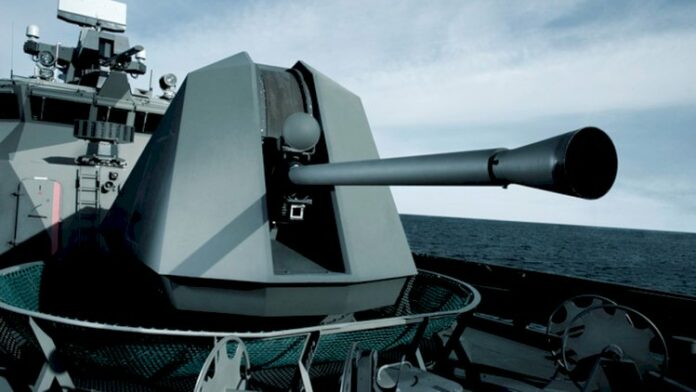
BAE Systems has been selected by the vessel contractor to provide the German federal police force, Bundespolizei, with three 57mm naval guns for its three new 86m Offshore Patrol Vessels (OPVs) built by Fassmer shipyard.

The gun systems, known as the Bofors 57 Mk3, will support the maritime arm of the Bundespolizei that monitors the country’s North Sea and Baltic coastlines. The 57 Mk3 is a flexible, highly versatile gun system designed to react quickly for close-to-shore operations. 

Ulf Einefors, director of marketing and sales for BAE Systems’ weapons business in Sweden, said:

“The Bofors 57 Mk3 is a versatile naval gun with firepower and range that exceeds expectations when compared with similar, medium calibre naval gun systems. That’s how our 57 millimeter system has earned its reputation as the deck gun of choice for ships operating in coastal environments. This contract expands the number of European nations deploying the 57 Mk3 and reflects the growing interest we’re seeing in the region, where we look forward to supporting new opportunities in the near future.”

The 57 Mk3 naval gun is also in use with the allied navies and coast guards of eight nations, including Canada, Finland, Mexico, and Sweden, as well as the United States, where it is known as the Mk110 naval gun.

This contract also includes accompanying fire control systems as well as systems integration support. Work is expected to begin immediately and will be performed at the BAE Systems facility in Karlskoga, Sweden. The first unit is scheduled for delivery in 2020.

McDermott, Chiyoda and Zachry Group Announce First Cargo from Freeport LNG Train 1

0

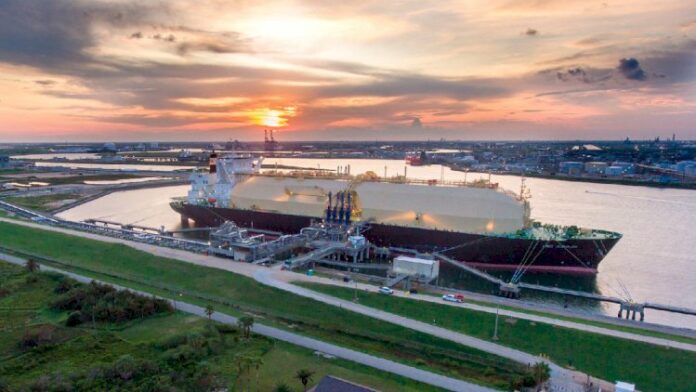
McDermott International, Inc. along with its partners, Chiyoda International Corporation and Zachry Group, have announced that the first commissioning cargo of liquefied natural gas (LNG) has been shipped from the Freeport LNG project on Quintana Island in Freeport, Texas. Feed gas was introduced into Freeport LNG Train 1 on July 22 and today's announcement of first cargo is a precursor to completion of Train 1.

Mark Coscio, McDermott's Senior Vice President for North, Central and South America, said:

"We continue to make great strides on the Freeport LNG project with the shipping of the first cargo from Train 1, which is a major milestone for the joint venture project team. Congratulations to everyone for their hard work and dedication in reaching this project achievement and for their strong focus on safety and quality throughout the project. For 2019 alone, the team worked more than 11 million work hours with no lost time incidents, an outstanding accomplishment."

Zachry Group, as the joint venture lead, partnered with McDermott for the Pre-FEED in 2011, followed by FEED works to support the early development stage of the project as a one-stop shop solution provider. Later Chiyoda joined the partnership and the joint team provided engineering, procurement and facility construction as well as commissioning and initial operations for the project. The project includes three liquefaction trains with a projected export capacity of approximately 15 million tons per annum of LNG, a second loading berth and a 165,000 m3 full containment LNG storage tank.

Freeport LNG Trains 2 and 3 remain on track to meet their previously announced schedules, with Train 2 initial production of LNG scheduled for Q4 of 2019 and Train 3 initial production of LNG scheduled for Q1 of 2020.

Port of Dover launches mobile app for marine stakeholders

0

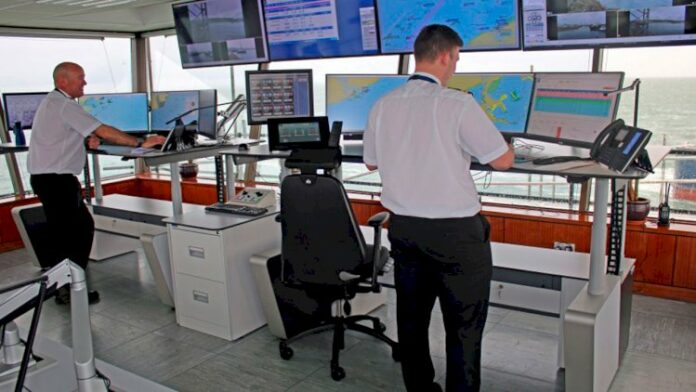
After several months of development with technology experts, the VTS team at the world's busiest passenger port has launched a new mobile app especially for mariners, providing live, up to date information for the local sea area and within the Port.

You can now access real time schedules, vessel movements and up to the minute weather and information at your finger tip. For Android and iOS, the PoD Port Information app is free and available to download now. No login is required, ensuring easy and efficient access. Search for Port of Dover in iOS, or click here to download for Android.

Steven Masters, Harbour Master says:

“The new PoD Port Information app is a vital tool for all of our marine stakeholders across the business – it gives real time, instant access to important navigational and weather information and updates within the Port. This app is the final stage of a major £1.6m overhaul of the Port’s VTS (Vessel Traffic Service) system, which is the biggest upgrade of its kind. Combined with our new state of the art operations room, it shows that as a leading port, we are constantly evolving and using the latest cutting-edge technology to communicate with mariners. The PoD Port Information app will continue to develop as our business develops, so the opportunities will be endless.”

Equinor started production from the Snefrid Nord gas field

0

On 1 September Equinor and its partners started production from the Snefrid Nord gas field, the first discovery tied back to the Norwegian Sea Aasta Hansteen field. It also sets a new depth record on the Norwegian continental shelf (NCS).

Recoverable resources for Snefrid Nord are estimated at 4.4 billion standard cubic metres of gas (27,5 million barrels oil equivalents) and some condensate. This will extend plateau production from Aasta Hansteen by almost a year. On plateau Snefrid Nord will produce four million cubic metres of gas per day. Aasta Hansteen came on stream in December 2018. Together with the Polarled pipeline the field opened a new region in the Norwegian Sea for gas export to Europe. Less than a year later the first discovery is tied back to the field.

Geir Tungesvik, senior vice president for project development in Equinor, says:

“Snefrid Nord has been delivered without any serious injuries, ahead of schedule and within the cost estimate.”

It cost around NOK 1.2 billion to develop Snefrid Nord. Originally the field was to start production at the end of 2019.

Snefrid Nord was discovered in 2015 and in 2017 the field development was sanctioned. The concept includes one well in a subsea template tied back to the Aasta Hansteen field by a pipeline and an umbilical.

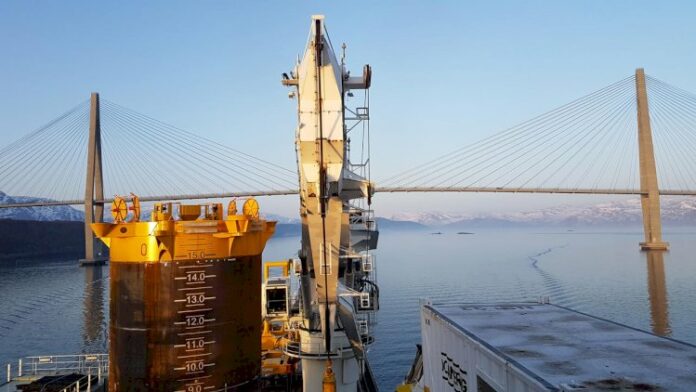
Siri Espedal Kindem (left), senior vice president for operations north, and Geir Tungesvik, senior vice president for project development in Equinor. The template is installed at a water depth of 1,309 metres, making Snefrid Nord the deepest field development on the NCS.

Tungesvik says:

“To a large extent the development has been performed in synergy with Aasta Hansteen. As the two projects have used several of the same suppliers, we have been able to combine campaigns and follow-up teams in Equinor and reuse technical solutions.”

The template and the suction anchor have been delivered by Aker Solutions in Sandnessjøen, which also delivered the Aasta Hansteen template. The Transocean Spitsbergen rig drilled the well while drilling the Aasta Hansteen wells, and Subsea 7 installed the template in the same campaign as the Aasta Hansteen risers. Pipeline end termination (PLET) for Snefrid Nord has been delivered by Momek in Mo i Rana.

Siri Espedal Kindem, senior vice president for operations north, says:

“We are pleased to see that the Snefrid Nord project has led to ripple effects and activity on the Helgeland coast. This is important to us.” 

Snefrid Nord is the first field to be tied back to Aasta Hansteen. With the infrastructure in place, more satellites may be developed in the area.

“There are several interesting prospects and discoveries around us. The new infrastructure makes it possible to develop them and more attractive to explore around the platform and along the pipeline. There is high exploration activity and several discoveries already in the area,” 

says Kindem, and adds that she is confident that we can develop the deep-water pioneer in the Norwegian Sea into something much more than the fields currently on stream.


Woolpert and iXblue partner to deliver aerial mapping services

0

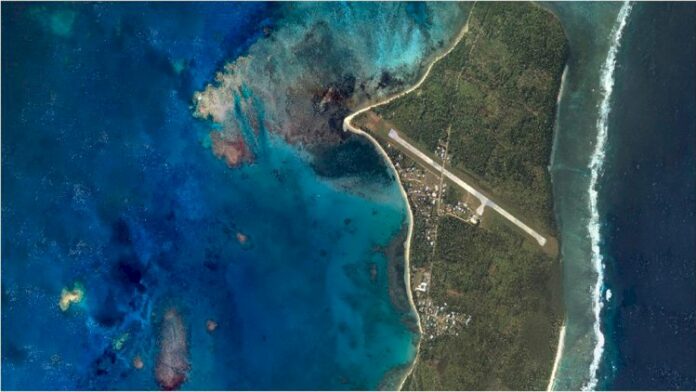
Woolpert, Inc and iXblue Sea Operations division, part of iXblue Group based in France, have formed a strategic partnership to provide aerial mapping services to clients in Australia, New Zealand and across the South Pacific. The pairing combines the reputation and regional business development expertise of iXblue, a global marine survey and technology firm, with Woolpert’s internationally known aerial topographic lidar, bathymetric lidar and geospatial capabilities.

Under this partnership, Woolpert and iXblue will collect, process and deliver airborne Digital Imagery, Topographic LiDAR and Bathymetric LiDAR operations from helicopter and fixed wing platforms to provide custom solutions to commercial and government clients.

John Gerhard, Woolpert’s director of Maritime Solutions, said:

“We are looking forward to working with iXblue, which has established itself as a highly respected data provider in the region, and to extend our geographic reach. By playing to our firms’ combined strengths, our clients will receive this highly accurate, highly requested mapping data at a lower cost.”

iXblue’s General Manager, Airborne Matt James adds:

“iXblue and Woolpert have had a great working relationship and the partnership aligns with growing demand from our clients to offer seamless hydrographic and topographic mapping operations. Both companies offer extensive domain knowledge, capability and experience that provides our clients with comfort and reliability that their project outcomes will be achieved.”

Woolpert has collected and processed hundreds of thousands of square miles in aerial, terrestrial and bathymetric lidar data and orthoimagery for clients within and outside the continental U.S. These clients include the U.S. Geological Survey, the U.S. Army Corps of Engineers and the National Geospatial-Intelligence Agency, as well as customers across multiple commercial industries. In May, the firm also acquired Geomatics Data Solutions, an international marine and terrestrial survey firm.

iXblue has surveyed over 100,000 line miles worldwide and has been operating the Sea Operations division across the Australasian region since 2007 providing clients with detailed and precise surveys of the marine and littoral environment. iXblue recently announced the diversification in capability to include an aerial mapping operation alongside its existing marine survey business.