-3.1 C
New York
Home Blog Page 1006

Bakker Sliedrecht to convert trailing suction hopper dredger Schenge energy-efficient

0

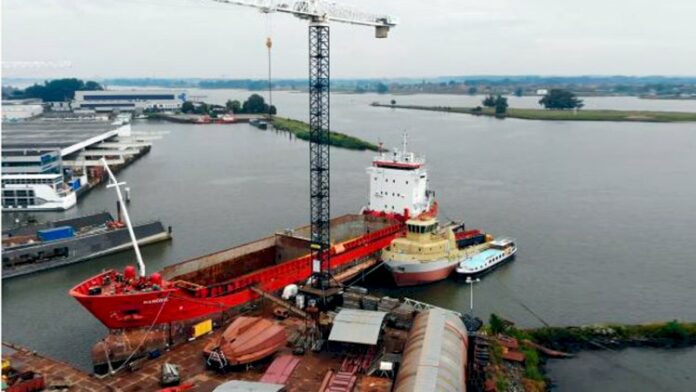
Thanks to Bakker Sliedrecht, the new trailing suction hopper dredger Schenge from the Goes based Faasse Groep will become energy-efficient. The electrical drive specialist supplies and installs a shaft generator on the main engine, which generates the electricity for the entire dredging installation. As a result, the ship works more efficiently, needs less maintenance and has an optimized lay-out.

Early this year, Faasse bought the freighter MS Mandeo in order to be converted into the trailing suction hopper dredger Schenge. After its completion in 2020, the vessel will be deployed for sand extraction in the North Sea. The Schenge has a hopper capacity of approximately 2600 m3, divided over two holds so that it can carry two types of product. For the electric drive of the dredging installation and jet pumps, a shaft generator with matching frequency drive from Bakker Sliedrecht is added, which is connected to the existing main engine by means of a new PTO shaft. The vessel has an adjustable propeller (CPP). Because the main engine runs at a low load for propulsion during dredging, this power can be used for the electrical dredging installation.

As a result, the trailing suction hopper dredger does not require any auxiliary diesel generators. This saves a lot of fuel, space, piping, and maintenance.

Senior Electrical System Designer Marcel Bakker and Sales Engineer Wim Verlek of Bakker Sliedrecht, said:

“We use the power that the main engine does not need during dredging. That makes the ship much more efficient and also ensures energy-efficient operations. Moreover, this solution saves a lot of space and allows a flexible and optimized lay-out of the vessel.”

During the conversion of the ship, Bakker also supervises the installation on board and the commissioning. The crew is also trained in dealing with the frequency drive so that they are familiar with the operation of the systems and the supplied manuals. Bakker Sliedrecht has applied this type of electrical installation more often, but mainly on larger dredgers. The Schenge is the first ship of Faasse in this category to be equipped with it.

The Faasse Groep produces three million tonnes of sand annually for the concrete industry, infrastructure, sports fields and beach spraying. The sand is extracted off the Dutch and Belgian coast and transferred to inland barges. The 140-year-old Zeeland family company invests continuously in sustainability and innovation to keep the fleet up-to-date.

Bakker and Verlek said:

“Faasse came to us because they expect us to have some expertise in this area. We know how to handle quality and sustainability and are able to deliver this kind of advanced electrical solutions.”
Wärtsilä solutions to support Hurtigruten’s green push in expedition cruises

0

The technology group Wärtsilä will supply a broad scope of solutions that will support Hurtigruten, the world’s largest expedition cruise operator, in its push for greener and more sustainable shipping.

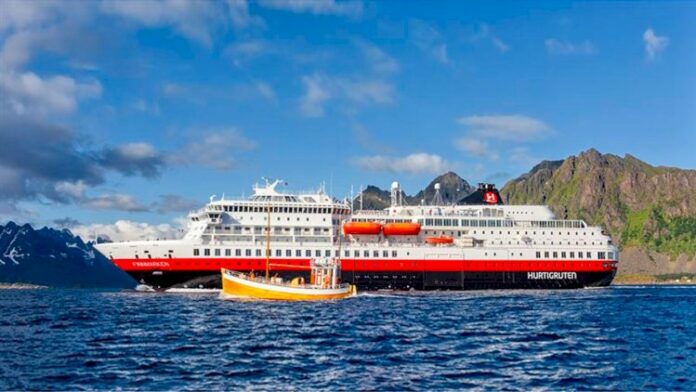
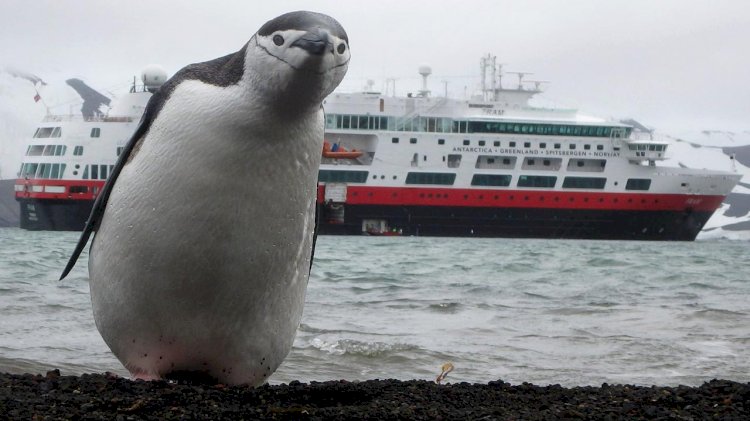
Hurtigruten, considered one of the world’s most sustainable cruise operators, is converting an additional three vessels to become premium, hybrid powered expedition cruise ships. The order with Wärtsilä was placed in Q2 2019 and covers the ‘MS Finnmarken’, the first of the three vessels to be upgraded. Following the conversion project, the 140 metre, 530 guest MS Finnmarken will be renamed the MS Otto Sverdrup.

The scope includes upgrading the ship’s Wärtsilä engines for selective catalytic reduction (SCR) technology to restrict emissions of nitrogen oxides (NOx). Four Wärtsilä Nitrogen Oxide Reducer (NOR) systems will be installed for this conversion. Wärtsilä will also deliver two Energopac systems. The integrated propeller and rudder design of the Wärtsilä Energopac utilises advanced hydrodynamic technology to optimise propulsion efficiency. This enables effective savings in fuel, costs, and emissions. The ship will also have the capability to operate on battery power to further lessen its environmental footprint.

Cato Esperø, Head of Sales, Service Unit Nordics and Baltics, Wärtsilä Marine, says:

“We have enjoyed a good customer relationship with Hurtigruten for many years, and we are pleased and honoured to have been selected to supply our sustainable solutions to a company that is committed to protecting the environment. The fact that we could deliver Tier III certificates for the total installation was a significant factor in the award of this contract.”

Daniel Skjeldam, CEO of Hurtigruten, says:

“At Hurtigruten, the push for sustainable solutions and introduction of green technology is the core of everything we do. We operate in some of the most spectacular areas of the world. This comes with a responsibility.”

The Wärtsilä equipment is scheduled for delivery in December of this year. Hurtigruten has announced that all new additions to its fleet, as well as its existing vessels, will be made compliant with the IMO’s Tier III regulations.

Global wind turbine fleet to consume over 5.5Mt of copper by 2028

0

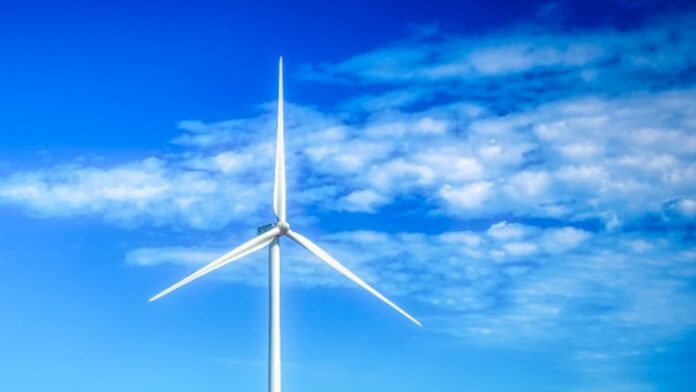
Over 650 GW of new onshore and 130 GW of new offshore wind capacity will be installed between 2018 and 2028. This will consume in excess of 5.5Mt of copper, according to a recent analysis by Wood Mackenzie.

Henry Salisbury, Wood Mackenzie Research Analyst, said:

"Wind technology is the most copper-intensive form of power generation and is anticipated to consume the largest amount of copper over the next ten years in this sector. Governments have set out to transition from a dependency on carbon emission-intensive power to more renewable energy sources. As a result, wind and solar energy sources have become a popular technology choice.

In order to generate, transmit and distribute the energy, copper is required due to its low electrical resistivity, high conductivity, malleability and durability. As a result of the intensity of copper within wind farm projects and the increasing demand for wind energy, consumption of copper is substantial and forecast to grow significantly over the next decade.”

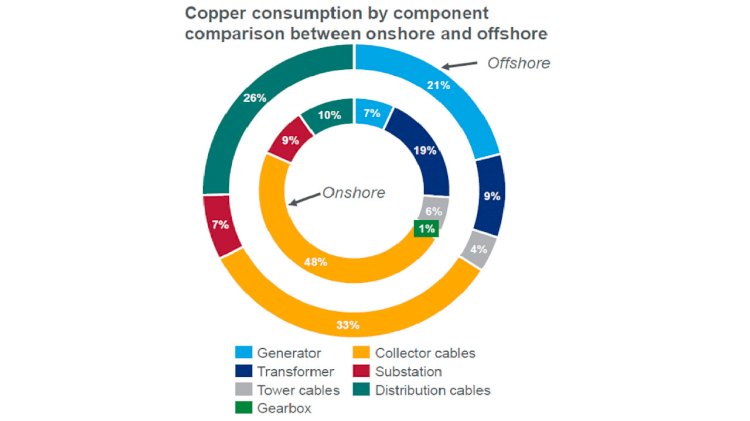
Where is copper used in wind turbines?

  • Within a wind turbine, copper is consumed in the generator, power transformers, gearbox and tower cabling.
  • Onshore turbines are connected through collector cables, which are linked to a substation before joining the electrical and transmission network.
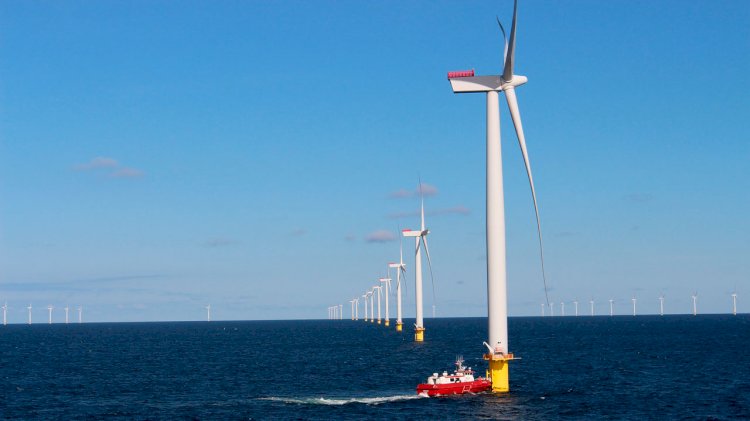
  • Offshore turbines are connected through collector cables to an offshore substation. Distribution cables connect the offshore substation to a terrestrial substation ahead of connection to the transmission network.

Mr. Salisbury added:

“Approximately 58% of copper consumed within wind installations is through cabling. Considering our current forecasts for new wind turbine installations between 2018 and 2028, over 3 Mt of copper will be consumed in both collector and distribution cabling.” 

Global wind technologies are expected to require an average of 450 ktpa of copper per year between 2018 and 2022, before increasing to 600 ktpa per annum out to 2028.

Mr. Salisbury said:

“China is forecast to see the strongest growth in new onshore capacity, consuming an average of 110 ktpa copper pear year to 2028. This is followed by the US, which will average 35 ktpa copper each year through 2028. The U.K., the Netherlands and Germany will lead offshore installation in the largest market; Europe. This is forecast to consume an average of 80 ktpa per year between 2018 and 2028. Due to higher copper intensity, offshore turbines will command an increasing share of copper consumption. Progressive development of larger wind turbines will increase copper intensities, providing an upside risk to copper consumption in the longer-term beyond 2024.” 

Higher copper prices have driven some manufacturers towards considering, and in some cases introducing, alternate materials in some wind turbine components.

In cables, aluminium is lighter and cheaper, however requires more maintenance and needs a 50% larger cross-sectional area than copper cables to achieve similar levels of electrical resistivity and conductivity.

In generators, manufacturers are reluctant to wholly commit to alternative materials until quality and reliability is guaranteed.

Mr. Salisbury concluded:

“Enercon have begun introducing EP3 generators with aluminium form-wound coils instead of multistrand copper wires. Further developments in aluminium technology could lead to increased substitution of copper in cabling above our current expectations. Additionally, future introduction of higher output turbines may reduce the number of turbines per wind farm. Considering that cabling constitutes 58% of copper intensity, this scenario could reduce copper intensity and, therefore, consumption in the future.”

VIDEO: The world’s largest container ship MSC Gülsün arrives at the Port of Rotterdam

0

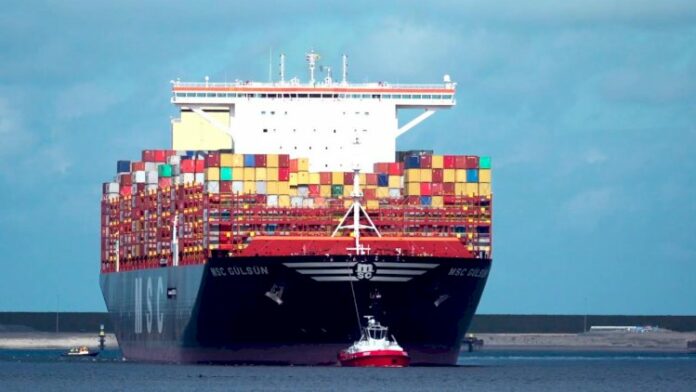
MSC Gülsün arrived at the APMT 2 terminal quay in the Port of Rotterdam.

The vessel, 400 metres long and with a beam of 62 metres, has a 23,756-TEU (twenty-foot standard containers) capacity, making it the world’s largest container ship.

MSC Gülsün is the first container ship capable of transporting 24 containers side by side across the breadth of its hull.

The OOCL HongKong, taken into operation two years ago, was the largest containership until now, with a capacity of 21,413 TEU.

Tractebel awards two floating solar PV projects

0

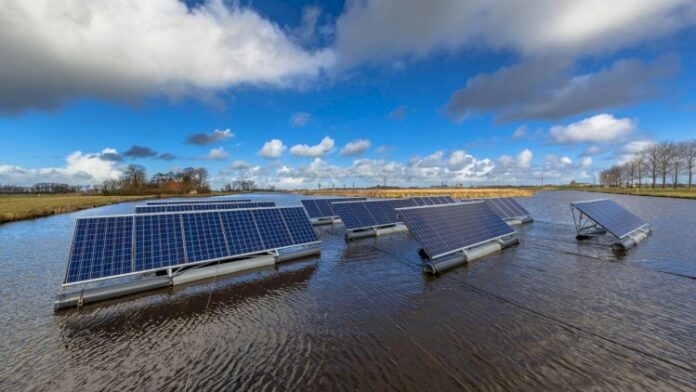
A multidisciplinary team of Tractebel experts from Belgium, France and India are working together on feasibility studies for the implementation of floating solar PV plants in Ivory Coast and India.

Tractebel has awarded two feasibility study projects by the French Development Agency (AFD). The projects concern implementation of floating solar photovoltaic plants in Ivory Coast and India.

Floating solar has some unique characteristics that can have large benefits over ground mounted solar related to land use, grid connection in case of combination with existing hydro power plants, ease of installation and maintenance.

Alexandre Tang, Business Developer at Tractebel, said:

“This commercial success has been thanks to the project teams, the strategies they adapted to suit the project requirements, and optimum use of skills worldwide. These projects are the perfect illustration of our commitment to designing solutions that make environments more liveable, sustainable and integral to the zero-carbon transition.”
 

Aker Solutions launches Intelligent Subsea field design system

0

Aker Solutions has launched its Intelligent Subsea offering designed to accelerate field development and maximize performance.

The industry has standardized, simplified and reduced the size of equipment in recent years, but a further step-change is needed to drive a sustainable future for the subsea industry and the world it serves.

With Aker Solutions’ intelligent subsea approach, the time it takes to generate optimal subsea field layouts can be cut by 75 percent and the cost of field development capex can be halved. Accelerated field development is achieved by combining Aker Solutions’ modular, optimized and configurable subsea equipment with automated design which can reduce engineering hours by up to 70 percent.

Intelligent Subsea addresses the current and future needs of subsea production by combining three core value propositions:

  • Adopting an integrated approach to field design where both the subsea and topside systems are optimized and concepts can be rapidly developed with the aid of advanced digital tools.
  • Standardized and digitally-enabled products that can be rapidly configured to customers’ needs and are delivered with accelerated timelines – reducing the time to first production.
  • Maximized life of field performance with enhanced recovery and extend field life enabled by condition monitoring, predictive maintenance and simplified system enhancement as the field matures.

Aker Solutions Chief Executive Officer Luis Araujo said:

"Digitalization of our work process and new applications are transforming field design, radically accelerating development and delivering actionable insight to maximize performance through the life of a field. Our system thinking and intelligent solutions are a revolution in subsea developments. Intelligent Subsea is enhancing recovery, saving cost and increasing value through life of field.

With our industry-leading all-electric and subsea gas compression technology, we extended the frontier for subsea production. We believe Intelligent Subsea will set a new frontier for customer value in projects around the world."

New satellite technology saves lives, supports fishing in Indonesia

0

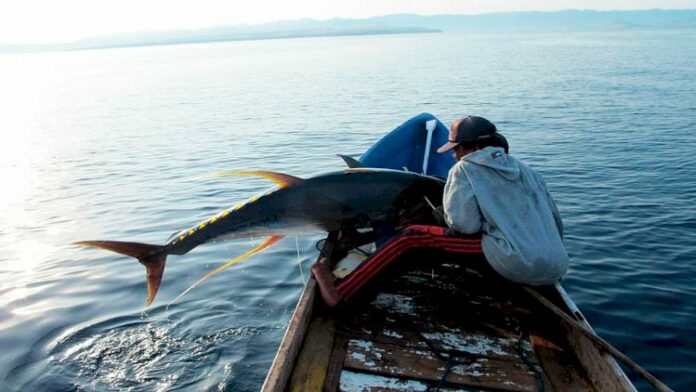
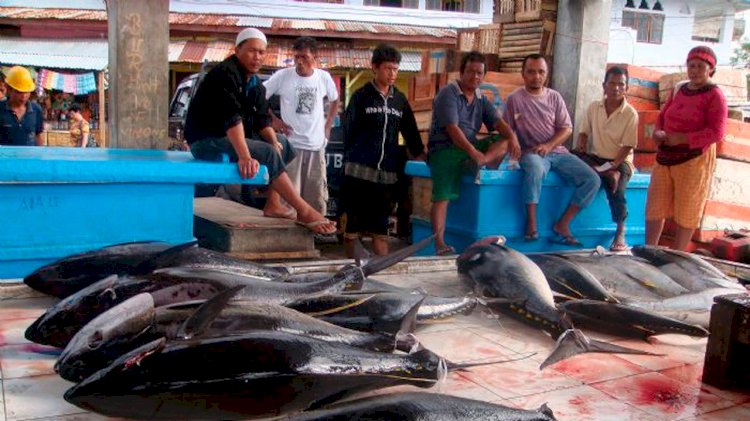
Three year project examined how satellite communications could support fishing communities in Indonesia; saving lives in distress, linking coastal families to relatives at sea and improving efficiency and sustainability through a dedicated Vessel Monitoring System. Estimated that approximately 40 lives have been saved during the project.

Inmarsat, the world leader in global, mobile satellite communications, working with the Indonesian Ministry of Marine Affairs and Fisheries, its Department of Fisheries, the UK Space Agency and other partners has marked the successful closure of a three-year fisheries innovation project. Using low-cost, solar-powered satellite technology on smaller fishing vessels, the project aimed to enhance safety, efficiency, ship to shore contact and offer potential fish stock sustainability improvements.

With Indonesia’s long coastlines and more than 17,000 islands, it is difficult and costly to monitor vessel movements in the country’s waters. Independent analysis by consultancy Poseidon Aquatic Resource Management Limited, published today, showed that applying modern, satellite-based technology to smaller boats below 30 gross tonnage (30GT), not currently legally required, supported the local industry’s move towards safer, more sustainable and profitable operations. It also has potential to improve the ability of Indonesia’s Ministry of Marine Affairs and Fisheries (MMAF) to address illegal fishing.

With funding from the UK Space Agency and support from Inmarsat, this International Partnership Programme project was implemented to test the benefits and challenges of expanding the use of satellite-based Vessel Monitoring Systems (VMS). The tested satellite VMS system was expanded with various applications and is referred to as VMS+.

The purpose of the project was twofold. Firstly, to test whether the Inmarsat VMS+ could increase the safety of fishers at sea and improve the efficiency of their fishing operations, and so improve their livelihoods. Secondly, to provide the PSDKP (Indonesia’s Directorate General of Marine and Fisheries Resources Surveillance) with spatial tracking data for these smaller vessels and open the potential for e-reporting, such as via e-logbooks. Poseidon’s independent analysis found that both objectives have been achieved, with further opportunities for improvement also discovered.

Fishers were able to call for help during times of acute distress, linking back to Inmarsat’s founding mission of saving lives at sea. Poseidon estimates that 39 lives were saved during this project. It also delivered enhanced capabilities in both the fisheries monitoring centre as well as on its patrol vessel.

James Cemmell, Vice President, Government Engagement, Inmarsat, said:

“The results of the project highlight how technology, training and respect for the expertise of fishers can together deliver enhanced safety, economic growth and environmental sustainability. There are people alive today with their families because of this project, which is the most important result in many ways. Together with the fishing community, government, technologists and specialists in fisheries management, we have prototyped a ‘Made-in-Indonesia’ satellite communications device for fishers. We have also ensured that pricing reflects the economics of the sector, which contributes to affordability. The results of the study have been independently verified and can be used to further modernise fisheries management in Indonesia. This can deliver the potential for more sustainable fish stocks, safer, better conditions for fishers, and improved economic growth from fisheries businesses.”

Dr Graham Turnock, CEO, UK Space Agency said:

“This is a true reflection of what positive and prosperous partnerships can achieve. The Inmarsat, Indonesia project has aimed to benefit Indonesian fisheries by promoting inclusive and sustainable fishing practices, a huge step in encouraging global, responsible use of our ocean resources. Thanks to this project Indonesia will be able to improve the policing of illegal fishing and move the industry onto a more sustainable and profitable basis.”

The International Partnership Programme (IPP) is a £30 million a year programme run by the UK Space Agency. IPP focuses strongly on using the UK space sector’s research and innovation strengths to deliver a sustainable economic or societal benefit to emerging and developing economies around the world.


VIDEO: Boskalis presents a solution for fixing and sealing subsea cables

0

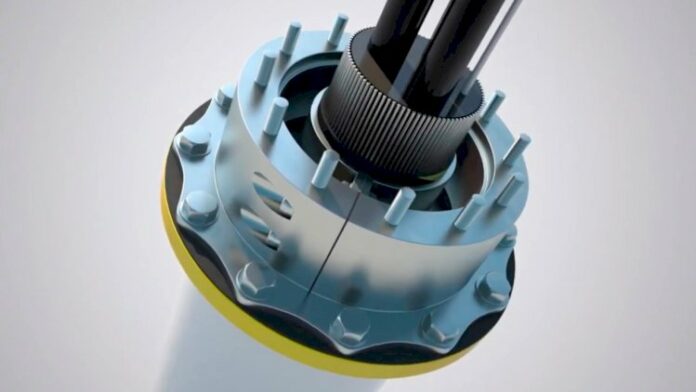
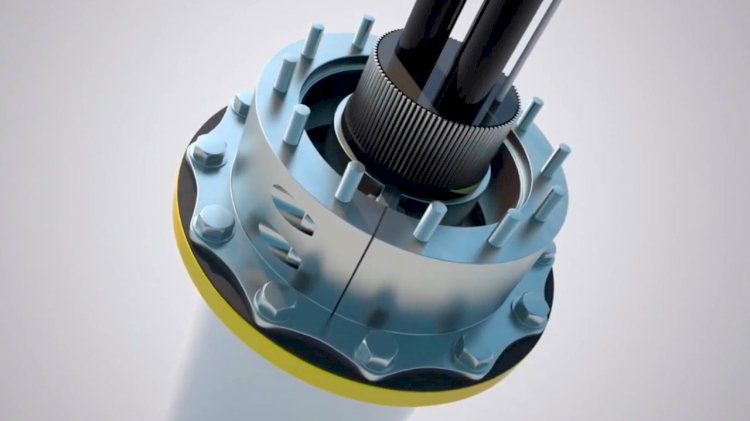
Boskalis introduces a sustainable solution for fixing and sealing subsea cables in offshore structures by offering a hang-off that features fast (dis)assembly without the use of toxic resins.

Until now, hang-offs were assembled using – often toxic – resin, which can be harmful to both human health and the environment. With its resin-free hang-off, Boskalis offers a safe, rapid and reusable solution when, for example, demounting a cable from a monopile or jacket for replacement.

VIDEO: ST Engineering introduces an anti-jam GNSS antenna system AgilLOC AEC

0

Global Navigation Satellite Systems (GNSS) operates across multiple domains and provides essential service from enabling value-added logistics solutions to facilitating civil protection operations. However, GNSS is very susceptible to jamming and interference. A low power interference source can seriously degrade the GNSS position, navigation and time availability – even to the point of service denial.

AgilLOC Antenna Element Compact (AgilLOC AEC) is an integrated anti-jam antenna system which can null up to three concurrent interference sources to ensure continuous GNSS protection to the connected system. The low power compact design allows for easy integration with new or existing legacy systems that require uninterrupted GNSS reception.

AgilLOC Resilient Time Source (AgilLOC RTS) offers a high-level resilience against these threats. Short discipline time allows your system to be quickly protected upon power on. In the monitoring mode, AgilLOC RTS will provide enhanced timing holdover upon detection of spoofing or signal interruptions to ensure system continuity.

ST Engineering (previously known as ST Electronics) is a global technology, defence and engineering group specialising in the aerospace, electronics, land systems and marine sectors. ST Engineering brings innovation and technology together to create multi-disciplinary smart engineering solutions for its customers in the defence, government and commercial segments in more than 100 countries.


Groundbreaking flexible 1500 passenger RoPax design by KNUD E. HANSEN

0

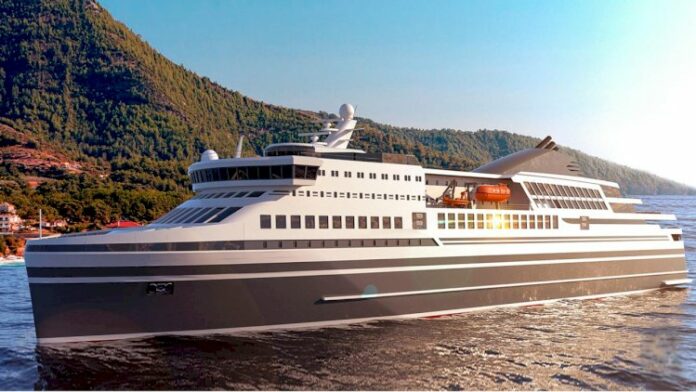
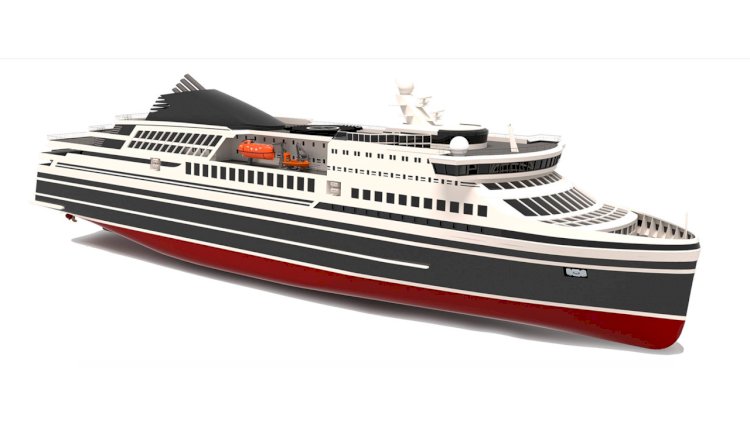
KNUD E. HANSEN has released its newest, groundbreaking design, a 154-meter RoPax ferry that can transport up to 1500 passengers and 440 cars.

The vessel also boasts an additional 657 lane meters for trucks and trailers. Its impressive maneuvering and docking capabilities make it an ideal choice for e.g. the Mediterranean market although it is well suited for a variety of locations and operating conditions worldwide.

The vessel has a service speed of 25 knots and can operate close to optimum engine load even at slow speeds due to its diesel electric propulsion plant and azimuthing pods. The four engines have a combined power of approximately 48 Megawatts and are fueled by marine diesel oil (MDO). There are also two tunnel thrusters located at the bow which, combined with the azipods, allow the vessel to move laterally without any forward or aft motion, a very desirable feature for mooring. There is also a large battery bank to power the vessel while dockside, allowing for zero emissions in port.

The vessel features two car decks below the Main Deck that are accessed via fixed ramps. The Main Deck gives priority to trucks, which can be easily loaded via an extra-wide stern ramp. There is also a dedicated passenger ramp astern with an escalator leading to the accommodation decks. Deck 4 is comprised of a hoistable car deck at the forward end that spans over 50 meters and can be raised to allow for additional truck loading. Deck 5 includes an additional car deck accessed via a hoistable ramp on the starboard side.

Decks 5 through 7 are devoted to passenger accommodation and public spaces which are well suited for both day voyages and overnight passages. There are a total of 112 twin-occupancy, en suite cabins with the majority facing outboard, giving passengers unobstructed ocean views. Deck 6 features a self-service restaurant, bar, two lounges, internet café, reception and shopping area. There is an open observation deck on Deck 5 forward as well as sun decks on Decks 6 through 8 aft, all with plenty of exterior seating.

The wheelhouse is located on Deck 8 along with 41 single-occupancy crew/officer cabins as well dining and recreation facilities for all staff. The vessel has two passenger lifts providing access to all vehicle and accommodation decks as well as one service lift. Unique to this vessel is a dedicated heli-pad located on the top deck.

The vessel is certified as a EuroClass Type A ship and is fully SOLAS compliant. KNUD E. HANSEN aims to achieve the highest level of survivability with strict adherence to Safe Return to Port (SRtP) requirements through the inclusion of redundant, segregated power and propulsion systems as well as passenger safe havens and an auxiliary wheelhouse.

This design has been developed in-house, by the experienced staff of naval architects, marine engineers and designers at KNUD E. HANSEN who place the utmost importance on safety, efficiency and design ingenuity and have been doing so for over 80 years. Interior design has been developed in corporation with our partner B33, who are a flexible design hub that includes furniture and product designers, interior designers, as well as landscape architects. The team at Design Studio B33 is comprised of internationally-acclaimed designers with a focus on timeless designs grounded in Scandinavian aesthetics.