-1.9 C
New York
Home Blog Page 1004

Shanghai Shipping Exchange and CargoSmart to establish a new shipping index

0

The companies set out to offer a new schedule reliability benchmark for the shipping industry.

Shanghai Shipping Exchange, a leading shipping index organization, and CargoSmart Limited, a leading global shipment management software solutions provider, have signed a Memorandum of Cooperation to develop a new shipping index for ocean carrier schedule reliability. Working together, Shanghai Shipping Exchange and CargoSmart will create a new methodology to calculate schedule reliability for key trade lanes to help shippers optimize their supply chains and for the industry as a whole to improve service quality.

Shanghai Shipping Exchange has been playing a significant role in providing up-to-date and accurate shipping information for the global shipping market, including publishing the China Containerized Freight Index (CCFI) and Shanghai Containerized Freight Index (SCFI).

Yao Weifu, Vice President of Shanghai Shipping Exchange, said:

“The alliance with CargoSmart allows us to expand the insights we provide for the shipping industry. We look forward to collaborating with CargoSmart to deliver a new shipping index that increases transparency to ocean carrier performance.”

With over 20 years of experience in providing shipping management solutions and connections with more than 20 ocean carriers, CargoSmart monitors and analyzes over 16,000 vessels, 1,400 global container terminals, 3,000 ocean carrier services representing 85% of the market, and 10 million sailing schedules. By tapping into its comprehensive database and applying analytics, CargoSmart will enable effective and accurate measurement of ocean carriers’ schedule reliability performance.

Lionel Louie, chief commercial officer of CargoSmart, said:

“CargoSmart and Shanghai Shipping Exchange share a common desire to improve supply chain efficiency and productivity. Our cooperation will extend our contributions to the shipping industry.”

Kim Guan, Ocean Service Manager of logistics service provider, C.H. Robinson, said:

“At C.H. Robinson, we are committed to providing a customer-centric and efficient operation that takes customer needs, market conditions and regulations into account for our customers to optimize their supply chains. We are excited that the Shanghai Shipping Exchange will be offering a standardized schedule reliability index that we can benchmark to offer more insightful carrier and route recommendations for our customers.”

Shanghai Shipping Exchange and CargoSmart will establish the index scope and methodology through a joint working group to further develop new insights for the shipping industry.
Cooper Energy discovered new gas field at Annie

0

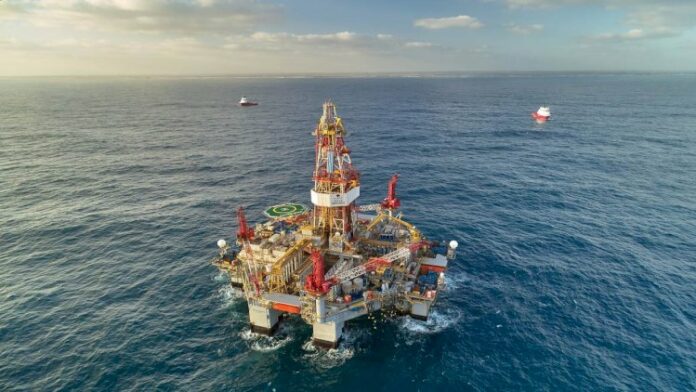
Cooper Energy as Operator of VIC/P44 (Cooper Energy 50% interest holder, Mitsui E & P Australia 50% interest) announces that the exploration well Annie-1 has made a new gas field discovery in the Otway Basin offshore Victoria. The well reached total depth (TD) of 2,442 metres measured depth rotary table (MDRT) at 9:00 am AEST on 4 September 2019.

Within the Annie-1 borehole, the Waarre C and Waarre A Formation sandstones productive in the Otway Basin were penetrated. The Waarre C primary target was encountered at 2,241 metres MDRT, comprising a gross gas column of 70 metres with gas-on-rock at its base. The net pay thickness is 62 metres.

The deeper Waarre A sandstone was encountered at 2,341 metres MDRT and was water wet. The analysis was carried out using Logging While Drilling (LWD) data. Wireline logging operations to collect pressure and sample data required to inform resource volume estimates and to determine gas composition have been completed. Data collected in Annie-1 is consistent with adjacent analogue producing fields. Laboratory analysis to confirm gas composition is to be conducted.

Cooper Energy Managing Director David Maxwell described the Annie gas discovery as a solid and promising result from the first well in the program: 

“Annie-1 is the first offshore gas exploration well Cooper Energy has drilled in Australia and the first of an $80 million drill campaign by the Joint Venture this year to find new gas supply for south-east Australia. We are very pleased with the success at Annie. It is very encouraging for future exploration in the offshore Otway Basin and for our strategy to build gas production around the hub of the existing Minerva Gas Plant.

“Preliminary analysis of the geological data from Annie-1 is consistent with the mid-range of our pre-drill estimates. In the coming months, we will complete the subsurface assessments and analysis of data to refine our estimates of field size and to inform decisions regarding field development.”

The Annie gas discovery is the first by an offshore well in the Otway Basin in 11 years, with the most recent being the nearby Netherby gas field in 2008. Annie-1 is located approximately 9 km offshore Victoria in a water depth of 58 metres. The field is located between the producing Henry (15 km west) and depleted Minerva (11 km east) gas fields.

Cooper Energy and Mitsui E & P Australia currently produce gas from the nearby Casino, Henry and Netherby fields. The presence of subsea infrastructure and future access to the existing Minerva Gas Plant enables the development economics for field discoveries in the region. The timing of any development will depend on rig scheduling for the drilling of a development well. With this proviso, a favourable decision on field development could result in the commencement of production from the Annie gas field in the latter half of calendar 2021.

The Diamond Offshore Ocean Monarch drilling rig is about to commence preparations to plug and abandon Annie-1, consistent with the work program previously announced. Following this, the rig is scheduled to move to drill the second well in the two well program, Elanora-1 in VIC/L24, 23 km southwest of Annie-1.

Seaspan Vancouver Drydock embarks on a large cruise ship refit project

0

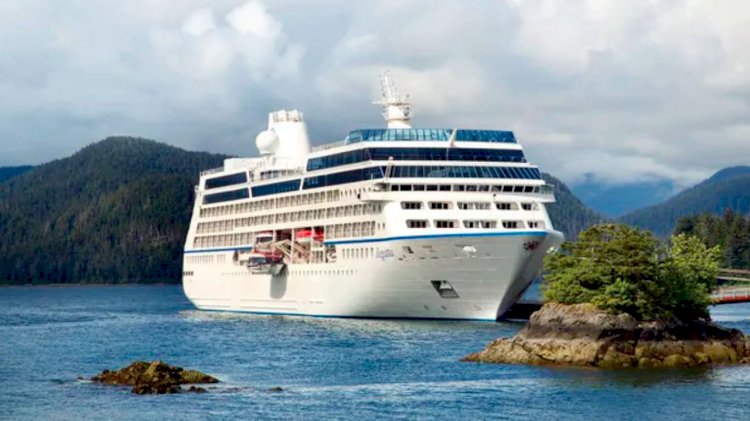
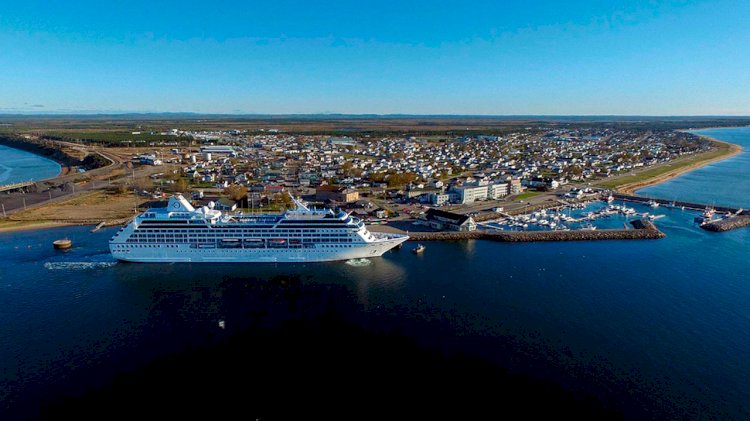
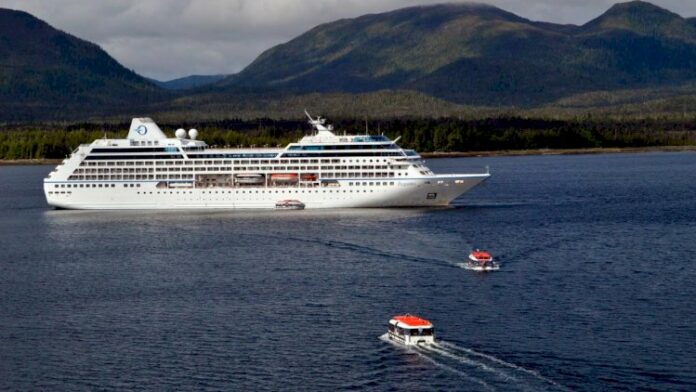
Seaspan Shipyards (Seaspan) is docking the MS Regatta, a 680-passenger flagship of the Oceania Cruises company, for a large refit at Seaspan Vancouver Drydock in Lower Lonsdale in North Vancouver on September 6, 2019.

Work on the project is expected to continue through to September 21, or 16 days. During this time the 30,000-tonne ship will have its hull stripped and recoated along with updates to the propulsion system and rudder. New furnishings, carpets, TV systems and other upgrades will be installed inside the ship.

This is the busiest period of the year for Seaspan Vancouver Drydock and this project alone will require over 2,000 contractors, cruise ship specialists and drydock employees to complete the refit. It’s anticipated that this work will bring approximately $10 million to the local economy through payroll, hiring of local suppliers and businesses, and spending by many workers.

For this project, Seaspan is employing new robotic ultra-high-pressure sprayers on the hull, which are quieter than traditional methods. This is just one of the many ways that Seaspan Shipyards is demonstrating its commitment to continuing to be a good neighbour while providing benefits to the local economy and adding to the vibrant and diverse Shipyards waterfront community.

Paul Hebson, Vice President & General Manager, Seaspan Vancouver Drydock, said:

“A project of this size and complexity is challenging. It takes teamwork, and our team is very excited about it. And this project alone is driving close to $10 million worth of benefits, indirectly and directly to employees, local suppliers and businesses, which is great news for the local community.”

About Seaspan Shipyards

Seaspan Shipyards is a leader in Canada’s shipbuilding and ship repair industry. With modern facilities and a dedicated workforce, the company has proven itself to be a reliable partner on a range of complex projects for both government and the private sector.

New combat system for submarines

0

At the 7th International Submarine Conference SubCon 2019 kta naval systems, a joint venture of thyssenkrupp Marine Systems and Kongsberg, presented its new combat system for non-nuclear submarines.

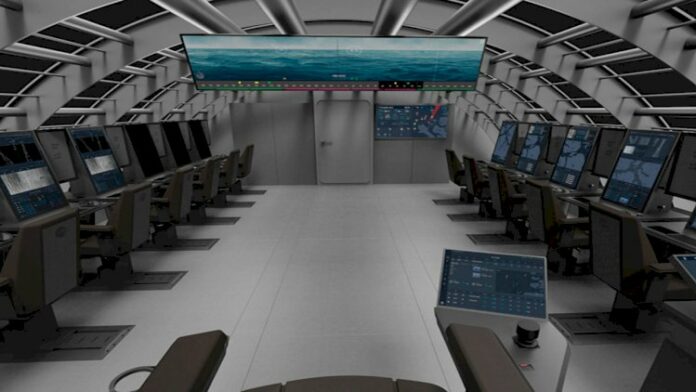
The system called ORCCA combines for the first-time maximum adaptability with the highest level of IT security. It enables its operator to conduct an integrated data analysis from a wide range of systems on board via one multifunctional console – for a sound and quick decision-making process.

Kathrin Rohloff, CEO of kta naval systems: 

"ORCCA is the most modern combat system for non-nuclear submarines on the market. We brought together the expertise of our colleagues at ATLAS ELEKTRONIK and Kongsberg Defense & Aerospace to create a unique combat system. We will equip all future submarines from thyssenkrupp with this highly integrated system."

The modular design enables the integration of new technologies and the adaptation to changing deployment scenarios throughout the lifetime of the system. Customers can constantly advance their combat system onboard to adapt to new requirements and to ensure that they always have the most recent available technology on board; no matter if in 10, 20 or 30 years.

The system shows this kind of flexibility already at installation: Subsystems from the respective customer countries can easily be integrated. In addition, the system can be used for all submarine classes of thyssenkrupp Marine Systems – whether newly built or retrofitted.

ORCCA enables its operators to interact as part of a unit in multinational missions like NATO or EU missions. The communication between the systems on board and to the national and in addition to the international domain modules is separated by a special IT infrastructure. ORCCA guarantees high speed and maximum security across the various communication channels.

About kta naval systems

kta naval systems sets new standards with combat systems for non-nuclear submarines. The company was founded in October 2017 as a joint venture between thyssenkrupp Marine Systems, its Naval Electronic Systems business unit (ATLAS ELEKTRONIK) and Kongsberg Defense & Aerospace. Based on the combined expertise of the joint venture partners, kta naval systems develops, produces and maintains as an exclusive supplier all combat systems for submarines from thyssenkrupp Marine Systems.

About thyssenkrupp Marine Systems

With around 6,000 employees, thyssenkrupp Marine Systems is one of the world's leading marine companies and a systems provider in submarine and surface shipbuilding as well as maritime electronics and security technology. Over 180 years of history and the constant pursuit of improvements are the basis for the company's success in constantly setting new standards. thyssenkrupp Marine Systems offers customized solutions for highly complex challenges in a changing world. The driving forces behind this are the employees of the company, who shape the future of thyssenkrupp Marine Systems with passion and commitment every day.

SMD unveil environmentally responsible ROV technology

0

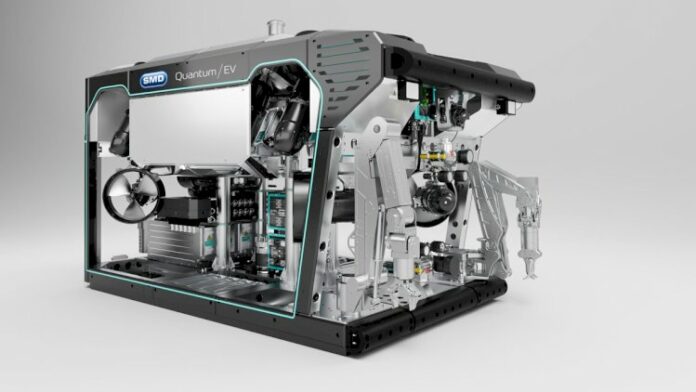
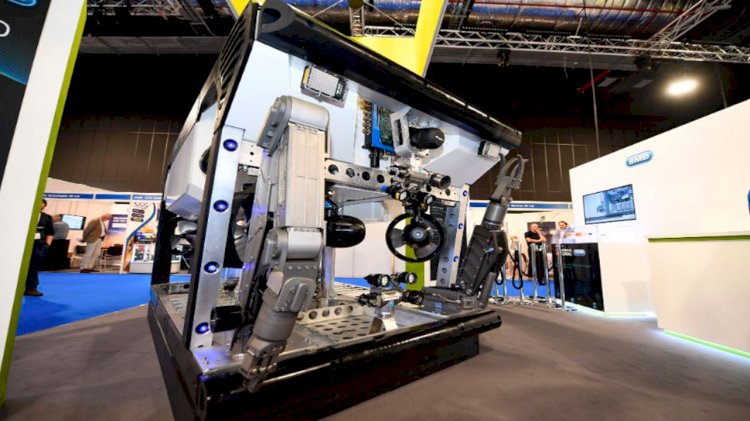
This week saw SMD unveil their electric Work Class ROV at Offshore Europe. Their new Quantum EV ROV introduces electric drive technology to the subsea sector in an optimised, modular package which brings Work Class ROV performance and capability to a new level.

The high capability Quantum EV is SMD’s environmentally responsible solution designed around five key principles covering performance, reliability, flexibility, ease of use and compact form factor.

The prototype, showcased at OE19, is equipped with a range of cutting-edge technologies including the completely new 25kW high power electric thrust system, a new long-distance DC transmission solution and locally managed DC power system.  Quantum EV has a 20% increase in performance and is twice as efficient when compared to current Work Class ROVs.  The new platform also features advanced flight processing for super stability, battery compatibility for tetherless operations and is future proofed to accept AI command technology.

SMD has been subjecting the newly developed technologies and the new vehicle to a thorough testing programme that will continue over the coming months.  First deliveries are expected to begin in 9-12 months.

Mark Collins, SMD’s Director for Remote and Autonomous Technologies has been involved throughout the development process:

“We have been listening to what our customers and the industry want and using our extensive real world, and sometimes painful experience, we’ve developed a new product range which has their needs at its very core. We have really focused on developing a tool that can be relied upon to take operational efficiency to a new level that’s easy to own and use. The technology will support our client’s ambitions and is suitable for traditional vessel, Unmanned Vessel and resident applications. One of the novel things about the EV technology is its modular flexibility. We’ve created future-ready, component-based, modular architecture which can be extrapolated for different uses; easily transferred for use in AUVs and USVs.”

Stephen Wilson, SMD’s Innovation Manager comments on the launch of this new EV technology:

“We have been developing electric motors and ROV thrusters for over 20 years. As specialists in high power motor drive technology, our parent company, CRRC Tec, have given us access to high power systems technology that would be otherwise inaccessible to the subsea sector. All of this, combined with financial support from our parent and Innovate UK has put us in a unique position to bring a world class electric ROV system to the market.  

Schlumberger and TGS announced a new 3D seismic reimaging project in the Red Sea

0

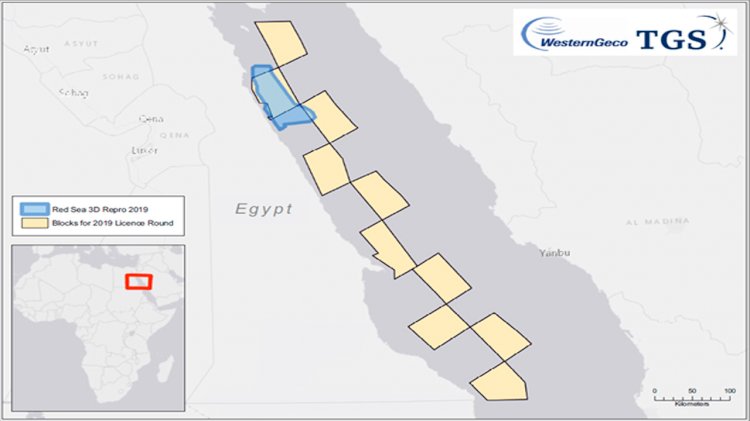
The project will comprise reimaging data from three overlapping seismic surveys totaling 3,600 km2 that were acquired between 1999 and 2008—the only available 3D data in the Egyptian Red Sea. It includes the integration of all legacy seismic and nonseismic data and will apply advanced imaging technologies to better define complex subsalt structures.

The project, which is supported by industry prefunding, will be carried out by TGS and WesternGeco®, the geophysical services product line of Schlumberger. Data will be available before the closing of Egypt’s offshore Red Sea international bid round on September 15, 2019.

Maurice Nessim, president, WesternGeco, said:

“Our comprehensive geological understanding, innovative seismic imaging techniques and full integration of nonseismic methods will define new exploration trends in this frontier basin. This collaborative approach will help our clients identify high-potential play segments, assess exploration risks and accelerate hydrocarbon discovery.”

Kristian Johansen, CEO, TGS, said:

“The Red Sea 3D reimaging project follows a multiclient 2D seismic acquisition program that was completed in March 2018 as the initial step in mitigating the complex salt imaging challenges in the area. The underexplored offshore Egyptian Red Sea area is made up of large, untested structures that offer exceptional growth opportunities for oil companies.”

Schlumberger and TGS have a long-term commitment with the Egypt Ministry of Petroleum and South Valley Egyptian Petroleum Holding Company (GANOPE) to acquire and process seismic data and promote the prospectivity of the Egyptian Red Sea. GANOPE is responsible for managing Egypt’s hydrocarbon resource potential under latitude line 28°.

Wärtsilä thrusters contribute to successful sea trials for Heerema’s SSCV

0

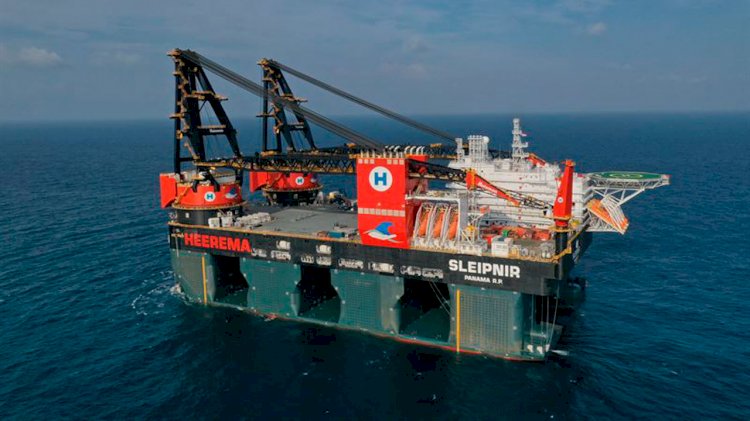
Performance of the propulsion solutions supplied by the technology group Wärtsilä exceeded the design specification and contributed to the success of the sea trials for the world’s largest semi-submersible crane vessel (SSCV).

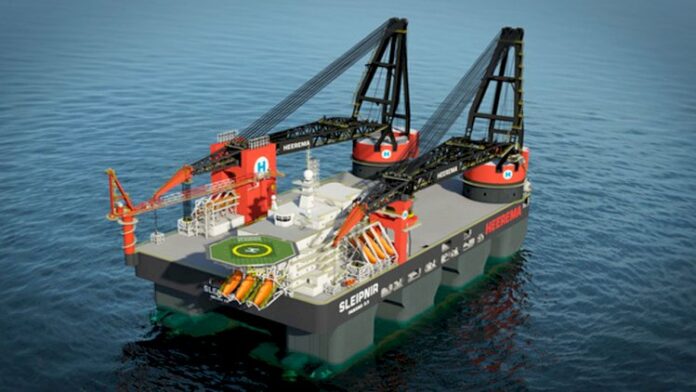
The ‘Sleipnir’ was built at Sembcorp Marine’s Tuas Boulevard Yard in Singapore for the Dutch offshore contractor Heerema Offshore Services (HOS). It was delivered from the yard in July.

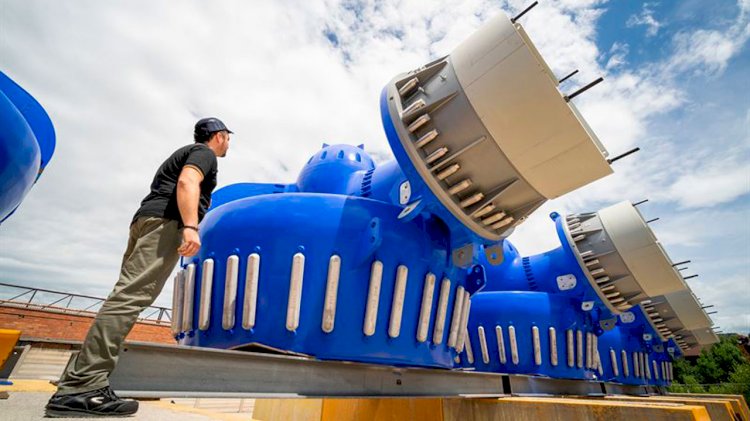
The huge vessel is designed for heavy lifting operations and is fitted with two cranes, each with a lifting capacity of 10,000 metric tonnes. The reinforced deck area measures 180 metres by 98 metres. Dynamic positioning is critical to its operations and to ensure this, Wärtsilä developed specifically for this project four 5500 kW forward retractable WST-65RU thrusters that are the world’s largest retractable thrusters ever made. They feature a unique combination of retractable and underwater mountable functionality. The thrusters installed at the aft of the vessel are 5500 kW Wärtsilä WST-65U underwater mountable steerable thrusters.

The underwater demounting capability of all eight thrusters means that neither dry docking, nor the use of a habitat is necessary should the thrusters need to be exchanged. They are equipped with Wärtsilä anti-pollution face type shaft seals, which have been selected primarily because of the challenging environments in which the thrusters will operate. The outboard parts of the thrusters are completely interchangeable.

Lauri Tiainen, Director, Thrusters and Propulsion Control Systems, Wärtsilä Marine, says:

“These are the largest thrusters in our portfolio, and we are particularly pleased with the impressive first-installation performance of the WST-65RU retractable thrusters, which were designed in close cooperation with our customer Heerema Offshore Services especially for this SSCV. The eight-degrees tilted propeller shaft solution, that is a feature of our underwater mountable thrusters, significantly reduces the interaction between the thrusters and the hull, and by exceeding the design specifications during the sea trials, we demonstrated the efficiency of this solution."

Heerema’s Project Director for Sleipnir, Sipke Schuurmans, says:

“Wärtsilä’s execution of the development and delivery of these thrusters specifically for the Sleipnir project and the performance of the thrusters demonstrated during the sea trials completely met our expectations. They also ensure accurate positioning, which is a must for a vessel of this size. Wärtsilä’s support and professionalism throughout this project have been first-class.”

In addition to the thrusters, Wärtsilä also supplied auxiliaries for steering and lubrication, the control units, and Wärtsilä’s comprehensive Propulsion Condition Monitoring Service (PCMS).

DNV GL unveils concept for live asset risk assessment using digital twins

0

DNV GL proposes the “Probabilistic Digital Twin” (PDT) to close the gap between digital twins – used increasingly by operators to manage the performance of their assets – and risk analysis still largely conducted manually before assets enter service.

A digital twin is a digital “mirror” of a physical asset, including models of its structure and dynamics which are updated through a combination of multiple data sources. They bring significant benefits for data management and decision making, providing a consistent, accurate single source of information. 

Risk models are rarely brought forward into operations – they typically exist separately within engineering, operations and health and safety disciplines – and are mostly used in desk studies, based on analyzing historical data and offering only a static picture of potential risks. 

In reality, risk is dynamic, varying in time with operational conditions and the condition of the asset, but this is not captured by current risk models which are seldom updated and lack real-time and prediction capabilities. 

Liv A. Hovem, CEO, DNV GL – Oil & Gas said:

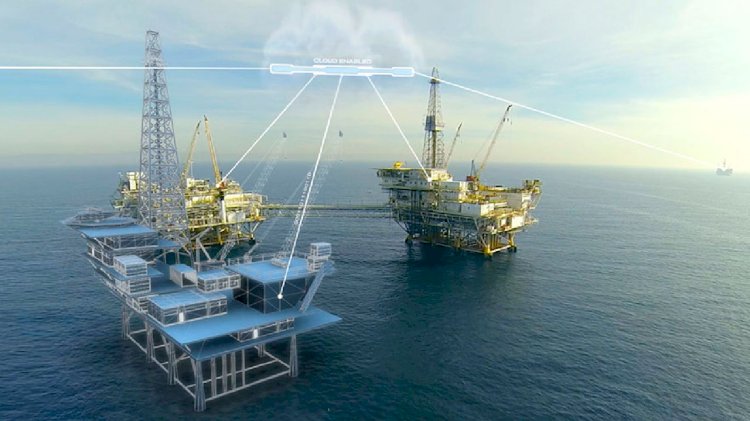
“A single, unscheduled downtime event can cost from $2 to $5 million per day – better and up-to-date risk information may significantly reduce unplanned or unnecessary downtime. Our proposed Probabilistic Digital Twin is designed to bring risk analysis into ‘live’ use. Their creation would add a layer of probabilistic risk modelling to existing digital twins, capturing uncertainty, the effect of new knowledge and actual conditions on operational performance and safety. By providing a more up-to-date and asset-specific risk picture, a PDT allows operators to adjust operations or take preventive actions to maintain an acceptable risk level at all times. This will enhance safety and reduce expensive downtime.” 

The Probabilistic Digital Twin concept was unveiled at Offshore Europe 2019, by; Dr. Frank Børre Pedersen, Programme director Oil & Gas at DNV GL’s Group Technology and Research unit; and senior research scientist Dr. Andreas Hafver. 

Frank Børre Pedersen said:

“DNV GL is prepared for a future where our clients will have digital twins of all their assets, having encouraged their use in multiple industries. Many of our clients are building and maintaining digital twins of their assets. The PDT allows us and our clients to take advantage of all the information such twins contain to improve risk assessments.

The Probabilistic Digital Twin is not an alternative, but an evolution of the digital twin – expanding it into the risk analysis space. It is a new way of delivering risk analysis – continuously and in a digital format, adding more value in day-to-day decision making.” 

A PDT may include reliability and degradation models to predict the remaining lifetime of mechanical components. However, it is more than a predictive maintenance tool. Risk is not only about component failures, but also about exposure to hazards and how the asset is operated. A PDT can say something about the overall impact on safety, by combining reliability models with models of the hazard exposure and the consequences if something goes wrong. 

The main elements which distinguish a probabilistic digital twin from traditional digital twins are: 

• Probabilistic degradation and failure models, reflecting uncertainty and variability of conditions and processes that affect performance and lead to failures. 

• Logic and relational models, relating performance variables to failures and loss events. 

• Surrogate models, approximating heavier simulation models, allowing fast queries and enabling propagation of uncertainty and model coupling. 

DNV GL’s PDT is detailed in a positioning paper which demonstrates the combination of process models with quantitative risk models and structural reliability models – three disciplines that have traditionally been separate – allowing more efficient safety management and creating additional value for the industry.

Orolia and Telko collaborate on first ECDIS with Navigational Cyber Security

0

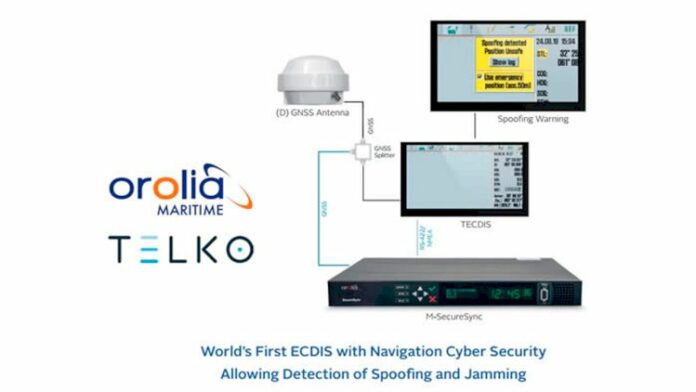
Orolia and Telko are collaborating to create the world’s first ECDIS solution that can detect and mitigate cyber-attacks on navigation systems on vessels. Together, they will showcase this new functionality on Telkos’ TECDIS system, with the addition of Orolia’s SecureSync Maritime Navigation Protection System (M-SecureSync), at this year’s Donso event in Sweden.

As the 2021 deadline for the International Maritime Organisation’s ‘Maritime Cyber Risk Management in Safety Management Systems’ mandate draws nearer, it is important that the entire vessel management ecosystem, from port coordination to critical bridge systems, includes protection of navigation. This is done by verifying the source and validity of position and timing data, as well as mitigating false data.

Orolia’s M-SecureSync employs various technologies to detect and resist GNSS jamming and spoofing attacks and alert the bridge to potential discrepancies in the navigation signals. It offers multi-layered protection that will be integrated into Telko’s TECDIS, Telko Electronic Chart Display and Information System. The system adds to existing GNSS reliability information by warning the user of compromised data by providing the current GNSS jamming and spoofing detection state, showing either “No interference”, ”Jamming detected”, ”Spoofing detected” or ”Jamming and Spoofing” and stores it for later analysis.

Martin Ekholm, Vice President Sales, Telko International AB explains, “We are excited to bring the first ECDIS system with navigation cyber security functionality to our customers, this means that they can rely on their critical GNSS signals for safer navigation. Telko has been supporting Navigation Systems for the North Sea fleet for the last 25 years, with more than 6,000 installations.”

Chris Loizou, Vice President Maritime Business Line at Orolia, said:

“Cyber-attacks can come in many guises and as the threats become increasingly sophisticated, poor cyber security could compromise commercial vessels’ safety through interference with navigation accuracy. We are dedicated to product innovation and developing state-of-the-art technologies, and through this collaboration with Telko we will continue to keep people safe while navigating the world’s waterways with the world’s first ECDIS with Navigation Cyber Security functionality.”
 

Jiangsu Maritime Institute selects KONGSBERG’s advanced K-Sim simulator technology

0

Students at the Jiangsu Maritime Institute (JMI) in China are to become the latest beneficiaries of KONGSBERG’s most advanced K-Sim simulator technology, with the recent signing of a contract for a major delivery to the institute’s Navigation Simulation Training Center and Maritime Engineering Simulation Training Center.

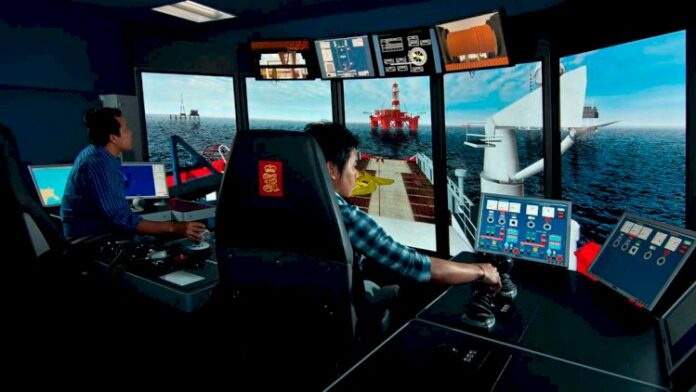
With installation scheduled for December 2019, the delivery will consist in part of one full-mission K-Sim Offshore simulator including one aft bridge with Kongsberg Dynamic Positioning (DP) system and one forward bridge. This will be complemented with a full-mission K-Sim Engine room simulator with two models certified by DNV GL, the MAN 6S70ME-C SCC and Wärtsilä RT-Flex Container L-11-I. A desktop engine room simulator that can accommodate 40 student stations is also part of the delivery.

The K-Sim Offshore vessel simulator with DP system is the first of its kind to be delivered by Kongsberg Digital to China and is designed to integrate with the K-Sim Engine full mission engine room simulator to provide a complete ship simulation training solution. The new delivery complements KONGSBERG’s existing hardware at the institute, which consists of a recently upgraded and expanded full-mission bridge simulator with 14 bridges and one desktop bridge simulator handling 20 student stations.

Mark Stuart Treen, Vice President Sales, KONGSBERG, says:

“The JMI, which is applying to become a national seafarers’ assessment centre, is recognized as a key cultivator of talent for all branches of the maritime industry, so it’s a credit to the effectiveness of our K-Sim simulator technology that the institute should have opted to continue basing its training programs upon our market-leading simulator technology to prepare its students with confidence for their future careers.”

MIAO Keyin, Vice President, JMI, adds:

“We have enjoyed a rewardingly cooperative relationship with KONGSBERG since 2006, during which time its simulators have accrued an impeccable reputation both within and beyond the institute as unparalleled training and assessment aids. As we coach new generations and senior seafarers alike in the operational processes and techniques required to successfully hold down roles in sectors ranging from shipbuilding, ocean transportation and inland navigation to offshore engineering, it’s reassuring to know that KONGSBERG will be assisting us every step of the way.”