
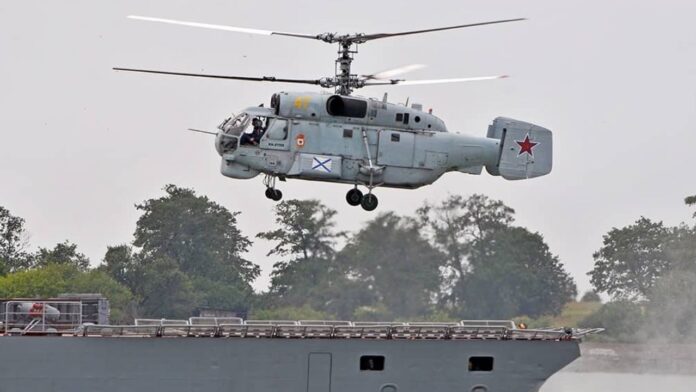
The Ukrainian Navy, in cooperation with Special Operations Forces, destroyed a Russian Ka-27 naval helicopter using a surface unmanned carrier drone that launched an FPV drone.
The video was released by the press service of the Navy.
It is reported that on the night of March 5, the fleet’s forces and assets, together with Special Operations Forces units, struck enemy positions on the Sivash drilling platform located at the Golitsyn gas field.
Russian troops used this platform as an observation point, a communications relay node, and a location for electronic warfare and short-range air defense systems.
It was also used to control strike drones, which were used to attack infrastructure in the Odesa and Mykolaiv regions and posed a threat to civilian shipping.
As a result of combat operations by unmanned naval platforms and aerial drones, enemy command and communications systems were destroyed, and significant losses were inflicted on enemy forces.
During the operation, Ukrainian Navy forces also destroyed a Russian Ka-27 helicopter that was attempting to land on the drilling rig platform.
Judging by the published footage, Ukrainian sailors and special forces carried out a complex operation involving kamikaze naval drones and unmanned “drone carriers” that launched FPV drones. It was one of these aerial drones that destroyed the Russian helicopter.
We remind you that information about the destruction of the helicopter appeared earlier, but no details were reported at that time.
The Ka-27 is a Soviet ship-based multi-purpose helicopter designed primarily for anti-submarine warfare, as well as search and rescue, transport, and patrol tasks.
The machine was developed by the Kamov Design Bureau in the late 1970s and is still actively used by the Russian Navy, while in Ukraine, helicopters of this type are almost no longer used.
The helicopter has a coaxial rotor configuration characteristic of Kamov machines — two main rotors located one above the other. This design does not require a tail rotor and is well suited for operation from ships, as it provides compactness and better controllability when landing on the deck.
Source: militarnyi


