-4.8 C
New York
Home Blog Page 998

Sercel launches a new ocean bottom node GPR

0

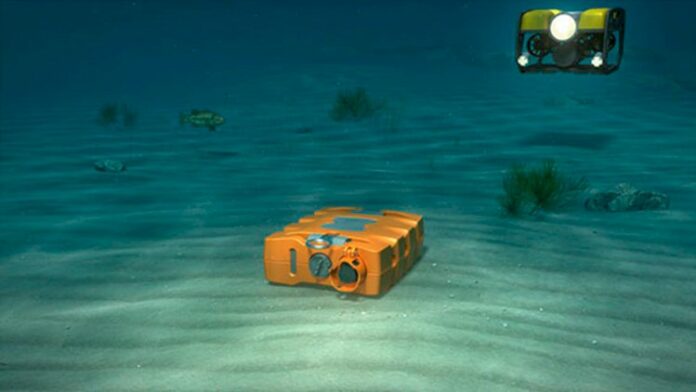
CGG has announced the launch by Sercel of GPR, a new Ocean Bottom Node (OBN). GPR leverages the proven high performance of Sercel’s QuietSeis® broadband digital sensor technology to collect superior data for accurate seismic imaging compared to data collected by conventional sensors. Sercel has jointly developed GPR in partnership with BGP.

The launch of GPR coincides with the continuing growth and maturity of the global node market and further strengthens CGG’s extensive portfolio of innovative products and services, all designed to reduce the risks and increase the success of its clients’ reservoir exploration and development efforts.

Sercel and BGP have drawn on their longstanding partnership and complementary seismic expertise and experience to design, develop and deploy GPR. The new node has successfully completed sea trials and valuable input from BGP from the field has ensured GPR’s performance is precisely tailored to meet today’s industry requirements. It has a compact design and benefits from the fidelity and ultra-quiet performance of QuietSeis as well as flexible deployment options.

Pascal Rouiller, Sercel CEO, said:

“GPR is a significant addition to CGG’s preeminence in the growing OBN market. It confirms our commitment to address evolving industry challenges, and through our equipment, geoscience and multi-client strengths, enables us to deliver a unique suite of OBN solutions to our clients. Sercel’s launch of GPR provides our clients with an advanced new technology to revitalize exploration and production opportunities in basins across the globe.”
 

ABS and Keppel O&M develop the industry’s first drilling rigs with smart notations

0

ABS recognizes Keppel Offshore & Marine as first shipyard integrating Smart Functions and Services into rigs

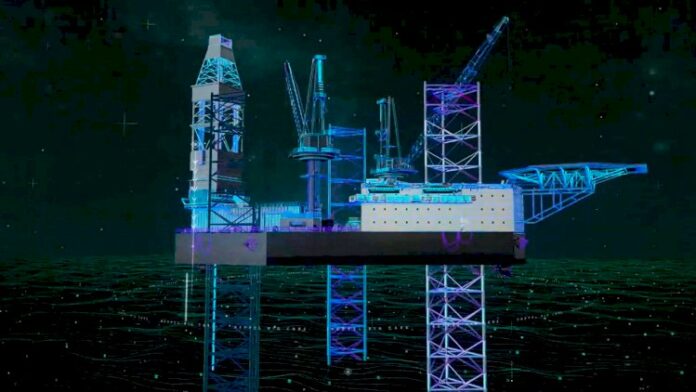
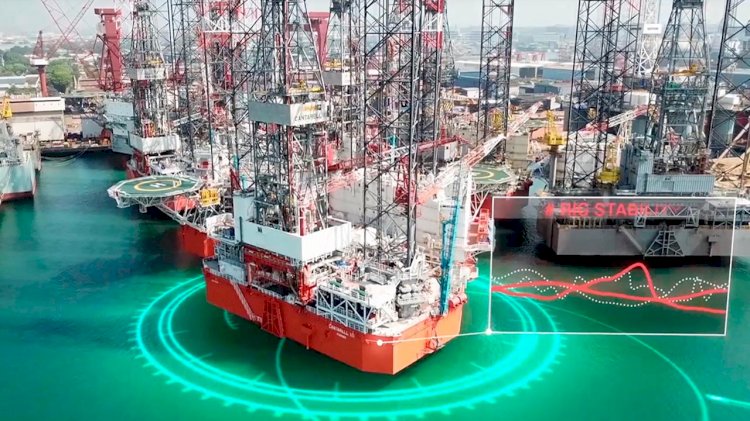
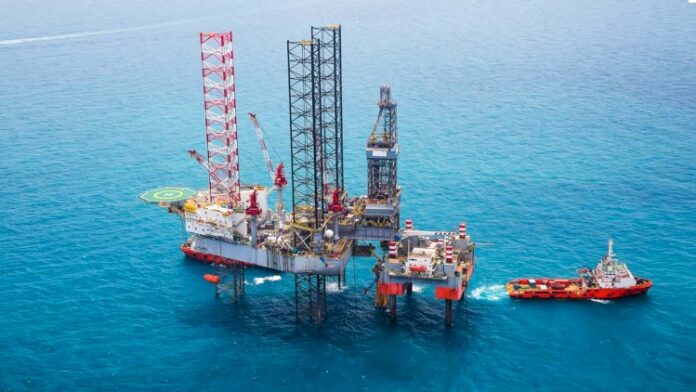
In an Industry first, ABS partnered with Keppel Offshore & Marine (Keppel O&M) in developing the first two new build Drilling Rigs with Smart Notations. One of the rigs, which was delivered earlier this year for work in offshore Mexico, is already online with its performance being monitored from Singapore.

In line with issuing the ABS Guide for Smart Functions for Marine Vessels and Offshore Units, Keppel O&M is recognized as the first shipyard group to integrate smart functions into rigs.

Demonstrating ABS and Keppel leadership in offshore digital technology, the rigs utilize data collected from a range of sensors monitoring machinery and structural health to improve their performance.

As part of a Joint Development Project (JDP) with Keppel, ABS refined its methodology to verify and validate Smart Functions, supporting a more data-centric approach to survey after construction and ultimately assisting rig owners to move to a rig-specific Condition-based Class approach.

ABS Chairman, President and CEO, Christopher J. Wiernicki, said:

“These rigs set a new benchmark for offshore assets, underlining how ABS is setting the pace in digital innovation in the marine and offshore industries. Smart functionality for both machinery and structures provides a rich stream of data we can leverage in a Condition-based Class approach, offering data-driven insights to focus surveys on areas that need attention—while potentially offering increased uptime and optimizing maintenance practices. As a world leader in digital, ABS is dedicated to harnessing the benefits of these technologies for our clients.”

Mr. Chris Ong, CEO of Keppel Offshore & Marine said:

“These are the industry’s first drilling rigs with Smart Notations and demonstrate how Keppel is adding value with our proprietary RigCare Solution. This encompasses a suite of digital services, which in close collaboration with ABS and partners, supports the rig’s lifecycle needs. RigCare Solution will significantly transform the efficiency, safety and operability of the rig. We have been monitoring the performance of the first rig in offshore Mexico from our HQ in Singapore and we are pleased with how the system is supporting our customer’s operations in real world conditions. Greatly appreciate the support from ABS in this JDP.” 

ABS and Keppel will continue to work together in this JDP on a variety of projects covering a wider range of vessel types and assets. 

In 2018, ABS introduced comprehensive guidance providing the marine and offshore industries a goal-based framework to enable data-driven decision making based on smart technology. The ABS Guidance Notes on Smart Function Implementation support data infrastructure development, enabling health and performance monitoring and augmenting vessel operations leading to more informed decisions in support of fast-moving environmental requirements. The guidance sets an actionable framework for owners, operators and equipment manufacturers to take smart steps today in preparation for an environmentally sustainable future.

Wärtsilä simulators provide advanced training at a new facility in Portugal

0

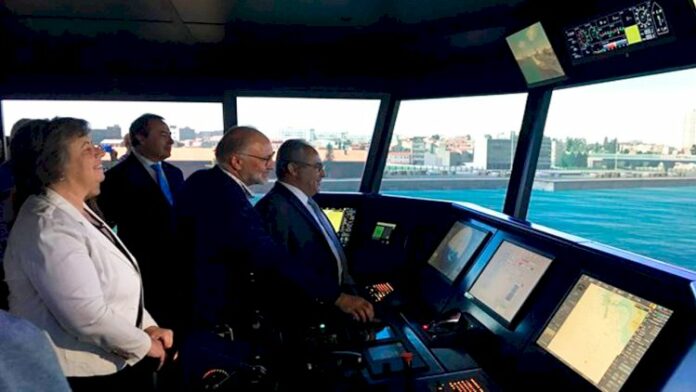
The technology group Wärtsilä has supplied advanced technology simulators providing realistic hands-on training at a new facility in Portugal.

The training centre is developed and run by the Port Authority for the ports of Douro, Leixōes and Vano do Castelo (APDL), and was inaugurated in the end of July at a ceremony headed by Portugal’s Minister of the Sea, Ana Paula Vitorino. The order was placed in October 2018.

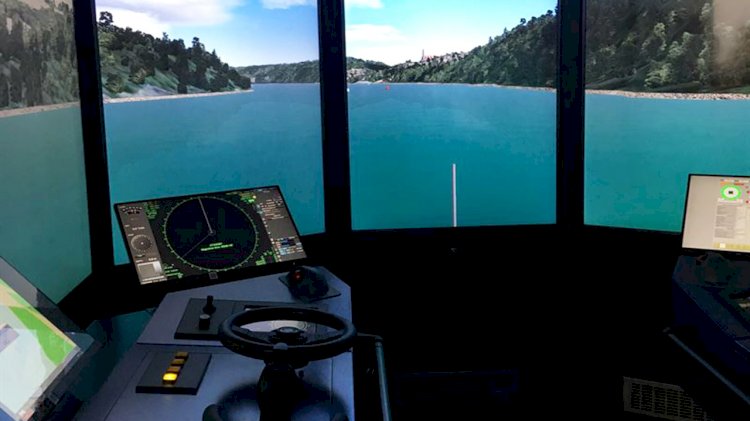
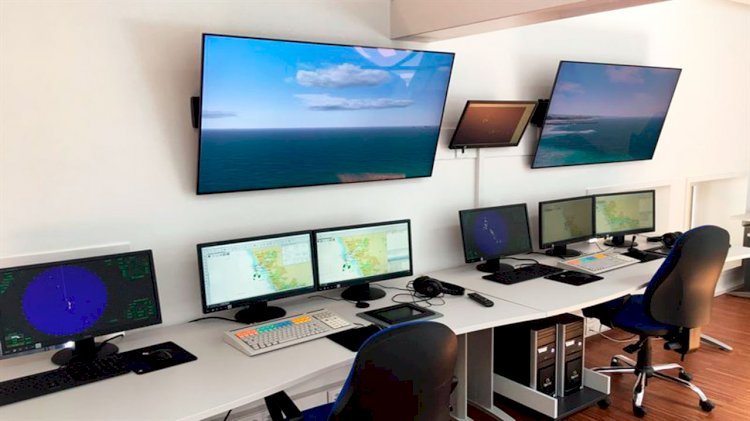
The centre is the country’s largest and most advanced maritime training facility. It features a Wärtsilä Full Mission Bridge (FMB) simulator with 360 degree projection, two tug simulators with 360 degree LCD, and one VTS simulator to allow full training, complex exercises, and certification for pilots, tug masters, merchant navy offices, and seafaring vessel crews. The simulation technology has been developed by Transas, a Wärtsilä company.

Alex van Knotsenborg, Global Sales Director, Wärtsilä Transas, says:

“Our ability to customise the configuration of the simulators to meet the precise requirements of APDL was a key contributor to the winning of this prestigious contract. The Full Mission Bridge simulator with 360 degree projection technology is the largest and most modern of its kind in Portugal. Without a doubt it is also on a par other state-of-the-art simulation solutions provided to well-known European training centres since it implements the most realistic simulation possible.” 

Comandante Rui Cunha, Director of Operations and Safety at APDL, says:

“This is a state-of-the-art training centre with state-of-the-art simulators, and we thank Wärtsilä for their support throughout this project. The centre will promote both safety and operational efficiency at sea and on inland waterways. By being able to re-create actual operating conditions, the training doesn’t need to be carried out onboard, thus saving fuel and reducing pollution. The River Douro inland waterway has its five locks and corresponding approaches recreated in this simulator, as well as all the scenarios of Porto de Leixões and Viana do Castelo. This allows for intense and continuous training of ships’ crews, and for maintaining the skills of APDL pilots and parties.”

Speaking at the inauguration ceremony, Minister Vitorino said:

“The simulator management software allows the creation of scenarios for any port and for differing weather and sea conditions. It is especially relevant for preparing pilots and masters, and for studying manoeuvres in adverse conditions, crisis situations, and maritime rescue.”

The Wärtsilä scope includes the development of several 3D zones and a tug boat model. Wärtsilä has earlier provided APDL with a VTS system.

Tullow Oil’s Joe-1 exploration well opened a new Upper Tertiary oil play

0

Tullow Oil plc (Tullow) has announced that the Joe-1 exploration well has successfully opened a new Upper Tertiary oil play in the Guyana basin.

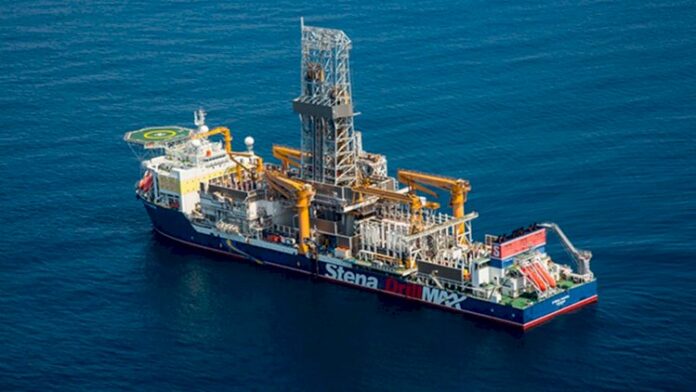
The Joe-1 exploration well was drilled by the Stena Forth drillship to a Total Depth of 2,175 metres in water depth of 780 metres. Evaluation of logging and sampling data has confirmed that Joe-1 has encountered 14 metres of net oil pay in high-quality oil bearing sandstone reservoirs of Upper Tertiary age. Joe is the first oil discovery to be made in the Upper Tertiary and de-risks the petroleum system in the west of the Orinduik block, where a significant number of Tertiary and Cretaceous age prospects have been identified.

Tullow and its Partners will now evaluate data from the Joe-1 discovery alongside data from the Jethro-1 discovery announced in August 2019 and await the outcome of the Carapa well to determine the optimal follow-on exploration and appraisal programme.  

The non-operated Carapa-1 well on the Kanuku licence (Tullow 37.5%) is scheduled to commence drilling in late September with the Rowan EXL II jack-up rig and will test the Cretaceous oil play with a result due in the fourth quarter of 2019.

Joe-1 was drilled on the Orinduik licence, offshore Guyana by Tullow’s wholly owned subsidiary Tullow Guyana B.V.

Angus McCoss, Exploration Director, said:

“I am very pleased that we have made back-to-back discoveries in Guyana and successfully opened a new, shallower play in the Upper Tertiary age of the Guyana basin with our second well. The Joe-1 discovery and its surrounding prospects represent another area of significant potential in the Orinduik Block and we are greatly looking forward to the next phase of the programme as we continue to unlock the multi-billion barrel potential of this acreage.”

Tullow Guyana B.V. is the operator of the Orinduik block with a 60% stake. Total E&P Guyana B.V.  holds 25% with the remaining 15% being held by Eco (Atlantic) Guyana Inc. On completion of operations, the Stena Forth drill ship will depart Guyana and return to Ghana.
 

VIDEO: Tidal stream energy in the UK

0

Tidal stream energy is the most predictable and unlimited source of renewable energy on planet earth.

Tidal energy generates more power and is more environmentally and grid friendly than wind or solar. The UK holds 50% of Europe's tidal energy resource and 9% of the global share. The UK currently holds the lead in the technology but is in danger of throwing it away through inaction. A tidal energy industry in the UK would create jobs, exports and inward investment particularly in the post-industrial regions, ports and shipyards that we are seeking to rejuvenate.
 

Research highlights benefits of stable crewing

0

Stable crewing* can improve safety, well-being and financial outcomes, according to a new report led by researchers from Solent University.

Started in April 2017, the Effective Crew Project has examined the benefits and challenges associated with the implementation of either a stable or a fluid crewing strategy on board merchant vessels.

The report finds that stable crewing can: reduce handover times and increase crew retention; improve safety by strengthening work relations and promoting better communications both on board and ashore; reduce recruitment and training costs; and reduce staff turnover.

The report goes on to conclude that: good leadership and management skills are fundamental and need to be current and sensitive to continuous crew development and efficient vessel operations; companies need to consistently collect more reliable data in order to better inform their crewing strategies; and that inconsistent data sets from shipping companies makes it problematic to put hard figures against the cost benefits.

Sponsored by the Lloyds Register Foundation and TK Foundation, the Effective Crew Project developed findings from a pilot study, conducted by the same research team, and best practice from stakeholders within the maritime industry. Data was also examined from other industries to compare best practice and draw on lessons to improve safety, welfare and efficiency at sea.

Dr Kate Pike, the lead researcher on the project says:

“The research offers conclusive evidence that stable crewing can improve safety, well-being and, over time, financial outcomes. However, it is important to recognise that ‘one size does not fit all’ and that different crewing strategies may suit different companies at various stages of their development, as they grow or reduce fleet numbers for example. Additionally, the importance of good leadership cannot be overstated and is vital to the success of any crewing strategy. It will have a strong influence over the safety of the crew and ship and the well-being of the seafarers. Further work is needed to develop measures that can accurately assess the overall performance of a vessel and the impact of the crewing strategy adopted, so that decisions are better understood, implement and evaluated.”

* Stable crewing, within the merchant shipping industry, is where the same top four senior officers (Captain, Chief Officer, Chief Engineer and Second Engineer) operate on a back-to-back basis and return to the same vessel for several voyages, with all four joining and leaving the vessel at the same time. Sometimes stable crewing can relate to crew members other, or as well as, the top four returning to the ship for more than one voyage. More usually, companies operate a fluid system, where senior officers are assigned to any appropriate vessel and will sail with different senior officers every trip.
 

P&O Ferries launch new freight ferry service between Calais and Tilbury

0

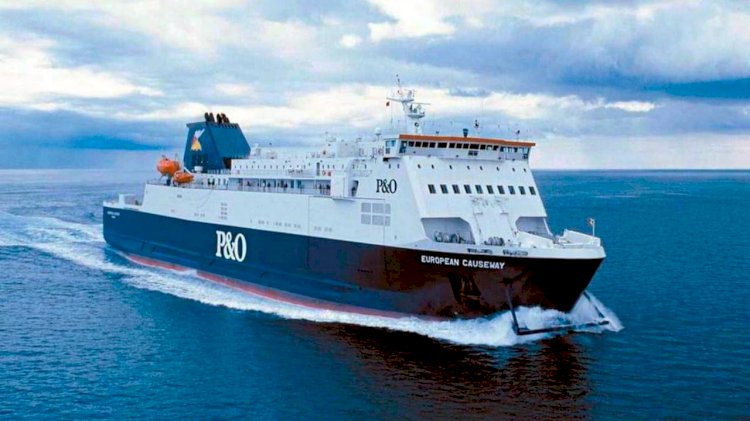
P&O FERRIES will strengthen its position as the leading enabler of trade flows across the English Channel by launching a new daily ferry service linking Calais with the Port of Tilbury.

The new route launches this month and is designed to give freight which is not accompanied by a driver a direct route to a port located just 25 miles from Central London, further broadening P&O Ferries’ comprehensive service for importers to and exporters from the South East of England.

Janette Bell, Chief Executive of P&O Ferries, said:

“We are delighted to be able to increase the choice we offer our customers by introducing a reliable, efficient and timely route for goods bound for markets in London and the South East. The route saves up to 75 road miles each day compared with the traditional Calais-Dover crossing, meaning that our customers save on fuel and land on the doorstep of London. By prioritizing the fast discharge of the ship, the freight can be on the M25 from 5.30am, thereby enabling time-sensitive loads to continue their journey before the rush hour starts.”

Xavier Bertrand, Président du Conseil Régional des Hauts-de-France, said:

“The opening of a regular shipping line between Tilbury and Calais is an event to celebrate for many reasons. On the one hand, it meets the expectations of the European market and will help developing trade with Greater London, the Midlands and Greater Manchester.

On the other hand, it will improve the fluidity on the Channel, especially in the event of a No Deal Brexit. The port of Calais and P&O Ferries show their willingness to invest in the future, to offer a wider range of services to their customers in the logistics sector and to enhance the attractiveness of the French coastline.”

Charles Hammond, Chief Executive of the Forth Ports Group (owner of the Port of Tilbury), said:

“This adds another string to Tilbury’s market offering at a crucial time for the UK economy. Our £250m investment in an expanded ferry terminal at Tilbury2 will add further scope to grow our P&O routes to-and-from northern Europe in 2020.”

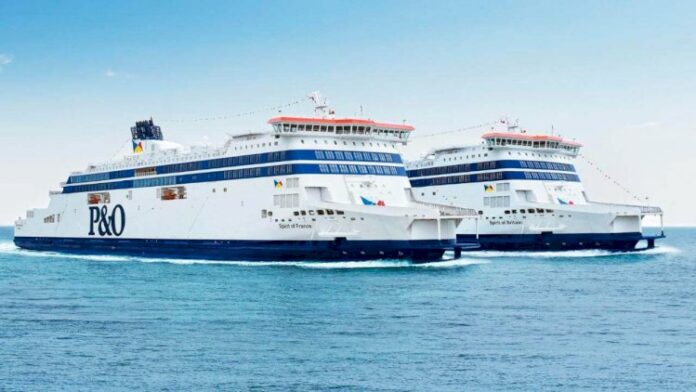
P&O Ferries has chartered the Caroline Russ to service the new route, with two sailings every weekday and one each on Saturday and Sunday. The eight-hour sailing will have capacity for 100 units of freight, with a total of 50,000 expected to be carried in the first 12 months. It is expected that time-sensitive supermarket goods including fresh fruit and vegetables will be transported on the route.

The new river berth at the Port of Tilbury is scheduled to open in April next year, enabling P&O Ferries to treble volumes on its existing Zeebrugge-Tilbury services to 600,000 loads of freight a year. An onward rail connection to Daventry is also expected to be operational in 2020, mirroring the rail connections linking the Port of Calais with Le Boulou, Turin and Orbassano on the Continent.

P&O Ferries is a leading pan-European ferry and logistics company, sailing 27,000 times a year on eight major routes between Britain, France, Northern Ireland, the Republic of Ireland, Holland and Belgium. It operates more than 20 vessels which carry 8.4 million passengers and 2.3 million freight units every year.

Together with its logistics business, P&O Ferrymasters, the company also operates integrated road and rail links to countries across the continent including Italy, Poland, Germany, Spain and Romania, and facilitates the onward movement of goods to Britain from Asian countries via the Silk Road. P&O Ferries is part of DP World, a leading enabler of global trade and an integral part of the supply chain.

Freeport of Riga: Smart logistics is just one of the first steps

0

Stockholm hosted one of the most important events for Baltic Sea ports: the annual Baltic Ports Conference. This event is organised by the Baltic Ports Organisation or BPO, to which the Freeport of Riga belongs.

With 47 Baltic Sea ports as members, the goal of the BPO is to promote cooperation among regional ports and shipping to promote sustainable economic, social and ecological development, ensuring better regional competitiveness.  

The 2019 Baltic Ports Conference focused on the rapid introduction of digitisation, technologies and innovation in daily port operations, and implementation of the smart port concept at various Baltic Sea ports. 

Like every year, during the introductory session, experts and analysts discussed factors that will define the development of ports and shipping in future. One of the most surprising conclusions was that apart from geopolitical factors, environmental protection and technological development, changes in the global demography will have a considerable impact on the sector. As the global population increases and certain parts of the world age, it is expected that trade flows will be increasingly affected by regional specificities, services and knowledge. Loss of productivity will be offset by increasingly wider use of various technologies. Thus, even the traditional shipping and port sectors will have to adapt increasingly faster and implement digitisation, new technology and innovation projects. 

For a considerable period of time, the concept of smart ports has been the most discussed topic during various sectorial events. During the 2019 Baltic Ports Conference, representatives of several ports presented their vision about the principles underlying smart ports and their implementation in various ports throughout the region. Though the smart port concept covers varied technological and innovative solutions, all participants agreed that the main goal of introducing such technologies and innovations is to promote sustainable development of ports not only from the point of view of economic efficiency and process optimisation, but also from the point of view of environmental protection and social responsibility. 

Ansis Zeltiņš, the CEO of the Freeport of Riga, underlined:

“Smart logistics is just one of the first steps, as digitisation and big data are not an end in and of themselves. It is important to adopt a wider view of the ports – not only as providers of infrastructure and logistics, but also as an important part of urban communities. Societies of today and of the future want to be ever better informed. Advanced communication will be more and more important for the sustainable development of ports.”

Belfast Harbour intend to invest £254 million in new Port

0

Landmark investments that will boost NI economy detailed in 2035 strategic outlook.

Belfast Harbour has announced its ambition to become the best regional port in the world and create an iconic waterfront for Belfast that will be an attractive place for people to live, work and visit as well as a hub for inward investment and tourism.

The 2019-2023 Strategic Plan together with an outlook through to 2035 were publicly launched at Belfast Harbour’s Annual Stakeholder Meeting. The plan focuses on increased collaboration and partnerships with key city stakeholders to drive growth and regeneration in Belfast’s waterfront.

As part of the plan the Port has committed £254 million of investment to deliver new marine and estate infrastructure. Research from Ulster University’s Economic Policy Centre has concluded that these investments will generate 7,000 new jobs and support a further 3,500 construction jobs generating £500 million gross value added for the Northern Ireland economy and an additional £300 million per annum in wages and £4 million in rates to the city each year.

The projects planned over the next five years will lay the foundation for even more substantial “once-in-a-generation” investments. Detailed in Belfast Harbour’s ‘2035 Outlook’ these long-term proposals include schemes to deepen the Port’s shipping channel to accommodate larger vessels, to create new deep-water quays, the completion of the 2million sq ft City Quays development and the creation of a new globally recognised science and technology hub at Catalyst Inc.

Belfast Harbour’s Chairman, David Dobbin, said:

“Belfast Harbour has been enabling local businesses to succeed and trade with the outside world since it began over 400 years ago. The purpose of our plans is to make sure we are fit for purpose to handle and benefit from the technological, economic and social changes taking place in the 21st century.

We want to become the world’s best regional port and create an iconic waterfront district for Belfast which will be an attractive place to live, work, visit and invest in. This will bring huge benefits for our customers, the regional economy and all our citizens. We can’t deliver our ambitious plans by ourselves which is why a partnership approach is a key part of our strategy.
Over the next 5 years Belfast Harbour intend to invest £254 million in new Port and estate infrastructure and facilities.”

During 2019-2023 Belfast Harbour plans to invest £254 million upgrading its cranes and material handling equipment, installing new ramps to accommodate larger vessels and building new storage facilities. Work will also begin on digital ‘Smart Port’ initiatives to provide greater automation and a new unified system to coordinate cargo and shipping communications.

A number of real estate projects will also be completed, including City Quays 4, a 250-apartment build-to-rent development; Pierpont Plaza, a five-storey office facility at Catalyst Inc; additional new film studios and a media hub at Giant’s Park and new public realm space. 

Over the longer term the ambition is to significantly enhance the Port’s capacity to attract new trade and manage the next generation of shipping by deepening the Victoria Channel and developing new quays and wharves. Belfast Harbour also wants to create an iconic waterfront district with attractive public spaces that is integrated into the rest of the city. This will potentially include new cross-harbour bridges, a water taxi service and opportunities for new tourism, leisure and cultural projects.

Joe O’Neill, Belfast Harbour’s CEO, said:

“These plans are among the most ambitious to be put forward in the Port’s history, but the challenges and opportunities of the future demand a new approach. Belfast Harbour is currently working with a wide range of partners such as Belfast City Council, Department for Infrastructure, Catalyst Inc and our two Universities, NI Screen, Titanic Quarter and Titanic Foundation so that we can accomplish more.

Belfast City Council’s aim is to accommodate 66,000 new residents, create 46,000 additional jobs, and develop 550,000 sq m of employment floor space by 2035. Belfast Harbour’s proposals will be pivotal in helping meet those targets. Undoubtedly our plans will evolve and change over time, but the strategy sets out our long-term direction of travel. By 2035 our vision is to transform the Port and Belfast’s waterfront, boost trade and make an even more significant contribution to Northern Ireland’s economy.”

Belfast Harbour has also set out plans to be one of the world’s most sustainable ports by deploying new technologies to improve air quality, reduce fuel consumption and reduce emissions. The Port will “digitise, decarbonise and decentralise” its energy usage by providing shore-side power for vessels and creating a green micro-energy grid throughout Belfast Harbour Estate.

SeaTec steps into offshore platform installation works in Malaysia

0

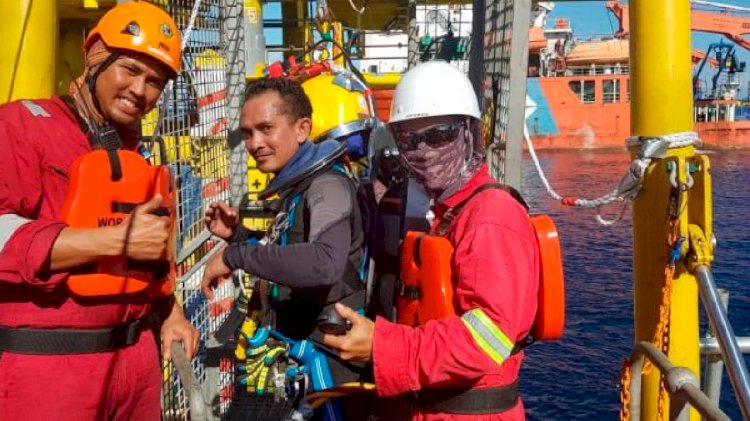
SeaTec recently completed air diving works as part of a major offshore project on the Bokor oilfield close to the Malaysian coast.

The project marks SeaTec’s first foray into offshore platform installation works. Siang Yee Koh, SeaTec’s Singapore based engineering and projects manager who led the project, said of the completion:

“This project is significant as it breaks new ground for SeaTec as the first platform installation of its kind for our organisation. We intend to develop our service offering in the region and this project is a great starting point for SeaTec to grow into a major player.”

The Bokor oilfield, which is operated by Malaysian oil and gas giant Petronas, has undergone continued development since its discovery in the 1970s. Situated in the Baram Delta area approximately 28 miles from Lutong in the north east of Malaysia, the oilfield lies nearly 70m underwater. “Executing a subsea project on behalf of Petronas gives SeaTec increased credibility as a supplier,” explains Siang Yee, “particularly as it was a challenging project with high demands for local compliance.”

Alan Trevarthen, Director for SeaTec’s Subsea division, said:

“The delivery of this project was a very important and hard won milestone in SeaTec’s penetration of the Malaysian and wider offshore market. I would like to thank the team for their hard work and perseverance in achieving completion. We have for many years been delivering above and below inspection, repair and maintenance services to the drilling rig market operating offshore Malaysia. This new development perfectly complements support for our traditional offshore customers.”

For more information on the Bokor project and SeaTec’s subsea services, contact Alan Trevarthen.