-5.2 C
New York
Home Blog Page 994

Scientists learn to restore deep-sea coral communities

0

The deep, cold waters off the rocky coast of Point Sur, California, are home to an unexpected community of organisms that most people associate with tropical settings—corals.

Scientist Charlie Boch and his colleagues recently compared different methods to restore deep-sea coral by transplanting live coral fragments and measuring their survival rates. The experiment was conducted on Sur Ridge, 60 kilometres (37 miles) offshore and 800 to 1,300 meters (2,624 to 4,265 feet) below the ocean’s surface.

Deep-sea coral and sponge communities don’t receive as much attention as their shallow-water counterparts, but their roles in deep-sea ecosystems are equally as important and, unfortunately, they are just as vulnerable to human impacts, including trawling, mining, and pollution. Scientists have confirmed that human activities in deep-sea habitats are having serious effects on the coral and sponge communities but options to actively mitigate those effects have not been established.

Charlie Boch, an MBARI research associate and lead author on the recently published study, is an expert in shallow-water coral restoration but in this project he’s taking his expertise to the deep sea. Boch said: 

“We are inherently connected to deep-sea coral and sponge communities—human societies have been trawling for deep-sea resources for decades. But because we don’t see them in our everyday lives, we may be missing a deeper connection with our oceans.”
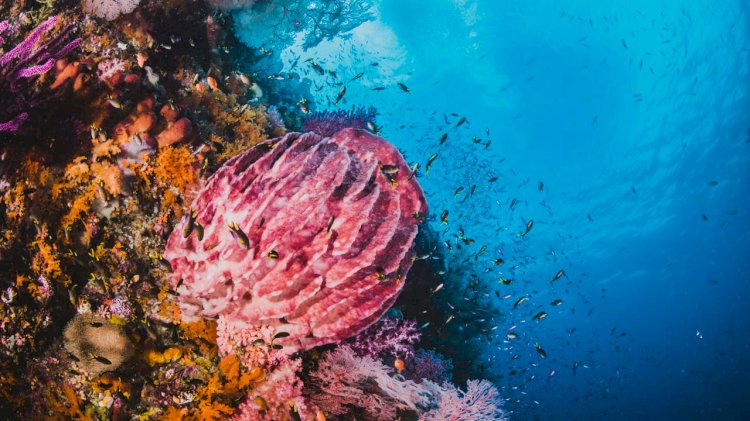
MBARI researchers discovered the amazing coral gardens on Sur Ridge in 2013 and since then have worked closely with the Monterey Bay National Marine Sanctuary (MBNMS) to explore and study these ecosystems. Together MBARI and MBNMS have combined their efforts to investigate the best methodology for coral restoration in the deep sea.

This is the first time researchers have attempted to develop and test restoration methods for multiple deep-sea coral species in the Pacific Ocean. Because previous studies have focused primarily on propagating single species, this research helps fill in the knowledge gap for multiple coral species restoration methods in the deep sea. It is also the longest deep-sea coral study ever completed.

Boch said:

“Anytime you do restoration work it is very much a building process—finding out what works, what doesn’t work—but you make an experimental study out of it to tease apart which parts of the process need to be optimized. For this investigation, the team focused on the seven most common coral species living on Sur Ridge, including some of the most iconic and beautiful species: bubblegum coral, bamboo coral, black coral, and precious corals. These species have been harvested in some areas, “jewelry is a common direct human use of coral material from both shallow and deep-sea communities, but thankfully, areas like Sur Ridge are protected from such practices.”
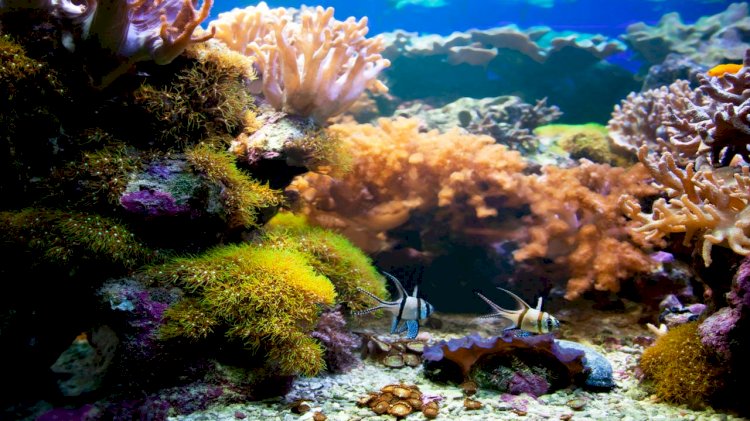
Boch and his fellow researchers collected and relocated corals using one of MBARI’s remotely operated vehicles (ROVs), the Doc Ricketts. They transplanted 113 “coral pots” to eight different locations within Sur Ridge. To create these coral pots, Boch and the team took small branches off living coral colonies, cut them into smaller fragments, and attached them to polyvinyl chloride (PVC) pipes.

Boch added:

“We took a simple approach and did it in an experimental way. We looked at what the next steps in deep-sea coral restoration approaches should be and what we needed to do in order to minimize any stress the corals might experience.”

Boch considers this study a great success:

“Many tropical coral restoration projects have shown that surviving the first year is critical.”
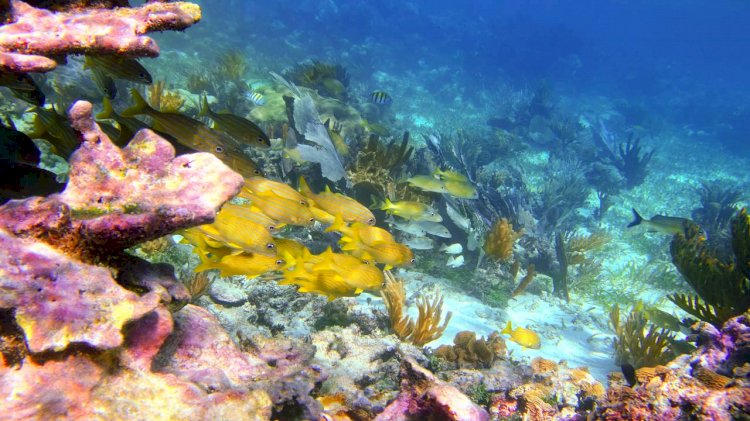
Even in shallow-water coral ecosystems, where decades of studies have already been conducted, few transplanted corals survive as long as a year. In contrast, during Boch’s recent experiment, three coral species had 90 to 100 percent survivorship over three years.

The researchers note that there is no single solution for every deep-sea coral community. Many questions still need answering and methods need testing. For example, are there other strategies that would be more successful for attaching corals to a transportable substrate or module, especially for the species that did not perform well in this experiment? Can these coral species be transferred longer distances, say to an area hundreds of kilometers away? What are the resources and equipment needed for a long-distance, weeklong (or longer) transfer?

Boch said:

“Our goal for this project was to provide some alternative tools for management. Down the line, if ecosystem managers or the public decide they need active mitigation tools to restore these systems after human-induced impacts, such as trawling, the methods and tools will already be available.”
 

REV Ocean secures first-ever Triton 7500/3 series submersible

0

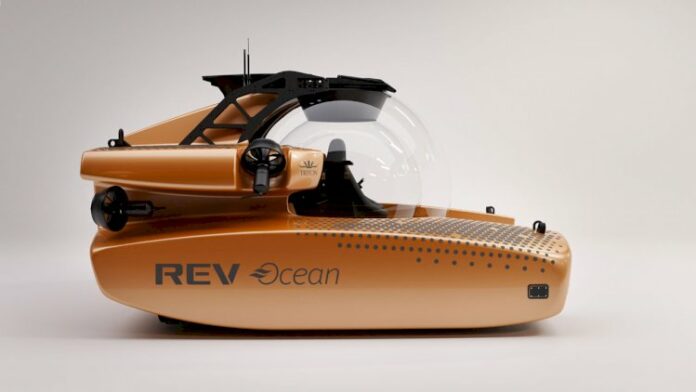
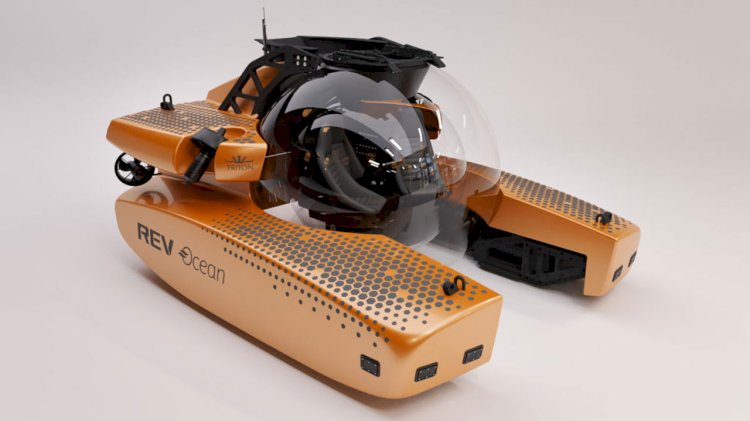
Triton Submarines LLC has announced the sale of the first Triton 7500/3 series submersible to Project REV Ocean – a not for profit foundation established and funded by Norwegian businessman and visionary Kjell Inge Røkke.

The Triton 7500/3 will be the deepest diving acrylic pressure hull equipped submersible ever conceived and is capable of diving to 7,500 feet or 2,286 meters with three people on-board.

The revolutionary Triton 7500/3 features a transparent acrylic sphere as the pressure hull, which provides occupants with an immersive and completely unobstructed view of their surroundings while keeping them safe and comfortable at one atmosphere regardless of the diving depth. The Triton 7500/3 acrylic sphere is made using proprietary technology pioneered by Triton’s exclusive acrylic manufacturing partners, which results in a finished material that is stronger, clearer and superior to anything previously made. In addition to offering unprecedented levels of passenger comfort, Triton submersibles are simple to operate, easy to maintain, safe and reliable.

Triton President Patrick Lahey said:

“We are thrilled Project Rev Ocean chose to add a Triton 7500/3 submersible to the vast arsenal of subsea tools and equipment on their entirely unique and groundbreaking vessel. The capacity to visit such extreme depths and see things not possible any other way will dramatically enhance the experience of being aboard and create more ocean advocates. Project Rev Ocean is a once in a lifetime opportunity and we are honored to be a part of Mr. Røkke’s ambitious and exciting vision.”

The CEO of REV Ocean Nina Jensen said:

“Having the Triton 7500/3 onboard our research vessel truly elevates REV Ocean to a level of unparalleled opportunity. Putting three people in a transparent acrylic sphere submersible with the capacity to reach such incredible depths will certainly inspire, educate, and motivate the global community to support our core mission of ensuring we have one healthy ocean.”

REV Ocean is the world’s largest and most advanced research and expedition vessel. The ship is 182.9 meters in length and has the capacity to carry up to 55 scientists and 35 crew members. Equipment onboard includes scientific trawls, sonar systems, laboratories, auditorium and classrooms, a moonpool, AUV, Triton 7500/3 submersible, and an ROV with a 6,000 meter diving depth and advanced communication equipment.

REV Ocean, will be equipped for conducting missions that cover the entire marine ecosystem. The vessel will be used by scientists and innovators for ‘solutions’-oriented research that examine issues such as the impact CO2 emissions have on the ocean, plastic pollution and unsustainable fishing practices and highlights the possibility for positive, sustainable and much-needed change.

REV Ocean Science Director Alex Rogers added:

“I have dived with Triton subs on numerous expeditions and they provide unique platforms for visiting the ocean and viewing seascapes in a way that is not possible with other deep diving equipment. The new Triton 7500/3 will enable REV Ocean scientists to visit vulnerable marine ecosystems as well as reach the most productive zones of seamounts and other features such as deep-sea canyons and hydrothermal vents.”

Triton Submarines, through its recently delivered 36000/2 model and contribution to the Five Deeps Expedition, engaged in record-breaking dives to the deepest point of the world’s five oceans with the first submersible ever certified for Full Ocean Depth operation.

Hamburg Süd launches smart application for booking containers online

0

Hamburg Süd has expanded the e-commerce offerings on its website and is now offering INSTANT, a digital application that makes booking containers much easier and faster. Customers will benefit from enhanced certainty in their planning, transparency and efficiency.

Within just a few seconds, INSTANT users will be able to view fixed prices and book their cargo directly – all of it online. Bookings can be made up to four weeks prior to the planned shipment. The earlier the booking is made, the lower the total price for the customer – and subsequent price changes or additional fees will no longer apply. At the same time, Hamburg Süd will guarantee to customers booking cargo via INSTANT that there will be sufficient space for it on the selected connection, thereby enhancing the predictability of their transportation chain.

Frank Smet, Chief Commercial Officer (CCO) of Hamburg Süd, explains:

“With INSTANT, booking a container will be just as easy and fast as booking a flight online – you only need a few clicks. With it, we are creating a smart digital complement to the personal customer service that Hamburg Süd customers are used to.”

INSTANT is now available for Hamburg Süd services between South America East Coast and Europe or Asia as well as between Asia and Oceania, and it will gradually be extended to more trades.

Incat Crowther and Penguin Shipyard launched a new Flex Ferry

0

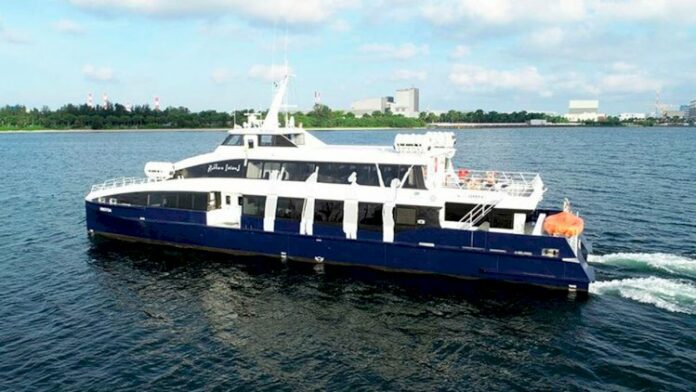
Incat Crowther has announced the launch and delivery of Krotoa, the first Flex Ferry developed in conjunction with Penguin Shipyard.

The Incat Crowther designed vessel has been delivered to South Africa’s Robben Island Museum and takes its name from the famous prison’s first female political prisoner. It is the first of Penguin Shipyard’s passenger ferry stock build program.The second vessel will be completed in the coming weeks.

Carrying 285 passengers, the Flex Ferry sets a new benchmark, offering efficiency and seakeeping beyond its competitors. The vessel also exhibits excellent handling and maneuverability characteristics. 

Krotoa features boarding locations aft and amidships, as well as foredeck access, giving it great operational flexibility. Large luggage racks greet passengers as they boar amidships on the main deck, in addition to stairs to the upper deck. Crew accommodation and bathrooms are located aft on the main deck.

Upstairs, a further 89 passengers are accommodated, as well as a further 2 toilets. The half-height wheelhouse affords excellent visibility, whilst the aft outboard corners of the upper deck are cut away to give unencumbered engine removal paths. 

Krotoa is powered by twin Caterpillar C32 ACERT main engines, each producing 1081kW and driving optimized, high efficiency fixed pitch propellers.

The Flex Ferry is classed by Bureau Veritas to 2000 HSC Code Category A. Penguin is one of the largest aluminium vessel builders in the world, strengthening their position in the market with a world-class ferry offering designed by a world leading design firm.

Prysmian launches a breakthrough innovation in submarine cable industry

0

Laying of the first non-metallic armour cable successfully completed in Greece. Composite material is 30% lighter allowing installations up to a depth of 3,000 m.

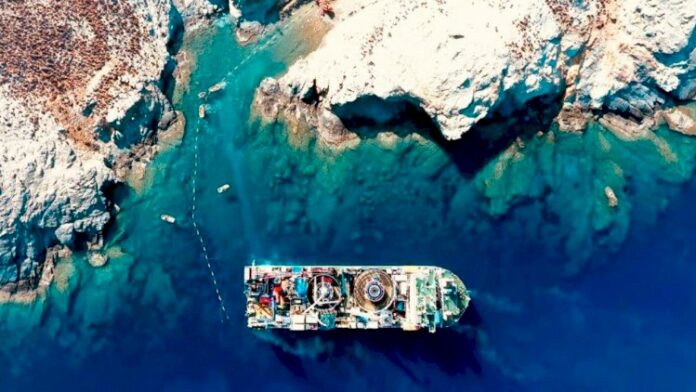
Prysmian Group, world leader in the energy and telecom cable systems industry, successfully completed the submarine laying operations for the Evia, Andros and Tinos islands interconnections. The Group developed, supplied and installed the first non-metallic armoured cable, whose armour has been designed with a composite material based on High Modulus Synthetic Fibres, which shape the new generation of cable technology. 

Water installation, performed by Prysmian Group’s state-of-the-art cable-laying vessel Cable Enterprise, reached 550 m in the link between the islands Evia and Andros. Thanks to this innovative product featuring a synthetic armour that can be 30% lighter than steel, Prysmian will be able to perform ultra-deep installations reaching up to 3,000 metres, and to provide its customers with almost all the submarine cable routes they might need. The same cable technology will also be used in 2020 for the Crete-Peloponnese submarine interconnection project, which requires an installation depth of about 1,000 m, allowing a strong reduction in installation risks compared with metallic armoured cables.

Srinivas Siripurapu, EVP and Chief R&D Officer, Prysmian Group, explained:

“This product is the outcome of 7 years of R&D activities including modelling, materials selection and cable testing which ended up in a true innovative use of a light-weighted, high performance armour developed to provide our Utilities and TSOs customers with an industry-first solution." 

Hakan Ozmen, EVP Projects, Prysmian Group, stated:

“With the launch of this breakthrough innovation, Prysmian Group confirms its commitment towards continuous innovation, especially after the introduction of two new 525 kV extruded land cable systems, qualified with P-Laser and XLPE insulation, respectively.”

The €21 million contract was awarded in 2018 by IPTO (Independent Power Transmission Operator), the Transmission System Operator of the Greek electricity system, to provide and ensure a robust, reliable and sustainable power transmission system connecting the Evia, Andros and Tinos islands to the mainland power grid.

This project is one of the three submarine power interconnection contracts that Prysmian Group has been awarded in Greece by IPTO, together with the interconnections between the island of Crete and the Peloponnese region of the Greek mainland, and between the island of Syros (Cyclades) and the mainland power transmission system in Lavrion. The Evia, Andros and Tinos islands interconnections confirm once again Prysmian’s role and commitment in developing the Mediterranean region’s power grids, using in particular deep-water cable installation. It also proves the validity of Prysmian's expertise and its HVAC technologies.

Subsea engineers test robots to tracking oil spills under the arctic ice

0

As sea ice continues to melt in the Arctic and oil exploration expands in the region, the possibility of an oil spill occurring under ice is higher than ever. But how first responders will deal with oil trapped under ice in such an extreme and remote environment is a huge unresolved question.

WHOI engineer Amy Kukulya said:

“With the opening of the Northwest Passage a few years ago and more commercial ships routinely traveling through the area, there have been concerns among various government agencies that there’s no real infrastructure in place to respond to an oil spill below the ice. From a logistics standpoint, it’s very challenging to get resources to the Arctic.”

Kukulya is leading multiagency collaboration aimed at developing cutting-edge sensors and autonomous robot capabilities that will help improve oil spill responders’ situational awareness and decision making during an emergency. She said:

“As oceanographers, we see a critical need for autonomous underwater vehicles (AUVs) that can survey spills under ice over long distances.” 

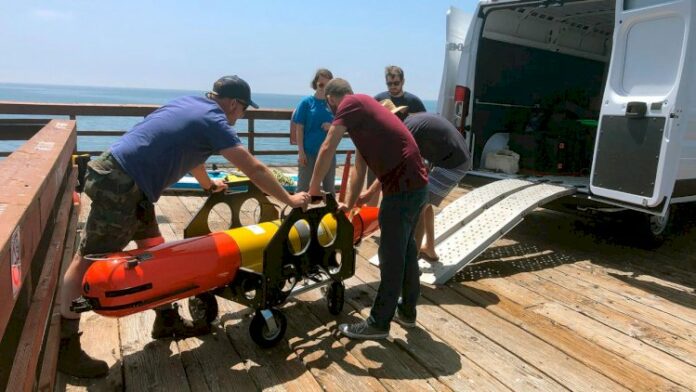
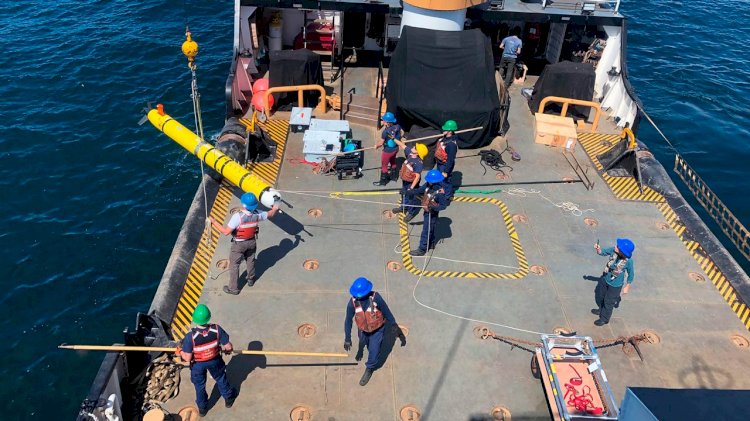
As part of the effort, she and her colleagues deployed a series of AUVs in late August off the coast of Santa Barbara, California to test the vehicles’ oil spill detection capabilities for rapid response during a real-world maritime oil spill. Collaborators on the project include the Department of Homeland Security (DHS), the U.S. Coast Guard (USCG), the U.S. Environmental Protection Agency (EPA), the National Oceanic and Atmospheric Administration (NOAA), the Bureau of Safety and Environmental Enforcement (BSEE), Monterey Bay Aquarium Research Institute (MBARI) and the Arctic Domain Awareness Center (ADAC).

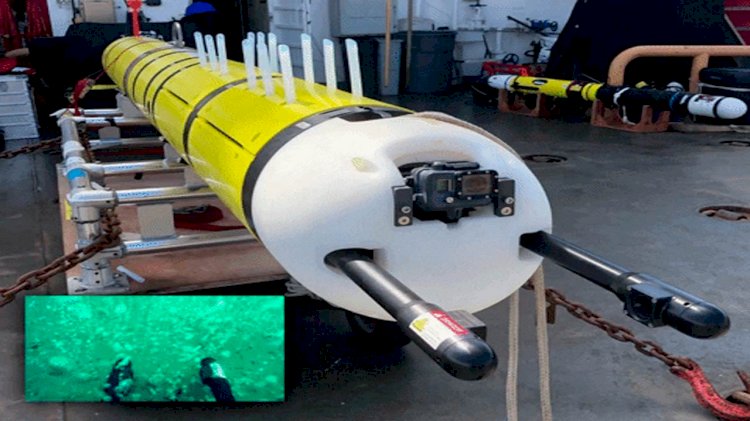
The field program featured two complementary AUVs, a REMUS-600 outfitted with custom oil sniffing and sampling capabilities, and a Long Range Autonomous Underwater Vehicle (LRAUV), a new class of Arctic AUVs funded by DHS to provide a fast and persistent oil spill response for ice covered oceans.

The original LRAUV was initially developed at MBARI under the leadership of James Bellingham, now WHOI’s director of the Center for Marine Robotics (CMR). The latest model, which is still being developed in conjunction with MBARI engineers, is designed specifically to detect oil spills under ice. Bellingham said:

“Our goal is to provide the Coast Guard with greater awareness in the event of a real-world spill, and the ability to understand an incident while there is still time to react.”

The vehicle can be launched into open water from shore, sea ice, ship or helicopter and is an ultramarathoner in the AUV world: it can operate continuously for more than two weeks over a distance of 620 miles (1,000 kilometers).

Dana Tulis, director of emergency management for the Coast Guard, says the new vehicle delivers on a critical and unmet need: fast and efficient data collection that can inform response management in remote and difficult-to-access areas.

Kukulya said:

“If you’re in a remote Arctic environment, rather than deploying a huge vessel, it would be ideal to have these easy-to-deploy robotic vehicles collect information from below the surface. It’s a perfect complement to aerial drones, which we use to fly over remote areas instead of large planes. Embracing the latest technologies like this will allow us to save big on resources when it comes to oil spill response in the open ocean and in the Arctic. And, they can also help with with more common spill response in non-remote areas."

Kukulya says a dozen LRAUV's have already been built by MBARI, and a thirteenth is underway with WHOI as part of the oil response collaboration.

The prototype fills a void in marine robotics between underwater gliders—which can travel long distances but lack the power and payload capacity to carry an extensive suite of sensors—and standard AUVs which typically operate for only 24 hours or less. It builds off MBARI’s noncommercialized underwater vehicle platform—called a Tethys LRAUV—to which various technologies have been added over time. This includes sonar mapping, navigation systems, and specialized sensors that can detect where oil is spreading—and where it is not. First responders can use this information to efficiently track an actual oil spill remotely as it’s happening.

Among the LRAUV’s key features, according to Kukulya, is a “buoyancy engine” which allows the vehicle to shift its internal weight and change its overall buoyancy so it can drift at zero propeller speed. This helps maximize endurance so it can rove for weeks on a single battery charge.

In previous field tests of the LRAUV’s capabilities in Monterey Bay, California, the researchers used a green, biodegradable dye in the ocean to simulate an oil plume. The LRAUV successfully tracked patches of the dye for hours as it drifted through the water, surfacing every few minutes to transmit data for review and analysis by the researchers.

During the more recent testing at the Santa Barbara site, the team conducted another simulated spill, only this time they used real oil, not dye. The site has naturally-occurring oil seeps, from which an estimated 20 to 25 tons of oil are emitted from cracks in the seafloor each day.

During the simulated oil spill, the team tested out new gear on the vehicle, including a holographic camera system. Developed by emeritus WHOI biologist Cabell Davis at the marine technology company he founded, Seascan, the system sends out laser beams roughly seven times per second to take detailed, three-dimensional images of oil droplets in the ocean. A new WHOI “water gulper” that collects up to a dozen water samples per mission also made its debut.

In addition to new hardware, the team has integrated the Robot Operating System (ROS) onto a ‘backseat’ computer for autonomous behavior adaptations.  WHOI research engineer Kevin Ducharme and assistant scientist Erin Fischell wrote and tested these new software capabilities on the REMUS vehicles, which will assist in oil spill rapid response efforts.

Beyond cutting-edge technology itself, one critical success factor in moving the project forward to date has been the highly collaborative and multidisciplinary team approach, according to Tulis. When she visited the Santa Barbara testing site in late September, she was surrounded by engineers and scientists from various areas of expertise all working toward the same goal—integrating the new technologies into Coast Guard responses. She said:

“On a single ship, you had experts in remote sensing and engineering, chemistry, and data management. As I went from station to station, I felt like I was in science camp.”

Lessons learned from the 2010 Deepwater Horizon oil spill taught Kukulya and her team a great deal about the challenges of rapid response. “It took 10 days to get the first AUV in the water, and that was in a place that was easy to access,” she said.

The speed at which first responders could deploy AUVs in the Arctic remains a question, but Kukulya says that in addition to its strength in technology development, WHOI shines in the area of marine operations. She said:

“We’re uniquely positioned in terms of our ability to not only develop cutting-edge technology, but get it deployed in the water very quickly. Eventually, I can envision WHOI becoming the go-to place in the event of an oil spill in the Arctic or anywhere, as well as for rapid-response technology for harmful algae blooms, marine microplastics, or any environmental anomaly in the ocean that needs discrete sampling. We have systems right now in the lab that are ready to respond."

KVH chooses Iridium Certus as companion to KVH VSAT Systems for optimal vessel comms

0

KVH Industries has announced that the Iridium Certus® service is now available from KVH as a companion for KVH’s TracPhone® mini-VSAT BroadbandSM systems.

Iridium Certus is a next-generation L-band solution providing pole-to-pole global coverage and featuring small-form-factor, cost-effective antenna terminals. KVH’s VSAT systems include the TracPhone HTS-series, which provide data speeds as fast as 20/3 Mbps (down/up) to meet the connectivity demands of today’s commercial maritime vessels and global-voyaging superyachts.

This companion solution, featuring Iridium’s highest L-band data speeds of 352/176 Kbps (down/up) and the 38 cm (15 inch) diameter Cobham Sailor 4300 antenna, is designed to seamlessly integrate with all KVH TracPhone mini-VSAT Broadband antenna systems. Optional least-cost routing enables onboard data to switch from KVH mini-VSAT Broadband service to Iridium Certus and back again as necessary. An unlimited use data plan is available, whether the vessel is using KVH mini-VSAT Broadband or Iridium Certus.

The Iridium Certus companion solution is available for existing and new TracPhone mini-VSAT Broadband system users either via standard purchase or as part of an AgilePlans® deployment. KVH’s AgilePlans program provides commercial fleets with an all-inclusive, no-commitment connectivity solution that includes a TracPhone V7-HTS or TracPhone V11-HTS antenna, high-speed data, daily TV and print news, training, free shipping, free installation at select ports, and zero maintenance costs for one monthly fee. AgilePlans has become KVH’s most successful commercial maritime VSAT solution, accounting for more than 70% of the company’s commercial maritime VSAT shipments in the first half of 2019.

KVH is a mobile tech innovator that provides connectivity solutions for commercial maritime, leisure marine, and land mobile applications on vessels and vehicles, including the award-winning TracPhone and TracVision® product lines, the global mini-VSAT Broadband network, and AgilePlans Connectivity as a Service (CaaS). The company’s KVH Media Group provides news, sports, and entertainment content with such brands as NEWSlink™ and SPORTSlink™.
 

FUELTRAX introduces voyage planning tool

0

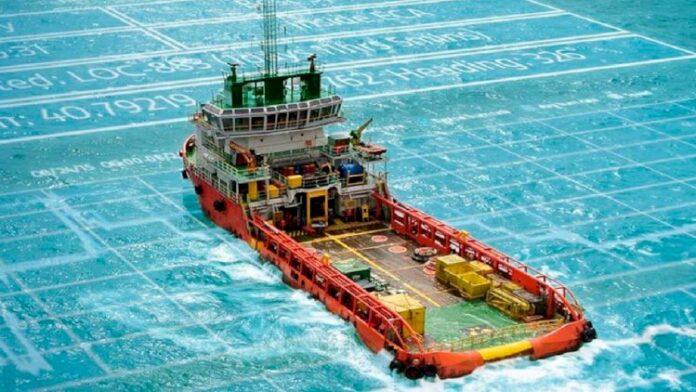
FUELTRAX's suite of smart vessel-tracking features has been designed to give the full picture of a fleet’s movements. The company has announced these features now include a brand-new tool to empower to Make Smarter Decisions™. It's called it FUELNET Trip Planner.

Initially developed FUELNET Trip Planner in close collaboration with one of FUELTRAX's clients. They requested a trip building feature that would allow them to plan multi-stop trips and accurately estimate time of arrival (ETA) by monitoring real-time speed changes. The company quickly worked on a solution and created an intuitive voyage planning tool that operates with the ease of Google Maps.

After the successful testing and implementation period, FUELNET launches this feature for all users. FUELNET includes the following functions:

  • Accurate ETA monitoring: Track each vessel’s ETA to any location in real-time via the FUELNET map view to make fully informed deployment plans.
  • Model custom ETAs: Compare current and custom vessel speeds side-by-side to see the impact on your ETA.
  • Store your favorite locations: Quickly and easily draw ETA lines by clicking on the map or selecting one of your saved locations.
  • Plan multi-stop journeys: Get a clear view of the arrival time at every stop along your vessel’s route with our multi-stop planning feature.
  • Independent tracking: Follow reliable real-time location updates from the independent FUELTRAX tracking signal.
  • Industry-leading 99% uptime: Enjoy pole-to-pole coverage and an uninterrupted satellite connection without relying on AIS or other tracking signals.

Konecranes launches three innovative technologies

0

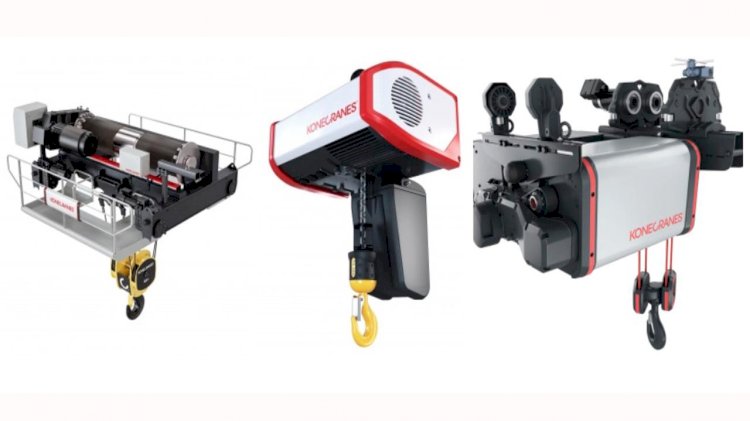
Konecranes has launched three new lifting products that refresh and reinforce its industry-leading portfolio, targeting existing and new industrial customers in segments including general manufacturing, automotive and various process industries. Sales of the new products are expected to begin already this month.

Konecranes President and CEO Panu Routila said:

“Today’s launches reflect the strength and depth of our expanded portfolio following the MHPS acquisition, as well as our continued momentum in streamlining the number of product platforms we have, and they will bolster our market leadership in the years to come. I’m especially proud of the innovative S-series crane, which sets us apart from the competition and has attracted strong interest from customers across a number of industries.”

The S-, C- and M-series represent the next generation of Konecranes’ three existing industry benchmarks, bringing new technology and innovation to areas including motor drives, rope, reeving systems, and clutches and brakes to deliver safer equipment that performs better, lasts longer and delivers greater operational savings.

The new products also underscore Konecranes’ technology leadership. All new S- and M-series cranes will be equipped with sensors and the capability to collect and send data. Every customer purchasing an S- or M-series crane will have access to the yourKONECRANES portal, the digital service for operators, technicians and management that lets customers take full advantage of their crane. Konecranes has a total of 20 patents either awarded or pending for the three new series of products.

These capabilities reflect Konecranes’ investment in the growing opportunities of data. The company has established a data science laboratory in Lyon, France, as part of its continuing drive to digitalize products, services, and operations. Konecranes has 21,500 connected cranes across the world and digital lifecycle records from over 1.1 million customer assets.

KONECRANES S-SERIES

When it comes to overhead cranes, the Konecranes CXT crane has long been the industry standard. The S-series crane sets the new benchmark with innovative standard features like variable speed control for all movements and Adaptive Speed Range, which adjusts the maximum lifting speed to the weight of the load for safer and more productive use; new synthetic rope with a revolutionary reeving arrangement that reduces wheel load impact by up to 45%; and Konecranes Smart Features like Follow Me, Hook Centering and Snag Prevention that improve operational safety. The S-series will also come with access to the yourKONECRANES customer portal and value-adding digital services like TRUCONNECT, Konecranes’ leading crane usage and operating data platform.

KONECRANES M-SERIES

The M-series crane is heavy lifting redefined, having the most compact and modular big heavy-duty winch from Konecranes. With high-performing and reliable Core of Lifting components and modular design, it can easily be configured to fulfill the needs of various production processes. A rethink of the winch’s component layout and machinery support system also eliminate component alignment errors that can be found in traditional winches. Smart Features and state-of-the-art user interfaces such as Remote Operating Station are available to increase productivity and safety of use.

KONECRANES C-SERIES ELECTRIC CHAIN HOIST

The new C-series is Konecranes’ most advanced electrical chain hoist to date. Built with the toughness, precision and reliability of Core of Lifting components, the hoist now boasts a redesigned motor cooling system that offers up to 50% longer runtime versus the previous generation, and a brake that is built for over a million operations. Safety features like operating limit switch and safety clutch have been enhanced for better performance and reliability.

Port of Los Angeles cuts emissions from ships, harbor craft and cargo handling equipment

0

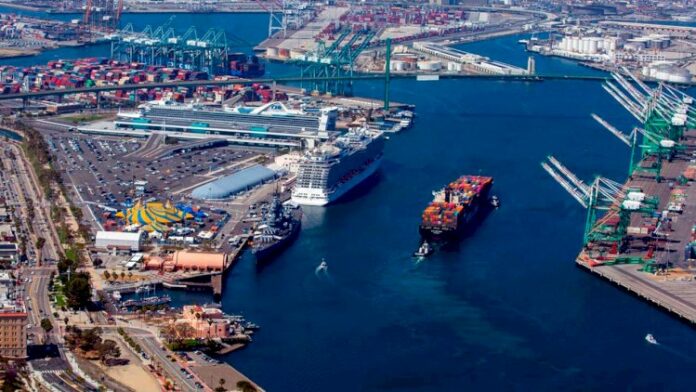
The Port of Los Angeles continues to make progress cutting emissions from ships, trains, trucks, harbor craft and cargo handling equipment since 2005, according to its 2018 Inventory of Air Emissions Report. Additionally, the report shows the Port is meeting and exceeding all 2023 targets for reducing primary pollutants while cargo volumes continue to rise.

Port of Los Angeles Executive Director Gene Seroka said:

“Even as cargo has increased 26 percent since the baseline year of 2005, we’ve sustained the remarkable clean air gains we’ve made since then. Our goal remains getting to zero emissions, which is why we’re focused on working with our partners on operational efficiencies and next-generation near-zero and especially zero emissions solutions, so our port, community and environment can thrive together.”

The Port’s Clean Air Action Plan (CAAP) compares emissions reductions for each calendar year to the 2005 baseline year to track progress toward CAAP goals. While 2018 container throughput rose to a historic high of nearly 9.46 million TEUs (twenty-foot equivalent units), up from 9.34 million TEUs in 2017, nitrogen oxides (NOx) emissions are still 60% below 2005 levels, with an actual year-to-year decrease from 2017 of 1%. Sulfur oxides (SOx) emissions remain 98% below 2005 levels, with an actual year-to-year decrease from 2017 of 2%.

Diesel particulate matter (DPM) emissions remain at 87% below 2005 levels, though actual emissions of DPM increased slightly from 2017 by 1%. Greenhouse gas (GHG) emissions are down 10% below 2005 levels, up 3% from 2017 levels.

Port Director of Environmental Management Christopher Cannon said: 

“The annual increases are not surprising given the 1.3% growth in container cargo volume since the previous year. They underscore the importance of further reducing combustion-based engine technologies in heavy-duty equipment in port operations and ultimately moving toward widespread use of zero emission technologies to achieve continued GHG reductions.”

The Port is currently leading or participating in 16 projects with multiple partners to demonstrate near-zero and zero emissions engines, emissions control technology, and alternative fueling and charging stations. The projects include testing hybrid and fully battery-electric, natural gas and hydrogen fuel cell heavy-duty trucks; battery-electric forklifts, yard tractors, top handlers and rubber-tired gantry cranes; and emissions control equipment on large ships and harbor craft. All demonstrations are conducted in real-world operating conditions in and around the San Pedro Bay ports.

Cannon said:

“These projects are among our most ambitious clean air initiatives to date. Year-to-year emissions may fluctuate as we develop, assess and implement these initiatives, but as we reduce or eliminate combustion, we move the needle closer to zero.”