4.4 C
New York
Home Blog Page 981

First hybrid yacht propelled by SCHOTTEL azimuth thrusters

0

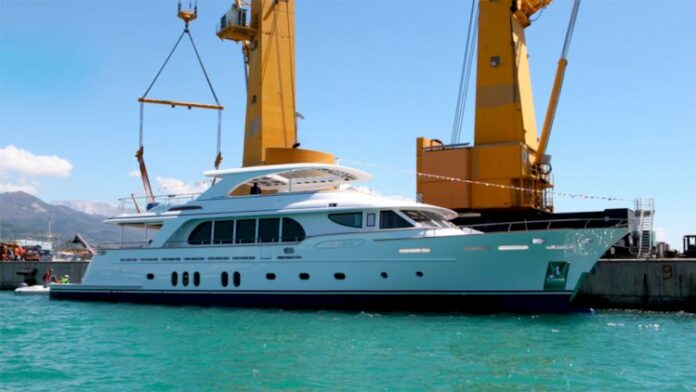
CCN’s 31-metre motor Yacht "Vanadis" is the first hybrid yacht propelled by SCHOTTEL azimuth thrusters (type STP). It is powered by a propulsion system consisting of diesel engines with in-line electric motors.

The vessel was built by the Italian shipyard CCN and has already been handed over to its European owner. It will be deployed in Italian waters. The M/Y "Vanadis", the fourth model in CCN’s Fuoriserie line, is also the winner of the "Green Yachts" category at the World Yachts Trophies 2019.

Diege Michele Deprati, CEO of CCN, notes:

"Electric power is also making its way into the yacht sector. An increasing number of customers wish to practice their passion for yachting quietly and emission-free. To achieve this, we have equipped the 'Vanadis' with a propulsion solution from SCHOTTEL and a DC bus system from Siemens. We chose SCHOTTEL because of its high level of expertise and decades of experience in this field."

The propulsion system of the "Vanadis" consists of two CAT C9.3 engines which drive the two SCHOTTEL Twin Propellers type STP 150 FP (260 kW each). These power the yacht to achieve a maximum speed of 12.5 knots, which drops to 8 knots when cruising in electric mode. Beyond a lower fuel consumption and a limited environmental impact, it enhances on-board comfort thanks to reduced noise and vibrations.

The craft is fitted with a set of lithium-ion batteries (175 kWh) which supply most of the on-board utilities. The vessel can thus remain at anchor at zero emissions for up to 17 consecutive hours and cruise at limited speed for up to 120 minutes, depending on the power load.

Each SCHOTTEL Twin Propeller is equipped with two propellers rotating in the same direction. This feature allows the power to be distributed over two propellers and thus reduces the load acting on each individual propeller. The result is a considerable increase of efficiency and comfort when compared with systems incorporating just one propeller. The STP is thus ideally suited as a propulsion unit for all vessels with design-related higher propeller loads.

Named after a goddess of Norse mythology, the all-aluminium yacht features a master cabin and two guest cabins to accommodate a total of six guests. There is also a second pilot station located on the flybridge.
 

Seacat Services to support Sheringham Shoal offshore wind farm

0

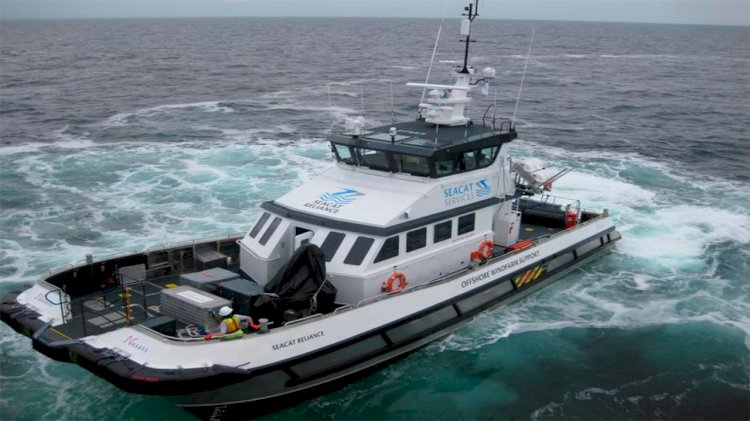
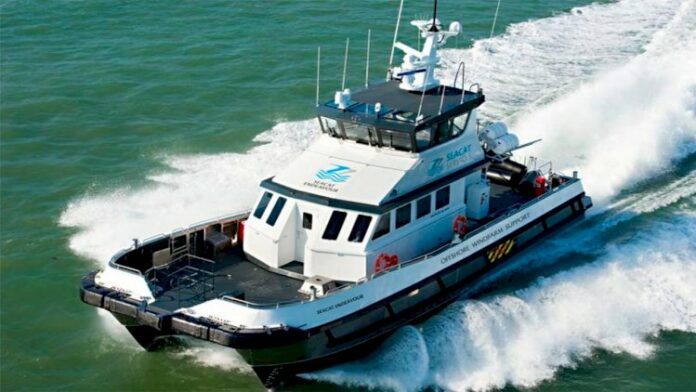
Class-leading Offshore Energy Support Vessel (OESV) operator, Seacat Services, has commenced a long-term contract with Equinor, which will see three specialist OESVs support the ongoing operations and maintenance (O&M) of the 88-turbine Sheringham Shoal Offshore Wind Farm off the coast of Norfolk. 

Throughout the contract, two of Seacat Services’ 21-metre vessels – Seacat Endeavour and Seacat Reliance – will operate on site all year round, and between March and October they will be joined on site by a larger 24-metre catamaran. 

Seacat Services’ vessels and crews will provide specialist logistical support to the Equinor technical teams, assisting with scheduled and unscheduled maintenance by conducting safe transfer of technicians and O&M equipment to and from Wells Harbour. 

The deal is the latest long-term agreement for Seacat Services, based on the proven performance of its fleet and specialist crews supporting O&M and construction projects throughout the UK and Europe. It highlights the real benefits to the offshore wind sector of taking a ‘value-over-cost’ approach when managing long-term O&M agreements by hiring and retaining trusted suppliers.

Operational versatility is another critical attribute of vessel support that allows O&M teams to respond to specific logistical challenges. Wells Harbour is smaller and shallower than other UK ports, and, with Seacat Endeavour and Seacat Reliance, Seacat Services has been able to offer a pair of ‘shallow-draft’ OESVs that meet the unique requirements of servicing of the assets at Sheringham Shoal from Wells-next-the-Sea.

The highly capable vessels, manned by experienced crew, will provide class-leading levels of technical availability to fulfil all contracted obligations towards Equinor to the highest standards. Furthermore, retaining Seacat Services on a long-term basis will create opportunities to build relationships between operations teams, technicians and vessel crews, ensuring operational familiarity and consistency, and a best practice approach to on-site safety.

Seacat Services also have provision of FPOS (i) (First Person On Scene – intermediate) trained personnel that meets Sheringham Shoal requirements. This capability complements Equinor’s existing FPOS training for technicians working at Sheringham Shoal and the nearby Dudgeon Offshore Wind Farm, ensuring that teams on site are well-placed to respond rapidly to medical emergencies. 

Ian Baylis, Managing Director of Seacat Services, said:

“A high standard of vessel support is a critical factor in the safe and cost-effective operation of an offshore wind farm. The industry is increasingly recognising the importance of stable supplier relationships to drive operational efficiencies, combined with the logistical versatility to ensure maximum ‘time on turbine’ for technicians.”

Karl Butler, Power Plant Manager, Equinor, said:

“Collaboration and close relations with our suppliers is essential to ensure safe and efficient operations. We are looking forward to working with Seacat Services and wish all the team a warm welcome to Sheringham Shoal.”

Maersk Supply Service brings its vessel to support Pemex

0

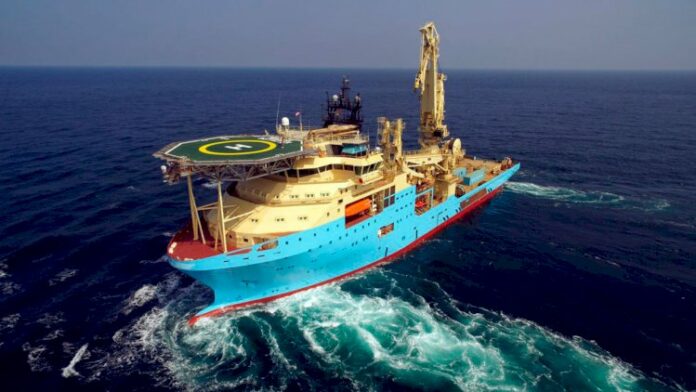
Maersk Supply Service has secured a 1.5 year contract with Blue Marine Group to support Pemex from subsea support vessel Maersk Installer.

Joining Maersk Implementer, the vessels will assist the national oil company in achieving its targets of increasing production and carrying out safe operations.

Delivered in November 2017 and May 2018 respectively, Maersk Installer and Maersk Implementer are some of the most modern vessels in their category. They will operate in the Bay of Campeche performing general support duties, well stimulation as well as inspection, maintenance and repair for Pemex’s platforms.

Managing Director for Maersk Supply Service in Mexico, Raymundo Piñones de la Cabada, says:

“The arrival of Maersk Installer is a significant stepping stone for Maersk Supply Service in Mexico. These two highly capable vessels allow us to expand our ambitions in the integrated solutions field locally, whether it is offering our customers well stimulation, subsea construction or FPSO installation or decommissioning.”

Raymundo Piñones de la Cabada continues:

“We look forward to increasing our local footprint and contributing to offshore services in the region. We intend to positively impact the community and prepare for long term operations here in Mexico. As part of this vision, we ensure our local seafarers are trained in operating these advanced vessels and safety management systems. Our ambition is to bring in more vessels of different types to support a growing demand for modern and highly specialised operations.”

Maersk Installer arrived in Mexico on 23 September and began its contract after completing all necessary inspections from Blue Marine and Pemex.

J. Lauritzen improving its fleet’s cyber security with ITLink

0

In addition to maintaining the cyber resilience of Lauritzen Kosan’s vessel IT network and automating previously time-consuming manual processes such as file distribution and system updates, Marlink’s future-proof platform will also proactively improve Lauritzen Kosan’s IT compliance in the face of forthcoming legislation, such as the cyber security requirements which the IMO has mandated for incorporation in safety management systems by January 2021.

Improved cyber security and onboard network resilience set to drive efficiency gains and prepare for future regulations in the highly advanced liquid transportation market.

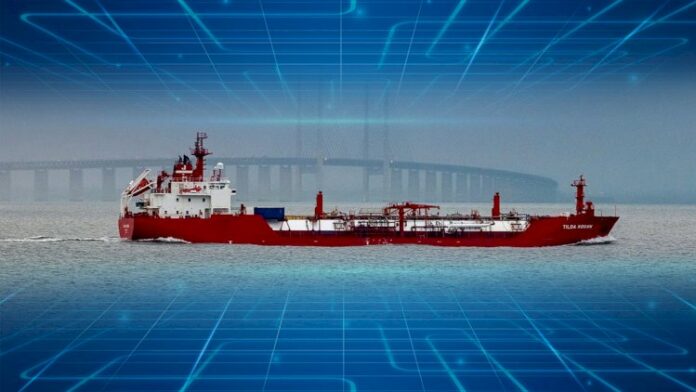
Danish shipping company J. Lauritzen has selected Marlink to deploy fully integrated and managed IT services on all Lauritzen Kosan managed gas carriers. The solution will be based on Marlink’s ITLink portfolio, with the KeepUp@Sea platform enabling automation of software and security updates, network and PC health monitoring and remote access for fast issue resolution. Once implemented, Lauritzen Kosan will benefit from a fully standardised ICT setup across its fleet, and have the flexibility to manage growth and changes in a cost and time efficient manner.

Lauritzen Kosan’s fleet is tasked with the secure and dependable ocean transportation of liquefied petrochemical gases. The ITLink managed services optimises vessel IT infrastructure and processes, enabling a reduction in operational and support needs while simultaneously improving the stability of onboard networks.

In addition to maintaining the cyber resilience of Lauritzen Kosan’s vessel IT network and automating previously time-consuming manual processes such as file distribution and system updates, Marlink’s future-proof platform will also proactively improve Lauritzen Kosan’s IT compliance in the face of forthcoming legislation, such as the cyber security requirements which the IMO has mandated for incorporation in safety management systems by January 2021.

Tore Morten Olsen, President Maritime, Marlink, says:

“Providing our new range of ITLink solutions is a key milestone to enable further automation and digitalisation for Lauritzen Kosan in the liquefied gas ocean transportation sector. In an environment with very specific demands within one of the most advanced maritime transportation segments, the unique functionality of our ITLink solutions including the KeepUp@Sea platform will help to take the firm’s safety, efficiency, reliability, compliance and cost-effectiveness to the next level.”

Lars Kirstein, head of Vessel IT, Lauritzen Kosan, adds:

“IT and operational technology are key to securing the safety of our ships, crews and cargoes so it’s vital that our on board systems are always available for updates and increased security.” 
 

Samsung Heavy Industries to build six large container ships for Evergreen

0

Samsung Heavy Industries, a shipbuilder in South Korea, has won a $920 million order from Evergreen, a Taiwanese container shipping company, to build six large container ships, the word’s largest in terms of twenty-foot equivalent unit (TEU) capacity.

Samsung Heavy said in a regulatory filing on Tuesday that it would build 23,000 TEU ships capable of carrying 23,764 containers. The vessels would be 400 meters long, 61.5 meters wide and 33.2 meters high. The shipbuilder set a record in July by delivering a ship capable of carrying 23,756 containers to Mediterranean Shipping Company S.A. (MSC), a Swiss-based shipping line.

TEU is an inexact unit of cargo capacity often used to describe the capacity of container ships. It is based on the volume of a 20-foot-long (6.1 m) intermodal container, a standard-sized metal box that can be easily transferred between different modes of transportation, such as ships, trains and trucks.

South Korean shipyards have developed eco-friendly ships as the amount of sulfur emanating from ships should be reduced from 2020 under new rules imposed by the International Maritime Organization (IMO), a U.N. maritime safety agency. Natural gas has been recommended as a proven commercial solution to meet ever-tightening emissions requirements.

Samsung Heavy has said its technological prowess in the eco-friendly ship market was proven through the delivery of LNG fueled tankers which can effectively respond to regulations on sulfur oxide emissions. The shipbuilder said its accumulated order so far this year stood at about $5.1 billion to build 11 LNG carriers and other ships. Samsung Heavy’s target for 2019 has been set at $7.8 billion.

KOTUG and Horizon Maritime start KOTUG CANADA

0

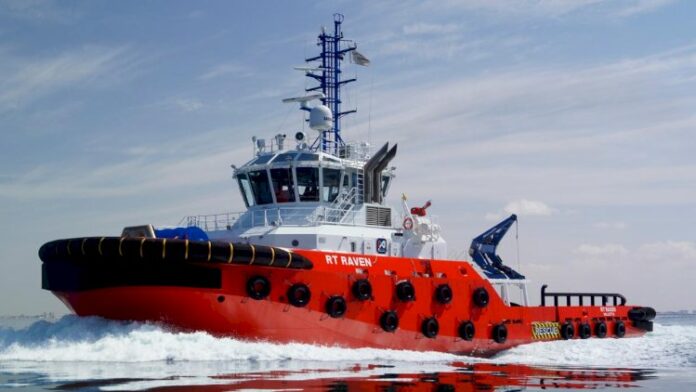
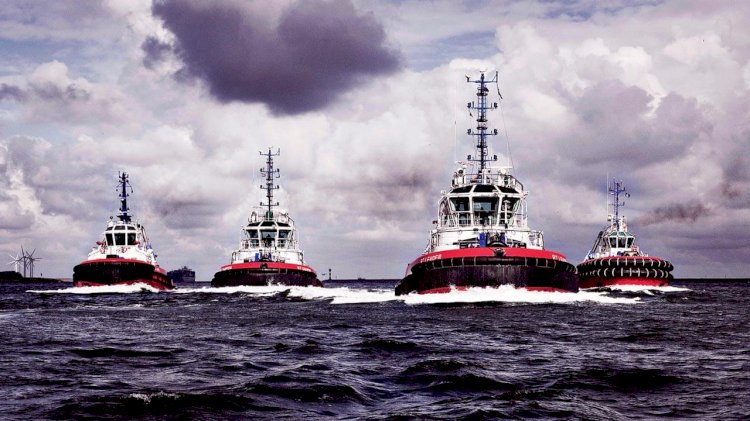
KOTUG International B.V. (KOTUG) and Horizon Maritime Services Ltd (Horizon Maritime) are pleased to announce that they have formed ‘KOTUG Canada’, a joint venture company which will offer terminal and harbour towage services across Canada.

The joint venture looks forward to developing a strong presence within the Canadian terminal and harbour towing market. The strategic partnership brings complimentary skills from each partner and the sharing of joint experience, expertise, and best practices will generate outstanding value for customers.

Steve Widmeyer, Chief Operating Officer, Horizon Maritime, comments:

“We are very pleased to partner with the world leaders in sustainable marine towing operations, combining our local experience and expertise to offer Canadian customers a top-notch level of towage services.”

Osman Munir, Chief Commercial Officer, KOTUG adds:

“KOTUG continues to expand internationally and looks forward to providing sustainable industry-leading equipment and services to our Canadian customers. We have selected Horizon Maritime as our partner based on our relationship with its leadership team and on its focus on people and safety. We look forward to working together and delivering on our promise to exceed our customers’ expectations.”

KOTUG has built a strong reputation as an innovator in the maritime industry thanks to years of experience and knowledge in the towage field. KOTUG is renowned for establishing solid, long-term business relationships with leading clients in industries such as Oil & Gas, Mining, Renewables, Offshore, and Port Authorities for high demand operations. It continues to invest strongly in sustainable innovations to improve its services for the benefit of the entire maritime industry. Examples are the invention and deployment of the highly manoeuvrable RotorTug®, hybrid tugs, Infield Support Vessel, a dispatch tug planning solution, and various other maritime solutions to contribute to a green maritime environment.

Bangor University’s U-Boat research in the Irish Sea

0

Research by Bangor University was featured in the Drain the Oceans series on National Geographic Channel on Monday, 7 October.

The programme outlines the development of U-Boats, and how they changed the shape of naval warfare. The introduction of the world's first stealth weapon forced Allied forces to adopt new tactics to fight back.

Highlighted in the programme is work carried out by Bangor University’s School of Ocean Science’s research vessel the Prince Madog, which has surveyed numerous shipwreck sites in the Irish Sea as part of a joint research project with the Royal Commission on Ancient & Historic Monuments in Wales‘s Heritage Lottery funded project: Commemorating the Forgotten U-boat War around the Welsh Coast, 1914-18.

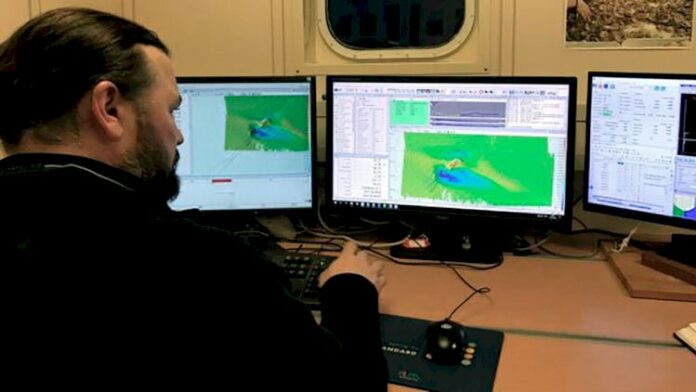
A team of staff from the School of Ocean Sciences led by Dr Mike Roberts have been using a multibeam sonar system and the latest imaging techniques to reveal underwater wrecks from the Great War.

The sonar system on the Prince Madog generates very high resolution, three-dimensional models of the seafloor as the research vessel moves through the water over it and these models can allow researchers to identify objects at near centimetre scale. In water depths of 100 metres, typically found in the Irish Sea, the team are generating models and images of wrecks that can help marine archaeologists confirm their identity and even provide evidence of their demise. 

Dr Mike Roberts explains why the information is so valuable:

“While these wartime relics can provide valuable information to historians and archaeologists, they may also help lead to the birth of a new industry. The data we’re collecting is providing unique insights into how these wrecks influence physical and biological processes in the marine environment. This information is being used to support the ambitions of the marine renewable energy sector.

These images of wrecks reveal how the tide and currents have removed or deposited sediments and how the presence of these structures on the seabed have influenced these processes over time and what might happen when artificial structures are placed in the same or similar areas of seabed.”

Crispin Sadler of production company Mallinson Sadler Productions said:

“Drain the Oceans is proud to have collaborated with the crew of the Prince Madog and the team for the Bangor University led by Dr Michael Roberts. Add the historical and archaeological expertise of Dr Innes McCartney from Bournemouth University and we had the ingredients for a fascinating story for our film on U boat development during the 1st WW, which to all intents and purposes was their golden age.

The work done by the team reveals just how successful and dangerous they were in the Irish Sea although as we see it was not all one sided. Drain the Oceans prides itself on taking the accurate data obtained in this fashion and turning it into photo realistic imagery of the sea bed and those wrecks found on it allowing these important aspects of our history to told to the widest audience possible. We are also proud that the series rates highly in over 170 countries across the world being translated into 44 languages and we feel that ‘Killer U-boats’ will be no exception’.

Wärtsilä to supply LNG bunkering vessel simulator to Malaysia

0

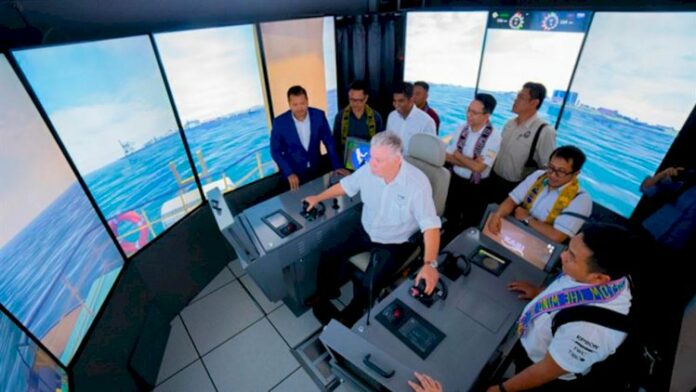
The technology group Wärtsilä will supply an LNG bunkering vessel simulator to Kasi Group (Malaysia), a leading provider of integrated marine solutions. The simulator will be used to provide hands-on training to those who will be operating LNG bunkering services. Wärtsilä is the first company capable of offering such a simulator. The order with Wärtsilä was placed in July.

Captain Bo Caspersen, General Manager, Kasi Group, says:

“As the global demand for LNG fuel for marine applications increases, the number of LNG bunkering vessels serving this demand is also increasing. To achieve best operating practices, safety and efficiency, first-rate crew training is essential. The Wärtsilä simulator enables this. We are familiar with Wärtsilä’s competence in simulator systems having used them in our research and development programme for some ten years already. We therefore had no hesitation in approaching Wärtsilä again when we were asked to provide training”.

The demand for training services for LNG bunkering vessel simulators has been rising since 2017, when only one single LNG bunkering vessel was in service. By the end of 2018, this number had increased to a total of nine ships, and it is forecasted that a further 30 of these vessels will be delivered during the coming five years.

The Wärtsilä scope of supply for its delivery of a TechSim LCHS Network Class simulator to Kasi Group includes a total of five work stations, namely one for the instructor and four for the trainees.
 

Port of Tilbury launches a new floating pontoon

0

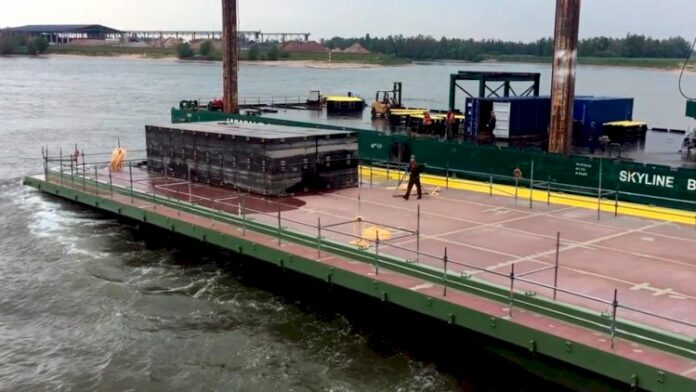
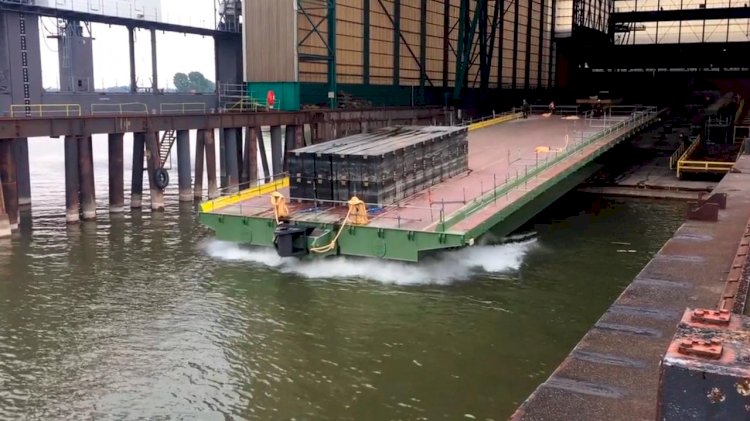
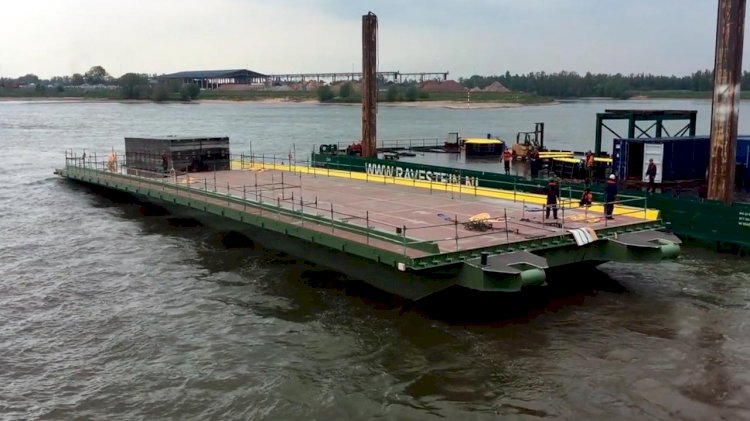
A floating pontoon used to discharge freight ferry vessels at the new Tilbury2 development at Port of Tilbury has been launched, marking a major milestone in the creation of a new multi-million pound port for London.

The pontoon, measuring 55 x 45m in dimensions, was launched from a slipway earlier this month from Ravestein BV yard in Deest, Holland. When complete the pontoon will be used to discharge freight Roll On/Roll Off (RoRo) vessels into the new terminal currently under construction by GRAHAM at Tilbury2.

The pontoon finishing works is expected to be completed in October, when it will then be towed by tug along with the linkspan bridge, ready for installation at the new RoRo terminal before the end of the year.

Paul Scott, contracts director for GRAHAM, said:

“This launch is a significant milestone in Tilbury2’s marine package of works that will enable the terminal’s Roll On/Roll Off function to be realised. Once complete, the floating pontoon will provide large scale capacity for the loading and discharge of RoRo vessels at the terminal, enabling a huge increase in the volume of cargo being transported across the quay. The economic and social benefits of this scheme, not just locally, but nationally, cannot be understated and this launch is an exciting milestone in the scheme’s progression.”

Peter Ward, Commercial Director at The Port of Tilbury said:

“The launch of the pontoon is a significant part of the creation of our new port Tilbury2 and we are pleased that the construction is on track for Spring 2020. When operational, T2 will be the largest unaccompanied Ro-Ro terminal in the UK.”

The Tilbury2 project consists of the construction of a new port terminal and associated facilities on land at the former Tilbury Power Station on the north bank of the River Thames at Tilbury.

When operational in Spring 2020, Tilbury2 will be the UK’s largest unaccompanied freight ferry port, the country’s biggest construction processing hub and will see the creation of a new significantly larger rail head which can accommodate the longest freight trains of 775m.

The project is central to the Port of Tilbury’s £1 billion investment programme during 2012-20, which has seen it double the size of its business in the past 10 years and is projected to double the volume of cargo across the quay (from 16 million to 32 million tonnes) and increase direct employment (from 3,500 to 12,000 jobs) over the next 10-15 years.

Testing a new minehunting sonar at great depths

0

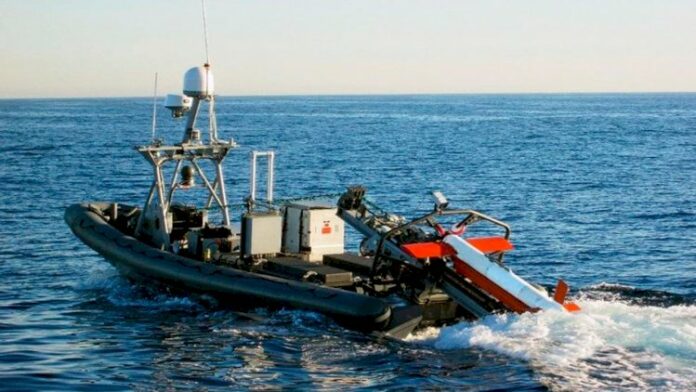
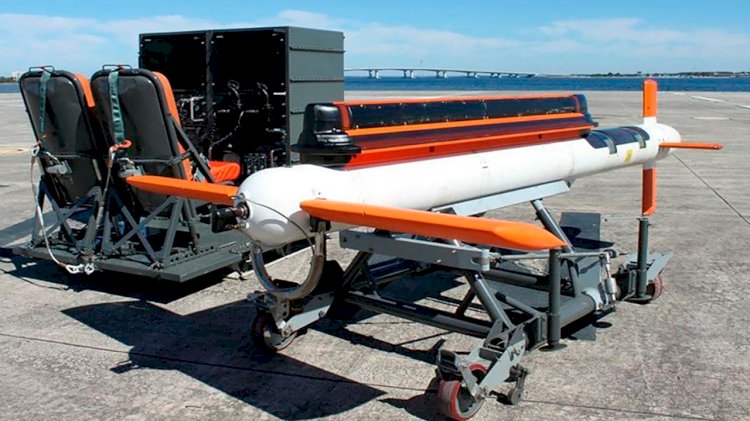
Northrop Grumman Corporation successfully operated the AQS-24 minehunting sonar at depths greater than 400 feet during system testing off the coast of Ft. Lauderdale, Florida.

Embarked on the M/V Richard Becker, the Northrop Grumman test team demonstrated reliable AQS-24 system operations with excellent sonar performance at all tested depths, while using the system to classify bottom objects of interest.

Alan Lytle, vice president, undersea systems, Northrop Grumman said:

“The AQS-24 minehunting system performed superbly at tow depths up to and beyond 400 feet. This latest internal research and development effort underscores our commitment to provide the most innovative, affordable and operationally-proven capabilities to meet the Navy’s Littoral Combat Ship (LCS) Mine Countermeasures Mission (MCM) package requirements and future expeditionary MCM needs.”

Earlier this year, Northrop Grumman demonstrated an autonomy upgrade path for the AQS-24’s minehunting system by integrating and successfully testing the company’s image exploitation suite, incorporating state-of-the-art machine learning for automatic target recognition (ATR) using multiple ATR algorithms. Following this successful demonstration, the U.S. Navy plans to incorporate this new capability into existing AQS-24 minehunting systems.

The success of Deep Tow is now followed by the recently commenced in-water testing of Northrop Grumman’s AQS-24 system on the Navy's MCM unmanned surface vessel (USV) at Naval Surface Warfare Center Panama City. This is in preparation for user operated evaluation system testing aboard the LCS in 2020. The AQS-24’s newly doubled depth capability is planned for integration and test with the MCM USV system.

These major enhancements to the U.S. Navy’s only operational mine hunting towed sonar – running deeper, automatically detecting and reporting targets, and providing the transition to the LCS MCM USV – increases the operational effectiveness of the AQS-24 system while providing the warfighter with an unprecedented capability that affordably meets operational needs and provides a proven path for continued integration of state-of-the-art technology.