4.4 C
New York
Home Blog Page 980

One Sea adds Awake.AI to autonomous ship ecosystem

0

One Sea, the industry alliance bringing together leading exponents of autonomous ship technology, has made a significant addition to its growing membership, after signing up Awake.AI – a company led by an experienced team of maritime digital innovators.

Awake.AI is aiming to create a new platform and ML models (Machine learning) based on transparent data sharing to break down the barriers between ships, ports and other actors in the maritime logistics chain. The ‘virtual infrastructure’ will be vital if ports are to handle autonomous ships successfully from pre-arrival, through cargo operations and to onward departure, according to the Finnish start-up.

Awake.AI CEO, Karno Tenovuo says:

“Today’s data silos result from legacy systems developed when interoperability wasn’t a pressing need. Moving forward, the more information is shared, the greater are the opportunities to automate. Our task is to develop the digital handshakes (APIs) between different supply-chain actors, freeing data to enable smarter ships and ensure their acceptance by smart ports.”

Jukka Merenluoto, Ecosystem Lead, One Sea, commented:

“We are delighted to welcome Awake.AI on board: enabling the smooth flow of data between different players is integral to One Sea’s roadmap to transition from remote monitoring to remote control, and to increasing vessel autonomy by 2025. We also advocate the benefits of maritime digitalisation in its own right, to minimise incidents, decrease marine traffic’s environmental footprint and improve commercial efficiency.”

Drawing on experience from digital innovators that include Nokia, Microsoft, Rolls-Royce Marine, Aker and academia, Awake.AI leverages collective expertise in intelligent and autonomous ship systems, AI data pipelines, system architecture, cloud and network design and cyber security.

Joining One Sea brings Awake.AI into a commercially neutral industry cluster that already plays host to the technology leaders in autonomous shipping, including ABB, Cargotec, Ericsson, Inmarsat, Kongsberg Maritime, MTI, Tieto and Wärtsilä as well as a range of other maritime stakeholders.

Merenluoto says:

“Our membership includes the well-established technology firms making the running on autonomous ships, but it is important we accommodate newer players, like Awake.AI, who can bring fresh perspectives on how to meet the challenges on the road towards realising workable autonomous solutions.”

Awake.AI’s Tenovuo adds:

“Already, we are having conversations with One Sea stakeholders from across the ecosystem to work through strategies to create standards and pathways that will facilitate autonomous shipping.”
Expansion of shore-based power supply units in Port of Hamburg

0

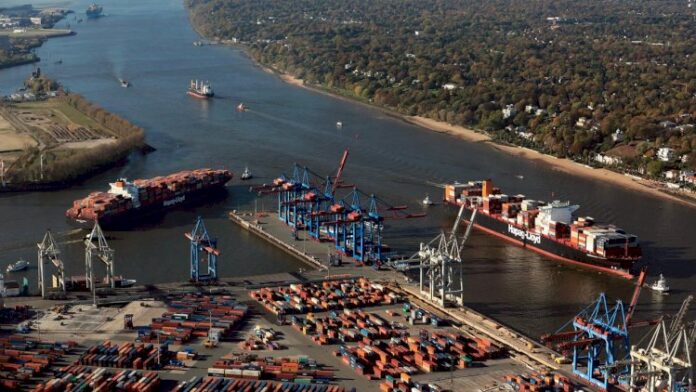
Hamburg’s state government has approved a large-scale expansion of shore-based power supply in the Port of Hamburg. This will create the conditions for a shift from shipboard diesel power supply to ecological electric power during lay times. With this expansion, Hamburg is playing a pioneering role in the field of alternative power supply during ships’ lay times in port.
 
As the first port in Europe, from 2022 the Port of Hamburg will offer shore-based power supply both for cruise liners and mega-containerships. Shore-based power will be available for containerships at a total of eight connection points located at Burchardkai, Europakai and Predöhlkai. In addition, availability of shore-based power will be extended to all existing cruise terminals. A shore-based power supply point will be constructed at HafenCity – CC1 and Steinwerder – CC3. The first such unit for cruise ships in Europe has been located at Altona Cruise Terminal ever since 2016.
 
Hamburg First Mayor Peter Tschentscher:

“Expansion of shore-based power supply units in the port represents a significant and tangible step towards greater climate and environmental protection in Hamburg. Use of regenerative power from these units will totally eliminate existing CO2 and pollutant emissions from vessels during lay times. With today’s decision, we are giving shipowners clarity and planning certainty for the essential refitting of their vessels. Along with systematic expansion of infrastructure for e-mobility in the city, large-scale support for local public transport that includes construction of new underground and suburban rail lines, and provision of infrastructure for operation of 100-percent emission-free buses, now by extending shore-based power supply in the port, Hamburg is demonstrating that climatic protection need not be simply a matter for discussion, but also for actual implementation. Today, sea trades are already the most economical and environment-friendly mode of transport for worldwide freight traffic. With our shore-based power project, we in Hamburg are acting as a role model and pioneer for other European ports in making maritime logistics as a whole more climate-friendly.”

All shore-based supply units will be connected to the power grid, in future supplying vessels with regenerative current that will be converted at a central facility to normal shipboard 6.6 kV voltage and 60 Hz frequency, and fed to the connection points from there.

Unique Group acquires five iXblue’s USV for offshore operations

0

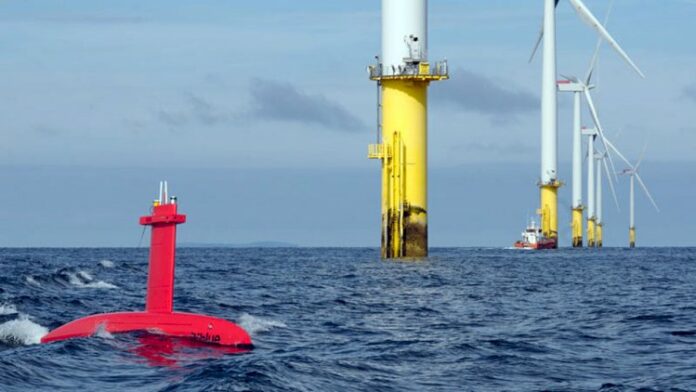
Leading integrated subsea and offshore solutions provider Unique Group has signed an agreement to acquire five Unmanned Surface Vessels (USV) DriX units from French high-technology company iXblue, marking a significant investment in the Group’s global portfolio of survey products, increasing its autonomous offshore offerings.

With an aim to continually introduce latest cutting-edge technology for offshore survey operations, Unique Group’s new addition is designed for a wide range of tasks such as geophysical and hydrographic surveys, touchdown monitoring of pipelines, subsea positioning, and ROV/AUV tracking.

DriX, with its long endurance, increased hydrodynamics and flexible sensor payload, can significantly improve the efficiency of offshore operations and act as a true force multiplier in the marine renewables sector as well as subsea construction, IRM and decommissioning in the oil & gas markets.

The acquired units will be strategically placed within Unique Group’s global rental pool and accessible to clients across the Middle East, Europe, South East Asia and the Americas.

Harry Gandhi, CEO at Unique Group commented:

“We’re extremely delighted to add DriX to our ever-expanding inventory of USVs. DriX has proven to be a real game changer in the offshore market and been used across many successful subsea positioning and bathymetry missions. We look forward to the prospect of further developing our partnership with iXblue in the future.”

Sébastien Grall, Head of iXblue Shipyard Division further added:

“Since its launch in the offshore and hydrographic markets, DriX has been met with incredible success and positive feedbacks. With outstanding seakeeping capabilities, the USV has set a new standard in the industry of surface drones. This agreement with Unique Group is another endorsement of the added value DriX brings to subsea operations and we now look forward to seeing the units in use across various industries for survey, offshore, marine sciences as well as hydrographic operations.”

VIDEO: Wärtsilä’s anti-pollution and environmentally compliant solution

0

The Wärtsilä Airguard is an anti-pollution lip type seal, which is especially designed for applications where extra security against the leakage of oil into the seawater is required.

The Wartsila Airguard completely separates the stern tube oil and the seawater by an air barrier. Any seawater and/or oil entering the air barrier chamber is automatically drained inboard without leaking outboard or entering the stern tube.

As the seal successfully takes away the oil-to-sea interface, it can be operated with mineral oil in accordance with the 2013 Vessel General Permit.

The Wärtsilä Airguard seal works with compressed air, which is applied to the void space between the seal rings. This constant flow of compressed air into the void space is automatically set higher than the seawater pressure, resulting in a small amount of air forced out into the seawater.

The void space is connected to an inboard drain collection system. Any seawater or oil that infiltrates the void space is automatically drained inboard, preventing oil leaking outboard or seawater entering the stern tube. As the Wärtsilä Airguard seal successfully takes away the oil-to-sea interface, it can be operated with mineral oil in accordance with the 2013 Vessel General Permit.

All Formosa 1 wind turbines are installed

0

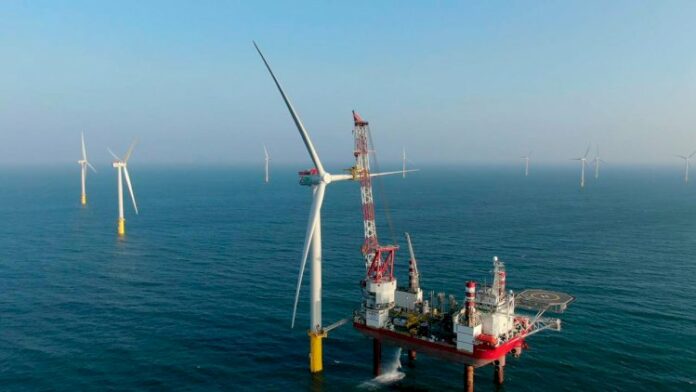
Formosa 1 announced today that the installation of all 20 wind turbines for phase 2 of the project has now been completed. Formosa 1 is the first commercial-scale offshore wind farm in Taiwan and will be able to supply 128,000 households with clean power.

The offshore construction of Formosa 1 Phase 2 started in May 2019, and the first wind turbine was hoisted into position on 24 July. The Formosa 1 project team overcame the challenges caused by four typhoons and other weather impacts and completed all wind turbine installation work this week. All the wind turbines are gradually entering the commissioning phase, and the project is expected to reach commercial operation by the end of the year.

The Formosa 1 chairman, the President of Ørsted Asia Pacific, Matthias Bausenwein, says:

"The Formosa 1 project team and the joint venture partners, Ørsted, JERA, Macquarie Capital, and Swancor, have faced various challenges in the past few months. The installation of the last wind turbine not only marks the completion of the construction work, but also symbolises that we now have built valuable construction experience in Taiwan. All Formosa 1 wind turbines will start powering soon, and then reach commercial operation by the end of the year. Formosa 1 will become a paradigm for Taiwan's energy transition."

A total of 20 6MW wind turbines have been installed for Formosa 1 Phase 2. The installation work was carried out by three major subcontractors, including JDN for foundation and cable installation; Siemens Gamesa for wind turbine installation, operation and maintenance; and Fortune Electric for onshore electrical systems. More than 100 experts participated in the Formosa 1 Phase 2 project team and construction team.

The Formosa 1 project is a joint venture between Ørsted (35%), JERA (32.5%), Macquarie Capital (25%), and Swancor Holdings (7.5%).

Innovative lifting solution to shipping of out-of-gauge cargo

0

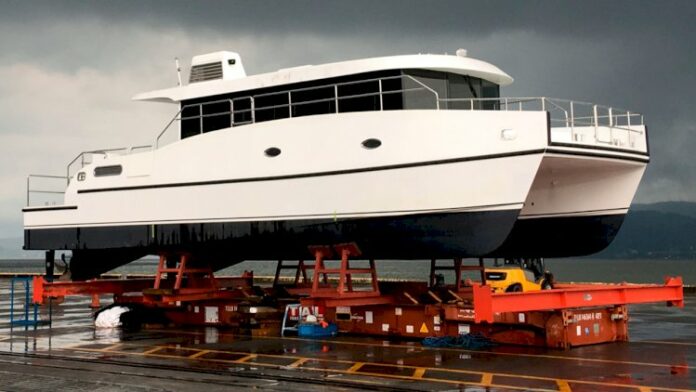
Subic Bay International Terminal Corp. (SBITC), a unit of International Container Terminal Services, Inc. (ICTSI) operating at the Subic Bay Freeport, successfully handled the first Flat Rail operation in the Philippines with the loading of a brand-new catamaran on a CMA CGM vessel.

SBITC, operator of the New Container Terminals 1 and 2 at Cubi Point, performed the carefully planned operation in collaboration with Peters & May, an international freight forwarder and yacht transport specialist, and Bespoke Load Solutions, patent owner of the Flat Rail System used to load the cargo onto the ship.

The Flat Rail System uses a simple and innovative solution that enables the shipping of out-of-gauge cargo with dimensions that exceed the specifications of 40-foot flat racks. Chris Steibelt, Bespoke Load Solutions Development Manager, explained:

“The Flat Rail System consists of two beams which are secured to the flat rack with twist-locks. With lifting points at the end of each beam, the complete unit load can then be loaded using slings attached to the spreader of the container gantry crane. “Typically, a Flat Rail shipment will be in the range of 12 to 15.5 meters long and the width blocks the corner castings.  The system can safely accommodate payloads of up to 44 tons.”

Using Flat Rails, the catamaran was loaded onto a single 40-foot flat rack.  The process was simplified into two moves–first, sea to berth, and second, berth to vessel after the cargo is lashed to the flat rack and Flat Rail. Traditionally, without the rails, the shipment would require at least six flat racks. The catamaran would be loaded as breakbulk and lashing would be done on board the vessel.  This method is significantly less efficient and more costly for the shipper because of the larger vessel space occupied by the cargo, and longer port stay as a result of extended loading time.

Roberto Locsin, SBITC President and General Manager, said:

“SBITC has demonstrated its capability and flexibility to safely and efficiently handle complex shipments such as this. We have eight more catamarans on the way, and we are confident that we could further improve our process and deepen our partnerships with other businesses that require customized service to expand their markets.”

Built by full-service yacht agent Asia Pacific Marine – Subic, the 14.3-meter, twin hull vessel is export-bound for the Maldives.  The shipment is the first of 10 catamarans commissioned by an exclusive resort group operating in six continents.

Miguel Ramirez, Asia Pacific Marine Managing Director, said:

“We intended to deliver the catamaran in brand-new condition.  With the guarantee by SBITC that they can safely handle our cargo, we know it is the best option for us.”

Yacht shipping remains an uncommon service in the Philippines with importers and exporters opting to discharge and load their boats in nearby countries before sailing them directly to and from the Philippines. SBITC hopes the success of this particular project would eventually pave the way for yachts to be transported using Philippine ports.

Maersk Supply Service to provide a mooring lines life extension solution for Shell’s FPSO

0

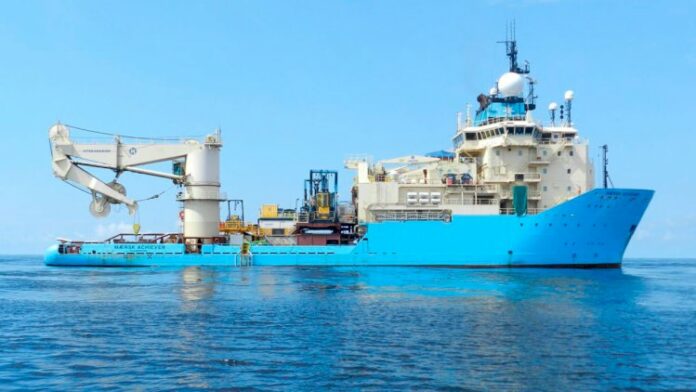
Maersk Supply Service will provide an integrated mooring lines life extension solution for Shell’s FPSO Fluminense, including project management, engineering, interface management and offshore execution off the coast of Rio de Janeiro.

Head of Integrated Solutions, Olivier Trouve, says:

“This is an important milestone for Maersk Supply Service both locally in Brazil, and globally as we continue to grow our integrated solutions business. From the start of the engineering phase, we have set up a centralised project team together with our customer to ensure seamless alignment.”

With the offshore phase expected to commence in December, the project includes heading control of the FPSO, replacement of mooring lines, as well as installation and hook up of the new mooring components. Maersk Achiever, along with one to two Maersk L-class anchor handling tug supply vessels, will mobilise to Brazil following the completion of another mooring lines replacement project offshore West Africa.

Olivier Trouve continues:

“We look forward to demonstrating how our ability to plan and execute the full range of scopes required for FPSO moorings maintenance, supplying all vessels from our large in-house fleet, can help reduce risk and optimise operations for our customers.”

Managing Director for Maersk Supply Service in Latin America Rafael Thome says:

“Through our 40-year’s history in Brazil and ambitious focus on local content, Maersk Supply Service is determined to continue to play a significant role in the country. We believe our integrated solutions business, incl. our towing and mooring capabilities, offer fantastic opportunities for growth in the near future.”
 

MAN Energy Solutions and KONGSBERG: the collaboration on common data infrastructure

0

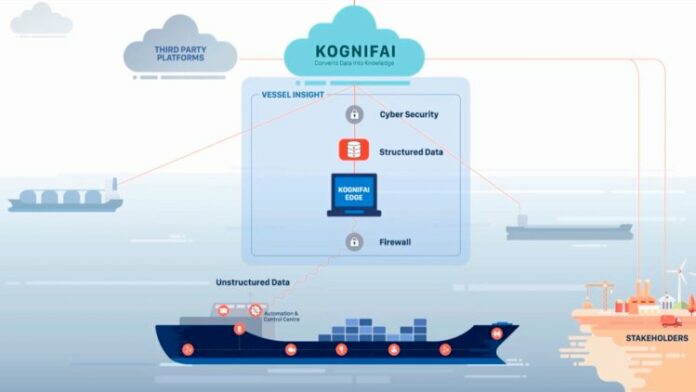
KONGSBERG and MAN Energy Solutions have signed a Memorandum of Understanding with the purpose of exploring the potential for collaboration on a common data infrastructure for the maritime sector. The collaboration will broaden the value offering to vessel operators, improve return on investment in digital solutions and increase the adoption of secure connectivity.

Under the MoU, MAN Energy Solutions is set to investigate the possibility of using Kongsberg Digital’s data-infrastructure solution, Vessel Insight, to securely collect and transmit data using MAN Energy Solution’s digital platform, MAN CEON. A successful trial would allow MAN Energy Solutions to use advanced services such as PrimeServ Assist, its remote monitoring and optimization package, to better serve customers.

Hege Skryseth, President of Kongsberg Digital and EVP of Kongsberg, says:

“The complexity of data capture and transfer drives up the cost of these essentially non-core activities and prevents efficient development of value adding solutions to the market. Collaboration between vendors in the industrial digital value chain is therefore a win-win for vendors, who can focus on digital development within their core competencies, and customers, who will get faster access to better and more cost-efficient solutions.”

The collaboration between the industrial software company and the world-leading engine and marine solution provider aims to solve a key challenge for the broader adoption of digital solutions, namely the high cost of capturing quality data from the vessels, which leaves vessel owners and operators with an unattractive ROI on their digital investments. This could help accelerate the maritime transformation, where new technology and digital solutions enable a move towards smarter, more efficient, safer and greener operations.

Per Hansson, Head of Digital and Strategy at MAN Energy Solutions, says:

“Our commitment is to help our customers increase the safety, reliability and predictability of their individual vessel performance and overall fleet. Through this co-operation, we aim to securely onboard our customers faster to provide our new digital services, advanced analytics and support – areas where we can provide unique benefits to their business.  As an additional benefit, I also expect faster development of our core functionality, supported by a stronger focus and customer interaction.”

The MoU was signed in September.

VIDEO: PowerBuoy deployment in the North Sea

0

Watch as Ocean Power Technologies' PB3 PPowerBuoy® travels from dockside in Scotland to Premier Oil's Huntington field in the Central North Sea. This August 2019 deployment places the PB3 PowerBuoy® in one of the world's roughest sea environments to produce electricity and provide topside surveillance during decommissioning. 

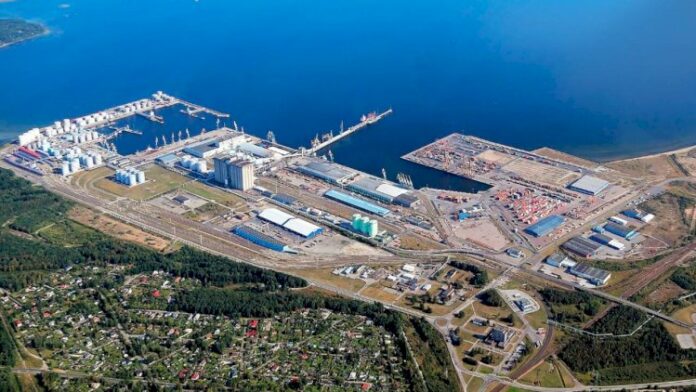
Port of Tallinn opened the refurbished part of Terminal D

0

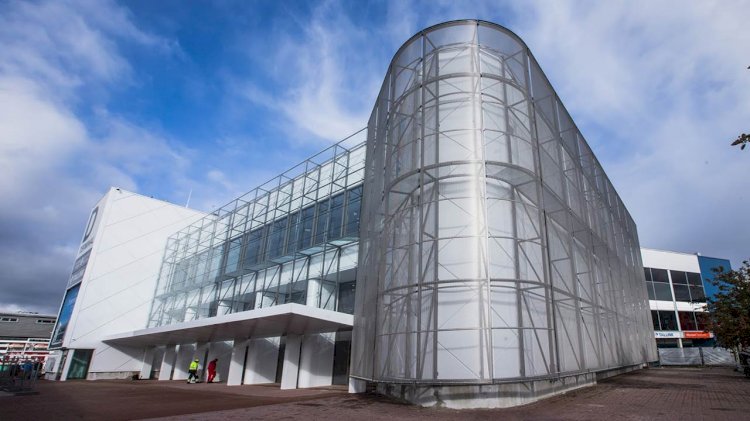
On Tuesday, the Port of Tallinn presented the refurbished part of its Terminal D to travellers. The first to have discovered the new terminal were the passengers boarding Tallink’s shuttle Megastar at 07:30.
 
Peeter Nõgu, Head of Infrastructure Development at the Port of Tallinn, notes that the Nordecon construction company has done a great job and the part of Terminal D completed during the first stage of the overhaul can be opened:

“Starting today, visitors of the Port of Tallinn will be able to enjoy modern and well-lit room appropriate for Estonia’s largest sea and tourist gate. The interior design of the terminal features advanced materials, natural wood and a light colour scheme.” 

On the first floor of the building, the passengers arrive in a spacious atrium, and this is also where the store is located; from there, ramps bring them to the second floor with ticket desks and the check-in area. The third floor of the terminal is where only ticketholders are allowed. The windows provide beautiful views over the Old Town and the territory of the port, and the passengers now have significantly larger waiting and lounge areas at their disposal alongside a café and a store. Arriving passengers will from now on be able to reach the first floor directly from the third floor along a ramp.
 
The façade of the new terminal building is as impressive as the country’s sea gate should be – the glass façade with background lighting is covered with large wall panels and decorative mesh.

Marek Sööt, project manager at Nordecon AS, said:

“The process of building the new part of Terminal D was rather challenging, mainly because the terminal remained operational and kept providing daily services to passengers at the same time. Still, any contractor would consider a project of such weight and importance, which sees millions of visitors pass through every year, to be a fascinating opportunity. The first stage has been completed, and approximately a half of the old building has been renovated with further construction works to follow.”

Peeter Nõgu explained:

“We cannot say that absolutely everything has been finished in the new terminal and part of the old terminal. A temporary solution for passengers’ movement to and from the ship will have to be used in the area completed by now. Old furniture will also remain in the renovated part for a couple of months, and the fact that the old part of the terminal operational so far will be separated from the new one with temporary partitions will have to be taken into account. A third of the terminal is still in need of reconstruction, so there will be some noise inside while people will still see construction materials and structures to be taken down around the terminal”.

Terminal D is being built by the general contractor Nordecon AS, and the building is to be completed in full by the summer of 2020.

The author of the architectural solution and interior design of the building is the architectural firm R-Konsult lead by Irina Raud. The structure and special parts of the building were designed by SWECO Projekt AS, and electricity, low current and automation systems, by Rausi OÜ. The innovative BIM (Building Information Modelling) method was used for designing the terminal and its utility systems.