3.5 C
New York
Home Blog Page 973

New climate-smart passenger ship by Viking Line

0

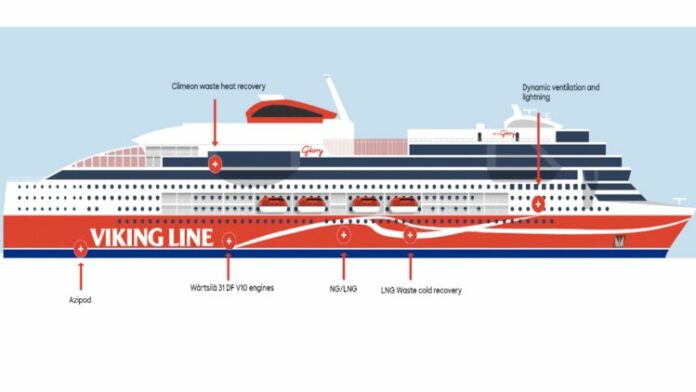
Thanks to its advanced solutions and technical innovations, M/S Viking Glory will be one of the most climate-smart passenger ships in the world. It is estimated that the ship will consume up to 10% less fuel than M/S Viking Grace, which is smaller and was hailed as the world’s most eco-friendly ship of its time.

Viking Glory will launch into service in 2021 as the first ship in the world to be equipped with Wärtsilä 31DF dual fuel engines, which utilise the latest technology and run on completely sulphur-free liquefied natural gas (LNG). As with Viking Grace, Viking Glory will also have the ability to run on biogas, once it becomes a viable fuel alternative in the future.

Project Manager Kari Granberg, who is in charge of the new construction at Viking Line, explains:

“Viking Glory will have six 31DF engines for efficient optimisation of fuel consumption. These engines have the lowest fuel consumption, but at the same time, the highest cylinder output in their segment (550 kW/cylinder).”

Viking Glory will also, as the first in the world, recover the waste cold from the use of LNG and recycle it for use in cold counters, cold rooms and other special rooms. 

Granberg continues:

“Today, recovery of waste heat is already common, but to recycle waste cold for the purposes of refrigeration appliances and cold rooms is an innovative and highly climate-smart solution. Viking Line has carried out development work in collaboration with Wärtsilä, Projektia and Deltamarin.”

 Additionally, Viking Glory will be equipped with a Climeon energy recycling system that harnesses and converts waste heat from the engines into electricity. The system can generate up to 40% of the electricity required for the passenger functions. Moreover, a dynamic air conditioning and lighting system will be installed onboard, which will have a direct effect on energy consumption. This system will be controlled by the booking system: if a cabin remains empty at departure, it will be set in a power-saving mode, thereby minimising air-conditioning and heating for that particular cabin.

This also marks the first time when a passenger ship of this kind utilises the Azipod propulsion unit manufactured by ABB as a means of saving time and energy in terms
Viking Glory will be one of the most climate-smart passenger ships in the world of ship manoeuvring: the system facilitates faster turns in the ports and a hull design with approximately 8% less water resistance than with a traditional propeller system.

Gustaf Eklund, who is Head of Development at Viking Line and in charge of developing the concept for the new ship, says:

“Viking Line endeavours to be a forerunner of responsible navigation, and this goal is reflected in the design and construction of our new ships. Those technological innovations we are now testing and developing jointly with our Nordic partners constitute the foundation for the novel cruise experiences through the archipelago.”
Eni: New resources discovered in the Gulf of Suez offshore Egypt

0

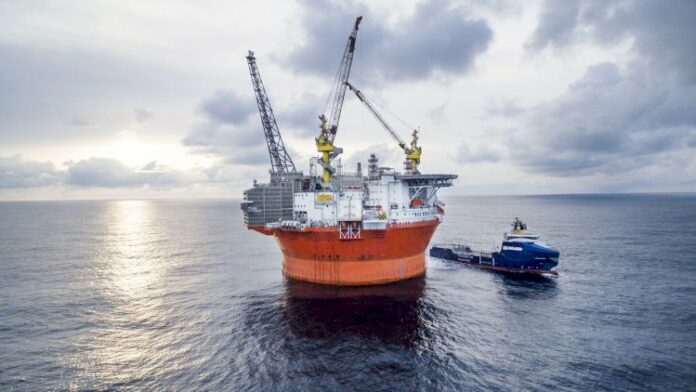
New resources discovered in the Abu Rudeis Sidri development lease, in the Gulf of Suez, where an appraisal well of the discovery of Sidri South, announced last July, was drilled. A rapid development plan for the new discovery with a "fast-track" approach, leveraging on existing infrastructures in the vicinity of the well and maximizing facilities synergies was immediately conceived.

Eni announces the discovery of new resources in the Abu Rudeis Sidri development lease, in the Gulf of Suez, where the operating company Petrobel, equally held by Eni and by the Egyptian General Petroleum Corporation (EGPC), drilled an appraisal well of the discovery of Sidri South, announced last July.

The Sidri 36 appraisal well, drilled to assess the field continuity westward in a down dip position with respect to Sidri-23 discovery well, encountered an important hydrocarbon column in the clastic sequences of the Nubia Formation (200 meters of hydrocarbon column).

This new and important result continues the positive track record of the "near field" exploration in Eni's historical concessions in Egypt and prove how the use of new play concepts and of the technology allows to re-evaluate areas where exploration was considered having reached a high level of maturity.

The well will be completed and put into production in the next few days with an expected initial flow rate of about 5.000 barrels per day. Petrobel immediately conceived a rapid development plan for the new discovery with a "fast-track" approach, leveraging on existing infrastructures in the vicinity of the well and maximizing facilities synergies; this strategy will be applied also in future activities in the Sidri area with the next delineation and development wells connected to the production in a short time.

The Sidri South discovery, which is estimated to contain about 200 million barrels of oil in place, will be reassessed following these new results.

Eni has been present in Egypt since 1954 where it’s the country leading producer. The current equity production is around 350,000 barrels of oil equivalent per day. Such production is expected to further grow within the year, thanks to the Zohr gas field and to the Baltim SW field ramp-up.
 

Pioneering eco-friendly project for solar heat in the port of Antwerp

0

Energy transition taking shape in Port of Antwerp: Azteq installs Concentrated Solar Thermal pilot plant for Adpo logistics company in Beveren.

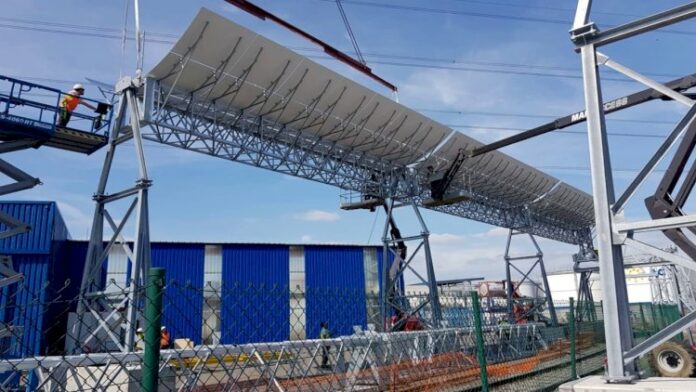
The first solar concentrator farm in the European process industry was inaugurated in Port of Antwerp. This pioneering energy technology generates eco-friendly heat from concentrated sunlight that can be used by industrial companies. The plant was installed for Adpo by the Genk-based energy company Azteq as part of a pilot project co-financed by the Flemish government.

Industrial companies normally obtain heat for their processes from combustion of fossil fuels such as natural gas. Concentrated Solar Thermal energy (CST) is an innovative technology in which sunlight is concentrated by parabolic mirrors and so converted directly to heat. The temperatures reached can be as high as 400°C, thus providing high-grade heat that can be used in industrial processes. The technology produces three times as much energy per installed square metre than a photovoltaic system. Furthermore the heat can be stored in insulated containers so that it is also available for use at night. The technology is an entirely eco-friendly alternative for industrial heating requirements and so can make a significant contribution toward reducing CO2 emissions.

The Ghent-based energy company Azteq has in the past few months installed a CST farm with 1100 m² of parabolic reflectors on the site of the logistics company Adpo (Antwerp Distribution and Products Operations) in Beveren. Until now Adpo has used gas to produce the steam that it uses for cleaning and heating tanks and containers. This requires temperatures of more than 140°C, well within the capabilities of CST technology. The CST farm that will replace 500 MWh of gas consumption annually is installed above the company's car park, above a railway line and underneath a high voltage line, thus providing an excellent example of double use of ground area. The solar reflectors, each 5 m long and installed in lines of 120, follow the path of the sun and focus the incident sunlight on collector tubes. The plant is the first industrial CST project in Europe.

Filip De Dijcker, managing director of Adpo, declared:

"Investing in the transition to sustainable, renewable energy is in our DNA.  The current project is not our first foray into sustainable energy. We already generate 700 MWh of electricity per year from solar panels, and the first LNG/CNG gas station was built on our terminal five years ago. We are also making our contribution to the modal shift: thanks to a new container quay we transport 10,000 containers per year by water instead of by road, and we have made significant investments in a rail connection and a direct pipeline connection for two of our companies."

The plant in the port of Antwerp forms part of a project in which three pilot installations with solar reflectors are being set up in Flanders. The three plants in Beveren, Ostend and Genk respectively will generate between 1,390 and 1,260 MWh of eco-friendly heat annually. Between them these plants will cost a total of 1.425 million euros, of which 819,000 is being financed by the Flemish government.

Koen Vermout, CEO of Azteq, commented:

"With this technology we aim to decarbonise a significant part of industrial energy requirements by 2030. This initiative in the port is one of the pilot projects that we are able to put into practice thanks to support from the Flemish government. We want in particular to demonstrate the feasibility of this technology and to establish it here. In addition to Flanders there are also plans for projects in the Netherlands, France, Germany, Austria and Spain. Making the supply of heat for industry more eco-friendly not only leads to significant reductions in CO2 emissions but also to technical progress and job creation in a future-oriented circular economy."

Port of Antwerp CEO Jacques Vandermeiren:

"As Port of Antwerp we have a pioneering role to play in the energy transition. Together with industry we are working to reduce CO2 emissions and make the transition to alternative energy sources, so as to become a CO2-neutral port. We aim to accomplish this by means of ambitious transition projects, using methanol, hydrogen, wind power etc. We want to be a testbed for technological innovation that helps us on the way to a sustainable future. I am therefore proud that this promising technology is being tested first in Port of Antwerp."

Port alderman Annick De Ridder:

"Big challenges such as those posed by the energy transition can only be tackled by collaboration. Collaboration with industry, the Flemish government and the industry associations. Together we are the driving force behind the conception and implementation of solutions to the challenges of the future. In our view, innovation is the way ahead. This pioneering project is an excellent example."

VIDEO: ROV to  cutting debris during drilling operations

0

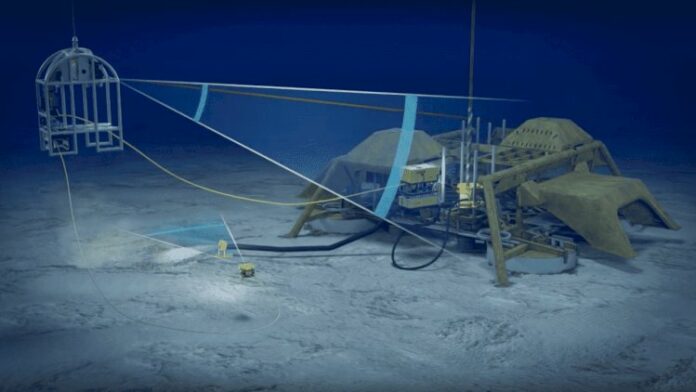
The ROV Cutting Transport System (RCTS) provides the same functionality as traditional drill cuttings removal systems while requiring fewer crew members and less deck space. It combines remotely operated vehicle (ROV) services and drill cuttings removal technology to provide an integrated solution and eliminate the need for additional onboard systems.
 

MOL adds new experiential content to VR-based safety education tool 

0

Mitsui O.S.K. Lines, Ltd. has announced the development of new content for its virtual reality (VR)-based marine safety education program, allowing trainees to virtually capture the sensations of "falling", "hand being caught between something", and experiencing "an incinerator explosion incident".

The program uses VR goggles and VR technology created by Tsumiki Seisaku Co., Ltd.

With the VR tool, trainees can experience onboard operations, with computer graphic simulations of moving around on the ship, in conjunction with their own movements, allowing them to pinpoint dangerous areas and situation. If a crew works without recognizing a danger, there is a higher likelihood of an accident or problem. The VR-based content enables them to think about issues that require extra care and help them plan their next moves during onboard operations.

Furthermore, the new content involves all the trainees' senses by introducing new equipment that replicates touching and sensing they would experience during an onboard accident, taking the training to a new level of realism. In particular, trainees may feel an electric shock (at imperceptible current) administered by the controller, as well as hear and see the situation and feel vibration through the VR goggles. This is intended to connect the training to instinctive learning by recreating the experience of an actual accident.

MOL strives for more effective onboard safety education including development of additional content, with the aim of raising mariners' safety awareness and eliminating onboard accidents through practical use of experience-based education tools, which mark a tremendous advance in authenticity compared to current training content.

Helsinki’s West Harbour fairway made more intelligent and safer

0

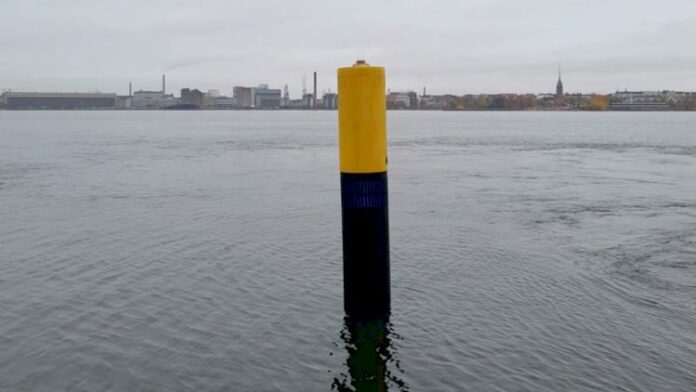
Port of Helsinki has upgraded ten buoys into smart, modern navigational aids.

The transition away from old buoys improves environmental friendliness, and the smart technology integrated into the new buoys increases safety in the fairway. The new buoys are part of Meritaito Ltd.’s InSea service concept.

Safety in the busy fairway at Helsinki’s West Harbour will improve as the old buoys were replaced with buoys equipped with remote monitoring and control technology.  This allows for data on the buoy, the navigational aid, any deviation from position and other faults to be available 24/7 in real time, and for the luminosity of the navigational aid to be adjusted to the prevailing weather conditions.

Jukka Kallio, Cargo Director at Port of Helsinki, says:

"Our aim is to introduce new technology to the fairway, and connecting the new navigation aids to Meritaito’s SeaDatics remote control and monitoring system is a good developmental step towards our goal. The change will also improve the port’s sustainable development goals, as the steel navigational aids were replaced with polyethylene buoys, which can be recycled throughout their entire life cycle. Real-time situation reports on the location and status of buoys improves safety in the fairway, but also increases the predictability of maintenance and thereby also improves cost-efficiency."

The connection of modern remote control and monitoring technology to navigational aids and the comprehensive maintenance service are both part of Meritaito’s InSea service agreement, which enables and accelerates the modernization of fairway navigational aids as a leasing service with a fixed monthly fee.  The pricing model increases cost-efficiency as leasing fees are easily controlled and budgeted, and customer capital is not tied up in the fairway infrastructure.

Thomas Erlund from Meritaito Ltd. says:

"Meritaito’s InSea service concept can be tailored to the customer’s needs. In addition to the modernization and maintenance of fairway navigational aids, it is also possible to add regular hydrographic survey services, condition surveys of underwater port structures, maintenance planning and other fairway maintenance services in accordance with the customer’s needs. The InSea service agreement allows for the fairway owners’ navigational aids to remain up-to-date, as the customer always has solutions enabled by the latest digital technology at their disposal."

New high speed catamaran to be built by Austal

0

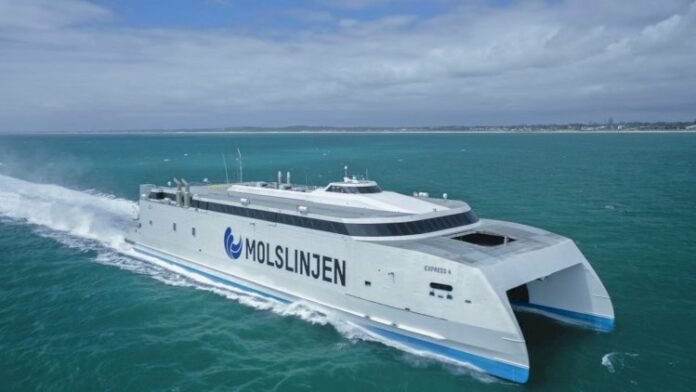
Austal has announced a €83.65 million contract for the design and construction of a new 115 metre high-speed catamaran for Molslinjen of Denmark.

A follow-up order to the 109 metre high-speed catamaran Express 4, delivered to Molslinjen in January 2019, the new Auto Express 115 will be the largest ferry (by volume) ever built by Austal. The vessel will be fitted with a new generation of medium speed engines that are LNG compatible, and is designed with the potential to upgrade to LNG fuel in the future.

Construction will commence in the third quarter of 2020 and delivery of the vessel will be in the first quarter of 2022. The vessel construction will dovetail neatly at the end of the second Fred Olsen trimaran currently being built in the Philippines, creating continuity of production for the facility.

Austal Chief Executive Officer David Singleton said the new order from Molslinjen confirmed Austal’s continuing international competitiveness and leadership in high-speed ferry design, construction and technology:

"With this new order, Austal has once again demonstrated a clear capability to offer the best, most advanced high speed ferries, cost competitively, reliably and to the highest quality.

To be designed in Henderson over a 12 month period and then built at our state-of-the-art shipbuilding facility in Balamban in the Philippines, the catamaran will feature Austal’s signature raked-bow and optimised hull form, and an LNG-capable medium-speed power plant that offers a powerful, yet economical and environmentally-friendly solution.

Express 5 will provide Molslinjen with a truly exciting high speed craft that will deliver a unique customer experience."

Featuring capacity for 1,610 passengers, space for 450 cars (or 617 lane metres for trucks + 257 cars) over 2 vehicle decks and an operating service speed close to 37 knots, the new ship will add valuable additional capacity on Molslinjen’s Bornholm route between Ystad and Rønne, from early 2022. On board, passengers will enjoy leather appointed reclining seats (with USB ports), Wi-Fi, a full bistro and bar(s), children’s play area and multiple audio-visual screens.

With this latest design, Austal’s Auto Express vehicle-passenger ferry portfolio has expanded to include over 30 catamaran and trimaran hull designs, ranging from 49 to 127 metres LOA, delivered to 30 operators since 1996.

Customisable to suit any operational requirement or route, the proven Auto Express platform also features Austal’s proprietary Motion Control and MARINELINK-Smart systems that deliver a smoother journey for passengers and crew and a more efficient, better performing, ‘smart’ ship for operators.
 

Speedcast upgrades major norwegian fleet’s VSAT connectivity

0

Fleet of 40 vessels will employ enhanced VSAT connectivity, Iridium Certus back-up solution and onboard network management via SIGMA Gateway.
 
Speedcast International Limited, the world’s most trusted provider of remote communications and IT solutions, has signed a multi-year fleet contract extension with a major Norwegian ship owner to deliver significantly increased VSAT connectivity along with the latest Iridium Certus back-up solution.

In addition to the provision of Global VSAT and L-Band connectivity, Speedcast will install its industry-leading SIGMA Gateway network management platform across the entire fleet of over 40 vessels. SIGMA Gateway seamlessly manages Speedcast’s global VSAT, L-Band, 4G/LTE and Wi-Fi services, bringing powerful capabilities to support vessels with advanced technology requirements.

Athina Vezyri, Executive Vice President of Maritime for Speedcast, said:

“This is a long-time Speedcast customer with a desire to take advantage of Speedcast’s high-speed VSAT service for increased bandwidth and faster speeds. The upgrade will increase operational effectiveness and facilitate the customer’s vision of improved welfare for onboard crew, while SIGMA Gateway will support the company’s network management requirements — today and in the years to come.”

The customer’s Global Fleet Support Systems Manager said:

“We look forward to the roll out of Speedcast’s VSAT connectivity solution onboard our fleet. Increased bandwidth and enhanced connectivity management services deployed via Speedcast’s SIGMA Gateway will increase our fleet’s operational efficiency and ensure improved service management on board each vessel.”

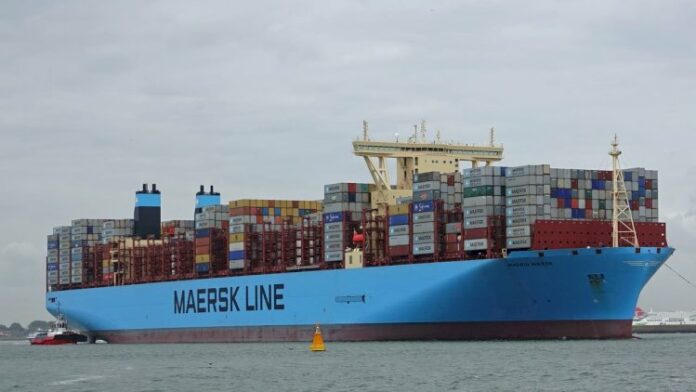
LR and Maersk: achieving net zero is an ‘OPEX not a CAPEX challenge‘

0

New study indicates that achieving net zero is an ‘OPEX not a CAPEX challenge‘.

LR and Maersk joint study finds that to develop zero carbon ready ships, shipowners must invest for fuel flexibility and points to the need for policy interventions and fundamental changes to incentives scheme for shipping.

A joint LR and A.P. Moller-Maersk study assessing the transition to zero carbon fuels has found that the cost of transport will rise – not because ships themselves will require greater levels of investment but because new fuels are projected to be significantly more expensive than existing fossil solutions which will lead to increased operating costs.

According to the study partners, achieving net zero is therefore an operating expense (OPEX) not a capital expenditure (CAPEX) challenge. A further key conclusion of the joint exercise was the recognition that the market will not drive the transition to zero and policy interventions as well as a fundamental change to the incentives scheme for shipping are required.

The joint study evaluates the interplay between economic performance of zero-emission vessels (ZEVs), technology readiness of fuels, associated machinery configurations, as well as safety and environmental considerations, all in the context of the wider energy system and the dependable production of future fuels. The study also found that the most relevant carbon neutral fuel configurations have relatively similar cost projections so initial modelling cannot yet determine clear winners purely from a cost point of view.

LR CEO Alastair Marsh says:

“The next decade will require industry collaboration as shipping considers its decarbonisation options and looks closely at the potential of fuels like alcohol, biomethane and ammonia. This joint modelling exercise between Lloyd’s Register and Maersk indicates that shipowners must invest for fuel flexibility and it is also clear that this transition presents more of an operating expenditure challenge than a capital expenditure one.”

According to Katharine Palmer, LR global head of sustainability, who led the study on behalf of the classification society: 

“The additional price to build a ship with new fuel tanks, modified engines and fuel supply systems is a very small element of the total cost of operation, as the additional CAPEX cost is divided over the lifetime of the ship but given the potential impact of future fuel prices on operating costs, shipowners must invest in flexibility – for example, designing a ship which can run on one fuel today and later be retrofitted to run on an alternate fuel.”

According to the project partners, the greater challenge is on land and within the energy sector. ZEVs are technologically possible in the next two years and while they may require ships and engines to be amended, this is dwarfed by the challenges of getting the right fuel ready and the necessary supporting infrastructure on land. LR’s Palmer says:

“Shipowners must be confident around their future investments and they require confidence around their fuel supply chain, both availability in the quantities required and the land-based infrastructure in place.”

Søren Toft, Maersk Chief Operating Officer, says:

“Decarbonising shipping requires a total shift in propulsion technologies and by 2030 we need to see the first commercially viable carbon neutral vessels in service – that’s only 11 years from now. This is a game changer that requires close collaboration and joint action from researchers, regulators, technology developers, investors, customers and energy providers.”

Toft added:

“Getting such a wide range of actors to work in the same direction is a necessary task, fundamental for the world, the next generations and also for the shipping sector if it is to stay relevant as the servant of global trade in a decarbonised economy. The more industry consensus we can get towards the pathway to follow the better to accelerate the efforts to innovate, scale and initiated the transition to a sustainable shipping by 2030.”

Boskalis awarded dredging project in the Republic of Maldives

0

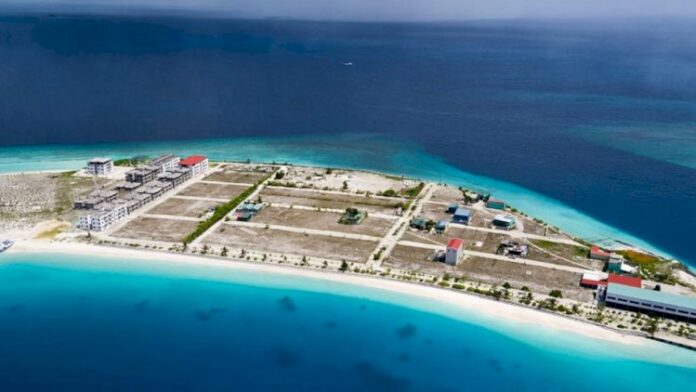
Royal Boskalis Westminster N.V. (Boskalis) has been awarded a contract by the Ministry of National Planning and Infrastructure, Republic of Maldives, in relation to the development of Gulhifalhu.

The contract carries a value of approximately EUR 45 million. The dredging activities are due to commence in the fourth quarter of 2019 and are expected to be completed in the second quarter of 2020.

The development of Gulhifalhu, located about four kilometers from the country’s capital Malé, forms part of the Ministry of National Planning and Infrastructure’s strategic plan to improve and develop the port infrastructure and will serve as a climate adaptive solution, making this part of the Maldives resilient to rising sea levels. As part of this program, Boskalis will reclaim an area with an initial volume of six million cubic meters of sand using a mega sized trailing suction hopper dredger. Boskalis’ activities also include rock revetment work for shoreline protection.

Since the turn of the century, Boskalis has successfully executed a number of climate change adaptive dredging and reclamation projects in the Maldives. Starting in 2006, the company reconstructed the island of Vilufushi following the devastating tsunami in December 2004. By doing so Boskalis increased the size of the island and raised it to 1.4 meters above mean sea level. This was followed by several subsequent projects including the initial development of Gulhifalhu in 2012 and land reclamation activities on four other islands in 2014.