3.5 C
New York
Home Blog Page 974

GTMaritime protects onboard cyber security in record numbers

0

GTMaritime has seen exceptional growth in the use of its secure, maritime optimised email software and other cyber-security solutions as vessel owners and operators step up a gear to harden onboard networks and protect their ships from digital threats.

Many have been spurred into action by IMO’s decision to bring cyber-security under the remit of the ISM code from 2021.

Some 5,677 vessels are now employing solutions from GTMaritime’s portfolio – an increase of more than one-third over the past year. Put another way, nearly one in ten vessels in the global merchant fleet are using GTMaritime technology to safeguard onboard systems from malicious code.

Notably, the deployment of the made-for-maritime anti-virus solution GTSentinel has jumped 23% since September 2018, with nearly 1,500 vessels now subscribing. Standard antivirus protection software can underperform at sea due to patchy connectivity and bandwidth constraints, often leaving vessels and businesses at risk.

GTSentinel was developed specifically by GTMaritime to overcome these failure points. It allows fleet IT managers to schedule the distribution of anti-virus updates on a live, daily or weekly basis. Updates need only be sent once to each vessel and then propagated to all onboard devices thanks to a unique serverless peer-to-peer distribution mechanism. The ‘buddy system’ minimises the impact of updates on the ship’s communications infrastructure and lets fleet managers strike a balance between airtime costs and updating anti-virus software.

When coupled with GTMaritime’s advanced email solution, GTMailPlus, GTSentinel ensures vessels are equipped with the highest level of protection against ransomware, spam, viruses and malware.

In the last six months, GTMaritime services have stopped more than 59,500 malware attacks which were unknown to standard antivirus services and halted more than 68,000 known viruses in their tracks. They have also prevented more than 200,000 spam messages clogging up onboard inboxes.

Mike McNally, who joined GTMaritime last year as Sales & Marketing Director, has now taken on the role of Global Commercial Director, responsible for all sales, marketing, technical sales support and sales operations. He said:

“As the leading independent provider of maritime email we feel a responsibility to continuously enhance the cyber security aspect of our solutions. We have made hundreds of updates and enhancements this year and will continue to do our best to keep ahead of the threat profiles.”

GTMaritime continues to respond to rising demand for its security solutions, McNally added. Over the past year, it has added nine new resellers across Asia, Europe, and the Middle East, he said
Damen signs contract with Karachi Shipyard

0

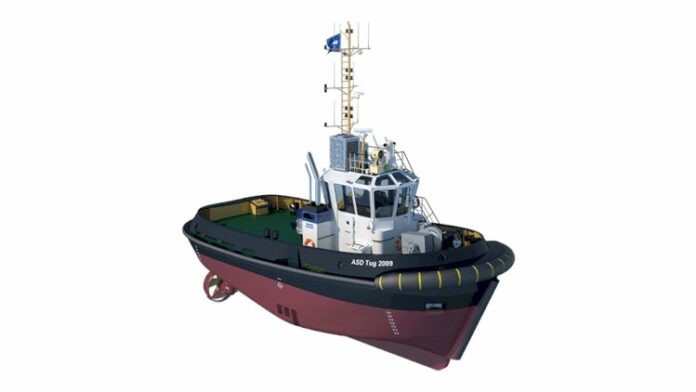
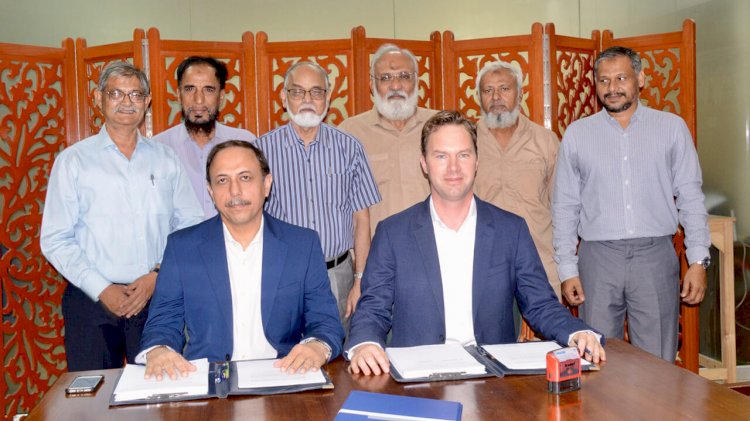
Damen Shipyards Group on 22nd October signed a contract with Karachi Shipyard & Engineering Works (KS&EW) for the materials package of a third ASD Tug 2009 under the Damen Technical Cooperation (DTC).

The order follows a contract of two ASD Tugs 2009 signed in July 2019. KS&EW is constructing all three vessels with Damen’s support.

The contract was signed on behalf of KS&EW by General Manager Shipbuilding Commodore (R) Saleem Iqbal SI(M) and by regional director Teun Haverkort on behalf of Damen.

Contract signing. Photo: Damen.

Speaking on the occasion of the contract signing, Mr. Haverkort said,

“Damen is pleased to have been awarded this contract on the basis of the good cooperation between our two companies and of the progress that has been made so far with the first two ASD Tugs 2009.”

Construction of the first two vessels is now underway, following a steel cutting ceremony held on 11th October in Karachi. The ceremony was attended by senior officials from the Government and Navy of Pakistan as well as the national industry, along with representatives of Damen and KS&EW. The two shipyards have been working together since 1988 and have successfully delivered numerous vessels to various clients in Pakistan. The ASD Tug 2009 is a proven, standardized design featuring excellent seakeeping behavior, superb maneuverability, and outstanding towing characteristics. The two vessels will be operated by the Pakistan Navy to support their fleet.

Vessel particulars available by this link

TechnipFMC awarded significant EPCI contract for Woodside’s Pyxis field

0

TechnipFMC has been awarded a significant integrated Engineering, Procurement, Construction and Installation (EPCI) contract by Woodside for the development of the Pyxis and Xena fields, located offshore North West Australia.

TechnipFMC will design, manufacture, deliver and install subsea equipment including subsea production system, flexible flowlines and umbilicals.

This contract is the first call-off under the recently executed five-year EPCI Frame Agreement between TechnipFMC and Woodside. The Frame Agreement allows collaborative development of projects for Woodside through early engagement and utilization of TechnipFMC integrated execution solutions.

Arnaud Piéton, President Subsea at TechnipFMC, commented:

“We are very pleased to have signed a five-year Frame Agreement with Woodside that leads to this first contract under this agreement. This iEPCITM contract combines our integrated subsea solution with our Subsea 2.0 products and illustrates TechnipFMC’s complete offering. We value our long-term, collaborative relationship with Woodside and are committed to bring the best in the execution of this project.”

Ports ready to roll to save UK from trade traffic

0

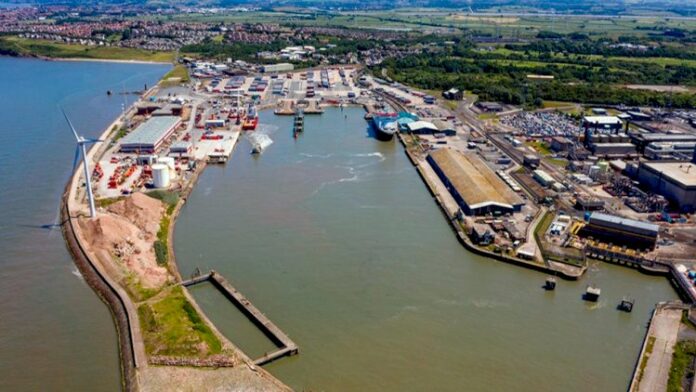
The ports of Liverpool, Heysham and Sheerness (London Medway) have the capability to limit the impact the UK’s expected departure from the EU on 31 October is expected to have on trading, according to their operator, Peel Ports.

With a combined capacity to handle 1 million RORO (roll on, roll off) units per year, the ports could play a vital role in ensuring cargo flow freely through UK ports as trade is expected to be challenging across the Dover Straits following Brexit.

All three ports have already taken steps to improve resilience ahead of Brexit. These include increased throughput capacity for HGV trailers and storage to support smooth trade operations by RORO ferries.

Peel Ports says that transporting non-perishable freight unaccompanied is faster and more cost effective than relying on driver-accompanied hauliers – of whom there are an acute shortage of across the continent – to transport cargo from Europe to the UK and vice versa.

Routing via ports such as London Medway would be just as efficient as the existing options through the Dover Straits, as although the sea leg is longer, road miles are reduced, according to Peel Ports. Door-to-door, cargo owners could reduce cost, increase resilience, avoid congestion and reduce carbon emissions.

Elsewhere, Peel Port’s operated Heysham has unrestricted access to the Irish Sea and already caters for numerous daily RORO sailing from providers including Seatruck, Stena Line and Isle of Man Steampacket.

Mark Whitworth, Chief Executive Officer of Peel Ports, said: “Our industry must address the risks of congestion. 75 per cent of the trailer freight market between north-west Europe and Britain passed through the pinch point of the Dover Straits. Mark Whitworth said:

“The solution we are putting forward is a simple one, which will help maintain smooth trade and also offer increased value to cargo owners.Unaccompanied trailers offer more flexibility for longer sea crossings, taking advantage of capacity at ports other than Dover, such as London Medway.

These journeys allow for clearance checks to be completed without the pressure of a 90 minute crossing increasing throughput and capacity. Using RORO also helps to alleviate the critical lack of drivers available on both sides of the continent. Elsewhere at our ports at Heysham and Liverpool, we have unrestricted access to the Irish Sea with daily services transporting cargo across the Irish Sea Hub.

We know that these practical solutions will help our customers to mitigate the risk which Brexit could bring. We believe cargo owners and their logistics providers can ensure their supply chain is protected, regardless of the regulatory framework around Brexit, by embracing RORO and alternative ports across the UK.”

In August this year Peel Ports Group were officially accredited with the internationally recognised quality mark of Authorised Economic Operator (AEO) by HMRC, marking a significant milestone in its path towards Brexit.

The accreditation recognises that a business’ customs controls and procedures are efficient and meet EU benchmarks to safeguard goods passing through the international supply chain.

New marine fuels: Total’s first LNG bunker vessel launched

0

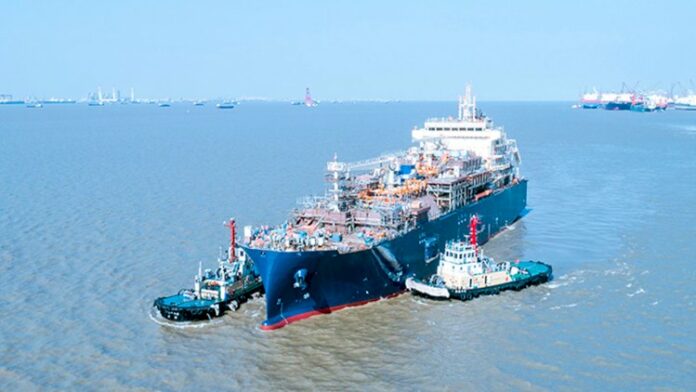
Total announces that its first large liquefied natural gas (LNG) bunker vessel has been launched, following the signature of a long-term charter contract between Total and Mitsui O.S.K Lines (MOL) in February 2018.

After delivery in 2020, the bunker vessel will operate in Northern Europe, where it will supply LNG to commercial vessels, including 300,000 tons per year for CMA CGM’s nine ultra-large newbuild containerships in Europe-Asia trade, for a period of at least 10 years.

The LNG bunker vessel’s construction is in line with the International Maritime Organization (IMO) decision to drastically limit the sulfur content of marine fuels as of 2020. In this context, the transition from heavy fuel oil to LNG is a competitive, efficient and immediately available solution for maritime transportation.

Used as a marine fuel, LNG sharply reduces emissions from ships, resulting in a significant improvement in air quality, particularly for communities in coastal areas and port cities. LNG helps to cut:

  • Sulfur emissions by 99%,
  • Fine particle emissions by 99%,
  • Nitrogen oxide emissions by 85%,
  • Greenhouse gases emissions by around 20%.

Momar Nguer, President for Total Marketing & Services, said:

“Developing infrastructure like this giant bunker vessel is essential to allow LNG to become a widely used marine fuel. This first ship demonstrates our commitment to offering our customers both more environmentally friendly fuels and the associated logistics. Thanks to this pioneering investment, Total is making a positive contribution to the sustainable evolution of global shipping.”

Built by Hudong-Zhonghua Shipbuilding at their shipyard near Shanghai, the bunker vessel is fitted with innovative tank technologies, with a capacity of 18,600 cubic meters, provided by the French company GTT. Designed to be highly maneuverable, the 135-meter-long vessel will be able to operate safely in the ports and terminals considered. Lastly, she meets the highest environmental standards thanks to the use of LNG as fuel and complete reliquefaction of boil-off gas.

Total is the second-largest private global LNG player, with an overall portfolio of around 40 million tons per year by 2020 and a global market share of 10%. With 22 million tons of LNG sold in 2018, the Group has solid, diversified positions across the LNG value chain. Through its stakes in liquefaction plants in Qatar, Nigeria, Russia, Norway, Oman, Egypt, the United Arab Emirates, the United States, Australia and Angola, Total sells LNG in markets worldwide.

VIDEO: The world’s most powerful Heavy Fire Vessel

0

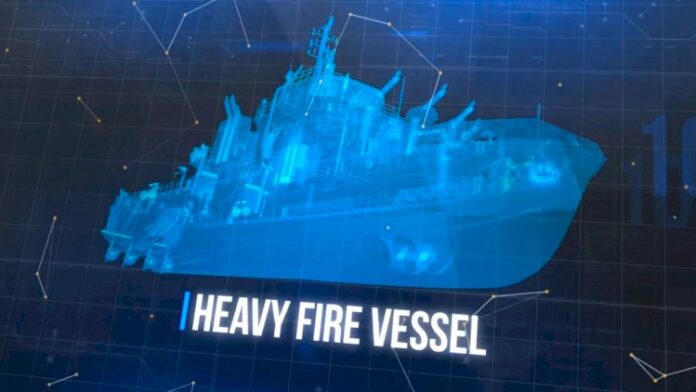
The Heavy Fire Vessel (HFV), codenamed the Red Sailfish, is the world’s most powerful firefighting vessel.

The Red Sailfish is equipped with an external firefighting (FiFi) Class 3 system that enables it to discharge a total output of 240,000 litres of seawater in a minute. In addition, the Red Sailfish is able to automatically maintain its position in the water, which helps to stabilize the water and foam monitors for effective firefighting operations.

The Red Sailfish’s capabilities and features include:

  • 12 water and foam onboard monitors capable of pumping water and foam up to a distance of 200 metres while providing a 360-degree firefighting coverage.
  • On-board detection capabilities for hazardous materials.
  • A chemical-biological-radiological (CBR) protection system.
  • 6 automated decontamination shower cubicles.
  • A launch and recovery system for the deployment of a Rigid-hulled Inflatable Boat (RHIB) for rescue operation.
  • Seaborne Electro-Optics Systems (SEOS) with thermal imaging capabilities.
  • A Command Room that has a 4G booster and video streaming system. 

The Red Sailfish is capable of pumping water and foam up to a distance of 200 metres.

AI could fix costly downtime in the oilfield services industry

0

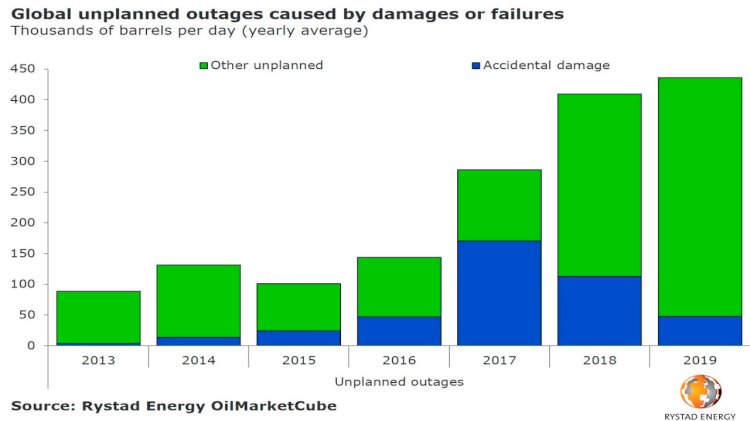
Unplanned outages are on the rise globally from both equipment failures and damages.

Smaller operators do not have the excess capital to conduct the same level of planned outages. As traditional methods of predicting equipment failure can be unreliable in a dynamic operating environment, they can be hesitant to sanction significant shutdown work unless it is absolutely necessary. Thus, they are forced to ride out operational uncertainty and have unfortunately seen unplanned outages increase.

Unplanned outages have severe negative cost and production consequences for the operator. Viewing this problem with upside potential, many service companies are now turning to technology companies in the hopes that artificial intelligence (AI) can help solve the problem and, ultimately, to grow revenues. Rystad Energy forecasts the application of artificial intelligence to monitor and predict equipment failures will continue to rise in the oilfield services industry.


Shipping trio share operational data with ONE through the IoS-OP

0

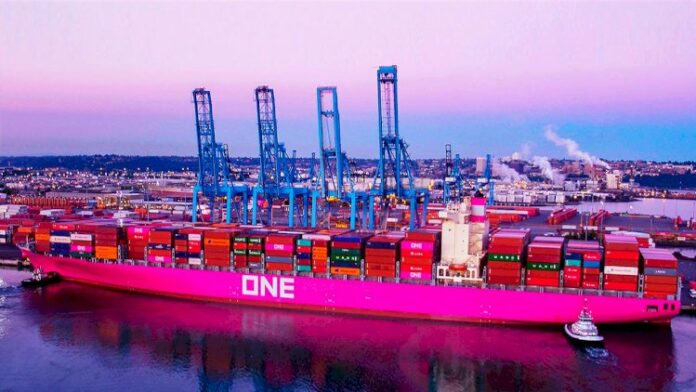
Kawasaki Kisen Kaisha, Ltd. ("K" LINE), Mitsui O.S.K Lines, Ltd. (Mitsui), and Nippon Yusen Kabushiki Kaisha (NYK) have begun sharing of operational data acquired from the monitoring system installed in their container ships with their charter, Ocean Network Express Pte. Ltd. (ONE), through the IoS-Open Platform (IoS-OP) promoted by Ship Data Center Ltd. (ShipDC).

As "K" LINE, MOL, and NYK have managed the data by different frameworks, ONE needed to carry out data conversion. With the IoS-OP’s automatic conversion function to the standard names in line with ISO19848, which is provided by ShipDC, data conversion burden is mitigated resulting in simplifying analysis and management of integrated operational data of ONE’s fleet.

ONE aims to use this data to improve the accuracy of performance evaluations of individual vessel and machinery, and to achieve safer and more efficient vessel operations.

This data sharing will significantly increase the volume of ship operational data distributed through IoS-OP, and further contribute to acceleration of data collection, distribution, and utilization through IoS-OP within the maritime industry.

Damen partners with Maris to consider seaweed solution

0

Consortium weighs viability of harvesting, preprocessing and transportation of Sargassum.

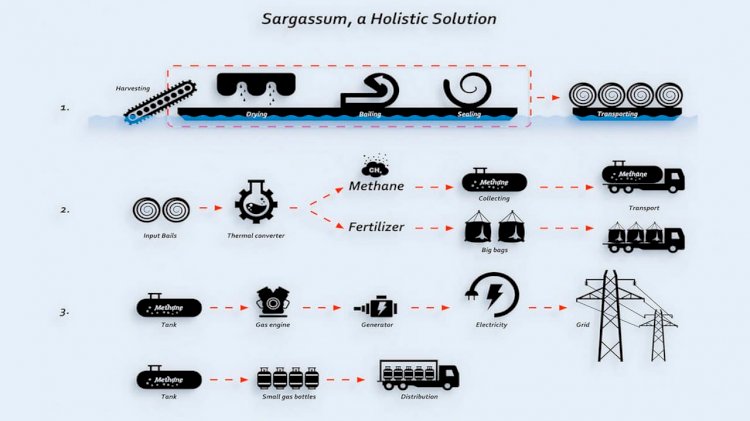
Damen Shipyards Group and Maris Projects have joined forces to tackle the issue of invasive Sargassum seaweed in the Caribbean region – including the Dutch Caribbean Islands. The partners are working towards the developments of a holistic solution. The work of the two companies is expected to greatly increase knowledge of bioprocessing, leading to the design of efficient and scalable technologies with the capability to deliver both environmental and socio-economic benefits.

A significant – and to date, inexplicable – rise in the quantity of Sargassum in Caribbean waters and along its shores, has been recorded in recent years. The weed is causing considerable problems in the region. Aside from the stench it gives off when decomposing, which has led to beach closures, the seaweed also clogs the engines and nets of fishing vessels. Additionally it is also smothering sea grasses and coral reefs as well as releasing greenhouse gases as it decomposes.

To attempt to find a solution, Damen Green Solutions has partnered with Maris. Damen’s role in the partnership is to develop a dedicated solution based on a specially developed MultiCat for harvesting, preprocessing and transportation Sargassum. Maris brings experience in scalable preprocessing and anaerobic conversion technology. With this, the consortium is assessing the viability of turning the Sargassum into methane for energy purposes.

The two partners have identified a local operating partner – CMC – that can harvest the seaweed in Martinique and Guadeloupe. Currently, the partners are discussing a contract that will create the consortium to be known as Blue Caribbean Energy Solutions.

The consortium aims to collect and purify Sargassum, then turn it into biogas via a two-step process using low temperature anaerobic digestion as the first step. The residues of this process will then be fed into a high temperature anaerobic thermal reactor to turn them into usable methane.

Damen Green Solutions director Marcel Karsijns explains:

“Currently, the solutions to the Sargassum challenge only go as far as removing the weed from the sea. Often it is brought onto land and left to decompose, where it gives off damaging greenhouse emissions. What we are attempting to do is develop a holistic, circular solution that turns a negative into a positive. As well as offering clean energy, the aim of the project is also to deliver sustainable benefit to local economies.”

As well as the short term aim of turning Sargassum into energy, the partnership will consider the economic viability of turning the harvest into fertiliser and/or feedstock for the agriculture industry.

The consortium will present the developments of their solution thus far at the forthcoming The Decade SARG EXPO between 24 and 26 October in Guadeloupe.

Maersk Drilling awarded drillship contract by POSCO International

0

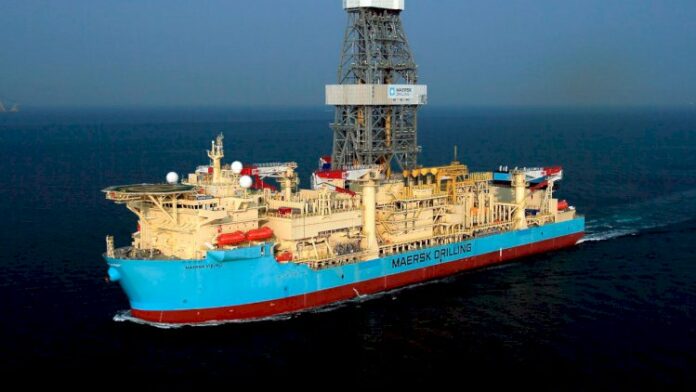
Maersk Drilling has secured a contract for the 7th generation drillship Maersk Viking which will be employed by the POSCO International Corporation, a Korean operator, for a three-well campaign offshore Myanmar.

The contract is expected to commence in the end of 2019, with an estimated duration of 154 days. The value of the firm contract is USD 33m, including a mobilisation fee. An additional one-well option is included in the contract.

Morten Kelstrup, COO of Maersk Drilling, says:

“We are very excited about having the opportunity to work together with the POSCO International Corporation and helping them achieve their goals. This campaign will enable us to showcase the nimbleness of our deepwater fleet, including the ability to move our floaters from one region to another and quickly start up new operations. We look forward to demonstrating the capabilities of our 7th generation drillships in the Asian-Pacific market.”

Maersk Viking is a high-spec ultra-deepwater drillship which was delivered in 2013. In August this year, Maersk Viking completed its latest campaign in Ghana, which included a well drilled at an ultra-deepwater depth of 10,125 ft.