-0.4 C
New York
Home Blog Page 972

X-BOW cruise vessel to set off for its first Antarctica expedition

0

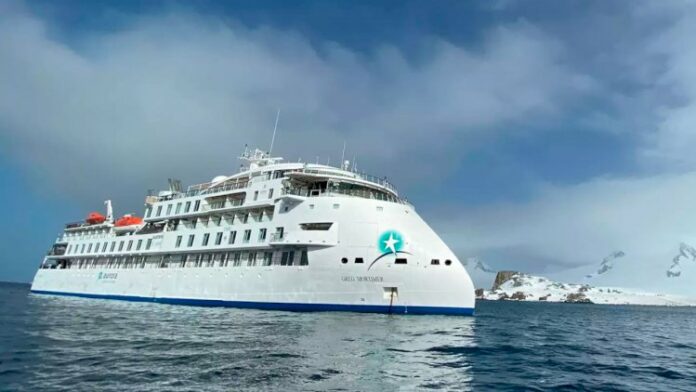
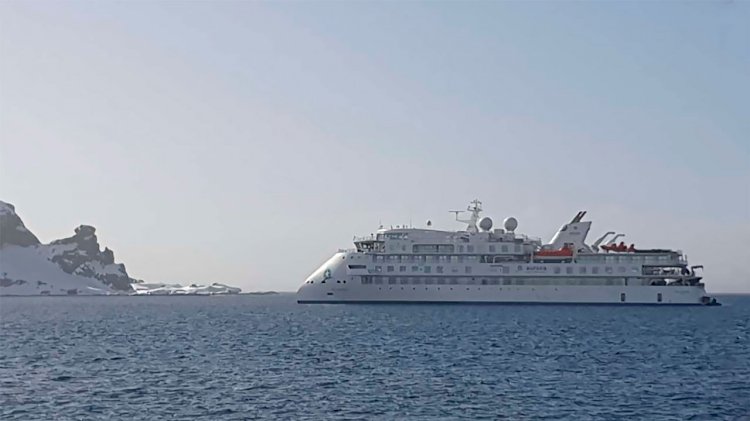
The first X-BOW® cruise vessel, Greg Mortimer, is about to set off for her first Antarctica expedition and will cross the notorious Drake Passage on 1 November. The X-BOW® feature reduces the slamming in head seas. This was proven on the transit from China to Argentina, when she entered 10m high waves and strong winds.

The vessel is a true globetrotter from birth, having been developed on four continents: The ship owner SunStone Ships is based in the U.S., the travel operator Aurora Expeditions is Australian, the ship designer is Norwegian, and the shipyard is Chinese. Now she will be exploring the White Continent.

The ‘Greg Mortimer’s characteristic X-BOW® design feature improves on-board comfort in head seas, as it helps to reduce slamming and resulting vibrations. The vessel can thus keep up speed in adverse weather to get quickly through the harshest stretches of waters, typically the Drake Passage.

Already on her first journey from the CMHI construction yard in China, the vessel came across very bad weather after leaving Cape Town heading for Ushuaia, Argentina. According to the Captain, the waves were 8-10 metres, with some waves reaching above deck 5, and strong winds. The vessel still kept high speed of 12-13 knots, with only 1 knot speed loss.

Captain Ulf-Peter Lindstrøm says:

“It’s a totally different experience! In big seas, I kept waiting for the slamming, but it never came. You don’t feel the sea, you have to relearn how to interpret the vessel behaviour. Other ships can only keep half the speed."

The X-BOW® feature was launched by Ulstein in 2005 and is implemented in more than 100 vessels worldwide, mostly offshore vessels. Ulstein has, for decades, been a specialist in the offshore segment before entering into offshore renewable vessels, car/passenger vessels and expedition cruise vessels.

Tore Ulstein, deputy CEO and COO Design & Solutions at Ulstein Group, says:

“Being an offshore specialist means that the vessels we design must be robust and handle very tough weather in some of the world’s harshest ocean areas. When Ulstein turned to the cruise industry, the cruise ship owners immediately saw the potential. The ‘Greg Mortimer’ is the first cruise vessel with the X-BOW® feature, but there are now several others under construction in China and Norway.”
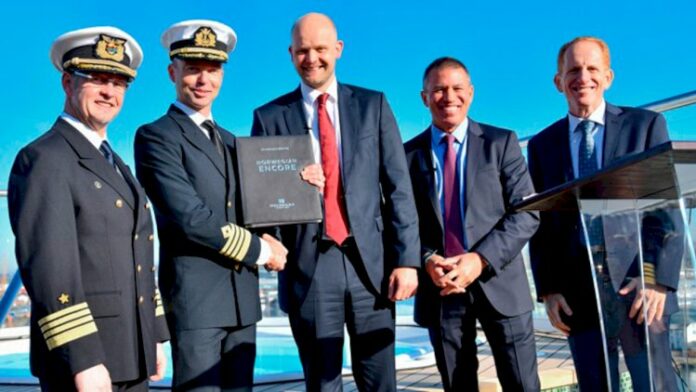
MEYER WERFT hands over Norwegian Encore

0

MEYER WERFT handed over the 169,245 GRT cruise ship Norwegian Encore to Norwegian Cruise Line (Miami, USA) in Bremerhaven following extensive testing of all machinery and systems, sea trials and intensive crew training. Norwegian Encore is the third vessels delivered by MEYER WERFT in 2019.

The technical equipment for a perfect entertainment on board is standard for cruise ships built in Papenburg. But the ship offers more than just unique en-tertainment. Many technical measures to protect the environment ensure pas-sengers can enjoy a lovely holiday while at the same time showing responsibil-ity for the environment, illustrated clearly by features including the electric pod propulsion drive and improved hydrodynamics, together with many energy sav-ing systems such as heat recovery or extensive water cleaning systems. The exhaust gas from energy-efficient engines is cleaned in a special scrubber system.

Tim Meyer, Managing Director of Meyer Werft, said:

“Norwegian Encore is the third cruise ship we deliver in 2019. I am proud and thankful for the contribution of our employees and partners.”

Following delivery, Norwegian Encore will be leaving Bremerhaven for South-ampton, where the ship will be presented to the public for the first time. The ship will be christened on 21 November 2019 in Miami by Kelly Clarkson, an American singer.

Waves Group introduces its system to reducing risk in incidents

0

Imagine: you’ve just received a call to say that your vessel has been involved in a major incident. Initial details are sparse – it seems that while nobody has been hurt there could be some very serious damage caused to both the vessel and some expensive port infrastructure.

There will be a lot of questions. Is emergency assistance needed and who can provide it? What caused the incident? Could the vessel be liable?

So how to respond? The traditional method would be to get somebody on scene to make an assessment as quickly as possible. But who? A generalist local surveyor? A specialist maritime casualty consultant? And crucially, what can you tell them before they arrive so they can be prepared?

Getting the early decisions right can make the difference between a professional response that protects your interests and mitigate the risk of having an expensive set of problems.

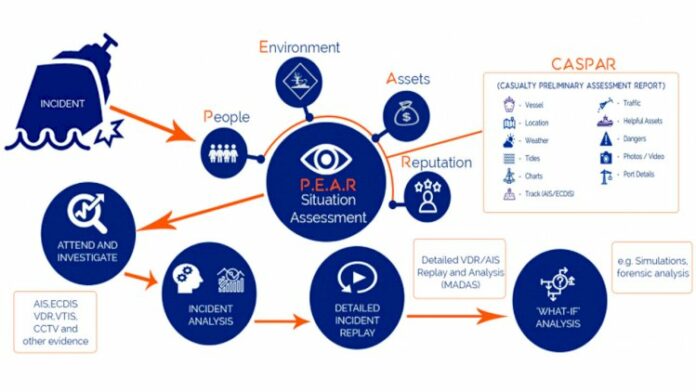
Leveraging the vast number of resources now available digitally, Waves Group has developed a unique in-house software system: CASPAR (CASualty Preliminary Assessment Report).

Provided in an easy to read format, a CASPAR report brings together all of the most relevant intelligence available in relation to an incident – AIS tracks, charts, weather and tide data, Vessel details, photos or videos of the incident, and many other considerations.

Those managing the casualty and those attending will then have far more insight into what has occurred and how best to respond with a CASPAR in hand, before they arrive on site.

The ability to turn data into meaningful information readily within the early stages of an incident can help to reduce risk while increasing the certainty of a favourable outcome.

CASPARs have been utilised in dozens of real-world incidents over the past year. CASPARs will be provided within 24 hours of instruction, although in practice most are with clients within 4 hours.

VIDEO: Maersk delivers innovative solutions for well intervention

0

Maersk Supply Service delivers innovative and cost effective solutions for well intervention such as well stimulation and subsea tree installation and recovery.

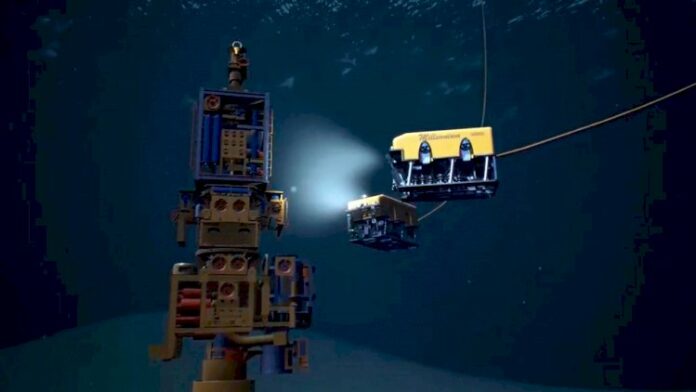
One example is a light well intervention campaign carried out offshore Angola from August 2018 to April 2019. Maersk Supply Service provided project management, subsea support vessel Maersk Installer, and additional project crew to support a Light Well Intervention campaign across 9 production and water injection wells.

The integrated service provided by Maersk Supply Service and a partner includes the vessel, well intervention systems, downhole services and WROV. The setup can be employed to evaluate reservoir performance, set packers to isolate zones, perform
perforation to improve flow, mechanically repair downhole safety valves, and shift sliding sleeves to reconfigure flow.
 

Maqta Gateway and Etisalat partner to deliver digital services

0

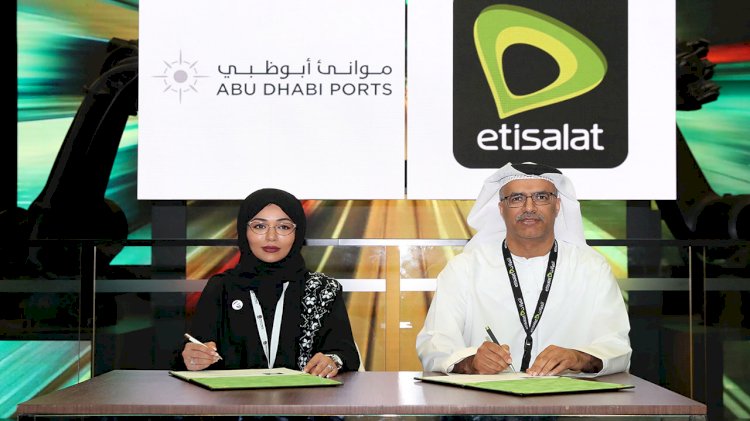
Maqta Gateway, a subsidiary of Abu Dhabi Ports signed a Memorandum of Understanding (MoU) with Etisalat enabling connectivity and bringing digital innovation across the port facilities.

The partnership will help transform the port with technologies like cloud computing, IoT and big data, paving the way for a new era of digital transformation in the maritime sector. Dr. Noura Al Dhaheri, Chief Executive Officer, Maqta Gateway, said:

“We aim to transform our port facilities with smart solutions and technologies. Etisalat as a partner will help us achieve our vision by delivering digital services that is in line with the Abu Dhabi vision 2030 and ultimately improve customer experience.”

Sultan Al Dhaheri, General Manager, Etisalat Abu Dhabi region said: 

“Etisalat looks forward to working with Maqta Gateway enabling connectivity and giving them capabilities to bring in efficiency and manage business operations across the port. This strategic agreement is part of our overall strategy and objective of ‘Driving a Digital future to Empower Societies’ as we work closely with the public and private sector to enable digital technologies and solutions to help boost their digital services.”

The agreement aims to focus on building shared electronic projects and networks, exchanging knowledge, simplifying procedures, securing fixed and wireless telecommunications coverage, and managing operational risk.

Yang Ming to launch the new ITS service

0

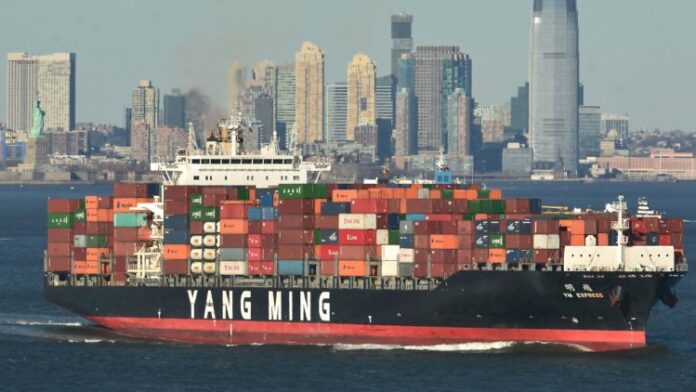
Encouraged by the steady economic growth and foreign trade in between Indonesia, Singapore, Malaysia and Thailand, Yang Ming continues to enhance its Southeast Asia deployment with the new ITS service (Indonesia – Singapore/Malaysia – Thailand Service). The ITS service is set to be launched on November 12th, 2019.

A total of three container ships with loadable capacity of 1,180 TEU each will be deployed for ITS service, of which one is contributed by Yang Ming. The full port rotation will be Singapore, Port Kelang, Semarang, Surabaya, Port Kelang, and Singapore, Laem Chabang, Bangkok, Laem Chabang and Singapore. With the new service, Yang Ming can penetrate the markets in Indonesia and Thailand further. The ITS service will be able to connect Yang Ming’s global service network via transit hubs Singapore and Port Kelang.

Yang Ming currently offers nine regional services in Southeast Asia, in addition to SE5 and TIX, the ITS service will increase options for customers to directly access Thailand and Indonesia. With the new service, Yang Ming will be able to provide more efficient and comprehensive service in this area.

Boskalis awarded offshore wind farm project in Taiwan

0

Royal Boskalis Westminster N.V. (Boskalis) together with Taiwanese partner Hwa Chi Construction Co. Ltd. have been awarded the foundation scope for the Taiwanese Changfang and Xidao offshore wind farm (CFXD OWF) project owned by Copenhagen Infrastructure Partners (CIP).

The project includes the transportation and installation of sixty two three-legged jacket foundations and the accompanying 186 pin piles. The contract value for Boskalis is substantial and is subject to financial close of the CFXD OWF project by CIP due later this year.

Boskalis and Hwa Chi have successfully performed marine construction projects in Taiwan over the last 30 years and will execute this project as BoWei (Boskalis HwaChi Offshore Wind Taiwan Co. Ltd.). In line with the local content requirement policy for OWF developments in Taiwan, BoWei will subcontract work to local suppliers including the sourcing of support vessels, local engineering and logistic services. The CFXD OWF is located approximately 15 kilometers off the coast of Changhua County, Taiwan and will generate a total capacity of up to 600 MW. Engineering and pre-construction works commenced recently and the project is scheduled to be executed in the period 2021-2023.

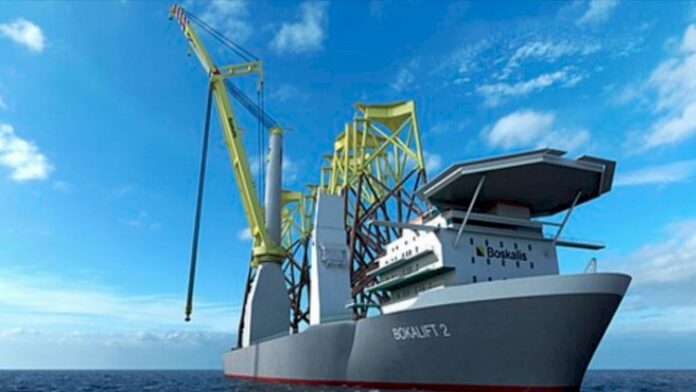
CFXD OWF will be the launching project for the new Bokalift 2 crane vessel. Similar to the successful Bokalift 1, Boskalis will convert an existing hull to create the Bokalift 2 crane vessel. The DP2 vessel with accommodation for 150 persons will boast 7,500 m2 of free deck space and a 4,000 ton revolving crane capable of lifting structures more than 100 meters high. The Bokalift 2 will be a flexible value adding asset, well positioned for the installation of current and future generation offshore wind turbine foundations as well as oil and gas structures in addition to serving the decommissioning and salvage market.

Boskalis’ strategy is aimed at benefitting from key macro-economic factors which drive worldwide demand in our markets: expansion of the global economy, increase in energy consumption, global population growth and the challenges that go hand in hand with climate change. This project is related to the development of generating renewable energy due to climate change and increasing energy consumption.

BOURBON to deploy Smart Shipping program for TOTAL

0

BOURBON & SONASURF have announced the signing of a 3-year cooperation agreement with TOTAL in Angola for the deployment of the Smart shipping program on 5 latest-generation supply vessels of the Bourbon Explorer 500 series (DP2-equipped PSVs) operating on blocks 17 and 32 off the Angolan coast.

Building on technological innovations, BOURBON’s Smart shipping program has the objective of reinforcing the safety and reliability of operations while reducing cost by 25% over the long term. It aims at:

  • simplifying organization on board, notably with the support of digital technology;
  • transferring ashore functions that are currently carried out on board by connecting the vessels;

It is based on 3 pillars: operational model aboard the vessel, predictive maintenance and support of onshore operational centers.

Among the innovations and optimizations deployed on the 5 vessels under contract with TOTAL, some should be highlighted:

  • The use of the dynamic positioning (DP) system: its supervision is mutualized between maintenance and bridge crews to reinforce the mix of expertise. The system has been reinforced to enable the continuous and remote monitoring of DP’s integrity.
  • The rationalization of work organization on board: BOURBON crews have digitalized some of the mandatory bridge’s tasks and have developed applications to simplify the crew's administrative work and optimize their workload. The elimination of administrative and routine tasks thus enables crews to focus on the supervision of operations.
  • The deployment of a new system of predictive maintenance for the main equipment on board: it enables the reduction of vessel downtime and thus the impact on customer operations by anticipating incidents on equipment that are under constant monitoring. It is coupled with dedicated organization onshore.

Deployment of the Smart shipping program on this fleet of supply vessels is in line with TOTAL's willingness to deploy innovative solutions enabling the sustainability of current vessel rates over the long term and thus the control of its production costs.

Ivelino Do Nascimento, Sonasurf Operations Manager, states:

"This new mode of vessel operation enables us to meet the challenge of controlling costs in the current time of recovering activity. We are very happy to have been able to move forward in collaborative mode with TOTAL on this deployment project in Angola."

Victor Chevallier, CEO of Bourbon Marine & Logistics, adds:

"Our customers' trust and this project in partnership with TOTAL in particular are essential in the success of our #BOURBONINMOTION action plan. The deployment of the program at TOTAL prefigures a new way of sustainable cooperation and optimized services delivery to our customers with fewer resources."

New electric tug powered by battery and hydrogen fuel cell

0

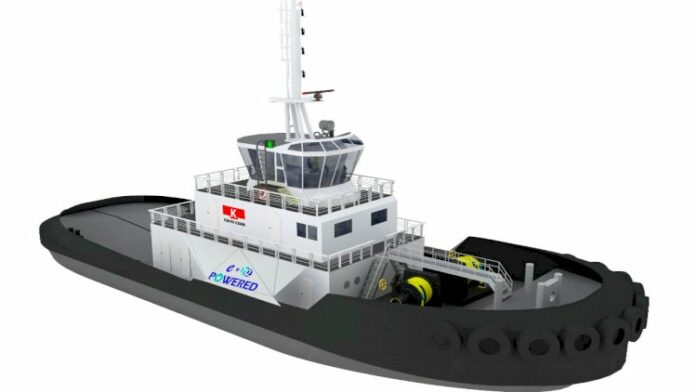
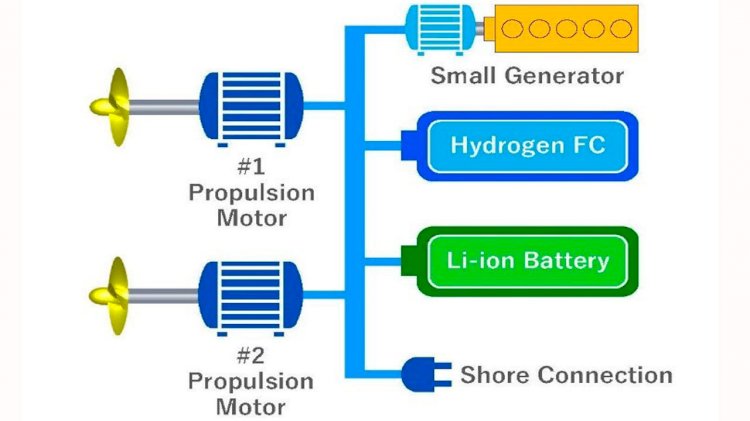
Tokyo Kisen Co., Ltd. and e5 Lab Inc. have jointly developed the new concept design of “e5 Tug,” electric propulsion harbor tugboat powered by large-capacity battery and a hydrogen fuel cell.

The e5 Tug is a harbor tug fully electrified and designed to minimize environmental footprint.

The e5 Tug is equipped with a propulsion system running on “e5 powertrain platform”, devised and planned by e5 Lab, which utilizes a large-capacity battery system as a main power source and a hydrogen fuel cell and generator as the auxiliary power source.

This electric propulsion system will ensure sufficient bollard pull and continuous cruising time necessary for harbor tugboat which requires a large-capacity power to function. Furthermore, CO2 emission is minimized by incorporating fuel cell. 

This joint project is drawing upon knowledge and experience of Tokyo Kisen as a tugboat operator and e5 Lab is undertaking concept planning / development, design, and project management.

Maersk join forces with industry peers and customers to develop LEO

0

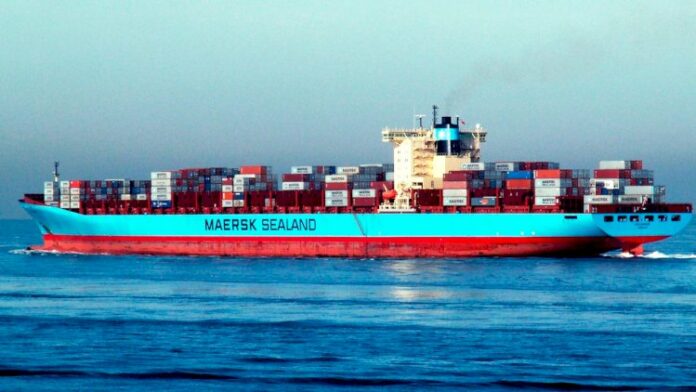
A.P. Moller – Maersk alongside with Wallenius Wilhelmsen, BMW Group, H&M Group, Levi Strauss & Co. and, Marks & Spencer to explore LEO – a blend of lignin and ethanol – that could be part of the future solution for sustainable shipping.

From the phone, tablet or computer you are reading this on, to the fruit you eat, the trousers you wear or the car you drive, around 80% of the goods you use every day are delivered to you by sea.

Shipping accounts for 2-3% of global CO2 emissions, a proportion that is set to increase as global trade continues to grow at a sluggish but steady pace. As such, this industry has an urgent need to reduce its environmental impact.

Maersk and Wallenius Wilhelmsen have teamed up with Copenhagen University and major customers including BMW Group, H&M Group, Levi Strauss & Co. and Marks & Spencer to form the LEO Coalition, which will explore the environmental and commercial viability of LEO fuel for shipping.

The marine sector has very different fuel requirements than automotive or aviation. Søren Toft, Maersk Chief Operating Officer, explains:

“Shipping requires bespoke low-carbon fuel solutions which can make the leap from the laboratory to the global shipping fleet. Initiatives such as the LEO Coalition are an important catalyst in this process.”

Lignin is a structural bio-polymer which contributes to the rigidity of plants. Lignin is isolated in large quantities as a byproduct of lignocellulosic ethanol and pulp and paper mills. Currently, it is often incinerated to produce steam and electricity.

Craig Jasienski, Wallenius Wilhelmsen Chief Executive Officer, says:

“Our customers’ ambitions on sustainability are increasing rapidly, and we applaud this development. Clearly, LEO would be a great step forward for supply chain sustainability, and it has the potential to be a viable solution for today’s fleet, and not just a future vision.”

Leading companies in many sectors are actively exploring solutions to reduce emissions along their entire value chains, as part of the global recognition of the importance of sustainably meeting the world’s demand for goods. This very much includes the transportation and logistics sector which delivers those goods.

Sea transport logistics plays an important role for the BMW Group´s vehicle production and distribution processes all over the world. As the company fosters sustainability along the entire value chain the participation at the LEO project is a valuable commitment.

Helena Helmersson, Chief Operating Officer at H&M Group states:

“Climate change is an ongoing reality and a key challenge to all industries, including fashion. We are aware of our responsibility to stay within the planetary boundaries and are committed to reduce our impact in every aspect of our value chain, including how our products are shipped to consumers around the world. This coalition gives us the opportunity to explore the development of a low-carbon fuel for shipping today.”                                                                 

Copenhagen University is currently running the laboratory-scale development of this potential marine fuel. The project aims to move into phase II – testing the fuel on actual vessel engines – in the second quarter of 2020. Following a successful phase II, phase III will begin – the scaling up of LEO fuel production.