-0.5 C
New York
Home Blog Page 969

Saipem receives the Total Safety Award for an innovative system

0

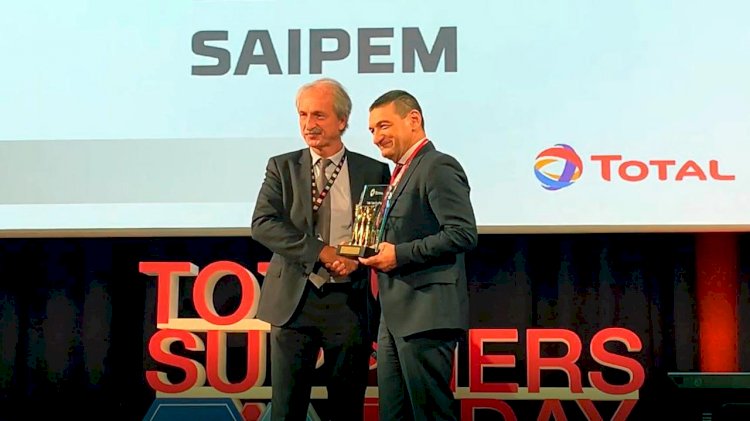
Saipem has received the Total Safety Award for an innovative system that improves performances during operations in confined spaces in terms of personnel safety, productivity and quality of the end product.

The award ceremony took place on 23 October 2019 during Total Suppliers Day in the offices of the oil major in the La Défense district of Paris.

The new confined space management system adopts hi-tech equipment and is the result of a study based on years of experience and expertise gained on previous projects.

From an operational standpoint, the solution requires that riggers and welders working in confined spaces wear special ergonomic helmets into which purified air is introduced and through which it is possible to adjust the temperature of the protection device according to one’s personal level of comfort. Headsets and a microphone ensure constant communication between the operators inside and the assistants outside. Furthermore, gas detection sensors and an infrared camera system facilitate the monitoring in real rime of all environmental parameters inside the space, as well as the timely identification of potentially risky situations. Finally, training is provided using a tailor-made simulator.

The confined space management system was developed in Nigeria for the Egina project in collaboration with Total. It was initially designed for welders working on buoyancy tanks, cylindrical buoys used to support the vertical pipes that transport oil and gas from the seabed to the surface. In order to carry out this important task, it is vital that the welds on all airlocks (whose filling with hydrogen determines the way the buoy is positioned) are done to perfection.

Guido D’Aloisio, Senior Manager of Saipem’s Offshore E&C Business Division, commented:

“Through this solution, Saipem has managed not only to improve the working environment of people operating in confined spaces, but also to increase productivity. Indeed, thanks to this equipment it is now possible for the work session of an individual to last for two or three hours rather than the usual 30 minutes. This project is further proof of how Saipem contributes to creating value in the countries where it operates, in this instance by transferring both assets and know-how. Specifically, we are witnessing a transfer of technology, designed and produced entirely in Nigeria, to other sites around the world where it can be used in confined space operations”.
Nexans exports cable for the Seagreen wind farm project

0

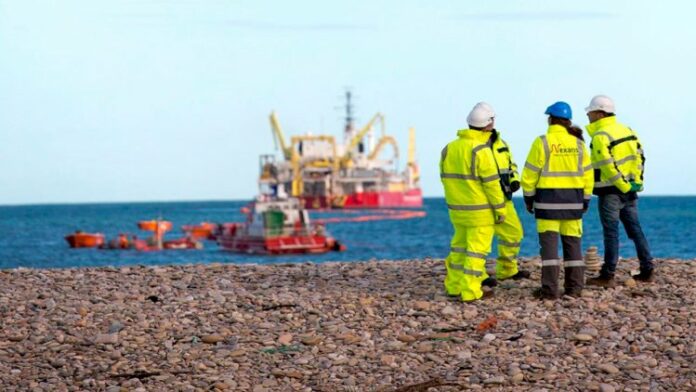
Nexans has been appointed by SSE as the preferred supplier to design, manufacture and install the onshore and offshore export cables for the Phase 1 development of the Seagreen offshore wind farm project. Currently under construction off the Angus coast, Phase 1 comprises the Seagreen Alpha and Bravo wind farms.

With a combined capacity of 1,075MW,  they will form the largest windfarm project in Scotland when they come on line in 2024. Nexans will supply and install the three 65 km offshore export cables and three 20 km onshore export cables for the project.

Seagreen Project Director John Hill said:

“We are pleased to announce Nexans as our preferred supplier to design, supply and install the onshore and offshore export cable. Nexans is one of the world leaders in this field and this agreement is a major step forward for the Seagreen project.”

Vincent Desale, Nexans SEVP for the Subsea and Land System Business Group commented:

“We are delighted to receive this agreement from SSE and we are excited to be helping to bring the biggest windfarm in Scotland to life.” 
 

GMP invests in two new container berths in Port of Le Havre

0

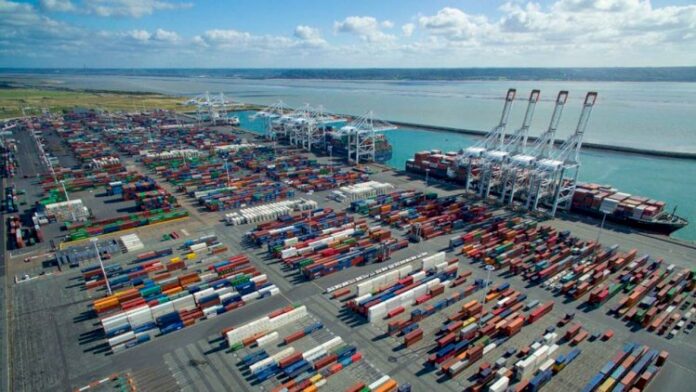
DP World’s Joint Venture Wins Concession for Berths 11 & 12 of Port 2000 in Le Havre.

The joint venture between DP World, the leading enabler of global trade and the France-based international container operator Terminal Link – PortSynergy Group (GMP) – has been awarded the service concession for the construction and operation of berths 11 and 12 at Port 2000 in Le Havre.

The terminals of Port 2000 in Le Havre are trade-enabling gateways for cargo entering the French consumer markets. Recognising the strategic importance of Port 2000, GMP has been an early supporter of port development and looks to grow its partnership with the Port of Le Havre by developing the terminal further. GMP will now invest in two new container berths spanning across 700 metres.

The favourable decision by the Supervisory Board of the Port of Le Havre will allow GMP to strengthen its presence in France, at the same time supporting the economic growth of the region. In 2018, GMP posted market-leading growth of 11% compared to 2017, representing more than 55% of market share through its two terminals (Terminal de France and North Terminals).

The new terminal represents an additional operational capacity of 1 million TEUs and will include a 700-meter-long quay and a 42-hectare site. The concession agreement is for a term of 34 years, including two years of studies and design, two years of civil engineering work and 30 years of operation. GMP will make significant investments in the development of this new terminal, modernising it to better support trade growth.

The new berths are envisaged to include new state-of-the-art equipment to service large container vessels, creating a terminal with smarter trade-enabling solutions to increase productivity and greatly enhance its service capability and quality including a 35-hectares stacking area, a direct rail access into the hinterland and a 7-hectare area dedicated to buildings and operating infrastructures.

Louis Jonquiere, Managing Director of GMP, said:

"The signing marks a new chapter in our partnership with the Port of Le Havre. The addition of the two new berths will enable us to secure more volume and provide high-efficiency services. As a major hub port, the expansion in the terminal will facilitate the capture of more volume from the trade, benefitting from the momentum that has built in the region.

We aim to enable smarter trade and create a much stronger economic engine for the national and regional market. By investing further in the terminal, GMP is driving economic development for the region and generating career opportunities for the local population."

Meratus Line chooses CyberLogitec’s container carrier operations solution

0

CyberLogitec ALLEGRO SaaS chosen to Manage Operations at Meratus, Leading Indonesian Shipping Line.

CyberLogitec, the leading provider of maritime, port/terminal and logistics operations technologies, has announced that leading Indonesian shipping company Meratus Line has signed the contract to deploy ALLEGRO SaaS, container carrier operations solution.

Meratus Line operates a fleet of 56 vessels, 40,000 box containers and 30 container liner services connecting over 30 major ports across the Indonesian archipelago. The move to ALLEGRO SaaS promises to benefit Meratus’ clients in Indonesia and the broader Southeast Asia region.

The SaaS solution offers a pay-per-use model built on the successful ALLEGRO solution, allowing customers to enjoy the same benefits, such as real-time data for critical decisions and intelligent algorithms for automated data capture. This agreement follows closely on the heels of the SaaS launch recently in July 2019.

Mr Kamlesh Devchand, Chief Executive Officer of Meratus Line, said:

“Through advanced capabilities, ALLEGRO SaaS will enable us to provide seamless operations from end to end and reinforce our capacity to serve domestic and regional trade and logistics. The ability to integrate and automate all our shipping functions will be vital to our push for greater customer value from here and into the future.
The deployment of ALLEGRO SaaS is a key component in our digital transformation strategy. By enabling all data to be accessible on any device, anywhere, any time, it will improve decision-making, enable great efficiency gains and deliver improved customer satisfaction.”

Jason Hyeon, Managing Director of CyberLogitec Global, said he was heartened by the deal:

“ALLEGRO SaaS will help level the playing field as small- and mid-sized carriers stand to enjoy digitialized and automated functions that will reduce time spent on repetitive tasks, reduce human error, boost productivity. Meratus Line will be able to provide more powerful, efficient services for their customers. We look forward to working with Meratus Line to help them realise their goal of better resource utilization and cargo yields.”

ALLEGRO is an end-to-end, integrated solution tailored for the operations of containerized shipping lines. Besides allowing for shipping processes to be hosted on a single system, the cloud-based ALLEGRO SaaS runs in a robust, web-compliant operating environment with user-friendly interface, enabling remote teams to have always-on, easy access to data. As the entire range of activities, from pricing, to booking up till delivery is updated in real time, enabling Meratus to maintain 24/7 visibility of the supply chain end to end. This provides proactive monitoring of operational efficiency and managing of operating costs.

Cyber-SHIP Lab in UK to address maritime cyber security

0

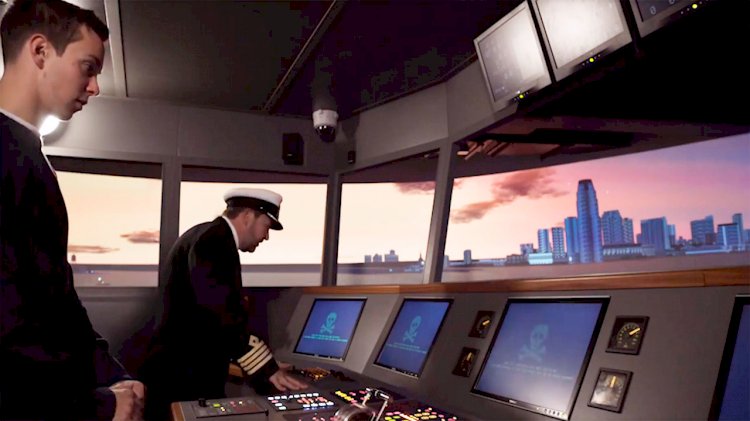
A unique new research facility designed to address the key cyber security challenges facing the shipping industry is being established at the University of Plymouth.

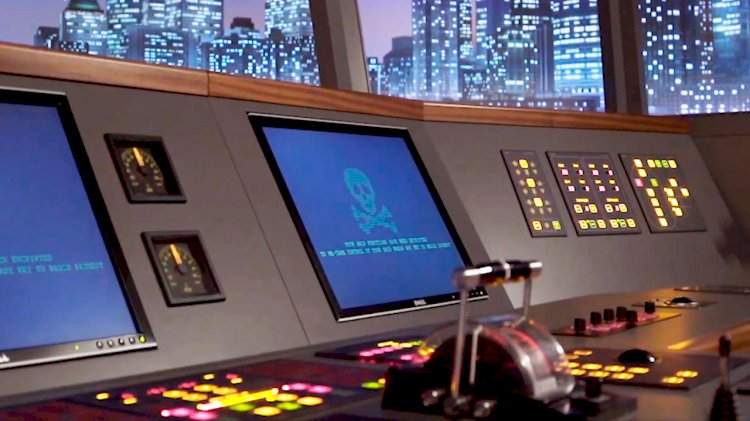
The £3million Cyber-SHIP Lab, supported by funding from Research England, part of UK Research and Innovation, and industry, will bring together a host of connected maritime systems currently found on an actual ship’s bridge.

Experts in cyber security and information systems will then assess them for weaknesses, and identify the human and technological changes needed to make them secure for the future.

The Lab is being developed and delivered in partnership with key industry sectors including equipment manufacturers, solution developers, shipping and port operators, ship builders, classification agencies and insurance companies.

It will feature cutting edge maritime technology including radar equipment, a voyage data recorder (VDR), an Electronic Chart Display and Information System (ECDIS), an automatic identification system (AIS) and communications devices.

And it will complement the University’s existing world-leading maritime facilities, which include a state-of-the-art simulator dedicated to training professional seafarers, and a lab examining latest advances in cyber security.

The creation of the Cyber-SHIP Lab is being coordinated by researchers from the University’s Maritime Cyber Threats Research Group and Centre for Security, Communications and Network Research, which between them combine leading multidisciplinary research and practical expertise from across the University and beyond.

Professor Kevin Jones, Executive Dean for Science and Engineering and Principal Investigator for the Project, said:

“The creation of the Cyber-SHIP Lab is a transformational step towards developing a national centre for research into maritime cyber-security. It will support a range of research and training that cannot be achieved with simulators alone, and also facilitate the development and delivery of new maritime cyber provision for graduates, postgraduates and industry.

Cyber-attacks are a Tier1 National UK threat. But although the maritime sector is advancing technologically, it is not well protected against cyber or cyber-physical attacks and accidents. Worth trillions, it has an unmatched reach across international waters, which exposes people and goods to a diverse range of factors, putting the shipping industry at high risk. As such, this facility has never been more timely.”

The Cyber-SHIP Lab, which has been funded for three years with a view to it then becoming self-sustaining, will address a number of complex and interlinked issues affecting the maritime industry.

It will take into account both technological and human behavioural aspects in order to effectively mitigate threats, especially considering the huge variation in vessel types, which can be subjected to cyber-attacks in differing ways for differing motivations.

It will support the delivery of the UK’s Industrial Strategy, develop ongoing relationships between academia and external partners, consolidate and create new international collaborations by allowing shared access to facilities, and act as a key enabling facility in support of the economic growth ambitions of the Oceansgate development in Plymouth.

ABS classes world’s biggest floating wind turbine

0

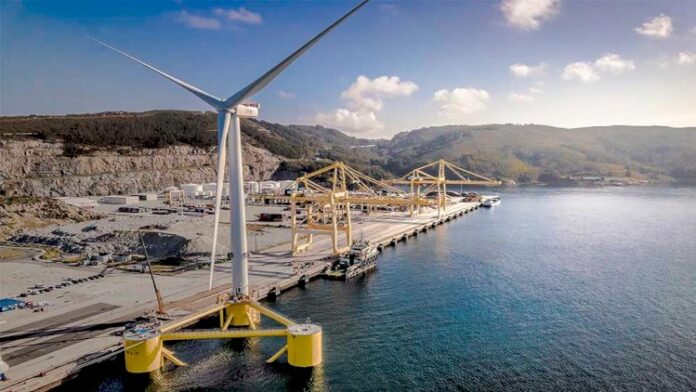
The largest floating wind turbine in the world, an 8.4-megawatt (MW) ABS-classed offshore wind turbine, is about to be installed.

It is the first of three ABS-classed, SEMI Submersible Type units designed by Principle Power housing MHI Vestas turbines that will make up for a total of 25 MWs of floating offshore wind power.  This is continental Europe’s first larger scale floating wind farm, 20 kilometers off the coast of Viana do Castello, Portugal.

Christopher J. Wiernicki, ABS Chairman, President and CEO, said:

“ABS has supported innovation in offshore energy since 1958. This landmark installation underlines how we continue to support promising technology more than 60 years later. Floating turbines enable us to reach offshore wind resources in water that is too deep for conventional bottom-fixed turbines. It is breakthroughs such as this that will make a vital contribution to the global transition to clean energy.”

The project is developed by the Windplus consortium, which is jointly owned by EDP Renováveis, ENGIE, Repsol, and Principle Power Inc., and is scheduled to go online at the end of 2019.  The development is based on the same principles as the original Principle Power designed concept, WindFloat 1, that was installed offshore Portugal in 2011. 

Steven Barras, Chief Technical Officer at Principle Power, said:

“Principle Power is very pleased to work with ABS, once again, in the framework of the WindFloat Atlantic project, building on the successful collaboration of the WindFloat 1 prototype. WindFloat Atlantic represents a major milestone for the floating offshore wind industry as it is the world’s first semi-submersible floating wind farm. We are proud of having led the process of industry standard-setting from the early days, together with ABS, and we look forward to taking the WindFloat technology to full commercialization around the world.”

Thanks to their floating foundations, floating offshore wind farms are not subject to the same depth restrictions as fixed structures and can be at any depth.  With the development of larger turbines above 10 MWs and research focused on shallow water moorings, the floating technology may even be an alternative to traditional bottom- founded technologies in intermediate water depths in the future.

Matt Tremblay, ABS Senior Vice President, Global Offshore, said:

“Large highly-efficient turbines reduce capital costs as well as operating costs, so the deployment of the world’s largest floating offshore turbine is a significant milestone in this emerging industry. As the world’s leading offshore classification organization, we are able to leverage our extensive experience with the oil and gas sectors to support safety and innovation in the offshore wind industry.”

ABS is the leading class society for floating offshore wind and continues to lead the development of design standards and concepts for floating offshore wind turbine foundations. ABS certified the first commercial-sized semisubmersible floating offshore wind turbine, WindFloat 1, in 2011 and released the ABS Guide for Building and Classing Floating Offshore Wind Installations in 2013. ABS was the first class society to venture offshore, certifying the world’s first mobile offshore drilling unit in 1958 and classing the first jackup, semisubmersible, drillship, FPSO, TLP and spar. 

Jan De Nul goes 100% biofuel for dredging work

0

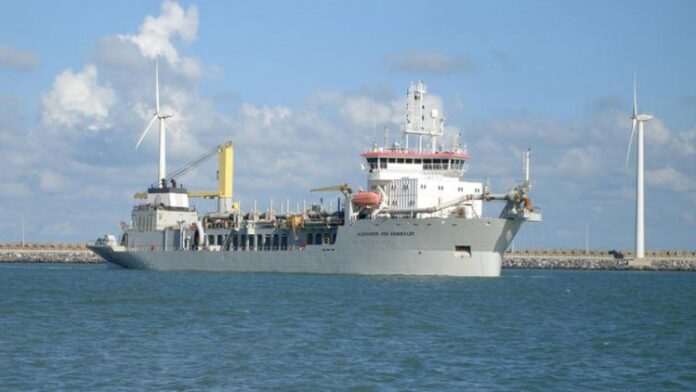
Jan De Nul Group carries out dredging work in the Benelux with 100% renewable fuel. With this, the world player is further committing itself to immediately and considerably reducing its CO₂ emissions. Trailing suction hopper dredger Alexander von Humboldt will from now on sail on renewable biofuel from certified and sustainable waste streams.

The choice of 100% renewable fuel is part of the ambitious CO₂ reduction objectives of the Jan De Nul Group. In this context, Jan De Nul also wants to collaborate with the Flemish government to introduce a minimal CO₂ reduction obligation of 15% for 80% of the maintenance dredging contracts in Flanders by 2022 at the latest.

By 2050 the European Union wants to reduce the emissions of greenhouse gases by 80% to 95%, compared to 1990, of which at least 40% of the reduction must be realised by 2030.

Bart Praet, Head of the Dredging Benelux department at Jan De Nul Group, says:

“Why wait until tomorrow when it’s already possible today? We need concrete action. This intervention makes us at least 80% CO₂ neutral. With this we want to prove to the governments and to our clients in the Benelux that if they have climate ambitions and incorporate these in the selection procedures, the market is ready for it now. At the same time, we are urging our colleagues in the sector to follow our example in a renewable and climate-neutral trajectory. We are continuing to work hard on our energy transition, relying on innovative solutions.”

Engineer Freddy Aerts, head of division Maritime Access, Department of Mobility and Public Works, says:

“The Flemish government is glad about the use of this renewable fuel, and will definitely include a sustainability criterion for the next procurement of the dredging contract for the evaluation of offers.”  

The trailing suction hopper dredger Alexander von Humboldt sails using sustainable renewable biofuel from certified and sustainable waste streams. The ship will carry out maintenance dredging works in the maritime access routes, on the North Sea and in Flemish seaports. 

The second generation of biofuel, supplied by biofuel market leader GoodFuels, reduced CO2 emissions by at least 80% and is also sulphur-free. GoodFuels pioneered in the development, commercialisation and supply of renewable fuel in the shipping industry. Jan De Nul Group entered into a multi-year agreement with them because of their innovative technology and verifiable sustainability guarantees.

Michel Deruyck, Head of the Jan De Nul Energy department, adds:

“Our energy transition can start today. As we are in continuous consultation with engine manufacturers and other suppliers, we know what is technically feasible. We continue to innovate to remain sustainable and viable in our sector, and to be able to offer our clients alternatives."

Joint group work on a hydrogen system pilot for large ships

0

If large vessels are to sail zero emission at high speed over long distances, battery solutions does not contain enough energy. Fuel cells running on hydrogen is a solution to this, and the Havyard Group, with Havyard Design & Solutions and Norwegian Electric Systems, is now conducting pioneering work on the development of a system that will become the biggest of its kind for ships.

The first phase of the Havyard Group’s ground-breaking work is completed, and the company is now entering into the approval stage for the hydrogen system together with Linde Engineering as tank supplier and PowerCell Sweden AB as supplier of fuel cells. 

The project manager for the Havyard Group’s FreeCO2ast project, Kristian Osnes, says Linde is a significant player in the market for designing and manufacturing equipment for cryogenic gases:

"We believe they are the right partner for finding solutions that will ensure safe storage and control barriers for cryogenic hydrogen on board ships. The regulations for these solutions have not yet been developed, and we are pleased to have Linde on-board when entering the approval process, which we expect to be very challenging."

The Havyard Group has chosen PowerCell to deliver fuel cells.

PowerCell's core technology for fuel cells is well documented through their cooperation with Bosch for the car industry, and we are looking forward to working with them to create the right solutions for the maritime sector.

Kristian Osnes says that fuel cells have similarities with the battery technology that NES has already worked with in a number of ferry projects, he therefore thinks the cooperation will provide high quality maritime solutions, as they take the zero-emissions goal one step further – from battery to hydrogen.

The agreement entails that the Havyard companies, together with PowerCell and Linde, will design a hydrogen solution and take the first step towards certification. This solution will be offered to Havila Kystruten for retrofitting.

The development of the hydrogen system is part of a PilotE project in which the Havyard companies and the research institutions Sintef and Prototech are working together.

The head of research and development at Havyard Group, Kristian Voksøy Steinsvik, says PilotE is very useful when it comes to simplifying the application process in relation to the range of Norwegian research and development funding instruments, and not least in terms of the support, which lessens the risk inherent in spearheading the development.

Havyard Design and Solutions has sound experience of simulation tools and virtual prototyping of ships. This combined with Norwegian Electric Systems’ expertise in green technology and integration will ensure optimal interaction with the other power systems on the ship.

AST launches INTEGRA Edge Cloud at Europort in Rotterdam

0

Global provider of intelligent remote communication solutions, Applied Satellite Technology Ltd (AST), has announced the launch of INTEGRA Edge Cloud, at Europort in Rotterdam.

INTEGRA Edge Cloud is the shore-side traffic analysis and management platform for the INTEGRA Edge service. It provides fleet and operations managers with extensive current and historical metrics and analytics of all communications networks used on-board, allowing full visibility of both system, network and crew usage.

Users gain access via AST’s multi-function online connection management portal, My AST Portal, allowing them to monitor any vessel at any time without having to directly connect to the ship, cutting down on time and costs, and providing increased intelligence for improved efficiency.

It further enhances INTEGRA Edge which allows a ship’s captain to control all on-board communications whether satellite, cellular and WiFi through one simple intuitive interface making it easy to switch seamlessly to the most cost-effective connection at any point in time and save money. The solution also incorporates an integrated firewall, web and content filtering to restrict which data is allowed on and off the vessel, and a captive portal to manage the crew’s internet access efficiently.

AST Group Managing Director, Gregory Darling commented:

“We are delighted to present INTEGRA Edge Cloud at Europort. We are innovators at heart, and we develop our solutions with the customer in mind, focusing on operational efficiency, costs savings and ease of use.”

Building on the success of its ground-breaking real-time application control service, INTEGRA Control, AST recently released two new services, INTEGRA See+ and INTEGRA Control Lite which provide customers with an even more flexible and cost-effective way to view, restrict, block and report on applications used over their satellite connection. It operates over AST’s INTEGRA Network, a next-generation ground network that delivers reliable and secure end-to-end connectivity, optimised performance and includes AST’s cyber security solution, INTEGRA CyberShield, a multiple layer of controls designed to protect businesses against threats that may put operations at risk. The INTEGRA Network supports connectivity to any satellite IP network and communications service and currently connects to the satellite networks of Inmarsat, Iridium, Thuraya and VSAT services.

As well as INTEGRA services, AST will showcase iRAMS, a versatile application for telematics, remote sensor monitoring & asset control and IRIS an award-winning, cost-efficient remote monitoring & control application for IoT over satellite.

Sofar presents a new ASV to monitoring ocean environments

0

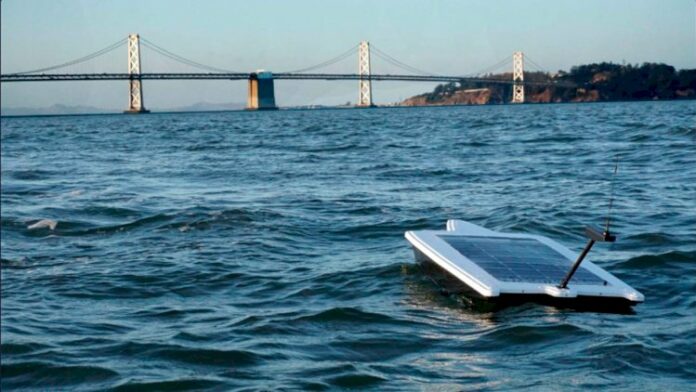
The Sofar Strider is a coastal, near-shore and inland water monitoring platform capable of extended range and multiple sensor configurations. 

Sofar Strider represents a new generation of autonomous surface vehicles making data collection simple and more accessible than ever before. By combining compact designs with the latest Internet technologies, Strider is an affordable way to run missions to collect water quality parameters, perform bathymetric surveys, or monitor underwater acoustics. 

In addition to customizable payloads, Strider collects real-time video from above and below the waterline. Flexibility as both a remotely operated or autonomous route-following platform makes it suitable for broad area coverage with minimal user oversight. 

Tim Janssen, Sofar o-Founder and CEO, said:

“Strider is an exciting addition to the Sofar family. Our mission is to create pervasive sensor networks to understand and monitor ocean environments and help our customers achieve their goals. Strider fills an important niche by providing flexibility and unprecedented ease-of-use in marine data collection."

The primary design goal behind Strider was affordability and easy sensor payload integration. Strider was built with the capacity to integrate most sensors. Additionally, all sensors that are integrated on the platform are available with on-board data logging, ingestion, and streaming to the cloud. 

With browser-based mission controls, Strider also allows for real-time video monitoring, both above and below the surface, with multiple live video feeds. The mission control view also allows users to view the output of water quality parameter sensors, side-scan sonar, or hydrophone. The controls also make it easy to pilot the ASV remotely or easily change route settings on the fly.