-0.5 C
New York
Home Blog Page 968

CargoSmart links shipment data, trade finance blockchains

0

CargoSmart, a leading shipment management technology solution provider, has announced the successful completion of a proof-of-concept with eTradeConnect, a multi-bank blockchain consortium in Hong Kong facilitated by the Hong Kong Monetary Authority (HKMA).

The engagement explored ways to improve global trade through enhanced collaboration among shippers, banks, terminal operators, and ocean carriers, with applications to be further developed once the Global Shipping Business Network (GSBN) is formed. CargoSmart and eTradeConnect have successfully completed the proof-of-concept facilitated by PwC, with banks and ocean carriers including Bank of China (Hong Kong) Limited, The Bank of East Asia Limited, HSBC, Standard Chartered Bank (Hong Kong) Limited, COSCO Shipping Lines, and OOCL respectively. The proof-of-concept was designed to validate the hypothesis that linking supply chain data with trade finance transactions can provide enhanced transparency, traceability, and efficiency for member banks and their trade finance customers.  
 
Under current practice, in order to apply for financing services, companies are required to provide banks with shipping documents for validation, which takes significant time. The proof-of-concept connects two blockchain networks to exchange information under a strong data governance model. With the consent of its customers, banks in the eTradeConnect network would be allowed to access relevant historical records provided by ocean carriers and terminals. Banks would be able to shorten the customer validation process, with a better understanding of customers’ backgrounds and with real-time, credible shipment event data. The proposed solution intends to accelerate the document validation and trade finance process.  
 
In addition, eTradeConnect member banks will be able to leverage trusted data to streamline their trade finance approval operations, improve their risk management, and enhance their abilities to extend credit to small and medium enterprises (SMEs). It will become easier for borrowers to meet their funding needs and to seize more business opportunities.  
 
Mr. Andy Tung, Co-Chief Executive Officer of OOCL, said: 

"Finding ways to improve the level of efficiency in how the shipping industry exchanges information and documents have always been a monumental challenge. The success in this proof-of-concept is a very positive direction forward to not only tackle this challenge head on, but to take it a step further by broadening the scope of stakeholders such as financial institutions to be a part of this open and transparent digital ecosystem. We certainly look forward to seeing more of these kinds of forward thinking technologies and collaborations being implemented for the collective good of all stakeholders.”

Digital transformation has swept across many industries in recent years, often in digital silos and mostly without cross-industry outreach. Mr. Lionel Louie, chief commercial officer of CargoSmart, said:

“The exchange of trusted and immutable data enabled by blockchain gives rise to a seamless and secured linkage across the global trade and financial sectors. The convergence of both worlds will unleash enormous opportunities for global trade and give impetus to international economic growth. The proof-of-concept with eTradeConnect has demonstrated the power of trusted networks. CargoSmart will continue to bridge the shipping industry with other sectors for supply chain excellence to create value for all stakeholders.”

As the proposed counterpart of eTradeConnect, the GSBN will be a not-for-profit organization once it is formed after all applicable regulatory and antitrust approvals have been obtained. The GSBN will work with authorities to comply with all applicable regulations concerning information handling and data privacy, and develop standards in this new area of business-to-business data exchange. Upon official formation, the organization will operate a data exchange platform for supply chain participants around the world. The platform is expected to follow strong data governance while data contributors retain control of their data. The platform will also be transparent and fair to encourage participation by all stakeholders. 

CDWE signs contracts for the Zhong Neng offshore wind farm

0

Taiwan based CSBC-DEME Wind Engineering (CDWE) and the Zhong Neng Wind Power Corporation Preparatory.

Office have signed two contracts for the Zhong Neng offshore wind farm project. The contracts include transportation and installation of foundations, as well as a Preferred Bidder Agreement (PBA) for transportation and installation of  wind turbines.

The 300 MW Zhong Neng offshore wind farm, developed by China Steel Corporation, is planned for completion in 2024. In order to implement the localisation policy required by the Taiwanese government, the Zhong Neng Wind Power Corporation Preparatory Office has worked closely with CDWE, with the aim of maximising local content. China Steel Corporation makes every effort to invest in local wind turbine component production and steel structure fabrication. 

CDWE is a joint venture of CSBC and DEME Offshore in Taiwan. CDWE has signed a Preferred Bidder Agreement for the WTG transport and installation scope of CIP’s Changfang-Xidao offshore wind farm in May 2019. Recently CDWE also signed a Preferred Supplier Agreement with Hai Long Offshore Wind for a large-scale Balance of Plant (BOP) scope.

The two contracts mark another milestone in CDWE’s strategy for business diversification and its role as a pioneer and driving force in the localisation of offshore wind developments, making further contributions to Taiwan’s renewable energy pot

Belfast Harbour in UK first for 5G technology

0

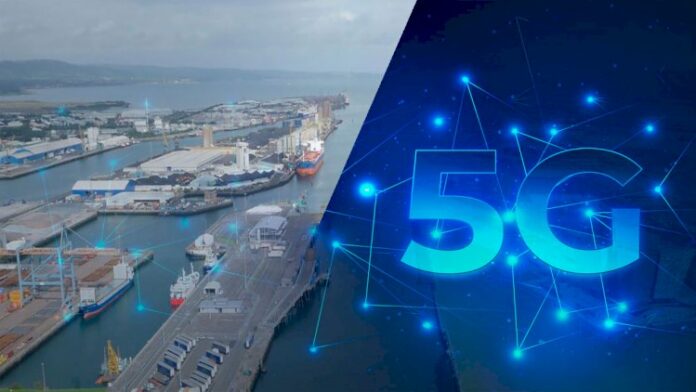
Belfast Harbour has taken part in the first “live” demonstrations in the UK over BT’s new 5G public network. 5G is the next-generation of mobile phone technology and will help Belfast Harbour achieve its ambition of becoming a ‘smart port’ that engages more creatively with customers, visitors and employees.

5G provides ultrafast speeds and reliability which will greatly enhance the ability of businesses to use new applications such as virtual reality.

As part of the demonstrations, supported by BT and mixed reality partners Ubimax and VRtuoso, a member of Belfast Harbour’s operations team used a hands-free, augmented reality headset while inspecting one of the Port’s cranes. This enabled them to provide and receive ‘real time’ video information and guidance while working.

Joe O’Neill, Chief Executive of Belfast Harbour, said:

“Working with BT on this initiative has opened our eyes to a whole new world of 5G possibilities. We have a strong ambition and motivation to become the world’s best regional port and create an iconic waterfront district for Belfast, making it an attractive place to live, work, visit and invest in. Using the very latest technologies and collaborating with expert partners is a key part of how we will deliver that vision for Belfast.

What we’ve seen so far has given us a real appetite to continue exploring how 5G enabled applications will help us transform the Port and Belfast’s waterfront, boost trade and make an even more significant contribution to Northern Ireland’s economy.”  

Gerry McQuade, CEO of BT’s Enterprise unit, added:

“We’re delighted to be working with Belfast Harbour, Ubimax and VRtuoso to explore the benefits that 5G can bring to the Port and to the City of Belfast. 

Over the next 15 years, 5G technologies are expected to contribute $2.2 trillion to the global economy. It will deliver far more than enhanced mobile broadband services and will have a far bigger impact in the enterprise space, by transforming entire industries. But 5G can’t be viewed in isolation. It is a vital component of a brand-new digital ecosystem comprising the Internet of Things, data analytics, AI, mobile edge computing, content and cloud infrastructure. 

The demonstrations we’ve shown today are a powerful illustration of what 5G can do for business, both here in Northern Ireland and across the UK. They’ve shown that 5G will be the catalyst for a revolution in how technology supports people, enables workplaces and simplifies operations.” 

5G can help simplify and improve maintenance activities by delivering information directly to staff when and where they need it. The hands-free headsets are particularly suitable in hazardous environments, where health and safety is essential, and are built to work with personal protective equipment such as hard hats.

In another demonstration, participants in different locations were able to connect into the same real-time, virtual presentation. Such Immersive experiences have the potential to transform marketing and training activities.  They enable companies like Belfast Harbour to bring the Harbour to the customer, letting them experience the environment and services in a much more captivating and immediate way.

They can also be a powerful training tool – an immersive 360-degree experience makes the brain feel like the user has experienced a situation, creating a memory that leads to higher levels of engagement and retention.

The potential industry and business benefits of 5G enabled applications are vast, from improved operational efficiency and productivity, to fast and reliable knowledge transfer and higher employee satisfaction and engagement.

Maersk tests low-carbon solutions for its fleet

0

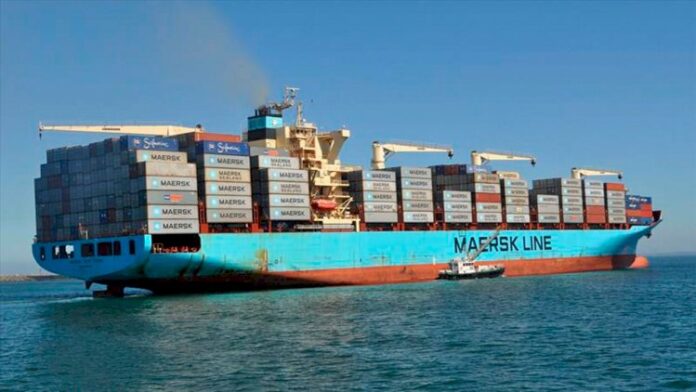
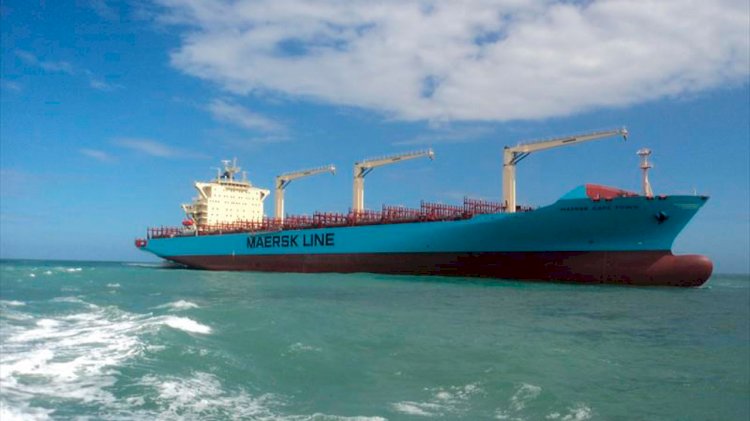
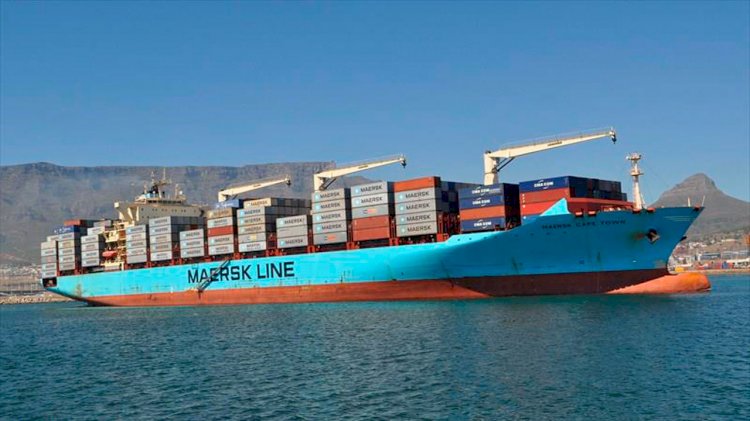
A containerized 600 kWh marine battery system will be installed in a trial on board the Maersk Cape Town in December 2019 to improve vessel performance and reliability while reducing CO2 emissions.

Søren Toft, Maersk COO, explains:

“This trial will provide a greater understanding of energy storage that will support Maersk in moving towards further electrification of its fleet and port terminals. Maersk will continue to facilitate, test, and develop low-carbon solutions on our journey to become carbon neutral by 2050.” 

Propelling marine vessels with battery power alone is still years away from being a technically- and economically viable option. However marine battery systems can be used to improve the efficiency of a vessel’s onboard electrical systems such as the Maersk Cape Town’s generators. By maintaining the vessel’s auxiliary generators at a more optimal load, and avoiding running generators when not needed, overall fuel consumption can be reduced.

Additionally, it will support the generators with up to 1,800 kVA of power during rapid changes in electrical load such as thruster operation. This can reduce generator maintenance requirements. The battery system is also capable of providing redundant power, which can improve reliability at sea by ensuring continuous power supply.

The Maersk Cape Town includes a waste heat recovery system, which is a special feature of many Maersk container vessels. This system increases overall efficiency, as it allows the batteries to charge by capturing electrical energy from heat that would otherwise have been lost out of the exhaust gas system for the main propulsion.

Ole Graa, Maersk Head of Fleet Technology, reinforces:
“This exciting pilot – the first of its kind in the industry – will show the potential of battery technologies to keep improving the performance of our vessels while also reducing fuel consumption in our non-propulsion electrical systems.” 

The containerized battery energy storage system has been manufactured in Odense, Denmark by the system integrator and turnkey supplier Trident Maritime Systems. The battery system will be shortly transported to Singapore and installed on board the Maersk Cape Town.

The vessel is a Singapore-flagged 249-meter long container ship built in 2011 which sails between West Africa and East Asia. The first full voyage with the new system in place will take place next year and will be closely monitored to evaluate the performance of the system against the trial’s ambitions.

Battery modules will be operating within the container in conjunction with other electrical and control components. Maersk has also worked in close collaboration with the American Bureau of Shipping – the vessel’s classification society – to ensure safety and compliance.

The application of battery technology and the understandings gained can enable further innovation across A.P.Moller- Maersk. We have an interest in working with suppliers to grow these possibilities as the technology matures.

VIDEO: Baker Hughes presents its new BOP surface control system

0

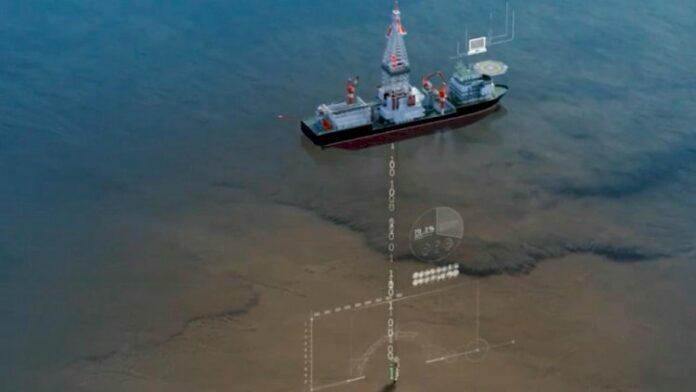
Industry-leading BOP surface control system designed to deliver maximum performance at lowest cost to own.

SeaONYX® is Baker Hughes’s next-generation Blow Out Preventer (BOP) surface control system and operator interface, based on the industry-proven PLC platform. With its highly simplified architecture and compact design, SeaONYX is designed to deliver maximum performance at the lowest cost to own. It is a reliable, configurable, and easy to maintain solution.

The system leverages commercially available components with a hot swappable feature that enables easy maintenance and maximizes drilling availability. SeaONYX is your single control platform for all the BOP control needs.
 

USA awards USD 24.9m to hydro, marine energy projects

0

DOE Announces $24.9 Million Funding Selections to Advance Hydropower and Water Technologies

The U.S. Department of Energy (DOE) has announced selections for up to $24.9 million in funding to drive innovative, industry-led technology solutions to advance the marine and hydrokinetics industry and increase hydropower’s ability to serve as a flexible grid resource. Innovative water power technologies have the potential to increase the affordability of hydropower and marine energy. Selected projects will also strengthen U.S. manufacturing competitiveness and build on department-wide initiatives to improve the capability of technologies to deliver value to the grid.

Projects were selected across four Areas of Interest (AOI)—Hydropower Operational Flexibility, Low-Head Hydropower and In-Stream Hydrokinetic Technologies, Advancing Wave Energy Device Design, and Marine Energy Centers Research Infrastructure Upgrades.

Under Secretary of Energy Mark W. Menezes said:

“Hydropower is a valuable national resource and these technologies will make it an even more competitive clean energy option to invest in the Blue Economy. These awards are another example of this Administration reaffirming its commitment to an ‘all-of-the-above’ energy policy to the benefit of the entire nation.”

AOI 1: Hydropower Operational Flexibility

Projects awarded under this area of interest will quantify the flexible capabilities of hydropower and advance operational strategies to increase such flexibility to better serve an evolving grid.

AOI 2: Low-Head Hydropower and In-Stream Hydrokinetic Technologies

Projects awarded under this area will focus on the development of two types of technologies—standard modular hydropower (SMH) and current energy converters (CECs). CEC technologies extract kinetic energy from rivers without the need for a dam or diversion, whereas SMH technologies use dams or other structures with turbines to create head—differences in water elevation—and generate power.

AOI 3: Advancing Wave Energy Device Design

Projects awarded under this area will drive performance improvements in WEC devices in preparation for open-water testing, where wave energy has the greatest energy capture potential and lowest unit costs.

AOI 4: Marine Energy Centers Research Infrastructure Upgrades 

Projects awarded under this area will upgrade necessary infrastructure at existing National Marine Renewable Energy Centers (NMRECs) to enable broader industry access and reduce technical barriers to incubating advanced marine and hydrokinetic technologies.
 

Carrier Transicold introduces digital tool to add cargo visibility

0

Carrier Transicold has added to its growing suite of digital solutions to boost container refrigeration operations with the introduction of the TripLINK™ digital tool, which remotely connects customers with vital shipment information and intelligence to improve visibility and efficiency of both reefer and the cargo.

The system securely monitors and analyzes refrigeration machinery and cargo health globally 24 hours a day. Carrier Transicold is a part of Carrier, a leading global provider of innovative heating, ventilating and air conditioning (HVAC), refrigeration, fire, security and building automation technologies.

The TripLINK software module is hosted in a secure cloud infrastructure that can be accessed via smart phone, PC or tablet. The TripLINK tool receives information that is wirelessly transmitted from a telematics hardware module sitting inside the refrigerated container unit and connected to the micro controller.

Willy Yeo, director of marketing, Carrier Transicold, said:

“The TripLINK tool empowers customers to make more informed decisions for fleet operations based on key operational parameters and its in-built data analytics capabilities, which provides a time and cost saving benefit.”

Information provided to TripLINK tool users includes key parameters such as set temperature, box temperature, in-range status, reefer operating mode and ambient temperature. The TripLINK tool also provides critical and non-critical alarm codes, their descriptions and specific calls to action. In addition, container status data can be exported into PDF or Excel files for analysis.

An optional feature of the TripLINK digital tool is the TripWise™ system that performs critical run-time diagnostics in the background while the refrigeration unit is in operation, reducing the need for Pre-Trip Inspection (PTI) tests, thus bringing savings to refrigerated container owners through lower terminal operating expenses, higher throughput and decreased idle time.

The TripLINK digital tool can be factory installed and is also compatible with existing units in service, providing they have the Micro-Link® 3 controller. 
 

Big oil and gas discovery in the North Sea

0

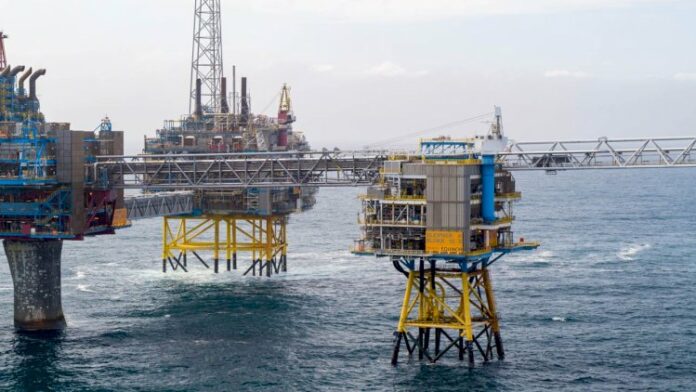
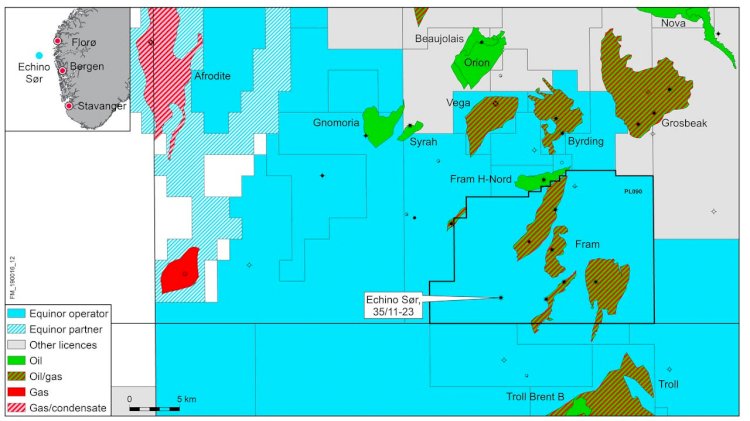
Equinor and partners ExxonMobil, Idemitsu and Neptune have discovered oil and gas in exploration well Echino South, 35/11-23, by the Fram field in the North Sea. Recoverable resources are estimated at 6-16 million standard cubic metres of oil equivalent, corresponding to 38-100 million barrels of oil equivalent.

Nick Ashton, Equinor’s senior vice president for exploration in Norway and the UK, says:

“We are making one of this year’s biggest discoveries in the most mature area of the Norwegian continental shelf (NCS), not far from the Troll field. This demonstrates the opportunities that still exist for value creation and revenue from this industry.”

Adding considerably to the resources in this part of the North Sea, the discovery will probably be tied back to existing infrastructure. Further knowledge of the area and new data investments have increased our confidence in the exploration opportunities in this part of the northern North Sea.

Ashton says: 

“After more than 50 years of geological surveys on the NCS, we are still learning something new and finding hydrocarbons where we previously thought there were none. By utilizing existing infrastructure, these resources may be recovered at good profitability and with low CO2 intensity.”

Exploration well 35/11-23, Echino South, was drilled 3.2 kilometres south-west of the Fram field. The primary exploration target was to prove petroleum in the upper Jurassic reservoir of the Oxfordian age (Sognefjord formation).

The secondary exploration target in the well was to prove petroleum rocks of the middle Jurassic period (Brent group). Hydrocarbons were proven in both exploration targets. A sidetrack (well 35/11-23 A) is being drilled to delineate the discovery in the Sognefjord formation.

The licensees in production licence 090 are Equinor Energy AS (45%), ExxonMobil Exploration and Production Norway AS (25%), Idemitsu Petroleum Norge AS (15%) and Neptune Energy Norge AS (15%). The well was not formation tested, however, extensive amounts of data have been acquired. Well 35/11-23 was drilled to a vertical depth of 2947 metres below sea level. Water depth is 350 metres.

The well will be permanently plugged and abandoned after sidetrack 35/11-23 A has been drilled. The well was drilled by the Deepsea Atlantic drilling rig, which will drill production wells on the Askeladd North field in production licence 064 after it has completed the sidetrack.

Joint Group to launch open-sourced blockchain trade platform

0

Cuts end-to-end trade document transit time by more than half from 45 to 20 days.

To leverage Singapore’s global trade connectivity, DBS Bank and Trafigura, in collaboration with Infocomm Media Development Authority (IMDA), the International Chamber of Commerce (ICC), Enterprise Singapore and tradetech Perlin, have come together to develop an open-sourced blockchain trade platform (ICC TradeFlow platform) to connect trade partners across borders and streamline manual paper-based trade processes to improve trade flows. The platform’s pilot trade of USD20 million worth of iron ore will be shipped from Africa to China this month.

Built on IMDA’s TradeTrust network infrastructure and powered by Perlin’s blockchain technology, the platform is designed to be interoperable with existing and future digital trade platforms. This approach will enable companies based in digital harbours like Singapore to continue seamlessly trading with countries governed by traditional paper-based systems. All parties on the blockchain platform are also able to send, receive and act upon trade instructions in real-time, cutting the end-to-end trade document transit time by more than half from 45 to 20 days.

Tan Su Shan, Head of Institutional Banking, DBS Bank, said:

“DBS is pleased to lead the industry and work with global industry anchors such as Trafigura to co-create digital solutions to make the age-old business of trade finance more efficient, transparent and productive. By tapping into each other’s respective expertise in commodities and finance, our customers will be able to receive their goods at least 50 percent faster with much less paperwork. Solutions like these are timely as they meet our customers’ demands for increased transaction speed and optimised financing to promote better cash flow and capital management.”

Tan Chin Hwee, Trafigura’s Asia-Pacific Chief Executive Officer, said:

"This is a Singaporean take on how to successfully adopt global trade finance technology under the leadership of governmental stakeholders. ICC TradeFlow, a distributed ledger system, is the first to be powered by the TradeTrust network. We would particularly like to thank IMDA, Enterprise Singapore, DBS and Standard Chartered for their support and leadership on this initiative.”

Leveraging the success of this initial pilot, the partners will continue iterating and improving the ICC TradeFlow platform, with a vision for global adoption. As next steps, further enhancements will be made to the platform. These include offering trade finance on-the-go, as well as providing background information and credit ratings on trade participants, vessels and couriers to build trust among counterparties – with the aim of achieving a more seamless trade process.

John W.H. Denton AO, Secretary General of the ICC, said:

“ICC TradeFlow is a transformative enterprise tool developed by our partner Perlin that we will champion for adoption internationally. With IMDA’s help and working with Trafigura and DBS, the ICC TradeFlow platform is uniquely placed to help gather the critical mass needed for a truly international and industry-wide shift from analog trade systems to digital ones. The technological, economic and governance-based precedents and standards set in Singapore will support adoption in other countries and ultimately greater growth in trade on a global scale.”

Dorjee Sun, Chief Executive Officer of Perlin, said:

“We are certain that blockchain will help drive the digitalisation of trade and transfer of title electronically. This will revolutionise trade, commodities and related finance and Singapore is at the forefront. We built ICC TradeFlow as the first working enterprise tool powered by TradeTrust with the vital help of our partners such as DBS and Trafigura, and are excited to work with the ICC for global adoption.”

Mr Satvinder Singh, Assistant Chief Executive Officer of Enterprise Singapore, said:

“Home to a strong pool of international trading companies, Singapore is well-positioned to connect the industry players to innovations that can boost the overall efficiency of trade. Enterprise Singapore has been supportive of efforts in this aspect – from working with Perlin and ICC to establish the regional Centre of Future Trade in Singapore, to connecting them to partners such as DBS, Trafigura and IMDA to trial the use of blockchain for trade documentation. This partnership is a good start and we hope that it will encourage the business community to develop and pioneer new innovations that can reinforce Singapore’s position as a leading commodity trading hub.”

IMDA is spearheading the development of a globally trusted network, TradeTrust, for digital trade documentation exchange, and is working with various government agencies, including the Maritime and Port Authority of Singapore, Enterprise Singapore, Singapore Customs, Government Technology Agency, and industry partners such as Singapore Shipping Association.

Conventional digitalisation efforts have given rise to increasingly fragmented digital ecosystems consisting of silo groups of user communities. TradeTrust works within this reality by enabling various enterprise and platform systems to effectively inter-operate. This will enable more seamless and efficient flow of goods between digitally inter-connected trading partners. This trusted network aims to reduce inefficiencies and complexities of cross-border trade arising from the current usage of paper-based documentation, such as bills of lading. This reduces operating costs for businesses, lowers risk of fraud and promotes more growth in trade.

Jane Lim, Assistant Chief Executive, IMDA, said:

“In the area of trade, technologies such as blockchain can help market participants move beyond traditional manual, paper-based processes, streamlining their trade processes for higher efficiency and cost savings. TradeTrust aims to inter-connect different trade platforms between paper to digital. We are pleased that Trafigura and DBS have leveraged the TradeTrust prototype in the ICC TradeFlow platform, and we look forward to work with more market participants globally to incorporate TradeTrust into their systems.”

VIKAND’s new Healthcare Platform for the shipping industry

0

VIKAND SOLUTIONS, LLC, a global, maritime medical operations and healthcare solutions provider, and INMARSAT, the world leader in global, mobile satellite communications, have announced that VIKAND has become a Certified Inmarsat Application Provider and will launch the first all-inclusive total healthcare solution platform for the global shipping industry. 

VIKAND HealthNet™ integrates all aspects of healthcare and medical operations for vessel owners and operators, utilizing the latest satellite communication tools and medical technology, supported by an experienced maritime medical team.

Shipping companies will benefit from VIKAND HealthNet’s use of state-of-the-art technology and innovative all-inclusive business model ensuring a complete turnkey medical solution. VIKAND HealthNet’s telemedicine technology is easy to use and very affordable requiring limited bandwidth making it broadly available to the commercial shipping and energy industry.

VIKAND HealthNet’s Total Healthcare Solution will cover all aspects of the vessel owners’ ongoing healthcare needs including urgent care, monthly house doctor calls, chronic disease management, crew maintenance + crew loss prevention = crew wellness, medical chest management, medical equipment technical support, a customized mental health program and a 24/7 medical emergency support hot-line.

By managing the entire healthcare needs for a vessel owner, the attached cost to the owner will be reduced, risk management and efficiency enhanced with an overall winning ROI. 

VIKAND HealthNet™ will launch in the first quarter of 2020 and will be an Inmarsat Certified Application providing the service over a Dedicated Bandwidth APN on Inmarsat’s Fleet Xpress service, which is currently installed on over 7,500 vessels across the globe. Prior to the official launch, VIKAND HealthNet™ will be conducting trials on a selection of ships equipped with Fleet Xpress. 

Peter Hult, CEO of VIKAND, said:

“By providing this application we will offer a unique opportunity to provide global seafarers all over the world easy access to healthcare, focusing on early intervention, a key in healthcare not available onboard ships today. This will ensure a much safer and healthier environment onboard offering our seafarers an opportunity to leave the ship healthier than when they joined. Our shared vision for our partnership is to ensure a healthier environment onboard ships, early intervention when seafarers are not well and a rapid support system in the event of an emergency, utilizing the communication strength of Inmarsat. This is a perfect combination of technology driving value.”

Marco Cristoforo Camporeale, Head of Digital Solutions, Inmarsat Maritime, said:

“We are delighted that VIKAND will become a Certified Application Provider for our Dedicated Bandwidth service over Fleet Xpress. This partnership will help save lives at sea by helping diagnose medical problems quicker and allowing companies to respond earlier in case of medical emergencies.

As part of our new suite of Maritime Digital Solutions, our Dedicated Bandwidth Services are available across either our Fleet Xpress or FleetBroadband networks and are designed specifically for applications such as VIKANDHealth Net that need direct access to the vessel and cannot be constrained or interrupted by crew or operational traffic.”