-0.9 C
New York
Home Blog Page 967

3D reconstruction: The story of Australia’s largest naval loss

0

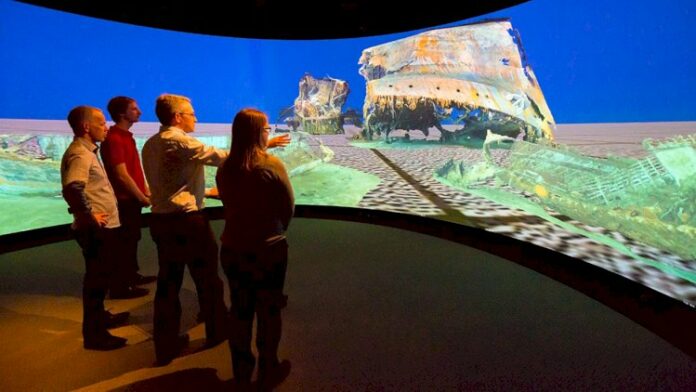
An ambitious project to create digital 3D reconstructions of shipwrecks for virtual underwater heritage museum experiences relies on the AARNet network for the transfer of huge volumes of data from the research lab to supercomputer.

The Sydney-Kormoran Project, a Curtin University and Western Australian Museum collaboration, is using the latest imaging technology, research networking, supercomputing and advanced visualisation techniques to tell the story of two of Australia’s most significant shipwrecks – the HMAS Sydney (II) and the German raider HSK Kormoran.

The shipwrecks met their fate at the bottom of the Indian Ocean on 19 November 1941 after a short but fierce battle ending with the loss of all 645 crew of the Australian vessel. How and why Sydney, a state-of-the-art warship, was defeated by Kormoran, a modified merchant vessel, has long been the subject of much speculation and controversy.

Despite the historical significance of these vessels – whose resting place 200km off the coast of Western Australia was only discovered in 2008 – they have been largely inaccessible to the public due to their isolated location 2,500 meters below the ocean’s surface.

Now, thanks to detailed 3D imaging surveys carried out by Dr Andrew Woods, Senior Research Fellow at Curtin University, and his team, haunting images have emerged that reveal new insights about the last moments of the ships, including a previously-undocumented 15-centimetre shell hole through Sydney’s bridge.

Woods said: 

“The Sydney-Kormoran Project is the first research project in Australia to have undertaken such an ambitious underwater survey and has set a new bar for this type of work.”

The expedition to the ocean floor involved four years of preparation, 63 crew members and two remotely operated vehicles fitted with 14 digital cameras. Four dedicated 1Gbps links to 2,500 meters were used to transfer images from the cameras to the researchers on board the project’s service ship for quality assurance in realtime.

Over 500,000 images and 300 hours of high definition video footage were collected and recorded on hard drives. After preprocessing at Curtin University, the data was seamlessly transferred over the AARNet high capacity network to the Pawsey Supercomputing Centre for processing.

Woods said:

“We can’t do our research without AARNet. We’ve got to move data around and we rely on the AARNet network to do that for us.”
 

First Subsea supplies wind bend stiffener connectors for Kincardine

0

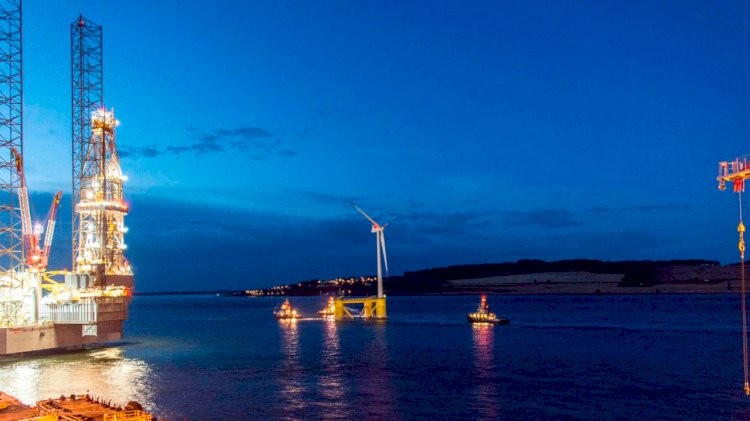
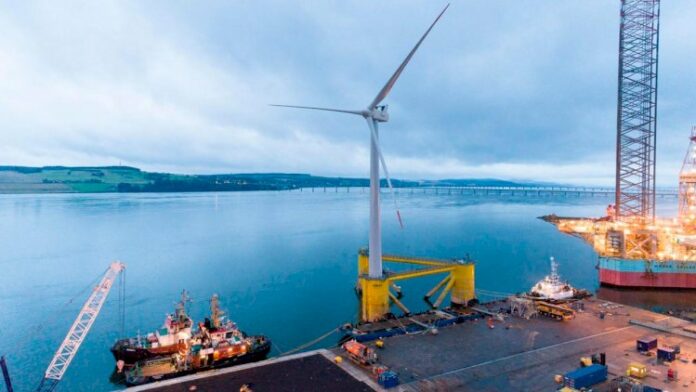
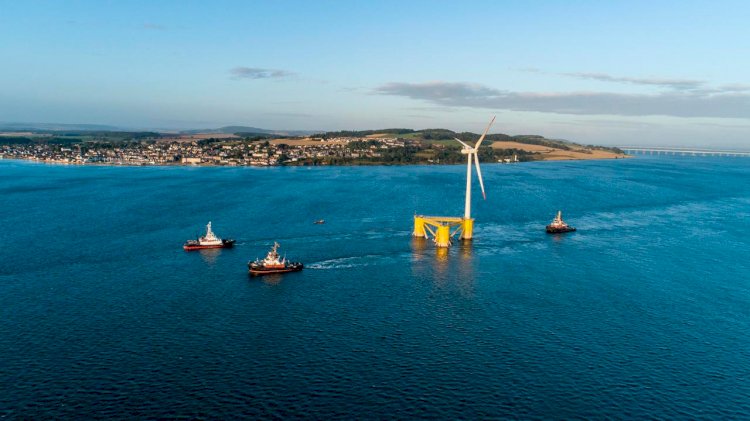
First Subsea has secured a second contract with Spanish developer and construction company, Cobra Group, to provide Dynamic Bend Stiffener Connectors for the Kincardine Floating Offshore Windfarm.

Following the initial supply to the pilot turbine last year, a further eleven connectors will be supplied to the 50 MW Kindcardine floating offshore windfarm project, 15km offshore Aberdeen.

The Floating Offshore Wind Dynamic Bend Stiffener Connector is based upon a joint development between First Subsea and Trelleborg, utilizing established knowledge and expertise from First Subsea on offshore mechanical connection systems and from Trelleborg on dynamic bend protection of flexible pipelines, umbilicals and cables for life of field. Comprising primarily of a diverless subsea connector and a conical polymer bend stiffener, the connector system attaches around the power cable and is pulled into a female receptacle on the floating wind turbine platform. The connection is secured quickly and safely in a single pull-in operation, locking in for immediate service.

During the normal operational lifespan of a windfarm, Trelleborg’s Njord DBS (Dynamic Bend Stiffener) provides continuous over-bending and fatigue protection of the cable at the critical foundation entry point whilst the cable and the foundation move in the dynamic offshore sea conditions.

Greg Campbell-Smith, sales and business development director, First Subsea, advises:

“The Diverless Bend Stiffener Connector’s unique feature is that it can be easily disconnected and reconnected if the turbine is recovered and towed back to the quayside for service.”

Under the same collaboration, First Subsea and Trelleborg have previously supplied Diverless Bend Stiffener Connectors on the Japanese Floating Offshore Wind project, Fukushima.

First LNG bunkering in Nagoya Port is successful

0

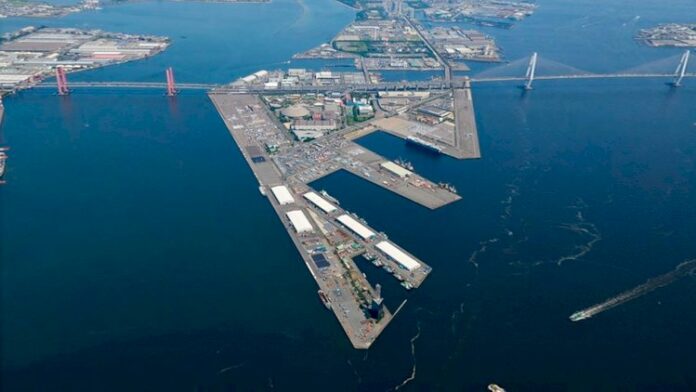
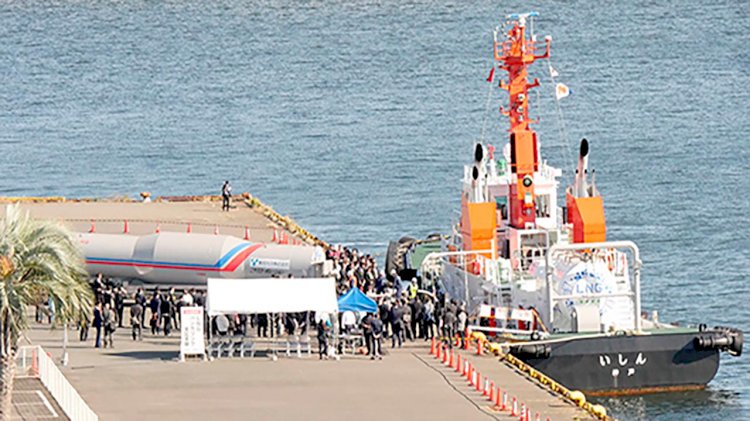
Toho Gas Co., Ltd. and Mitsui O.S.K. Lines, Ltd. has announced the implementation of a demonstration test to supply LNG (LNG bunkering) to the LNG-fueled tugboat Ishin in the Port of Nagoya. This marked the first LNG bunkering in the Port of Nagoya, and the test confirmed that LNG can be safely supplied to vessels at the port.

LNG was transported via truck from the Toho Gas Chita-Midorihama LNG Terminal (Chita-shi, Aichi Prefecture), and supplied with a truck-to-ship system to Ishin, berthed at the Port of Nagoya's Garden Pier.

Also cooperating in the demonstration test were, Niyac Corporation, which provides LNG land transport for Toho Gas, MOL Marine Co., which provides maritime consulting services, and Nihon-Tug-Boat Co., which operates Ishin.

Based on the findings of the demonstration test, Toho Gas and MOL will continue working to reduce the environmental impact of the maritime industry by promoting the use of LNG fuel by vessels calling at the Port of Nagoya.

SCHOTTEL supplies propulsion solutions for Bibby WaveMaster Horizon

0

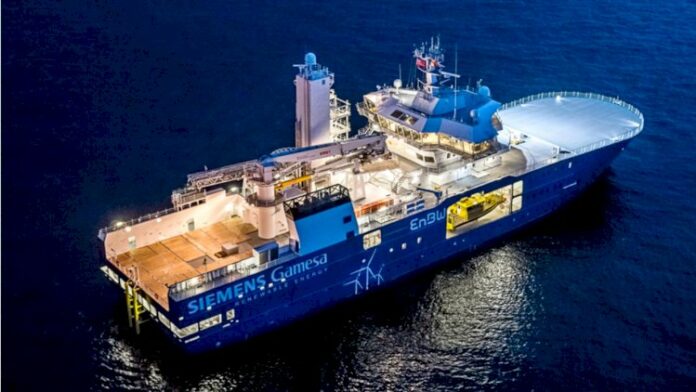
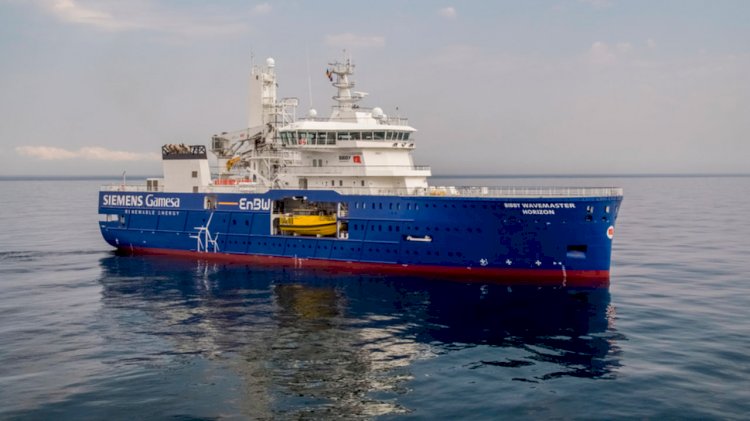
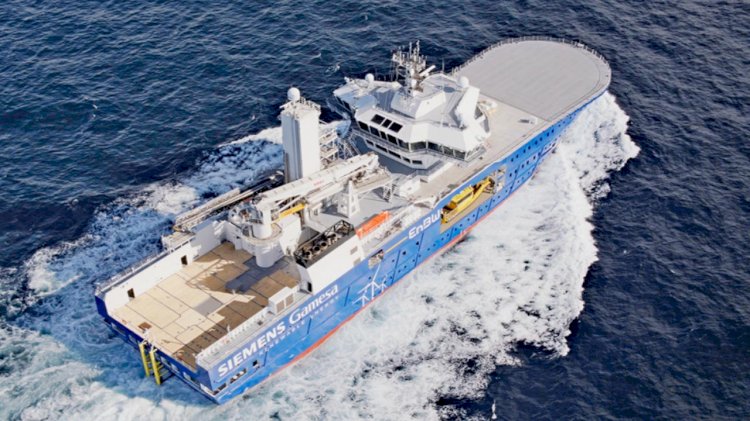
The newly built Service Operation Vessel (SOV) "Bibby WaveMaster Horizon" is equipped with propulsion units from SCHOTTEL.

Ordered by the British company Bibby Marine Services Ltd. and built at Damen Shipyards Galati, the vessel is driven by three rudderpropellers and two bow thrusters from the German propulsion expert. The new walk-to-work vessel is purpose-built for the transfer and accommodation of support and maintenance engineers at offshore wind farms.

The 89.65 m long and 20.00 m wide "Bibby WaveMaster Horizon" recently started work on the "Hohe See" and "Albatros" offshore wind farms in the German North Sea. Homeported in Emden, Germany, it will be used for operations and maintenance services. For this purpose, the SOV has a deadweight of 2,300 tonnes, a deck space of 425 m² and accommodation for a total of 60 people.

The propulsion system of Damen’s SOV 9010 design vessel is powered by four diesel generators, driving the electric motors of the SCHOTTEL propulsion package. With two SCHOTTEL Rudderpropellers type SRP 460 FP featuring an input power of 2,150 kW each and a propeller diameter of 2.60 m at the stern, the vessel will reach a top speed of 13 knots.

At the bow, two SCHOTTEL Transverse Thrusters type STT 4 FP (860 kW each) and one SCHOTTEL Retractable Rudderpropeller type SRP 260 RT (860 kW) – which can be used as a tunnel thruster in its retracted position – complete the propulsion package. In combination, the SCHOTTEL propulsion solutions enable the vessel to manoeuvre precisely in confined waters and maintain an exact position during DP operations.

The SCHOTTEL Rudderpropeller (SRP) sets standards as a main or auxiliary propulsion unit, even in the toughest offshore operation to which the newly built vessel will be exposed. By rotating the underwater section through 360°, the full propulsive power can also be used for manoeuvring and for dynamic positioning (DP) of the vessel.

The hydraulically retractable rudderpropellers are retracted into the hull for open-water service and lowered for manoeuvring and dynamic positioning at the site of operation. With the rudderpropeller retracted, the "Bibby WaveMaster Horizon" is able to take advantage of the SRP-RT as a tunnel thruster. Beyond this, the SRP-RT can be used as a take-home device.

Thuraya launches the voice solution with monitoring capabilities

0

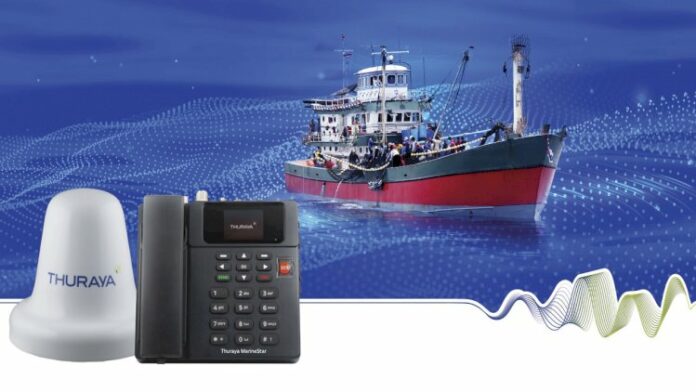
Thuraya has responded to strong demand from the maritime sector and distributors by launching the MarineStar, its best in class, affordable maritime voice solution with advanced two-way tracking and monitoring capabilities.

Designed by the world’s most innovative provider of mobile satellite communications, the MarineStar is Thuraya’s new flagship voice terminal for entry-level maritime users. It is based on the same successful platform as other Thuraya voice hardware that have sold in excess of 1 million units to date. Quick and easy to install, Thuraya MarineStar is a one-stop solution for a wide range of operations including vessel tracking and monitoring, crew welfare and voice communications.

Thuraya MarineStar is perfectly suited to small vessels, and highly scalable to satisfy the operational requirements of larger vessels. The service will be available through Thuraya’s global distribution network, and will cover the world’s busiest sea routes and fishing hotspots within the Thuraya satellite footprint. 

High demand for Thuraya MarineStar is anticipated from within the global fishing industry, which is under increasing pressure to curb unreported and unregulated fishing. Governments now require fishing vessels to report their catches electronically and log their movements while at sea. The MarineStar makes compliance simple by bundling all the essential elements into one affordable package. Key applications include Geofencing, Tracking, Alerts and Fish Catch Reporting. Tracking is packaged as an end-to-end turnkey service based on time, distance, speed and area, with no extra hardware required. An SOS button is included for use in emergencies. According to data from the Western & Central Pacific Fisheries Commission (WCPFC), 80% of the world’s fishing regions lies within Thuraya’s footprint, so this is a truly global service.

Thuraya MarineStar is also ideal for regional merchant fleets needing a backup alternative to radio communications, GSM, VSAT or any other primary voice communication service.

Shawkat Ahmed, Chief Commercial Officer of Thuraya, commented: 

“Thuraya MarineStar represents a new and important chapter in Thuraya’s maritime portfolio. With more than 300K small vessels expected to benefit from the service, we are looking forward to working with our distribution partners to roll out Thuraya MarineStar worldwide and benefit from strong potential demand from users for this game-changing solution.”

Thuraya MarineStar offers outstanding functionality in multiple languages to users and system integrators. A range of physical interfaces will support multiple sensors and third-party devices. Sensor information can be transmitted easily and affordably, supporting on-board monitoring of operations. The device also enables over-the-air programming and remote terminal access.

Low-cost, high-quality voice calls support day-to-day operations and keep crew in touch with shore while at sea. With more than 395 roaming agreements in 161 countries, Thuraya is the only L-band operator to open up business opportunities for Mobile Network Operators (MNOs). The MarineStar is backed by local numbering plan and GSM roaming over the Thuraya satellite network. As a result, users continue to stay connected on GSM numbers even outside terrestrial coverage. 

Thuraya MarineStar’s unique value proposition means it is a must-have solution for users and distributors. Flexible and customized airtime bundles are available for all aspects, from voice through to tracking and monitoring, so the solution is affordable for most budgets. There are no long-term contracts, no hidden fees and no early termination fees. These benefits, combined with the solution’s outstanding features and versatility, are a winning combination for users and make Thuraya MarineStar an essential part of any distributor’s portfolio.
 

Shell Marine signs fleet-wide lubricants contract in China

0

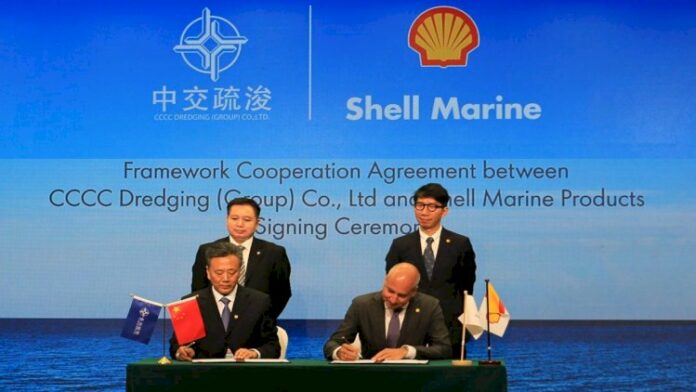
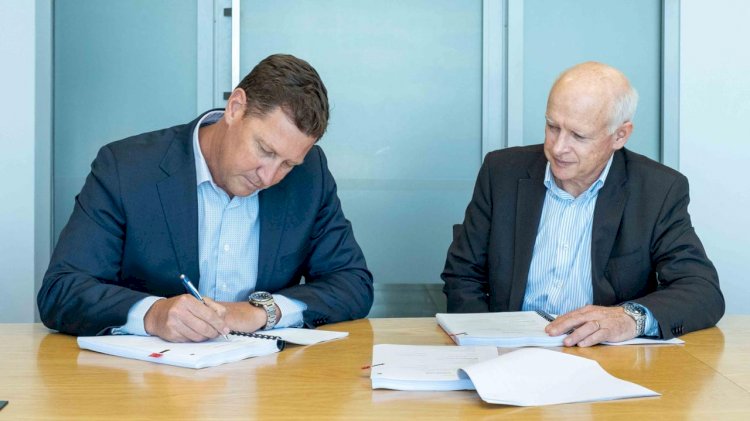
Shell Marine signs framework agreement with China’s CCCC Dredging (Group) Co. Ltd covering the fleet-wide supply of marine lubricants and technical services.

Shell Marine has today signed a framework agreement with CCCC Dredging (Group) Co. Ltd of China to supply marine lubricants and provide technical services across the Chinese company’s fleet. The strategic cooperation, formalised today at a signing ceremony demonstrates Shell Marine’s ability to provide a comprehensive all-in-one service, reliably supplying lubricants and technical services around the clock wherever they are needed.

In addition to the supply of Shell Marine’s comprehensive range of lubricating oils designed for every shipboard application, CCCC Dredging’s full access to the company’s technical services is a key component of the agreement. Effective lubricants supply and service, according to Shell Marine experts, is essential because the correct choice and management of marine lubricants optimises performance and minimises component wear, thereby extending time between overhauls. All of these factors have a direct impact on the bottom line and asset lifecycle costs.

Technical service products within the Shell Marine portfolio now available to CCCC Dredging include:Shell LubeAdvisor – for general technical support and product guidanceShell LubeMonitor – for condition monitoring and operational optimisationShell LubeAnalyst – for planned and predictive maintenance. Commenting on the agreement, CCCC Dredging’s Vice President, Mr. Liu Shudong, said:

“We expect that this strategic agreement will strengthen our relationship with Shell Marine and pave the way for further collaboration in other areas. Shell Marine’s comprehensive product range and extensive network ensure that it is well-placed to meet our complex requirements, both in terms of product and supply. We also see the technical services aspect of the agreement as a key element in supporting our drive to raise fleet efficiency and optimise the performance of our assets.”

Mr. Joris van Brussel, General Manager of Shell Marine, commented:

“We are delighted to have formalised this strategic agreement with CCCC Dredging. We believe that our customer-oriented services and global supply network will provide a comprehensive all-in-one basis for marine lubricant optimisation across the CCCC Dredging fleet. Our competitively priced products, wide port coverage and advanced distribution systems enable a short response time around the clock.”

Wes Amelie will use SNG produced from renewable electrical energy

0

MAN Energy Solutions and Wessels Marine GmbH have announced a technical showcase whereby the 2017-retrofitted ‘Wes Amelie’, a 1,036-teu feeder container ship, will use liquefied SNG (Synthetic Natural Gas) produced from renewable electrical energy as drop-in fuel. The companies are cooperating on the Wes Amelie project with Nauticor, the LNG transportation company, and Unifeeder, the charter company.

To demonstrate that SNG can successfully be used as shipping fuel, 20 of the 120 tons of LNG that the Wes Amelie typically uses per round trip will be replaced by climate-neutral SNG. As a result, CO2 emissions are expected to decline by 56 tons for this trip.

Automobile manufacturer Audi’s Power-to-Gas facility in Werlte, where a liquefaction plant is currently under construction, will provide the SNG, which will be generated by wind energy and is thus 100% climate-neutral. The SNG trip will take place after the completion of the liquefaction plant in Q2 2020.

The Wes Amelie, owned and managed by Wessels Reederei (Haren/Ems), previously made headlines in 2017 when its MAN 8L48/60B main engine was retrofitted to its current, four-stroke MAN 51/60DF unit that enables dual-fuel operation – the first such conversion of its type the world had ever seen.

Stefan Eefting – Head of MAN PrimeServ in Augsburg – said:

“This is another important milestone and proof of concept for the Maritime Energy Transition, the initiative we have been driving since 2016. We strongly believe that a roadmap based on LNG and SNG as fuels can lead the way to a decarbonised future for shipping and, in Wessels Marine, we have the perfect partner.”

Christian Hoepfner, Managing Owner of Wessels Marine, Hamburg, said:

“The Wes Amelie project has always been about demonstrating the technologically doable while pointing out the regulatory actions necessary to make it possible. The initial retrofit to LNG took support from the German Government to be financially viable, but it was a huge success for the environment in that it drastically reduced emissions. As a consequence, there now is a retrofit programme in place to make more retrofits happen.”

He continued:

“In another world-first, we will now demonstrate that SNG can successfully be used to reduce harmful emissions even further as the fuel is climate-neutral. However the costs are still way too high. Going forward, governments and regulators will have to work together to make this a viable and available option for ship owners.”  

Stefan Eefting added:

“To bring down future emissions generated in the global-trade supply chain, synthetic fuels play a crucial role. Especially in shipping, the use of batteries alone is not a viable option and any successful decarbonisation efforts need to address the fuel. Power-to-X technology allows the generation of 100% climate-neutral natural gas from renewable energy. This technology has tremedous potential and needs to be freed from regulatory burdens and to be developed on an industrial scale to bring down costs.”

A pioneer of this technology, MAN Energy Solutions commissioned the Werlte-based methanation plant, in partnership with Audi, in 2013. While the 6 MW methanation unit is still the largest of its kind in Europe today, MAN now offers a 50 MW EPC Power-to-X solution to ramp up the generation of synthetic fuel. Eefting concluded: 

“We need Power-to-X out of the labs and into the market in order to produce more competitive, renewable fuels by using scaling effects.”

Wes Amelie conversion

The ship-owning company from Haren/Ems, Wessels Reederei, initiated the pioneering conversion of the Wes Amelie to dual-fuel running in 2017. A milestone within the development of the European container-feeder market, the conversion showed that existing engines could be converted to LNG operation with a tremendous effect on exhaust emissions and the environment.

MAN Energy Solutions reports that the retrofit enabled the Wes Amelie to significantly reduce its SOx emissions by >99%, NOx by approximately 90%, and CO2 by up to 20%. As a result, the vessel now meets both Tier II and Tier III emission requirements set by the International Maritime Organisation (IMO).

Napier Port appointed a contractor to build its new wharf

0

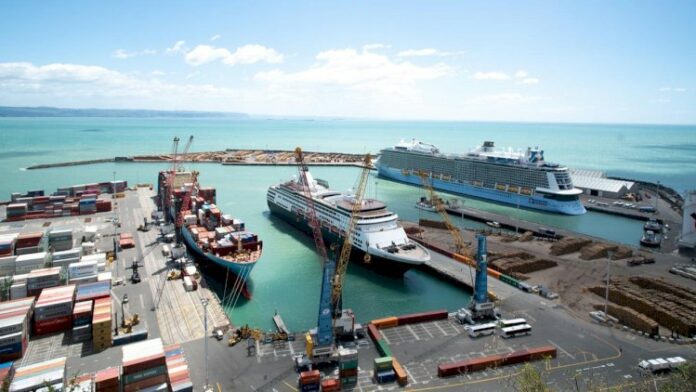
Napier Port has signed the contract with HEB Construction to build its multi-purpose 350 metre wharf, which will boost the port’s ability to handle more and larger ships.

HEB is scheduled to start building the wharf – known as 6 Wharf – during the first quarter of 2020 (calendar year) and will be on-port this month to establish the construction site, and order and deliver materials.

Heron Construction & Dredging Limited is the key subcontractor undertaking the essential dredging works, scheduled to begin around the end of the first quarter of 2020.

Napier Port chief executive, Todd Dawson says assuming no significant weather-related delays or other unforeseen circumstances, construction and dredging should be complete and the new wharf ready to receive its first ship in late 2022.

Mr Dawson says:

“Planning for this project started over four years ago so it’s a huge milestone to get to this point. 6 Wharf is a critical piece of infrastructure that will help support growth for our customers and Hawke’s Bay’s economy for many years to come.”

As well as allowing the port to handle more and larger ships, 6 Wharf will help to increase the port’s operational resilience and efficiency by easing congestion constraints and reducing secondary vessel movements (temporarily moving vessels off the wharves to accommodate larger vessels) by an estimated 100 movements per year.

Mr Dawson says the port remains dedicated to ensuring the project is the best it can be for the economy, environment and community throughout construction and dredging.

Evergreen selected MACS3 for its cargo securing regulation services

0

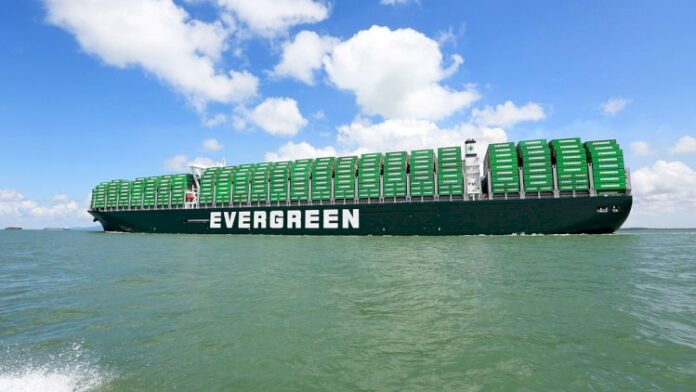
Navis, a part of Cargotec Corporation, and the provider of maritime software solutions for cargo and vessel performance and compliance, announced that MACS3 loading computer will be installed on two newbuilding series of container vessels owned and operated by Taiwan-based Evergreen Marine Corporation.

Due to the owner’s decision to have this loading computer installed, they are moving to support safer and more effective onboard cargo handling.

The newbuildings are currently being built at two different Chinese shipyards. The Jiangnan shipyard is currently building four container ships with a capacity of 2,500 TEU, which will be delivered between February and November 2020. Two other 1,800 TEU fully containerized vessels are being built at Jiangsu New Yangzijiang shipyard and are planned to be commissioned in March and May 2021 by Evergreen, currently operating a fleet of around 200 owned and chartered-in vessels. All vessels will sail under Japanese classification society Class NK.

As the industry standard loading computers for container vessels, MACS3 provides an advantage for cargo securing rules. MACS3 incorporates the most comprehensive set of updated lashing regulations of all major classes that provides vessel operators a greater flexibility for planning the vessel’s utilization while being compliant in terms of safety.

Capt. Hwang, Deputy Senior Vice President at Evergreen, said:

“Ensuring the availability of most accurate lashing force data is an important step towards our goal to optimize the vessel utilization."

Ajay Bharadwaj, Head of Product Management for Navis Carrier and Vessel Solutions, said:

“Our software engineers collaborated closely with the classification societies in order to secure the implementation of all rules providing by different systems into MACS3, while maintaining the performance of the loading instrument. We will work to ensure that all of our customers reap the benefits of applying the updated lash rules from MACS3.”

Navis also recently launched MACS3 API Services, offering lash rules calculations in the cloud. For the first time, ocean carriers, terminal operators and other key stakeholders in the shipping industry can directly access ship-specific loading calculation results for lashing and integrate them into the workflow of stowage planners.
 

Wärtsilä installed the first DP system onboard the harbour tug

0

The technology group Wärtsilä, in collaboration with PSA Marine, has achieved a breakthrough in its IntelliTug project.

Following the successful installation of a first-of-its-kind Dynamic Positioning (DP) system onboard the harbour tug ‘PSA Polaris’, trials are now being carried out in the Port of Singapore under real-world conditions. This phase of the project implementation, which has been approved by Lloyd’s Register, moves the bar higher on safety standards for vessel automation and autonomy. The Wärtsilä and PSA Marine IntelliTug project is also supported by the Maritime and Port Authority of Singapore.

The new DP system, also known as the Joystick Maneuvering System (JMS), enables easier and more intuitive control of the tug’s movement. With the push of a button, the tug master can achieve ‘virtual anchoring’ to hold position and/or maintain the tug’s heading. The DP system also forms the foundational technology layer for the IntelliTug project, enabling digital navigation instructions to be passed to the vessel’s propulsion systems. The system has received a Statement of Compliance from Lloyd’s Register for the DP notation, thereby endorsing its safety, reliability and performance.

PSA Marine is a leading harbour and terminal towage operator in Singapore, the world’s busiest transshipment hub. To meet the challenges of the evolving port, which is expected to double its capacity by 2040, Wärtsilä and PSA Marine are developing and field-testing intelligent vessel capabilities and viable pathways to achieve safe and sustainable autonomous operations. The IntelliTug project is bringing to life a smart tug that can enhance the capabilities of the tug master by autonomously performing a range of routine missions. This will ease the task of addressing the complex demands faced by tug masters on a daily basis.

Bernard Wong, Head of Fleet Management at PSA Marine, said:

“The IntelliTug project is about discovering smarter, safer, and more efficient ways of operating a harbour tug. It incorporates human-centric technology, design thinking, and man–machine collaboration. We are on a journey of turning today’s ideas into tomorrow’s reality.”

Paul Kendall, Wärtsilä’s Director of Sales, Dynamic Positioning, said:

“Safety and productivity are key areas being improved with our autonomous vessel technology. As we develop and learn from these technologies, the values we are able to provide to our customers will grow exponentially, providing a very clear path for businesses needing to compete in the new intelligent maritime industry.”

Andrew Watt Lloyd’s Register’s Centre of Excellence Manager for South Asia, the Middle East & Africa, said:

“With the growing interest in repurposing existing vessel systems for autonomous navigation, Lloyd’s Register is taking the lead in making sure that control systems are safe and compliant as both a human-machine interface for vessel control, as well as the foundational layer for digital navigation instructions. We are delighted to advise that Wärtsilä’s DP system has met the requirements of our DP notation.”

The PSA Marine tug masters involved in the IntelliTug project underwent simulation and onboard training before commencing actual operating trials onboard ‘PSA Polaris’. Wärtsilä and PSA Marine will continue development of the IntelliTug project throughout the coming months, including physical test-bedding and trials in Singapore port waters.