-0.9 C
New York
Home Blog Page 966

Ørsted inaugurates its first offshore wind farm in Taiwan

0

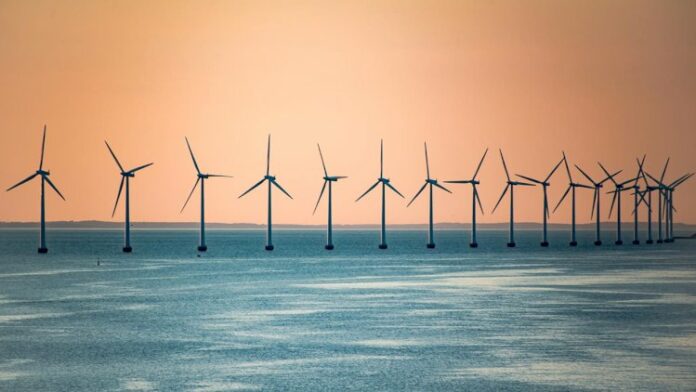
Ørsted celebrates the inauguration of the Formosa 1 offshore wind farm in Taiwan, the first offshore wind farm built by Ørsted in Asia-Pacific.

In the past three years, Ørsted has worked closely with joint venture partners, secured NTD 18.7 billion in project finance and constructed the offshore wind farm on time.

The Formosa 1 offshore wind farm is a joint venture between Ørsted (35%), JERA (32.5%), Macquarie Capital (25%) and Swancor (7.5%). Located approx two to six kilometres off the coast of Miaoli County, Formosa 1 has two phases: Two Siemens Gamesa 4MW wind turbines were installed in October 2016 for the first phase and officially commissioned in April 2017. The second phase, completed in October 2019, includes 20 Siemens Gamesa 6MW wind turbines. The total power generation capacity for Formosa 1 is 128MW, which can supply 128,000 households in Taiwan.

Martin Neubert, CEO, Ørsted Offshore, says:

"Ørsted built the world's first offshore wind farm in Denmark over 28 years ago. Since then, Ørsted has constructed more than 25 offshore wind farms. We're proud to inaugurate the very first commercial-scale offshore wind farm in Taiwan and the Asia-Pacific region. We're glad that Ørsted can contribute to Taiwan's energy transition, which is also a significant step for Ørsted in realizing our vision to create a world that runs entirely on green energy."

Matthias Bausenwein, President of Ørsted Asia-Pacific and Chairman of Formosa 1, says:

"Today is a historic moment for all who participated in the Formosa 1 project. All the intensive efforts invested together with our joint venture partners, local authorities, financial institutions and stakeholders have flourished. Formosa 1 marks the first milestone for Ørsted's expansion in Asia-Pacific. With this successful first step, we're confident that Ørsted will continue to lead the growth of offshore wind in Asia."

Beyond Formosa 1, Ørsted remains strongly committed to the green energy transition in Taiwan and is currently constructing the 900MW Greater Changhua 1&2a project with expected commissioning in 2022. Furthermore, Ørsted has been awarded an additional 920MW for the Greater Changhua 2b&4 project, which, subject to final investment decision, is expected to be completed in 2025.
 

Ærfugl’s Phase 2 will come three years ahead of the original plan

0

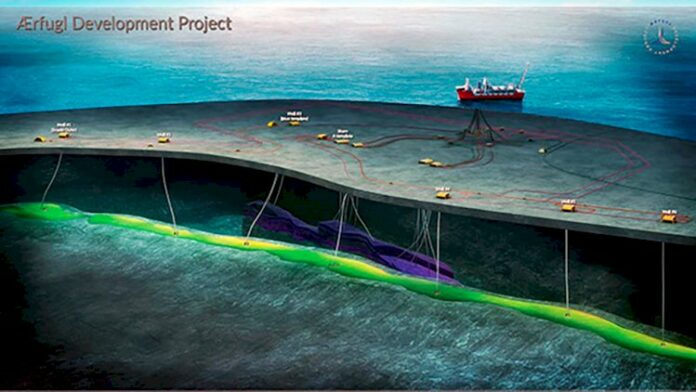
The Ærfugl partners have decided to proceed with Phase 2 of the Ærfugl project in the Norwegian Sea, three years ahead of the original plan. The Ærfugl field, which produces via Skarv FPSO, is one of the most profitable development projects on the Norwegian shelf with a break-even price of around USD 15 per barrel (converted from gas).

Operator Aker BP and partners Equinor, Wintershall DEA and PGNiG approved the final investment decision (DG3) for Ærfugl Phase 2 in early November. The goal is to start production from the first Phase 2 well as early as in first half of 2020. This means that production start-up for phase 2 will come before the start-up of Ærfugl phase 1!

Kjetel Digre, SVP Operations & Asset Development in Aker BP, says:

“Acceleration of Ærfugl Phase 2 means earlier production and increased value creation from the field. This is good news for the Ærfugl joint venture, the supplier industry and the Norwegian society in the form of increased revenues.”

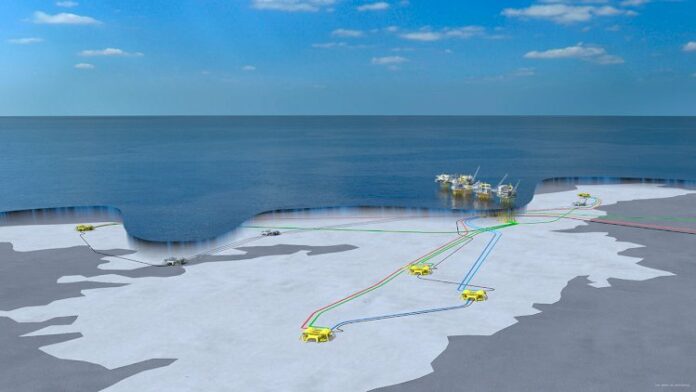
The Ærfugl development is a major subsea project in two phases. Both phases are tied into the existing production vessel (FPSO) on the Skarv field, which is located approx. 210 km west of Sandnessjøen.

The Plan for Development and Operation (PDO) for both phases of the Ærfugl development was submitted to the Ministry of Petroleum and Energy in December 2017.

Phase 1, which develops the southern part of the Ærfugl field, consists of three new wells. Phase 2 consists of an additional three wells in the northern part of the field. The original plan for start-up of Phase 2 was 2023, due to capacity restrictions for processing gas on the Skarv FPSO.

VP Operations Skarv, Ine Dolve, says:

“In parallel with development of Ærfugl Phase 1, work has been proceeding to increase gas processing capacity on Skarv. Modification of the plant will contribute to an increased capacity by more than 15 per cent. We have as well optimized the phase 2 scope and will use existing infrastructure on Skarv for the first “phase 2 well”. Overall, this means that we are now ready to proceed with developing Phase 2.”

Reorganizing the value chain through strategic partnerships and alliances is an important part of Aker BP’s strategy. The alliances in subsea installation, modifications and drilling&wells have contributed to the Ærfugl project.

Bård Atle Hovd, project director for Skarv, says:

“The Subsea alliance between Aker BP, Subsea 7 and Aker Solutions has demonstrated substantial improvements and increased value creation over several years. Now we see excellent deliveries from the alliances for the Ærfugl development. This fall, the Phase 1 production system, including three large subsea structures, was installed. The work has been done according to plan, without serious incidents. We are well-positioned to start production for phase 1 in the fourth quarter of 2020.”

Hovd adds:

“Being able to accelerate the development and production start-up of phase 2 is another manifestation of how these partnerships enable us to increase the value creation and to deliver in line with our ambitious improvement agenda.” 

The Ærfugl project is as well characterized by development of new technology, in line with Aker BP’s ambition to be a technology leader in the industry. The vertical valve trees and electrically heated pipelines used for the Ærfugl development are the first of their kind in the world.

British webtool to bring together Offshore Renewable Energy research

0

The Supergen Offshore Renewable Energy Hub has launched an interactive Research Landscape to communicate Offshore Renewable Energy (ORE) research.

The mission of the Supergen ORE Hub is to connect academia, industry, policymakers and the public to inspire research and innovation and maximise the societal value in offshore wind, wave and tidal energy.

Following a series of consultation events with over 180 partners, the Hub has developed a series of research themes, challenges and opportunities faced by the ORE community. 

After working with digital creative agency Elixel, these can now be communicated through the web-based interactive Research Landscape, providing information about ORE research in an easily accessible format.

The Research Landscape showcases current research across all three ORE technology sectors, including the Hub’s own core research and research supported through its Flexible Fund. It also encourages UK academics to submit relevant research projects and papers for inclusion, in order to continually develop the information held by the Hub. 

The Supergen ORE Hub was established in July 2018 thanks to £5million of funding from the Engineering and Physical Sciences Research Council (EPSRC), and was subsequently awarded a further £4million in June 2019.

Professor Greaves, Director of the Supergen ORE Hub and Head of the School of Engineering, Computing and Mathematics at the University, said:

“We are delighted to be launching the Supergen ORE Hub’s Research Landscape tool, which will guide and strengthen the focus of academic effort in Offshore Renewable Energy. The platform will promote offshore wind, wave and tidal research to raise awareness and maximise its impact by enhancing collaborations between academia, industry and government.” 

Access the Research Landscape and find out how you can request to include your research project or paper at www.supergen-ore.net/research-landscape

New technology to reducing the vessels fuel consumption

0

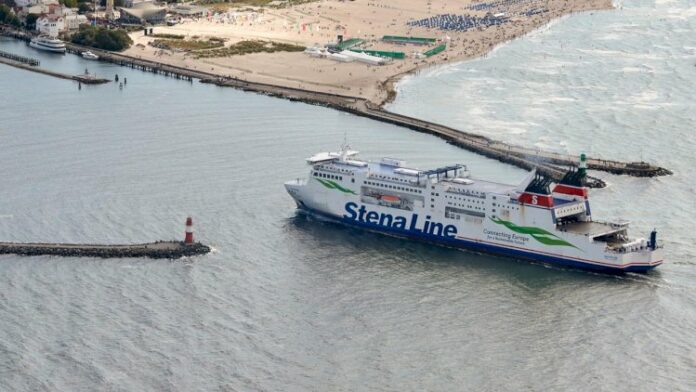
Stena Lines pilot project using artificial intelligence (AI) technology to predict the most fuel-efficient way to operate a vessel has shown to be successful. The results show a reduced fuel consumption by 2-3 % per trip. The technology will now be launched on more vessels.

Reducing the vessels fuel consumption is a priority area for Stena Line and the ferry company have a target to lower the fuel consumption and CO2 emissions by 2.5 % yearly. Fuel is also one of the largest costs for a ferry company like Stena Line, at around 20% of total costs. AI technology has shown to be a successful solution to tackle these challenges and achieve the ambitious targets Stena Lines has set for ourselves.

In 2018 Stena Line started a pilot project onboard the Stena Scandinavica on the Gothenburg – Kiel route using AI technology to predict the most fuel-efficient way to operate a vessel. The results show that the project has been successful, enabling the captain and crew to save 2-3 % fuel per trip with AI assistance. The software is now named Stena Fuel Pilot and will be installed on five more Stena Line vessels during the autumn. The ambition is to do a complete fleet wide roll-out on all 37 vessels in Europe during 2020.

Jari Virtanen, Chief Transformation Officer at Stena Line, says:

“Stena Line aims to become the worlds first cognitive ferry company; assisted by AI in all areas by 2021. This project is using AI technology to support our captains and officers to save fuel. By improving the efficiency, we reduce both our costs and our environmental footprint. It really embodies Stena Line’s vision of Connecting Europe for a Sustainable future.”

AI technologies help to develop a model for shrimp aquaculture

0

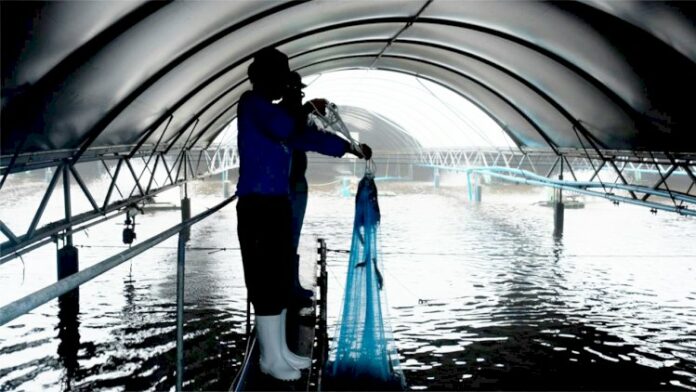
UMITRON PTE. LTD. has started a joint project with CHAROEN POKPHAND FOODS PUBLIC COMPANY LIMITED (CPF) to develop a future sustainable model for shrimp aquaculture.

CPF operates an integrated agro-industrial and food business in Thailand and is currently the largest shrimp business enterprise in the world.

By providing UMITRON solutions such as AI and automation technology to CPF’s environment-friendly farms, the project aims to:

  • improve growth efficiency
  • heighten biosecurity and quality of work
  • reduce feed wastage which would help minimize any environment issues.

Ultimately, the parties encourage spreading sustainable seafood ideas in Japan and the Asian consumer market, and contributing to provide sustainably grown food in the world.

BMT delivers MLM system for Helang FPSO

0

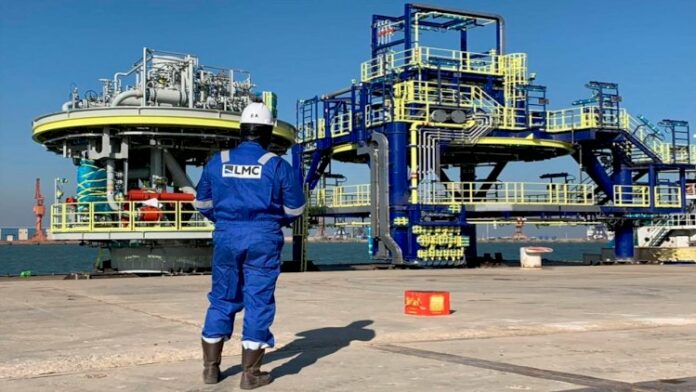
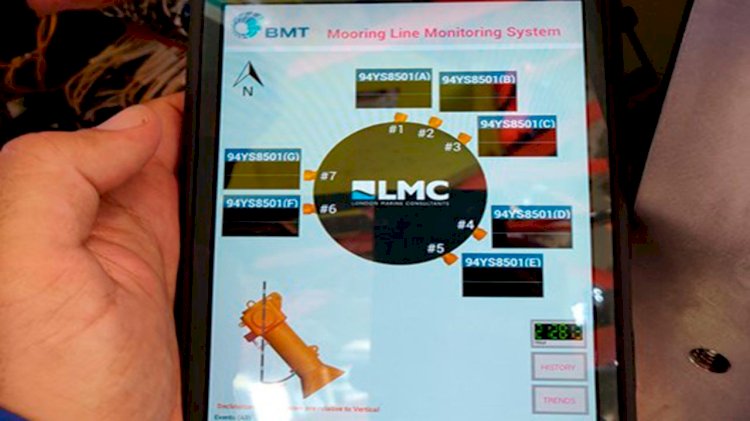
BMT has delivered a Mooring Line Monitoring (MLM) system to London Marine Consultants (LMC) for the Helang FPSO project in Malaysia.

The MLM technology that has been developed by BMT has been supplied to LMC to monitor mooring pull-in and inclination of the chain stoppers during the FPSO hook-up installation phases and long-term operation of its internal turret mooring system (TMS) on the Helang FPSO.

Dale Hastings-Payne, BMT’s Director of Business Development, Asia, said:

“We are delighted to work with LMC on this project. The Helang’s internal turret is integrated into the FPSO’s hull enabling the FPSO to passively weathervane while permanently moored to the seafloor, so our inclination data is essential to indicate the leaving angles for each of the mooring line chain stoppers. Our MLM system is one of many advanced asset monitoring solutions that BMT has supplied to the offshore oil and gas industry.”

The new MLM system, allows visual monitoring of the chain stopper inclination to measure chains being tensioned during the FPSO hook-up installation phase and long-term operation of the TMS. In this case, there is a total of 7 chain stoppers which require monitoring during this critical phase, the MLM will indicate the leaving angles for each of the mooring line chain stoppers, it includes 7 subsea inclinometer sensors that transfer data which can be accessed on a local tablet readout and a ICSS (integrated control and safety system) at the client’s FPSO control room.

BMT has developed and delivered several successful turret moored systems for major deepwater field developments. Its suite of Mooring Line Monitoring (MLM) systems provide valuable integrity data and important real-time monitoring of mooring systems to enhance operational safety.

Bourbon’s fleet to migrate to Fleet Xpress

0

Fleet Xpress agreement marks new stage in Bourbon digitalisation strategy for offshore.

Bourbon commits to Fleet Xpress in key part of its strategy to leverage digital and connectivity tools that will reduce fleet operating costs

Bourbon, a world leader in marine services for offshore oil and gas, has signed a contract committing more than 100 offshore support vessels (OSVs) to Inmarsat’s Fleet Xpress, the maritime broadband service that combines the speed of Ka-band with continuous back up from Inmarsat’s FleetBroadband operating on L-band.

The deal represents a breakthrough offshore contract for Fleet Xpress, which is already installed on some 7,000 vessels – mainly seagoing merchant ships.

Eric Griffin, VP Offshore Energy, Inmarsat Maritime, says:

“This contract is substantial in its own right and underlines that Inmarsat’s Fleet Xpress solution offers the same compelling business case on vessel efficiency and crew welfare for the energy sector as it does in the merchant shipping arena. Commercial shipping is using Fleet Xpress as its pathway to maritime digitalisation; now, the value of joining that journey is being acknowledged by one of the leading marine offshore Service Providers in the world.”

Well-known for high performance vessels and operational excellence of its services, Bourbon’s response to prolonged lower oil prices has emerged as the action plan ‘#BOURBONINMOTION’. The plan includes the Smart Shipping Programme, structured around a new vessel operational model, onshore support and a remote support centre, which seeks to leverage digital and connectivity tools to reduce fleet operating costs. Set for completion by 2021, the programme envisages deployment on 133 ‘smart’ vessels.

According to Bourbon Corporation Chief Executive Officer Gaël Bodénès:

“The time has come for operational intelligence: connected vessels, use of predictive maintenance, shore-based control centres, rationalization of tasks, etc. Automation of onboard systems is already a reality for our seafarers and we must all innovate at speed to invent our business model and our professions of tomorrow.”

Eric Griffin of Inmarsat also stresses that flexibility had been an essential ingredient in securing the Bourbon deal. He says:

“The service provider could raise or lower bandwidth usage as necessary, or even suspend it on a planned basis without penalty. An important aspect of Fleet Xpress is that third party charterers could run their own Fleet Xpress services via a dedicated ‘pipe’ without interrupting the primary bandwidth being provided to an OSV. Customers chartering OSVs can therefore manage their own ‘smart’ vessel performance with full flexibility, using existing terminals and hardware on board.”

All vessels covered in the agreement will feature advanced 3-axis stabilised antennas from Cobham, specifically developed for and approved by Inmarsat for the Global Xpress satellite network.

Among the first of Bourbon’s fleet to migrate to Fleet Xpress will be a group of high-end subsea vessels whose data consumption and management needs are ready for IoT-based solutions. These vessels also feature dual satellite terminals with high-powered amplifiers for additional redundancy. The Bourbon vessels will take advantage of bandwidth, stability and reliability, in the first instance to step up the use of video conferencing. Real time video feeds are also expected to feature in ROV operations, with digitalisation ultimately expected to touch every aspect of vessel management.

Alcatel annonces the completion of the Johan Sverdrup PRM system

0

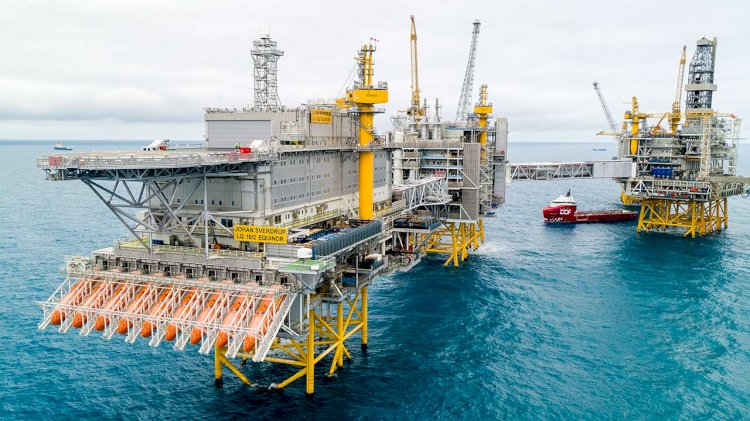
ALCATEL SUBMARINE NETWORKS (ASN) has announced that the first phase of the Permanent Reservoir Monitoring (PRM) system for the Johan Sverdrup field, operated by Equinor in the North Sea, has been successfully installed and commissioned by ASN in mid-August 2019.

The Optowave PRM system has acquired data during the first seismic data acquisition campaign at Johan Sverdrup. This is the first oil field where the base line survey is performed before production start. Johan Sverdrup production started on October 5th, 2019.

The PRM system at Johan Sverdrup will be used to develop the drainage strategy, to optimize production and to plan the location of new wells to be drilled. Equinor has an ambitious target to achieve 70% oil recovery rate at Johan Sverdrup and the PRM system supplied by ASN will be a key enabler.

The PRM system at Johan Sverdrup is based on the Optowave technology developed by ASN Norway. ASN has mobilized its resources in Trondheim, Greenwich, Calais and Paris to complete the engineering, manufacturing and installation of the first phase of the Johan Sverdrup PRM in 2019.

Since the contract was awarded in January 2018, ASN manufacturing facilities in Trondheim, Greenwich and Calais have been ramping up to achieve the required production rates. Major investments have been made by ASN to develop a fit-for-purpose and effective marine installation methodology – including a custom-built TDM (Touch Down Monitoring) tool to control the seismic cables positioning during lay. All seismic stations have been installed within a target corridor of +/- 5m).

The Johan Sverdrup PRM system has recorded seismic data since mid-August 2019. Once captured, the data has been transferred to Equinor’s on shore processing centre.

The acquired active seismic is being processed in order to provide the license with acoustic images of the reservoir. These images wil be used to characterize the reservoir and will be compared over the years to assess changes in hydrocarbon production. The interpretation of the PRM data wil contribute to an optimum oil recovery from the reservoir.

Alain Biston, President of Alcatel Submarine Networks said:

"We are delighted to continue our cooperation with Equinor. It was a significant industrial challenge to implement this phase 1 of Johan Sverdrup PRM prior to start of production, and ASN is proud to have successfully achieved this important milestone. We will continue to support Equinor in the fulfilment of its road map towards oil field and off-shore processes digitization, which is key to enhanced oil recovery".

The successful design, installation and operation of the PRM system at Johan Sverdrup is the result of hard work and excellent co-operation between ASN as a supplier and Equinor as the final user of the system.

The Johan Sverdrup PRM system will be expanded in 2020 to cover a wider area, also including Stage II of the Johan Sverdrup field. Once completed, the PRM system at Johan Sverdrup will cover an area of 200 km2, becoming the largest system ever deployed.

Johan Sverdrup is the third largest oil field on the Norwegian continental shelf with expected recoverable resources of 2.7 billion barrels of oil equivalent. The first phase of the development came into production in October 2019. The second phase of the giant development is due to come on stream in Q4 2022. The Johan Sverdrup partnership consists of Equinor (operator), Lundin Norway, Petoro, Aker BP and Total.

Vard Marine supplies floating power plants for New York

0

Vard Marine Inc. has been contracted to complete the basic class design package of a new generation of Siemens powered SeaFloat power barges to support New York’s Gowanus Repowering Project.

Working under the guidance of Stantec, the project’s engineer of record, Vard Marine will supply the barge arrangements, structural design package, marine engineering and naval architecture for the project.

Vard Marine’s Houston Vice President, Darren Truelock, said:

“We are very pleased to be partnered with Stantec and Siemens in such an important initiative that reduces potential emissions in New York City and provides peaking power to the city and state.”

The two barges will be equipped with eight Siemens SGT-A65 Aeroderivative gas turbines and will replace the four older barges currently operating in the Gowanus Generating Station in Brooklyn, New York City. They will have a generation capacity of approximately 300 megawatts (MW) each.

Vard Marine’s current portfolio of floating power plants span from 40 MW to 220 MW units of both diesel and gas turbine power generation.

Truelock further stated:

“We are proud to partake in the city’s strategy to leave a greener footprint and are excited to see the environmental impact the two barges will have.”
 

New study: Dangers to ancient Antarctic ice

0

Dangers to ancient Antarctic ice portend a future of rapidly rising seas, but a new study, partially funded by NSF, may relieve one nagging fear. Meltwater ponds fracturing the ice below them may not cause protracted chain reactions that unexpectedly collapse floating ice shelves.

A study published in Geophysical Research Letters and reported in a Georgia Tech press release modeled fracture chain reactions and water amounts necessary to repeat a rare, epic collapse such as the 2002 shattering of the iconic shelf "Larsen B."

Larsen B's disintegration was preceded by an atypical heatwave that riddled it with meltwater ponds, focusing researchers' attention on pond fracturing, also called hydrofracturing. They discovered that a melt pond hydrofracturing the ice shelf can prompt neighboring ponds to do the same. Concerns grew of possible extensive chain reactions, which the new study addressed.

The study found that pooled meltwater does fracture ice; however, ensuing chain reactions appear short-ranged. Still, massive increases in surface melting due to unusually warm weather can trigger catastrophic ice-shelf collapses.

Co-author Alison Banwell, a glaciology researcher at the University of Colorado Boulder, said:

"There is a speed limit in the study that shows that an ice shelf can't collapse ridiculously fast. However, if it becomes as covered in meltwater ponds very quickly as Larsen B was, it can collapse in a similar way." 

Also funding the research was the Cooperative Institute for Research in Environmental Sciences at the University of Colorado Boulder.

Program director Paul Cutler in NSF's Office of Polar Programs said:

"The evolution of surface and shallow subsurface meltwater across Antarctic ice shelves has important implications for their stability. It is vital to understand the causes of ice-shelf instability because ice shelves buttress against the discharge of inland ice and therefore influence ice-sheet contributions to sea level rise."