-0.1 C
New York
Home Blog Page 965

Fugro RAMMS technology benefits US Navy mapping system

0

Fugro’s collaboration with Areté to develop the Rapid Airborne Multibeam Mapping System (RAMMS) has resulted in improved maritime domain awareness for the US Navy.

The accomplishment, which was showcased last week during a Naval Oceanography event held at Southern Mississippi’s Marine Research Center, demonstrates the value of federal investments in private-sector research, development and commercialisation efforts.

RAMMS is based on Areté’s Pushbroom Imaging Littoral Lidar System (PILLS), an airborne seabed mapping capability developed through a US Navy Small Business Innovation Research (SBIR) programme. One of the primary yet challenging goals of SBIR programmes is transferring the benefits of federally funded innovations to the private sector. Areté achieved this goal by partnering with Fugro to develop and commercialise RAMMS. As a result, PILLS itself was improved, making it possible to deliver hydrographic mapping of an accuracy and quality that can support numerous data applications, including updated nautical charts.

Ed Saade, President of Fugro USA, said:

“We are very pleased to be part of this full-circle technology transfer and successful collaboration between industry and government to the benefit of all parties. To see RAMMS’ hydrographic mapping capabilities being incorporated by Areté back into the original PILLS system for the US Navy is extremely gratifying.”

Areté first demonstrated the upgraded PILLS during an Advanced Navy Technology Exercise (ANTX) with the Hydrographic Department at the Naval Oceanographic Office (NAVOCEANO) in August. The exercises involved mapping areas of the Eastern Gulf Coast and providing in-depth analysis and post-processing training for Department of Defense personnel at the Joint Airborne Lidar Bathymetry Technical Center of Expertise, with participation from NAVOCEANO and the US Army Corps of Engineers (USACE).

Eric Korpie, PILLS Programme Manager, said:

“Areté is proud to have showcased the PILLS technology at ANTX in partnership with NAVO and USACE, and to have teamed with Fugro to successfully deliver a commercial capability that meets the demanding technical requirements of the hydrographic community.”
LR and Seabury Maritime partner to tackle OPEX and CAPEX challenges

0

Partners to combine market knowledge and data capability, helping clients optimise business performance.

Seabury Maritime, LLC, the global maritime investment banking and industry advisory company and a subsidiary of Seabury Capital Group, has formed a strategic partnership with LR, the provider of classification, compliance, and advisory services, to support maritime clients with key business decisions.

The partners will leverage their global capabilities, vast market knowledge, and extensive networks to build a platform to help shipowners and other shipping stakeholders better assess the risks and opportunities facing their businesses.

By delivering an end-to-end service to empower clients to navigate operational and capital expenditure challenges in a fiercely competitive maritime marketplace, the tie-up will boost profitability, revenue, and operational efficiency, while addressing ongoing concerns, including regulation, shrinking margins, geopolitical risks as well as physical and cyber security threats.

Seabury Maritime President & CEO Edward M.A. Zimny said:

“Based on our initial soft-opening with the market, we know that digitalisation and decarbonisation will be key components of our joint maritime operational performance assessment offering. Working together, Seabury Maritime and LR will provide a full spectrum of advanced methodologies to help clients assess their operational and financial performance so that they can implement profitability-boosting strategies and technologies, which will enhance revenues, optimise costs, and increase efficiencies.”

John Hicks, LR President of Americas Marine & Offshore, said the partnership between the companies comes at the right time as the industry needs a state-of-the-art advisory service to effectively identify and resolve issues and bottlenecks that are severely impacting maritime organisations’ bottom lines.

Hicks added:

“The synergies of this partnership, and LR’s deep domain expertise in the most relevant functions and segments of the maritime sector, means the tie-up will offer client organisations unrivaled solutions to profitability and growth.”

 Zimny added:

“Working with LR, we’ll deliver solutions centered around analysing data, identifying areas to improve, measuring performance over time, and bolstering decision-making which no other firm currently offers.”

Seven new alternative fuel vehicles in the Port of San Diego

0

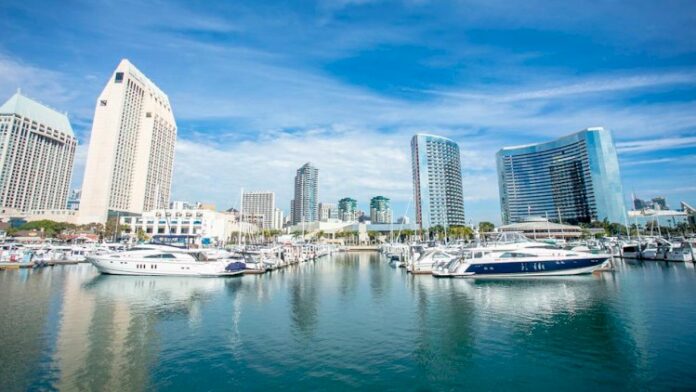
As an environmental champion of San Diego Bay and its diverse ecosystems, the Port of San Diego is purchasing seven vehicles for its work fleet that will run on renewable diesel fuel.

The Board of Port Commissioners approved a $700,000 agreement with 72 Hour LLC, DBA National Auto Fleet Group at its November 5, 2019 Board meeting. The emissions produced from renewable diesel do not result in a net increase of C02 emissions because renewable diesel is produced by biogenic waste products that would have decayed and produced C02 emissions elsewhere.

Garry Bonelli, Chairman of the Board of Port Commissioners, said:

“The use of renewable diesel will help the Port meet its Climate Action Plan goals to curb greenhouse gas emissions along San Diego Bay and its tidelands. The Port’s greenhouse gas emissions have decreased 13 percent since 2006 and the purchase of these vehicles will help to further decrease air pollution.”

The Port’s General Services staff will use the vehicles as part of their maintenance duties at the Port’s facilities, 22 parks and other areas. The vehicles to be purchased are:

  • One 10-yard dump truck;
  • Two ¾-ton crew cab pick-up trucks;
  • One ¾-ton utility gardener truck;
  • One ¾-ton crew cab stake bed truck;
  • One long-bed cargo stake truck;
  • One refuse packer/loader.

The agreement also includes two gasoline-powered mid-sized SUVs that will replace two older fleet vehicles. The newer SUVs will be more gasoline efficient and will therefore produce less air emissions than the older vehicles. Port staff researched the feasibility of purchasing alternative fuel SUVs, but this segment of the market did not offer sufficient options based on staff’s current equipment needs. The Port will continue to research opportunities to incorporate alternative powered vehicles throughout its work fleet.

Fishery companies donate millions to new simulator in Greenland

0

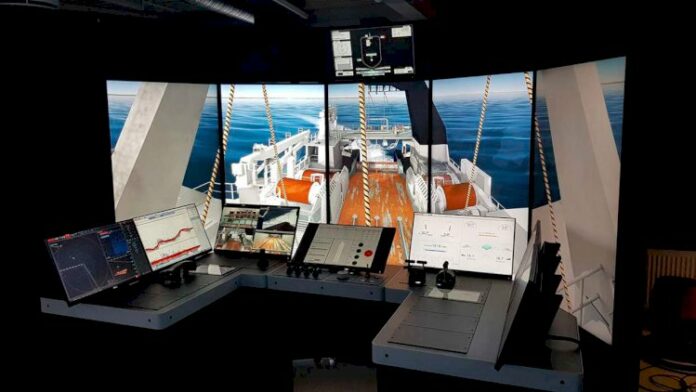
Nine commercial fishery companies have donated in total DKK 3.2 million to Danish training institute, the Greenland Maritime Center, for investment in a state-of-the-art K-Sim Fishery simulator from Kongsberg Digital.

A first of its kind in the Kingdom of Denmark, the K-Sim Fishery simulator will enable students to gain vital competence in diverse fishery situations, including aft deck operations, and is scheduled for installation in 2020.

Introduced by Kongsberg Digital in 2018, K-Sim Fishery is based on sophisticated K-Sim Navigation simulator technology, with added functionality and instruments specific to commercial fishing, including Kongsberg Maritime (Simrad) echo sounders, sonars and trawl monitoring systems.

Reflecting Kongsberg Digital’s ability to adapt to customer requirements, the new K-Sim Fishery simulator will be built upon one of Greenland Maritime Center’s existing K-Sim Navigation bridge simulators. The upgrade will include a highly detailed fishing vessel model with advanced hydrodynamic modelling for ultimate realism in behavior and a new customized sailing area to accommodate exercises in Greenland waters.

Additionally, the extension will feature new consoles and instruments for training on maneuvering, fish finding and fish catching. Included are also instruments for aft-deck operations, to address the risk elements associated with working outside on the stern of the vessel.

Bent Olesen, Head of Education, Greenland’s Maritime Center, says:

“K-Sim Fishery addresses all aspects of safety and catch performance on a fishing vessel. Students will become familiar with operations at the bridge both for navigation and best practice on using the hydroacoustic systems to locate and detect the ideal catch. Further, the aft deck simulation will help to prepare crews for the hazardous work they face at sea. I am proud that the industry is supporting us to deliver the most advanced training for fishing vessel crews, and I am very grateful that they are committed to enabling young people to build vital sea skills.”

The companies donating and enabling Greenland Maritime Centre to augment its Commercial Fisheries Maritime Safety and Maritime Safety for Skilled Commercial Fishermen courses are; Royal Greenland, Polar Seafood, Arctic Prime Fisheries, Ice Trawl Greenland, Niisa Trawl, Qajaq Trawl, Qaleralik, Sigguk A/S and Sikuaq Trawl.

Tone-Merete Hansen, Sr. VP, Kongsberg Digital, said:

“We are proud to work with Greenland Maritime Centre and deliver training solutions that support sustainability in fishery operations. Interest in K-Sim Fishery keeps growing as more companies and training organisations understand the unique training benefits it enables. We continue to develop the system based on the industry’s training requirements and have some significant updates that will broaden the simulators application scope in the coming years.”

Maersk Drilling awarded new contract for work offshore Trinidad

0

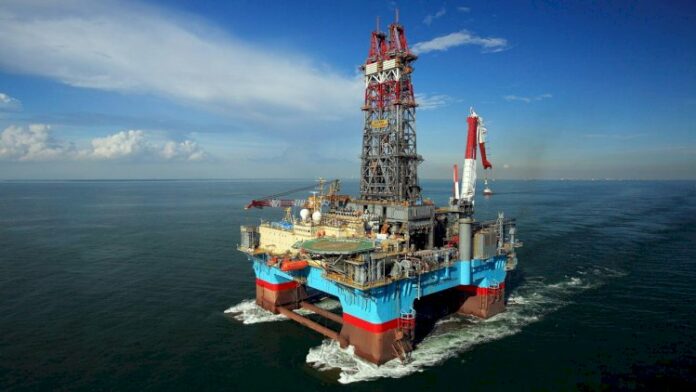
Maersk Drilling has entered a contract with BG International Ltd., a subsidiary of Shell, for work offshore Trinidad and Tobago on a two-well development project for the semi-submersible rig Mærsk Developer.

The contract has an estimated duration of 171 days and is expected to commence in Q1 2020. The value of the firm contract is approximately USD 39m, including a mobilisation fee. The contract contains five additional one-well options.

The Mærsk Developer is a DSS-21 column-stabilized dynamically positioned semi-submersible rig, able to operate in water depths up to 10,000ft. It is currently operating offshore Mexico.

Morten Kelstrup, COO of Maersk Drilling, says:

“We are very pleased to be headed back to Trinidad to build on the successful work Mærsk Developer previously performed for Shell there.”

Hapag-Lloyd expands fleet on AL3 service between the US and Europe

0

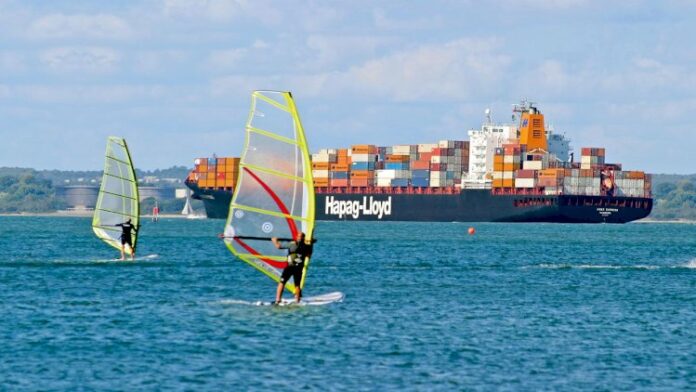
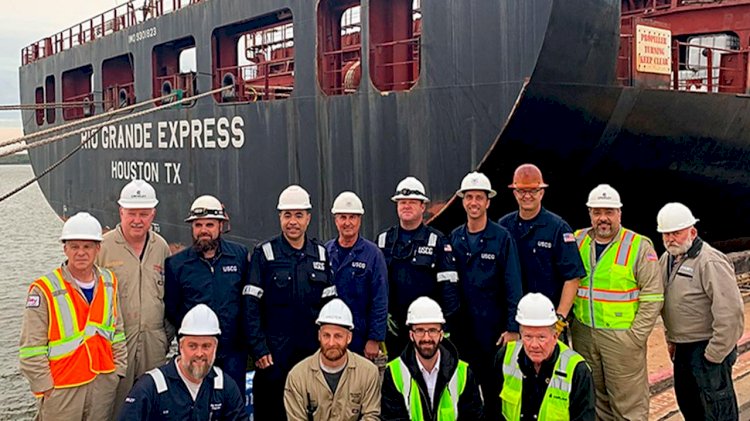
Hapag-Lloyd's Atlantic Loop 3 Service (AL3) fleet is growing with the addition of the 4,248 TEU vessel “Rio Grande Express” sailing between the United States and Europe.

Upgrading to a 6 vessel rotation will improve the reliability of the AL3 service for our customers and support our strategy of being number one for quality. The “Rio Grande Express” will be flagged under the United States, completing an entire loop of US Flag vessels, which will provide valuable opportunities for US mariners and reinforcing our commitment to the US Flag fleet. The AL3 service connects the vessel’s new homeport Houston (Texas) with the port of Hamburg.  

With a fleet of 237 modern container ships and a total transport capacity of 1.7 million TEU, Hapag-Lloyd is one of the world’s leading liner shipping companies. A total of 118 liner services worldwide ensure fast and reliable connections between more than 600 ports on all the continents. Hapag-Lloyd is one of the leading operators in the Transatlantic, Middle East, Latin America and Intra-America trades.

World’s most powerful offshore wind turbine is testing in UK

0

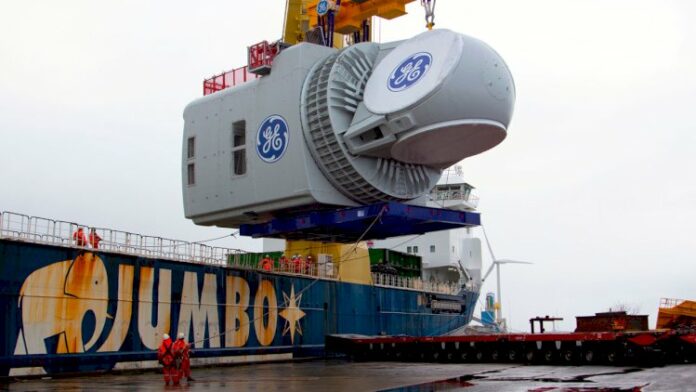
A nacelle from GE Renewable Energy’s Haliade-X 12 MW offshore wind turbine has arrived at the Offshore Renewable Energy (ORE) Catapult’s testing facility in Blyth, Northumberland, ahead of a rigorous testing programme designed to prepare it for years of operation at sea.

This nacelle, comparable in size to six double-decker London buses, will undergo full indoor testing as part of an advanced technology program that will replicate real-world operational conditions. This is the second Haliade-X nacelle to be assembled, with the first recently installed in Rotterdam which last week produced its first kWh.

John Lavelle, President & CEO of GE’s Offshore Wind business, said:

“GE’s Haliade-X technology will have an important role to play in helping the UK to achieve its Offshore Wind Sector Deal goals of 30 GW by 2030, and UK Government’s ambition to work for greenhouse emission reduction to “net-zero” by 2050. Our Haliade-X global testing program will allow us to put different components under controlled and extreme conditions in a faster way, to adapt our technology in a shortened time while introducing new features to meet customers’ demands, and reduce the validation time before starting serial production in 2021.”

Andrew Jamieson, Chief Executive of ORE Catapult, said:

“Once again, the North East is playing a significant role in the UK offshore wind success story by welcoming another key component of the world’s largest offshore wind turbine to date, following the arrival of the turbine’s 107m blade for testing earlier this year. Our objective is to subject the turbine nacelle to an extremely rigorous testing program designed to make sure it can withstand years of operation at sea. Testing these world-leading technologies in the UK cements our position as a global leader in offshore wind and presents unparalleled opportunities for the UK supply chain to develop new products and services, creating jobs and generating economic benefit.”

GE Renewable Energy is investing close to £15 million in testing and research and development activities on the Haliade-X in the UK. In addition to the nacelle and blade testing program, GE and ORE Catapult are also developing the “Stay Ashore!” program, which aims to reduce the time people spend at sea, increasing safety and contributing to energy cost reduction by focusing on developing technology in robotics, digital and remote operations.

The Haliade-X 12 MW is a multi-million investment and will contribute to reducing the cost of offshore wind energy in order to make it a more competitive source of clean and renewable energy. One Haliade-X 12 MW turbine can generate up to 67 GWh of gross annual energy production, provide enough clean energy to power 16,000* European households and save up to 42,000 metric tons of CO2, the equivalent of the emissions generated by 9,000 vehicles in one year.

Eni uses ECHELON software for optimization of field monitoring

0

Eni achieves a new milestone in its digital transformation agenda with the deployment of advanced dynamic reservoir simulation.

Eni announces the industrial deployment of ECHELON, an advanced dynamic reservoir simulator, for optimization of field monitoring, development and production. ECHELON software allows to run thousands of parallel reservoir simulations in a record timeframe, further accelerating projects time-to-market. This technology will support Eni in managing uncertainty while improving early understanding of field behavior for more effective business decisions and, together with the recent upgrade of its supercomputing infrastructure thanks to the deployment of HPC5, which will bring the company’s overall computational capacity to a peak of 70 Petaflops in the first quarter of 2020, it confirms the progression of the company’s digitalization process.

As part of its digital transformation agenda, in 2018 Eni has signed a strategic agreement with Stone Ridge Technology (SRT) aimed at jointly pursuing the development and industrialization of ECHELON, the first dynamic reservoir simulator designed and developed to fully harness the power of modern high-performance General-purpose computing on graphics processing units (GP-GPUs). ECHELON, while able to efficiently employ the computational power provided by GP-GPUs, it features a 5-fold reduction in processing times compared to other commercial reservoir simulators, while delivering the same level of accuracy.

ECHELON deployment at Eni will continue throughout 2020 on the company’s core assets aiming to maximize their value, furthermore Eni and SRT are planning the advanced industrial release for compositional simulator in the second quarter of 2020.

Rolls-Royce and Sunseeker sign frame agreement for MTU engines

0

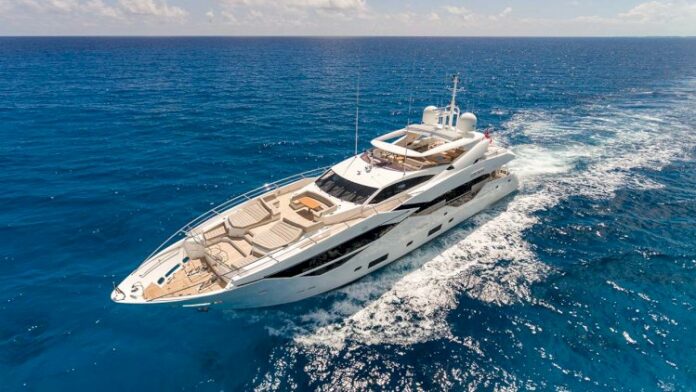
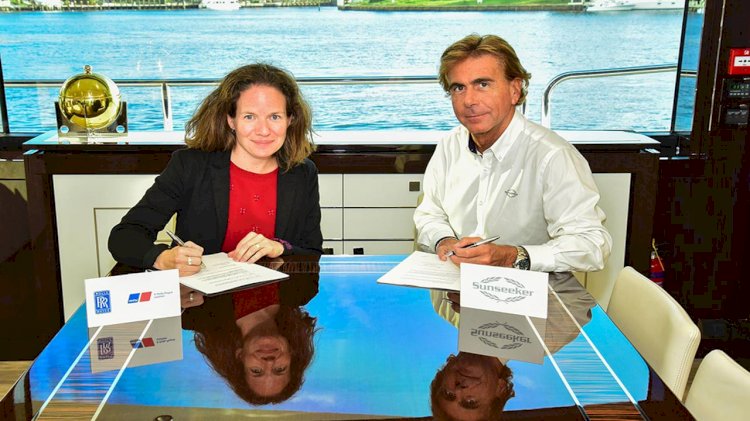
Rolls-Royce and British luxury yacht manufacturer Sunseeker International have signed a new frame agreement for the supply of MTU yacht engines.

The contract, signed during the Fort Lauderdale Boat Show, runs until the end of 2022 and covers a total of over 90 MTU Series 2000 V10, V12 and V16 engines as well as V8 and V12 configurations of the Series 4000. The engines offer power outputs ranging between 1015 kW (1,380hp) and 2340 kW (3,182 hp). The engines will power a wide range of yacht models in the 25 meters (75ft+) category. An initial Sunseeker 161 yacht was presented at the boat show in Cannes and has already been sold. New propulsion technologies are also to be used, including an MTU hybrid engine for the Sunseeker 133. This modular propulsion system is being developed by Rolls-Royce in close collaboration with Sunseeker.

Andrea Frabetti, Chief Operating Officer of Sunseeker, said:

“We are pleased to be entering into another frame agreement with Rolls-Royce. We aim to double our yacht portfolio over the next few years, and intend to include new technologies. Rolls-Royce is an excellent partner for this undertaking. Our long-standing, successful partnership is proof-positive of this.”

For over 18 years Rolls-Royce has been supplying Sunseeker with engines to power yachts between 20 and 47 meters in length.

Denise Kurtulus, Head of Marine & Offshore at Rolls-Royce Power Systems, said:

“Sunseeker has already installed over 1.8 million horsepower of MTU technology in its yachts. We are proud to continue our winning partnership with this renowned yacht builder.”

ITF called for global cooperation to fight piracy in Gulf of Guinea

0

Following the attack of two vessels in the Gulf of Guinea last week, the International Transport Worker’ Federation (ITF) has called for urgent global and regional cooperation to fight piracy in the region.

On November 2, Pirates kidnapped nine crew members from the Norwegian-flagged MV Bonita while the vessel was at anchor off the coast of Benin in West Africa, and two days later on November 4 four crew members were taken hostage off the coast of Togo from the Greek-flagged Elka Aristotle.

Several other abductions have been reported in the Gulf of Guinea in recent months, including eight crew members taken hostage off Cameroon in August, and 10 Turkish seafarers off the coast of Nigeria in July.

Piracy and armed robbery have been long-standing problems in the Gulf, but in recent years, and months, the frequency of attacks is increasing. Sixty-two seafarers have reportedly been captured off the coasts of Nigeria, Guinea, Togo, Benin and Cameroon this year.

ITF seafarers’ section chair David Heindel has called on the shipping industry, governments and unions to work collaboratively to eliminate piracy in the Gulf of Guinea. He said:

“Alarmingly, the frequency and severity of attacks on vessels in the Gulf of Guinea is increasing, with a spate of recent kidnappings and ruthless acts of violence in recent months. The entire maritime industry urgently needs to take action to improve prevention, reporting and response to attacks across the Gulf.

Coastal countries in the Gulf must work with industry and unions to identify actions, and allocate adequate resources, to reduce the risks posed to seafarers and shipping.

While we acknowledge the difficult international regulatory environment, we must continue to build capacity and cooperation, and address the mounting human toll that these attacks are having on lives and physical and mental health transiting through the waters of West Africa.”

Last month, the International Chamber of Commerce International Maritime Bureau (IMB) reported that the Gulf of Guinea accounts for 86 percent of crew taken hostage and nearly 82 percent of crew kidnappings globally.