0.5 C
New York
Home Blog Page 963

Shell Marine wins contract to supply lubricants to COSCO

0

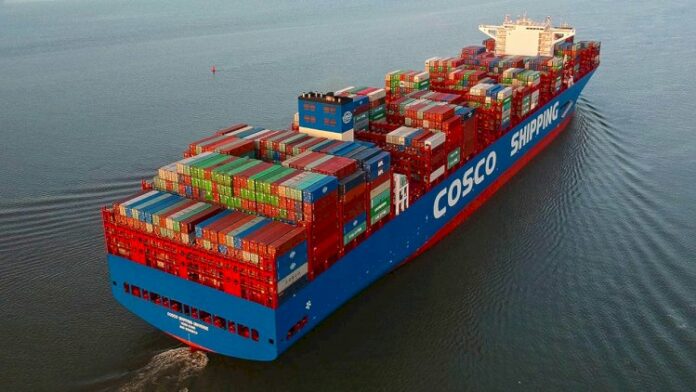
Shell Marine has extended its relationship with China COSCO Shipping Company Limited (COSCO SHIPPING) businesses, after winning a contract to supply lubricants for five 62,000 dwt multi-purpose pulp carriers due delivery to COSCO SHIPPING Specialized Carriers Co Ltd in 2019 and 2020. 

The lubricants contract, won in a competitive negotiation process, calls for delivery of the two-stroke engine cylinder oils Shell Alexia 100 and Shell Alexia 40 and the multi-functional lubricants Shell Melina S30 and Shell Argina S3 40. Alexia 100 and Alexia 40 are part of Shell Marine’s portfolio of cylinder oils protecting two-stroke engines across a full range of vessel operating profiles, machinery specifications and fuel sulphur contents, now and after the introduction of IMO’s global sulphur cap from January 1, 2020.

Joris van Brussel, Shell Marine Global General Manager, said:

“There is a direct relationship between the quality of marine lubricants and engine reliability, and Shell Marine is delighted to have once again secured a major contract with COSCO SHIPPING group. We look forward to working with COSCO SHIPPING to optimise their vessels’ total cost of ownership and by meeting expectations for deliveries to an extensive list of ports.”

Shell Marine LubeAnalyst drain oil analysis is integral to the new agreement, added van Brussel:

“Increasingly, discerning owners want a single supplier to offer proven lubricant performance supported by global logistics and comprehensive technical services. Our customers also have the right to expect peace of mind when it comes to cylinder oil performance, availability and service support – before, during and after the IMO 2020 sulphur cap transition.” 

Shell Marine offers a complete portfolio of lubricating oils for marine engines burning gas, heavy fuel, gas oil or liquid biofuel. All its engine oils are designed to minimise deposit build-up and keep engines clean. Its Shell Alexia oils meet a full range of vessel type and fuel grade needs offering owners peace of mind on IMO 2020 fuel sulphur content compliance, whether slow steaming, operating in emissions control areas or undertaking fuel switching.
 

SAR: Galileo will use ReturnLink Rescue Solutions

0

Galileo is the European Union’s Global Navigation Satellite System (GNSS) constellation, which reached its operational phase in 2017, allowing technology with a Galileo-enabled receiver to use signals provided by Galileo’s global satellite constellation for positioning, navigation and timing.

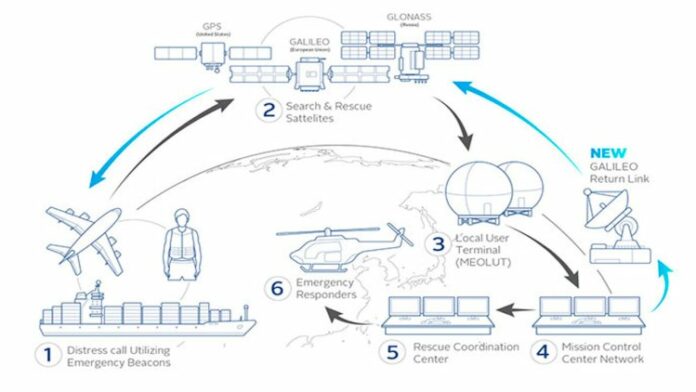
Galileo’s development is part of the EU’s preparations for upgrading the international distress beacon locating organisation COSPAS SARSAT’s Search and Rescue (SAR) Ecosystem under the MEOSAR program, which requires new earth based antenna and a network of 72 SAR satellites, made up of the US GPS, EU Galileo and Russian Glonass constellations.

Galileo’s immediate impact on Search and rescue (SAR) has been the addition of 26 new satellites, allowing greater global coverage, with faster detection of the 406MHz distress frequency. Coupled with Galileo’s precision GNSS capabilities, SAR beacons with Galileo receiver’s location detection is greatly accelerated. Interaction with the GPS network has also created a Canyon Effect capability that allows signal detection in areas with previously limited coverage.

The Second major impact will be the Return Link Service (RLS), a re-assurance signal back to a new generation of SAR beacons to inform the user that their distress signal and location have been detected. This new capability is unique to the Galileo satellites and is due to be activated in early 2020.

The confirmation signal for ReturnLink will be the activation of a blue light on a new range of beacons as the blue light is widely seen as being associated with the emergency services. The flashing blue light is sent around 15minutes after confirmation that the distress signal has been detected and the beacons location independently located.

The Galileo Return Link Service Provider based at CNES headquarters in Toulouse, where the Cospas-Sarsat French Mission Control Centre is also operated. This facility is in charge of the management of the Return Link Messages and their coordination with the Cospas-Sarsat network and with the Galileo Ground Mission Segment on the transmission of messages to the distress beacons through the Galileo E1 signal.

The SAR community have long known the survival impact of dealing with a distress situation on your own, either as a solo adventurer or as a group that feels isolated due to lack of communication with the outside world. Knowing that others are aware of your situation can greatly improve your mental strength for the challenges you are facing. Return Links reassurance signal will also reduce the chances of rash decisions taken by those who feel they have nothing to lose, like leaving the site of an accident or attempting to swim to safety. Knowing that SAR professionals know your situation and location will be an invaluable support. From a technical perspective the two-way interaction of the beacon helps reassure users, often unfamiliar with the technology, that it’s activated and doing what it needs to do.

A new type of lifesaving distress beacon, the FastFind ReturnLink PLB, utilises unique functionality generated by Galileo satellite constellations Return Link Service to send a signal back to the FastFind ReturnLink beacon confirming the users 406MHz distress alert has been received and Galileo GNSS location coordinates have been detected.

Orolia Maritime will launch the new FastFind ReturnLink PLB at Mets 2019 but the unit will only be available to purchase when Galileo confirm that the system is fully operational, which is expected in late 2019 or early 2020.

The RLS feature is already available as an option in Orolia’s latest aviation ELT, the Kannad ULTIMA-S and will also be released later in 2020 as an EPIRB with an updated version of Orolia Maritime’s unique SmartFind & SafePro AIS range.

Galileo’s RLS functionality will be available to any beacon manufacturer that update their design to incorporate the necessary hardware. However, only Orolia has the history of supporting the development of the MEOSAR ground and space infrastructure, Galileo satellite timing components and leadership of the EU’s Helios project to support development of the next generation of SAR beacons to utilise the benefits of Galileo.


Consortium involving Brittany Ferries buys Condor Ferries

0

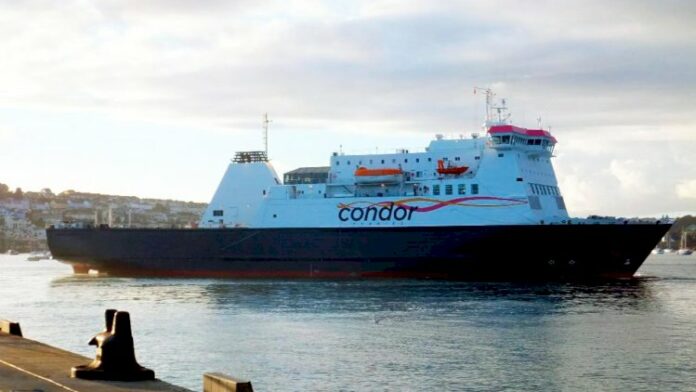
Brittany Ferries, in consortium with the Columbia Threadneedle European Sustainable Infrastructure Fund (ESIF), has reached an agreement to acquire 100 percent of Condor Ferries from Macquarie Infrastructure and Real Assets (MIRA). Contracts have been signed and the deal is expected to be executed following scrutiny by relevant regulatory authorities. Brittany Ferries will hold a minority stake.

Condor Ferries is an operator of lifeline freight and passenger ferry services. Each year, Condor Ferries carries approximately 1 million passengers, 200,000 passenger vehicles, and over 900,000 freight lane meters between Guernsey, Jersey, the United Kingdom, and the Port of St. Malo in France.

Brittany Ferries began operations in 1973. Today its fleet includes twelve ships connecting France, the United Kingdom, Ireland and Spain. It operates from three ports in the UK, Portsmouth, Poole and Plymouth and carries around 2.5 million passengers every year, as well as 210,000 freight units.

ESIF is a new open-ended, evergreen fund that invests in European mid-market equity assets, managed by leading global asset management group Columbia Threadneedle Investments.

Heiko Schupp, Global Head of Infrastructure Investments at Columbia Threadneedle Investments, said:

“This agreement is exciting news for us as it marks the first investment for the Columbia Threadneedle European Sustainable Infrastructure Fund. Its evergreen structure suits long-term, income-producing infrastructure assets such as Condor Ferries. We are delighted to have partnered with Brittany Ferries and look forward to working with management, employees and the Channel Islands towards the long-term security and development of Condor’s ferry services.”

Christophe Mathieu, CEO Brittany Ferries, added:

“We are delighted to be part of the consortium that has agreed to acquire Condor Ferries. Brittany Ferries and Condor enjoy a long history in commercial operations and a closer cooperation between the two companies will create opportunities for sharing expertise and best practice. We believe this is a positive step and look forward to playing our part in supporting the economies and communities of the Channel Islands into the long term.”

Jean-Marc Roué Chairman of Brittany Ferries concluded:

“I am proud and honoured that we have concluded a partnership with the Columbia Threadneedle European Sustainable Infrastructure Fund. It allows us to reconnect with a route to the Channel Islands that Brittany Ferries operated in the past.”

Innovation project to reduce cost of floating solar plants

0

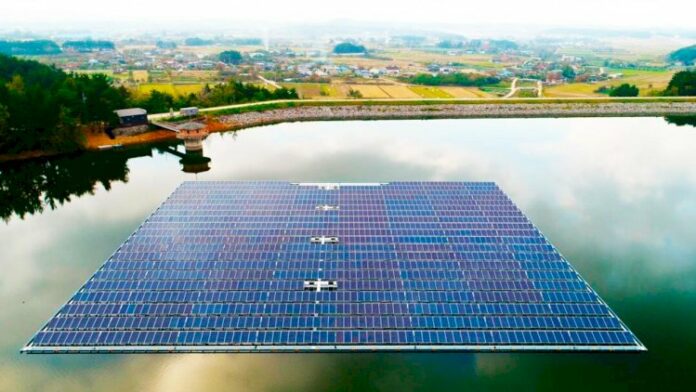
Large-scale floating photovoltaics plants can be one of the solutions for a sustainable energy supply. The EU has now approved a project that will optimize the anchoring and mooring of floating solar plants and adapt the anchoring to ocean environment as well. The aim is to significantly reduce the cost of anchoring floating solar parks.  

RISE is part of a consortium of Swedish, Spanish and Portuguese players who have now received funding from the European Union’s European Maritime and Fishery Fund (EMFF) to develop the technology for anchoring and mooring floating solar cells. The project (FRESHER – Floating Solar Energy mooring: Innovative mooring solutions for floating solar energy) starts in November 2019 and lasts for two years.

John Rune Nielsen, Director Research and Innovation at RISE, says:

"We are happy to be part of the value chain in such an innovative and emerging market, providing competences to the industry and supporting SME’s."

The main goal of the FRESHER project is to be able to showcase and validate new innovative anchoring technology for floating solar power plants. The new technology results in both greatly improved LCoE (Levelized Costs of Energy) and increased capacity for solar power. The solar power should therefore cost less and provide more energy, which makes it possible to increase the rate of expansion so that ocean based solar parks can be profitable.

The project leader is Seaflex, a company that offers flexible and environmentally friendly anchoring and mooring solutions:

Lars Brandt, CEO at Seaflex, says:

"Seaflex has worked in the marine industry for a long time, focusing on the environmental aspect of safe and efficient mooring systems. The development in this project is aimed directly at floating solar cells and is therefore very important to us."

Another partner in the project is EDP, the Portuguese energy company whose energy production to 70 percent comes from renewable sources, and which already has an active floating solar cell park in northern Portugal. They see a great future for floating solar cells.

Miguel Patena, Director for Innovation & Technology  at EDP Produção, says:

"Portugal has the ambition to be carbon neutral by 2050 and to have 80% of the energy supplied by renewable sources (RES), a commitment that EDP shared from the first day. Hybridizing alternative sources of energy with our hydro fleet is one of the fastest ways to help accomplish this target. Floating photovoltaic, only in Portugal, has a potential of more than 2 GW. However, the harsh environment in our dams and competition with other conventional RES technologies requires an optimization of the mooring designs and a reduction of costs . Our ambition  goes in three ways: improve the existing solutions, bring competitive proposals and contribute for the design in harsher environments, as the offshore sea water applications."

FRESHER’s goal is thus to show that floating solar energy is ready to take the next step and grow in market share. Among the new technologies in the project are so-called PV anchoring suitable for the marine environment, which open up new markets and uses in the green energy transition. The design is based on lessons learned from previous tests and commercial implementations as well as experience from the industrial and offshore sectors. 
 

NOAA releases new strategies to apply emerging science and technology

0

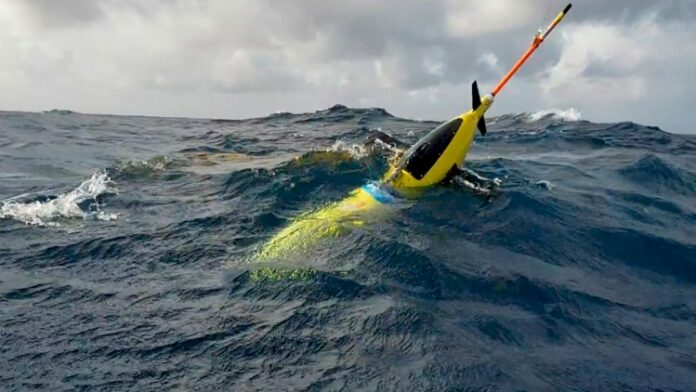
NOAA has announced new strategies to dramatically expand the agency’s application of four emerging science and technology focus areas — NOAA Unmanned Systems, Artificial Intelligence, ‘Omics, and the Cloud — to guide transformative advancements in the quality and timeliness of NOAA science, products and services.

Neil Jacobs, Ph.D., acting NOAA administrator, SAID:

“NOAA is a pioneer with a strong track record of applying the latest science and technology and these new strategies will allow us to dramatically expand these applications across our mission areas. These detailed strategies will enable us to achieve our priorities of reclaiming and maintaining global leadership in numerical weather prediction and sustainably expanding the American Blue Economy.”

These draft strategies, open for public comment through December 16, were highlighted at a White House Summit on Partnerships in Ocean Science and Technology, which convened key players from across the ocean science and technology community including representatives of industry, academia, government, philanthropy, and the private sector. The event promoted partnerships in ocean science and technology, showcased American leadership, and engaged the community to explore the unknown ocean, advance marine science, and promote new technologies.

The strategies developed by NOAA to improve the efficiency, effectiveness and coordination of their development and usage across the agency, include:

  • Unmanned Systems Strategy. In recognition of the opportunities unmanned systems presents for addressing NOAA's mission priorities, the NOAA Unmanned Systems Strategy provides a framework to efficiently provide requirements-driven, safe, cost-effective, and compliant Unmanned Systems services across the agency; prioritize strategic investments in Unmanned Systems applications and technologies that fuel innovation and strengthen operations, and accelerate and enhance capabilities through partnerships.
  • Artificial Intelligence Strategy. The overarching goal of the NOAA Artificial Intelligence (AI) Strategy is to utilize AI to advance NOAA’s requirements-driven mission priorities. Through this strategy, NOAA seeks to reduce the cost of data processing, and provide higher quality and more timely scientific products and services for societal benefits.
  • Omics Strategy. In recognition of the opportunities and challenges presented by the advent of tools associated with ‘omics — a suite of advanced methods used to analyze material such as DNA, RNA, or proteins — the NOAA ‘Omics Strategy provides a framework to advance the application of ‘omics to address mission priorities. The strategy leverages NOAA’s current organizational structure to more effectively implement ‘omics through improvements in computational and analytical capacities, targeted research, technology transition, workforce proficiency, and partnerships across NOAA’s lines, federal agencies, and extramural research and commercial communities.
  • Cloud Strategy. NOAA’s robust experience with cloud applications is already beginning to demonstrate significant improvements in performance and skill in areas such as satellite data products and services, numerical weather prediction, ocean models, and big data analysis, storage and dissemination. Cloud services will be further leveraged to expand benefits, such as: accelerated timeline to acquire new computing resources; increased security posture; more accessible and monetizable NOAA data to customers, such as academia and industry; reduced transition time from research to operations; scalable infrastructure that supports scientific and high performance computing requirements; and a more agile and innovative culture.

Bollinger awarded contract to construct ocean transport barge

0

Bollinger Shipyards has been awarded a contract to construct an ocean transport barge for General Dynamics Electric Boat.

Bollinger President & C.E.O. Ben Bordelon said:

“We are pleased to announce that we will be constructing the Ocean Transport Barge for Electric Boat, which will transport submarine modules to Electric Boat’s Groton Shipyard for final assembly and test. The Bollinger management team and talented workforce are proud to be part of this program.”

The concept and contract design for the 395ft. by 100ft. Ocean Transport Barge was performed by the Bristol Harbor Group.The detail design engineering will be performed at the Bollinger Lockport New Construction facility in Lockport, Louisiana and the construction will take place at the Bollinger Marine Fabrication facility in Amelia, Louisiana.Delivery is scheduled for 2021.

Bollinger Shipyards LLC is a leading designer and builder of fast military patrol boats, ocean-going double hull barges, offshore oil field support vessels, tug boats, rigs, liftboats, inland waterways push boats, barges, and other steel and aluminum products from its new construction shipyards. Bollinger has 10 shipyards and all are strategically located throughout Louisiana with direct access to the Gulf of Mexico, Mississippi River and the Intracoastal Waterway. Bollinger is the largest vessel repair company in the Gulf of Mexico region.

Stena Line takes delivery of new ferry Stena Estrid

0

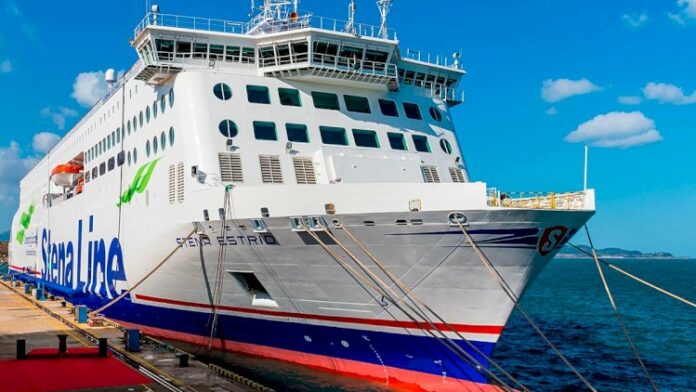
Stena Line has officially taken ownership of its newest ferry Stena Estrid* following a handover ceremony at the AVIC Weihai Shipyard in north-western China.

Stena Estrid is the first of five next generation Stena Line RoPax vessels that are currently being constructed. Stena Estrid will now embark on a six-week journey to its new home on the Irish Sea, where it will begin service on the Dublin to Holyhead route in January 2020.

A further two of the new ferries are also destined for the Irish Sea with Stena Edda expected to commence operations from Belfast to Liverpool next spring, and a third vessel Stena Embla to be introduced on the same route in early 2021.

Stena Line owner Dan Sten Olsson attended a service officiated by the Reverend Stephen Miller of the Mission to Seafarers, who undertook the long held maritime tradition of blessing the ship, in order to bring it good luck at sea.

Following the signing ceremony, Stena Line’s Technical Operations Director Bjarne Koitrand and Stena Estrid’s Senior Master Matthew Lynch and crew officially took ownership of the vessel.

Bjarne Koitrand said:

“Today has been six years in the planning, and we are delighted to finally take ownership of the first of our five new ships.  With the new crew now in place, they can start the long journey to the Irish Sea, where Stena Estrid will make her new home serving customers between Dublin and Holyhead.”

Stena Line CEO Niclas Mårtensson said that the delivery of Stena Estrid marks the start of a very important few months for Stena Line’s Irish Sea operations:  

Mr Mårtensson said:

“Taking ownership of Stena Estrid is a major milestone for Stena Line, and is the result of a very significant investment in our Irish Sea operations that reflects our commitment to the region and will ultimately see three of the world’s most modern ferries operating between Ireland and Britain.

A first-class customer experience is a priority for us, so we are determined to deliver the best possible freight and travel service to our customers. Stena Estrid will provide a more environmentally sustainable way to travel with more efficient loading and unloading operations, increased freight capacity and the best Scandinavian quality, style and design in our facilities.”

Part of a multi-million-pound investment in the region, the new Stena Line ships will be amongst the most advanced vessels in operation and larger than today’s standard RoPax vessels. At 215 metres in length, Stena Estrid will provide freight capacity of 3,100 lane meters, meaning a 50 per cent increase in freight tonnage, and the space to carry 120 cars and 1,000 passengers and crew.

*The name Estrid is connected to Stena Line’s Scandinavian heritage. It is an Old Norse eastern-Nordic version of the name Astrid. Estrid is commonly found on old runestones and means ‘divinely beautiful’.

Svitzer starts operations at Suez Canal Container Terminal in Port Said

0

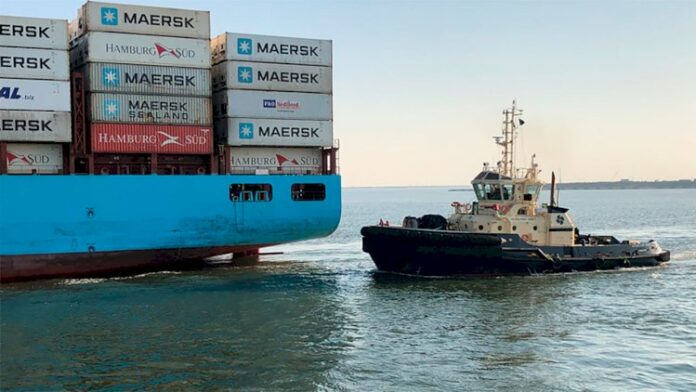
Earlier this year in March, Svitzer signed a 10-year agreement with Suez Canal Authority (SCA) to deliver two 70tbp ASD tugs to provide towage services at the Suez Canal Container Terminal (SCCT), which is operated by APMT, in Port Said, Egypt. 

The first vessel Svitzer Port Said 1 went on hire on 11 November while the second, Svitzer Port Said 2, is expected to arrive in January 2020. The current volume of 10 tug jobs per vessel per day is expected to double with the upcoming jetty extension at Port Said.

Nicolai Vinther Friis, Managing Director of the AMEA region for Svitzer, commented:

“This new operation is a significant step for us and a reflection of our strong and long-standing relationship with Egypt and that the country plays an important role in our growth plans for the region. Securing this contract is a great example of close collaboration between our head office in Copenhagen, regional team in Dubai and the local team in Egypt as well as tapping into Maersk synergies with APMT. I would like to extend a special thanks to the team at SCCT, Lars Vang Christensen (CEO) and Hany El-Nady (PR and Security Director) who played an instrumental role in the negotiations with SCA.”

Svitzer has been successfully operating in Egypt at the Idku LNG plant since 2005 under a 20 years contract with Egyptian LNG and this new operations will be Svitzer’s second operations in the country.

C-Job unveils autonomous underwater maintenance dredger design

0

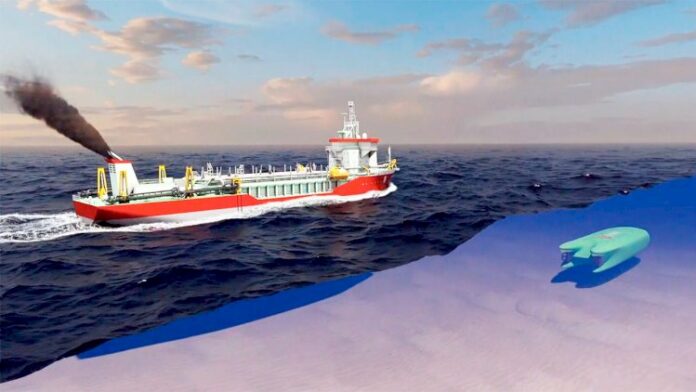
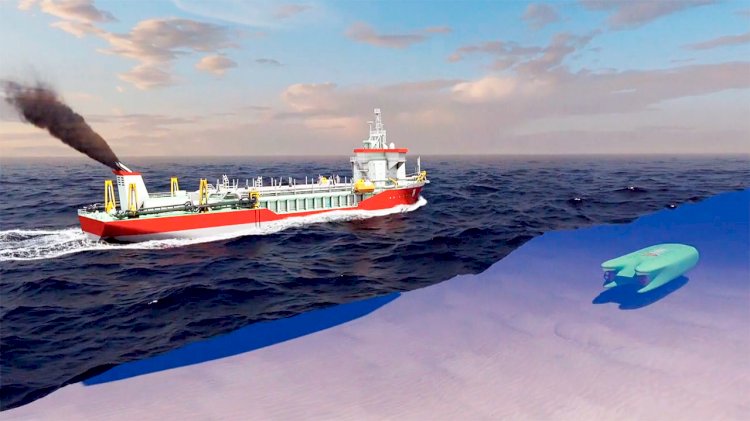
C-Job Naval Architects has revealed its concept design of an Autonomous Underwater Maintenance Dredger. The unique design was presented by the independent ship design and engineering company at the combined Maritime and Port Technology and Development Conference (MTEC) and international Conference on Maritime Autonomous Surface Ships (ICMASS) in Trondheim, Norway.

The Autonomous Underwater Maintenance Dredger (AUMD) concept design developed by C-Job’s Research and Development department is specifically created for maintenance in port environments. The team took advantage of the opportunities and out-of-the-box solutions autonomous vessels provide such as completely submerging a dredging vessel.

This one-of-a-kind design is sustainable as it requires significantly less power compared to a conventional dredger which enables a 16MWh battery pack to power the AUMD and provides maintenance dredging for up to 12 hours.

Rolph Hijdra, Autonomous Vessels Research Lead at C-Job, says:

“When we developed this exciting design, we performed a comparison study with a conventional Trailing Suction Hopper Dredger. This showed that the Autonomous Underwater Maintenance Dredger requires 55% less propulsion power and by submersing the vessel we could reduce the suction head cutting the dredge pump power demand by 80%.”

The submersion of the design also increases operability as it mitigates wave motions as she’s capable to remain submerged throughout the dredging cycle. She only needs to surface for repair, maintenance and charging her batteries. The AUMD features the same hopper volume as the traditional dredger even though the overall length of C-Job’s design has been reduced by 20%.

Rolph continues:

“Autonomous shipping provides enormous potential for ship owners, with both technical design and economic benefits. According to our research, even with a conservative approach, we found that with the AUMD ship owners can expect nearly twice as much profit after 15 years. Though there’s a higher initial investment, operational cost are much lower which makes it an interesting option for companies to consider.”

While the Research and Development team focused on reduced power demand, sustainability, and operability, they also considered other aspects of the design. This includes emergency access which can be obtained through the diver’s lock included in the design. Data communication with the vessel was envisaged via shore-based communication networks such as 4G/5G.

Tim Vlaar, Technical Director at C-Job, says:

“In order for autonomous vessels like the Autonomous Underwater Maintenance Dredger to become reality more work is needed and requires all stakeholders such as class, port authorities, Autonomous Technology companies and launching customers to come together. Of course, continued development of autonomous vessel designs is also needed to fully explore the possibilities autonomous shipping presents even further.”

C-Job is renowned for its innovative ship design and engineering and has a strong track-record in several industries including Dredging, Offshore (Wind), Ferries, Yachts and Workboats. The company has a dedicated Research and Development department which focuses on new ways to improve and be innovative with both its designs as well as in the creation of these designs. This allows the company to show the economical and operational consequences in each design. Recent projects include the Autonomous Underwater Maintenance Dredger and exploring NH3 as a marine fuel.

Wight Shipyard Co to build revolutionary new hybrid crew transfer vessel

0

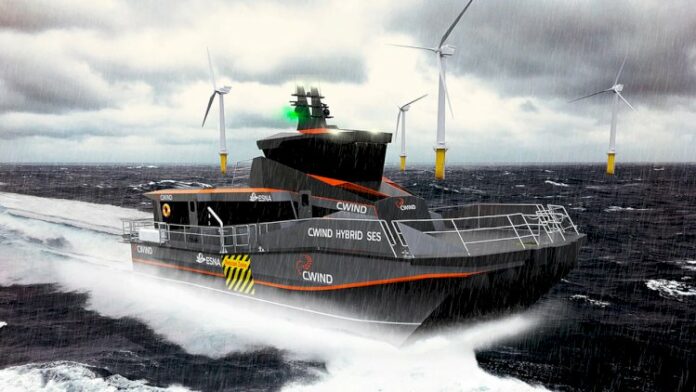
One of the UK’s leading aluminium vessel builders Wight Shipyard Co have been contracted to build the world’s first hybrid surface effect crew transfer vessel, which will service the Borssele 1 and 2 offshore windfarms located 23 kilometres off the Dutch coast.

WSC was chosen to build the vessel by CWind because of its reputation for superior build quality and track record of delivery coupled with the unique ability of working with new designs and concepts, including hybrid vessels that reduce carbon emissions.

Peter Morton, CEO WSC, said:

“We have built a reputation in the fast ferry arena and commercial marine sector. But this a world first, building a hybrid SES for crew transfer. Building greener vessels has been an integral focus for some time now so we are well placed to lead this step change in Crew Transfer Vessels.”

WSC will manage the build project from its development stage right through to delivery. The vessel will be a game-changer for the industry because of its ability to handle 2m significant wave height during technician transfer in heavy seas. At the same time, it will decrease fuel consumption and CO2 emissions.

The Hybrid SES propulsion engine will deliver sprint speed and extreme bollard push from its 1,600 kW installed diesel engines, which can be battery boosted up to 1,500 kW. Significant fuel savings will be achieved through balancing engine and inefficient low engine power running hours, with battery drive modes including windfarm standby and low speed/harbour operations.  This will lead to an engine operating hour reduction of 50% during windfarm battery standby.

Martyn Drye, Director of Engineering at CWind said:

“We embarked on the design of this revolutionary project last year, which utilises new technology to meet industry drivers for improved performance and reductions in carbon emissions. We’re proud to be delivering a concept which is at the forefront of CTV innovation and look forward to a collaborative working partnership with Wight Shipyard Co over the coming months for the build of this vessel. WSC have been great to work with during the pre-contract stage and have embraced the new technology for this vessel. We are confident that they will deliver a high quality solution, on time.”

The Hybrid SES crew transfer vessel was developed in partnership with the operator CWind and ESNA, a ship design company based in Kristiansand, Norway, which specialises in commercially competitive vessels with surface effect technology to deliver significant carbon reductions.

Consisting of two catamaran hulls with the area between the hulls closed, by flexible reinforced rubber fingers in the bow and an inflated rubber bag in the stern. Centrifugal fans blow air into this enclosed space, providing an air cushion that supports up to 80% of the vessel weight. The remaining 20% is supported by hull buoyancy. This allows for higher vessel speed because the hull resistance is significantly decreased. It also reduces motion owing to less wave contact. In addition, the air cushion acts as a large shock absorber, improving the seakeeping and reducing seasickness.

The overall design and build, with 24 passenger capacity, will pay particular attention to technician and crew health, safety and comfort, thus delivering the workforce in the best possible work-ready condition.

Naval architect and co-founder of ESNA, Trygve H. Espeland, said:

“The vessel design will accommodate further developments in hybrid propulsion and battery technology, ensuring it has the capability of being developed into a totally carbon-free solution in the future. Wight Shipyard Co was the obvious partner for the build because of its solid reputation for both quality timely builds and experience bringing a new concept hybrid vessel to market”.

CWind’s long-term charter contract agreement with Ørsted, which operates the Borssele 1 and 2 offshore windfarms, will start in mid-2020. The agreement will cover an initial three-year firm charter with options available for a further two years.

The new CWind Hybrid SES will enable Ørsted to not only deliver and service windfarms efficiently through reduced transit times, but support Ørsted’s green energy ambition. The Hybrid SES crew transfer vessel will operate from the Dutch port of Vlissingen to Borssele 1 and 2, located 23km from the Dutch coast in the North Sea.

WSC has focused on designing and building lighter weight fast ferries with the subsequent benefit of lower fuel burn – with previous builds including Red Funnel’s Redjet 6 and 7, three vessels for MBNA Thames Clippers and the first two passenger ferries built outside of the United States for Mexican operator Ultramar.

Also using its build expertise to spearhead newbuild hybrid vessels setting new industry standards in the sector. Earlier in 2019, it unveiled a step change in patrol craft with the new hybrid vessel designed by Chartwell Marine which was showcased on the quayside at Seawork International.