-0.3 C
New York
Home Blog Page 962

EPS introduces the nine startups for maritime accelerator

0

Widely recognised as Singapore’s largest shipping company, Eastern Pacific Shipping (EPS), has partnered with global early stage investor and accelerator, Techstars to launch the first dedicated global maritime accelerator called the Eastern Pacific Accelerator powered by Techstars.

Today, the Eastern Pacific Accelerator powered by Techstars has announced its first class of nine startups, which were selected from hundreds of worldwide applicants. The class of startups was selected with careful consideration and input from EPS’ Operations, Marine Technical, Commercial, IT, Fleet Personnel, and Management teams, who would work closely with each startup to test their technologies and accelerate their businesses.

The Eastern Pacific Accelerator powered by Techstars aims to bring digital, technology-led solutions to problems faced by one of the oldest trades around – the shipping and maritime industry. From November 2019, the nine startups will go through an intensive three-month programme of research and development, mentorship, and collaboration at EPS’ headquarters in Singapore.

The nine startups, are from Singapore, Denmark, UK and USA. One of the startups, C-Log has recently moved their global headquarters to Singapore, while US-based Volteo has spun-off Volteo Maritime as a Singapore company. Nautilus Labs is also establishing a permanent presence in Singapore while keeping its headquarters in New York City.  All three moves demonstrate the importance of having a presence in the Lion City, which is a strategic global maritime hub.

Gil Ofer, the Head of Open Innovation at Eastern Pacific Shipping said:

“We see a need for technology to propel the maritime industry forward, especially with a rapidly digitalising society and an increase in global trade. That means the shipping industry needs to innovate to solve problems such as fuel consumption, operational efficiency, fleet performance, and improving life-at-sea for seafarers – and we are doing just that with the Eastern Pacific Accelerator powered by Techstars. For these pioneering startups, EPS can provide access to a deep network of industry players, real-world data, and operational insights from our experienced maritime experts that will accelerate the development of their products.”

The world’s shipping and maritime sector continues to grow, accounting for around 90 per cent of all goods moved globally, spanning over 50,000 vessels and over a million seafarers, according to the International Chamber of Shipping (ICS). The United Nations Conference of Trade and Development’s (UNCTAD), meanwhile, estimates that volumes of global seaborne trade will grow by 3.8 per cent between 2018 and 2023. However, the industry faces a number of critical issues – with innovation proving crucial to sustain its competitiveness and growth.

Claus Nehmzow, Chief Innovation Officer at Eastern Pacific Shipping commented:

“The shipping industry is continually evolving, but change comes slowly and in incremental stages. However, issues such as sustainability, reducing emissions, and seafarer’s mental and physical wellbeing can no longer take a wait-and-see approach. The goal is to address these issues today through the accelerator and to inspire the industry to take a technology-first approach to solving problems."

Mr. Nehmzow added:

“EPS believes that by partnering with Techstars, we can combine the best of maritime knowledge and technology know-how, to innovate the maritime space to address some of the biggest issues facing the industry. We hope to be able to spark a renaissance in how maritime trade is conducted and to usher in a wave of next-generation tech for the shipping industry.”

During the intensive three-month programme, the startups will receive hands-on mentorship from industry experts, access to EPS’ operational data, and the opportunity to deploy their technology on EPS’ diverse fleet of over 150 vessels. The programme will also provide the founders with access to Techstars’ network of mentors, investors and partners. In February 2020, the accelerator will culminate in a Demo Day where the founders will pitch to an audience of top investors, multinationals, government partners and other ecosystem players.

Dhritiman Hui, Managing Director of the Eastern Pacific Accelerator powered by Techstars, shared:

“We are thrilled to be in partnership with EPS and to focus on an industry that’s ripe for disruption. Techstars has seen many startups successfully tap on the power of partnerships and mentors to energise different industries. These partnerships play an important role to develop innovative solutions that address real market needs. Corporate partners, like Eastern Pacific Shipping, are critical in commercialising these solutions, and when that happens everyone benefits.”
IMO 2020: SQLearn launches the new e-learning course

0

“IMO 2020 Sulphur Cap” is a revolutionary e-learning course developed by SQLearn and Prevention at Sea (PAS) and launched on November 15th, 2019. This is the one-time stop to learn everything that IMO requires to achieve compliance with the IMO 2020 Sulphur Cap Legislation.

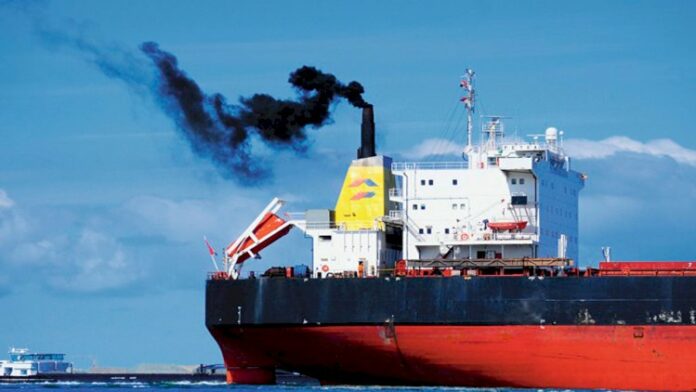
This e-learning course covers all the aspects of the IMO 2020 Sulphur Cap Regulations and gives you the deepest knowledge on the upcoming maritime changes defined by IMO and strictly implemented on January 1st, 2020.

This course uses innovative technology and extensive analysis on the new regulations so that you can precisely be trained to meet the requirement by using 0.50% sulphur compliant fuel oil. The “IMO 2020 Sulphur Cap” course emphasises a wide range of fields affected by IMO 2020 Sulphur Cap Regulations such as: air pollution from the shipping industry, fuel oil system modifications, potential safety implications associated, other alternative fuels, etc.

SQLearn along with Prevention at Sea – its strategic partner – work together to create e-learning courses combining high technological standards and accuracy in delivering the required and in-depth knowledge to cover the needs of the maritime industry. 

Yang Ming launches new Southeast Asia services

0

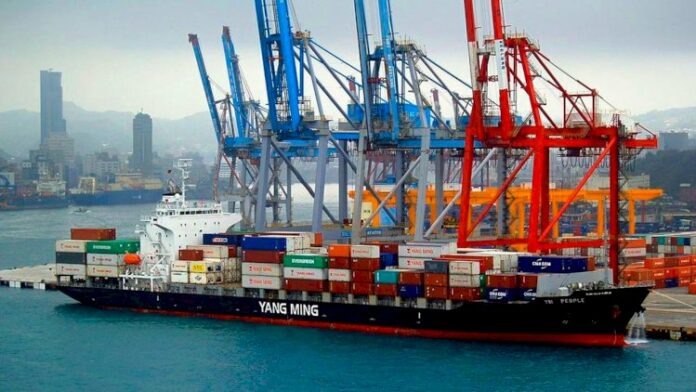
According to the latest estimates by the International Monetary Fund (IMF), the GDP growth rates in Myanmar and Philippines are expected to exceed 6% for the upcoming two years. In view of the strong and steady economic growth in both countries, Yang Ming Marine Transport Corp. announces the launch of two new services, SPE service (Singapore-Philippines Express Service) and MYX service (Malaysia-Yangon Express Service).

The new SPE service will provide a weekly service between Singapore and Philippines effective from December 2nd, 2019. The port rotation will be Singapore – Manila – Cebu – Singapore. Currently Yang Ming already has four services that directly link to Philippines, namely TPE, TPS, PH2 and KMC. The addition of SPE will enable local customers to have greater flexibility in cargo arrangement.

The MYX service will provide a weekly direct service between Port Kelang and Yangon effective from December 7th, 2019. The new service will not only satisfy the export and import demand in Myanmar but also shorten delivery time effectively.

Yang Ming is committed to pursuing better service quality. The new SPE and MYX services will optimize Yang Ming’s Intra-Asia service network and easily connect to Yang Ming’s global service network via transit hub Port Kelang and Singapore. With the new services, Yang Ming will provide customers with more convenient and comprehensive service.

2G Robotics releases new software to combine navigational and laser data

0

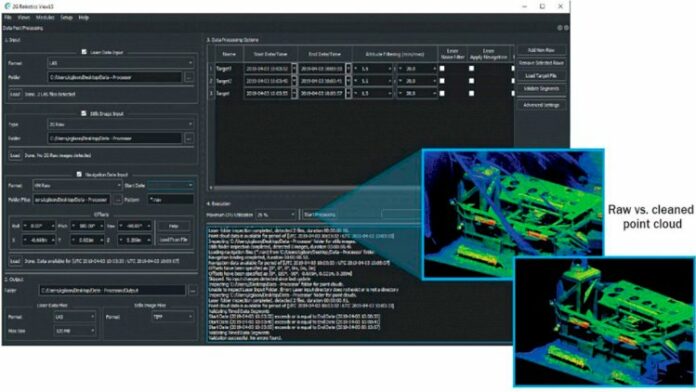
2G Robotics has released a Data Module for their ViewLS software which enables the automatic enhancement of laser point cloud and stills image data. This solution provides a simple and efficient post-survey workflow for customers of all experience levels. 

The ViewLS Data Module combines raw laser data with navigational data from industry standard sensors to create geo-referenced laser models in significantly less time than typical survey software. The resulting laser data is automatically filtered using statistical outlier rejection and range limiting to remove the effects of turbidity and noise. Targets of interest can be extracted from large datasets into an organized file structure by inputting event times, or loading a target file. This provides a simple and application specific data processing solution for ROV and AUV operators that requires minimal survey training or experience. 

The Data Module also enables post-processing and enhancement of stills images. 2G images are enhanced in real-time onboard the vehicle, and the ViewLS module enables more advanced contrast enhancement and colour correction on targets or segments of interest. 

Chris Gilson, Product Development Manager for 2G, says:

“The release of the new 2G Data Module removes a significant barrier to adoption for new customers, allowing them to quickly manipulate and clean laser data with minimal training. This will enable AUV and ROV operators without survey experience to efficiently use 3D laser data.”
 

NOV announces new contract award for flexible pipe

0

NOV Flexibles, part of Subsea Production Systems within our NOV Completion & Production Solutions segment, and Ocean Installer have signed a contract for the supply of flexible pipes and ancillaries for the redevelopment of the Vår Energi AS-operated Balder field on the Norwegian continental shelf.

The contract covers more than 90 km of flexible pipe systems, including 10 dynamic risers, five midwater arches, and other riser accessories. The project will be delivered with campaign releases between 2020 and 2022, making it the largest delivery for the North Sea in the history of the Flexibles group.

Michael Hart, President, Subsea Production Systems, said: 

"This is a significant award for NOV and the largest North Sea project in our history. Throughout the history of the group, the North Sea has always been a key area of focus and commitment. For more than 20 years we have set many firsts and delivered a grand total of more than 210 km of flexible pipes for installation offshore Norway. NOV would like to thank Vår Energi AS and Ocean Installer for their confidence in our ability to contribute to the success of the Balder Future project."

Håvard Strand, Chief Operating Officer at Ocean Installer, said:

"Ocean Installer is pleased to place such a significant subcontract with Flexibles. This is a complex delivery and critical to the overall success of the Balder Future project. We look forward to working in close cooperation with NOV over the coming years to successfully and safely deliver this project."

NOAA ceases production of all paper nautical charts

0

NOAA is undertaking a five-year program to end all raster and paper nautical chart production. Ultimately, production of all NOAA paper nautical charts, raster navigational charts (NOAA RNC®), and related products, such as BookletChartsTM will cease. NOAA is seeking feedback from chart users and companies that provide products and services based on NOAA raster and electronic navigational chart (NOAA ENC®) products.

The Coast and Geodetic Survey Act of 1947 and the Hydrographic Services Improvement Act requires that NOAA compile and distribute nautical charts and other nautical publications. These statutes do not specify a particular format for chart products. NOAA and its predecessor agencies have produced paper nautical charts of the U.S. Coasts, its territorial waters, and the Great Lakes since the mid-1800s. NOAA has produced electronic navigational charts (ENCs) since 1993.

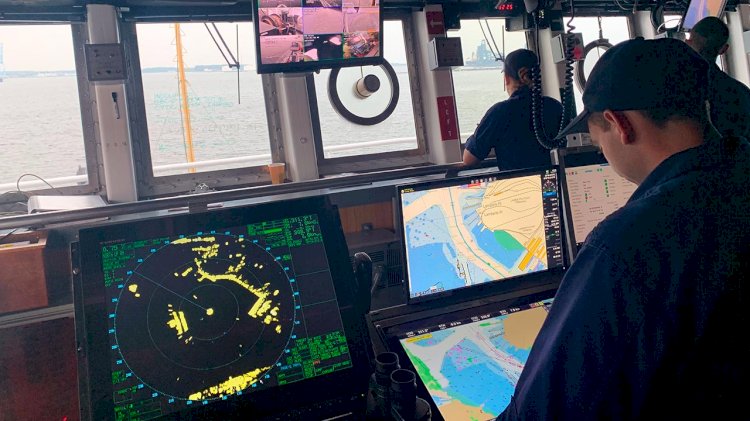
The International Maritime Organization now mandates that all large commercial vessels on international voyages use ENCs. In 2016, the USCG started allowing regulated commercial vessels on domestic voyages to use ENCs in lieu of paper charts. Recreational boaters are also increasingly using electronic chart displays.

Use of NOAA ENCs surpassed paper nautical charts in 2011. ENC sales increased 425% since 2008, while sales of paper charts are now half of 2008 levels. The current NOAA nautical chart product suites comprise 1,258 electronic navigational charts (NOAA ENC®) and 1,007 NOAA raster/paper nautical charts. NOAA has started a multi-year program to create a standard gridded layout and increase the scale of ENCs. This will increase the number of detailed NOAA ENCs to about 9,000.

NOAA is undertaking a five-year program to end all raster and paper nautical chart production. Ultimately, production of all NOAA paper nautical charts, raster navigational charts (NOAA RNC®), and related products, such as BookletChartsTM will cease.

NOAA is taking steps to provide a NOAA Custom Chart web-based application that will enable users to download and print raster chart backup files created from the most up-to-date ENC data. The NOAA Custom Chart prototype is available from https://devgis.charttools.noaa.gov/​pod. These chart backup files will look somewhat different than traditional paper nautical charts, but will provide a similar functionality.


Oldendorff to explore the use of digital design in ships

0

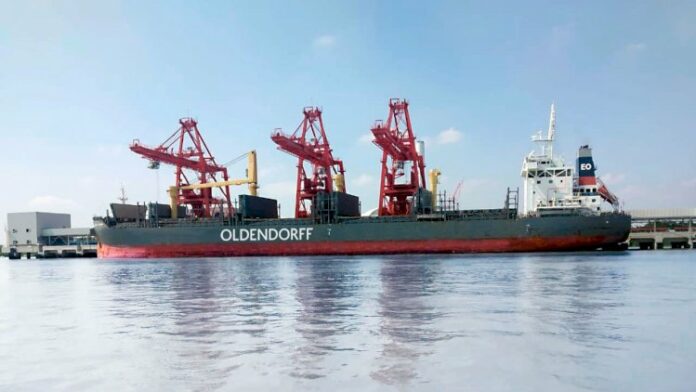
Oldendorff Carriers has signed a research agreement with the Massachusetts Institute of Technology’s (MIT) Center for Bits and Atoms (CBA). Oldendorff, together with CBA and its campus collaborators including MIT's Sea Grant Program, will investigate disruptive improvements in ship design and propulsion to achieve the IMO 2030/50 requirements.

The initial emphasis will be directed at improving hydrodynamic efficiency, which builds on work CBA has been doing with the aerospace and automotive industries. This looks beyond traditional naval architecture to a deeper integration of form and function. Anticipated research areas include morphing structures, hydrodynamic cloaking, moving boundary layers, and alternative energy sources.

CBA's digital material technology is based on digitizing not just designs but also the construction of materials, in the same way that all of life is based on twenty amino acids. The resulting structures promise to bring to shipping benefits including record-setting material properties, integrated heterogeneous functionality, automated lifecycle assembly and disassembly, and reduced environmental footprints.

According to Clarkson Research, only about 30% of the world fleet today is made up of “eco” vessels. Since 2013, Oldendorff has invested USD 3 billion in 90 new eco vessels built in China, Korea and Japan, which have fuel-efficient and reduced greenhouse gas emissions engines, and a number of fuel saving devices to reduce consumption and carbon emissions. Today over 95% of the Oldendorff fleet, and most of our chartered vessels, are eco type vessels. The average age of the 116 vessels of the Oldendorff owned and bareboat chartered fleet is 4.09 years. 

Oldendorff CEO, Peter Twiss commented:

“We recognise that clean oceans and clean air are vital for our survival, both as a company and as individuals. With less than 10 years to implement a fundamental shift on how ships are powered in order to achieve the GHG reduction mandates, Oldendorff Carriers is partnering with MIT’s preeminent experts in technology research to forge the way ahead.”

CBA director Neil Gershenfeld says:

"We're pleased to have this opportunity to extend our research on high-performance structures from air and space to the seas, and appreciate the ambitious commitment that Oldendorff Carriers is making to the important goal of meeting the IMO mandate for reducing the environmental impact of shipping."

MIT's Center for Bits and Atoms is an interdisciplinary initiative exploring the boundary between computer science and physical science. It's known for pioneering advances in digital fabrication, materials, robotics, computing, biology, and design. It manages a unique facility for rapid-prototyping across length scales, and has created a network of thousands of community fab labs.

BMT’s innovative marine fleet management software platform

0

MATE™, a market-leading vessel inspection technology and innovative marine fleet management software platform from BMT, provides real-time data on vessels' conditions. It also maps out fleet variances over time, thereby allowing operators to respond to risk areas immediately to help prevent and mitigate marine disasters.

The MATE™ – ‘Marine Application for Survey, Trend Evaluation & Reporting’ – system draws from over 100 years of experience in marine claims and accident investigation work. The proven technology is widely considered to be one of the world’s most flexible and comprehensive fleet monitoring systems that helps to bring improved navigational safety and efficiency benefits to seafarers and operators.

Jeroen de Haas, Managing Director, Surveys at BMT, said:

“Mitigating risk in the marine industry has become more important than ever. Year after year, we see that incident numbers globally remain at a consistently high level and so do marine insurance claims. Vessels have become bigger, and through the usage of more technology, also more complex; the impact of incidents has increased exponentially. BMT feels a strong responsibility to use our proven expertise to strengthen maritime security and to help lessen the number of marine incidents happening year-on-year.”

Lars Klingenberg Jacobsen, Head of Post Fixture Operation at Maersk, said:

“The scope of the inspection programme is completely unique and is bespoke to fit our specific needs on monitoring our chartered fleet. With MATE™, the generation of valuable intelligence on vessels allows us to competitively benchmark against average data. This safety-enhanced technology from BMT is an active prevention concept that greatly assists in improving the quality of the shipping work being carried out by Maersk. The system involves actual physical inspections on-board of ships, as well as customised audits that are dependent on vessel type and on complexity of operation.”

BMT partners with more than 250 highly qualified and experienced surveyors in all major ports of the world, providing MATE™ fleet audit inspections globally that are verified by maritime industry’s best-practice standard guidelines. Delivering continuous enhancements of international fleet surveys, as well as strict monitoring and evaluation of all inspections by a dedicated team, is an integral part of the MATE™ quality management process. MATE™ was launched by BMT in 2016, with Seaspan, MPC and Maersk serving as some of its biggest clients.

The innovative MATE™ fleet monitoring software allows overviews over the current status of a vessel and monitoring of a vessel’s condition over time, as well as the creation of benchmarks against fleet averages. Built to increase real-time visibility into vessel and fleet conditions to all fleet stakeholders, the MATE™ system that is managed by BMT, helps to make shipping safer and drive smarter fleet management around the world.
 

New wind projects off Chiba prefecture in Japan

0

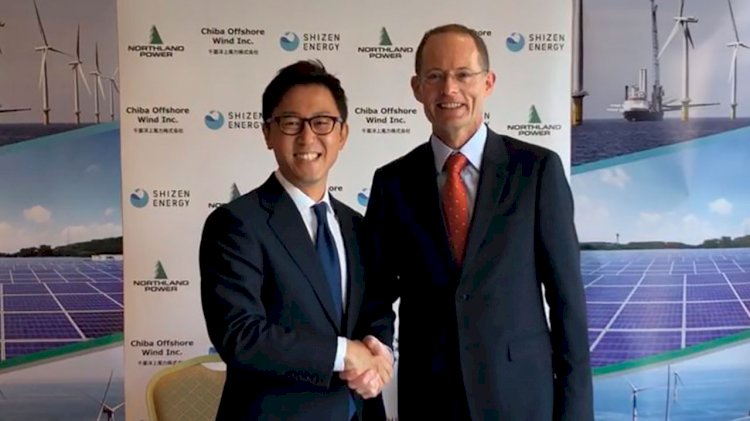
Northland Power Inc. has announced the signing of an agreement with Shizen Energy Inc. to jointly establish Chiba Offshore Wind Inc., a 50:50 joint venture, to develop early stage offshore wind development opportunities in Chiba Prefecture, Japan. The projects have a combined capacity of approximately 600 megawatts (MW). 

Northland Power is a global developer, owner and operator of sustainable infrastructure assets with over 30 years of successfully developing, constructing and operating power projects over full lifecycle. With a global fleet of assets generating in excess of 2.4 GW, the Company has operating facilities in Canada, Latin America, and Europe. In addition, Northland has a project pipeline of 1.4+ GW under construction and advanced development, including Asia, where it owns a 60% equity stake in the 1,044 MW Hai Long project under development in Taiwan.

With its vision to “take action for the blue planet,” Shizen Energy has contributed to the development of approximately 1 gigawatt worth of renewable energy in Japan and is expanding its portfolio to include solar, onshore & offshore wind, biomass and hydro power generation. As Shizen Energy also aims to expand its global businesses, it completed the construction of its first overseas solar power plant in Brazil in July 2019. Further, Shizen Energy has started working on wind and solar projects in Vietnam and Thailand.

Mike Crawley, President and Chief Executive Officer of Northland, stated:

“We are excited to partner on this joint venture with Shizen Energy, which marks Northland’s entry into the burgeoning Japanese offshore wind industry. With Shizen Energy’s strong track record of developing and constructing renewable projects in Japan, and Northland’s success developing, constructing and operating offshore wind farms globally, we view this agreement as an excellent opportunity to combine the strengths of the two companies to achieve something great.”

Masaya Hasegawa, Shizen Energy’s Representative Director, commented:

“‘Taking action for the blue planet’ is our company’s foremost priority, and we hope to pass the blue planet on to the future generations. To achieve this goal, we aim to grow as a company and cooperate with other businesses worldwide to shape our common future. We strongly believe that our partnership with Northland will allow us to put that vision into action and bring us a step closer to making a positive impact on the future of our blue planet.”

BOURBON awarded new integrated logistics contract by TOTAL

0

Bourbon Marine & Logistics has announced that it has been awarded by Total E&P Namibia an integrated logistics contract to support a deep offshore exploration campaign in South Namibia in 2020.

The project scope covers provision of Logistics base, freight forwarding, custom clearance, material storage & warehousing, handling and lifting, marine port visits support along with tank cleanings and logistics operations planning and conduct (material & personnel). This new contract follows the success of BOURBON's initial assignment in integrated logistics in Bulgaria.

BOURBON will provide Integrated Logistics services through a local branch “Bourbon Logistics Namibia” with a strong and well-established local partner: “Logistics Support Services” (LSS). Working with a solid local partner is a key aspect of BOURBON local content strategy.

Namibia seems to represent great growth opportunities for many oil companies who will closely watch the results of the exploration well in south Namibia. The project started early August 2019 and should last approximately one year with drilling activities expected in the first semester 2020. The operations will be managed out of Lüderitz, a port in the south of Namibia, representing a particularly interesting challenge for BOURBON teams.

Grégoire Durand, VP Oil & Gas logistics of Bourbon Marine & Logistics, commented:

“We are extremely pleased to support TOTAL E&P in this new exploration project, and will ensure to provide efficient cost effective integrated logistics services, with the help of our local partner. The deployment of such integrated services contract for our number one customer prefigures a new way of sustainable cooperation and optimized services delivery to our customers.”