-1.4 C
New York
Home Blog Page 960

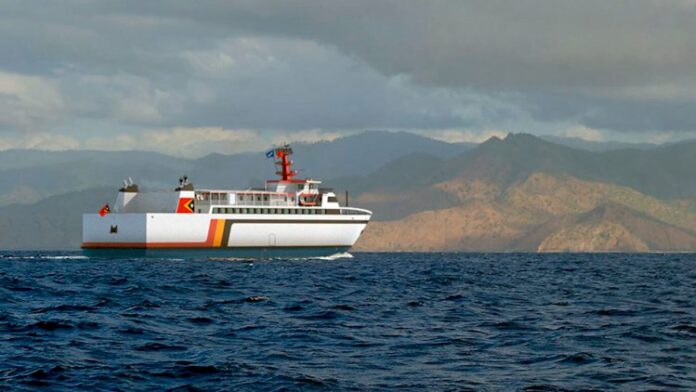
Damen Shipyards builds RoPax for the Republic of Timor-Leste

0

New ferry route to connect capital Dili to Oecusse enclave and Ataúro.

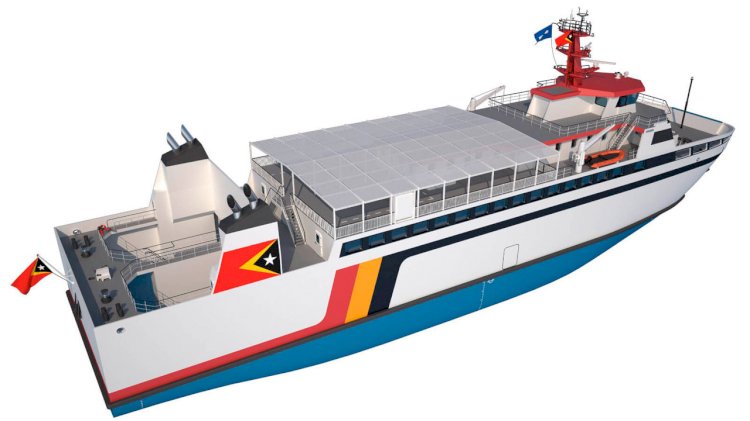
Recently, the Republic of Timor-Leste and Damen Shipyards Group signed a contract agreeing provision of a new RoPax Ferry 6716. The vessel will operate a route between the Timor-Leste capital Dili, the Oecusse enclave and the island of Ataúro, providing regular transportation of passengers, vehicles and goods on the north coast of the island.

The contract was signed at the Kay Rala Xanana Gusmão Hall of the Ministry of Finance, Díli, by the Minister of Transport and Communications, José Agustinho da Silva, and by the regional director of Damen Shipyards, Gysbert Boersma.

With an ageing vessel currently in operation, the Port Authority of Timor-Leste IP (APORTIL) recognises the need to maintain the safety and reliability of its fleet, hence the investment in a new ship. In a project co-financed by Timor-Leste and the Government of Germany, the RoPax Ferry 6716 is scheduled to begin operations in 2021, and will lower operation costs, increase reliability of the service, and improve employment opportunities due to the improvement in transportation networks. In preparation for the ferry’s arrival, over the next 19 months APORTIL will undertake work to improve and build support infrastructures.

The extension of these maritime passenger connections will initially include a connection between Dili and Com, in addition to those already in place between Díli, Ataúro and Oecusse, with the aim of improving the quality of life of the populations in these areas.

In a speech delivered at the contract signing, Timor-Leste Minister of Transport and Communications José Agustinho da Silva said:

“This new ferry will help to connect Dili with other ports on the south and east coasts of Timor-Leste and improve access to market, education and institutions in Dili and provide other important services to Timor-Leste.”

The Minister went on to say:

“This new ferry will increase job opportunities to our seafarers and give direct and long-term employment opportunities to our Timorese seafarers.”

The RoPax Ferry 6716 will have a width of 16 metres, a draft of 3.3 metres and a length of 67.3 metres, and its deck, with a 27-ton axle load, will reach 4.8 metres in height. The vessel is capable of a maximum speed of 10 knots and will have a carrying capacity of 380 pax.

Damen’s design and proposal engineer on the project, Gökçe Koc, explains why the vessel is ideal for Timor-Leste:

“The vessel’s two Yanmar engines, delivering 837 kilowatts of power to a 1.6 metre fixed pitch propeller, give it the power to manoeuvre safely when docking as well as on the open water. It’s a remarkably stable vessel and combines high levels of comfort for the passengers along with high performance for the operator. APORTIL couldn’t have made a better choice.”

Damen will conduct the design and management of the project at its head office in the Netherlands and construction of the vessel will take place at Damen’s Yichang Shipyard in China. Upon completion of its construction, the vessel will be delivered to Dili.

Gysbert addressed the assembled representatives, saying:

“I hope this project will be the start of a long-lasting cooperation between the Republic of Timor-Leste and the Damen Shipyards Group. It is a privilege to contribute to the improved mobility of the Timor East people. With this ferry, in 19 months, Timor-Leste will receive a high quality vessel that will last for a generation.”
 

RightShip launches compilance “Temperature check” ahead of 2020 Sulphur Cap

0

New assessment to increase data availability and help manage new operational and safety risks arising from 2020 regulation.

To support improved industry management of risk and safety ahead of the implementation of the 2020 Sulphur Cap, RightShip is asking the operators of vessels over 8,000 DWT to confirm their compliant fuel choices and ship implementation plans in a new compliance assessment, the company has announced.

Information gathered will be displayed on a per-vessel basis in RightShip’s vetting platform Qi, improving the accessibility of compliance pathway data for owners and charterers and helping the industry to manage new safety risks arising from the Sulphur Cap.

After 1st January 2020, any serious incidents, detentions or non-compliance related to the regulation will also be highlighted on the platform. This follows the current RightShip practice whereby the vessel’s Risk Rating will be downgraded until the root cause analysis is completed or the manager can prove compliance. Repeat incidents or non-compliance will be flagged during the vetting process.

RightShip users will be able to see the vessel’s method for IMO 2020 compliance as declared by the ISM operator. Vetting customers will have the option to screen this data as part of their vetting criteria.  The vessel’s Risk Rating or GHG Rating will not be influenced by the vessel’s IMO 2020 compliance method.

During the vetting process, if the manager has indicated that a vessel does not have a valid method of compliance, the vet requestor is informed accordingly of the risk of non-compliance or incidents.

Regardless of the compliance option chosen by the vessel owner, the decision to accept the ship or not ultimately remains with the vetting customer.

Martin Crawford-Brunt, CEO, RightShip, said:

“Complying with IMO 2020 brings a host of technical and operational risks that all of the industry needs to be aware of. It is therefore vital that all parties – ranging from ship owners, managers and charterers – have a full understanding of how compliance is being managed across a fleet. This temperature check will provide a means for vessel owners and managers to communicate their transition plan and their chosen compliance pathway. RightShip remains impartial to the compliance option selected and we will continue to support industry safety standards.

This is an excellent opportunity for us to engage with vessel operators and allow them to directly input their own data, which in turn will support a smoother vetting process. This is an important element in our mission to work across the industry, and will allow us to share the collective lessons we are learning on the implementation.”

Bureau Veritas certifies Ørsted’s Borkum Riffgrund 2 offshore wind farm

0

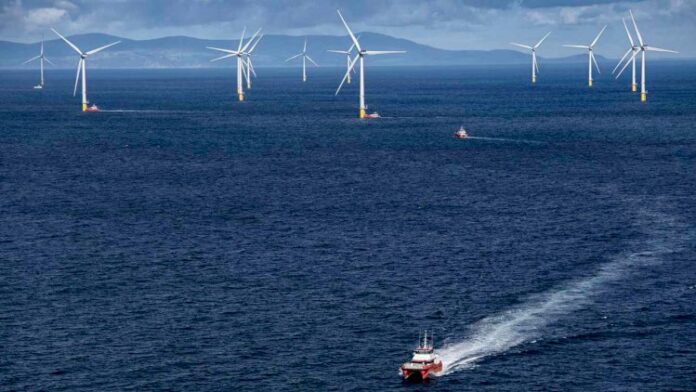
Bureau Veritas has issued Ørsted, the global leader in offshore wind, a Project Certificate for the 450MW Borkum Riffgrund 2 offshore wind farm. Located in Germany’s North Sea, 56 kilometers off the coast of Lower Saxony, the project consists of 56 MHI Vestas V164-8.3MW turbines with two different types of foundations – monopiles with bolted transition pieces and suction bucket jackets. Borkum Riffgrund 2 supplies 460,000 households with clean energy.

The Project Certificate concludes a “double certification process” started in 2015 – both to the internationally recognized scheme IEC 61400-22 and to the German BSH standards. The scope of the evaluation included all assets, including the wind turbines, their foundations, the offshore substation and the inter-array cables, and covered all project phases, from Design and Manufacturing, to Installation and Commissioning.

Volker Malmen, Managing Director of Ørsted in Germany, said:

“I am delighted that Borkum Riffgrund 2 has reached its final milestone with the receipt of the project certificate. We are extremely pleased with the outstanding and constructive collaboration with Bureau Veritas.”

Eric Rouaix, Wind Certification Director at Bureau Veritas, explains:

“The close collaboration between all parties and the deep expertise of our technical teams allowed us to carry out this project. The IECproject certificate positively concludes Bureau Veritas' evaluation and demonstrates the overall quality of the project.”

Andreas Klatt, Industry Director of Bureau Veritas Germany, said:

“We look forward to continuing our cooperation with Ørsted on this project throughout the Operations & Maintenance phase over the coming years. Bureau Veritas is a reliable partner for the entire life-cycle.”

The collaboration between Bureau Veritas and Ørsted will not stop here, as Bureau Veritas has been awarded the Operation & Maintenance surveillance contract for Borkum Riffgrund 2, and is providing certification for the Borssele 01&02 offshore wind farm in the Netherlands.

ABB subsea system opens new offshore opportunities

0

ABB’s pioneering subsea power distribution and conversion technology system is commercially viable, bringing groundbreaking potential for cleaner, safer and more sustainable offshore oil and gas production, following the completion of a 3,000-hour shallow water test.

For the first time worldwide, energy companies will be able to access a reliable supply of up to 100 megawatts of power, over distances up to 600 kilometers and down to 3,000 meters water depth, at pressures that could shatter a brick. This is all achievable with a single cable with little or no maintenance for up to 30 years, making oil and gas production feasible in far out and deep ocean environments.

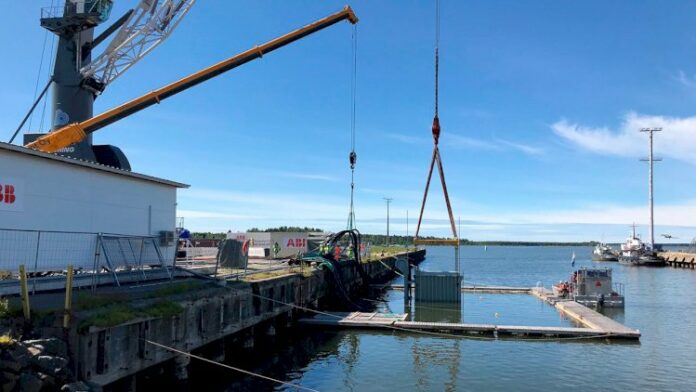
The $100 million research, design and development Joint Industry Project (JIP) between ABB and Equinor with its partners Total and Chevron was initiated in 2013. The validation of the shallow water test at a sheltered harbor in Vaasa, Finland, means the majority of the world’s offshore hydrocarbon resources are now in reach for electrification.

Dr. Peter Terwiesch, President of ABB’s Industrial Automation business, said:

“This milestone marks an outstanding achievement and is the culmination point of an inspirational technology development achieved through tremendous dedication, expertise and perseverance. It is the result of intensive collaboration by over 200 scientists and engineers from ABB, Equinor, Total and Chevron in a multi-year, joint effort.”

By powering pumps and compressors on the seabed, closer to the reservoir, ABB’s subsea power distribution and conversion technology can significantly reduce power consumption. There is potential for substantial energy savings, with reduced carbon emissions using power from shore. ABB’s subsea power technology can connect to any power source, enabling future integrations with renewable energy, such as wind and hydro power.

Based on a specific field development case, the new technology could offer CAPEX1 savings of more than $500 million, if eight consumers, such as pumps or compressors, are linked through a single cable over a distance of 200 km from other infrastructure.

Having fewer people offshore will reduce risks and improve overall safety. Against a backdrop of digitalization and increasing autonomy in offshore operations, new opportunities are also anticipated in the ocean ecosystem.

Dr. Terwiesch said:

“Moving the entire oil and gas production facility to the seabed is no longer a dream. Remotely operated, increasingly autonomous, subsea facilities powered by lower carbon energy are more likely to become a reality as we transition towards a new energy future.”

Previously, only the transmission cable and subsea step-down transformer were proven to operate underwater. Today, ABB’s complete subsea power distribution and conversion system includes a step-down transformer, medium voltage variable speed drives and switchgear, control and low voltage power distribution, and power electronics and control systems. ABB’s flagship distributed control system, ABB Ability™ System 800xA, controlled the rigorous testing.

Scientists use AI in sea level rise impact study

0

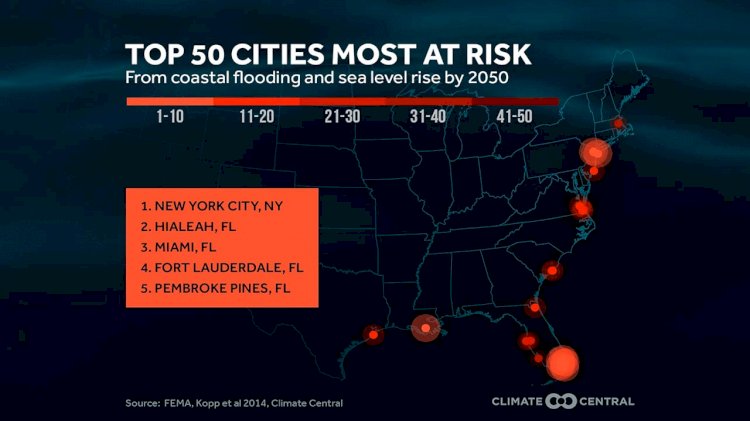
When it comes to future sea level rise, most studies predict we’ll see between four to eight inches of global sea level rise between now and 2050. This is on top of the six to eight inches the ocean has already risen since the turn of the 20th century. But the looming question is — how many people will be affected by rising seas in the coming decades?

According to a new Climate Central research paper published in Nature Communications, it’s a lot more than previously anticipated. The study, which looked at land elevations in coastal areas, suggests that by 2050 annual coastal flooding will engulf land that is currently home to 300 million people. And, it projects, by 2100, areas that are now home to 200 million people could fall permanently below the high tide line.

Christopher Piecuch, a physical oceanographer at Woods Hole Oceanographic Institution (WHOI), says that while land elevation estimates are often incorporated into sea level rise predictions to determine vulnerability to submergence and flooding, these data sets can have uncertainties that make it difficult to confidently project the impacts of rising seas on particular coastal communities. He said this is where the new study takes an important step forward.

Piecuch said:

“This study, by more accurately mapping elevation near the coast where people live, work, and play, paints a more detailed and granular picture of exposure to risk of coastal flooding and inundation, now and into the future.”

According to a report from WHOI and other, concurrent studies across the world, global sea level rise is tied to warming air and ocean temperatures, which cause the seas to rise for two reasons. First, they melt ice sheets and glaciers, adding water to the ocean. Second, warmer ocean waters take up more volume due to thermal expansion.

On a regional level, along the coast, land elevation plays a key role in determining the potential human impacts of sea level rise. Using an artificial intelligence (AI)-based computer model called CoastalDEM, the Climate Central researchers discovered that many of the world’s coastlines are at a lower elevation than previously thought, which in turn heightens the risk of rising seas to populations living near the coast.

Rick Murray, director and vice president for research at WHOI, says that land-based studies like this are important extensions of the work oceanographers are doing to better understand the dynamics behind sea level rise.

Murray said:

“Given that so many people live on coastlines and in areas such as deltas, it is very important to more precisely determine the shape and elevation of the coastal regions around the globe. This study is a terrific example of how objective science can help us understand the degree by which environmental changes will affect society.”

While land elevation is an uncontrollable force, the new study suggests the rates at which sea levels rise during the next century will be, in part, human influenced. Murray acknowledges the human factor as well, and says it’s a good reminder of strategies that can be taken to mitigate impacts.

He said:

“We can’t minimize sea level rise. But there are things we can do to mitigate the effects, including protecting our coastal wetlands, upgrading stormwater systems in ways that account for rising seas, and preserving sediment supply to deltas.”

RH Marines on-board cloud solution brings system integration to next level

0

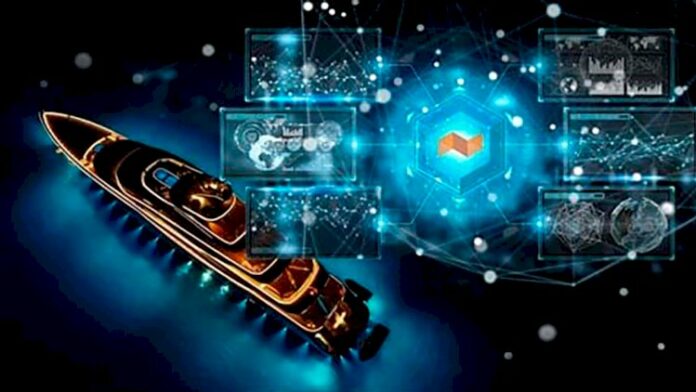
The profusion of pc’s and servers, all with their own applications, cabling and components, on board of yachts and other vessels will soon be over. By building a new on-board cloud infrastructure, leading maritime system integrator RH Marine has developed an automation network that needs less hardware, is more flexible and simplifies updates and repairs.

The technology has originally been developed for the Royal Dutch Navy. It is driven by the need for more efficient use of manpower and more efficient maintenance. Like other vessels the navy has a lot of personal computers on-board, connected to a lot of servers, making software updates, hardware repairs and replacements a complicated matter. The growing role for automation led to a growing need for integration. Wouldn’t it be nice if there would be no hard link between applications and specific hardware, if computing power could be shared and if there were more similar hardware components, RH Marine asked itself.

After two years of R&D RH Marine launched its new Integrated Virtualized System Architecture (IVSA), inspired by cloud- technology, taking automation system integration to the next level. The system provides an on-board computer network to which applications for the bridge, engine room, CCTV, the Alarm Monitoring and Control System (ACMS) or power management systems can be connected.

Marcel Vermeulen of RH Marine explains:

“Due to the virtualized technology the software runs on the server, not on numerous computers. Instead of let’s say 40 computers and dozens of stacked servers you only need a few servers. Every screen you plug in to connect with the LAN-network becomes a workstation. That can be on the bridge, in the engine room or every other selected spot on the vessel. On every workstation you can do everything.”

This has a lot of advantages. In case of workstation failure, all software applications are immediately operational on another station, allowing the operator to continue there instead of waiting for hardware or software repairs. Failed or obsolete hardware components are replaced without any downtime or impact for the applications running.

In case of an application upgrade, one USB stick in the main server can update the software on all working stations. If an additional workstation on the yacht is needed, a network cable to the nearest network wall socket is the only thing required. In a minimalistic bridge design, the compact workstations require no more space than a smart monitor and a network cable. Furthermore, by using IVSA there is no need for early design freeze. Early in the project a general infrastructure with a few servers is delivered and later on or after delivery applications and sensors can be added without impact on this installed infrastructure. Needless to say the system saves a lot of on-board cabling between computers, network and servers.

The system is flexible and can integrate hardware or software of all kinds of suppliers. It can be installed on board any vessel during the design and construction phase or added later on, making it an ideal solution for both new-builds and refits. For instance, RH Marine is able to upgrade or adapt the bridge without any extreme modifications. Thus the new infrastructure reflects RH Marine’s mission to make ships smarter and easier to operate.

The question was if this new approach could comply with the harsh regulations and certifications in the maritime industry. Therefore RH Marine, together with Bureau Veritas, started a classification process. Now the virtualized system has been applied to one of the newest naval vessels and received the approval of the MED wheel mark certification.
   

VIDEO: The tanker ‘Delfi’ capsized in the Black Sea, Ukraine

0

On the evening of November 21, the small bunker tanker Delfi under the flag of Moldova suffered a disaster on the roads of the Port of Odessa. The engine of the vessel was failed, the vessel was dropped from the anchor and carried away to Odessa.

At first, a heavy storm prevented the rescue operation, and then the crew members refused to evacuate. According to the official version, the owner of the vessel threatened the crew with unpaid salaries in case of consent to the evacuation. He allegedly insisted on the need to save the ship.

On the afternoon of November 22, the tanker almost lay on its side. A black oily liquid flowed out of the hole. Ecologists began to work on the spot, they took water samples. After lunch, three crew members were evacuated from the ship.

CyberOwl optimises the cyber resilience of the shipping sector in Singapore

0

CyberOwl, a UK-based startup specialising in protecting industrial systems from cyber-attacks, has been selected as a founding member of the Eastern Pacific Shipping (“EPS”) accelerator powered by Techstars, a first-of-its-kind global innovation programme run directly by a shipping fleet operator.

CyberOwl is the only cyber security company to be selected into the programme, following a highly competitive process narrowing down to less than 1% of the hundreds of marine technology businesses that were identified. 

In the wake of increasing digitalisation and automation, the shipping sector is grappling with the challenges of managing the cyber risks to vessel systems. Global threat intelligence suggests a steady increase in threat actors particularly targeting the maritime sector, leading to the U.S. Coast Guard issuing a safety alert warning in July 2019 to all shipping companies to be vigilant to cyber risk. In addition, Royal Carribean Cruise Lines reports that they are at the receiving end of an estimated million cyber-attacks every day. 

Regulators and charterers are mounting pressure on fleet operators to improve their vessel cyber resilience. Effectiveness of the cyber risk controls onboard ship systems is increasingly becoming a standard part of ship inspections, leading up to regulation by the International Maritime Organisation requiring fleet operators to appropriately address their cyber risks by 1 January 2021.

Through the programme, the CyberOwl team will work closely with multiple stakeholders across EPS and other organisations across the shipping supply chain in Singapore, to ensure CyberOwl’s proposition optimises the cyber resilience of the shipping sector and helps operators comply with impending regulation. The programme provides unparallelled access to the operations and expertise of the EPS team, one of the largest privately-owned shipping fleets globally, who have over 60 years of experience across multiple shipping segments. 

CEO of CyberOwl, Dan Ng, said:

“Cybersecurity has been a nice-to-have in the maritime sector. This is now changing as the risk escalates and regulation catches up. It is clear that Eastern Pacific Shipping recognises the criticality of improving the cyber resilience of the systems onboard their vessels and are spearheading the move to raise the game across the shipping sector. Being part of EPS Techstars is an important first step for CyberOwl to establish our presence in the Singaporean market, one of the world’s leading maritime clusters.”

Head of Open Innovation at EPS, Gil Ofer, said:

“As we transition into the era of smart, connected vessels, we at EPS believe that the risk of ‘cyber piracy’ will only increase over time; by partnering with CyberOwl we aim to secure ourselves and the shipping industry well in advance. We are very excited to have them onboard our inaugural program and look forward to assisting them in building a permanent presence here in Singapore.”

Moscord unlocks big data value for shipowners

0

Moscord is launching a new service enabling shipowners “to turn their big data into procurement savings”, while simplifying purchasing, tailoring consolidated product catalogues and driving business efficiency. The fast growing maritime e-marketplace, headquartered in Singapore, uses its established digital competency to give owners a previously unobtainable understanding of exactly what their ships buy, allowing them to easily manage, improve and gain optimal value from fleet-wide procurement.

Moscord has rapidly established itself as a disruptive force in the ship supply segment – delivering a digital trading platform where users can buy directly from suppliers, while suppliers build valued relationships with customers. The site, often compared to ‘Amazon for shipping’, offers over 200,000 quality products, with on time, last-mile delivery to worldwide ports and locations requested by customers.

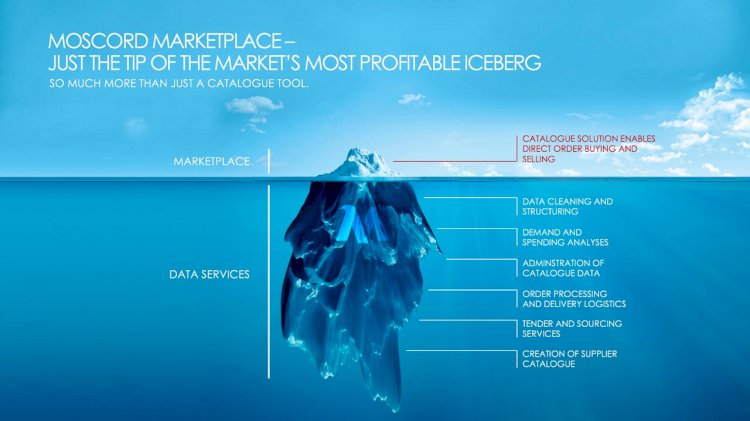
However, according to Michael Klint, Director of Operations at Moscord, the marketplace is only “the tip of the iceberg.” There’s a great deal of added value for customers, he says, beneath the surface. Michael Klint comments:

“Shipowners are sitting on a wealth of big procurement data, but are currently lacking the tools to monetise that. That’s where we come in. Moscord can help manage that data to provide powerful analytic insights, helping owners understand the totality of what they buy, how spend data deviations can lead to loss making decisions, and where to focus their energy to save money.”

Klint notes that current procurement practice often leaves individual ships in a position of ordering their own supplies, meaning that the number of lines purchased across a fleet can often run into the many tens, sometimes hundreds, of thousands. This leads to a lack of standardisation, management understanding and value for money in what is, he says, a complicated procurement process.

However, if that data can be gathered – exposed to AI, machine learning and careful ‘cleaning’ – the number of lines can be drastically cut to create a standardised catalogue that all parties across an organisation adhere to, allowing favourable prices to be set and contracted directly with suppliers. The result is simple, clear and peak value procurement.

Klint states:

“Suddenly management teams are in complete control. They understand what has been bought, where and by whom, can identify trends and conduct detailed spend analysis. A new catalogue can be tailored for their individual organisational needs with optimal, agreed pricing levels – in turn this allows for increased automation of processes, reduced administration and, as a result, far greater business efficiency. And the beauty of it all is that owners already have the data they need to access all these benefits – they just need a little expertise to unleash that potential. Moscord is on hand to help.”

Moscord is now offering data services that encompass data cleaning and structuring, demand and spend analysis, catalogue data administration, order processing and delivery logistics, tender and sourcing services, supplier catalogue creation, and more.

APM Terminals introduces industry-leading application monitoring solution

0

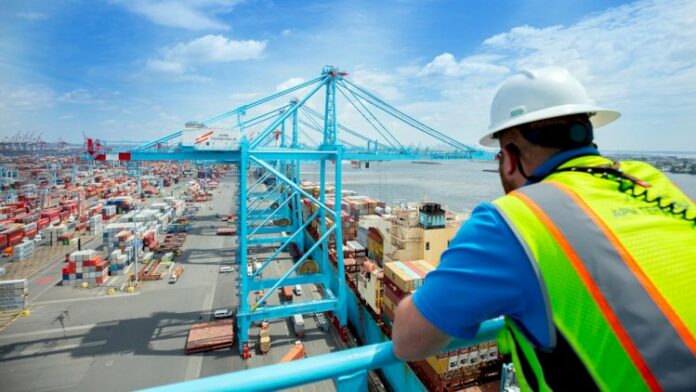
APM Terminals has commenced the global role out of an advanced application monitoring solution, capable of spotting issues with performance before they start to negatively impact operations. 

This new solution, which has already been rolled out to 11 terminals, will ensure business continuity, improve terminal efficiency, and safeguard consistency (peak moves per hour) by ensuring that applications consistently operate at the speed they’re supposed to. It will also prevent minor problems from combining to cause a major outage. 

According to APM Terminals Global Capability Manager, David Pickup:

“This industry first provides the same level of service normally only provided by advanced IT companies to their customers.” 

Traditionally the company relied on the basic monitoring offered by the suppliers of the company’s global standard terminal operating system (TOS) Navis. This year, the company’s TOS Support teams and Global Core Capability Centre (GC3) have established a new application monitoring capability that combines Riverbed and Elastic technologies. GC3 was established in 2018 to provide unrivalled internal technical capability around TOS.

Instead of simply monitoring isolated points, the solution monitors end-to-end performance – including code, application architecture, servers, disk space, databases, user endpoints and more. The data is fed into one central dashboard, which is monitored 24/7 by the Maersk global Command & Control Center in the UK and the GC3 support team. 

David Pickup says:

“The dashboard operates using a simple traffic light system. Green means that no issues are detected. Amber flags have the potential to impact the business.  Our goal is to fix these before they turn to red flags. Red flags indicate that the issue is probably already impacting our operations. This new solution enables us to identify any issues before the end user even notices that something isn’t working as it should.” 

Asked about real-life examples, Mr Pickup explains that the company’s databases should automatically purge themselves of old data, to ensure that they don’t run out of disk space:

“There are a number of reasons why this could go wrong. For example, a user running a query that blocks the database. At a specific threshold, we’d already want to be flagging this and investigating the reason before it impacts system performance.”

In some instances, fixed parameters, such as 96% usage of a database can lead to false alarms, so the team have applied machine learning to improve accuracy.

Mr Pickup explains:

“For example, say a terminal normally receives around 350 EDI messages per day from customers checking containers. A simple operating parameter might be between 150-550 messages before the system flags a potential issue. But in this example unexpected terminal closures on weekends or national holidays, seasonal fluctuations, or differences between different sized terminals could result in a number of false alarms. Instead of having fixed parameters, machine learning adapts to these to become more accurate and reliable in identifying real issues.”