-2.2 C
New York
Home Blog Page 959

Jan De Nul orders super-size class vessel Les Alizés

0

Just six months after the investment announcement for the offshore installation vessel Voltaire, Jan De Nul Group orders Les Alizés, a floating installation crane vessel from the CMHI Haimen shipyard in China. 

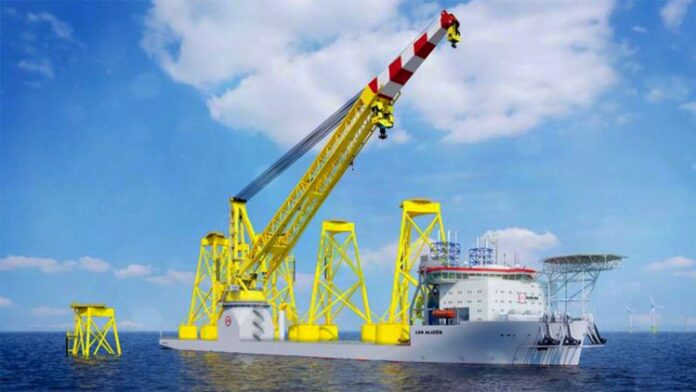
Together with the Voltaire, this new vessel will be in a super-size class of its own, capable of building the newest generation of offshore wind farms. Les Alizés, that will be ready in 2022, is equipped with a crane having a lifting capacity of 5,000 tons and equally impressive lifting heights.  

Les Alizés will mainly be used for the construction of offshore wind farms, but with her impressive crane she is also extremely suitable for decommissioning offshore oil and gas platforms. 

Thanks to her dimensions and impressive lifting and loading capacities, Les Alizés will be able to load out, transport and install multiple units of the largest and heaviest wind turbine foundations. In addition, as a crane vessel that floats, it will be able to install heavier and larger foundations into deeper waters and in more challenging seabed conditions.

This vessel investment is a response to the global trend within the offshore wind energy sector to design and install increasingly larger wind turbines. This new generation of turbine can be more than 270 metres high, with blades up to 120 metres long and sit on foundations up to 2,500 tonnes. The offshore installation vessels currently available on the market are experiencing great difficulties in installing these new turbines and their heavier foundations, with their enormous dimensions and installation weights.

Philippe Hutse, Offshore Director at Jan De Nul Group, explains:

"We continue to invest in the future of offshore renewable energy. By ordering Les Alizés today, from 2022 we will have not one, but two, offshore installation vessels that will be able to install the newest generation of offshore wind farms. This is how we offer our customers the most efficient installation method. Similar to the Voltaire, we have financed this investment by means of a green loan thanks to the green emissions reduction technology on board the vessel. During the design phase, as is the case for all our new vessels, we studied very carefully the environmental impact and the solutions to minimize that impact."

Peter De Pooter, Manager Offshore Renewables at Jan De Nul Group:

"The order of the Voltaire was a first step in our strategy to install the newest generation of offshore wind turbines. With Les Alizés we want to further strengthen our vision and our belief in the future of offshore wind energy. We want to be a major and enduring player in this sector. For that reason, we continue to invest in the further expansion of our offshore renewables department." 

The vessel will be built at a shipyard of China Merchants Industry Holdings Co. Ltd., located in Haimen, Nantong City, China. As a subsidiary of China Merchants Group, this shipyard has a proven track record in supplying marine and offshore facilities which gives Jan De Nul Group sufficient confidence to award this contract to CMIH.

Les Alizés is specifically designed for loading, transporting, lifting and installing offshore wind turbine foundations. The main features are a main crane of 5,000 tons, a deck loading capacity of 61,000 tons and a deck space of 9,300 m². With these characteristics, Les Alizés can easily transport the heavier future foundations, several in one trip, to the offshore installation site, with direct benefits in planning, fuel consumption and emissions reduction. 

Unlike the Voltaire, Les Alizés does not have four legs to lift itself above the sea surface. It is a crane vessel for floating installation, which means that the vessel is not dependent on the water depths and the seabed conditions. Les Alizés is equipped with a high-performance DP2 system.

When designing the vessel, Jan De Nul Group took into account the environmental impact. Jan De Nul tackles environmental challenges by focusing on reducing the footprint of its activities, particularly on water and air quality, and on the climate. Air pollution is one of the greatest threats to public health. Construction activities at sea are usually located close to coastlines, large and small ports, and densely populated areas. The Group is aware that, regardless of the choice of fuel or engine technology, the exhaust gases must always be filtered.

 

VIDEO: Boluda Towage Europe assisted heavy lift vessel with five giant cranes

0

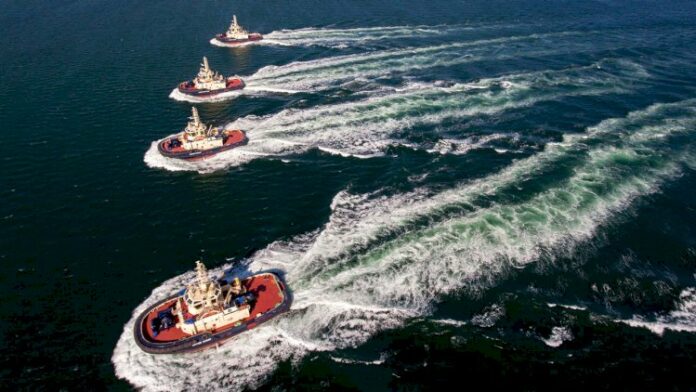
On 19 November 2019, Boluda Towage Europe safely assisted heavy lift Vessel ‘Zhen Hua 25’, loaded with 5 giant container cranes. As from the entrance of the River Scheldt, when passing the port of Flushing, two tugs convoyed the Zhen Hua 25 all the way to the port of Antwerp, where two additional tugs joined the convoy. With the assistance of four powerful tugs, Zhen Hua 25 was safely moored at the PSA Noordzee Terminal.

The new cranes are built tailor-made in China at the Shanghai Zhenhua Heavy Industries Company Limited (ZPMC), and delivered on board the heavy lift vessel MS Zhen Hua 25. Two of the container cranes are destined for Antwerp PSA Noordzee Terminal. The other three are constructed for PEEL ports Liverpool and will be delivered at the L2 container terminal in the port of Liverpool.

Two container cranes will be 'unloaded' at the PSA Noordzee Terminal and will be prepared for operations during the next couple of months. The new container cranes have a lifting height of 52 meters and a 70 meter outreach. They are among the largest in the world and perfectly able to handle the latest mega container ships. In addition, they are "dual hoist" cranes, that can handle two 40-foot or four 20-foot containers simultaneously, with a total weight of 100 tons.

In close cooperation with the PSA Noordzee Terminal, Flemish River Pilots, Antwerp Port Authorities, Global Nautical Authorities and the local agent Newman Shipping Agency, this operation was well prepared during various meetings and the assistance was delivered without any hick-ups. For Boluda Towage Europe it was an honor to be part of this great project.

Nexans to supply advanced turbine cables for Siemens Gamesa

0

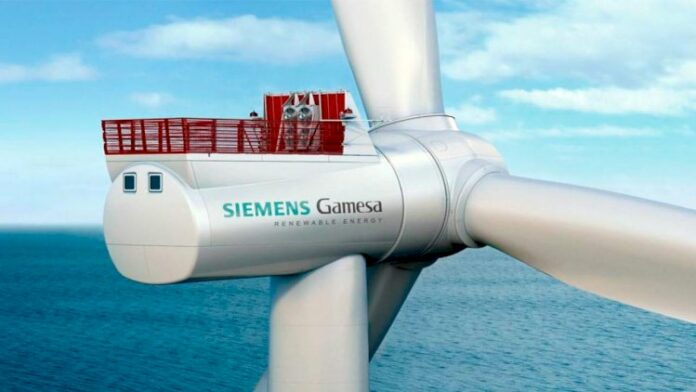
Nexans has been awarded a major two-year contract by Siemens Gamesa Renewable Energy to suppy Windlink® cables for its onshore and offshore wind turbines.

Leading the way forward in the renewable energy sector, Siemens Gamesa provides cleaner, more reliable and more affordable wind power. Its scale, global reach and proven track record ensures that the company will play a central role in shaping the energy landscape of the future. One of Siemens Gamesa’s strongest competitive advantages is the fact that it is successfully engaged in all three areas of the windpower business : Onshore, Offshore and Service.

In addition to ready-to-install medium voltage (MV) cable kits, including 72 kV cable kits to meet the growing demand for offshore wind farms to operate at higher voltages, Nexans is also supplying a variety of cabling solutions such as jumpers for the switchgear to transformer connection, as well as low voltage (LV) copper cable assemblies and aluminum power cables for fixed installation in towers. 

The Windlink® cables will be used for applications inside the wind turbines including tower, loop, nacelle and generators. In total, Nexans will supply 60 km of MV cable and 1200 km of LV cable.

All Windlink® cables have been developed by Nexans to ensure and long life and total reliability in the demanding wind turbine environment.

Thibaut Zumsteeg, Nexans Global Market Director Wind, said:

“Reducing time to market and increasing supply chain flexibility are major areas of focus in the wind industry. Siemens Gamesa Renewable Energy chose Nexans for this contract because of our long-standing relationship, confidence in the Windlink® range and the fact that we offer a one-stop-shop for cables, cable accessories, cable assemblies and service. They also appreciated the high level of support available through our global footprint and expertise on complex innovative system solutions.”

The MV and LV cables, kits and accessories will be manufactured in Nexans plants around the world including Germany, Brazil, France, Italy, Sweden, Denmark, Poland and Morocco.

APM Terminals Barcelona unveils 5G V2X crane communication systems

0

During this week’s Smart City Expo World Congress in Barcelona, APM Terminals Barcelona revealed how the latest 5G wireless technology is enabling the use of V2X communication – where information is passed between vehicles and other entities that could affect it.

During his presentation, entitled “5G in a container terminal: V2X applied to Cranes. Improving safety in a dangerous Environment”, Sergi Domínguez Tomas, Head of IT at APM Terminals Barcelona, explained that 5G technology provides an opportunity to develop new solutions to optimise safety within the terminal. He said: 

“Wireless communications have always been difficult to manage in container terminals, but we are convinced that 5G technology will allow us to use V2X systems in our terminal, to optimise safety in our processes.”

Vehicle-to-Everything (V2X) communication involves passing information from a vehicle to any entity that could affect it, and vice-versa. Car manufacturers have been studying such systems for some time to improve road safety and manage traffic flows more effectively. Developments in wireless communication are making it possible for cars to communicate with each other (vehicle-to-vehicle (V2V) communications) and to communicate with roadside units (vehicle-to-infrastructure (V2I) communications). These planned V2X car-based wireless communication systems are generically called Intelligent Transport Systems (ITS).

Sergi Domínguez concluded:

“By using V2X solutions in our cranes we offer our drivers extra support to maintain their safety, while also allowing the mapping of terminals, people and possible dangerous obstacles. We are creating a fully controlled environment”.

EDRF supports the development of MPS wind and wave technologies

0

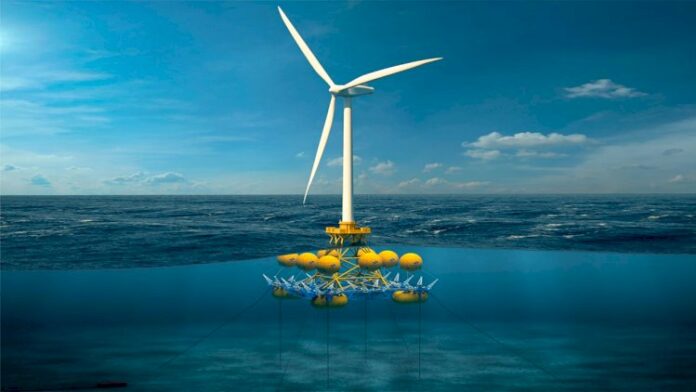
Marine renewables technology developer Marine Power Systems (MPS) has been awarded £4.3 million by the European Regional Development Fund to accelerate the development of a floating offshore wind and wave technology that could transform the opportunities for energy generation in deep water locations.

The EDRF funding, which is part of a £6.2million project under the Cornwall and Isles of Scilly Local Enterprise Partnership scheme to promote research and innovation, will enable MPS to launch an extensive programme of work on the DualSub, which the company launched earlier this year. The announcement comes just weeks after MPS secured investment from the Welsh European Funding Office for £12.8 million to design, build and test a full-scale WaveSub device.

WaveSub is a wave energy generation device designed to provide easy operation and maintenance at sea alongside low cost transportation and installation. Scaleable to over 10MW in size, the device is in the final stages of development and testing by MPS ahead of commercial readiness. WaveSub’s high level of stability in deep water prompted MPS to explore its suitability for use as a platform for wind turbines, particularly in locations where wind speeds are high but water depths make a fixed base turbine too costly to install – a constraint widely recognised in the sector.

Initial tests revealed MPS’s approach could provide a strong, stable platform on which a turbine could be installed, enabling the simultaneous capture of wave and wind energy from the ocean. This led to the development of a combined floating offshore wind and wave device, DualSub, and a floating offshore wind device – WindSub.

Both DualSub and WindSub have successfully completed prototype stability tests, detailed computational simulation and cost of energy modelling. Positive results have led MPS to accelerate the development of both devices and the £4.3million of ERDF funding will enable MPS to move through a significant programme of work to a point of demonstrator sea-testing, before progressing to a point of commercial readiness in 2023.

Says Dr Gareth Stockman, Chief Executive Officer at Marine Power Systems:

“The UK floating offshore wind sector offers huge opportunity for low carbon energy generation. We’re delighted to have secured this funding from the European Regional Development Fund and would like to thank them wholeheartedly for their support. It is investment such as this that will unlock new markets for UK skills, products and expertise as well as play a vital role in the UK Government’s legally binding target of net-zero emissions by 2050.”

Dr Graham Foster, Chief Technical Officer at Marine Power Systems commented:

“Following extensive testing and computational modelling over the last 2 years, we’ve produced some hugely encouraging results regarding the potential viability of DualSub as a combined wave and floating offshore wind technology. This funding from the ERDF comes at a perfect time and will enable the MPS team to progress with the next phase of research, design and testing of DualSub at sea.”

The announcement of MPS’s plan to expand into the floating offshore wind sector follows a report published by the International Energy Association in October which predicts offshore wind generation will grow 15-fold to emerge as a $1tn (£780bn) global industry in the next 20 years and will prove to be the next great energy revolution. In a speech earlier this month, the UK Prime Minister Boris Johnson committed to help deliver a green industrial revolution, with a pledge to increase the UK’s current offshore wind capacity from 8.5GW to 40GW by 2030.

The UK currently generates 8% of its electricity from offshore wind. Around 70% of offshore wind farms are located along the east coast of the UK where oceans are shallower and fixed base turbines are easily installed. DualSub and WindSub have the potential to open up new areas of coastline in the UK where wind speeds are higher but water depth is greater and the installation of fixed base wind turbines are deemed too expensive.

Brittany Ferries takes steps to reduce the use of plastic waste

0

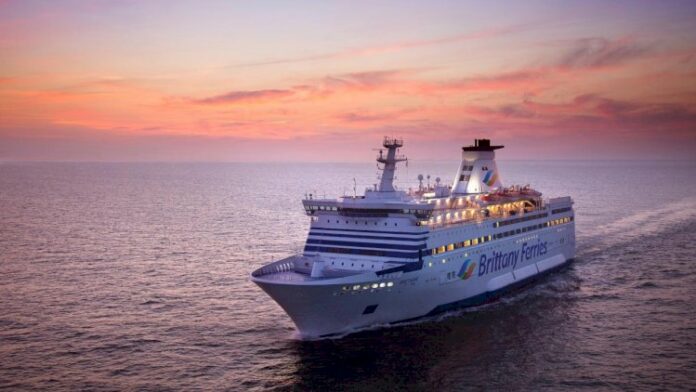
Ferry company Brittany Ferries is realising the benefits of its drive to reduce and eventually eliminate the use of single use plastics on board its fleet of ferries linking UK, France, Spain and Ireland, by purging almost 5.7 million items of plastic per year.

Over the last 18 months the company has been purging its onboard restaurants and cabins of single use plastic items, including cutlery, cups, lids, stirrers and straws.

Altogether 5,664,400 items of plastic have been eliminated per year, including over two million cups. In their place have come environmentally friendly alternatives made from bamboo, cardboard, paper and wood. If all these items were placed end to end, they’d stretch over 400 miles – the distance from London to Edinburgh.

Already the vast majority of meals consumed on Brittany Ferries ships are served on china plates alongside stainless steel cutlery, whilst most drinks are already served in glasses and china cups.

Other measures include the replacement of disposable shower gel sachets in cabin bathrooms with dispensers filled with eco-friendly gels, and the elimination of plastic bags in dustbins.

Brittany Ferries CEO Christophe Mathieu says:

“The sea is our home, so of course we’re deeply aware not only of its beauty, but also its fragility. By tackling single use plastics we are determined to take responsibility and make a significant contribution to collective efforts to protect the seas upon which we sail. I’m delighted to see this project already bearing fruit.

We couldn’t have done this alone: we’re working closely with our suppliers to raise standards and to find innovative and creative solutions. And we’re also working with our customers and colleagues, who are increasingly driving our efforts to make changes. We want to make it easier for them to consume and recycle in line with their and our values whilst they’re on board our ships.

For sure, there’s much more to do, but this is a positive step forward, part of our long term mission to incorporate sustainability into everything that we do.”

In 2020 the company will renew its focus on airborne emissions when it welcomes its first LNG-powered ship, Honfleur, to be followed by two more: Salamanca in 2022 and Santoña in 2023. The trio will be amongst the first ferries of their type to be powered by Liquefied Natural Gas (LNG) offering significant environmental advantages over traditional marine fuels, burning more efficiently and producing no sulphur, virtually no particulates and 95 per cent less nitrogen dioxide.
 

Port of Rotterdam launches a digital service for users of RiverGuide

0

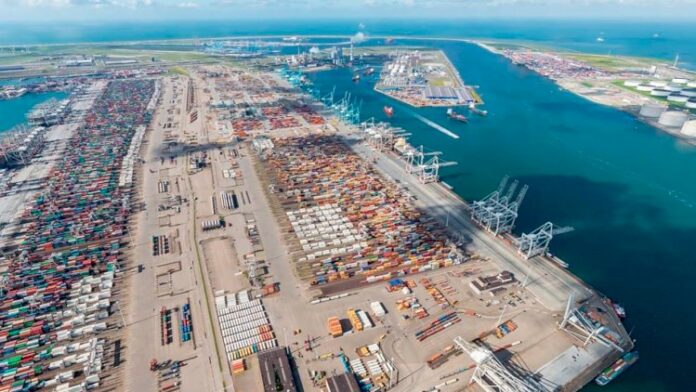
The Port of Rotterdam Authority is starting a trial digital service providing application-based advice on public berths for inland shipping. As they are approaching the port, users of RiverGuide – the digital route planner for inland navigation – will receive a push message asking them whether they require a berth.

The aim of the trial is to validate whether voyage data and vessel characteristics can be used to provide correct advice on berths. The port also will be assessing whether the skipper appreciates the advice provided. Running until the end of January 2020, the trial will include 500 port calls. If the trial proofs successful, the system could become a permanent feature within RiverGuide and other route planners.

Inland vessels visiting the port of Rotterdam sometimes have to wait a while before they are able to access a terminal and then look for a berth. Another reason why inland vessels need berths is so they can wait for a new cargo. A berth may also be necessary because a skipper is obliged to take a break due to the law covering sailing hours.

Spread throughout the port of Rotterdam, there are approximately 150 locations with a joint capacity of around 500 vessels. For some years, the Inland Shipping Berths Information System (BLIS) has been providing access to online information on whether or not berths are available. This functionality is also built into RiverGuide, the app for smooth, safe and smarter navigation, developed on behalf of the Port of Rotterdam Authority in association with eight other waterway authorities.

It has been shown that skippers regularly have to look for a place because their preferred public berths are either taken when they arrive or do not meet their requirements (e.g. the displaying of cones if dangerous substances are on board). It has also been shown that skippers do not always consult BLIS’s berthing function. In some areas of the port, there are rarely any vacant berths, whereas at other locations there is still plenty of available capacity. This causes unnecessary shipping movements and is therefore inefficient. The Port Authority is hoping that this trial will be able to help visiting inland vessels even more, by providing custom advice whenever possible.

ABS awards AIP to SHI’s LNG re-liquefaction advance

0

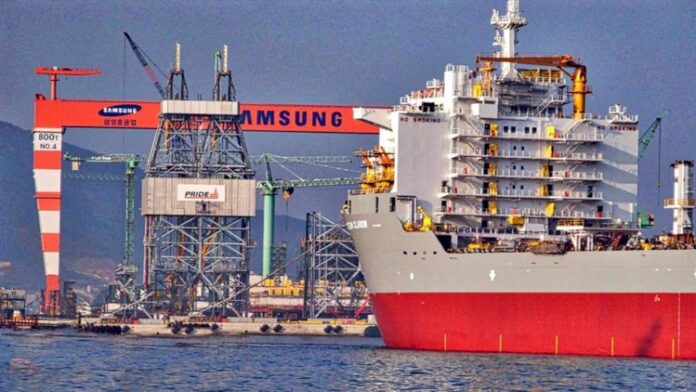
ABS has awarded Approval in Principle (AIP) to Samsung Heavy Industries (SHI) for its innovative X-Reli LNG Boil Off Gas Expander, part of SHI’s Expansion Re-Liquefaction System.

According to SHI, the X-Reli system is optimized for low and medium pressure application, which SHI says offers increased efficiency and reliability over existing high-pressure re-liquefaction systems.

Eric Kleess, ABS Senior Vice President, Eastern Hemisphere Operations, said:

“Re-liquefaction is a useful capability for owners and operators, offering increased flexibility and the potential to maximize cargo delivery. The ability to operate this at low or medium pressure reduces barriers to adoption of the technology and ABS is proud to be able to facilitate this.” 

The system increases re-liquefaction capacity using expansion technology, which enables the generated boil off gas from the cargo tank, except the fuel gas for generator engines, to be re-liquefied. SHI has designed X-Reli to address industry needs for energy efficiency and improved environmental performance.

SHI Ship & Offshore Research Institute Vice President, Dr. Yong Lae Shim, said:

"By gaining the ABS AIP Certificate for the X-Reli System, SHI has secured approval of its competitive re-liquefaction solution, which has been developed to meet the various needs of ship owners. The X-Reli system will be tightly integrated with SHI's smart ship solution SVESSEL® – SVESSEL Onboard and SVESSEL Onshore – to assure quality and performance. It will become one of SHI’s core technologies for LNG carriers, alongside its LNG cargo tank technology."

ABS has reviewed the suitability and feasibility of the Re-Liquefaction system design to confirm the system would comply with current ABS Rules.

ABS applies its experience and knowledge to support members and clients in gas-related projects, including LNG and LPG transportation, the use of LNG and other gases as fuel and emerging offshore LNG terminal technology projects.

Rolls-Royce and Svitzer sign long-term service agreement for MTU engines

0

Rolls-Royce has signed a 10-year service agreement with leading global towage and marine services operator Svitzer A/S.

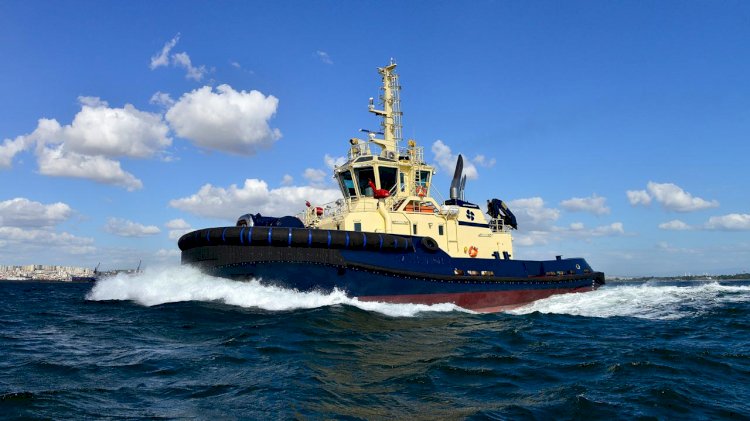
The agreement – named Global Frame Value Care Agreement (VCA) – covers spare parts deliveries in 6 countries for a fleet of 17 tugs powered by MTU-brand Series 4000 engines. In it, the cost of maintenance services is being tied to the engine up-time. This is the first maintenance contract of its kind to be signed by Svitzer. The preventive maintenance arrangement preserves engine availability for Svitzer while contributing to optimal life-cycle costs.

Danish founded towage company Svitzer currently operates 17 vessels with MTU Series 4000 units on board. Among them are the world's first harbor tugs with 90 tons bollard pull powered by high-speed diesel engines. These have been in service in the Tanger-Med cargo port in Morocco since 2018. Other vessels are deployed in Brazil, Costa-Rica, Denmark, Great Britain and Germany.

Also included in the fleet is the tug Svitzer Hermod, the first commercial vessel to demonstrate remote operation, which is likewise powered by twin MTU 16V4000 M63 diesel units. As part of the agreement, the Rolls-Royce business unit Power Systems will ensure that exactly the right spare parts for a vessel are made ready in the right place at the right time for each scheduled maintenance. This approach will allow Svitzer to have focus on efficiency in the technical management and operation of the vessels in scope, while spare parts planning, scheduling and deliveries are handled by Rolls-Royce.

Kasper Gottlieb, Head of Global Procurement at Svitzer, said:

“We are highly satisfied with the performance of the MTU engines in our day-to-day operation and with our cooperation with Rolls-Royce since 2016. The global frame agreement provides the basis for long-term collaboration and it will enable us to further optimize our vessel running costs while maintaining a smooth and reliable operation at the same time.”

Evangelos Fragkoulis, Chief Technical Officer of Svitzer, said:

“As part of the current Technical Operating Model within Svitzer we want to focus further on our main equipment performance and reliability. It is our belief that the maintenance agreement with Rolls-Royce will give a great support on the current journey of Svitzer on defining the actual life cycle costs of our main equipment components.”

Denise Kurtulus, Director Global Marine Business at Rolls-Royce, said:

“We are delighted that Svitzer has chosen to step up cooperation with us as their trusted partner. This new agreement provides us with a basis for intensifying our work together on other technologies such as hybrids and gas engines, as well as on digital services for real-time monitoring of operation.”

By enabling technical data to be captured and processed on an ongoing basis, digitalization has opened up a number of new possibilities in the field of proactive maintenance management. These are being realized already by Rolls-Royce as part of Customer Service 4.0, with new digital products such as MTU-Go!Act and MTU-Go!Manage providing solution strategies especially suited to the needs of fleet operators, among others.

Svitzer is part of the Maersk group. With a 4,000-strong workforce it operates 440 vessels in 120 ports across 34 countries. In addition to towage services in ports and terminals, Svitzer provides a wide range of other marine services, including emergency response.

Anglo-Eastern leads in digital transformation with Wärtsilä Fleet Operations Solution

0

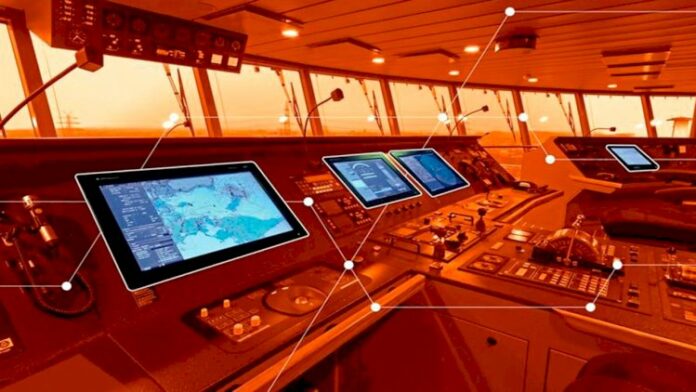
Anglo-Eastern has partnered with the technology group Wärtsilä to digitalise its fleet operations. The technology solution, which will be rolled out to the Hong Kong-based ship manager’s global fleet of more than 600 vessels, supports full voyage planning and execution as well as engine performance and fuel efficiency monitoring.

The Wärtsilä Fleet Operations Solution (FOS) integrates individual processes that are otherwise separate from each other to optimise the planning, weather routing, fuel consumption, and speed of a vessel. It also facilitates ship-to-shore reporting and fleet performance management to reduce fuel consumption, taking into consideration charter party compliance, speed management, as well as the hull, propeller and engine condition.

Key benefits of deploying the Wärtsilä FOS include a unique platform that integrates with a ship’s planning station and electronic chart display and information system (ECDIS), immense cloud computing power, machine learning, data analytics, and onboard/onshore mobile applications.

Capt. Bjorn Hojgaard, Chief Executive Officer of Anglo-Eastern, said:

“We are keen to leverage the advantages of the latest digital solutions to maximise the efficiency of our voyages and the performance of our fleet. Realising the opportunities made possible by the Wärtsilä Fleet Operations Solution, we look forward to contributing to the further development of the solution as an early adopter.”

Anglo-Eastern’s Capt. Pradeep Chawla, Managing Director of QHSE and Training added:

“We believe that the Wärtsilä Fleet Operations Solution will further increase ship navigational safety, reduce crew workload, and improve fuel efficiency.”

Dr Torsten Bûssow, Managing Director of Wärtsilä Voyage Solutions/Transas, said:

“Our Fleet Operations Solution is exactly what we mean when we at Wärtsilä talk about utilising a Smart Marine approach to raise efficiencies, improve safety, and reduce the carbon footprint of shipping. We are excited to be bringing these benefits to the 600 vessel Anglo-Eastern fleet  over the coming 12 months.”