-2.6 C
New York
Home Blog Page 955

Inmarsat launches Fleet LTE service in the North Sea

0

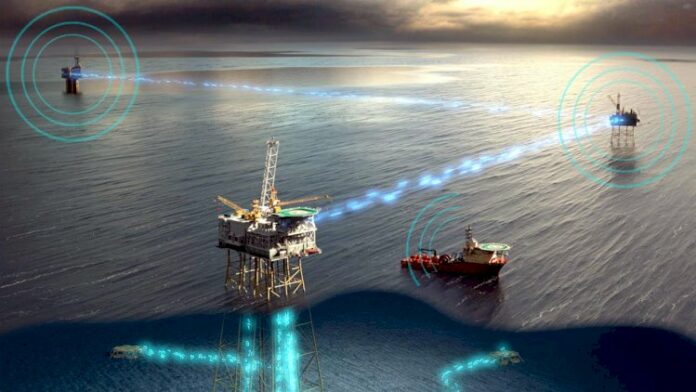
Inmarsat, the world leader in global mobile satellite communications, will extend its service portfolio for customers with the launch of Fleet LTE, following an agreement with subsea fibre and offshore LTE network operator, Tampnet.

The new service which is primarily aimed at offshore support vessel operators, but could also be used by fishing and ferry operators operating in the area,  leverages low-latency, high data speed communications available via a dedicated Access Point Name (APN) on the Tampnet North Sea LTE network and could be extended to other regions such as the Gulf of Mexico if successful.

Inmarsat’s new Fleet LTE service means customers can access high speed 4G, Fleet Xpress maritime VSAT Ka-band and continuous L-band connectivity within a single, fully managed hybrid package.

Tampnet CEO, Per Helge Svensson, said:

“Inmarsat is a leader in a market that has significant untapped potential for Tampnet’s premium LTE services, and we are really pleased to add such a great company to our list of partners. Inmarsat provide services to large fleets of offshore vessels that fall in our LTE network footprint. The North Sea is a natural starting point, but we are also keen to explore how we can work with Inmarsat in other regions where Tampnet is present such as the Gulf of Mexico.”

The unique ‘three-in-one’ offer delivers 4G and VSAT Ka-band and L-band without the complication of dual billing or the risk of connectivity drop-off.

Eric Griffin, VP of Offshore and Fishing, Inmarsat Maritime, said:

“As demand for data continues to grow, especially in the realm of high-stakes decision-making where real time action is needed, such as for remotely operated vehicles or securing details on seabed conditions, low-latency LTE bandwidth and satellite connectivity play crucial roles.” 

Agreeing its own APN means Inmarsat can guarantee customers access to LTE services enabled via Tampnet’s 3,000km subsea fibre network. Griffin adds:

“Being able to exploit business-critical decision-making tools helps operators to cut non-productive operational time.”

Inmarsat Fleet LTE is available in a range of service bands that deliver data speeds of up to 40 Mbps with Round Trip Delay of around 35-40ms. However, when LTE is not available, services automatically switch over to Ka-band Fleet Xpress committed information rates, with continuous back-up from L-band FleetBroadband. Meanwhile, connectivity via FleetBroadband continues even outside the LTE coverage area.

Service transition between LTE and VSAT is fully automated, with routing depending on data needs and network conditions, while vessels only need to add two LTE antenna and a modem on deck to enable the upgrade, which can be rented or purchased. Griffin said:

“Inmarsat Fleet LTE also comes without hidden costs and offers owners plan flexibility to support business demand from third parties. Owners can choose from various LTE plans up to 40 Mbps, upgrade and downgrade between packages without additional fees, and choose separated dedicated bandwidth plans for charterers.”

Inmarsat continuously seeks network solutions that best serve its customer base; recovering offshore market conditions have been persuasive in driving the value-added LTE proposition. Griffin comments:

“As a service provider also offering failsafe connectivity via L-band for reasons of maritime safety, guaranteeing resiliency and performance whether vessels are on station or moving to/from shore are first principles for Inmarsat.”
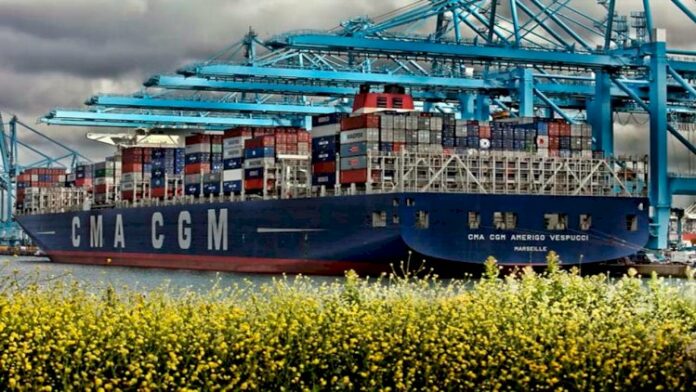
Total will supply LNG to CMA CGM’s future containerships in Marseille

0

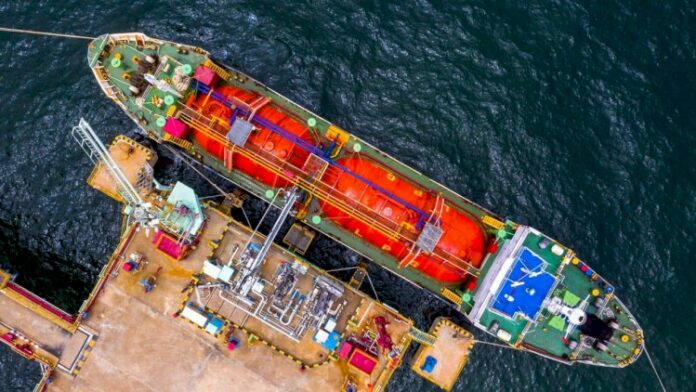
Total and CMA CGM have signed an agreement for the supply of approximately 270,000 tonnes per year of Liquefied Natural Gas (LNG) over 10 years. This volume will cover the supply at Marseille-Fos of CMA CGM’s future 15,000-TEU  container ships that will operate between Asia and the Mediterranean, that are scheduled for delivery starting in 2021.

A pioneer in the use of LNG to power ultra-large container vessels, CMA CGM has chosen to retain Total Marine Fuels Global Solutions, Total’s business unit dedicated to worldwide bunkering activities.

As part of this agreement, Total will provide a suitable solution for the bunkering of these containerships with the positioning of a LNG Bunker Vessel at the port of Marseille-Fos and a complementary bunkering solution in Singapore. These new supply chains will further expand the use of LNG as a marine fuel, particularly in the Mediterranean Sea.

CMA CGM and Total confirm their commitment to France, particularly in favour of the Marseille-Fos business hub where they are both key economic players. Deeply attached to Marseille, the starting point of its global entrepreneurial adventure, the CMA CGM Group has been committed to the development of the region and its port for more than 40 years.

On this occasion, Rodolphe Saadé, Chairman and Chief Executive Officer of the CMA CGM Group, declared:

“Liquefied Natural Gas is the only energy currently available and reliable to significantly reduce our carbon footprint. The choice of LNG to power our ships requires the complete adaptation of the entire energy supply chain and infrastructure. By choosing Marseille-Fos as a refuelling port for our 15,000-TEU vessels, from the end of 2021, we are bringing the French container ports into this major energy transition.”

For Patrick Pouyanné, CEO of Total:

"The development of Liquefied Natural Gas as a marine fuel is at the heart of our LNG strategy. This new contract with CMA CGM results in the launch of a dedicated supply chain in the port of Marseille-Fos. Total is committed to working with its customers to offer them more environmentally friendly marine fuels and thus contributes positively to the sustainable evolution of maritime transport, particularly in the Mediterranean basin."

Ørsted and Covestro sign the world’s largest offshore wind PPA

0

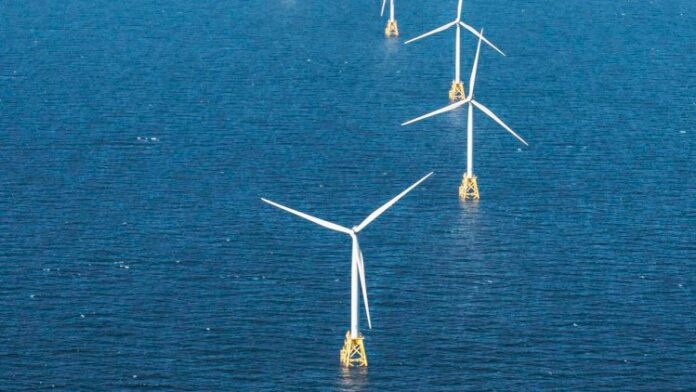
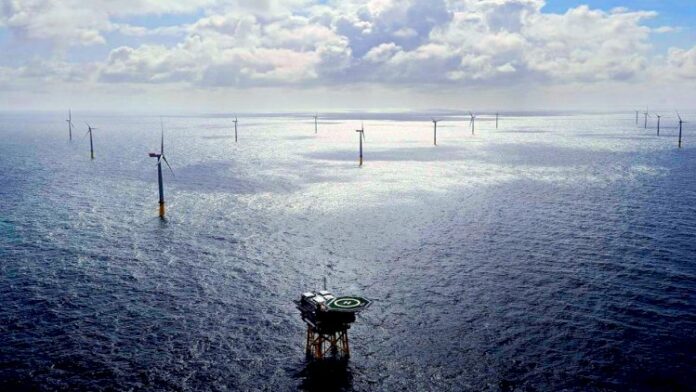
Covestro, a world-leading supplier of high-performance materials headquartered in Leverkusen, Germany, has signed a 10-year indexed fixed-price agreement with Ørsted, the world-leader in offshore wind, to offtake green power produced from Ørsted's planned Borkum Riffgrund 3 offshore wind farm which is expected to be fully commissioned in 2025, subject to Ørsted's final investment decision.

This makes Covestro, who is listed on the Frankfurt stock exchange and employs 16,800 people world-wide, the first major chemical company in Germany to sign a long-term corporate power purchase agreement from a new asset with a supplier of renewable energy.

Covestro CEO Dr. Markus Steilemann said:

"By purchasing green electricity, we are underpinning our comprehensive sustainability strategy and preparing ourselves for the expected rise in energy prices and CO2 costs. We assume that this will enable us to inspire and motivate our customers and corresponding value chains towards sustainable industrial production. At the same time, we also hope that the cooperation with Ørsted will stimulate the accelerated expansion of renewable energy in Germany. Without green electricity, the chemical industry, but also industry as a whole, cannot make its contribution to ensuring that Germany becomes largely greenhouse gas-neutral by the middle of the century, as specified in the climate protection plan."

Martin Neubert, Executive Vice President and CEO of Ørsted Offshore, said:

"Our agreement with Covestro is the first tangible step to secure stable revenues for part of the power generated by Borkum Riffgrund 3 which will be built and operated without subsidies. At the same time, this corporate PPA shows that offshore wind can be a reliable source of green power delivering the large volumes required by energy-intensive industrial players. With this agreement, Ørsted and Covestro support the German energy transition and the continued build-out of renewable energy which is urgently needed to reduce carbon emissions in the German industrial sector."

Covestro will offtake 100MW of the planned wind farm's 900MW total capacity for 10 years, which makes it the world's largest corporate PPA for offshore wind. The PPA will be effective from 2025.

DNV GL developed new class rules and a class notation “Gas fuelled LPG”

0

As the maritime industry looks to reduce emissions to air and work towards the International Maritime Organization’s (IMO) greenhouse gas reduction strategy, alternative fuels are coming to the fore. Classification society DNV GL, recognizing that, with the exception of LNG, international regulations for such fuels are absent, developed new class rules and a class notation “Gas fuelled LPG” for using liquefied petroleum gas (LPG) as fuel in anticipation of growing industry interest. A respective announcement was made at Marintec trade fair in China.
 

Except for liquefied natural gas, currently all gases and low-flashpoint fuels are subject to the ‘alternative design approach’, which means that they may be used if their safety, reliability and dependability of the systems can be shown to be equivalent to those achieved by new and comparable conventionally fuelled main and auxiliary machinery. This can be a time-consuming and costly process and may impede the uptake and expansion of lower emission alternative fuels.

Geir Dugstad, Director of Ship Classification & Technical Director at DNV GL – Maritime, said: 

“With the new rules and class notation, we want to offer owners interested in LPG a straightforward path towards compliance with the alternative design approach mandated by the IGF Code. As the fuel environment within the maritime industry becomes more diverse, it is essential that we continue to broaden the enabling rules and regulation to support these new choices.”

The rules and notation are based on DNV GL’s rules for ships using LNG as fuel but account for the differences in properties and phases between LPG and LNG. The “Gas fuelled LPG” notation covers internal combustion engines, boilers and gas turbines for both gas-only and dual-fuel operations. It also includes requirements for the ship’s fuel supply, considering all aspects of the installation from the bunkering connection up to and including the LPG consumers (main and auxiliary engines, boilers, etc.).

LPG as a fuel can lower a vessel’s emissions to air, both in terms of greenhouse gases and other pollutants. It virtually eliminates sulphur emissions and reduces GHG output by approximately 17 per cent compared to burning HFO or MGO. LPG could also act as a bridging fuel to ammonia, as the materials used for LPG tanks and systems is, in most cases, suitable for ammonia. With advanced planning, the adjustments needed for a switch to ammonia from LPG could also be minimized.

Wilhelmsen and thyssenkrupp to provide 3D-printed components for maritime vessels

0

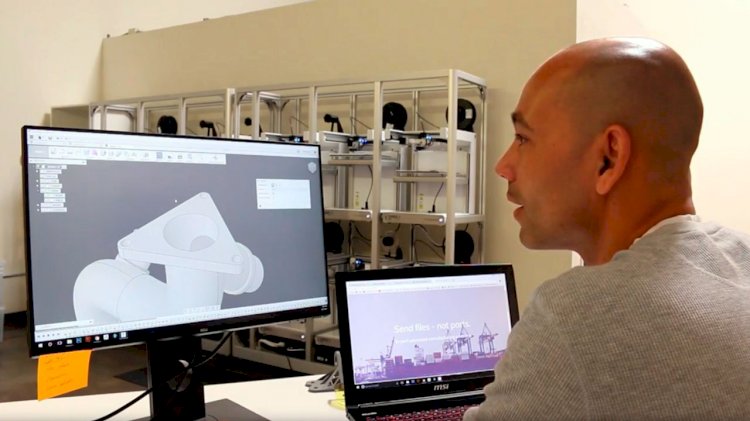
thyssenkrupp has announced its collaboration with Wilhelmsen, one of the largest maritime products and services provider in the world, to jointly develop Additive Manufacturing (AM) enabled commercial solutions for the maritime industry.

Under the Memorandum of Agreement signed by both companies, thyssenkrupp and Wilhelmsen’s Marine Products division will collaborate on providing 3D-printed components for maritime vessels, leveraging on thyssenkrupp’s deep expertise in AM alongside Wilhelmsen’s in-depth maritime expertise and direct ongoing experience of developing 3D printing as a service for vessels.

The collaboration will also leverage on the capabilities of the recently inaugurated thyssenkrupp Tech Center in Singapore and its Global Additive Manufacturing Tech Center in Mulheim, which has been awarded the Approval of Manufacturer certificate by leading quality assurance and risk management firm DNV GL. The high-level certification, which allows thyssenkrupp to supply metal 3D products for application in maritime and other industrial sectors, further cements the company’s distinctive capabilities to design and fabricate metal parts and components utilizing additive manufacturing.

Jan Lueder, CEO of thyssenkrupp Asia Pacific, said:

“We are extremely excited with this new milestone for us in the arena of Additive Manufacturing. After securing the world’s first certified facility for marine 3D printing, we are now partnering with one of the biggest shipping companies in the world to deliver our AM expertise to our marine customers across the globe.”

Kjell André Engen, Executive Vice President, Marine Products, Wilhelmsen, shared:

“Wilhelmsen is built on innovation, and our partnership with thyssenkrupp once again shows how we are leveraging technology to further elevate the maritime industry. AM offers a lot of advantages, and we can clearly demonstrate to our customers how they will benefit from on-demand manufacturing of spare parts.”

Joining the collaboration is startup company Ivaldi Group, a technology partner partly owned by Wilhelmsen that utilizes its platform to market and offer 3D products for the maritime industry. This partnership of two globally renowned enterprises – thyssenkrupp and Wilhelmsen – and fast-rising startup Ivaldi bodes well for the burgeoning Additive Manufacturing ecosystem.

Espen Sivertsen, CEO of Ivaldi Group, said:

“We are privileged to be part of this exciting collaboration paving the way for AM in the maritime industry. Combining our capabilities will surely positive impact the sector as well as all our customers and partners around the world.”

The coming together of the three formidable companies bodes well for the future of AM in various sectors both in Singapore as well as across the region.

Lueder noted:

“Formalizing this partnership here in Singapore is only natural given size of maritime industry here and the vibrant innovation ecosystem which Singapore offers. We look forward to introducing our deep engineering expertise and solutions to customers here in Asia Pacific and potentially the rest of the world to the wonders of AM for marine industry.”

Marlink’s new XChange version increases vessel operational efficiencies

0

New XChange version 5.1 and Cloud Premium significantly enhance business, logistical and vessel operations to meet the most advanced needs for ship IT efficiency and data sharing.

Marlink customers with the powerful XChange communications management system on board can now access firmware version 5.1 and XChange Cloud Premium, a new service tier designed to accommodate and enable the exponential increase in data sharing for optimising operations across a fleet.

XChange Cloud Premium is an upgrade to Marlink’s unique cloud-based vessel data sharing and handling solution launched in 2018. With more capacity and storage volume, expanded file structures and optimised management, it streamlines and enhances business, logistical and marine operations to deliver tangible operational cost savings.

XChange version 5.1 introduces new features including a multilingual interface and embedded tutorial videos to ensure its rich functionality is easily accessible. The XChange software update process has also been overhauled, with further automation, health checks and status tracking to ensure successful download and installation to mitigate the risk of data loss.

Network management has been enhanced too, including a brand-new Open LAN (Local Area Network) feature, which reduces complexity for IT departments by simplifying online access management. Network security also receives a boost, with new features including an enhanced firewall and greater access control to give IT departments the ability to whitelist URLs or block undesirable content with ease.

Tore Morten Olsen, President Maritime, Marlink, said:

"As with every innovation in our XChange portfolio, the Cloud Premium solution and new version 5.1 deliver unique capabilities that contribute to the diverse digital strategies our customers depend on for safer, greener and more profitable operations."

Nexans to provide subsea cables for Ørsted’s offshore wind farms

0

Nexans, Eversource and Ørsted sign Framework Agreement for North American Offshore Wind Farm development with the opportunity to provide up to 1,000 kilometers of export cable for multiple Ørsted projects till 2027 in United States.

Nexans, the global expert in advanced cabling and connectivity solutions, Eversource, New England’s premier transmission builder, and Ørsted, the world leader in offshore wind, have announced a framework agreement. The agreement will reinforce their long-term partnership and will result in Nexans having the opportunity to provide up to 1,000 km of subsea high voltage export cables for Ørsted’s offshore wind farms in North America. The first delivery is expected by 2022 and the agreement extends until 2027.

Vincent Dessale, Senior Executive Vice President, Nexans Subsea and Land Systems Business Group, explained:

“Our partnership with Ørsted and Eversource will accelerate the energy transition in North America and bring Nexans’ industry-leading subsea cable technology to the U.S. Nexans’ advanced subsea cables will contribute both to the overall performance and to increasing the energy efficiency of Ørsted’s projects.”

Building on the Group’s distinguished know-how in submarine cabling systems and its existing manufacturing footprint in Norway and Japan, the Nexans facility in North America will become the first and unique plant to manufacture subsea high-voltage cables in the U.S.

Nexans’ investment in the U.S. facility adds to the Group’s ambition to increase its submarine cable installation capacity. To take full advantage of this capacity, Nexans is building Nexans Aurora, a new state-of-the-art cable-laying vessel with a 10,000-ton capacity.

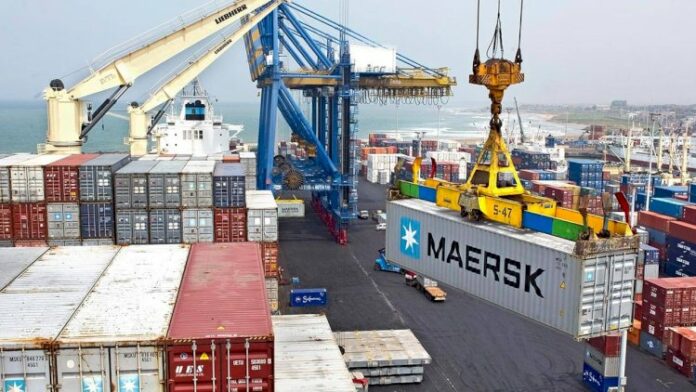
Maersk launches new visibility tool Captain Peter

0

With a look and feel like an everyday smartphone app, “Captain Peter” is aiming to take customer experience to a new level. The avatar will assist customers along the journey of their cargo, reducing some of the daily hassles and complexities of shipping.

Maersk has released its revamped Remote Container Management (RCM) platform featuring the virtual assistant Captain Peter. Since its launch to customers in September 2017, over 3,600 companies have signed up for RCM and the transparency on information from the over 380,000 refrigerated containers of the combined fleet of Maersk and Hamburg Süd it provides. 

Ken West, Reefer Digital Development Manager at Maersk, explains:

“Over the last two years, our RCM product has proven good value to our reefer customers, but we have also identified key areas of improving such a cargo visibility tool. With Captain Peter, we are significantly elevating the customer experience of working with the data and building the foundation for delivering even more advanced features around it.”

Captain Peter keeps an eye on the container’s temperature, humidity, and CO2 levels, and notifies the customer if something needs attention. The data is now cloud-based for increased agility and can be easily shared as well as configured to the customer’s specific needs.  

Wiskerke has been one of the key customers involved in the development of Captain Peter. When it comes to tracking their reefer shipments, the visibility offered makes the tool a clear winner for the company.

Chayenne Wiskerke, Managing Director of Wiskerke Onions, says:

"I choose Maersk and Captain Peter over others because I can see what is happening with my cargo. You can’t imagine the pain I’m feeling when I can’t see what is happening during the voyage."

Maersk plans to continue the dialogue with customers and add even more advanced features to the new reefer platform going forward, delivering value to the customers’ businesses through digital innovation.


BMT launches 26m Patrol Interceptor Vessel for Oman

0

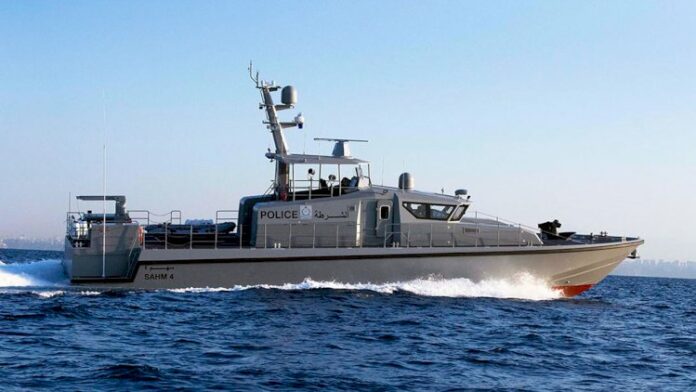
BMT has announced the launch of the first ‘ARES 85 Hercules’ Patrol Interceptor Vessel (PIV) for ARES Shipyard in Antalya. The new interceptor capable of speeds in excess of 50 knots adds to BMT’s proven track record in the Fast Interceptor and Patrol Boat market. The vessel built by ARES Shipyard for the Royal Oman Police Coast Guard (ROPCG), is a continuation of the partnership between BMT and ARES responsible for a range of fast patrol boats between 18m-48m.

The ROPCG contract for 14 Patrol Boats within a 4-year acquisition program is well underway with the first vessel now delivered, and multiple other vessels in various stages of fit out. The vessels, which are fully customised to meet the ROPCG's needs, will provide the agency with a much-expanded capability to patrol and secure the nation’s waters.

John Bonafoux, Director of Business Development at BMT said:

“Another first has again been accomplished by BMT and ARES. The interceptor, has now been delivered to The Coast Guard division of the Royal Oman Police, is the first unit of a new vessel series of high performance vessels”.

Mr. Bonafoux added:

“Supporting operations conducted by coast guards, police forces and navies, the boat can be deployed in marine patrol and surveillance in territorial seas, anti-smuggling interceptor duties, marine law enforcement operations, special forces operations, and rapid response actions. It can also be used to support offshore and fast patrol vessels during operations at sea.” 

This latest contract for a governmental customer signifies BMT’s expansive reach into a growing market area for larger, faster interceptors – an urgent technology requirement that’s needed to combat threats at sea.

During initial sea trials the vessel was praised for its exceptional performance reaching a speed of 52 knots, highlighting the high efficiency of the vessel whilst maintaining superior seakeeping performance and manoeuvrability. With its upright wheelhouse providing excellent visibility alongside low noise attenuation throughout, the vessel will undoubtably prove to be an excellent asset to the ROPCG in active duty.

BMT has a proven history in designing naval vessels. Its breadth of naval expertise and comprehensive range of high-performance patrol vessels, from 9 metres to 220 metres, has offered their commercial and government customers with unrivalled seakeeping, speed and reliability. The international design consultancy has a wealth of commercial experience in naval architecture, including hull form development, class level design and detailed production and outfit engineering on a wide range of vessel sizes. Its skilled team of naval architects and engineers have worked closely with ARES to develop ‘award winning’ designs for Offshore and Littoral Waters Law-Enforcement, Open Sea Rescue Operations, Naval and Coast Guard Duties, Offshore Patrolling and Escort, Search and Rescue, Anti-smuggling Operations, Anti-Terrorist Protection of Offshore and Coastal Installations and Critical Infrastructure.

Wärtsilä solutions to make new state-of-the-art vessels super-efficient

0

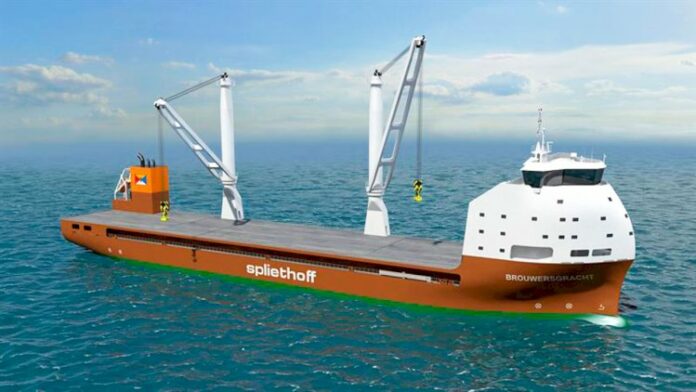
The technology group Wärtsilä has been selected to supply a comprehensive package of solutions for two new state-of-the-art vessels being built for the Netherlands-based shipping company Spliethoff. The ships are under construction at the Fujian Mawei Shipbuilding yard in China. The order with Wärtsilä is booked in November 2019.

The design of the two DP2-B-type ships combines the intake of a multi-purpose vessel with Dynamic Positioning station-keeping ability, thus making them ideal for supplying cargo to offshore installations. The versatile characteristics give the ships a unique position on the market. The design parameters specified high fuel efficiency and a minimal environmental footprint, and the contract with Wärtsilä was based on these requirements.

The full scope for each vessel includes a Wärtsilä 32 main engine, four Wärtsilä 20 engine generator sets, selective catalytic reduction (SCR) systems for all the engines to abate their nitrogen oxide (NOx) emissions, four transverse and two retractable thrusters, and a controllable pitch propeller (CPP). Wärtsilä will also supply its Pro-Touch propulsion control system to enable user-friendly control in both free-sailing and dynamic positioning operations. The ships will comply with the IMO’s Tier III regulations.

Luuk Hijlkema, Account Manager, Wärtsilä Marine, says:

“Having single-source supplier capabilities allows us to deliver fully integrated solutions that create real value for the owner. Such is the case with this order, added to which we have been able to utilise our experience and in-house know-how by partnering in the concept design. These are highly efficient ships requiring flexible and highly efficient onboard equipment, which is why we were selected.”

Mikael Liljeström, Technical Department, Spliethoff, says:

“At Spliethoff we have a continuous drive towards greener and more fuel-efficient operations, and the design of our DP2 B-Type vessels reflects these ambitions. We value Wärtsilä’s strong cooperation during the development phase of this project, and we are confident that the Wärtsilä solutions will meet our requirements.”

The Wärtsilä equipment for these two 141 metres long vessels is scheduled to be delivered to the yard commencing in Q3 2020