-1.3 C
New York
Home Blog Page 950

HullWiper expands clean shipping in Gibraltar

0

HullWiper Ltd is expanding its operations in Gibraltar in partnership with global ship fuel conservation and underwater services provider SCAMP, with a second underwater hull cleaning unit that will be operational in the first quarter of 2020.

About 60 hull cleans have been carried out in the Port of Gibraltar by HullWiper since its launch there in 2017. Growing demand for safe, eco-friendly in-port hull cleans will be met with HullWiper’s Remotely Operated Vehicle (ROV) operating in the Strait of Gibraltar day or night, quickly, cleanly and efficiently. With the second unit, cleaning operations will start on the east side of Gibraltar.

HullWiper’s underwater diverless- and brush-free cleaning technology uses adjustable natural seawater jets to dislodge and remove biofouling without the abrasive scrubbing or harsh chemicals employed by traditional methods. The ROV collects marine fouling removed from hulls, rather than releasing it into port waters and risking the spread of invasive marine species. Captured residues are pumped into the ROV onboard Filter unit and deposited into dedicated drums onshore, protecting both the marine environment and the customer from potential fines or penalties. And as no divers are involved, the ROV also saves costs and reduces the risk to human life.

Freddie Pitto, SCAMP General Manager Shipping Services, says:

“This second HullWiper ROV enables us to provide even more vessels with reliable and efficient hull cleans to ensure they leave for their next destination foul-free.”

Traditional hull cleaning methods generally restrict requirements for hull cleans with deep drafts or during harsh weather conditions. Deep draft restrictions do not apply to HullWiper and cleaning can be carried out even in adverse weather conditions.

HullWiper Managing Director Simon Doran says:

“Freddie Pitto and the SCAMP team have successfully integrated ROV cleaning into their day-to-day operations. Using the ROV enables them to attend laden vessels and makes hull-cleaning safer by removing the risk to life when divers are involved.”

Since its launch in late 2013, HullWiper has expanded from its first base in Dubai to include key locations across the Middle East, as well as ports in Australia, Denmark, Egypt, Gibraltar, Norway, Singapore, Sweden and – most recently – Panama and Mauritius. Plans are in the pipeline for new locations including Sri Lanka, Korea, South Africa, Chile and Bahamas. HullWiper is also available for lease where the company does not have its own base.

To date, HullWiper has attended more than 1,000 vessels for hull cleans worldwide.
New emissions reduction technology by SAL Heavy Lift

0

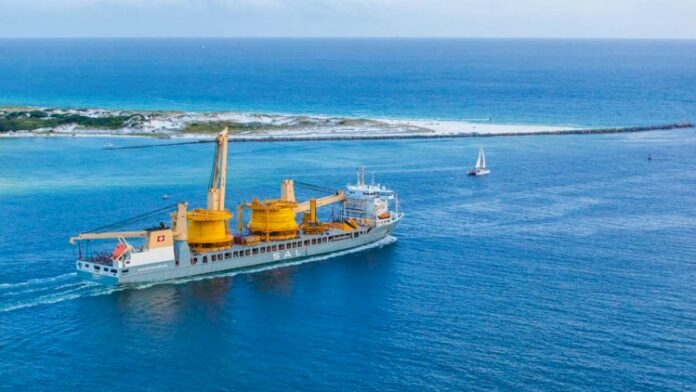
SAL Heavy Lift sets itself as a green-tech front runner and becomes the first shipping company in the world to adopt a new hydrogen/methanol technology to its fleet.

With significant emission reductions in terms of CO2, SOx, NOx and other particles, the injection technology developed by FUELSAVE GmbH paves the way for making shipping greener and more energy efficient.

After more than four years of close cooperation, testing and development between SAL and FUELSAVE GmbH, alongside project stakeholders EcoTune Marine, Classification Society DNV GL as RO for Antigua and Barbuda flag, Carl Baguhn, MAN Energy solutions, M.A.C. System Solutions, AVL and last but not least the flag state administration of Germany, the new and advanced FS MARINE+ hydrogen / methanol injection solution is now entering the next stage of validation, after which it will find its way to six SAL vessels as a permanent installation.

By dynamically injecting a mix of hydrogen, oxygen, water and methanol into selected parts of the air intake of both the main engine and the auxiliary engines, the FS MARINE+ system ensures a much cleaner and thorough combustion process, resulting in reduced primary fuel consumption alongside lowering emissions and air
pollution. 

Sebastian Westphal, CTO of SAL Heavy Lift, says:

“SAL has always been a frontrunner when it comes to innovation and we are dedicated to make shipping more efficient and cleaner by using technologies that creates a long-lasting effect. We have tested a prototype on a generator engine of our MV Annette over more than two years with very convincing results. The FS MARINE+ system not only achieved significant fuel savings, but also emission and air pollution reductions which was verified by 3rd parties both during field trials and in laboratory tests."

Marc Sima, CEO of FUELSAVE GmbH comments:

“We are proud to have SAL Heavy Lift GmbH as our customer, and help them to become the most innovative, efficient and sustainable shipping company within their field. With this system we are driving the clean fuel transition with a high impact solution. It can optimize the energy consumption and the environmental impact significantly irrespective of what fuel type you operate your vessel with. Thus, it is applicable with MDO, MGO, HFO, LSFO as well as LNG. We are looking forward together with SAL to take a lead in supporting the shipping industry in its efforts to become more environmentally sustainable."

By investing millions of dollars into retrofitting the system to the main engines and auxiliary engines on existing vessels it may appear that SAL is taking a big financial bet, but the results in terms of savings and payback time proves quite the opposite.

Jakob Christiansen, Naval Architect and Head of SALs Fleet Development Team, states:

“We ran the system for two years without a single incident and obtained results that matched the promised numbers. So, we see a technology that meets our green ambitions while also reducing the technical operating costs of the ships”.

The FS MARINE+ generator has proven to make average reductions of 10% less CO2, 15% less SOx, 30-80% less NOx and 40% less particle emissions.

SAL’s MV Trina is the first vessel to be retrofitted with the FS MARINE+ system in Q1 2020. Following a successful system integration on MV Trina, five more vessels will follow – ready to pave the way for a greener & more energy efficient shipping service.
 

MacGregor deck handling solution supports Xue Long 2 icebreaker operation

0

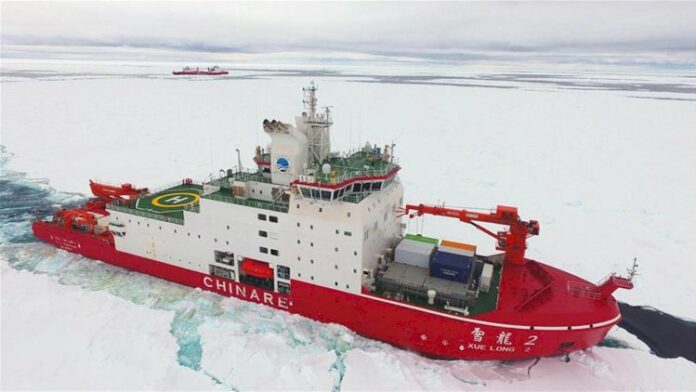
The two polar icebreakers, Xue Long (Snow Dragon) and Xue Long 2, are working together for the first time during China’s 36th Antarctic expedition, with Xue Long 2 also being the first domestically built icebreaker.

Xue Long 2 was jointly designed by Aker Arctic Technology in Helsinki, Finland and the Marine Design and Research Institute of China (MARIC) in Shanghai, China. Construction began in 2016 at the China State Shipbuilding Corporation’s Jiangnan Shipyard in Shanghai, with the vessel delivered to the Polar Research Institute of China (PRIC) in July 2019.

Xue Long 2 is a Polar Class 3 vessel, measuring 122.5 meters long and 22.3 meters wide with a displacement of 13,996 tonnes and a navigation capability of 20,000 nm. She is the world’s first icebreaker capable of cutting through ice whilst moving forward or backwards, with this capability and advanced installed equipment significantly improving polar region research capabilities.

The 36th Antarctic expedition involves 413 scientists, researchers and support staff, with Xue Long 2 working from China’s research stations in Antarctica and South Africa to support scientific operations being undertaken by the expedition team.

A MacGregor project team has been involved in the Xue Long 2 project from the very early stage back in 2011, working collaboratively with the PRIC project team and MARIC to develop different technical solutions required to enable deck handling equipment to operate effectively at temperatures of minus 45 degrees centigrade.

MacGregor’s deck handling solution and scope of supply for Xue Long 2 comprises three offshore cranes, the research equipment deck handling systems, oceanographic winches, deck machinery and hatch covers. Spare parts and service support will also be provided to maximise the icebreaker’s operational availability.

Mr Wang Shuoren, Political Commissar of Xue Long 2, Chief Technologist of Newbuild Icebreaker Engineering Department, emphasised:

“Integrated capabilities on safety, reliability and operational support were the main decision- making factors whilst selecting key equipment for this important project.”

Jane Chen, Vice President, Strategy, Marketing & Communications; Head of China, MacGregor, says:

“We are very proud to be a part of the Xue Long 2 project and make our contribution to China’s polar research operations and, in so doing, look forward to further extending our collaborative relationship with the PRIC and MARIC.”

Clearwater Dynamics selects Kx for cutting-edge cyber threat solution

0

Disruptive technology group, Clearwater Dynamics has partnered with Kx, the world leading provider of in-memory, time-series database technology, to deliver Horizon, a transformational cyber defence platform that proactively prevents rather than passively responds to attacks.

Powered by Kx, Horizon will use machine learning techniques to continuously search out and isolate advanced threats that would otherwise evade existing security systems. It provides real-time intelligence across terabytes of historical data, whilst managing real-time ingestion in a single unified and consolidated platform. Horizon’s development was spearheaded by a team led by Clearwater’s CTO Chris Sturgess, a former technical lead for the UK’s primary cyber intelligence agency, GCHQ.

Horizon is already proven in the maritime industry, where it protects against the greatest threats of email emulation and financial fraud without the need for embedded hardware or dedicated in-house cyber experts, whilst continuously monitoring the network’s surroundings to ensure that all threats are captured. Its success in protecting cloud environments has been recognised in dramatically lowered cyber insurance premiums for accredited clients.

William Unwin, CEO Clearwater Dynamics, commented:

“Through our partnership with Kx, Horizon empowers existing IT teams to react and mitigate threats on a same-day basis, without the need to invest in a resident cyber specialist. Cyber risk is identified and displayed in an intuitive way in order to minimise false positives and address the sector’s biggest issue of event fatigue and skills shortages.”

Patrick Brazel, Chief Commercial Officer, Kx added:

“Cybersecurity is one area where the need for speed and the ability to handle massive streaming and data at rest is unquestioned. Kx offers an unrivalled, truly real-time solution in one simple analytics technology. We are delighted to partner with Clearwater to deliver an essential capability.”
 

SCHOTTEL to propel world’s first hydrogen ferry

0

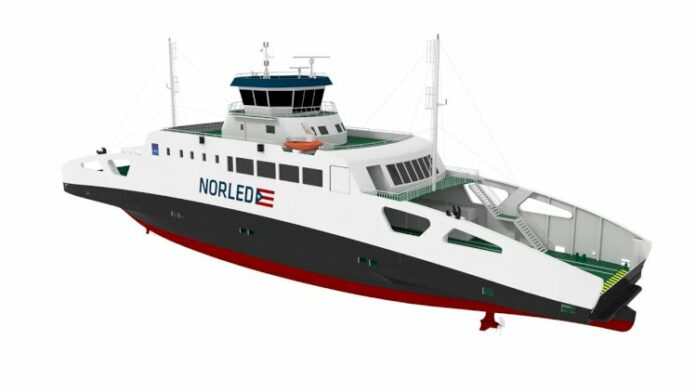
Two new environmentally friendly vessels for the Norwegian ferry operator Norled will be propelled by high efficiency azimuth thrusters from SCHOTTEL. One of these LMG Marin designed vessels – currently under construction at Westcon Yards, Norway – will be the first ferry in the world to sail on liquid hydrogen.

Sigvald Breivik, technical director at Norled:

"Our goal is to create a new icon among eco-friendly ferries. Hydrogen, as a zero-emission fuel, will be the alternative energy for ferry propulsion systems in cases where longer sailing distances are required and charging batteries is not possible. The energy efficient SCHOTTEL Rudder EcoPeller (SRE), which we now have selected for several of our new vessels, is an important piece in this puzzle. Through this selection, we ensure our place at the forefront of the development of zero-emission ferries."

Both ferry newbuilds will be a hybrid mix of batteries and hydrogen fuel cells. The first project – the one using liquid hydrogen – will be split 50/50 between batteries and fuel cells. The second ferry will be powered by batteries only. Each of the new vessels will be driven by two SCHOTTEL Rudder EcoPeller type SRE 340 L FP with an input power of 960 kW each. With fixed pitch propellers and a propeller diameter of 2.10 m, the ferry will operate at a service speed of 12 knots.

The SRE optimally meets Norled’s requirements as it covers the power range from 500 to 5,000 kW and ensures high efficiency even at very low loads. It is an ecologically friendly propulsion system developed primarily for open seas and coastal operating conditions.

Thanks to its efficiency, the azimuth thruster also contributes to the ferries’ low fuel consumption, resulting in low operating costs and reduced emissions. Beyond this, the SRE improves course-keeping stability and thus reduces steering angle corrections.

The LMG 80 ferries measure 82.40 metres in overall length and have a moulded breadth of 17.00 metres. They will operate on the Hjelmeland – Skipavik – Nesvik route in Ryfylke, Rogaland County starting in the spring of 2021. The double-ended vessels will each have a capacity of 299 passengers and 80 cars.

Chevron awards OneSubsea industry’s first 20,000-psi integrated deepwater project

0

Schlumberger has announced an award by Chevron U.S.A. Inc. (Chevron) to OneSubsea® for the supply of an integrated subsea production and multiphase boosting system for the Anchor Field in the US Gulf of Mexico.

Through this engineering, procurement and construction (EPC) award, OneSubsea—the subsea technologies, production and processing systems division of Schlumberger—will supply vertical monobore production trees and multiphase flowmeters rated up to 20,000 psi. Also included are production manifolds and an integrated manifold multiphase pump station rated to 16,500 psi, subsea controls and distribution. Awarded in March, this is the first 20,000-psi subsea production system contract in the industry.

Don Sweet, president, OneSubsea, said:

“We are delighted that Chevron has awarded OneSubsea the industry’s first 20,000-psi integrated deepwater project in the US Gulf of Mexico. Our innovative technologies optimize project efficiency and help reduce cycle times. This project is an example of our commitment to drive customer performance and help Chevron unlock their next frontier of deepwater oil and gas resources.”

The equipment that will be deployed in this project is covered under the 20-year subsea equipment and services master order for Chevron’s development projects in the Gulf of Mexico. This project will benefit from a preapproved catalog of standard subsea equipment, enabling Chevron to reduce investment cost while improving its subsea development performance.

Damen and Cotecmar to build DTC hydrographic research vessel

0

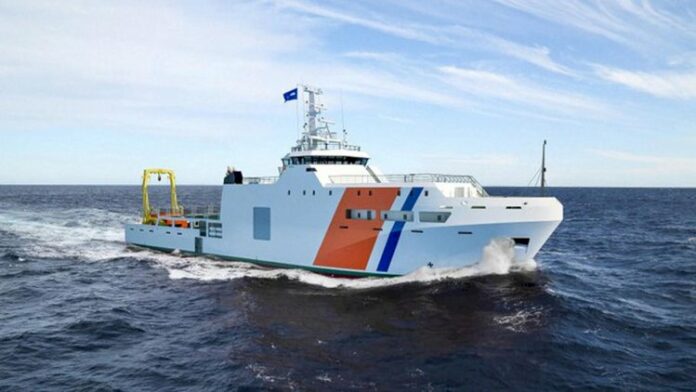
Damen Shipyards Group signed a Damen Technical Cooperation (DTC) contract with Cotecmar during ExpoDefensa 2019 in Bogota. The contract will see DTC provide design, engineering and technical assistance for the construction of a Scientific Marine Research Vessel (Buque de Investigación Científico Marina – BICM).

Cotecmar, operating two shipyards in Cartagena, will build the hydrographic and oceanogrpahic research vessel for DIMAR (Direccion Maritima – Maritime Authority) at their Mamonal location. The vessel, which will be 83 metres in length with a beam of 16 metres, will be the largest and most complex vessel ever to be built in Colombia.

DIMAR will operate the vessel in Colombian waters, both Pacific and Caribbean, and will also sail it to the Antarctic. The vessel has various types of hydrographic equipment on board, including all deck equipment, for example, a large A-frame on the aft, and also extensive laboratory capacity on board. It also features a Helicopter deck and hangar, that can handle a Dauphin or a Bell 412 helicopter.

Mr. Pieter Becker, Damen’s area manager for Colombia, says:

“We are very proud that we can assist Cotecmar with making this project a success. With our proven model of Damen Technical Cooperation we are sure that we can meet and exceed Cotecmar’s requirements before, during and after the construction of the vessel. Our goal is to remain in Colombia for a long time and to explore more opportunities for co-development and cooperation.”

Viking Glory will be equipped with Climeon’s technological innovations

0

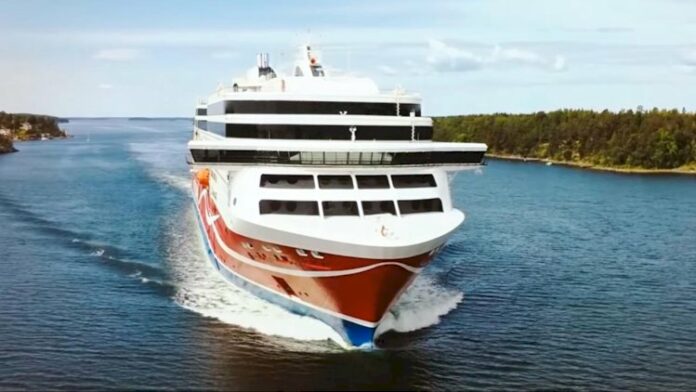
Viking Line is now building its new vessel, Viking Glory, which will be one of the world’s most climate-smart vessels when it is launched in service in 2021. The vessel will be equipped with a number of technological innovations, which Viking Line is working on in partnership with the Swedish clean tech firm Climeon, among others, to reduce the vessel’s climate impact. Climeon’s system is expected to reduce CO2 emissions by about 4,000 tonnes a year.

Viking Line’s new vessel, Viking Glory, is currently being built in Xiamen, China. The vessel will be equipped with a number of technological innovations to reduce emissions and its climate impact, including a system developed by the Swedish clean tech company Climeon.The Climeon Heat Power System uses waste heat from the engines to heat the vessel but also to generate clean electricity. Viking Line will also be the first shipping company in the world to install Climeon’s steam turbines, which use waste heat from gases produced during the combustion process. All in all, the Heat Power modules and steam turbines will reduce CO2 emissions by at least  4,000 tonnes a year. The steam turbines will be placed in service initially on Viking Glory but will be assessed for potential use on Viking Line’s six other vessels in the future.

Thomas Öström, Climeon’s chief executive officer, says:

“We are really proud of the confidence that Viking Line has placed in us and that they have chosen to be a pioneer in energy efficiency in the marine transport industry by installing both Heat Power modules and steam turbines from Climeon. Each unit can produce up to 150 kW, which is comparable to the amount of electricity needed to charge 250,000 mobile phones a day. Our estimate is that Viking Glory will reduce its CO2 emissions by about 4,000 tonnes a year with our new solution.”

Viking Line was the first shipping company in the world to invest in Climeon’s energy recovery system when the very first prototype developed for ships was installed on board Viking Grace. With the construction of Viking Glory, the decision was made to involve Climeon right from the start in the development work.

Kari Granberg, project manager for Viking Glory at Viking Line, says:

“Fuel is the second biggest expenditure for Viking Line, but being energy-efficient is not just about making savings. What is most important to us is that we work actively for sustainable marine transport. The Climeon Heat Power System will provide up to 40 per cent of the electricity needed for the passenger functions on board.”

Port of Rotterdam checks sulphur emissions from shipping

0

The Human Environment and Transport Inspectorate (ILT) from the Ministry of Infrastructure and Water Management recently installed an air quality sensor on Splitsingsdam at the Port of Rotterdam’s Maas Entrance. An application with real-time readings displays vessel emissions for inspectors when vessels enter or leave the port. This is one of the additional measures ILT is taking to monitor sulphur dioxide emissions from shipping.

Stricter regulations from the International Maritime Organisation (IMO) are placing significant restrictions on sulphur emissions from shipping. In protected areas, such as the North Sea, a maximum permitted sulphur level of 0.1% has already applied since 2015. As of 1 January 2020, sea-going vessels on the world’s oceans may only use fuel with a sulphur content of no more than 0.5%. The current maximum is 3.5%. High-sulphur fuel will only be permitted on vessels that have scrubbers – an installed filtration system – on board.

The ‘sulphur sniffer’ was originally installed at Hoek van Holland. It has now been relocated to the ‘Lage Licht’ on Splitsingsdam in the centre of the approach channel, where it will have a much better reach. The previous location was too far away from the area in which the largest vessels enter the port.

ILT has also been using a small Belgian plane to monitor sulphur emissions since 2018. The Belgian coast guard has been monitoring shipping emissions using a small Royal Belgian Institute of Natural Sciences plane for several years. A sensor extracts the air from beneath the plane to measure a vessel’s SO2 and CO2 emission concentrations. ILT is now also using this. Using the plane means that ILT can now also monitor vessels far out to sea.

In recent years ILT has observed that approximately 95 per cent of vessels arriving in Rotterdam complies with the sulphur regulations. In addition to the standard inspections in the Port of Rotterdam, ILT will also be sampling sea-going vessels’ so-called bunker tanks from 2020. From that point, vessels without scrubbers may no longer have fuel containing sulphur levels higher than 0.5% in their tanks.

Nautilus Labs becomes new Inmarsat fleet data application provider

0

Startup serving global clients will now offer dedicated application for fleet optimization accessible via Fleet Xpress and FleetBroadband

Nautilus Labs, the technology firm advancing the efficiency of ocean commerce through artificial intelligence, and Inmarsat, the world leader in global, mobile satellite communications, have signed an agreement for Nautilus Labs to join a premier group of dedicated application providers for Inmarsat’s Fleet Data service.

Nautilus Labs will use the Fleet Data API (Application Programming Interface) to help automate data collection as part of Nautilus Platform, a proprietary, fleet optimization UI (user interface) that provides shipping owners and operators with predictive analytics to reduce fuel consumption, allow for better decisioning, and meet international and local environmental standards—all in real time.

Matt Heider, CEO of Nautilus Labs, noted:

“It’s critical that vessel owners and operators have simple, easy, and consistent access to actionable information. We’re proud to partner with Inmarsat, a satcom titan that has built their maritime book of business on best-in-class voice and data solutions. Together, we’ll help connect more clients with continuous, cost-saving fleet optimization insights on Nautilus Platform—for the teams at sea and on shore.”

Developed by Inmarsat and made commercially available earlier this year, Fleet Data collects signals from onboard sensors, pre-processes that data, and uploads it to a central cloud-based database—equipped with a dashboard and an API. 

Marco Cristoforo Camporeale, Head of Digital Solutions, Inmarsat Maritime, said:

“We are delighted to be working with such an innovative startup such as Nautilus Labs, a company we covered in our recent Trade 2.0 report on the rise of maritime startups.”

Mr Camporeale says:

“This tie-up will allow ship operators and fleet managers to optimize their entire fuel process and reduce unnecessary costs and meet decarbonisation targets, this is all achieved through the Nautilus Labs application on Fleet Data and via a secure platform that is fully scalable, fleet-wide and now commercially available on both Fleet Xpress and FleetBroadband."