-3.5 C
New York
Home Blog Page 937

SeaRobotics selected Torqeedo’s electric propulsion system for its ASV

0

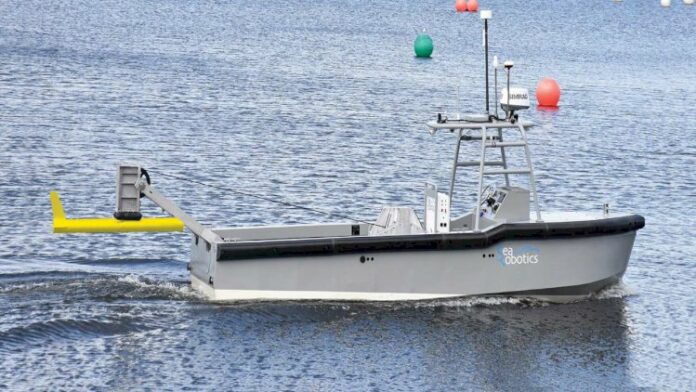
Dependable performance, extended time on station and quiet operation are key criteria when conducing acoustic underwater surveys. That’s why SeaRobotics selected an electric propulsion system from Torqeedo for their Endurance 7.0 autonomous surface vessel (ASV).

Don Darling, president of SeaRobotics, said:

“Our power requirements for this Endurance 7.0 ASV were very specific. The vessel required extended endurance on station as well as a quiet operating mode while performing acoustic research operations.”

The powertrain for the seven-meter (23 ft) aluminium boat consists of a Torqeedo Deep Blue 50i electric motor, a 360 VDC 30.5 kW lithium propulsion battery, a water-cooled DC-DC converter, a 24 VDC lithium battery for DC-DC backup, and a 25 kW diesel generator. The fully integrated computer-controlled propulsion system is designed for long-range unmanned hydrography and subsea mapping missions.

The system is designed to provide up to six days on station at survey speeds and up to 10 hours between automatic battery recharges from the onboard generator. The recharging cycles are fully automatic under computer control.

Darling said:

“The DeepBlue electric drive, with 80 horsepower-equivalent output, provides ample power for a wide range of towed or statically deployed systems. In addition, the smooth, continuous and rapid transition from forward to reverse thrust assists in station-keeping as well as near-dock manoeuvring.”

The Endurance 7.0 can operate under remote control by an operator ashore or semi-autonomously to implement a mission plan. All on-board systems are monitored with data connections to the remote base station. The operator can control all interfaces, view video feeds or put the ASV into automatic waypoint navigation mode, in which throttle and steering are under full computer control. The boat’s helm station can be optionally manned for operation in congested waterways and ramp operations when required.

Steve Trkla, president of Torqeedo, Inc., said:

“Autonomous Surface Vessels are a perfect application for electric propulsion in terms of silent, emission-free performance and reliable, low-maintenance operation. Torqeedo also had extensive previous experience in working with ASV builders. The full range of Torqeedo drives, from 0.5 kW outboards up to the high-voltage 50 kW Deep Blue system, have been successfully integrated into ASVs by builders around the world.”

Darling, who noted that SeaRobotics is also using Torqeedo outboards on other ASVs, said:

“Importantly, Torqeedo gave us the level of engineering and system integration support needed to create a fully meshed propulsion and control solution to meet our requirements for autonomous survey operations.”


 

Prysmian to supply cables for DEC’s offshore wind turbine prototype

0

Prysmian Group, world leader in the energy and telecom cable systems industry, has been awarded a contract by Dongfang Electric Corporation (DEC), one of the biggest state-owned enterprises in China and one of the world’s largest power generation equipment manufacturers and project contractors.

The contract includes the supply of cables for DEC’s newest 10 MW offshore wind turbine prototype that will be installed in China Three Gorges Corporation’s Xinghuawan wind farm in the Fujian province, China. Cables will be manufactured in the Group’s plant located in Tianjin, China.

With a development period of over 10 years, the wind power market in China is now going through a phase of strategic transformation in which offshore is becoming more and more supported by the Chinese government. Therefore, larger capacity turbines are suitable and preferred for China’s Southern and Eastern coastal areas for greater efficiency and lower integrated costs.

The successful development of this turbine does not only represent a major step ahead for China’s independent R&D capabilities on large-capacity wind turbines, but it is also, and most of all, a milestone for DEC to strategically transition their focus to the offshore market.

The new mega-turbine is the first of this type in Asia and is developed for the offshore wind areas along China’s southeast coast. It is a direct-drive permanent-magnet offshore turbine, able to resist 77 m/s typhoon winds and has a 185 m blade diameter. This turbine can generate 4 GWh of power each year (with 10 m/s wind), reducing coal consumption by 13,000 tons and carbon emissions by 3,500 tons.

Francesco Fanciulli, Prysmian Group Business Energy SVP, stated:

“We are very proud to take part in the increasingly strategic transformation of the wind power industry.”

This award reconfirms Prysmian’s approach as a 360° partner in the renewable power industry, able to supply from turbine tower and nacelle cables, to inter-array and export cables, installation, project management and up to monitoring systems and solutions. In 2019 the Group has been awarded with several projects like Provence Grand Large, Vineyard Wind, DolWin 5, Hollandse Kust Zuid III & IV and Empire Wind. Recently the Group has also been awarded a global contract for the full year 2020 to supply wind turbine tower and nacelle cables and assemblies by Siemens Gamesa Renewable Energy, world leader in the wind power industry.

Construction starts at Ørsted’s first offshore wind farm in the Netherlands

0

Ørsted has started constructing its first offshore wind farm in the Netherlands by installing the first foundations at the 752MW Borssele 1 & 2 offshore wind farm, marking an important milestone for the project.

Henrik Egholm, EPC Director for Borssele 1 & 2, says:

"It's great that the installation has started now, according to plan. We're very well on track with the construction of the wind farm. Borssele 1 & 2 will be operational end of this year."

Jan Wind, Senior Project Manager for Borssele 1 & 2, elaborates:

"The first monopile installed was also the heaviest and tallest on the wind farm, weighing 1,188 tons and measuring 76 meters. The diameter at the bottom of the foundation is 8.5 meters, wide enough to hold a football goal."

Steven Engels, General Manager for the Netherlands, says:

"Borssele 1 & 2 will be our first offshore wind farm in the Netherlands and is an important step in the Dutch government's ambitious shift towards green energy. Once completed, Borssele 1 & 2 will be the largest offshore wind farm in the Netherlands, able to supply renewable power to around one million Dutch households."

Borssele 1 & 2 is located 22 kilometers off the coast of the Dutch province of Zeeland. At water depths ranging from 14 to 39.7 meters, a total of 94 monopile foundations will be installed at the wind farm. Starting in April, the 94 Siemens Gamesa 8 MW wind turbines will be installed.

The monopiles and transition pieces for Borssele 1 & 2 have been fabricated by Sif, EEW SPC, EEW OSB and Bladt Industries. All foundations will be installed by DEME.

NOAA and Ocean Infinity to develop deep-water autonomous technologies

0

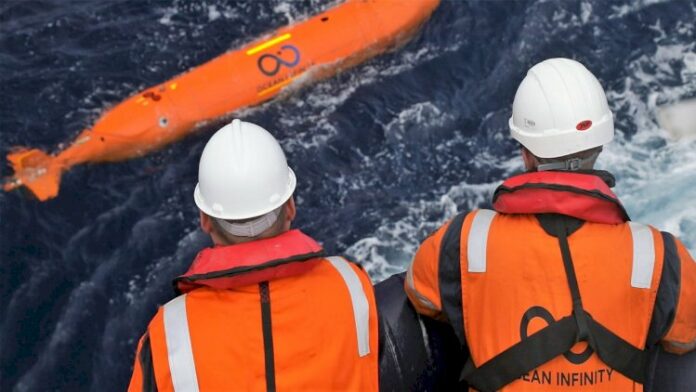
NOAA’s Office of Ocean Exploration and Research and the ocean data and technology company Ocean Infinityoffsite link have announced a new agreement to develop deep-water autonomous technologies that can gather ultra-high-resolution ocean information.

The four-year Cooperative Research and Development Agreement (CRADA) between NOAA and Ocean Infinity will also focus on advancing telepresence or the transmission of ocean video and information in real-time to public and academic audiences as well as new data collection and processing methods to increase the value and relevance of deep-ocean data.  

Neil Jacobs, Ph.D., acting NOAA administrator, said:

“This new partnership will help us more efficiently execute NOAA’s mission to advance unmanned drone systems and artificial intelligence to explore and map the United States Exclusive Economic Zone. Data and information about the ocean help our nation advance our Blue Economy, including maritime commerce, domestic seafood production, healthy and sustainable fisheries, coastal resilience, energy production, tourism and recreation, environmental protection and national security.”  

The collaboration will support the recent Presidential Memorandum on Ocean Mapping in the U.S. Exclusive Economic Zone and Shoreline and Near Shore of Alaska and the goals announced at the November 2019 White House Summit on Partnerships in Ocean Science and Technology.

Sean Fowler, director of business development for Ocean Infinity, said:

“This is an exciting step for Ocean Infinity as we combine our leading deep-water exploration technology with NOAA’s prominent authority in ocean science. Perhaps greater than technology is the collaboration between leading engineers and scientists to ultimately improve our understanding of earth-ocean systems in remote environments." 

Craig McLean, assistant NOAA administrator for research, added:

"Together, we’ll accelerate how we deliver important ocean information to those who need it most from ocean areas we know the least. This work will enhance our mission in science, operations and engineering.”

Only 43 percent of the 3.4 million square nautical miles of U.S. territory underwater is mapped to modern standards. Alan Leonardi, Ph.D., director of the NOAA Office of Ocean Exploration and Research, said:

“The NOAA-Ocean Infinity partnership will play a key role in helping NOAA reach its goal of fully mapping the U.S. EEZ and characterizing ocean environments to support their conservation, management, and balanced use.”

NMA goes digital with certificate issue

0

The Norwegian Maritime Authority (NMA) has issued its first electronic vessel certificate.

CLC and CLB certificates are the first certificates to be issued electronically. The purpose of these certificates is to document that the company carries adequate insurance to cover any claim of compensation for damage caused by oil spills.

Electronic certificates are issued from 29 November 2019 and will be of great value for shipping companies, insurance companies and the NMA. 

Toralv Austrheim, captain on board the MS Utsira, says: 

“This is exclusively positive and ensures us an enhanced document control."

It is no longer necessary to keep hard copies of documents on board, because the documents will be available in the web portal My Vessels. 

The automation of certificates will improve the quality of data. Eventually, when the solution is fully automated, this will give us the opportunity to issue CLB and CLC certificates 24/7.

Jorunn Lindøe, Senior Adviser at the IT section of the NMA, says:

“By using this system, the companies will save time on administrative tasks associated with the certificates, and they will also have digital access to the certificates.”

The system has raised great interest internationally, and many would like the Norwegian model to become an international standard. The project has already been presented to the International Maritime Organization (IMO), where it was well received.
 

Thales performed a challenging demonstration of its SMART-S Mk2 radar

0

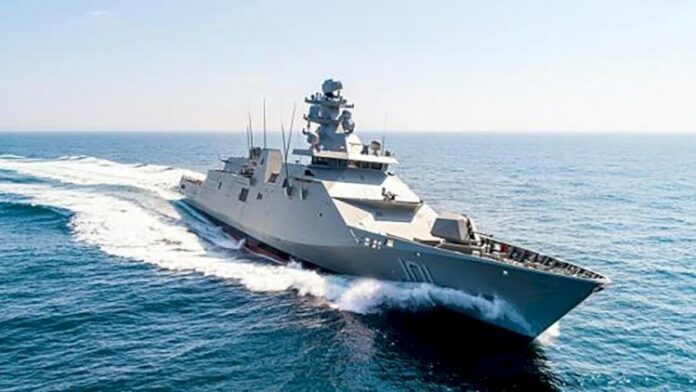
In November and December 2019, ARM Reformador, the first of the Mexican Navy’s POLA class vessels, was subjected to the Sea Acceptance Trials.

The trials took place off the Mexican west coast. Faced with various surface and air targets, Thales proved convincingly the integration of its systems and their functionalities.

In addition to the regular SAT, Thales also performed a challenging demonstration of its SMART-S Mk2 radar, involving a series of sea skimming and supersonic flights. SMART-S Mk2 performed excellent, to the full satisfaction of the Mexican Navy.

After the successful trials, the project’s next milestone is the commissioning of the ship into active service with the Mexican Navy. This is expected in February 2020.

Geert van der Molen, Thales VP Naval, said:

“Thales signed this contract in 2017 and was challenged to deliver early 2020. Thanks to the great cooperation with Damen Schelde Naval Shipbuilding and by making full use of our standard product philosophy, we met every requirement. We are looking forward to future projects with the Mexican Navy”.

The Thales share in ARM Reformador is huge: the Tacticos Combat Management System, the SMART-S Mk2 Air and Surface Surveillance Radar, the STIR 1.2 EO Mk2 Radar and EO Tracking system, the Gatekeeper Electro-optical Ship Security system, and the CAPTAS-2 Passive Variable Depth Sonar.

Furthermore the C-Guard Decoy launcher and RIGEL Radar-Electronic Support Measures and Radar-Electronic Counter Measures systems have been supplied and integrated into Tacticos.

Thales also delivered and integrated a full armament suite including RAM Surface to Air Missile launcher, Harpoon Surface to Surface missile launcher, 57 mm gun, 12,7 mm machine guns, and Mk38 25 mm Machine Gun with dedicated console.

Through this contract, Thales realized a Transfer of Technology to Mexico by having Navy engineers participating in the engineering and system integration activities, as well as in test activities.

ARM Reformador composes of six modules, only two of which have been built in Flushing, the Netherlands. Thales’s sensors have been installed in various modules built both in Mexico and in the Netherlands, which required a tight coordination between all parties. While the sensors on module V were installed in Flushing, the CAPTAS sonar and the weaponry was shipped and installed directly in Mexico.

LOC takes part in Clean fuel project on East coast of Thailand

0

LOC has signed an agreement with PSS JV (“Petrofac, Saipem and Samsung Joint venture”) for the Clean Fuel Project of Thai Oil Public Company Limited on East coast of Thailand.

LOC Thailand won the contract, valued at USD $1.2million to LOC Group, and will execute all Marine Warranty services (“MWS”) on the project on behalf of PSS JV. The agreement is for 3 years. The Group’s scope of work includes; the technical document review, vessel surveys and site attendances for all high value critical project cargos movements from vendor site to refinery site foundation.

The Clean Fuel Project of Thai Oil Public Company Limited, an oil refinery in Sriracha, Chonburi, Thailand is designed to transform the existing oil refinery to produce better, cleaner and more environmentally friendly transportation fuels. The project will also increase the refinery’s production capacity from 275,000 barrels per day (“bpd”) to 400,000 bpd.

Alex Harrison, Group Director Energy Services, commented:

“This contract award, in what was a highly competitive tender process, is a continuation of the strong momentum we generated throughout 2019. The award will see LOC leverage its global expertise and resources, on what is a high profile and material project in Thailand. To be involved with such strong names in the industry, Saipem, Petrofac and Samsung, is a testament to the excellent work LOC has delivered in recent years. We look forward to working with all the JV partners towards delivering this project once the work commences in 2020.”
 

Maersk introduces new feeder service in Spain

0

The new Z03 feeder service connects APM Terminals Gijón with Maersk’s global network via the port of Algeciras, offering competitive transit times to cater for the needs of customers located in the north of the country.

In order to further improve the service level and port coverage for local customers, Maersk continues to develop its network across Spain. On 23rd January, the first sailing of Maersk’s new Z03 feeder service will take place, connecting the port of Gijón (APM Terminals Gijón) with Algeciras and therefore further with Maersk’s global ocean network.

Diego Perdones, Area Managing Director for West Mediterranean, says:

“With the new Gijón product, which further integrates the region with our global network, our customers will now benefit from an even wider range of fast and flexible connections addressing their transportation needs.”

The Z03 service will be connected to Maersk’s ocean network via the key hub port of Algeciras. The first departure on the new service is scheduled for January 23rd with the scheduled port rotation being Gijón-Bilbao-Algeciras.

Diego Perdones adds:

“We expect this new service to improve the efficiency and competitiveness of the transportation options provided to our customers from industrial, agricultural and FMCG segments in the northern part of Spain though reliable and competitive product offering. This goes beyond ocean and also includes intermodal, logistics and services products and customs house brokerage, to name only a few.”

By introducing the new service connecting Gijón, Maersk aims to contribute to the development o a wider area including Asturias, as well as hinterland locations, such as León, Palencia, Valladolid, Zamora or Salamanca, effective improving the coverage in the north-western parts of Spain.

New initiative to help prepare for the IMO’s Cyber Security Deadline

0

North P&I Club has announced details of a new benefit for its Members to encourage them to better understand their vulnerabilities to cyber risk and to improve their cyber security processes and systems ahead of the International Maritime Organization’s deadline for safety compliance in January 2021. North has partnered with HudsonCyber to offer its Members access to their HACyberLogix platform.

HACyberLogix is a secure, cloud-based programme, designed specifically for the maritime industry. It will enable North’s Members to assess their cyber security capabilities and gain insight into what changes need to be implemented for January 2021 compliance. During an initial trial period, North’s Members will have access to HACyberLogix (Level 1) programme with confidential assessment and reporting, gaining insight into the operational changes and improvements required for January 2021 compliance.

Colin Gillespie, Director (Loss Prevention) at North, said:

“North P&I Club is committed to assisting Members prepare for the ever-changing regulatory environment and this partnership with HudsonCyber will help our Members meet the challenges presented by the upcoming requirement for cyber risks management to be included in Safety Management Systems from January 2021.”

Hudson’s HACyberLogix platform integrates industry-leading cyber security standards, frameworks and standardised practices, including the IMO’s International Ship and Port Security Code and the International Safety Management Code, therefore empowering North’s Members to rapidly and cost-effectively implement and sustain a cyber risk management framework compliant with the IMO’s guidelines on Maritime Cyber Risk Management.

Colin continued:

“Changes to operations may be time consuming and complex. We believe that the insights derived from Cyberlogix will inform decision making and allow efficient allocation of resources to support cyber security efforts in shipping companies.”

BW Group upgrades 102 vessels to utilize KVH HTS network

0

Agreement covers 102 total vessels utilizing KVH’s TracPhone® HTS systems

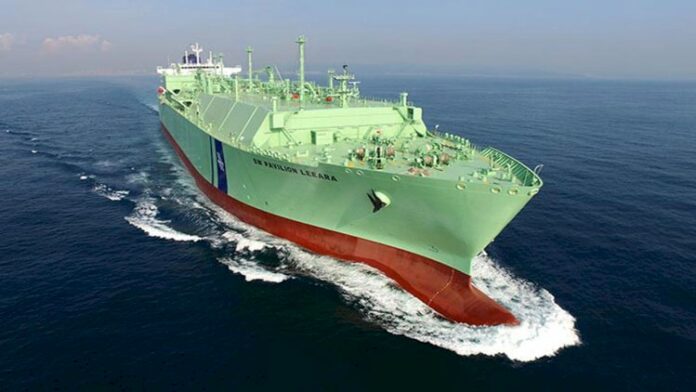
KVH Industries has announced that BW Group, one of the world’s leading maritime groups in the tanker, gas, and offshore segments, has signed a new contract to continue KVH VSAT services for at least five years and is upgrading 102 vessels to utilize KVH’s mini-VSAT BroadbandSM HTS network for advanced satellite communications. BW Group first chose KVH in 2013 to provide satellite connectivity for a portion of its fleet and since that time has rolled out KVH VSAT systems on additional vessels. The vessel migration is expected to be completed by the third quarter of 2020.

BW’s procurement officer says:

“Migrating our vessels to KVH’s advanced HTS network enables us to optimize our operational efficiency with fast, reliable connectivity from a trusted partner. We originally chose KVH because of their commitment to excellence and the ease of working with a sole provider, and we continue to value that relationship.”

With more than 80 years’ experience in maritime energy transportation, BW operates a large fleet that includes product tankers, LPG and LNG carriers, and offshore floating production vessels.

Ken Loke, KVH’s vice president for Asia-Pacific, says:

“It is an honor for KVH to continue working with BW Group, a company whose commitment to quality vessels, operational efficiency, and crew welfare is well known throughout the maritime industry. It is particularly gratifying that based on the performance of our legacy network, BW is now migrating to our newest HTS network. We value the strong working relationship that has developed between our companies during the past years and look forward to the continuation of that relationship for years to come.”

Under the newly signed contract, BW will equip the majority of the 102 vessels with KVH’s TracPhone V11-HTS, a 1 meter Ku/C-band maritime VSAT antenna introduced earlier this year and designed to deliver worldwide data speeds as fast as 20 Mbps down/3 Mbps up. The TracPhone HTS-series system is designed for KVH’s mini-VSAT Broadband HTS network, which utilizes Intelsat’s FlexMaritime service to deliver multi-layered coverage, enabling vessels to see multiple HTS and wide beam satellites for maximum availability of broadband service; the KVH network also utilizes additional capacity from SKY Perfect JSAT.

BW’s senior manager for business solutions says:

“Our vessels travel the world so working with a global provider such as KVH is extremely important to our operations. We value the global coverage of the KVH network and the excellent support we receive from KVH’s worldwide technical services team to ensure that our fleet has the connectivity we need to stay competitive.”