-2.8 C
New York
Home Blog Page 938

Triton Knoll wind farm poised for offshore construction

0

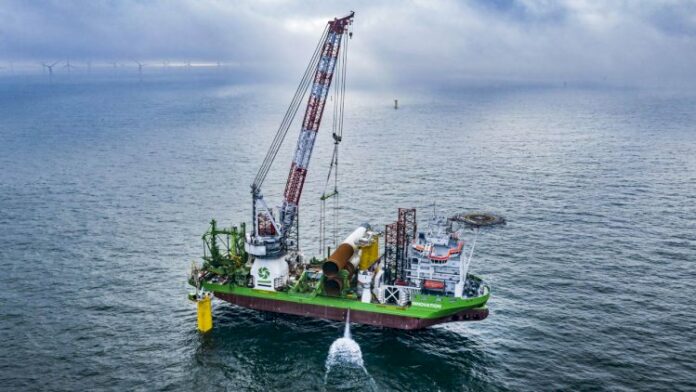
During 2020, the project team will aim to install 90 bespoke monopile foundations and transition pieces, along with two high-tech offshore substation platforms (OSPs) and their foundations, as well as over 600 kilometres of sub-sea export and array cables.

The vessel fleet that will carry out the installation has already begun to mobilise and will look to install the first foundations as soon as the weather conditions are favourable.

Julian Garnsey, project director for Triton Knoll and innogy, said:

“We are looking forward to a busy year installing Triton Knoll’s innovative foundations and offshore substation platforms, further demonstrating innogy’s continued commitment towards ever more sustainable electricity generation for consumers.”

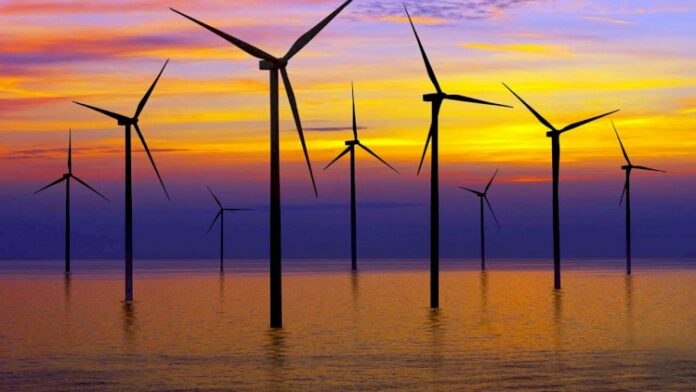
Triton Knoll Offshore Wind Farm is a state-of-the-art 857MW  offshore wind farm, located over 32 kilometres off the Lincolnshire coast, with a turbine array that covers an area of 145 square kilometres, bigger than the City of Manchester.

A fleet of vessels, many operating out of Grimsby’s Royal Dock, will support the construction of the wind farm. The offshore fleet will be dominated during 2020 by the 183 metre long installation vessel Seaway Strashnov, as well as the high-tech Service Operation Vessel (SOV) ‘Esvagt Froude’.

Within the month, the 83 metre long SOV will first visit Triton Knoll’s newly constructed Grimsby port facilities, where all offshore construction activity and longer-term operations and maintenance will be coordinated. The SOV supports the project’s specialist construction team and will regularly enter the port to change crews and re-stock supplies.

East coast and UK firms like Specialist Marine Consultancy (SMC), Seacat, Hull’s Precision Marine Survey Ltd and Carlbom Shipping Ltd, will also play key roles in supporting the offshore activities in 2020.

Construction of a multi-million pound turbine pre-assembly base at Teesside’s Able Seaton Port will get underway in the new year, equipping the port for the first time to be able to host the assembly and installation of turbines, with first components due to arrive the later this year.

Onshore, significant progress was made during 2019 to construct the project’s onshore electrical system, which consists of a 57km underground onshore export cable, a new landfall connection and purpose-built Triton Knoll Onshore Substation. Construction is due to finish in 2020 and will ensure the project is all set to transmit power, via the Offshore Substation Platforms which were mechanically completed in 2019, into the national grid network and ultimately over 800,000 UK homes.

In 2021, the focus of construction will shift to the installation and energisation of the powerful 9.5MW turbines, with Triton Knoll anticipating the first electricity to flow from the wind farm into the UK National Grid later that year.
One dead on board of FPSO in transit on Vanguard

0

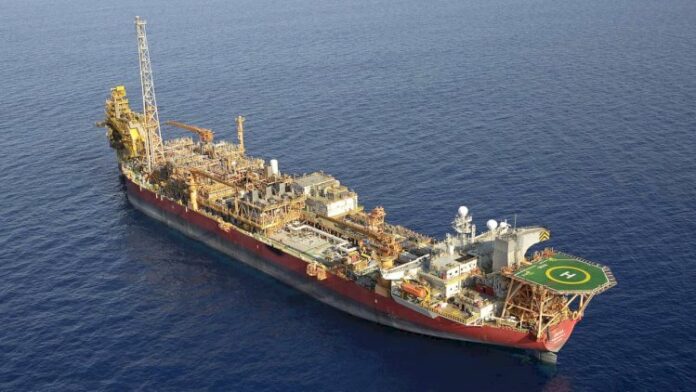
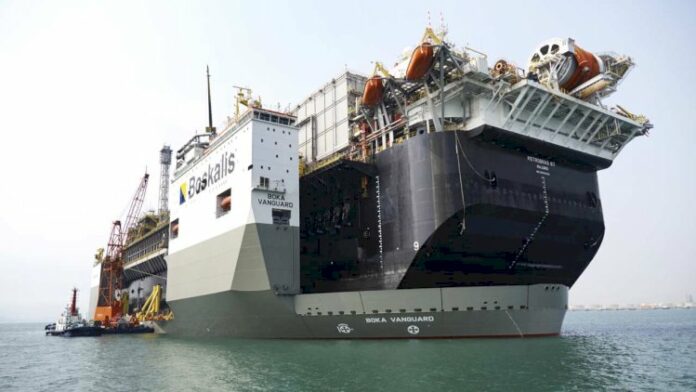
Earlier this week, an incident occurred on board of the FPSO which is currently being transported by the Vanguard from China to Brazil. 

During the journey a contractor, designated by the yard, is conducting preservation works on board of the FPSO. These works are part of the pre-delivery activities by the yard before the FPSO is delivered to the operator in Brazil later this month. Six persons employed by the designated contractor, all with the Brazilian nationality, illegally consumed a cleaning liquid found on board of the FPSO.

This liquid is a substance customarily used for degreasing purposes, presumably containing a mixture of ethanol and the severely toxic methanol. The affected persons reported this to our crew approximately 36 hours after consumption at which point serious signs of illness were becoming apparent. Swift and immediate action was taken by our crew. The Vanguard changed course towards the coast of South Africa and a medical evacuation by helicopter was organized.
Regrettably one of the affected individuals passed away before the medical assistance was on site. The remaining five persons were successfully evacuated, hospitalized in Durban, South Africa and are successfully recovering from the intoxication.

Boskalis expresses its deepest condolences to the family and loved ones of the deceased person.

Boskalis would like to stress that it has a strict zero tolerance policy with regard to alcohol on its offshore vessels. The FPSO and Vanguard have recently resumed their journey to Brazil.

Ulstein designed next X-BOW cruise vessel for Aurora Expeditions

0

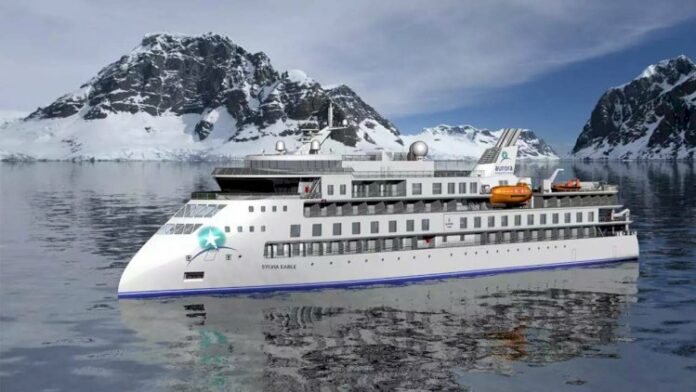
The operator Aurora Expeditions’ next X-BOW® expedition cruise ship will be named ‘Sylvia Earle’, to honour the renowned marine biologist, oceanographer and explorer. The ship is one of the vessels in owner, SunStone Ships’, INFINITY class. Constructed at CMHI, they have been designed by Ulstein Design & Solutions AS.

Sylvia Earle is ‘an accomplished marine biologist, oceanographer, conservationist and explorer; the first woman to become chief scientist of the U.S. National Oceanic and Atmospheric Administration and named by Time Magazine as its first Hero for the Planet in 1998. The vessel pays tribute to Sylvia’s long-standing conservation efforts for marine protected areas and ocean wildlife,’ states the cruise operator.

The ‘Sylvia Earle’ has been designed by Ulstein Design & Solutions AS and is one of the potentially ten vessels in SunStone Ships’ INFINITY class. The first delivery in this series, the ‘Greg Mortimer’, is also operated by Aurora Expeditions. The ULSTEIN X-BOW® hull shape has been proven in offshore vessels for more than a decade and on more than one hundred ships, however, the ‘Greg Mortimer’ was first in the cruise industry. The vessel’s naming ceremony and maiden journey in October 2019 therefore roused much attention world-wide.

Quoting Aurora Expeditions:

‘The 126-passenger ship will be the second in the fleet to sail with the patented X-BOW®, whose inverted bow design, in combination with dynamic stabilisers, offers unrivalled stability and comfort on ocean crossings. The X-BOW® cuts through the swell, minimising vibrations and disturbances, and makes quicker transits through waves. This helps reduce fuel consumption.

As well as improving comfort at sea the inverted X-BOW® offers an enhanced viewing experience by bringing passengers much closer to the immediate environment than that which can be achieved on ships with a traditional, bulbous shaped bow. The X-BOW® on the ‘Sylvia Earle’ will feature a unique two-level glass atrium lounge in the bow, offering extraordinary views to the front to the ship. In Polar regions this means that passengers will be able to appreciate the majesty of an iceberg immediately as it appears on the horizon.

With the revolutionary X-BOW® technology to cross oceans more comfortably, expansive observation decks to bring you closer to the environment, inviting communal areas and unsurpassed environmental credentials, Aurora Expeditions’ ships offer the perfect base camp for adventures at the outer limits of human exploration.’

Ulstein has delivered the ship design, equipment packages and site follow-up. The series of vessels are being constructed at the CMHI yard, China, and the ‘Sylvia Earle’ is scheduled for delivery in 2021.

Senegal approves Sangomar field development exploitation plan

0

The Government of Senegal has approved the Rufisque Offshore, Sangomar Offshore and Sangomar Deep Offshore (RSSD) joint venture Exploitation Plan and granted the Exploitation Authorisation for the Sangomar Field Development.

Commencement of the execute phase of the Sangomar Field Development Phase 1 (Sangomar Development) is subject to final execution of the Host Government Agreement with the Government of Senegal and the approval and award of key contracts.

The Sangomar Development concept is a stand-alone floating production storage and offloading (FPSO) facility with 23 subsea wells and supporting subsea infrastructure. The FPSO, expected to have a production capacity of 100,000 bbl/day, will process the oil before it is exported to market via tankers. First oil is targeted in early 2023.

The FPSO will allow for the integration of potential future development phases, including gas export to shore and future subsea tie-backs.

The RSSD joint venture comprises Woodside Energy (Senegal) B.V., Capricorn Senegal Limited (a subsidiary of Cairn Energy PLC), FAR Ltd and Petrosen (the Senegal National Oil Company).
 

Finnlines ordered two environmentally friendly ro-pax vessels

0

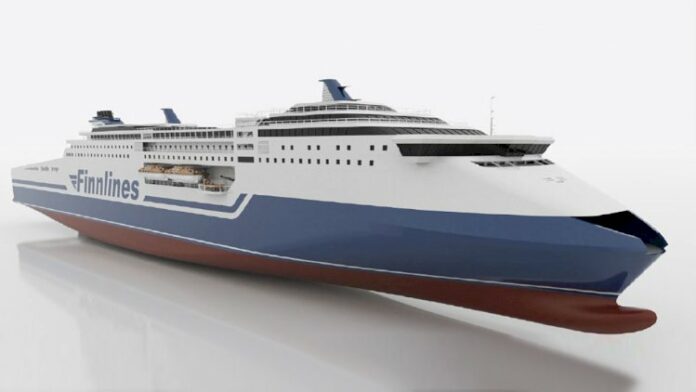
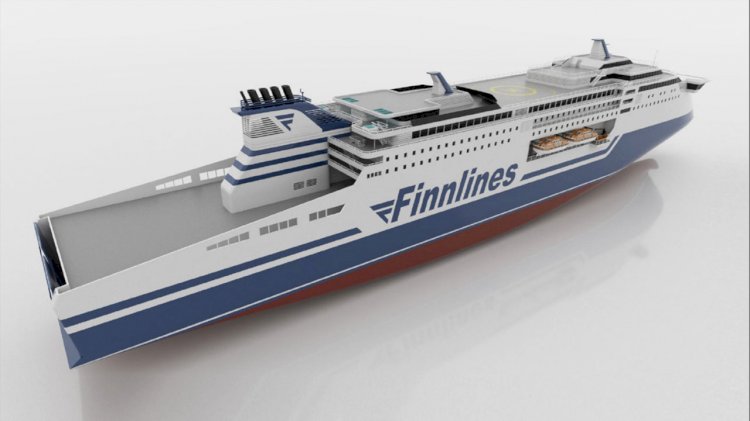
Finnlines invests in the highest passenger comfort – two environmentally friendly Superstar 5,100 lm ro-pax vessels ordered

After the order of three hybrid sto/ro ultra large green vessels at Jinling Shipyard back in 2018, Finnlines is pleased to announce that it has recently signed an order for two ro-pax vessels from China Merchants Jinling Shipyard (Weihai), previously known as AVIC Weihai. Today, both shipyards are part of China Merchants Group.

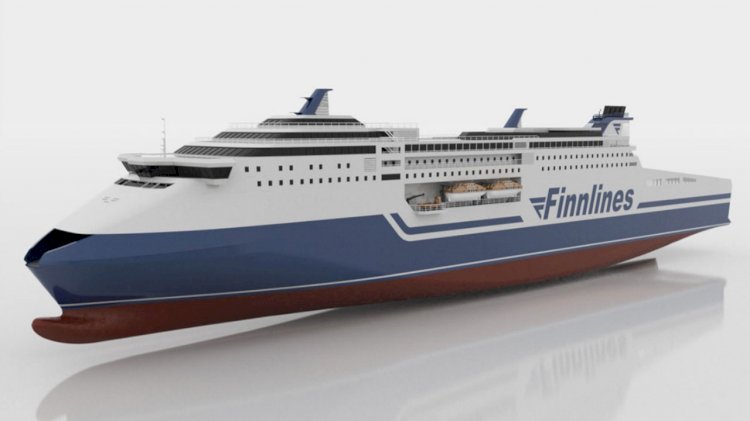
Called the Superstar ro-pax vessels, they are expected to be delivered by 2023. They will be larger than the existing Star class vessels and will be Finnlines’ flagships both in terms of size and technology. With a length of about 230 metres, their loading capacity will be for 5,100 lane metres for rolling freight and around 1,100 passengers.

The vessels will have the highest Finnish / Swedish ice class and will be built with the top technical and environmental views in mind, while being pioneers in honouring green values.

The renewed concept combines the best of both cargo and passenger vessels. The Superstar ro-pax vessel is designed to have many types of seating and public areas, plenty of outdoor areas to admire the Archipelago scenery and adequate premises to serve different kinds of groups. Heart of the vessel will be the shopping area to enhance onboard travel experience.

The Superstar vessel is also designed with the focus on fast and efficient cargo handling to guarantee Finnlines’ customers a short turnaround time.

The next generation Superstar ro-pax vessels will bring significant improvement in Finnlines fleet’s passenger comfort and will provide a brand-new customer experience. The customer experience will be taken to a new level through digital services – from check-in to onboard services and feedback collection.

Emanuele Grimaldi, CEO of Finnlines, says:

“We want to provide a high-quality service to our customers respecting all aspects of the environmental matters. This investment aims at energy efficiency and emission reduction, but at the same time, it is an investment for the highest passenger comfort. We want to lead the development of high-quality ro-ro and ro-pax services in the Baltic Sea region. Our ongoing EUR 500 million newbuilding programme will ensure that we continue to provide premium services to our customers.”

Port of Tallinn new cruise terminal will be built by YIT

0

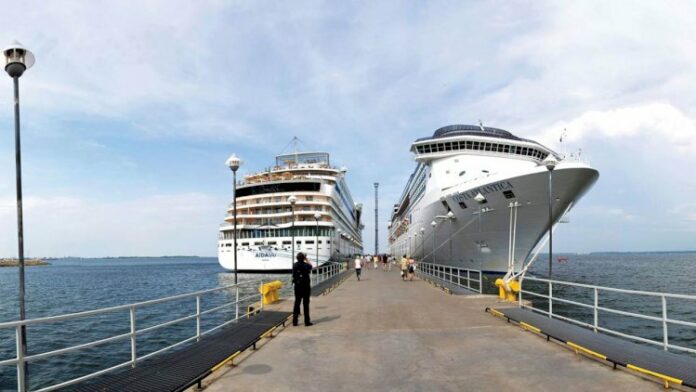
Port of Tallinn has signed an agreement with YIT Eesti AS for the construction of new cruise terminal in Tallinn Old City Harbour. The value of the contract is EUR 13.7 million. New cruise terminal will be completed in July 2021.

The contract includes a 3-storey terminal building with a net area around 4000 m2, pedestrian promenade area at the pier, children’s playground and parking spaces.

The multifunctional and environmentally friendly cruise terminal will be built in the Old City Harbor in the immediate vicinity of existing cruise quays. Both the interior and exterior architecture have focused on the best environmental performance of materials and equipment. The building will be heated by sea heating and energy will also be drawn from solar panels. Outside the cruise season, the building, which can accommodate up to 2,000 people, is used for events, concerts or conferences. The cruise season in Tallinn lasts from the end of April to October. In 2019, 338 cruise ships and 656 thousand cruise passengers visited Tallinn Old City Harbour.

The technical design of the terminal building is based on a study that explored how to implement energy efficient, ecological and sustainable solutions in the new building that would suit the Nordic climate and would allow the building to be operated outside the cruise season. The study was supported by the European Union funding for the Green Cruise Port project implemented under the Interreg Baltic Sea Program.


New app optimises remote support and intervention for critical bridge equipment

0

Pro-active support and maintenance increase first-time fix rates and improve operational efficiency for Telemar customers

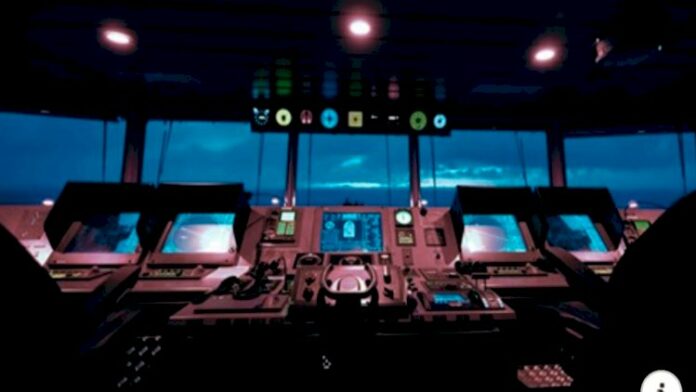
Telemar, the Marlink Group company dedicated to Bridge Electronics, on-board services and maintenance, has significantly enhanced its remote support capabilities within the recently launched BridgeLink solution. Telemar engineers will use the BridgeLink Smart Maintenance Application to provide pro-active support to reduce potential down-time and increase efficiency of Bridge Electronics hardware as well as associated software maintenance and repair.

Designed jointly within the Marlink Group, a core aspect of BridgeLink is the interconnection of equipment on board within a standardised data structure. By expanding the scope of equipment remotely accessible via the BridgeLink Smart Maintenance App, Telemar can perform more repairs remotely and increase first-time fixes for a more efficient service when its field engineers visit customer vessels.

The new Smart Maintenance App delivers value across all aspects of service and support. As well as creating a benefit for shipowners by streamlining troubleshooting wherever they operate, Telemar can use the data collected to optimise asset lifecycles and deliver further efficiencies. The BridgeLink Smart Maintenance App will also be used for performance analysis and to collect data for site surveys, helping to further reduce the engineering time required for firmware/software installations and upgrades.

Leveraging remote support technology, Marlink and Telemar are also contributing to reduce time, travel and ultimately also the carbon footprint for shipping companies. The Telemar Smart Maintenance team consists of certified and trained Field Service Engineers able to start in depth investigations to problems with GMDSS equipment, radar and ECDIS, satellite communications systems, Voyage Data Recorders and the majority of communications systems and navigational aids, quickly and from shore.

The BridgeLink Smart Maintenance App implements powerful network security features and all nominated bridge technology on board is connected on a dedicated and secured Local Area Network.

New recommendations for enhanced battery safety on vessels

0

In collaboration with the Norwegian, Danish and US maritime authorities, battery manufacturers, system integrators, suppliers of fire extinguishing systems, shipyards and shipowners, DNV GL has released a new report on battery safety in ships.

The report assesses explosion and fire risks in maritime battery installations and the effectiveness of fire extinguishing systems in the event of a battery fire.

Lars Alvestad, Acting Director of the Norwegian Maritime Authority, says:

“Batteries onboard ships are both environmentally friendly and cost-effective solutions that we wish to see more of in the future. This project has been important in learning the risks of these systems and using the new insight to improve safety requirements.”

A battery fire can produce very hot fires, as well as the risk of explosion due to gases produced by the battery. DNV GL’s new report presents the results of research on what happens during a fire in a battery compartment, the release of gases, and the usefulness of various extinguishing systems in combatting the fire and preventing explosions. One of the most important findings concerns ventilation systems, which are critical to avoiding an accumulation of explosive gas. The report concludes that ventilation alone will not adequately mitigate gas accumulation if a significant portion of the battery system ignites.

Henrik Helgesen, Project Manager for the research project and Senior Consultant at DNV GL, says:

"In addition to fire suppression and ventilation, the battery design must have preventative safety barriers so that the fire and gas emissions are limited to as small a part of the battery system as possible."

The report provides new recommendations on ventilation systems, based on a newly created model which identifies the appropriate size and type of ventilation system based on a vessel’s battery installation. Early fire and gas detection are also essential, meaning that the gas sensor should be located as close to the battery as possible.

Launched in 2017, the research project draws on the experience of a wide range of maritime stakeholders. Denis Cederholm-Larsen, Senior Ship Surveyor at the Danish Maritime Authority, says:

“It is very important for us to work closely with all parts of the industry and understand the full picture as we work to promote safety in our regulatory development work.”

The following partners have contributed to the research:

  • The Norwegian Maritime Authority
  • The Danish Maritime Authority
  • The United States Maritime Administration (MARAD)
  • Norwegian Defence Research Establishment (FFI)
  • Corvus Energy, supplier of maritime battery systems
  • FIFI4MARINE, supplier of Lithium-ion fire extinguishing systems
  • Nexceris, developer of technology for battery gas sensors
  • Kongsberg Maritime (former Rolls Royce Marine AS), supplier of propulsion technology
  • ABB, supplier of propulsion technology
  • Stena, ship owner and ferry operator
  • Scandlines, ship owner and ferry operator
  • arioff, supplier of fire extinguishing systems
  • Leclanché, supplier of battery systems
  • Super-B, supplier of battery systems
  • Damen, ship yard
  • DNV GL

Maersk Tankers to reduce CO2 emissions with a new software product

0

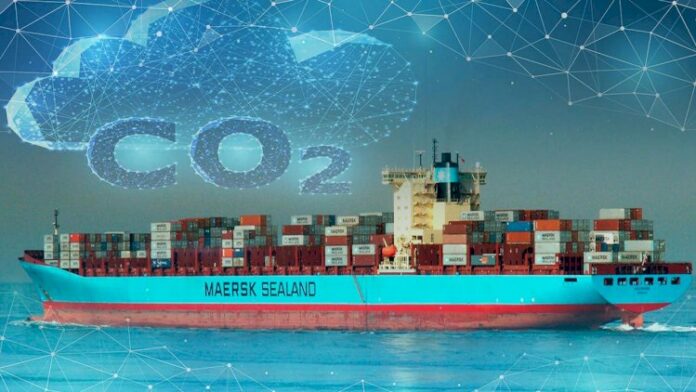
In an acceleration of its digital strategy, Maersk Tankers is launching a new standalone digital business to reduce CO2 emissions and optimise vessels’ earnings across the tramp shipping industry.

The as-yet-unnamed business will develop and sell the software product SimBunker to vessel owners and managers in the tramp shipping industry to help them use their vessels more efficiently. This will reduce CO2 emissions, supporting the shipping industry’s ongoing efforts towards more sustainable development, and increase earnings.

SimBunker optimises vessels’ bunker spend, which can account for up to 60% of the total voyage costs, by determining optimal solutions for factors such as speed, bunker purchase and route. The software product was developed within Maersk Tankers and will now be spun off into the new digital business, along with its related customer base.

Since 2016, Maersk Tankers has worked strategically to increase the use of digitisation, developing digital capabilities and products in-house, enhancing the customer and partner experience and forming strategic digital partnerships and alliances. The spin-off is a direct consequence of and testament to the tangible results achieved over the past years.

Christian M. Ingerslev, Chief Executive Officer of Maersk Tankers, says:

“Through significant and strategic investment, we have established Maersk Tankers as the digital frontrunner in the tanker industry. Digitisation will enhance customer and partner experience, transform our business and contribute to a more efficient operation, benefitting both sustainability and profitability. This becomes increasingly important at a time when the shipping industry must adapt to take its share in solving complex challenges posed by climate change and new regulatory requirements. With the new set-up, we will be able to accelerate our digital strategy.”

When SimBunker is spun off, it will be the sole focus of a dedicated team and management to develop the software product. The team will be built around employees from the existing Maersk Tankers Digital team, as well as new employees to be hired. It will be led by Soren C. Meyer, who is currently Chief Asset Officer of Maersk Tankers. As Chief Executive Officer of the new business, he will, until further notice, report to Ingerslev.

Meyer says:

“The shipping industry has an enormous potential for digitisation, especially in commercial and technical areas. As a standalone business, we will be able to accelerate this development. We will be working with players across the industry to optimise pool partners’ bunker spend, using large data sets and analytics. We are confident that such collaboration and digital measures are instrumental in putting the industry on a path to greener growth. I am truly excited about the ambition of the new business and the task ahead.” 

When Meyer takes on the Chief Executive Officer role, effective 7 January 2020, he will leave his position at Maersk Tankers and the Leadership Team.

Maersk Tankers will retain a digital team in-house to develop existing products and bring new digital ideas alive that can serve partners and customers in smarter ways. Peter Schroder, Chief Digital Officer, will continue to lead this and the digital transformation of Maersk Tankers, which is a core component of the tanker company’s business strategy ‘Shaping the Future’. Owing to the strategic importance of this work, he will now report directly to Ingerslev.

Schroder and his team, among other initiatives, will be working in close partnership with CargoMetrics Technologies, with which Maersk Tankers entered an equity agreement in 2017. The partnership has since then worked on the development of SimTanker, a software product that provides a data-driven trade signal to proactively position the fleet of vessels in the most optimal way, meeting both customer demand and increasing earnings. The in-house digital team will also work to digitise more of the pool partners’ ‘customer journeys’ with Maersk Tankers through the online partner portal, ‘InSite digital’.

Schroder says:

“We are today leading one of the most exciting transformations in the industry. We will retain and continue investing in digital competencies and expertise within Maersk Tankers. With this, we will further strengthen the company’s competitive advantage and differentiation in the industry. This entails maturing existing digital products and incubating new ideas. The priority will be given to products that lower CO2 emissions, increase earnings for partners and make it easier for them to do business with us, as well as to products that increase our ability to meet customer demand by having vessels in the right position at the right time.”

The new standalone digital business launches on 7 January 2020.

Foundation installation completed at Belgium’s largest offshore wind farm

0

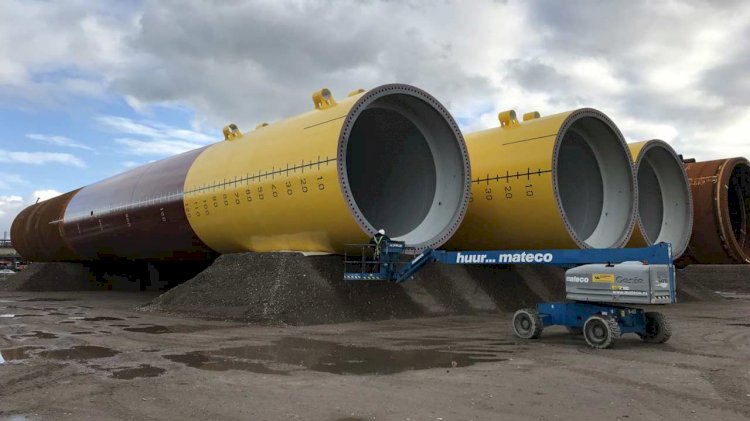
DEME has successfully completed the installation of 58 monopile foundations and two offshore substation foundations at the SeaMade offshore wind farm in the Belgian North Sea.

The last monopile foundation landed on the seabed on January 2. With a 487 MW capacity SeaMade is the largest offshore wind farm in Belgium.

Installation works kicked off in September 2019 with DEME’s offshore installation vessel ‘Innovation’. Turbine installation will start in spring 2020 with offshore installation vessel ‘Apollo’ and with the port of Ostend as load-out port for the Siemens Gamesa Renewable Energy 8,4 MW turbines. DEME will also install all inter-array cables with cable lay vessel ‘Living Stone’ after successfully having installed the export cable.

During foundation installation a new monopile gripper, mounted on offshore installation vessel ‘Innovation’, has been deployed. This new pile gripper excels in safety, versatility and piling accuracy, enabling ‘Innovation’ to install monopile foundations all year round. Furthermore, for ‘Innovation’s’ next project a noise mitigation system will be integrated for minimising subsea noise during installation activities.

Bart De Poorter, General Manager DEME Offshore, says:

“This is a major milestone in the construction of Belgium’s largest wind farm. SeaMade is a significant step in the country’s energy transition. Thanks to the expertise of the teams involved we safely and efficiently completed this project phase. This was also the first successful installation project with the new innovative pile gripper. We now prepare for a successful inter-array cable and turbine installation campaign.” 

Mathias Verkest, CEO at SeaMade, says:

“We are very proud to announce this great achievement, which could only happen by joining forces between an enthusiastic SeaMade team and very dedicated contractors, all committed to reaching this challenging target within the set timeframe. Another important step for reaching the 2020 climate goal.“

Before the end of 2020, SeaMade will provide renewable energy to 485,000 households in Belgium.