-3.6 C
New York
Home Blog Page 927

rise-x.io partners with Ascenz to optimise marine fuel spend

0

rise-x.io has announced a new partnership with Ascenz, a provider of premium, end-to-end solutions for the maritime industry and part of the global GTT group.

This partnership combines the Bunker Monitoring capabilities and services of Ascenz with rise-x.io’s QuayChain platform to automate the marine fuel supply chain to help customers in the sector to optimise their fuel spend and increase vessel profitability. 

Rowan Fenn, Co-founder and CEO at QuayChain, said:

“QuayChain exploits advanced analytics, artificial intelligence, IoT, and blockchain technology to optimises a vessels’ bunker spend and make it easier for ecosystem participants to do business together. Together with Ascenz, we have the capability to offer customers in the marine industry a comprehensive fuel management solution as a service including hardware, software, data and actionable insight.”  

Julien Glory, CEO of Ascenz, said:

“We are excited to include rise-x.io and QuayChain in our Premium Partnership Program. We anticipate the demand for these types of digital solutions to continue to increase as the industry grapples with rising costs and increasing supply chain complexity in the wake of MARPOL 2020.”

Fenn adds:

“The shipping industry has enormous potential for digitalisation, especially in the integration and optimisation of commercial and operations processes. We look forward to working with Ascenz to drive the industry forward faster.”
 

Valeport to help Tor Bay’s underwater rainforest

0

Valeport has pledged its support to a campaign to protect the vital ‘underwater rainforest’ which is under threat off Tor Bay, on the SW coast of the UK.  

To mark the hydrographic and oceanographic instrument manufacturer’s 50th anniversary, it will partner with a UK coastal zoo and aquarium to help protect seagrass, a remarkable plant that flowers underwater and forms dense meadows in shallow coastal areas. These meadows capture carbon at a greater rate than tropical forests, making them important in combating climate change.   Like coral reefs and rainforests, these underwater gardens are full of life. And like those better-known habitats, they are under threat, with global estimates suggesting the planet loses an area of seagrass the same size as two football pitches every hour.

Valeport will be supporting the Living Coasts research project #SaveOurSeagrass helping to secure the project’s future for the next two years as well as providing instruments and expertise to the programme. The research project aims to protect the seagrass meadows in Tor Bay which is a vital nursery bed for young fish and also home to key species such as the short-snouted seahorse.  These meadows are threatened by pollution and and by indiscriminate anchoring, which can unknowingly rip plants from the seabed. Living Coasts is using the research to begin trialling seagrass cultivation with the aim of helping to replenish the threatened species and contributing to increased marine biodiversity.

Living Coasts Curator Clare Rugg said:

“This is going to be a tremendous collaboration. Valeport’s support will allow us to continue our scientific research, aided by local volunteer divers who collect data on the seagrass. Living Coasts is testing ways to propagate seagrass, and we look forward to Valeport supporting our research with their instruments and expertise.”

Guy Frankland from Valeport added:

“This new partnership is marking Valeport’s 50th anniversary, but it’s a natural fit for us a designer and manufacturer of high-quality oceanographic and hydrographic instrumentation to join forces with a coastal conservation charity. We are delighted to support the important SaveOurSeagrass project and help save and protect a local habitat with international significance.”

Valeport’s collaboration with Living Coasts also includes opportunities for Valeport’s staff to get involved with activities from volunteer dives to beach cleans and it will be an important CSR focus for Valeport who has supplied the subsea sector for the last five decades.

ABS awarded $2.1 million for safety research in the offshore oil and gas industry

0

ABS has been awarded more than $2.1 million for two projects focused on strengthening safety culture in the offshore oil and gas industry.

The money from the Gulf Research Program (GRP) of the National Academies of Sciences, Engineering, and Medicine is part of $7.25 Million awarded to eight projects aimed at advancing safety offshore.

Matt Tremblay, ABS Senior Vice President for Global Offshore, said:

“ABS is a safety leader in the marine and offshore industries. As part of our mission to promote the security of life and property and preserve the natural environment, we are continuously working to push the frontiers of safety and so we are delighted that GRP has chosen to support these exciting projects.”

A project to develop an integrated offshore energy industry safety culture evaluation, benchmarking and improvement toolbox led by Dr. Kevin McSweeney, ABS Manager of Advanced Technology & Research, in cooperation with Lamar University and the University of Houston, received $1,440,330.

A second project providing recommendations for data science technologies to aggregate essential exposure data and enable analysis of safety incident rates around the world led by Dr. Xiaozhi (Christina) Wang, ABS Vice President of Digital Solutions, in cooperation with Safetec, received $739,992.

The GRP’s competitive Safer Offshore Energy Systems Grants program supports projects that produce datasets, strategies, and tools for measurement that will promote a culture of safety in the oil and gas industry.

Kelly Oskvig, senior program officer for the Gulf Research Program’s SOES initiatives, said:

“A culture of safety has nine characteristics. Through this grants competition, we hope to provide the tools to help strengthen some of those characteristics as well as answering a few critical questions – what best practices can oil and gas adapt from other high-risk industries? How can an organization measure improvements of its safety culture? How can data be used to better understand the dangers?”

Solstad Offshore renews and expands fleet contract with Marlink

0

Managed connectivity solution features custom self-service portal for control over individual vessel connectivity

Solstad Offshore, a leading provider of specialised offshore tonnage to the international oil and gas industry, has renewed its connectivity contract with Marlink, committing 65 offshore vessels to Sealink, Marlink’s high-throughput Ku-band VSAT service. Solstad’s vessels will be provided with Sealink Services and L-band backup to ensure seamless global connectivity.

To meet the diverse demands of its OSV fleet, Solstad sought a highly flexible, customised and future-proof service. Building on more than 10 years’ partnership, Marlink cooperates closely with Solstad Offshore to meet their operational and ICT (Information Communications Technology) requirements.

A tailor-made setup consisting of five diverse packages will allow Solstad to choose the hardware fitted to each vessel, ranging from basic 4G connectivity to a fully managed, high-throughput single or dual antenna VSAT system.

Christian Nesheim, ICT Director, Solstad Offshore, said:

“Reliable links with shore are vital in today’s industry to ensure operational efficiency and vessel safety, as well as improving quality of life for vessel crews by keeping them in touch with families ashore. Many of our clients work in the highly demanding oil and energy sector, and by providing them with outstanding connectivity Solstad will continue to deliver value at every level.”

Marlink’s services for Solstad Offshore are made flexible through use of an innovative Self-Service portal, on board and on shore. Without needing to pick up the phone, users will be able up- or down-grade their bandwidth allocation, activate or deactivate services such as content filters, and change their coverage area. This adaptability will allow Solstad Offshore more control, for example by increasing the bandwidth for a vessel in alignment with current on-board requirements.

To avoid unauthorised use of the portal, user accounts will be allocated with various access rights. Support tickets, changes and invoices will also be handled via a customer portal, specifically designed to meet Solstad Offshore’ needs, and providing transparency for both users and managers.

Tore Morten Olsen, President Maritime, Marlink said:

“Marlink has worked together with Solstad Offshore to produce a service offering which we believe to be unmatched in the industry. By enabling our customers to configure their connectivity to their exact requirements, we increase the value and service experience for our customer.”

Neptune Energy aims to find hydrocarbons 70 per cent faster with digital technology

0

Neptune Energy has announced plans for a digital subsurface programme with the aim of discovering hydrocarbons 70 per cent faster, reduce exploration costs and bring discoveries into production up to three years earlier than current industry standards permit.

The ambitious programme was unveiled at DigEx 2020 in Oslo, Norway, where the company discussed how it is making use of ground-breaking digital technologies including the latest cloud infrastructure to reduce the time from “idea to discovery”.

Neptune is working with a range of partners and vendors to develop new tools to scan and interpret vast quantities of seismic data, significantly reducing the time spent by geoscientists on administrative work and preparation, and providing them with data-informed insights they can use to identify hydrocarbons more efficiently and with more certainty, reducing the likelihood of drilling a dry well.

The company is also progressing a proof of concept project, testing new digital workstations provided by Cegal, a global provider of hybrid cloud solutions. The workstations would be hosted on Microsoft Azure’s cloud infrastructure and would make use of technology from Bluware which enables artificial intelligence and machine learning to interpret huge volumes of data.

This would create a global data hub and a platform for Neptune’s teams around the world to collaborate and access, share and analyse vast quantities of geological data, enabling them to pool their resources and experience.

Neptune’s VP Exploration & Development, Gro Haatvedt, said:

“Exploration and drilling is an important part of our strategy to grow our business in key geographies, yet it is expensive and time-consuming. Vast amounts of data, often stuck in multiple silos around the world, must be reviewed and interpreted before a single well can be drilled. At the same time, we employ incredibly intelligent geoscientists and exploration teams who have to spend much of their time on administrative work. Our digital subsurface approach will provide tools and platforms for our teams to access data quickly, allowing them to focus their time on delivering insights and results.”

Neptune’s Chief Information Officer, Kaveh Pourteymour, added: “Our goal is to make use of digital technologies to find and produce oil and gas faster, with more certainty and safely. If we can provide better intelligence and insights on where hydrocarbons reside, we can accelerate their discovery and production and reduce the cost of exploration. We aim to be an employer of choice and we believe we are providing an exciting, dynamic environment for geoscientists and exploration experts to make best use of their skills and experience.”

GeoCloud workstations are already in use by Neptune’s teams today. The results of the proof of concept will help inform the next steps of the company’s global cloud strategy.
 

Sea trials demonstrate new capability to manage AUVs

0

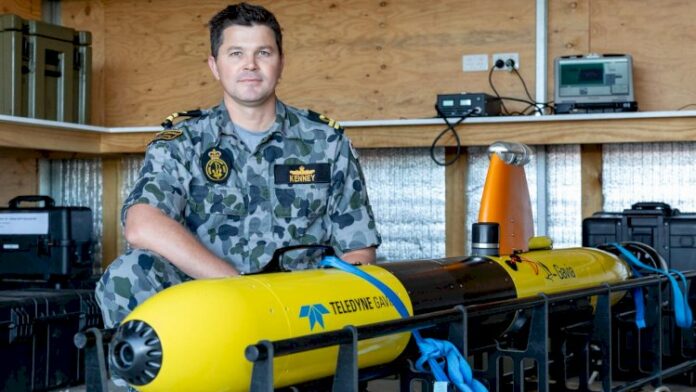
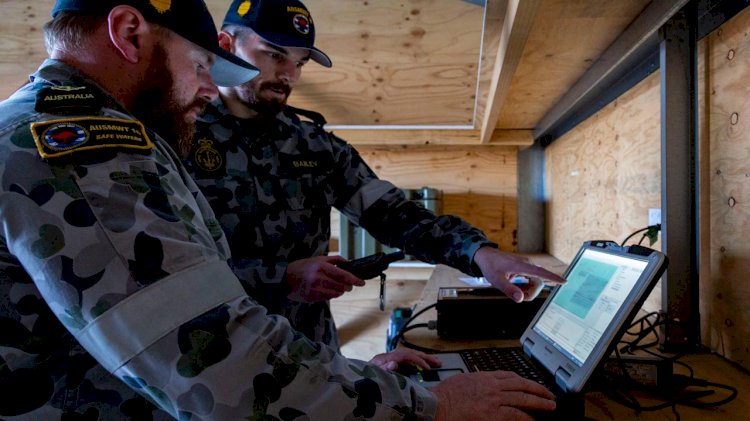
A week-long trial led by the Royal Australian Navy and the Defence Science and Technology Group has demonstrated new capability in the use of autonomous underwater vehicles.

Thirty-two autonomous underwater vehicle (AUV) experts from Navy, Defence Science and Technology (DST), industry and academia came together at HMAS Creswell, Jervis Bay in December 2019 for the inaugural ‘Summerfest’ event, to share knowledge and solutions to common challenges in the growing AUV environment.

The trials also gave Navy engineers an opportunity to mark the progress made in AUV applied research and operations throughout 2019. Lieutenant James Keane had the idea to organise Summerfest after attending a related event in Hobart, Tasmania, hosted by the Australian Maritime College (AMC), which was called Winterfest.

Lieutenant Keane said:

“Summerfest was very much focussed on users and developers of AUV behaviours, and the group was motivated to apply research and advance capability. Our aim was to see what progress had been made in our use of AUVs in the mine warfare and hydrographic communities, so that we have a benchmark for our work in 2020.” 

One of the key outcomes of the event was that it allowed the participants to trial the use of an unmanned service vessel (USV) on the water, that could act as a communications gateway for multiple AUVs.

Lieutenant Keane said:

“Using an unmanned service vessel in this way allowed the operators to remotely view the live status of the vehicle when it was on the surface and gave HQ the ability to reconfigure the vehicle or change its mission parameters in between dives. Next year we want to continue proving the capability of a surface vehicle to monitor AUVs and also to increase the interoperability between the USV and multiple AUVs.”

DST Group Research Scientist Dr Stuart Anstee praised the collaboration with industry partner Ocius Technologies, which supplied the USV under contract to DST Group and supported the activity during the trial.

Dr Anstee said:

“In summary, this activity showed the value of USV-AUV collaboration to a degree that was not expected, given the relatively minimal preparations that DST and Ocius were able to undertake prior to the trial. The USV was operated from MV Kimbla, but could have been operated from anywhere with a mobile 4G connection.”

Lieutenant Keane also said the week-long event at Creswell had allowed Navy to trial the technology in a higher sea state than they have previously operated.

Wärtsilä to supply world’s first hybrid powered self-discharging bulk carriers

0

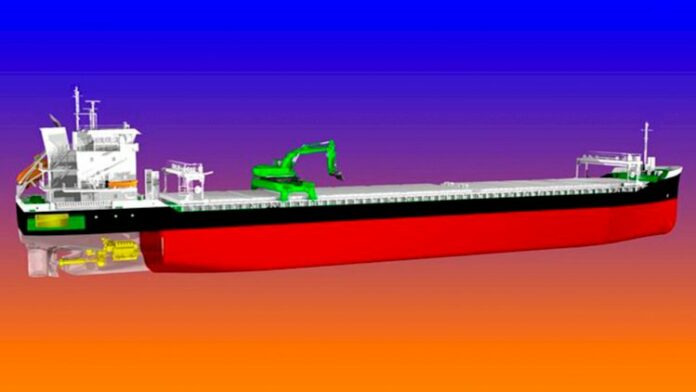
The technology group Wärtsilä has been selected to provide the complete system design and full equipment scope for two new 9300 DWT self-discharging bulk carriers featuring hybrid propulsion.

The ships will be the first of their kind to be fitted with a hybrid propulsion solution. They are being built for Norway’s Aasen Shipping at the Royal Bodewes shipyard in the Netherlands. The yard has also designed the vessels. The order with Wärtsilä was placed in December 2019.

Wärtsilä was contacted to determine whether a hybrid installation would be beneficial for these new ships. The company then carried out a detailed study in close cooperation with Aasen Shipping, taking into consideration a broad range of relevant factors. The study determined that the extra initial investment required for the battery installation would be more than offset by the high level of achievable fuel cost savings.

Harald Tillung, Business Development Manager, Wärtsilä Marine, says:

“Wärtsilä’s experience and strong track record with hybrid propulsion solutions form the background to this contract. As a complete hybrid system supplier, we have again custom designed a propulsion arrangement that delivers high efficiency, lower fuel consumption, and optimal environmental sustainability.”

Torbørn Torkelsen, CEO at Aasen Shipping, says:

“We approached Wärtsilä because of their capabilities in delivering hybrid propulsion systems. We appreciate their support throughout the planning and design processes, which has resulted in the best possible solution for these vessels.”

The full Wärtsilä scope for each ship includes a Wärtsilä 26 main engine with gearbox and controlled pitch propeller (CPP), a DC switchboard, a battery pack, and a power management system. The equipment is scheduled to be delivered to the yard commencing in mid-2021.

The vessels are bulk carriers fitted with excavators for loading and unloading. The excavators will be electrically powered using the battery pack, which will save fuel and be emissions-free since normally they would be diesel operated.

The investment cost for the hybrid installation is partly supported by Enova SF, the Norwegian government enterprise responsible for the promotion of environmentally-friendly production and consumption of energy.

Van Oord starts cooperation on Estonian offshore wind development

0

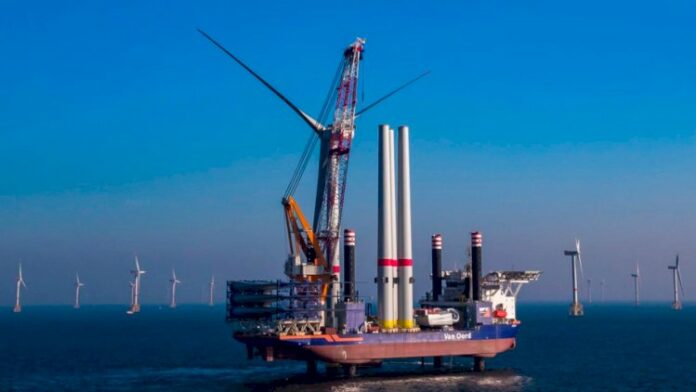
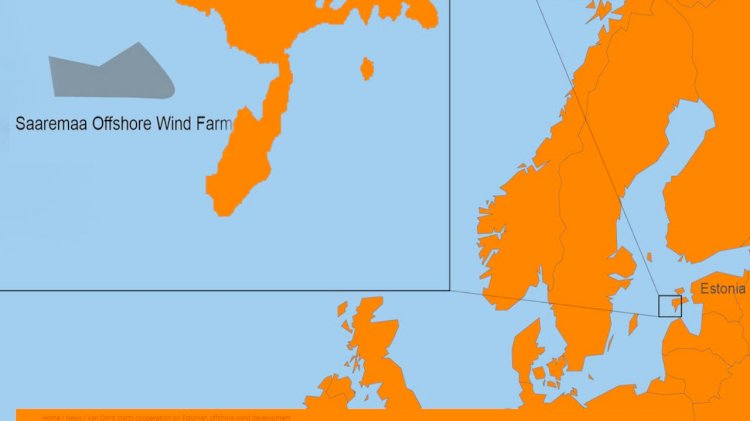
Van Oord and Saare Wind Energy have agreed to combine their forces and mutually develop the Saaremaa offshore wind farm. Saare Wind Energy is an Estonian developer involved in developing the offshore wind farm, covering 154 square kilometres, south-west of the Estonian island Saaremaa.

Saare Wind Energy started the development of the project in 2015 on basis of a thorough analysis and ample spatial planning experiences. The next phase in the development process includes the start of the Environmental Impact Assessment which will be initiated after receiving a positive decision from the Estonian authorities. Van Oord is an experienced offshore wind contractor from the Netherlands and, in addition to the construction of offshore wind farms, has been involved in several early developments. The parties are convinced that the combined knowledge base will facilitate a successful development of the project. The discussions that lead to the agreement were supported by the Estonian Investment Agency, which demonstrates the commitment of the Estonian authorities with respect to renewable developments.

The Saaremaa site offers an excellent opportunity for the construction of an offshore wind farm because of its location in the Baltic Sea in relation to the main wind direction. The offshore wind farm can act as a foothold for the development of an international Baltic Grid. The Saaremaa offshore wind farm is one of the parks under development in Estonia. Van Oord and Saare Wind Energy look forward to intensifying the cooperation with local and national Estonian stakeholders as this is a precondition for the upcoming permit process and the subsequent construction of the project.

Ulstein’s offshore wind vessel floated out

0

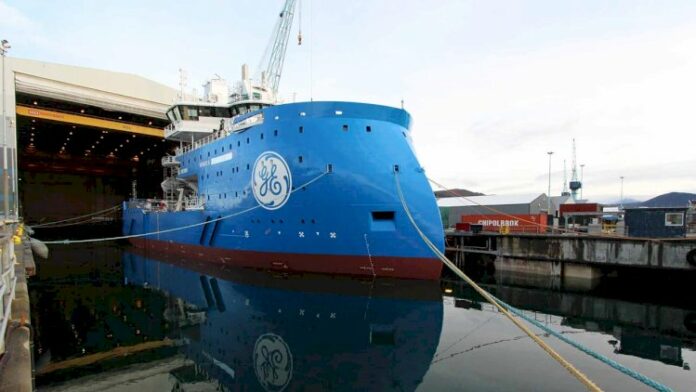
The next Service Operation Vessel (SOV) for Bernhard Schulte, Yard Number 315 at Ulstein Verft, was floated out from the yard’s dock hall on Sunday afternoon, 26 January 2020. The hybrid vessel has now been positioned in the outer dock for further outfitting and testing.

The painting of the vessel’s exterior was completed prior to the float-out. The commissioning stage of the project is ongoing, the switchboards have been powered up and main engines started. Also, the provision crane has been tested and testing of the davits have commenced. The inclining test is scheduled in the last part of February.

The vessel is equipped with a battery hybrid system: The Energy Management System has recently been presented to the Shipowner's representatives.

The X-BOW® and X-STERN™ innovations improve seakeeping and safety while reducing fuel consumption.

The vessel will stay in the outer dock for some time, and later the vessel will be moved to the outfitting quay. Sea trial is scheduled to start early March.

VIDEO: Hamburg Port Authority started the fairway adaptation of the Elbe

0

Making the port of Hamburg more accessible – that is the aim of the fairway adjustment. The Elbe fairway between Hamburg and the mouth of the Elbe will be partly deepened and in some places widened. The project consists of several sub-projects. 

The fairway adjustment of the Elbe is one of the most important projects of the Hamburg Port Authority in 2020. A lot needs to be done to ensure that larger ships can continue to come to Hamburg in the future. For the passing box, for example, the fairway will be partly widened. This will change the course of the approaching ships, which will therefore need two new leading lights in future. There are also extensive ecological compensation measures. On Billwerder Island, for example, a shallow water area with islands and tidal creeks will be created for a protected plant species.