-3.6 C
New York
Home Blog Page 926

Gasum to deliver LNG to Equinor’s new shuttle tankers

0

Energy company Gasum and Equinor have signed an agreement under which Gasum will deliver liquefied natural gas (LNG) to Equinor’s new crude shuttle tankers. The supply will commence when the shuttle tankers start operating during 2020.

The LNG bunkering deliveries will mainly take place off Skagen, the most northern part of Denmark, and at Mongstad, close to Bergen, Norway. Gasum will utilize its Coralius LNG bunker vessel to perform this service.

Kimmo Rahkamo, Vice President at Gasum, says:

“We’re happy to support Equinor in its ambition towards cleaner shipping. Last week we celebrated the 200th ship-to-ship LNG bunkering performed by Coralius. That was a major milestone for us, increasing not only the numbers but also expanding the geographical area. We now bunker vessels over an area ranging all the way from Rotterdam to the Gothenburg waters.”

LNG is the most environmentally friendly shipping fuel available and meets the requirements set by the Sulphur Directive for shipping as well as the stricter future limits set for emissions such as NOx, particulates and CO2.

Gasum is attracting increasing interest from the maritime segments regarding fuel and services. The company will continue to invest in the LNG supply chain and work together with maritime partners towards a cleaner future.

OneWeb to launch 34 satellites from Baikonur

0

OneWeb, the global communications company with a mission to bring connectivity to everyone everywhere, has confirmed its upcoming launch of 34 satellites has been scheduled for Thursday 6 February at 2142 (GMT) / Friday 7 February 0242 (local time) from the historic Baikonur Cosmodrome, Kazakhstan.

This marks the start of a regular launch campaign during 2020 that will rapidly grow OneWeb’s first phase constellation of 648 satellites and represents one of the largest civilian satellite launch campaigns in history. Each satellite forms an integral part of the high-speed global satellite broadband network and together will activate OneWeb’s first customer demos by the end of 2020 to provide full commercial global services for sectors such as maritime, aviation, government and enterprise in 2021.

In this first OneWeb launch of 2020, thirty-four satellites will be aboard a Soyuz launch vehicle. Arianespace will perform the launch, which will place the satellites into a near polar orbit at an initial altitude of 450 kilometers from where they will rise to their final orbit of 1,200 kilometers and form part of OneWeb’s global communications network. All the satellites are manufactured by OneWeb Satellites, a joint venture between OneWeb and Airbus Defence and Space.

OneWeb has chosen the theme Space for Everyone for the first launch of its 2020 Launch Program, showing how Space is becoming more relevant to everyday life as an important source of connectivity. In collaboration with governments, investors and distribution partners, OneWeb will bring its customers a new experience of connectivity together with social, educational and sustainability benefits. OneWeb’s vision is to see every school connected and it continues to be committed to tackling the digital divide that exists between the connected and unconnected.

Increased air draft allows larger ships to reach the Port of Wilmington

0

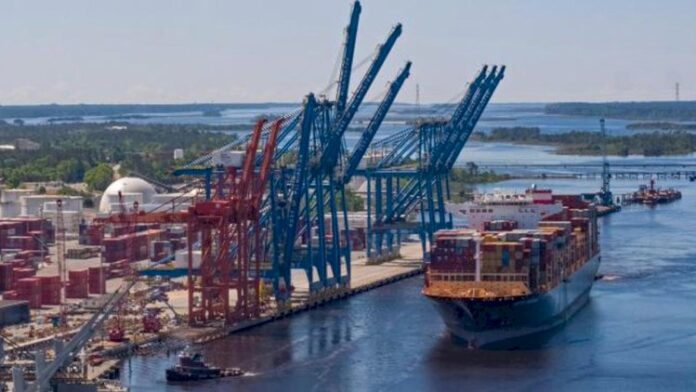
A new air draft over the Cape Fear River will make it easier for ultra-large container vessels to reach the Port of Wilmington.

The new allowable air draft has been increased to 212 feet. The air draft clearance will allow ships with a carrying capacity of 14,000 TEUs (twenty-foot-equivalent unit) and greater to safely and efficiently navigate to Wilmington.

Brian E. Clark, Chief Operating Officer, North Carolina Ports, said:

“This project was critical for North Carolina Ports’ long-term success and further accentuates our big ship readiness capabilities. Not only does it open the Port of Wilmington to some of the largest ships calling on United States East Coast, but it allows NC Ports to better support the needs of its customers.”

The four-month, multi-million-dollar project led by Duke Energy consisted of upgrades to the transmission towers in the Cape Fear River and the replacement of existing lines. Altogether, the improvements raised the transmission lines a total of 41 feet.

Paul J. Cozza, Executive Director, North Carolina Ports, added:

“This was a strategic decision to virtually eliminate air draft issues that other ports in the southeast continue to face due to bridge restrictions. Our partner on this project, Duke Energy, recognized the critical need for this upgrade and worked diligently to create a solution.”

John Elliott, Duke Energy Director of Government and Community Relations, said:

“We are working hard to meet the energy needs of customers now and in the future. Through our strong partnerships on this project, we are helping to keep Wilmington competitive with other East Coast ports and support economic growth across the state.”

The completion of this project comes as North Carolina Ports continues to push forward with its more than $200 million capital improvements plan. Infrastructure improvements include a wider turning basin, berth enhancements and an overhaul of Wilmington’s container terminal. The terminal renovations will double the port’s annual throughput capacity to 1.2 million TEUs and triple its refrigerated container capacity to 1,000 plugs.

Kloosterboer builds reefer container terminal in Vlissingen

0

Kloosterboer invests in an automated and highly sustainable reefer container terminal named Kloosterboer Containerterminal Vlissingen in its location in the Vlissingen harbour (The Netherlands). It will initially have 1,020 reefer plugs. The container terminal will be operational by mid 2020. The expectation is to process 250,000 TEU annually.

What is unique about this container terminal is the number of reefer plugs. Initially, a total of 1,020 reefer containers can be provided with electricity. This is necessary to keep the containers, which are primarily filled with food products, at the desired temperature. The container terminal will be equipped with 4 automated, electrically driven Rubber Tired Gantry (RTG) cranes. These cranes guarantee a high storage capacity. The use of these cranes will reduce the number of reach stackers in the terminal, resulting in a decrease in CO2 emissions of 800,000 kilograms. Kloosterboer is the first container terminal to use this type of automatic cranes. 

Moreover, the ultramodern container terminal is equipped with automatic, unmanned gates. The CargoCard will be used to gain access to the container terminal. Drivers will use this to register and identify themselves. In addition, new software systems will be used. Thanks to smart interaction between these systems, certain algorithms will be used to determine the most efficient method of storage and processing of the containers. The containers’ functionality and settings, such as temperature, are 24/7 remotely monitored. 

Thanks to the combination of a multi-modally accessible terminal and nearby cold stores, Kloosterboer Vlissingen can directly unload incoming containers and load them in the cold store, in order to further transport them by freight truck or barge. This means Kloosterboer arranges everything internally as a one-stop shop for the customer.

Due to the increasing trend of containerisation, the use of reefer containers has increased significantly in recent years. In order to facilitate these growing container flows now and in the future, Kloosterboer continues to invest. The location in Vlissingen offers the possibility to expand to a storage capacity of 1,600 reefer plugs, which means in future 400,000 TEU can be processed annually.

LOC Group was recently the victim of cyber attacks

0

LOC Group, the premier international marine and engineering consulting firm, has confirmed that it was recently the victim of cyber attacks. Investigations are ongoing but according to independent experts’ findings to date, the attacks saw a data breach confined to a single site, affecting a small number of clients, who were notified without delay.

LOC's systems ensured the attacks were quickly identified and since that time company have been dealing with this matter professionally and with the help of independent cyber security experts, in order to minimise business interruption and ensure data integrity.  LOC’s response included fulfilling all of its regulatory obligations, which also happened in a timely manner.

An investigation into the attack is currently being led by the appointed cyber security experts and the subsequent recommendations to improve our systems will be implemented as appropriate.

Commenting on the incident, LOC’s CEO, R.V Ahilan, said:

“Any IT attack is deeply regrettable and unsettling for our clients, and our own teams.  I would therefore again like to apologise for the inconvenience to the small number of clients affected, and to give all of those we work with the assurance that we take our IT security extremely seriously. We continue to make significant investments to ensure our systems remain robust. I would like to thank those involved in limiting the impact for their swift and professional response.”

Aker BioMarine brings big data to Antarctic krill fishery

0

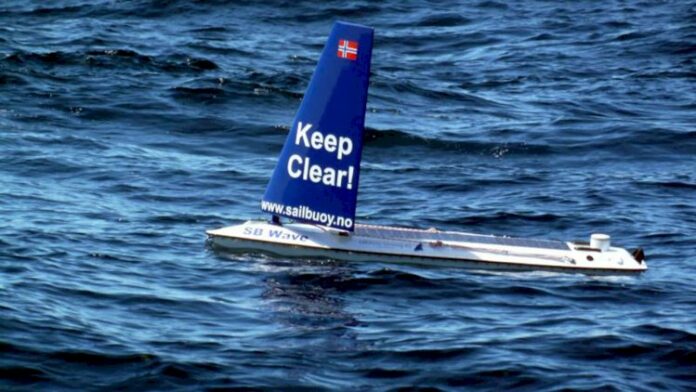
In order to collect detailed data on the krill biomass, Aker BioMarine is launching an unmanned solar-powered ocean data drone (Sailbuoy) as part of its operations in the Antarctica to take a further step in a new data-driven era of sustainable fishery and fishery management.

Equipped with echosounder and environmental sensors, the two meter long data drone collects, processes and transmits density and distribution data from wherever it is deployed, in real time.

Easy to operate, launch and recover, the unique ocean drone uses wind for propultion while the electronics is powered by solar panels, which charge the internal batteries. The Sailbuoy can reach a speed of 2 knots. Built to be robust and to survive the tough Antarctic conditions, it has also been designed to be small and unobtrusive, so that it does not disturb the local wildlife.

Minimizing the need for fishing vessels to spend time and resources looking for krill, the use of the ocean data drone significantly reduces the financial and environmental costs of searching for krill. All the data collection carried out by the drone has a carbon footprint of zero.

Frank Grebstad, SVP Vessel Operations says:

“Finally deployed, after a number of years in development, the Sailbuoy is changing how we work. We can position it close to the vessel and it will do the searching for us, or we can let it cover remote areas for up to months at a time, telling us where and when to proceed. As our Antarctic eyes and ears, the data the ocean drone is collecting is proving absolutely invaluable, and it is enabling us to make our operations even more sustainable and more focused, further lowering our impact.” 

The company behind building the Sailbuoy, Offshore Sensing is pleased to put the ocean drone in practical use in the tough conditions of Antarctica. David Peddie, CEO Offshore Sensing says:

“Albeit small, the Sailbuoy is designed to make a major impact when it comes to improving efficiency and helping the companies make better decisions based on real-time data. This Sailbuoy will help Aker BioMarine enter a new data-driven era of sustainable fishery.”

In addition to operational gains, the data will be of enormous benefit in the long-term to the wider scientific community and the krill fishery as whole. The Commission for the Conservation of Antarctic Marine Living Resources (CCAMLR), the international treaty managing the krill fishery in the Southern Ocean, has made decisive steps towards a more dynamic and scientific data driven management regime, which will put a lot of responsibility on the industry’s capability to monitor the krill biomass. The ocean data drone technology will enable the krill management regime of the future to come sooner rather than later.   

With the careful management of the fishery by precautionary catch limits based on frequent estimates, the detailed data that Aker BioMarine now can capture on density and distribution, will provide a more accurate picture of the size of the biomass. This will help the industry to better guide decisions on this precious resource in a time of climate change and with increasing needs for knowledge and data.
About the Antarctic krill fishery

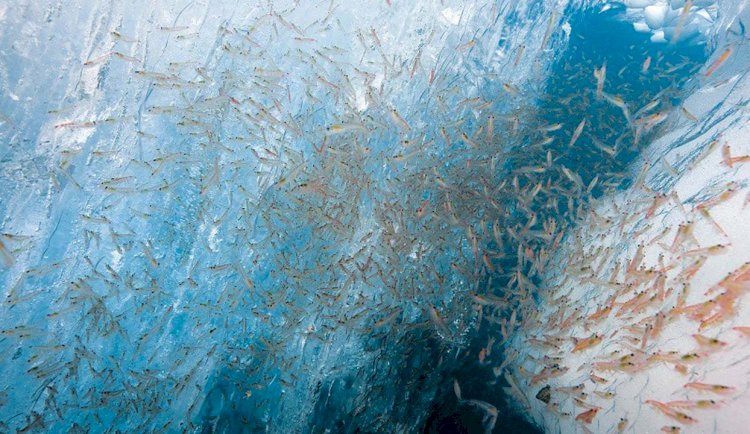
The Antarctic krill fishery today is managed by The Commission for the Conservation of Antarctic Marine Living Resources (CCAMLR) and known as one of the best performing fisheries in the world. For the fifth year in a row, the Antarctic krill fishery received an ‘A’ rating from the Sustainable Fisheries Partnership (SFP), meaning its krill fishery is in “very good condition. Several of the krill fishery companies are also MSC- and FSO-certified, a process that gets more and more rigorous for every re-certification, and contributes to both raised standards and transparency for the fleet as a whole.

The precautionary principle is applied very strictly to the krill fishery in Area 48 of Antarctica, with the annual quota set at approximately 1% of the biomass, and the actual harvest across the krill fleet being 0,5 to 0,6 % of the biomass.

With the CCAMLR biomass survey conducted in 2019 there is confirmation that the krill stock is in a good and healthy condition, having found 62,6 million tonnes of krill in all of Area 48 with a similar distribution to last time the biomass was surveyed in year 2000.

Through the Commitment on Voluntary Restrictive Zones in 2018, the members of the Association of Responsible Krill Harvesting Companies (ARK) made another dedicated and tangible step towards United Nations Sustainable Development Goals SDG14 Life Below Water.

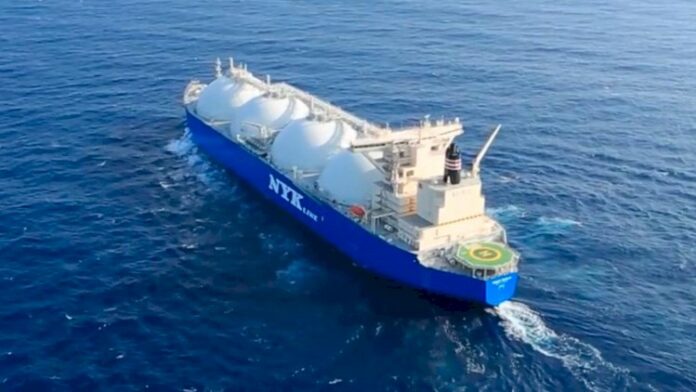
NYK examines concept of using ammonia as marine fuel

0

At the first symposium of the Green Ammonia Consortium (GAC) on January 22, NYK presented its approach of using ammonia as marine fuel for zero-emission ships.

Ammonia does not emit carbon dioxide (CO2) when it is heated and would thus be expected to contribute to the effort to address global warming. NYK is participating in the consortium to consider not only the maritime transport of ammonia as a power generation fuel used by electric power companies but also the use of ammonia as marine fuel, one of the solutions for decarbonization.

At the symposium, lectures were segmented into four fields in which CO2-free ammonia could be used — production, technology, demand, and regulation. NYK, on the demand side, made a presentation introducing ammonia as marine fuel from both the technical and operational side.

The NYK Group is making efforts to create next-generation green businesses involving alternative marine fuel to realize decarbonation and the company’s basic philosophy of “Bringing value to life” and contributing to the betterment of societies.

In accordance with the NYK Group’s medium-term management plan “Staying Ahead 2022 with Digitalization and Green,” the group is working to achieve the SDGs through its business activities, and this approach is one of the group’s initiatives.

About Green Ammonia Consortium (GAC)

Japan’s Green Ammonia Consortium was established in April 2019 to build a value chain from supply to use of CO2-free ammonia.
 

DSAm converting platform supply vessel into fish feed carrier

0

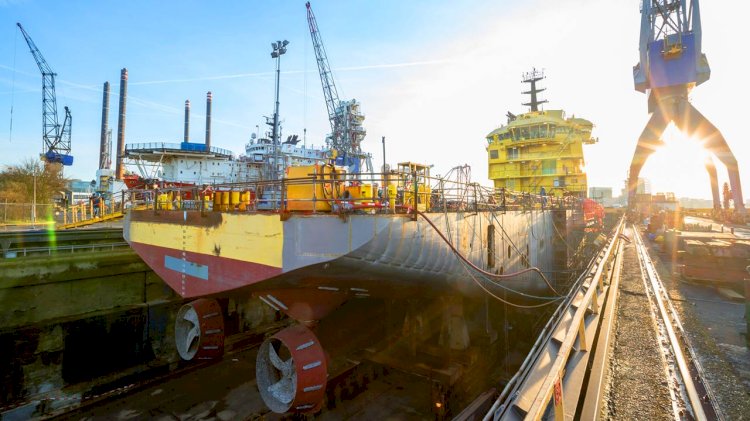
Eidsvaag, the Norwegian company that specialises in the distribution of fish feed, has contracted Damen to carry out a conversion project. Damen Shiprepair Amsterdam (DSAm) is converting a platform supply vessel into a fish feed carrier that will improve efficiency and sustainability in the Norwegian aquaculture industry.

Vidar Eidsvaag, general manager and owner at Eidsvaag, explains:

“One of the main things that made Damen stand out as a strong candidate in the tender process was their previous experience with the vessel.”

The vessel, now renamed Eidsvaag Opal, was part of a six-vessel order Damen built for the offshore supply company, World Wide Supply, and was delivered in 2013.

The tender was won by Damen Shiprepair Amsterdam (DSAm), which was the most suitable yard in the group for the project, based on its facilities and its proximity to Niron Staal, Damen’s specialist steel fabricator. And the conversion does involve a lot of steelwork. The Eidsvaag Opal arrived at the yard in the final weeks of 2019, where the stripping soon got underway. The first order of business was the removal of the main deck, after which the vessel was cut in half and the sub-contractor Mammoet moved the aft section of the vessel 10 metres back in order to allow space for the fitting of the new 4.9-metre section.

31 new steel sections are now being inserted into the hull and divided into sponsons and the new big bag hold. In total, 650 tonnes of new steel will be fabricated by Niron Staal and installed in Eidsvaag Opal while she is in drydock at DSAm. 300 tons of redundant ship’s structure will also be removed as part of the conversion process.

The project will also include increasing the beam with side boxes to give additional stability and extra cargo capacity. Each side box will be 1.2 meters. Damen will install 35 silos as well as cargo holds. When complete, the vessel will be able to transport 2,800 tons of feed at a time. there will be 5 new cranes as well as the discharger installed.

Vidar continues:

“It is really helping speed up the project with Damen already being familiar with the design of the ship. Of course, there were other reasons for their success in the tender process. In addition to knowledge of the actual vessel, Damen was able to demonstrate the successful completion of a relevant conversion for the aquaculture industry.”

Damen’s previous track record includes the conversion of a Damen Combi Coaster into a fish feed transportation vessel. This involved the shipbuilder shortening the vessel in order to provide the added manoeuvrability necessary for operating within fish farms. The vessel was then outfitted with 64 silos for the transportation of different types of fish food.

Tjeerd Schulting, managing director at DSAm, says:

“We really appreciate the close cooperation that we have with the client. We sailed with the client for a trip, which is something that we do not often have the opportunity to do, and it gave us a close understanding of the way the client works. This project really is a joint effort between the client and ourselves.”

Ørsted to become carbon neutral by 2025

0

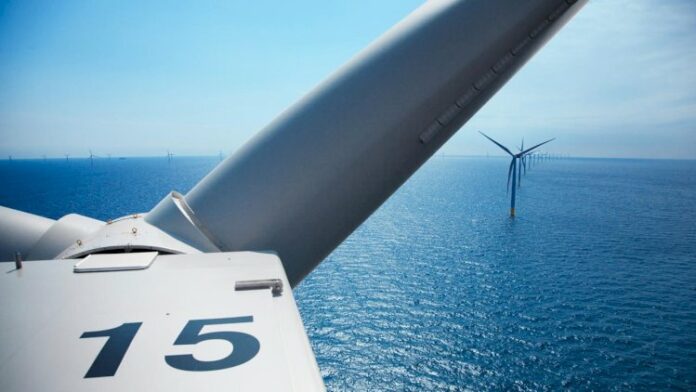
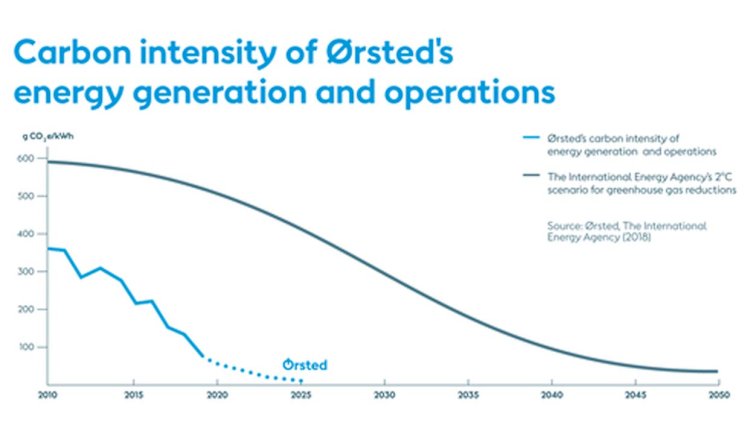
Ørsted, recently ranked the most sustainable company in the world, will become carbon neutral by 2025. This will make Ørsted the first major energy company to reach net-zero emissions in its energy generation – far ahead of science-based decarbonisation targets for limiting global warming to 1.5°C. Additionally, Ørsted sets a target of achieving a carbon neutral footprint by 2040.

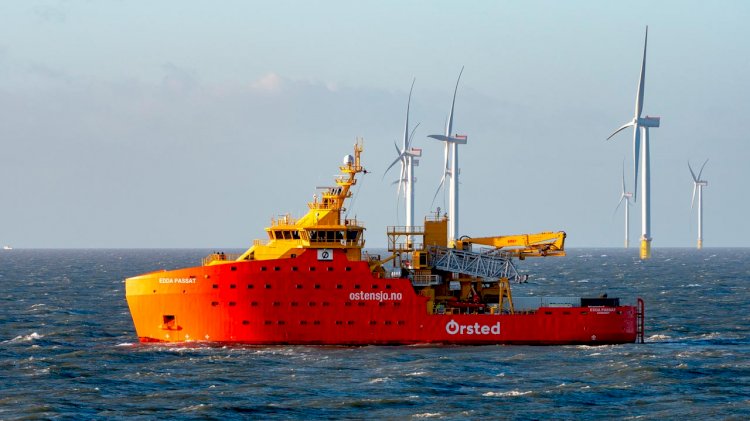
During the last ten years, Ørsted has transformed from a company with fossil fuels at the core of its business to a pure-play renewables company. Ørsted has gradually dismantled its traditional fossil fuel-based business and built a new business in renewable energy which is now among the biggest green energy companies in the world today.

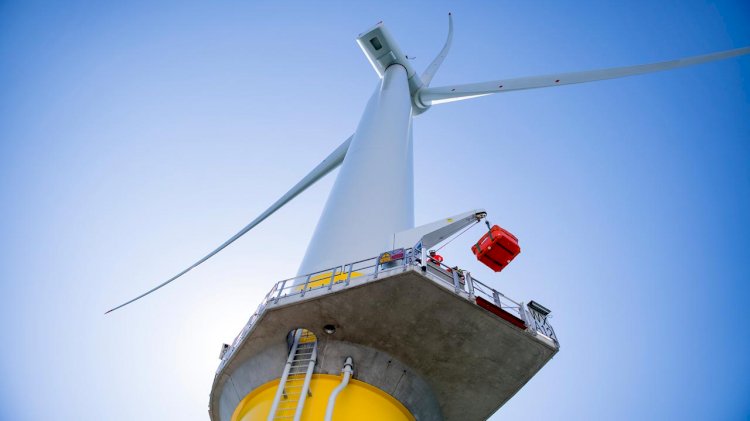
As the leading developer of offshore wind, Ørsted has installed one third of all offshore wind turbines globally. By driving out carbon emissions from its energy generation and operations, the company has reduced its carbon emissions by 86% compared to 2006.

As announced in its Sustainability report 2019, Ørsted now takes an additional step in its decarbonisation journey by deciding to become a carbon neutral company by 2025. 

CEO of Ørsted, Henrik Poulsen, says:

"We've come very far in reducing our emissions and Ørsted is more than two decades ahead of what is required by science to limit global warming to 1.5°C. We've now decided to take an additional step by making Ørsted a carbon neutral company already by 2025. Halting climate change requires action at all levels of society, and we need that action now. Especially within production and use of energy which account for 73% of all global emissions. We've transformed from producing energy based on fossil fuels to producing carbon neutral energy. A decade ago, we were one of Europe's most coal-intensive utilities, and by 2025, we'll be carbon neutral."


By becoming carbon neutral by 2025, Ørsted will be the first major energy company to reach net-zero emissions in its operations and energy generation.

The most important levers that will get Ørsted to carbon neutrality are a complete phase-out of coal by 2023 and the installation of 20GW of offshore and onshore wind by 2025, supported by a commitment to invest DKK 200 billion in green energy in the period 2019-2025.

With its determination to continue the phase-out of fossil fuels and build-out of green energy, Ørsted will see its emissions reduced by at least 98% by 2025.

The remaining emissions beyond 98% come from a variety of sources, where emissions are harder to abate. Ørsted will strive to push the reduction beyond 98% and look for solutions to reduce the remaining emissions. One such solution is Ørsted's decision to stop buying or leasing fossil-fuelled cars as of 2021 and make its entire car fleet electric by 2025.

As Ørsted is now only a few years away from net-zero energy generation, the company has decided to embark on the next phase in its decarbonisation journey, which is to address the carbon emissions beyond its own walls and align these emis¬sions with the 1.5ºC pathway. These emissions come from energy trading and from the supply chain.

The company has committed to reducing the emissions that take place outside of Ørsted, but are still linked to its activities, with 50% by 2032 compared to 2018. Ørsted now also sets a target to achieve carbon neutrality across the company's entire carbon footprint by 2040, ten years ahead of the global target for net-zero emissions as required by climate science to limit global warming to 1.5ºC. 

To achieve a carbon neutral footprint, Ørsted will gradually phase out natural gas trading activities while increasing the green share of power traded. Furthermore, Ørsted will engage its suppliers to reduce carbon emissions from the manufacture and installation of renewable energy and encourage suppliers to set emission reduction targets aligned with climate science and to run their operations on green energy. 

Henrik Poulsen says:

"It'll be challenging to reach a carbon neutral footprint by 2040, and it'll require significant innovation in all parts of our supply chain. Many of the green technologies to be used to decarbonise our supply chain exist but they're not yet cost competitive. With the 2040 target, we want to help drive the necessary innovation forward to mature the green technologies in the industries that supply to us."


Equinor awarding contracts in Brazil

0

Equinor has, on behalf of the partners ExxonMobil and Petrogal Brasil entered into Front End Engineering and Design (FEED) contracts with early commitments and pre-investments for phase 1 of the Bacalhau (formerly Carcará) area in Brazil. Contractors have been selected for both the SURF (Subsea, Umbilical, Risers and Flowlines) and the FPSO (Floating Production, Storage and Offloading) contracts.

Subsea Integration Alliance, SIA formed by Subsea7 and OneSubsea has been selected for the SURF contract and MODEC Inc. for the FPSO contract. 

Anders Opedal, Equinor’s executive vice president for Technology, Projects & Drilling, says:

“Awarding these contracts is an important milestone in developing the Bacalhau area. We have awarded these contracts to reputable companies with long experience in Brazil and we are now looking forward to further collaboration with SIA and MODEC to ensure a timely execution of the project.”

The SURF and FPSO contracts are based on a two-step award. The FEED and pre-investment are starting now, with an option for the execution phase under a lump sum turnkey contract setup which includes engineering, procurement, construction and installation for the entire SURF and FPSO scopes. 

The FPSO contractor will operate the FPSO for the first year. Thereafter, Equinor plans to operate the facilities until end of the license period in 2053. 

Opedal says:

“This will be the largest FPSO in Brazil with a production capacity of 220,000 barrels per day.”

There is a high degree of standardization and industrialization for both the SURF and FPSO contracts, leveraging contractors experience. The SURF contract makes a significant contribution to local content in Brazil with approximately 60 %.

Margareth Øvrum, Equinor’s executive vice president, Development and Production Brazil, says:

“Bacalhau is a world class asset in the Brazilian pre-salt Santos area. Brazil is a core growth area for Equinor, and the company has ambitions of producing 300 to 500 thousand barrels a day in Brazil within 2030. Bacalhau will be an important contributor to reach this goal.”

Partners in Bacalhau: Equinor 40 % (operator), ExxonMobil 40 %, Petrogal Brasil 20 % and Pré-sal Petróleo SA (PPSA, non-investor Government Agency).