-5.6 C
New York
Home Blog Page 928

Fugro awarded geotechnical contract for Apsara oil field

0

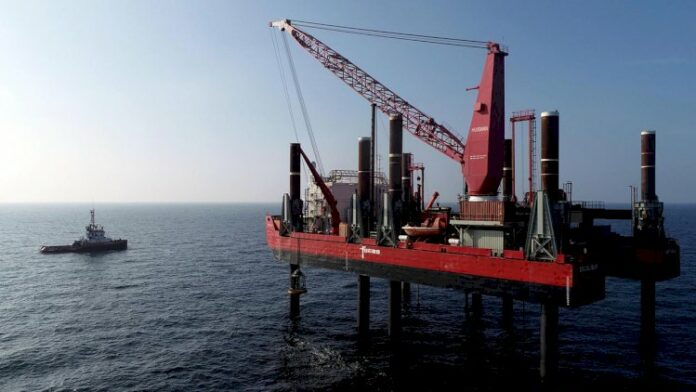
Fugro has been awarded a geotechnical contract for Apsara oil field in Block A, offshore Cambodia, as part of the nation’s first hydrocarbon development.

The Apsara field lies over the Khmer Basin, an unproduced geological basin in Cambodian maritime waters in the Gulf of Thailand.

Fugro will carry out a geotechnical investigation to support the design and installation phases of the Apsara Mini Phase 1A development. The work will be performed using their dedicated drill ship, the Fugro Mariner, and will comprise shallow gas pilot-hole drilling, and geotechnical sample boreholes and cone penetration tests.

Jerry Paisley, Fugro’s Business Line Director, Asia Pacific Region, remarked:

“It is a pleasure to return to Cambodia, where our involvement in the Block A exploration goes back to 2006, when we supported the drilling of the initial exploration wells. KrisEnergy has been our valued client since their establishment in 2009 and part of our success is owed to our unique ‘Triple A’ approach, where we acquire, analyse and advise on Geo-data across the full project life cycle”.

Vladimir Lavie, Senior Geophysicist for KrisEnergy, commented:

“We thank our colleagues at Fugro for working with us on this historic project. This site investigation will be yet another milestone in the 2020 realisation of the Apsara oil field. We’ve already completed our geophysical surveys, and Fugro’s geotechnical investigation will provide the final set of geomechanical information needed to derisk the design, installation and operation of our project.”
 

Expanding connectivity options for Energy, Maritime and Yachting customers

0

Inmarsat the world leader in global, mobile satellite communications and ITC Global have announced a five-year strategic collaboration. The partnership enables the organizations to combine their highly complementary, market-leading services to offer broadband connectivity, paired with high-value connectivity solutions to customers in the maritime, yachting and offshore energy sectors.

ITC Global will offer Inmarsat’s market-leading Fleet Xpress service, incorporating the Ka-band solution into its existing comprehensive range of Ku-band connectivity services. Fleet Xpress for Offshore is powered by the Global Xpress Ka-band network, combined with the proven reliability of Inmarsat’s flagship, FleetBroadband L-band service.

Delivering high data speeds, continuous connectivity and guaranteed performance, the Ka-band service – which is now installed on over 8,000 vessels – sets a new standard for maritime global communications, with crew welfare, regulatory and operational drivers at the heart. Benefits include affordable voice calls, multiple voice options for crew and operations and high-speed broadband for internet access, plus 24/7 online support by certified engineers. For offshore clients, Fleet Xpress provides added subscription flexibility to meet seasonal and short-term demand changes.

Eric Griffin, Inmarsat Maritime, Vice President Offshore & High End Fishing, said:

“We are pleased to secure the support of a key partner in ITC Global, which reflects our own commitment to providing the offshore and wider maritime community with uniquely global, reliable and flexible broadband connectivity anywhere in the world to meet their rapidly growing digitalisation needs.”

ITC Global is a subsidiary of Panasonic Avionics Corporation, delivering high-speed, high-capacity communications services to customers across the oil and gas, mining, merchant maritime and passenger vessel markets.

Ian Dawkins, CEO at ITC Global, said:

“Using our combined expertise of Ku-, L- and Ka-bands, we will be well-positioned to meet the individual demands of maritime and offshore customers. The agreement will enable us to extract further value from the synergies between our organizations and leverage our mutual technology and product innovations to fully support the operational requirements of customers.”

In September 2018, Inmarsat and Panasonic Avionics Corporation inked a similar agreement to offer broadband inflight connectivity (IFC) paired with high-value services to customers in the commercial aviation industry worldwide. The collaboration enables airlines, aircraft manufacturers and passengers to benefit from the combined expertise of two companies that have been at the forefront of technology and innovation for nearly four decades.

Presentation of 3D crane simulator in the Port of Duisburg

0

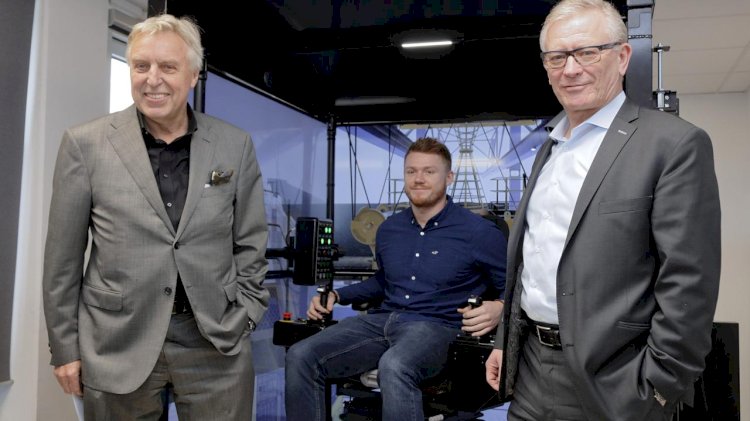
The Duisport Group has officially presented its own crane simulator in the Duisburg free port: A first for combined transportation in the hinterland.

With this initiative, the world’s largest inland port not only sets new trends for technical innovation in the logistics industry but also invests in the professional training and continuing education of its own employees.

Duisport Chief Executive Officer Erich Staake explains:

“The duisport training center in the Duisburg free port has already had its own train simulator since the beginning of 2019, and it is an integral part of our long-term training and continuing education strategy. The addition of a crane simulator means that the duisport Group’s training program is unique in Europe.”

Under the project leadership of duisport Executive Board member Professor Thomas Schlipköther, the crane simulator was made in the US and was adjusted to the requirements and conditions of the Port of Duisburg. The crane was made by US company GlobalSim, which is based in Salt Lake City.

When using the simulator, the employees operate crane facilities in a virtual environment that mimics a real crane and the scenery in the Port of Duisburg. The so-called “piggy back simulation” is especially designed for the needs of inland ports.

The system has seven 4k flat screens that are based on a proprietary 3-DOF movement (three-dimensional space). Users get a realistic sense of how the entire simulator moves – exactly how the equipment would move during the operation of a real crane.

An instructor control station is in constant contact with the system and the user. The operator can simulate any number of scenarios with instruction, including difficult weather conditions and special emergency situations. Such scenarios cannot be simply practiced on a real crane during regular operations. This represents a fundamental advantage of the crane simulator.

Photo: Port of Duisburg

Halliburton wins contracts for INPEX-operated Ichthys Project field development

0

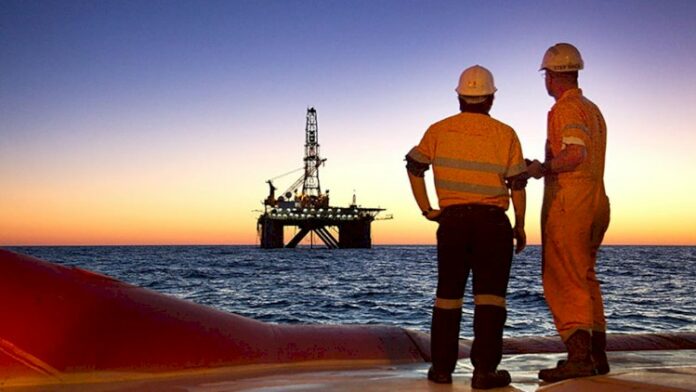
Halliburton Company has announced it has been awarded seven contracts for drilling and completion services for the next phase of field development of the INPEX-operated Ichthys Project in the Browse Basin offshore northern Australia.  

The well development campaign is due to start in March 2020 and will continue for an estimated 3-year term. The contracts awarded include directional drilling, logging while drilling, surface data logging, drilling and completions fluids, cementing, liner hangers, coring and well completions services.

Jason Jeow, vice president of the Australasia region for Halliburton, said:

“We are excited to win this work and to collaborate with INPEX to deliver our extensive drilling and completions services in addition to our digital capabilities in the strategically significant Browse Basin.”

Halliburton’s Western Australian facilities in Jandakot and Broome will support the project. The Company expects to hire locally at its Broome facility to support the contract.

Med Marine’s tug will be operated in Mexican Port of Manzanillo

0

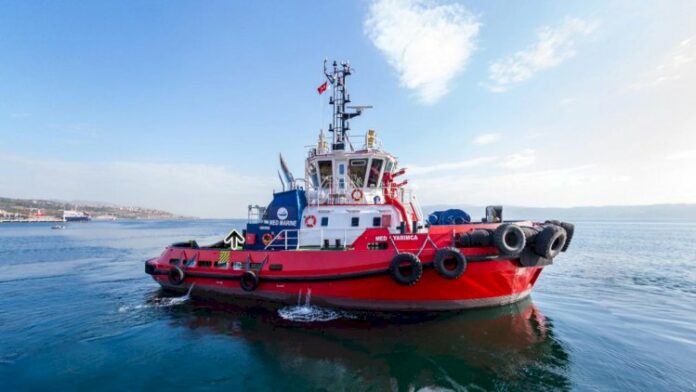
2019 was really busy for Med Marine and the company completed the year with a last minute contract. Med Marine and Mexica’s Snekke S.A. signed a contract for MED-A2575 class tugboat which is one of the designs that Med Marine has built many times with different bollard pull options and has a broad experience building the same. The vessel will be operated in Mexican Port of Manzanillo.

After Med Yarımca’s delivery to Port of Manzanillo, the number of Med Marine tugs operating in South America in 2019 is now 3.

Renamed as RPM MANZANILLO, Med Yarımca was previously operating in Med Marine’s national fleet in addition to her five identical sisters.

MED-A2575 is a RAmparts 2500W ASD design by Canadian designer Robert Allan Ltd. It is a very economical, compact but pretty robust design that is widely accepted by the operators all over the world.

The Canadian designer describes RAmparts designs as follows:

  • Versatile/multi-purpose ASD design
  • Ship-handling, coastal towing, escort, general purpose duties
  • Multiple configurations from 22 to 36 metres in length
  • The most widely accepted design series in the industry

Med Marine offers 60, 70 and 75 tonnes bollard pull options to its clients in this design.  Med Yarımca’s virtual reality experience is available on Med Marine’s web page which displays every detail about the high quality tugboat.

The tugboat’s general specifications include:       

  • LENGTH O.A.                      25,30 m
  • BEAM                                  12.00 m
  • DEPTH                                 4,60 m
  • BOLLARD PULL                  70 tons
  • SPEED                                13,5 knots (max.)
  • MAIN ENGINE                     2 x CAT 3516 C 2100 bkw@1600 rpm
  • PROPELLER                       Schottel SRP460 CP
  • FORE TOWING WINCH      THR MARINE (SEC) 
  • GENERATOR SET              2 x CAT C4.4 99 ekW 1500 rpm 50hz
  • FIFI 1 SYSTEM                   1 x 1200 m3/hr. Pump, 2 x Foam/water monitor              
  • ACCOMMODATION            6 people

NYK establishes first exclusive RORO terminal in Egypt

0

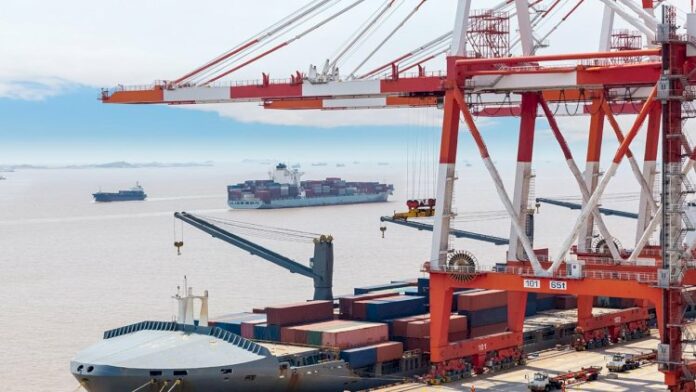
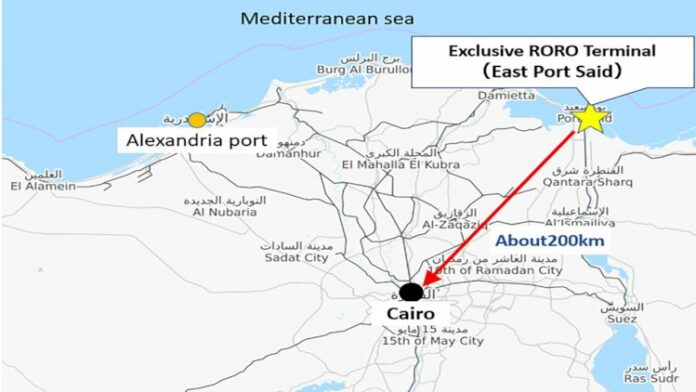
NYK, together with Bolloré Africa Logistics (Bolloré) and Toyota Tsusho Corporation (Toyota Tsusho), has signed an agreement with the General Authority for the Suez Canal Economic Zone to set up and operate a dedicated automotive terminal at East Port Said in Egypt.

The automotive market in Egypt is expected to expand along with population growth and economic development, and the Alexandria port, which currently handles almost all of Egypt’s vehicle imports, is a multipurpose port that sees a variety of cargo and lacks storage space. Therefore, the new dedicated automotive terminal to be developed and operated by the consortium will be favorably received.

The new terminal will be Egypt’s first exclusive RORO terminal, and it will have a wharf area that allows two large Pure Car and Truck Carriers (PCTC) to berth simultaneously. The terminal will additionally offer sufficient vehicle storage space to address increasing future demand.

The knowledge and experience that Bolloré has accumulated through its port operations in Africa will be utilized together with the achievements and know-how that Toyota Tsusho has acquired in a wide range of businesses inside Egypt and the skill and expertise that NYK has gained in its automotive transportation and terminal operations throughout the world, resulting in a rather valuable service from the three companies.

In accordance with its medium-term management plan “Staying Ahead 2022 with Digitalization and Green,” NYK is making efforts to optimize its supply chain and create new value through digitalization and green initiatives. The group will continue its efforts to provide high quality, competitive auto-logistics services, making use of its considerable expertise and global network.

Toyota Tsusho undertakes transportation infrastructure business–such as ports and airports–centered on Asia, the Middle East, and Africa. Toyota Tsusho will contribute to the development of Egypt's automotive industry and economy through this terminal operation business.

Innovative cooperation between offshore wind turbines and drones

0

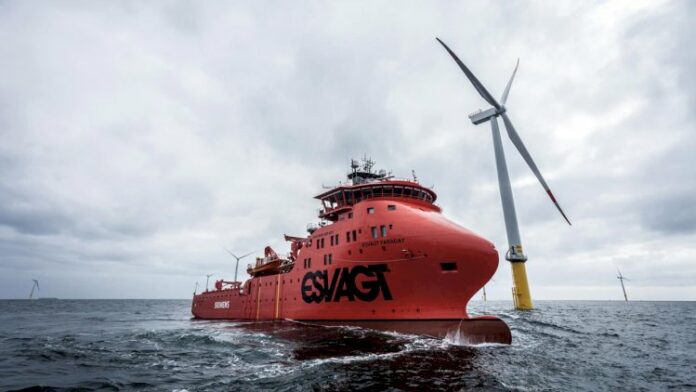
Together, ESVAGT, Siemens Gamesa and Ørsted are developing a drone-based solution for the delivery of spare parts and tools from vessel to offshore wind turbine.

There's a long way to the spare parts when your workday takes place at the top of an offshore wind turbine 40 km from shore.

Now Siemens Gamesa, Ørsted and ESVAGT want to solve this logistical challenge by transporting tools and spare parts from ESVAGT’s SOV (Service Operation Vessels) to the technician at the offshore WTG by means of drones.

ESVAGT’s SOVs are located in the offshore wind farms and have a wide range of spare options on board. Further innovating the transportation of spare parts and tools from vessel to WTG is the next step.

That is why the three companies have engaged themselves in an innovation project bearing the working title Operative package deliveries by drones that will examine the potential in meeting offshore WTG technicians’ needs in an easier way.

Flemming Hjorth, Head of New Services Business Development at ESVAGT, says:

‘A technician is wasting time if critical tools or critical spare parts aren’t available to him. When we transfer a WTG technician from vessel to WTG, he brings both spare parts and tools with him. But it often happens that the technician needs additional equipment, tools or spare parts while inside the WTG. Today, such a scenario requires the vessel to return to the WTG or that we send a transfer boat over to the WTG with the necessary gear, which the technician then has to get down and get. This process can be optimised.’

Siemens Gamesa, Ørsted and ESVAGT cooperate with several subcontractors regarding a solution in the innovation project, where drones can deliver packages weighing up to 3-4 kg directly to the WTG nacelle.

Flemming Hjorth says:

‘Most often, it is the small spare parts that make a difference: smaller electrical components or a specific tool. Delivering these with a drone could potentially spare us a tremendous amount of time and contribute to making the operation of the offshore wind farm even more efficient.’

The task isn't a walk in the park. The nacelles are moving in order to follow the wind, the blades are rotating, and the SOV is constantly working in new areas in the offshore wind farm.

Flemming Hjorth says:

‘Our ambition is to get a drone to transport spare parts between two variable points, following a route that will be adjusted along the way. It is complex, even when using drone pilots, and it becomes even more demanding once you add the changing weight of the cargo, the wind’s impact, the use of magnetic compass in an offshore farm with lots of steel, and so on. But the potential in finding a solution is extremely interesting.’

The project Operative package deliveries by drones is sponsored by the European Regional Development Fund and runs until June 2020.

It is not the first time ESVAGT sets foot in a drone project. A year ago, the shipping company formed the joint venture EWPL Ocean, which inspects offshore WTG blades via drones that are operated and piloted from ESVAGT’s vessels.

CMB wants to achieve zero carbon emissions by 2050

0

CMB wants to start of the anniversary year with an environmental announcement and a testimony to the long-lasting and continued belief in the power of global trade and human creativity.

They have offset all its CO2 emissions in order to have net zero CO2 emissions as from 2020. To achieve this long-term CO2 reduction, the company has already supported certified climate projects in developing countries and acquired high quality Voluntary Carbon Units (VCU’s) in Zambia (agro-forestry, SALM, REDD+), Guatemala (REDD+) and India (wind and solar parks).

CMB firmly believes in zero carbon emissions from its shipping operations and aims to achieve this by 2050. Many low carbon and zero carbon technologies are already in the early stages of development, and CMB is convinced that the shipping industry will find solutions to today’s problems to provide zero carbon shipping by 2050.

CMB is already investing heavily in the development of low and zero carbon ships and engines. The HydroTug, the world’s first hydrogen-powered tugboat, is an example of CMB’s developments. CMB fully supports the many different industry initiatives that want to join the forces to develop the technologies needed to reduce shipping’s carbon footprint.

As CMB will bring specific zero-carbon projects to life in the coming months and years, they will continue to actively engage and cooperate with other shipping companies, their customers, their suppliers, their banks and national and international politicians to achieve zero carbon shipping.


ExxonMobil made oil discovery at the Uaru

0

ExxonMobil has increased its estimated recoverable resource base in Guyana to more than 8 billion oil-equivalent barrels and made a further oil discovery northeast of the producing Liza field at the Uaru exploration well, the 16th discovery on the Stabroek Block.

Mike Cousins, senior vice president of exploration and new ventures at ExxonMobil, said:

“With recent high-quality finds at Tripletail and Mako contributing to our recoverable resources, our investments will continue to provide benefits for the people of Guyana. The Uaru discovery is another positive step as we begin a new decade with the Co-operative Republic of Guyana and our co-venturers.”

Uaru encountered approximately 94 feet (29 meters) of high-quality oil-bearing sandstone reservoir. The well, drilled in 6,342 feet (1,933 meters) of water, is located approximately 10 miles (16 kilometers) northeast of the Liza field, which began producing oil in December 2019.  

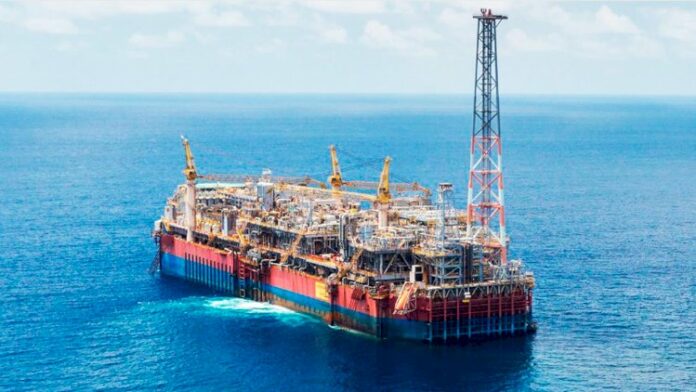
Production from the Liza Phase 1 development is currently ramping up and will produce up to 120,000 barrels of oil per day in the coming months, utilizing the Liza Destiny floating production storage and offloading vessel (FPSO).

The Liza Unity FPSO, which will be employed for the second phase of Liza development and will have a production capacity of 220,000 barrels of oil per day, is under construction and expected to start production by mid-2022.

Pending government approvals and project sanctioning of a third development, production from the Payara field north of the Liza discoveries could start as early as 2023, reaching an estimated 220,000 barrels of oil per day.

Four drillships in Guyana continue to explore and appraise new resources as well as develop the resources within approved projects. A fifth drillship is expected to be deployed later this year.

Joint group to launch a green hydrogen plant in Ostend

0

Port of Oostende, DEME Concessions and PMV are announcing an exclusive partnership on Monday 27 January. Their goal is to have a plant operational in the port area of Ostend by 2025 that produces green hydrogen. This end product, green hydrogen, will both serve as an energy source for electricity, transport, heat and fuel purposes and as a raw material for industrial purposes.

If hydrogen (H2) is produced with electricity by means of electrolysis, no CO2 is released in the process. However, the hydrogen produced can only be called green if the electricity used in the process has also been generated in a green fashion. The term ‘green hydrogen’ is thus used when green electricity is available that converts water into hydrogen via electrolysis. In other words, green hydrogen is hydrogen produced on the basis of renewable energy.

By the end of 2020, 399 wind turbines will be operating off the coast with a combined installed capacity of 2.26 GW. The new marine spatial plan leaves space for several hundred more wind turbines, which will generate around an extra 1.75 GW. That makes a total green energy generating capacity of around 4 GW, supplying half of Belgian households with electricity. However, the wind turbines’ production peaks rarely coincide with consumer demand peaks, meaning that there is an opportunity to compensate for the discontinuity between production and consumption.

In the first phase of the process, the general feasibility will be further investigated and a development plan will be worked out. An innovative demonstration project with mobile shore-based power will then be started. A demonstration project with an innovative electrolyser of around 50 MW is also scheduled. By 2022, the roll-out of a large-scale shore-based power project, running on green hydrogen, will start. The finish line will be crossed in 2025 with the completion of a commercial green hydrogen plant in the context of the planned new offshore wind concessions.

The three parties have the necessary expertise and together they are playing an important role in the transition of energy, transport and industry.

Port of Oostende is expanding its activities in the Blue Economy with this area-specific development. The planned location is in the Plassendale 1 port area.

PMV has experience in financing the development, the construction and operation of the infrastructure necessary for energy projects. PMV sees great potential for hydrogen in the long term and wants to stimulate and support entrepreneurial projects involving hydrogen. An expertise unit has been set up within PMV to gather knowledge and improve funding for potential ideas. PMV will participate actively in the expansion of hydrogen activities in Flanders through this public-private partnership. 

DEME is one of the pioneers in the development of offshore energy projects. The combination of renewable energy with green hydrogen is fully consistent with its innovation vision, which is why DEME plans to invest in the development and large-scale production, storage and delivery of green hydrogen.

Port of Oostende, DEME Concessions and PMV are once again joining forces to help bring about the energy transition in Flanders. Their joint goal is reflected in a very concrete and ambitious project: HYPORT® Oostende. The green hydrogen plant in Ostend will ultimately deliver a CO2 reduction of around 500,000 to 1,000,000 tons per year. HYPORT® Oostende will make a significant contribution to the achievement of Belgian and European climate objectives.