-1.3 C
New York
Home Blog Page 925

Torqeedo provided a battery-electric propulsion system for a new dual-mode boat

0

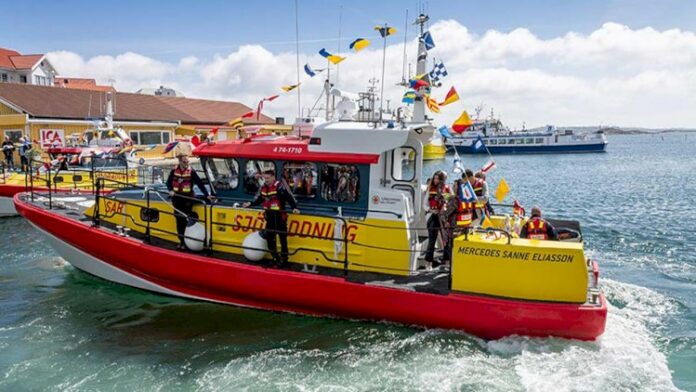
Torqeedo has provided a battery-electric propulsion system for a new dual-mode boat recently launched by the Swedish Sea Rescue Society.

The new boat is the first-ever in the Sea Rescue Society’s fleet to have parallel diesel and electric motors. The primary powertrain is twin 650 horsepower Scania diesels with water jets. The electric drive system consists of dual Torqeedo Deep Blue 50KW electric motors for a combined 160 horsepower-equivalent with two 10 kWh Deep Blue lithium batteries. The vessel can operate silently and emission-free up to 1.5 hours between recharges at a search speed of 6 knots.

Lars Samuelsson, head of the Maritime Department, said:

“We use the electric mode when entering and leaving port through Sweden’s environmentally sensitive waterways. The crew uses the diesels for high-speed runs out to the rescue location, then switches back to electric for search and rescue operations. It is crucially important to go quietly on the job since even the smallest sound can hinder the search for a missing person in the water.”

The 14-metre (46-ft) composite vessel, christened Rescue Mercedes Eliasson Sanne, carries a crew of three or four people for rescue missions. It operates out of the Rörö rescue station in Gothenburg’s northern archipelago. Its hullform is a development of the society’s former Victoria class and has many features in common with the nearly 40 boats built in this class since 1997 but has been extended by about two meters for a more stable ride in the sea.

The Swedish Sea Rescue Society is a non-profit association that saves lives at sea without any government support. There are 2,200 volunteer seafarers along the Swedish coast and in the largest lakes, ready to take off in all kinds of weather, all year round. The Society also works to prevent accidents at sea and to spread information and knowledge about maritime safety.

Ørsted and Eversource partner with Groton maritime automation technology developer

0

Joint venture partners Ørsted and Eversource announced the signing of a Memorandum of Understanding (MOU) with Groton-based marine automation and monitoring innovator ThayerMahan. ThayerMahan is a pioneer in the marine robotics and maritime surveillance industry and the MOU will explore the provision of maritime wildlife monitoring and seabed surveillance services for Ørsted and Eversource’s upcoming Revolution Wind offshore wind project.

CEO of Ørsted U.S. Offshore Wind Thomas Brostrøm said:

“When we started looking at growing the offshore wind industry in Connecticut, one of the most important factors was ensuring we are setting up in an area with some of the best innovators and most skilled workforce in the world. Offshore wind is part of the next generation of green energy and green technology, and we need partners who are the best in their industry. The people at ThayerMahan are remarkable inventors, and their technology will help us reduce any disruption offshore wind might have on North Atlantic marine life and the local fishing fleets.”

Eversource Vice President of Business Development Mike Auseré said:

“In addition to the hundreds of well-paying, local jobs that will be required to construct our Revolution Wind project, utilizing local partners like ThayerMahan will be critical to the overall success of our projects in Connecticut and beyond. We look forward to working with ThayerMahan to bring our Revolution Wind project to life and advance Connecticut’s clean energy economy and achieve its aggressive climate goals.”

The MOU reinforces Ørsted and Eversource’s commitment to utilize local vendors in the construction and operation of offshore wind projects like Revolution Wind, which will be operational in 2023 and deliver 304 megawatts of reliable, clean energy to Connecticut. The MOU also identifies the many advantages of this partnership and highlights ThayerMahan as a growing business in Southeastern Connecticut. ThayerMahan is well-suited to perform a wide variety of wind farm development and operational functions.

ThayerMahan CEO Mike Connor said:

“Ørsted and Eversource have been fantastic partners. We are glad to be part of their plans to fully utilize our local businesses, which have some of the best minds in the world. This MOU is yet another commitment, in writing, that offshore wind will grow Connecticut’s economy and that the joint venture is truly interested in working with our local developers and inventors. ThayerMahan is happy to be a part of this growing industry.”

The services that ThayerMahan and Ørsted/Eversource would explore include but are not limited to:

  • Marine Mammal Monitoring using passive acoustic, mobile detection systems featuring ThayerMahan’s proprietary Outpost sonar system for detecting, classifying and reporting on NARW – North Atlantic Right Whales and other marine mammals
  • Environmental monitoring from fixed and mobile systems
  • METOCEAN measurements and weather forecasting
  • Marine traffic and wind project vessel traffic monitoring
  • Seabed Survey and Inspections of undersea cable and monopile systems during construction and operations
  • Balance of Plant Services including operations and maintenance of wind turbine generators, monopole foundations, transition pieces, onshore substations and array and export cable surveys
  • Land-based real estate and construction consulting services including permit assist, land/purchase assist, zoning and entitlement assist, construction management and monitoring. 

Scientists create jellyfish with swimming superpowers

0

Engineers at Caltech and Stanford University have developed a tiny prosthetic that enables jellyfish to swim faster and more efficiently than they normally do, without stressing the animals. The researchers behind the project envision a future in which jellyfish equipped with sensors could be directed to explore and record information about the ocean.

Jellyfish use a pulsing motion to propel themselves forward, swishing their tentacles as they move to capture prey. The new prosthetic uses electrical impulses to regulate—and speed up—that pulsing, similar to the way a cardiac pacemaker regulates heart rate. The device, which is neutrally buoyant in water, is about two centimeters in diameter and is attached to the body of the jellyfish via a small wooden barb.

The research—led by Caltech's John Dabiri, Centennial Professor of Aeronautics and Mechanical Engineering, and Stanford graduate student Nicole Xu —was published in the journal Science Advances on January 29.

Typically, jellyfish swim at a rate of about two centimeters per second. Although they are capable of moving more quickly, doing so does not aid them in ensnaring prey, their typical reason for using the tentacle-waving "swimming" motion.

In the research described in the paper, Dabiri, Xu, and colleagues equipped jellyfish with a microelectronic controller pulsing at a frequency three times faster than the animals' usual body pulses. The animals' pulsing sped up, producing a corresponding increase in their swimming speed to around 4–6 centimeters per second.

In addition to making the jellyfish faster, the electrical jolts also made them swim more efficiently. Although the jellyfish swam three times faster than their usual pace, they used just twice as much energy to do so (as measured by the amount of oxygen consumed by the animals while swimming). In fact, the prosthetic-equipped jellyfish were over 1,000 times more efficient than swimming robots, Xu says.

Xu says:

"We've shown that they're capable of moving much faster than they normally do, without an undue cost on their metabolism. This reveals that jellyfish possess an untapped ability for faster, more efficient swimming. They just don't usually have a reason to do so."

It should be noted that the jellyfish were closely monitored to make sure that they were not harmed. Jellyfish do not have a brain or pain receptors, but they have been found to secrete mucus when stressed, and no such secretion was observed in this experiment. In addition, the jellyfish went back to swimming normally once the prosthetic was removed.

The research represents a "middle ground" between two veins of bioinspired robotics work that Dabiri has been involved in for the past decade, both at Caltech and Stanford. One involves the use of purely mechanical components and the other purely biological materials.

With purely mechanical systems, Dabiri has had success building robots that look like real animals but require much more energy to accomplish the same tasks. "We haven't captured the elegance of biological systems yet," he notes. However, although they are more elegant than robots, purely biological systems are a lot more fragile. Indeed, in collaboration with colleagues at Harvard University, Dabiri has shown that rat heart cells can respond to electric fields—which potentially makes them useful building blocks for biological devices—but the cells only survive under laboratory conditions.

The effort to add mechanical controls to jellyfish began in 2013 at Caltech when Xu was an undergraduate student doing a Summer Undergraduate Research Fellowship (SURF) in Dabiri's lab. Dabiri was interested in leveraging jellyfish for ocean exploration and sensing because of their abundance: the species used in the current experiments can be found throughout the earth's oceans, at depths ranging from the surface to the bottom of deep trenches.

Dabiri says:

"Only five to 10 percent of the volume of the ocean has been explored, so we want to take advantage of the fact that jellyfish are everywhere already to make a leap from ship-based measurements, which are limited in number due to their high cost. If we can find a way to direct these jellyfish and also equip them with sensors to track things like ocean temperature, salinity, oxygen levels, and so on, we could create a truly global ocean network where each of the jellyfish robots costs a few dollars to instrument and feeds themselves energy from prey already in the ocean."

Currently, the prosthetic can direct jellyfish to start swimming and control the pace. The next step will be to develop a system that guides the jellyfish in specific directions and that allows them to respond to signals from onboard sensors, says Dabiri, who hopes to develop even smaller electronic controls that could be completely embedded in the jellyfish's tissue, making them permanent but unnoticed prosthetics.

The study is titled "Low-power microelectronics embedded in live jellyfish enhance propulsion." This research was funded by the National Science Foundation.

PLA boosts operational efficiencies at the port with BareFLEET

0

The Port of London Authority boosts operational efficiencies at second-largest port in the UK with BareFLEET advanced remote monitoring system

The Port of London Authority (PLA), which is responsible for the safety of navigation on the tidal Thames, has signed a new deal with Reygar Ltd for the expansion of BareFLEET, Reygar’s advanced remote monitoring system, across PLA’s varied fleet of multi-cat, crewboat, and survey vessels.

A high level of fleet serviceability and operational efficiency is a key priority for the PLA. By investing in the latest in fully integrated fleet health and performance monitoring, the PLA are taking a best practice, data-based approach to the operation of its varied fleet.

As well as informing the PLA’s preventative maintenance strategy by monitoring engine health and performance, BareFLEET provides the PLA’s operations team with a complete understanding of fuel consumption, engine efficiency, and CO2 emissions across their varied fleet of workboats. Following an initial contract for ten BareFLEET systems, the business has now signed an agreement with Reygar for 14 further installations.

Chris Huxley-Reynard, Engineering Director, Reygar, said:

“It is essential that British ports remain competitive internationally as we negotiate our future international trading relationships – and ensuring our ports, waterways, and the vessels that use them are effectively and efficiently managed is key to this goal.

A more comprehensive adoption of BareFLEET will further streamline the PLA’s preventative and planned maintenance strategy, ensuring maximum availability for its versatile fleet of vessels whilst reducing unnecessary expenditure.

By pulling all critical data streams from the vessel into a single portal, the PLA’s operations team will have the oversight and flexibility to make further improvements to how downtime is managed, as well as advise on how vessels can be more efficiently piloted to reduce unnecessary fuel burn and emissions. We are proud to support the PLA in its worldclass approach to port operations, and in continuing to reduce the environmental impact of its vital work.”

Andy Osborne, Marine Engineering Manager, PLA, said:

“Advanced monitoring of vessel activities is central to our work to continuously improve the performance and efficiency of our vessels. The BareFLEET system allows us to pinpoint where and why any issues such as excess fuel burn are occurring. Acting on these insights not only reduces fuel costs, but reduces energy use across our operations. This enables us to operate efficiently and minimise fuel use.”

$55000 grant supports research into healthy oceans

0

A project to help more accurately measure the health of our oceans has been supported with a grant from the Simons Foundation.

Phytoplankton are the foundation of the aquatic food web, feeding everything from microscopic zooplankton, to small fish, to huge whales. Phytoplankton have chlorophyll to capture sunlight, and they use photosynthesis to turn it into energy just like plants on land. Through this process phytoplankton can consume carbon dioxide on the scale of forests. 

Satellites are used for large studies of phytoplankton and their role in climate change. While individual phytoplankton are tiny, when they bloom by the billions the chlorophyll and other light-catching pigments change the way the surface reflects light, making different colours visible to satellite imagery.

Monitoring this ocean-colour data serves to address many of the big questions of the day, such as collapsing fisheries, climate change and human health. However, while sensors mounted on satellites are capable of viewing the entire ocean, they need to be compared periodically with accurate and reliable in situ measurements, collected at the ocean surface. These sensors operate with higher spectral resolution than satellites so provide more information on phytoplankton.

This new grant will use sensors mounted on a so-called ‘ship of opportunity’ – a superyacht that will be visiting unique and remote areas of the planet as part of its regular travel. These areas have rarely been sampled, increasing the value of the data collected.

Dr Bob Brewin, Lecturer in Physical Geography at the University of Exeter, is the lead researcher on the project. He said:

“This is a great opportunity to increase the volume and quality of data available to the global science community.
It’s not that straightforward to set-up and requires specialist equipment, so funding like this is important. Processing ocean-colour data requires integrating data collected from different instruments, accounting for the geometry of the ship and sun, and for the movement of the ship. This project aims to develop a processing-chain that will take data and process it to a level for use by the scientific community for a wide range of applications.”
 

RH Marine develops tailored DP solutions for plough boats

0

RH Marine has developed a special dynamic positioning (DP) system for plough boats that equalize the seabed after dredging. RH Marine also participated in a study for a faster offshore installation of monopiles for wind turbines by dynamically positioned ships.

The innovative DP system for plough boats was first applied and tested on a Dutch ship. Now that the plough module has proven itself, RH Marine has received two orders from the Netherlands and one from China to install the system. During the leading European Dynamic Positioning Conference in London on February 4, consultant Ehab El Amam from RH Marine will give a lecture on this new technology for the dredging industry.

DP systems are designed to keep vessels stable in their position or sail a predefined track. RH Marine supplies PCs, PLCs and software that control the thrusters of the ship which ensure this. Plough boats that equalize the seabed after dredging often have to slow down or stop during their work, for example if the plough gets stuck. Otherwise, there is a risk that the ship will fall off course. Now the crew can recover the plough.

In the RH Marine system, the ship’s DP system communicates with the plough system and the survey system that examines the seabed. It reads, as it were, the forces exerted on the plough and adjusts the speed of the ship to the situation. For example, if the plough gets stuck, the ship will remain stationary.

El Amam says:

“This system goes beyond what most systems do. It does more than just respond to the force applied. We have looked at all stages of the operation, what the ship does, what the plough does, and have implemented this in our DP product.”

In addition to the dredging industry, the Dutch maritime system integrator and automation specialist also develops new DP systems for the offshore. For example, RH Marine was involved in a study and simulation for the installation of monopiles for offshore wind turbines by dynamically positioned ships. Now those large foundation piles are placed with so-called jack-up vessels, which attach themselves to the bottom with spud poles, or vessels that can be secured with anchors. Both ways are cost and time consuming.

In the case of dynamically positioned ships, there is a danger that the ship will move too much during installation and the monopile is diagonally positioned or – in the worst case scenario – damages the ship. The study in which RH Marine participated showed that this can be prevented by coupling the ship’s DP system to the grip system that controls the position of the monopile. El Amam says:

“If we can use dynamically positioned ships for the construction of wind farms, we can build them a lot faster.”

EMFF launches new project to develop biobased ropes for aquaculture

0

BIOGEARS is a new innovative project funded by the European Union under the European Maritime and Fisheries Fund that is set to develop biobased gear solutions for the creation of an eco-friendly offshore aquaculture sector using a multitrophic approach and new biobased value chains.

The project aims to provide the European aquaculture sector with innovative products and a value chain to challenge the existing gap of biobased ropes for offshore aquaculture, nowadays manufactured with 100% non-recyclable plastics. BIOGEARS will foster an eco-friendly aquaculture industry with the results of the project creating a biobased value chain under the EU Bioeconomy Strategy framework. BIOGEARS uses an Integrated Multi-Trophic Aquaculture (IMTA) approach by integrating seaweed with mussel production, which aims to increase aquaculture marketable products.

The current use of biobased plastic (produced from biomass renewable resources that can biodegrade in different environmental conditions) only represents about one percent of the 335 million tonnes of plastic produced annually. The BIOGEARS project will develop biobased ropes that though durable and fit-for-purpose, still biodegrade in a shorter time and can be sustainably managed by local composting facilities. The project therefore follows the principles of the EU’s Bioeconomy Strategy and supports forthcoming policy on marine litter and plastic use.

It is important to balance the functionality and biodegradation behaviour of the biobased ropes in order to develop the right biobased formulation for the aquaculture sector. The research, prototype development and pilot tests taking place in BIOGEARS will aim to reduce the current technological gaps and extend the current potential use in the sector.

As part of the project a BLUE LAB will be created to enhance cooperation between all partners of the project and enable them to track innovation related to the application of their new biobased materials to develop aquaculture ropes. It will be supported by knowledge transfer activities throughout the project to ensure that results and new biobased products will reach relevant end users and transform the aquaculture sector.

At the kick-off meeting on 11 December 2019 in AZTI offices in Derio, Spain, we heard from the Project Coordinator Leire Arantzamendi that BIOGEARS hopes to boost more eco-friendly mussel and seaweed production. She said:

“We will generate three rope prototypes with a highly reduced carbon footprint along the whole value chain. The aim is to develop these as marketable products, whilst minimising the potential of aquaculture to generate marine litter or release plastic to the sea.”

As the only project within the EMFF-BlueEconomy-2018 (Blue Labs) call that has a geographical focus on the Atlantic Basin BIOGEARS therefore represents an exciting research area for this region.

BC Ferries awards contract for additional Salish Class vessels

0

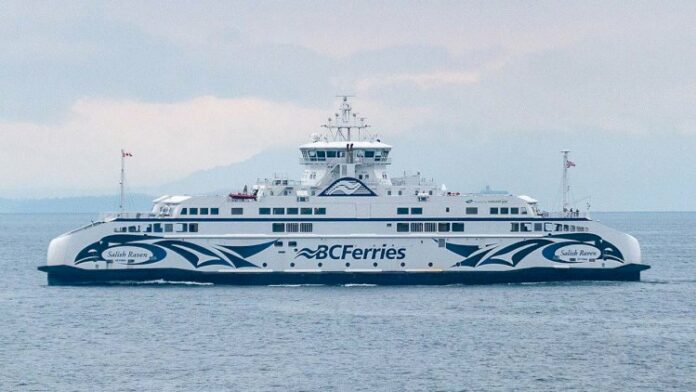
BC Ferries continues to roll out its Clean Futures Plan and has awarded Remontowa Shipbuilding S.A. of Gdansk, Poland a contract to build an additional liquefied natural gas (LNG)-fuelled vessel scheduled to go into service in the Southern Gulf Islands in 2022.

This vessel will be identical to the three Salish Class vessels built by Remontowa for BC Ferries in 2016.

Captain Jamie Marshall, BC Ferries’ Vice President, Business Development & Innovation, said:

“Our Clean Futures Plan is our path to replace diesel fuels with cleaner energy options. While this cannot be achieved in a single step, we are continually seeking energy sources that offer a cleaner, lower carbon-intensity option to displace non-renewable diesel. In our move towards a sustainable future, adopting LNG is one way to reduce our impact on the environment today. This new vessel will be our sixth ship fuelled by natural gas.”

The agreement with Remontowa is a design-build, fixed-priced contract that provides BC Ferries with substantial guarantees related to delivery dates, performance criteria, cost certainty and quality construction. The total project budget, which includes financing and project management costs, is approximately $92.3 million.

The 107-metre Salish Class vessel will have the capacity to carry at least 138 vehicles and up to 600 passengers and crew. It will allow for the retirement of the Mayne Queen, a diesel-fuelled vessel. The ship will be powered by three Wartsila engines and electrically propelled by Schottel thrusters at each end, driven by an efficient gas-electric power plant. Onboard amenities include a Coastal Café, Passages retail store, children’s play area and a passenger lounge.

The ship will have a number of key features that support BC Ferries’ goal to be efficient and environmentally responsible throughout its system. Highlights of the Salish Class vessels include:

  • The use of natural gas as the primary fuel that reduces GHG emissions by 15 to 25 per cent, reduces sulphur oxides by over 85 per cent, reduces nitrogen oxides by over 50 per cent and nearly eliminates particulate matter
  • Electric propulsion that eliminates gear boxes and shaft
  • Twin propellers that reduce cavitation
  • Hull designed for very small wake
  • Advanced hull coating that reduces flow disturbance and environmental leaching
  • Engine management system that reduces machinery running
  • Resilient engine mount that isolates structure borne noise

First step towards a climate-neutral transport Rhine-Alps Corridor

0

Seventeen parties have taken the first step towards a climate-neutral transport corridor between Rotterdam and Genoa.

Organisations and companies have signed a declaration of intent in Arnhem to ensure that, in the future, water, road and rail transport via the so-called Rhine-Alps corridor will run on hydrogen. The Port of Rotterdam Authority is also taking part in this initiative, which is known as RH₂INE (Rhine Hydrogen Integration Network of Excellence).

Freight on the transport line between the Netherlands, Germany, Switzerland and final destination Italy is currently almost exclusively carried on fossil fuel-based transport. The Province of South Holland, the Ministry of Infrastructure and Water Management and the German State of North Rhine-Westphalia took the initiative to establish the first zero emission route.

It is not an easy ambition to achieve. Many things are needed to create a stable market environment for a hydrogen corridor, including good infrastructure with bunker locations and filling stations for an effective balance of supply and demand – and that is aside from the need to convert vessels and trucks. Substantial developments are also required with respect to safety and regulations. This will be the Port of Rotterdam Authority’s specific contribution in the initiative RH₂INE (Rhine Hydrogen Integration Network of Excellence).

Stijn van Els, who represented the energy transition team in Arnhem, signed the declaration on behalf of the Port Authority. Van Els stated:

‘This is an important signal from government agencies, port organisations and companies for participants to get involved. The parties are really ambitious to make this crucial transport corridor sustainable. The strength lies in international cooperation. This will enable us to achieve real progress.’

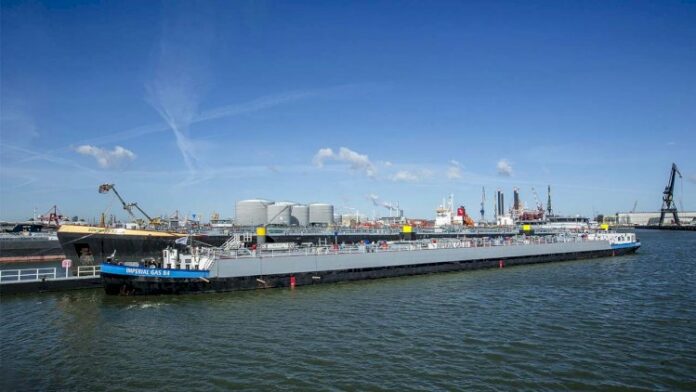
RH2INE will initially focus on realising production locations for hydrogen along the Rhine between Rotterdam and Cologne. This will enable the first ten to fifteen inland tankers to run on hydrogen in the coming years.
The initiators would like to see an increase in participant numbers as this would give the broadest possible impetus to the development of the climate-neutral transport corridor. RH₂INE will therefore be an open platform, as this will enable various hydrogen chain parties to join.

RH₂INE currently comprises the following parties: the Province of South Holland, the State of North Rhine-Westphalia, Ministry of Infrastructure and Water Management, Province of Gelderland, Port of Rotterdam Authority, Duisburg Port Authority RhineCargo, BCTN, EICB, Nouryon, Covestro, Air Products, Future Proof Shipping, HTS Group, NPRC, AirLiquide and Koedood.

New tidal energy project in Canada

0

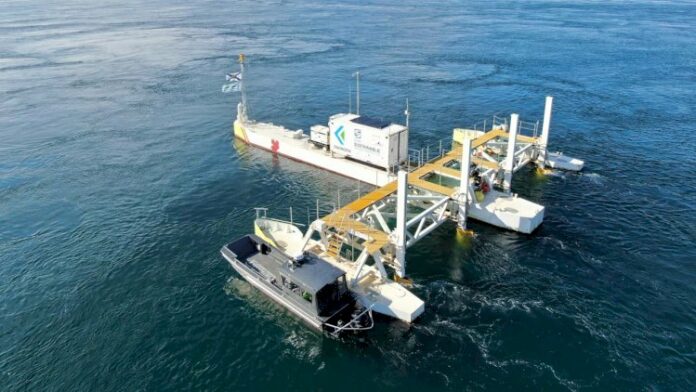
Sustainable Marine Energy (SME) and Minas Tidal LP (MTLP) have agreed to co-develop their adjacent berths at the Fundy Ocean Research Center for Energy (FORCE) and will utilise SME’s PLAT-I floating in-stream tidal energy technology to deliver up to 9MW of tidal energy to the Nova Scotia grid.

The combined project is to be called the Pempa’q In-stream Tidal Energy Project and will be delivered in phases starting next year. For Phase 1 SME will deliver three next generation PLAT-I platforms, each producing up to 420kW, providing a combined capacity of 1.26MW.

Sustainable Marine Energy (Canada) was recently awarded a license by the Nova Scotia Department of Energy and Mines (NSDEM) which allows energy generated by the three tidal energy systems to be sold via a power purchase agreement (PPA) to Nova Scotia Power.

Project financing for the first phase through equity and debt is being provided by Hamburg-based reconcept Group. The asset manager specialising in renewable energy investments has been advising on the project and is establishing a capital fund specifically for this purpose. reconcept will also be supporting the financing of further phases of the project, to enable the delivery of the full 9MW of capacity provided by the two berths.

Karsten Reetz, Managing Partner of reconcept Group, stated:

“Tidal power has great potential, especially in the Bay of Fundy, and can help answer the challenges of the climate crisis. The major advantage of tidal power plants is their predictable and reliable output – this is very compelling from the investor’s point of view. We expect attractive returns for our German co-investors.”

Jason Hayman, the Managing Director of SME, commented:

“Reaching this point has been a team effort and made possible by the strong support provided by key stakeholders in both Europe and Canada.

Over the past three years we have focused on developing and proving up our technical solution which has been strongly supported by our major shareholders; SCHOTTEL and Scottish Enterprise. This enabled SME to build and test the first PLAT-I demonstrator in Scotland, and since this time last year we have continued the testing in Nova Scotia, at Grand Passage, in preparation for our entry into FORCE.

The FORCE site is renowned for its incredible tidal resource, but this also makes it a very challenging environment in which to deploy equipment. The lessons learned from our deployments in Scotland and Nova Scotia have helped us to prepare for this project.

A supportive and stable market environment is required to enable the transition from R&D into an industry that can deliver commercially viable, abundant and predictable clean energy. We would like to thank the Government of Nova Scotia for remaining steadfast in their support of tidal energy. This enables us to continue our staged approach to delivering our objective; reducing the cost of tidal energy.“

The President of MTLP, Mark Savory, who has been appointed as President of the Spicer Marine Energy joint venture stated:

“In conjunction with our partner Minas Energy, a founding berth holder at FORCE, we have evaluated a number of potential technologies for developing our project over the years.

SME have demonstrated an innovative and robust solution which offers unrivalled access to key components for maintenance which will help reduce lifecycle costs and is essential for de-risking early-stage projects. Combined with the demonstrated ease of installation when compared to other technologies, this provides us with a high degree of confidence. We have scrutinised SME’s next generation design; they have adapted their system to deal with the conditions present at FORCE and have increased the rated output by 50% with only a small increase in the size of the platform. This makes us very optimistic about the commercial potential of their approach.”

When questioned about the significance of the project’s name, Savory responded:

“Here, in Nova Scotia, we are conducting our activities in an area that is home to the Mi’kmaq First Nation. In the Mi’kmaq language, pempa’q (pronounced bembaahk) is the name for the rise of the tide, which we feel is especially representative of the environment we are working in. The Bay of Fundy is famous for its large tidal range, which creates the strong tidal streams through the Minas Passage that we are using to generate renewable energy.

FORCE is located on the Parrsboro Shore, which in the 1800’s had very prosperous shipbuilding industry, that used the rise of the tide to launch their vessels. Now we are using the rise of the tide in the Bay of Fundy to launch a new, sustainable industry which will bring economic prosperity to the area in an environmentally responsible manner, that respects the values of Indigenous communities, many of whom are becoming more and more involved in the development of the renewable energy projects in Canada.”