-3.4 C
New York
Home Blog Page 919

The world’s first adaptive ferry transit conducted during normal service

0

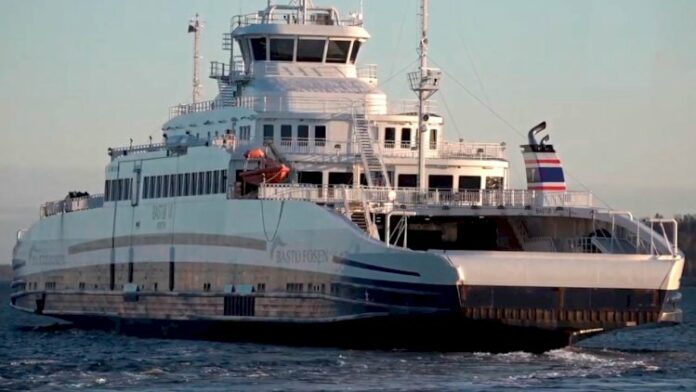
Kongsberg Maritime has announced the world’s first adaptive ferry transit conducted during normal service.

This landmark event, which took place last week on a vessel fully loaded with passengers and vehicles and demonstrated fully automatic control from dock to dock, is a key step forward in the integration of autonomous technology into everyday shipping operations. It was made possible by close collaboration between shipping company Bastø Fosen, KONGSBERG and the Norwegian Maritime Authority (NMA).

Bastø Fosen VI will now use adaptive transit functions developed from Kongsberg Maritime’s advanced systems to enhance the daily operation of its Horten-Moss service, while continuing to carry a full complement of crew. The technology introduces new potential for the sustainability of diverse marine operations by providing a platform for optimised fuel consumption and reduced Greenhouse Gas (GHG) emissions. While supporting key elements of the UN sustainability targets for climate change, ferry owners and operators adopting the technology can experience tangible operational cost savings.  

The fully-integrated digital system on Bastø Fosen VI automatically performs all docking and crossing functions to a high and repeatable level of accuracy, ensuring that best practice is followed to the smallest detail on every transit. The result is more exact timekeeping and improved customer satisfaction: during trials in December, Bastø Fosen VI consistently arrived within two seconds of the scheduled time.

Øyvind Lund, CEO, Bastø Fosen, commented:

“Today, at the press of a button, one of our vessels left the quay in Horten, crossed the Oslo fjord and docked in Moss, all completely automatically. This leaves the crew more time to focus on monitoring the vessel and ensuring passenger safety, which for us are the main motivations for adopting this technology.

Cooperation with KONGSBERG and the NMA has been crucial to the success of this venture, as has consultation with our captains and crew. We have included them in this project from the start and have been delighted with how engaged they have been in its delivery. This is an aid, not a replacement. Greater accuracy permits better logistics: for example, we can now pre-program the time allowed for the crossing and thus reduce energy consumption. Digitalisation and automation are the future, and we are proud to be prime movers.”

National and international regulatory bodies are still in the early stages of developing legislation to accommodate automatic marine operations, but through its work with Bastø Fosen and KONGSBERG on the Bastø Fosen VI, the NMA have shown the world a clear path forward.

Svein David Medhaug, Norwegian Maritime Authority, said:

“Norway is a small country, but we are very big within the maritime industry. That gives us the ability to promote these advancements across a large part of the world’s merchant fleet, and we’re happy to be a part of that. Safety is the key issue for us, and we’re delighted to work with stakeholders such as Bastø Fosen and KONGSBERG to ensure that this technology is both sustainable and safe.”

Bastø Fosen VI now enters a six-month trial period during which the automatic system – called ‘adaptive transit’ – is expected to control the vessel for most services, but the captain will remain in charge and the bridge will be fully staffed. At present, the installed equipment is not fully autonomous – if vessels or objects are detected on a collision course an alarm will sound and the captain will take control.

An anti-collision system, comprising radar and electro-optical sensors, is expected to be fitted to Bastø Fosen VI this summer and be under test by autumn, but crew will remain on the bridge even as the level of autonomy increases. To maintain manoeuvring skills, Bastø Fosen’s procedures will require their staff to perform manual transits on a regular basis.

This historic event consolidates Norway and the Norwegian maritime industry’s leading position in the development and implementation of autonomous maritime solutions. Speaking from on board Bastø Fosen VI, Gunnar Pedersen, EVP Integrated Solutions, Kongsberg Maritime, said:

“Leaving the quay, crossing and docking again, all at the press of a button – this is a world first. It’s super-smooth too, as we saw today. But without collaboration between a forward-leaning ferry operator like Bastø Fosen, the support of the Norwegian Maritime Authorities and a technology provider like KONGSBERG, none of this would have been possible. This is a big day for everyone involved – this is the future.”
 

Intellian’s next-generation GX100NX antenna approved by Inmarsat

0

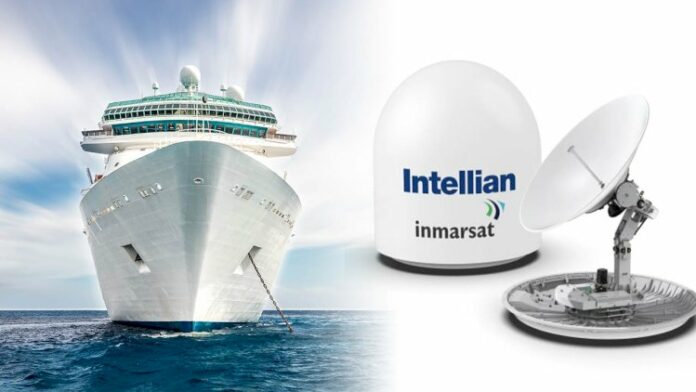
Intellian, the global leader of mobile satellite communication antenna systems, has received product approval from Inmarsat for the new GX100NX antenna. This announcement follows excellent results achieved during recent testing at Inmarsat’s innovative, hi-tech facility in Ålesund, Norway, followed by a wholly successful sea trial.

The Ka-band GX network from Inmarsat, the world leader in global, mobile satellite communications, is being enhanced and expanded at an extraordinary rate, with fully-funded plans to increase the number of GX satellites over the next four years from four to twelve. This is in response to rapidly increasing user demand for high speed data services across the globe, including the typically hard-to-reach Arctic regions.

The latest of the new satellites – GX5 – was successfully launched in November 2019 and is positioned to cover the EMEA region. Once in service later this year, GX5 will deliver twice the capacity of the entire existing GX fleet of four spacecraft combined.

Intellian’s highly efficient next-generation GX100NX antenna supports 2.5GHz Ka wideband networks out of the box and is supplied with a 5W BUC as standard, with the option to upgrade to a high-power 10W unit. This makes the GX100NX upgradable and futureproof for Inmarsat’s next generation high-capacity, high-speed constellation and future network upgrades.

Extensive sea trials demonstrated the significant advances over previous GX100 models, with faster satellite acquisition and a staggering 1dB (25%) signal increase. These advantages combine to deliver substantial improvements in network efficiency and availability which, when combined with superior bandwidth, will introduce Intellian and Inmarsat’s customers to a new era of reliability and value. Terminal testing also proved the effectiveness of the GX100NX Below Deck Unit, which integrates the Antenna Control Unit, GX modem and mediator function for dual antenna configuration in a single unit.

Eric Sung, CEO of Intellian, commented:

“We designed our NX series to bring cutting-edge performance to our customers, both now and into the future. Inmarsat’s rapid network expansion, both in terms of coverage and bandwidth, gives us the opportunity to demonstrate that the GX100NX is ideally suited to do just that, and we confidently anticipate that it will rapidly become the preferred choice for Inmarsat Fleet Xpress customers.”

Ronald Spithout, President, Inmarsat Maritime, added:

“Intellian’s innovative approach to antenna design mirrors our strategy for the Fleet Xpress platform, which has been installed on more than 8,000 vessels and is now much more than a VSAT connectivity pipe, due to fast-growing value-added services such as Fleet Data, Fleet Edge and Fleet Secure as well as the rapid development of our Application Provider ecosystem. We are delighted to welcome the GX100NX to our network and, together with Intellian, we look forward to delivering and continuously improving our service to meet the growing connectivity demands of the global maritime economy.”

Intellian NX antennas – including the GX100NX – feature a single cable design, along with new AptusNX software to enable fast commissioning and maintenance. This focus on streamlining installation and support processes delivers lower lifetime costs, without compromise on link performance. More savings come from the NX platform’s modular design, allowing spare part stocks to be reduced by up to 40%.

The GX100NX is now commercially available from all Intellian’s global logistics centers.

Innovation to deploy subsea drill at Saint-Nazaire offshore wind farm

0

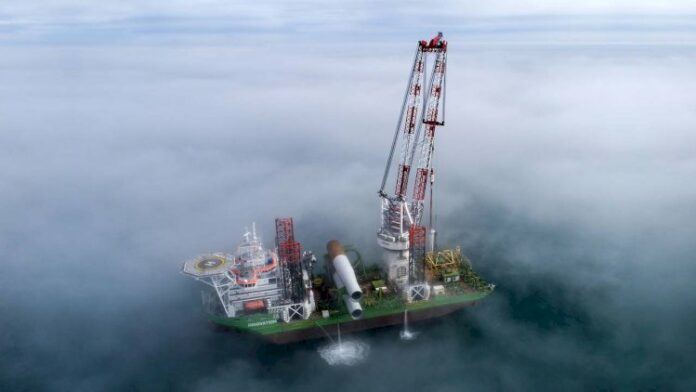
DEME Offshore and Herrenknecht have signed an agreement for the fabrication of a subsea drill to be deployed at the Saint-Nazaire offshore wind farm in France. This is the first wind farm in the world to use drilled XL-monopile foundations.

In 2019, a consortium including DEME Offshore and Eiffage Métal was awarded the EPCI contract for 80 foundations for the French wind farm. The scope includes the design, fabrication, transportation and installation of the steel foundations.

The 480 MW Saint-Nazaire offshore wind farm, owned by EDF Renewables and Enbridge, will be located between 12 km and 20 km off the coast of the Guérande peninsula in western France.

The XL-monopile foundations have to be installed on a difficult rocky seabed. DEME Offshore and Herrenknecht, the global leader in tunnel boring machines, are fabricating an innovative tailormade subsea drill specifically for the project. The subsea drill will be deployed from DEME Offshore’s installation vessel ‘Innovation’.

Bart De Poorter, General Manager DEME Offshore, says:

“Installing drilled XL-monopiles is a new step forward in the offshore wind industry. With this innovative solution, developed in partnership with Herrenknecht, we ensure that the installation is performed safely and efficiently in challenging marine conditions.”

Ulrich Schaffhauser, Member of the Board of Management of Herrenknecht AG, says:

“The Offshore Foundation Drilling (OFD) enables mechanised installation of monopiles, thus providing ecological and economic advantages compared to conventional methods. We are proud, that DEME relies on Herrenknecht’s solution, expertise and know-how in the field of excavation technology. The project teams of DEME and Herrenknecht cooperated very well, now we all are looking forward to project realisation.”
 

GreenSteam and Intra Mare bring machine learning vessel optimization to Greece

0

GreenSteam, developers of the first machine learning-based vessel performance optimization software, has partnered with Intra Mare, an international marine sales and naval architect organization promoting leading marine equipment makers.

Intra Mare will represent GreenSteam in Greece and support the roll out of their machine learning platform in this key maritime market.

The response of Greek shipowners to IMO GHG reduction targets is critical to the shipping industry's worldwide compliance. As one of the largest maritime markets in the world, the Greek shipping industry is under the spotlight, recently announcing their preference for shared accountability for vessel emissions for owners, operators and charterers when it comes to carbon reduction strategies.

GreenSteam’s machine learning platform uses all available data to accurately measure each component of vessel fuel consumption, transforming complexity into simple, clear and accurate vessel performance metrics. This analysis is used to optimise vessel performance and ultimately save costs and reduce GHG emissions for operators.

George Gerassimou, Managing Director at Intra Mare said:

“GreenSteam’s vessel optimization services enable us to champion the latest technology that will support our vision for the future, working in tandem with the interests of the Greek market. This includes upholding maritime tradition while keeping Greek companies operating competitively and efficiently. Environmental sustainability has never been more relevant and is directly tied to commercial success. GreenSteam sets up a virtuous cycle of saving fuel costs while also operating in a more environmentally sustainable way.”

Simon Whitford, COO at GreenSteam, commented on the partnership:

“As we enter the new decade, the shipping industry is taking action to reduce their emissions in a way that also cuts fuel costs. GreenSteam offers a machine learning platform that offers shipowners and operators a capex and downtime free way to enjoy high payback fuel reductions and embrace the future of vessel performance optimisation. By working with Intra Mare Greek shipowners have easy access to our technology and first class support. Intra Mare have an excellent reputation in this market, and we look forward to working with them.” 

Neptune Energy signs operated exploration licence for Gulf of Suez

0

Neptune Energy has signed an operated exploration licence with the Egyptian General Petroleum Corporation (EGPC) for Egypt’s North West El Amal Offshore Concession, underlining the company’s commitment to growing its presence in North Africa, an important region for the business.

Neptune will acquire 100 km2 of 3D seismic data and drill one exploration well in the first phase, with two further wells planned in phase two.

The North West El Amal Offshore concession covers 365 km2 and is located in the central part of the Gulf of Suez, approximately 42 km south of Ras Gharib and 105 km north of Hurghada.

The signing ceremony was held at the Egypt Petroleum Show (EGYPS) and was attended by Minister of Petroleum and Mineral Resources, His Excellency Eng. Tarek El Molla, CEO of EGPC, Abed Ezz El Regal; Neptune Energy’s CEO Jim House, VP North Africa & Asia Pacific Philip Lafeber and Egypt Managing Director Gamal Kassem.

Neptune CEO, Jim House said:

“Our strategy is to invest and grow our presence in Egypt which is an important market for Neptune. We are committed to strengthening our presence in North Africa through exploration and production activities. This is another important step for Neptune in the region and we’re pleased to build on our strong relationships with our partners and with the Ministry.”

Egypt Managing Director, Gamal Kassem added:

“The Gulf of Suez provides many promising prospects and we look forward to working closely with EGPC to grow Neptune’s business in Egypt.”
 

Port Canaveral awarded $14.1M to upgrade North Cargo Berth 3

0

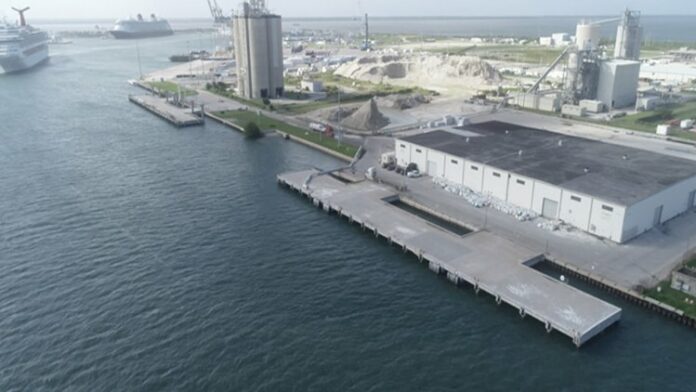
The Canaveral Port Authority has been awarded a $14.1 million grant from the U.S. Department of Transportation (DOT) Port Infrastructure Development Program to modernize and expand Port Canaveral’s North Cargo Berth 3.

Port CEO Capt. John Murray said:

“This is the largest federal grant ever awarded to Port Canaveral, and we thank Secretary Chao for her commitment to us. We have more demand for our bulkhead than we can currently provide. This funding now gives us the opportunity to aggressively advance the development of our cargo facilities to accommodate growth in key sectors including construction materials and commercial space.”

Port Canaveral’s Cargo Berth Rehabilitation and Modernization project will demolish an existing pier, replacing it with an 880-foot long wharf with the necessary channel width to accommodate larger vessels simultaneously at berth. Built in 1976, NCB3’s design – combined with the increasing size of commercial vessels and growing cargo diversity – has made the berth functionally obsolete.
 
Secretary of Transportation Elaine L. Chao said:

“Our ports are an integral component of our Nation’s economic success. As the Administration continues to invest in America’s infrastructure, this program will further modernize and improve the efficiency of our waterways.”

Port Canaveral’s NCB3 project has a total cost of $37,861,600. The CPA and the Florida Department of Transportation (FDOT) will maximize the leveraging of federal dollars by providing a combined match of $23,761,600 or 63 percent of the total project cost. This berth rehabilitation and modernization project furthers the DOT’s desire to finance projects that have actively sought to lower the federal dollar amount needed to complete infrastructure projects.
 
In Washington, D.C., U.S. Senator Marco Rubio (R-FL) applauded Port Canaveral as the world’s second busiest cruise port in multi-day embarkations and a world-class driver of the Florida economy.   
 
U.S. Rep. Bill Posey (FL-8) stated:

“Port Canaveral has long been a vital component to the economy of the Space Coast and Central Florida. The award of this grant will help pave the way for future job creation and economic activity, and I am pleased to see the Administration’s continued recognition of the importance of these infrastructure projects to our communities.”

The NCB3 Berth Rehabilitation Project is included in the Port’s five-year capital improvement plan with a targeted start date by the end of 2020. The Port has received the necessary required permits from the U.S. Army Corps of Engineers, the U.S. Environmental Protection Agency and the State of Florida to begin the first phase of construction.

Cruise ship was denied entry into Thailand due to coronavirus fears

0

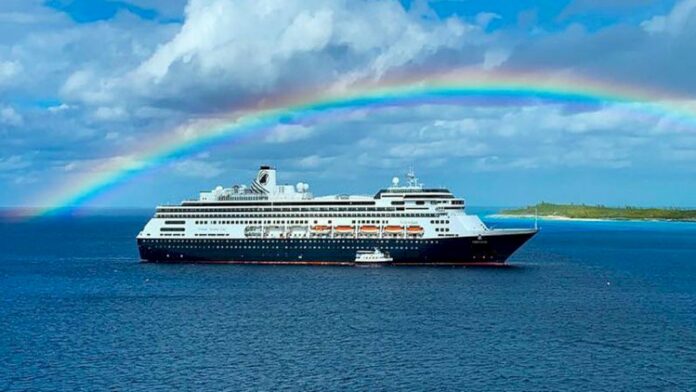
A Holland America Line cruise ship on Tuesday was refused entry to Thailand over fears of coronavirus. This is the fifth port to deny the ship to dock despite no cases of the virus having been confirmed on board the ship.

Westerdam is now sailing for Sihanoukville, Cambodia, where the current cruise will end. Ship will arrive at 7:00 a.m. local time on Thursday, Feb. 13 and will remain in port for several days for disembarkation. Guests will be able to go ashore. All approvals have been received.

Guests will disembark in Sihanoukville over the next few days and transfer via charter flights to Phnom Penh for forward travel home. Holland America Line will arrange and pay for all flights home. All guests will receive a 100% refund for the 14-day sailing, as well as a 100% Future Cruise Credit. Complimentary internet and phone access is available for guests and crew to stay in contact with loved ones. 

The ship is not in quarantine and there is no reason to believe there are any cases of coronavirus on board despite media reports. All guests on board are healthy.

Holland America Line has also received a letter from the Dutch National Institute for Public Health and the Environment affirming that they have full confidence in all medical reporting and the quality of  medical staff and services on Westerdam. This assessment was done in concert with the Ministry of Health of the Netherlands.

The Feb. 15 cruise currently scheduled to embark in Yokohama has been cancelled. Booked guests and their travel advisors have been notified.

No cancellations for cruises with departure dates beyond February 15 have been announced at this time.

New NAUTIS fishing simulators bound for training in Angola

0

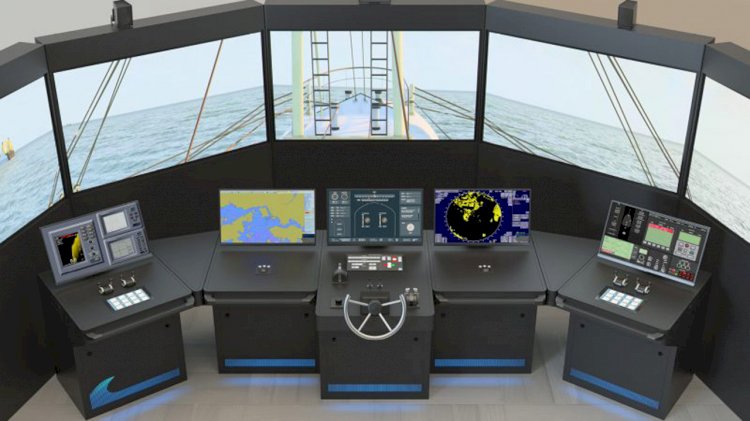
Another delivery will soon be made for the fishing package of NAUTIS Simulator through VSTEP’s partner ANEXUS. The simulators will head to Angola, where it will be used for training a wide range of fishery techniques.

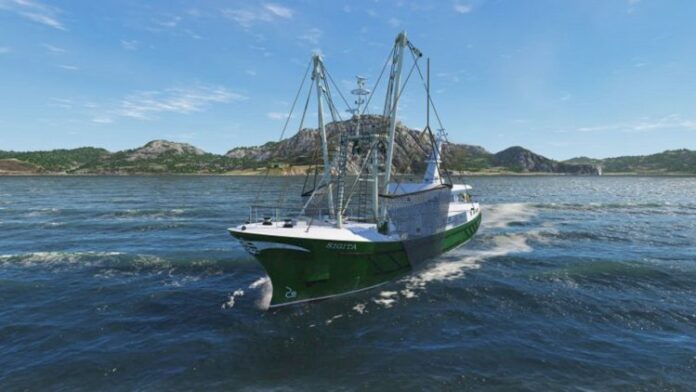
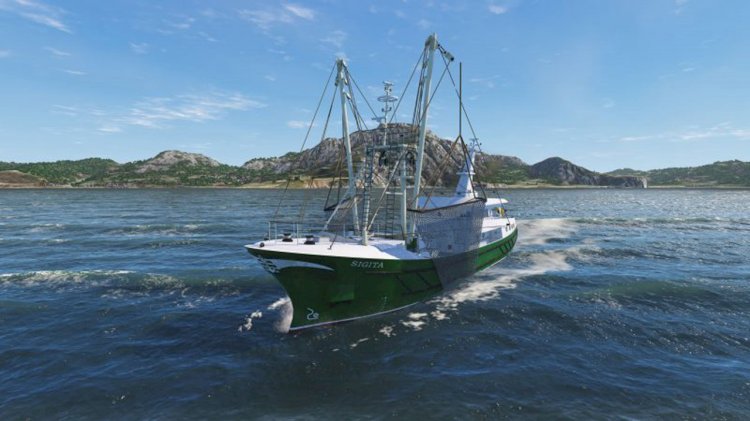
This new project includes a NAUTIS Class B and several NAUTIS Desktop Simulators with a MARIS Radar and eGlobe ECDIS. These simulators will be equipped with the Fishing content and functionality package. This combination will make the trainees in Angola well equipped to train for operations at sea, against a range of weather conditions. A variety of fishing methods are available, including bottom trawling, pelagic trawling, longlining and jigging.

Fishing capabilities within NAUTIS allow organisations to engage in different learning objectives in which instructors can place fish schools of any desired type into the simulation exercise. Trainees can engage in familiarisation training of a number of fishing techniques, under any conditions deemed necessary by the instructor at a procedural level.

Ties Klapwijk, Head of Business Development NAUTIS, shares:

“It is great to see an increasing amount of interest in our fishing content and functionality package. Our growing number of clients indicates a positive development. Not only are an increasing number of seafarers utilizing effective simulation, the adoptions of our solutions demonstrate the high class and worth of our simulator.”

There were 567 casualties and incidents in 2018*, with 208 persons injured and 11 who lost their lives at sea. More than half of those injuries took place onboard trawlers. 62.4% of all accident events are caused by human action and remains the most contributing factors. This highlights the need for additional training, which can be achieved through NAUTIS solutions.

The sale was made possible through VSTEP’s partner ANEXUS, which is based in Spain. Since the 1990’s they have specialised in simulation technologies. ANEXUS has stood out for their knowledge and services in professional nautical training and the maintenance of navigation, communications and integration systems. The partnership is supported by a mutual interest and expertise in maritime simulation.

*Data collected by the European Maritime Safety Agency (EMSA). 

Capbreton goes green with all-electric passenger ferry

0

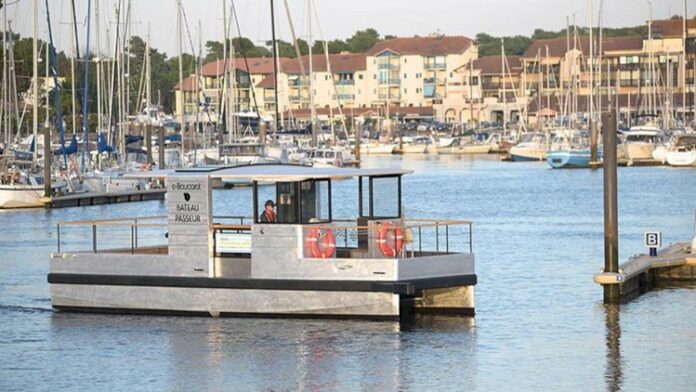
Capbreton is turning to green technologies to reduce pollution of its air and waterways. The popular holiday destination on the Atlantic coast of France saw its first all-electric passenger ferry go into service in July 2019, replacing an older diesel-burning vessel.

The 35-passenger aluminium vessel, called e-Boucarot, is powered by an integrated electric propulsion system developed by Torqeedo. It consists of two 10 kW electric outboards and four 48V 5 kWh lithium batteries with helm controls and display.

The 10-metre aluminium catamaran has a top speed of eight knots and typically cruises at an economical three knots in the harbour. The operator estimates that the boat can run up to 20 hours between shore recharges. L2O Naval, based in L’Orient, designed the ecologically responsible vessel, which was built by Idra Navacco.

Loys Leclercq, naval architect for the new boat, said:

“An important goal for us when designing the new eco-friendly boat was to be respectful of the environment. Unlike fibreglass, the aluminium hull is fully recyclable when the ferry comes to the end of its life, and the catamaran hull form improves efficiency by reducing water resistance. And with the Torqeedo powerplant, we’ve reduced air and water pollution – as well as noise levels – to zero.”

Jean-Claude Ollivier, deputy head of the port of Capbreton, said:

“The new solar boat is a popular attraction on the Capbreton waterfront. Our passengers love the experience of gliding silently and smoothly through the harbour under electric power when commuting or touring the harbour.”

Dr Christoph Ballin, co-founder and CEO of Torqeedo, said:

“In cities around the world, we see a movement to replace older fuel-burning boats with modern electric boats on urban waterways. Not only does it help reduce pollution, but passengers also enjoy their on-water experience with no noise or smelly exhaust fumes, and it saves money for operators in terms of fuel and maintenance costs.”

Abu Dhabi Ports inks long-term agreement with MSC Cruises

0

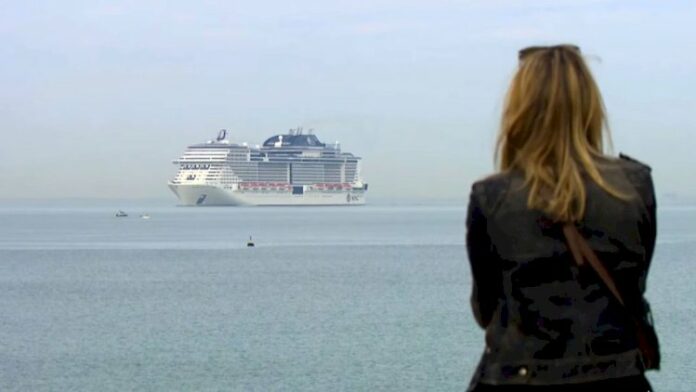
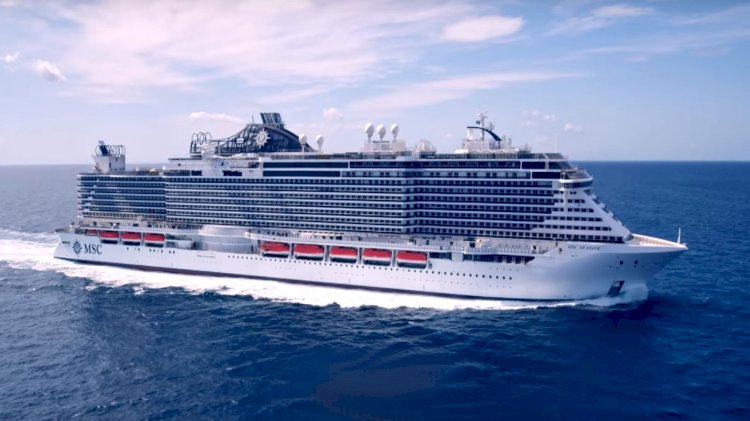
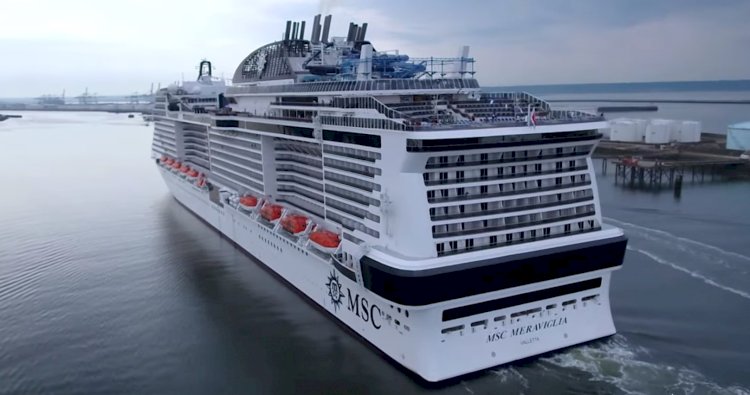
Abu Dhabi Ports has announced a long-term agreement with MSC Cruises, giving the world’s largest privately-owned cruise line berthing rights at Abu Dhabi Cruise Terminal and Sir Bani Yas Cruise Beach.

The deal, signed by Director of Cruise Business at Abu Dhabi Ports, Noura Rashid Al Dhaheri and MSC Cruise CEO, Gianni Onorato, at MSC’s headquarters in Geneva, Switzerland, reinforces Abu Dhabi’s position as a premier destination on the international cruise map. Most importantly, the deal will bring 1.3 million visitors to the capital over the tenure of the agreement.

Abu Dhabi’s Cruise Terminal has reported significant growth over the last 12 months, posting a 47 percent rise in passenger numbers and a 45 percent rise in vessel calls. The terminal’s bumper year was due in part to MSC Cruises’ commitment earlier this season to include 17 new calls at Zayed Port.Last December, the terminal marked one of its busiest days of the 2019/20 winter season to date, when it welcomed more than 8,000 visitors as part of a triple call to Abu Dhabi, which included the maiden call of MSC Cruise’s luxury liner MSC Bellissima.

Noura Rashid Al Dhaheri, Director – Cruise Business, Abu Dhabi Ports, said:

“Our continued partnership with MSC Cruises is testament to our already strong relationship, and reflects the quality of services we provide to the world's leading cruise operators at Abu Dhabi Cruise Terminal and Sir Bani Yas Cruise Beach. Our success in substantially boosting passenger volumes year on year demonstrates our commitment to develop a world-class cruise destination.

With investment in infrastructure, and enhanced operations and services to serve the cruise liners arriving in Abu Dhabi, we have cemented our position as the leading destination in the Gulf region. Abu Dhabi Cruise Terminal is emerging as the ultimate point of disembarkation for international cruise liners.

We are determined to further develop our offerings and strengthen our unique selling proposition by developing flexible and smart solutions to ensure all our guests enjoy the finest in-port experiences.”

Gianni Onorato, CEO of MSC Cruises, added:

“This new agreement with Abu Dhabi Ports for preferential berthing rights is another demonstration of the long-term commitment from MSC Cruises to the Arabian Gulf, and it will further consolidate our position as the largest passenger cruise operator in the region.

Abu Dhabi is a very important embarkation port and popular destination for ashore visits during winter cruises and we are currently serving the city and Sir Bani Yas Cruise Beach with both MSC Bellissima, the most modern and one of the most environmentally-advanced cruise ships to sail in the Arabian Gulf, and MSC Lirica.”

Ali Hassan Al Shaiba, Acting Executive Director of Tourism and Marketing at the Department of Culture and Tourism – Abu Dhabi, said:

“This historic deal will play a significant role in positioning Abu Dhabi as a top destination for cruises in the region. MSC Cruises was one of the key players in helping us attract over 500,000 cruise visitors to the capital last year, and we have no doubt in the successes it will bring over the coming years. On our end, we remain committed to providing MSC Cruises and all travellers with exceptional services and extraordinary experiences during their visit to the UAE capital.”Abu Dhabi Cruise Terminal operates from Zayed Port, the main cruise passenger gateway to the city, located close to most of the city attractions which include Louvre Abu Dhabi, Sheikh Zayed Grand Mosque, Ferrari World, as well as a wide range of luxury hotels and resorts."

Renowned as the first and only dedicated cruise beach of its kind in the region, Sir Bani Yas Cruise Beach is the gateway to one of the UAE’s largest natural reserves open to the public. Rich with UAE heritage and natural marvels, the island offers a unique experience to its visitors.