-4.9 C
New York
Home Blog Page 918

Two new oceanographic vessels will join the NOAA fleet

0

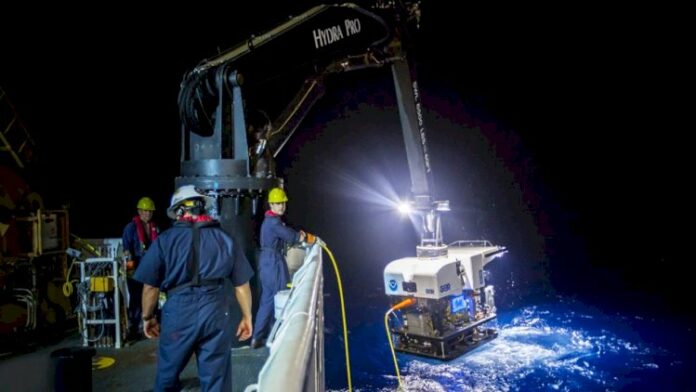
NOAA is in the process of acquiring two new oceanographic ships as part of the agency’s fleet rebuilding effort. Once in service, the new ships will support a wide variety of missions, ranging from general oceanographic research and exploration to marine life, climate and ocean ecosystem studies.

Neil Jacobs, Ph.D., acting NOAA administrator, said:

“When completed, these new state-of-the-art ships will be vital for collecting high-quality data and leading scientific discoveries. The science missions aboard these vessels promise to push the boundaries of what is known about our still largely undiscovered ocean.”

The first ship, to be named Oceanographer, will be homeported in Honolulu. The second ship, to be named Discoverer, will be assigned a homeport at a future date. Both ships will continue the legacies of their namesakes, the first Oceanographer having served in the agency’s fleet from 1966 to 1996 and her sister ship, Discoverer, from 1967 to 1996. 

Design of the vessels is currently underway and NOAA expects to award contracts for the construction of the ships by the end of the year. Both will be built in the United States and construction timelines and target launch dates for the vessels will be determined after the shipbuilding contracts have been awarded. 

Rear Adm. Michael J. Silah, director of the NOAA Commissioned Officer Corps and NOAA Office of Marine and Aviation Operations (OMAO), said:

“The acquisition represents a major step forward in the recapitalization of NOAA’s ship fleet and will help ensure that the agency has the seagoing capability to collect the best information possible about the marine environment.”

NOAA currently has a fleet of 15 active research and survey ships, which are operated by OMAO and crewed by NOAA Corps officers and civilian professional mariners. Each year, NOAA ships conduct more than 100 missions to collect data critical for nautical charts, fishery quotas, exploration of the nation’s 4.3-million-square-mile Exclusive Economic Zone, storm surge modeling and climate research.
Well-Safe Solutions awards significant work scope for downhole services

0

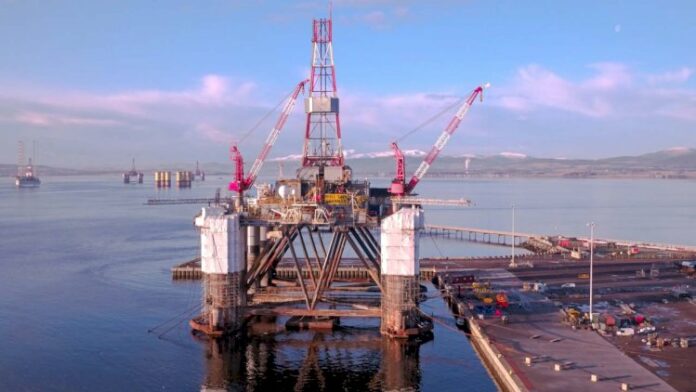
Well-Safe Solutions has announced the award of a significant work scope to Schlumberger for the provision of Plug and Abandonment Well Services.

The scope includes the supply of cementing service, wireline services, wellbore fluid services and fishing, milling and swarf recovery services.

The appointment of Schlumberger was the result of a highly competitive selection process through which Schlumberger demonstrated a highly attuned and complementary strategy for well decommissioning. The work will be aboard the Well-Safe Guardian; Well-Safe’s flagship decommissioning asset.

Phil Milton, chief executive officer at Well-Safe Solutions said:

“We are delighted to award this contract to Schlumberger following an extensive tender process. Achieving this major milestone within the timeframes we committed to, will give us access to the necessary technology and ensure our operational readiness for Q2 2020.”

Donald McKay, Business Development Manager at Schlumberger said:

“Schlumberger is pleased to deliver our services for well abandonment to our clients in the North Sea. The appointment of these fully integrated services shall enable significant benefit to the P&A market.”

Coronavirus-themed attacks target Global Shipping Concerns

0

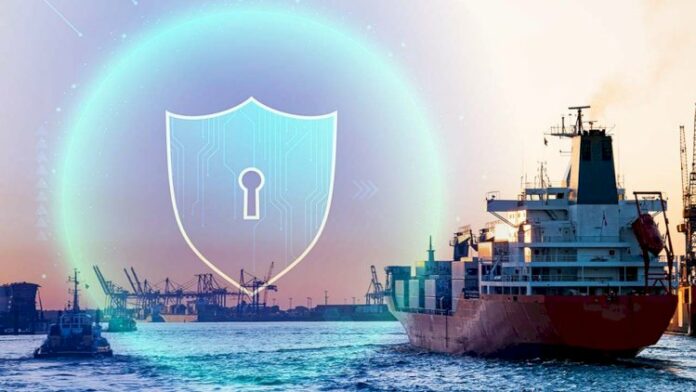
Last week attackers exploited Coronavirus fears by sending malicious health information emails aimed at Japanese-language speakers.

This week Proofpoint researchers uncovered new Coronavirus-themed email attacks that focus on concerns around disruptions to global shipping. In this latest notable effort, attackers are nearly exclusively targeting industries that are particularly susceptible to shipping disruptions including manufacturing, industrial, finance, transportation, pharmaceutical, and cosmetic companies (in that order).

While this specific Coronavirus-themed email campaign is narrow in its focus, it features malicious Microsoft Word documents, exploits a two-and-a-half-year-old vulnerability, and installs AZORult, an information stealing malware. The malware actors doing this appear to be from Russia and Eastern Europe, and while they aren't part an APT group, they clearly understand the economic concerns surrounding the Coronavirus. All emails with Coronavirus-themes and attachments should be treated with caution, even if they don’t appear to be directly health related.

A Coronavirus-related shipping supply disruption would negatively impact each of the company types listed above and it’s clear these attackers are aware that a major event like Coronavirus can have secondary impacts on industries. This awareness demonstrates not just technical sophistication, but economic sophistication as well. In addition to the health concerns around Coronavirus, there are increased concerns globally about Coronavirus’ potential economic and international supply chain impact.

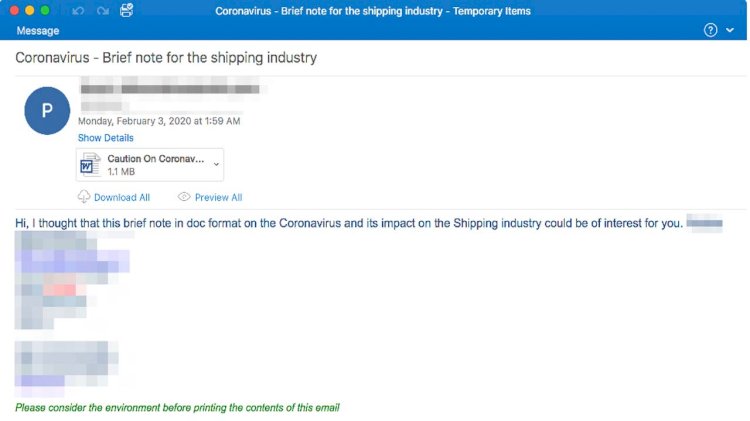
Below is an example of this targeted email campaign:

Figure 1 Coronavirus-theme Shipping Industry Lure
The Microsoft Word document that’s attached seeks to exploit a two-and-a-half year-old Microsoft Office vulnerability (CVE-2017-11882) which leverages Equation Editor. This vulnerability has been used in malicious documents by multiple threat actors in multiple attacks over the past two-and-a-half years. Its use in this campaign likely points to its proven effectiveness in other attacks and the attacker’s belief that the industries they’re targeting are slow to deploy patches.

Once the document is opened it installs AZORult which is information stealing malware Proofpoint has seen since at least 2016. In late 2018, Proofpoint also saw AZORult being used in sextortion scams with ransomware. In these attacks, Proofpoint doesn’t see AZORult downloading ransomware currently. However, because of AZORult’s configurable nature and past use in conjunction with ransomware that remains a real threat.

In light of this latest attack, organizations that have concerns around global shipping should exercise extra caution around Coronavirus-themed emails. People and organizations broadly should be exercising extreme caution around any emails, links or websites related to Coronavirus because of the demonstrated, increased risk that attackers will seek to use concerns around it as lures.

Rolls-Royce expanding marine division plant in Peterborough

0

Rolls-Royce has welcomed Minister Maryam Monsef, MP for Peterborough-Kawartha, Dave Smith, Member of the Provincial Parliament, and Peterborough Mayor Diane Therrien to break ground on a new expansion to its Centre of Excellence for Naval Handling equipment in Peterborough, Ontario.

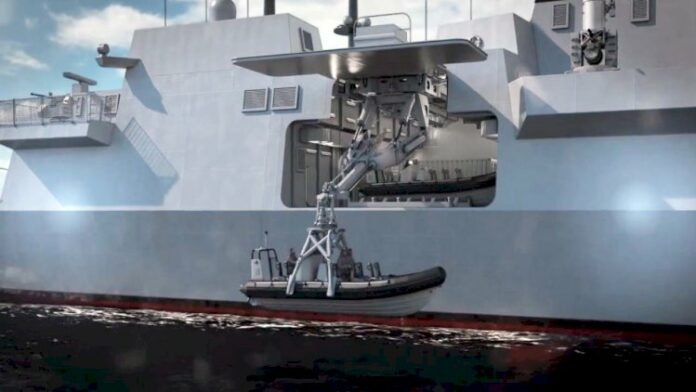
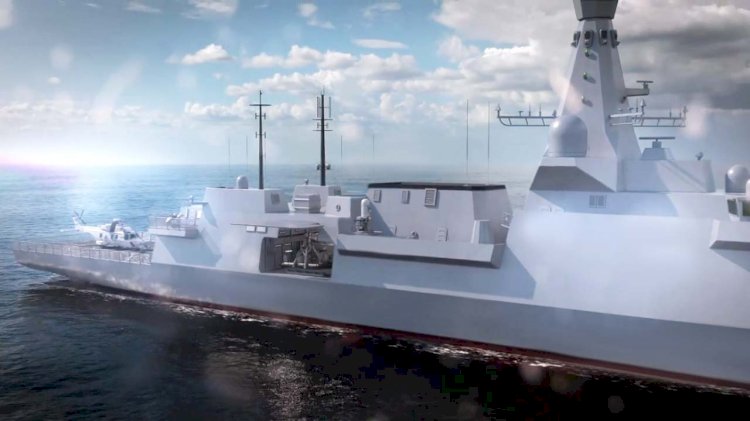
Design and manufacture of the world-leading Rolls-Royce Mission Bay Handling System (MBHS) will take place inside the new facility expansion. The MBHS is an innovative, adaptable and flexible feature of the Global Combat Ship design, selected for the Canadian Surface Combatant (CSC), Australian Hunter Class and UK Type 26 programs.

The Canadian Federal Government has already selected the Global Combat Ship design for the Royal Canadian Navy’s 15 new CSC ships. This significant investment in the expansion of infrastructure to support the CSC program demonstrates the company’s commitment to developing advanced industrial technologies to benefit the Canadian economy and Canada’s Armed Forces.

Rolls-Royce has already expanded its supply chain in Canada to meet the significant domestic and international export opportunities created by the Global Combat Ship program, enabling the company to sustain significant growth of the Canadian economy well into the future.

Bruce Lennie, Rolls-Royce, Vice President, Business Development & Government Affairs said:

“We are pleased to welcome Minister Monsef, MPP Smith and Mayor Therrien to mark this significant milestone in developing our infrastructure which will support the Canadian Surface Combatant program.

This Centre will harness and build upon the wealth of Canadian engineering and technological expertise we have at Rolls-Royce. We look forward to growing our business in country, further developing our supply chain and enhancing our contributions to the Canadian economy.”

Rolls-Royce’s Mission Bay Handling System is designed for adaptability and flexibility, offering a low-risk solution for tomorrow’s platforms. The MBHS has the capability to launch and recover naval vehicles and move containerised packages without the aid of a dockside crane. The multi-functional system can also be easily adapted to support custom operational requirements, such as humanitarian missions, by providing the space for medical facilities and aid supplies.

New Vado Gateway terminal commences operations in Italy

0

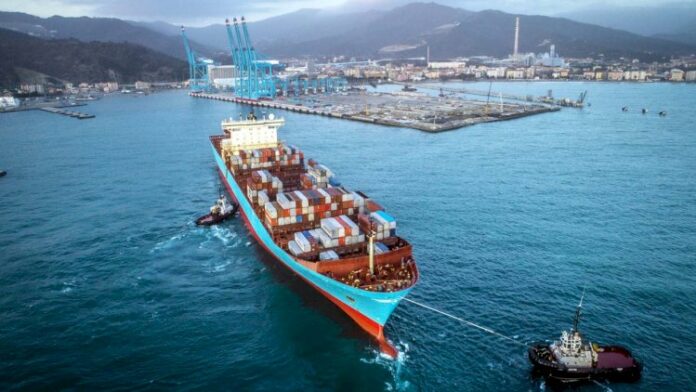
The new Vado Gateway terminal, located in Vado Ligure, Italy, received its first commercial service on 11 February 2020. The ship, M/V Maersk Kota, was the first of seven ships from Maersk’s weekly ME2 service, connecting the Mediterranean with the Middle East and India.

The call by M/V Maersk Kota marked the start of operations for the new deep-sea Vado Gateway container terminal. With a total investment of 450 million euros, it is one the most important port infrastructures to be built in Italy in recent decades. Managed by APM Terminals Vado Ligure, the new container terminal strengthens the competitiveness of the Italian port system and represents a strategic hub for the new "Silk Road", connecting the markets of Northern Italy, Switzerland, Germany and north-eastern France with the Far East.

With a capacity of over 6,400 TEUs, M/V Maersk Kota departed from the port of Tangier in Morocco and arrived at Vado Gateway after the port calls at Alcegiras, Valencia and Fos Sur Mer / Marseille. It continued its journey to Port Said in Egypt and various other terminals in Saudi Arabia, Oman and the United Arab Emirates, and finally Abu Dhabi.

Once unloading operations have been completed, containers will continue their journey by road or rail. The terminal operates a truck appointment system to limit turn times to a minimum and ensure maximum efficiency. Rail connections from Vado Ligure include the inland terminals of Pioltello (Milan), Rubiera (Modena) and Padua. Export activities also benefit from this new service, with containers arriving from all over Northern Italy, both by road and by rail.

Maersk’s MMX service, connecting the Mediterranean and Canada, is scheduled for the beginning of March. The five ships engaged on this line, of approximately 2,500 TEUs each, will dock in Vado Gateway once per week.

Paolo Cornetto, CEO of APM Terminals Vado Ligure, commented:

"With the arrival of the first ship on the quay, Vado Ligure’s new deep-sea container terminal has officially commenced operations. After managing a number of challenges, being able to finally serve customers, is a dream for us. We will do everything necessary to ensure that Vado Gateway becomes synonymous with efficiency and customer service in the shortest time possible – ‘the port system most preferred by customers’".

Freeport of Riga Authority completed reconstruction of the FG levee

0

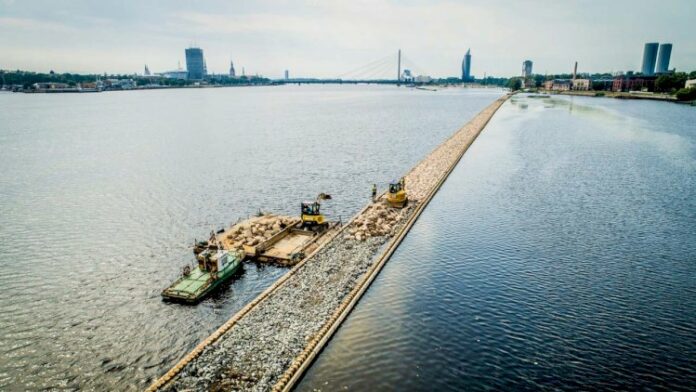
The Freeport of Riga Authority has completed reconstruction of the FG levee, an embankment built to protect the main waterway. It is located in the territory of the Freeport of Riga, on the left bank of River Daugava, and stretches over a total distance of 1.51 km.

The FG levee was built from 1889 to 1891 to tame the current along the left bank of River Daugava, and together with the CDE levee it is part of the levee system to fortify the riverbed and enable construction of the port. The levee system is essential for safe shipping in the Port of Riga, as it protects the main waterways and access to Riga Passenger Terminal from landslides.

Except for minor repairs in some parts of the FG levee, it was used for more than 120 years without any substantial renovations.

Its structure is made of interlinked wood pile walls filled with boulders. As the joints are located in an area where the water level tends to fluctuate, wooden structures are subjected to rotting and ice impact. When this site was inspected, significant damage was found: wooden constructions were missing, piles on Daugava side were broken off for as long as 400 m, and the boulder filling had slipped off which could have led to disintegration of the levee.

In August 2017, at the request of the Freeport of Riga Authority, reconstruction of the FG levee started. During the works, its supporting structures were replaced by constructing new wood pile walls along the current levee, and the levee was refilled with boulders and smaller stones, and covered with rocks.

The FG levee is a culturally and historically significant engineering structure, a part of the urban construction heritage site ‘Ķīpsala historic district’ designated as a site of national significance. Its reconstruction plan was approved by the National Agency for Protection of Cultural Monuments.

Pioneering digital technology project begins on HCMS Saskatoon

0

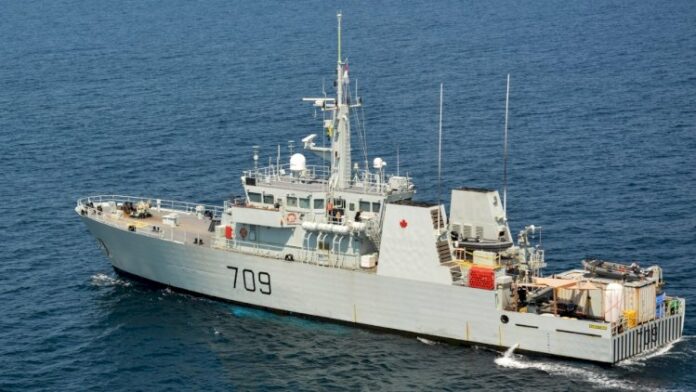
ABS has announced it is engaged in a pilot program with the Royal Canadian Navy (RCN) and Defence Research and Development Canada (DRDC) to deliver the ABS Digital Asset Framework for the RCN’s Maritime Coastal Defence Vessels.

The ABS Digital Asset Framework forms the foundation of a broader Conditioned-Based Class program that transforms ship classification from a calendar-based schedule to a condition-based model.  

The project, which will start with HMCS Saskatoon, will support the RCN’s larger Digital Navy Initiative.

Christopher J. Wiernicki, ABS Chairman, President and CEO, said:

“ABS is a leader in delivering condition-based maintenance data services in maritime and offshore applications, and we are proud that the RCN have chosen to work with us on this landmark project. Through our digital programs for commercial and government clients, we are seeing first-hand the power of these technologies to drive improved asset performance and operational safety.”

In the pilot program, a network of data models will be generated from a suite of ABS digital solutions which include advanced condition analysis tools. This network of data models will support the execution of an integrity management program developed specifically for the RCN.

The multi-year pilot program will enable the RCN to monitor the condition of the vessel throughout its remaining service life using digital twin technology and advanced ABS analytics to identify anomalies, guiding inspection and maintenance planning. 

ABS digital solutions that will be applied during this pilot program include:

  • A vessel-specific structural sensor plan designed for measurement of global hull response
  • Hull sensor pre-processing and data quality checks
  • Hull and operational data dashboard visualizations
  • Full structural digital twin creation and analytics 
  • RAM Analysis

Together, the digital solutions offer greater access to vessel-wide intelligence providing a more holistic view of structural health and the condition of on-board equipment. This allows the RCN to plan future maintenance actions based on the actual condition of the vessel.

Allseas presents a unique Jacket Lift System

0

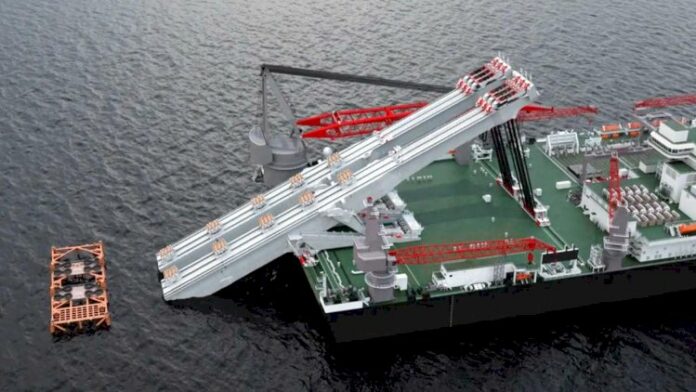
Allseas' record-breaking construction vessel Pioneering Spirit  will be able to remove and install jackets – the steel frame supporting the decks of an offshore platform – weighing up to 20,000 t – equal to 200 space shuttles – in a single lift. Systems and parts of the new Jacket Lift System (JLS) are taking form at fabrication sites around the world. In Italy, construction of the two 170-m lift beams has reached the halfway point, and in China, the upend system is close to completion.

Conventionally, when removing large jackets offshore, the structures need to be cut into small sections suitable for crane lifts, which requires lengthy and complex cutting operations. Pioneering Spirit  will minimise this offshore work, generating large cost savings and drastically reducing safety and environmental risks.


New data science project to predict illegal bunker activity

0

rise-x.io, DNV GL and NUS embark on data science project to predict illegal bunker activity.

Global hydrocarbon theft and fraud is estimated to be more than US$133bn per year.  Illegal bunkering is estimated to cost companies and governments as much as US$3bn per year and given the challenges involved in measuring losses it is likely that the true number is even higher. 

rise-x.io has announced that it is collaborating with DNV GL and the National University Singapore’s (NUS) Department of Statistics and Applied Probability on a data science project to help tackle this issue. NUS students majoring in Data Science and Analytics will be tasked to create computer models that analyse 10 billion lines of automatic identification system (AIS) data to determine whether illegal fuel bunkering can be detected using vessel pattern analysis.

Rowan Fenn, CEO at rise-x.io, said:

“The market driving illegal bunkering activities and bunker theft costs the industry billions every year. The quicker we can build solutions to address that issue, the quicker the industry can become cheaper and more sustainable.”

The algorithms produced by the project will go through a vetting process and if they are suitable, they will be integrated directly into rise-x.io’s QuayChain platform. David Barker, CTO at rise-x.io, said:

“These algorithms will provide users of the platform with unique insights into vessel performance and management that builds trust for vessel owners and operators. We believe that being good; is good for business.”

Nic Sabin, DNV GL’s technical lead on the initiative, said:

“After partnering with rise-x.io to make the QuayChain platform a reality with the help of our Veracity ecosystem, we are very excited about the next stage of this important initiative to revamp the marine fuels market. Data science is starting to gain momentum in the maritime industry, but is still relatively nascent compared to other sectors. We therefore see this excellent initiative, driving efficiency improvements while helping to prevent illegal behavior or honest disputes, as a key driver to improve trust and transparency in the industry.”

Beyond the potential direct integration into QuayChain, the algorithms will be enhanced to deliver alternative outcomes. Fenn said:

“The value of this project is how flexible the algorithms can be. For example, modifications will allow us to predict metrics such as fuel consumption and CO2 emissions without installing IoT devices on the vessel’s machinery.” 

Providing this information not only gives vessel owners more insights into their vessels’ operational performance, but also open doors for the delivery of carbon neutral voyages. 

Associate Professor Tiong Wee Lim, Deputy Head (Academic), NUS Department of Statistics and Applied Probability, said: 

“This project provides a great opportunity for NUS students to apply their data science and analytics skills to solve a real-world problem. A total of 34 students will be involved in this project, and I am sure they will benefit significantly from their participation under the mentorship of industry experts.”

TenneT develops first 2GW offshore grid connection with suppliers

0

Forty percent of the Netherlands’ electricity needs will come from offshore wind farms by 2030. TenneT will realise the grid connections for these wind farms.

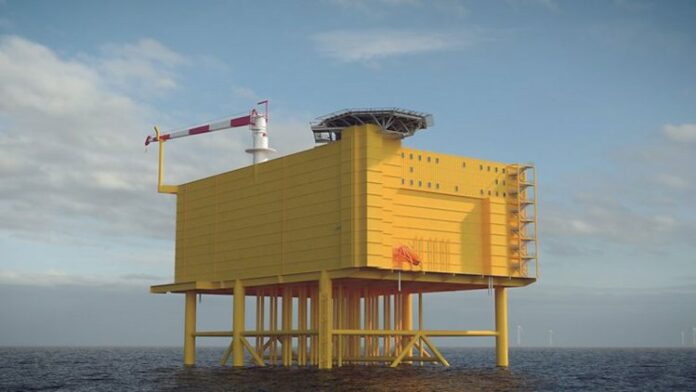
Alongside the eight 0.7 Gigawatts (GW) AC grid connections already planned, two 2 GW offshore grid connections will be built in the IJmuiden Ver wind energy area. Such a grid connection is currently not existing. This requires a new platform design and a high voltage direct current (HVDC) transmission system that allows increased power transfer.

TenneT has entered into a so-called innovation partnership* with its suppliers to ensure that this technically advanced and innovative requirement will connect seamlessly with what they can develop and manufacture.

Given the combination of the large distance to the coast and the size of the IJmuiden Ver wind energy area, a 2 GW direct current (HVDC) solution, based on 525 kilovolts, appears to offer most economical  advantages. It requires only one cable system per 2 GW, limiting the impact on the environment and the surroundings.

To realise such an innovative direct current system, TenneT launched the design phase with five HVDC suppliers on the basis of an innovation partnership: ABB Power Grids, GE Renewable Energy’s Grid Solutions  (Netherlands), Consortium Global Energy Interconnection Research Institute Co. Ltd. (GEIRI) & C-EPRI Electric Power Engineering Co. Ltd. (C-EPRI) (China), Siemens (Germany), and Xian Electric Engineering Co., Ltd (China). These suppliers will develop this innovative 2 GW 525 kV HVDC solution based on criteria set by TenneT. They will provide specific information on this to Iv-Offshore&Energy b.v., which is carrying out the Front-End Engineering Design (FEED) study on behalf of TenneT. On this basis, a standardised platform design will be developed for all HVDC solutions.

The information from the joint R&D innovation phase will be used for the final design of the platform. TenneT uses this standardised design for the contracting of several 2 GW grid connections (including IJmuiden Ver Alpha and Beta). This contributes to reducing costs for the offshore grid.

TenneT thus fulfils its responsibility as grid operator of the offshore grid, by stimulating innovative solutions that contribute to rolling out a cost-efficient and future-proof offshore grid infrastructure.

The move to connections with a 2 GW capacity is made possible through TenneT’s extensive experience with offshore HVDC grid connections in Germany, as well as with interconnectors. TenneT also uses the high-voltage 525 kV level for the new international offshore connection between Germany and Norway, NordLink. TenneT will realise at least four 2 GW offshore grid connection projects in Germany from 2029. The results of the FEED study and the R&D phase of the innovation partnership will also provide emphatic input for this, because TenneT strives to standardise the systems wherever possible.

IJmuiden Ver will have wind farms with a total capacity of 4 GW. With the new 2 GW connection concept, TenneT wants to make optimal use of the area’s scale. This is in line with the offshore wind industry’s desire for larger wind farms. TenneT is building two grid connections, each of 2 GW, for this purpose: Net op zee IJmuiden Ver Alpha, and Net op zee IJmuiden Beta. Preparations and procedures for these projects began in 2019, and Net op Zee IJmuiden Ver Alpha and Net op Zee IJmuiden Ver Beta are scheduled to go into operation in 2030.

*An innovation partnership is a tendering procedure in which TenneT, as contracting authority, can start a development process together with suppliers and then proceed to purchase the solution that is not yet available on the market.